Hats! One of my favourite things. The discerning Early Medieval woman (and those who wish to dress like one) seem to be relatively spoiled for choice: caps, hoods, veils, wimples and even headbands are all options. Unfortunately, the evidence for male headgear in period is generally not as well-represented. Chrystel R. Brandenburgh (2010) did a fantastic study of early textiles found in Frisia (a region in what is now the Netherlands) which details several hat fragments dated to the Viking Age, including an extremely spiffy example from Aalsum. 
The original hat found in Aalsum (object nr. FM 33-373), in the collection of the Fries Museum. Photo taken from Brandenburgh (2010).
The Aalsum hat is dated to 750-900 AD, towards the end of the estimated habitation of the find site. It is woven in a 2/2 diamond twill and is made of brown wool with no dye being detected. While there are a couple of other hats from Frisia with some form of neck flap (presumably to shield the neck from the elements), I was interested by this hat. Nothing similar shows up in sources from the British Isles nor Ireland that I know of, either written or pictorial.
That is, until I saw this in one of my books on Viking Age Dublin.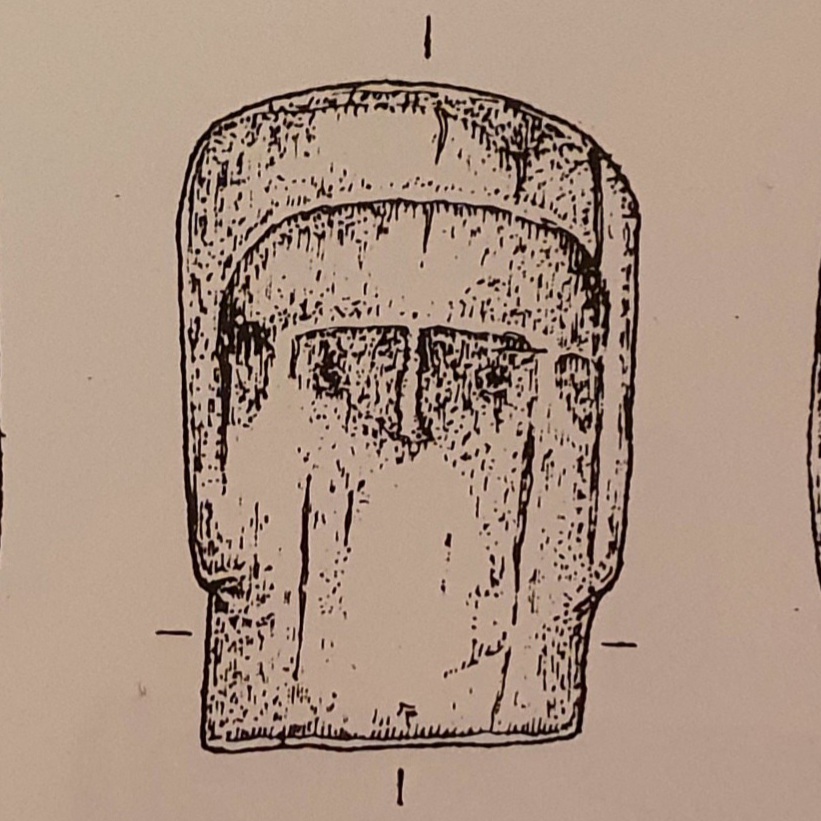
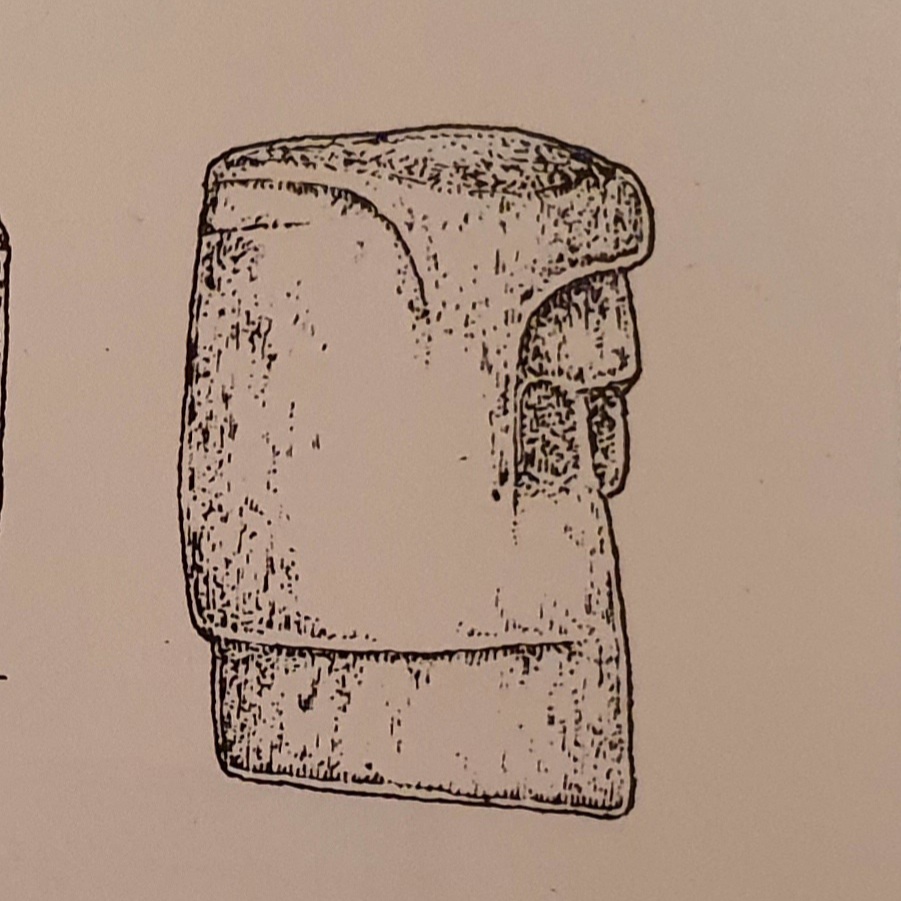
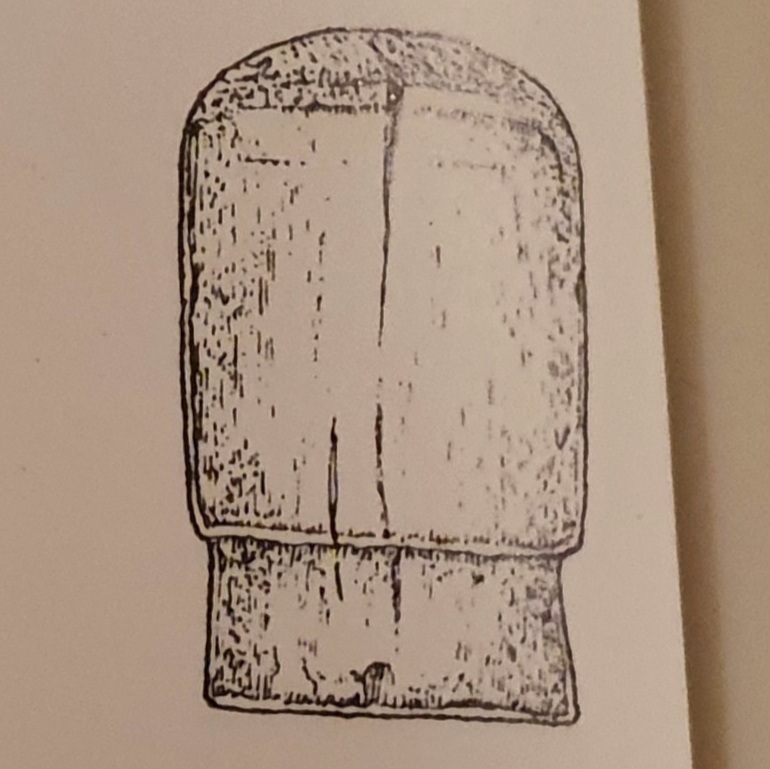
Well. Hello, handsome.
This cute little guy is featured in Viking-Age Decorated Wood by James T. Lang, part of the Medieval Dublin Excavations 1962-81 series (page 32). A friend had mentioned this to me a few years ago, but we didn’t know anyone who had a copy to check. To my joy, I managed to snaffle one on eBay during the last lockdown and finally I was face-to-face with our lad.
He is described thusly:
“DW110. Small human head (gaming piece?) (E112:945) Christchurch Place (Fig.48)
In an antler pit, 26/1, contemporary with 11/1 platform. Late eleventh century.
H. 3.2 cm, D. 2.0 cm.
A primitive human head in a ‘Canterbury cap’. The eyes are mere dots.”
I hadn’t heard of a Canterbury cap before, so I Googled it. Turns out that this is a Canterbury cap, worn fetchingly by Archbishop Thomas Cranmer:
Hmmm. I’m not convinced. It’s not totally unlike the hat on the Dublin figurine, but I believe it to be distinct nevertheless. Other photos of Canterbury caps are just as different as Cranmer’s, they are much closer to a modern cardinal’s biretta than anything else. I would describe the Dublin figurine as having much in common with the Frisian Aalsum hat, despite there being an estimated 2 centuries between them (the Dublin figurine is put at late 11thC, meanwhile the Aalsum hat is dated to 750-900 based on the other objects found nearby.)
So, I decided to recreate a version of the Dublin figure’s hat, based on the earlier find from Aalsum. Bear in mind, this is highly speculative and something I did for fun. I do not believe that this one tiny late 11th century figurine is carte blanche for every Tumi, Ríkarðr and Halfdan to make them for their Danish or Anglo-Danish impressions. If you do find the Dublin figurine compelling, I would gently advise you to keep your hats for your late 11th century Dublin (or perhaps general Hiberno-Norse) outfits. 
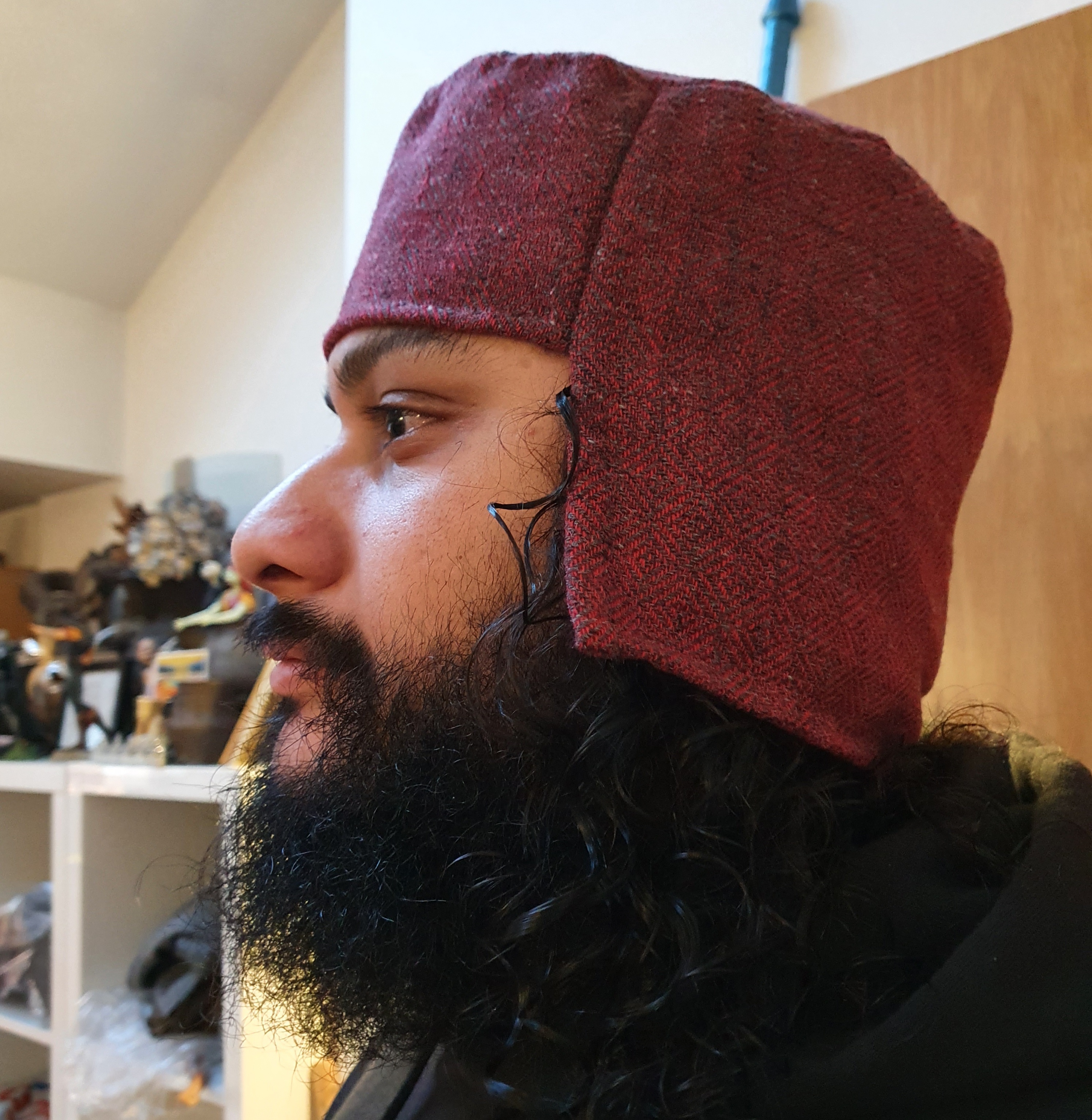
I actually made two hats- the first from some leftover red diamond twill and the second from some pinkish-lilac herringbone scraps. Both hats are made of wool and like the Aalsum find, they are not lined. I hemmed each piece individually with a rolled hem, then attached them all together with a whip stitch. Several of the Frisian hats were made in this way, as well as some of the woollen and silk caps from Dublin. It results in a strong and neatly constructed garment which is easy to fix if seams start to pull apart through wear.
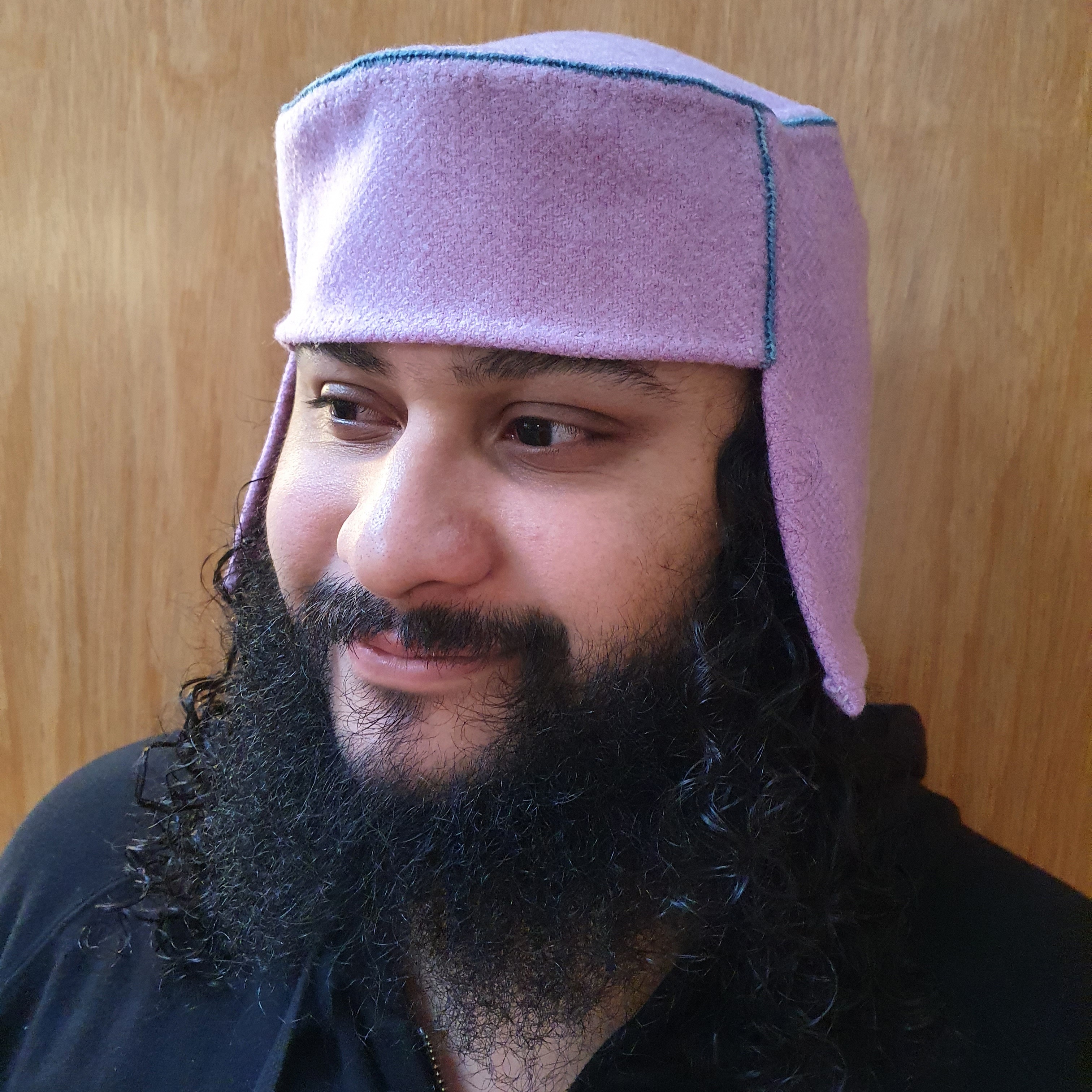
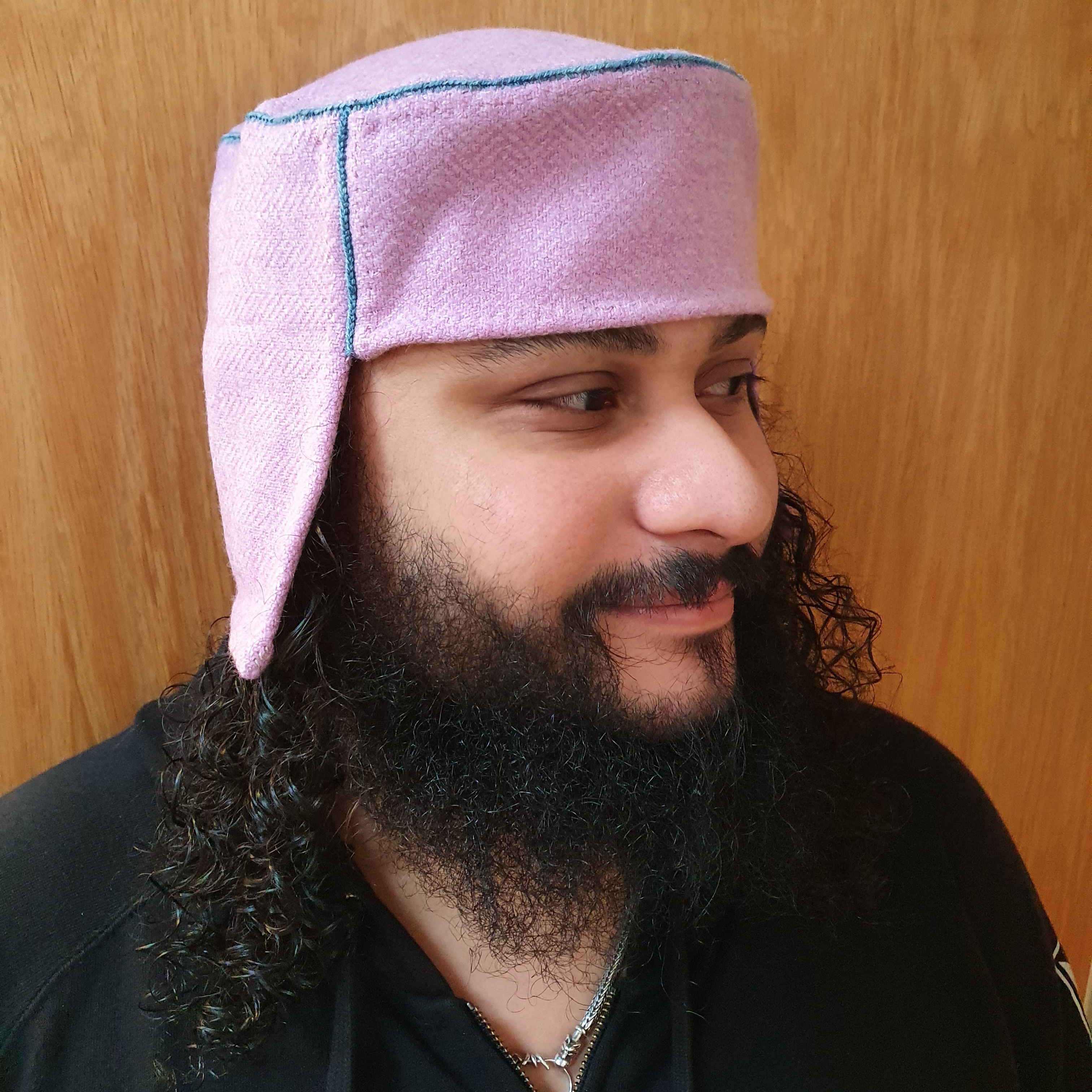
Like every project, I learned as I went along. In future, I would cut the front piece of the hat a little shorter if I was really aiming for a Dublin figurine look. In addition to this, you can see in the photos of the red hat, there is a slight bunching at the front and the top seam had a habit of falling inwards slightly. This could be as a result of my pattern cutting (I drew out the oval for the top by hand) or indeed due to the nature of the whip stitched seam. I decided to try some decorative seam treatment on the second hat, both for aesthetic and structural purposes. I felt that it did remedy the caving-in issue somewhat due to giving it some more structure, plus it’s pretty. I used some woollen embroidery yarn that I had dyed with some of my homegrown woad, I think it gives a nice contrast to the pink-lilac.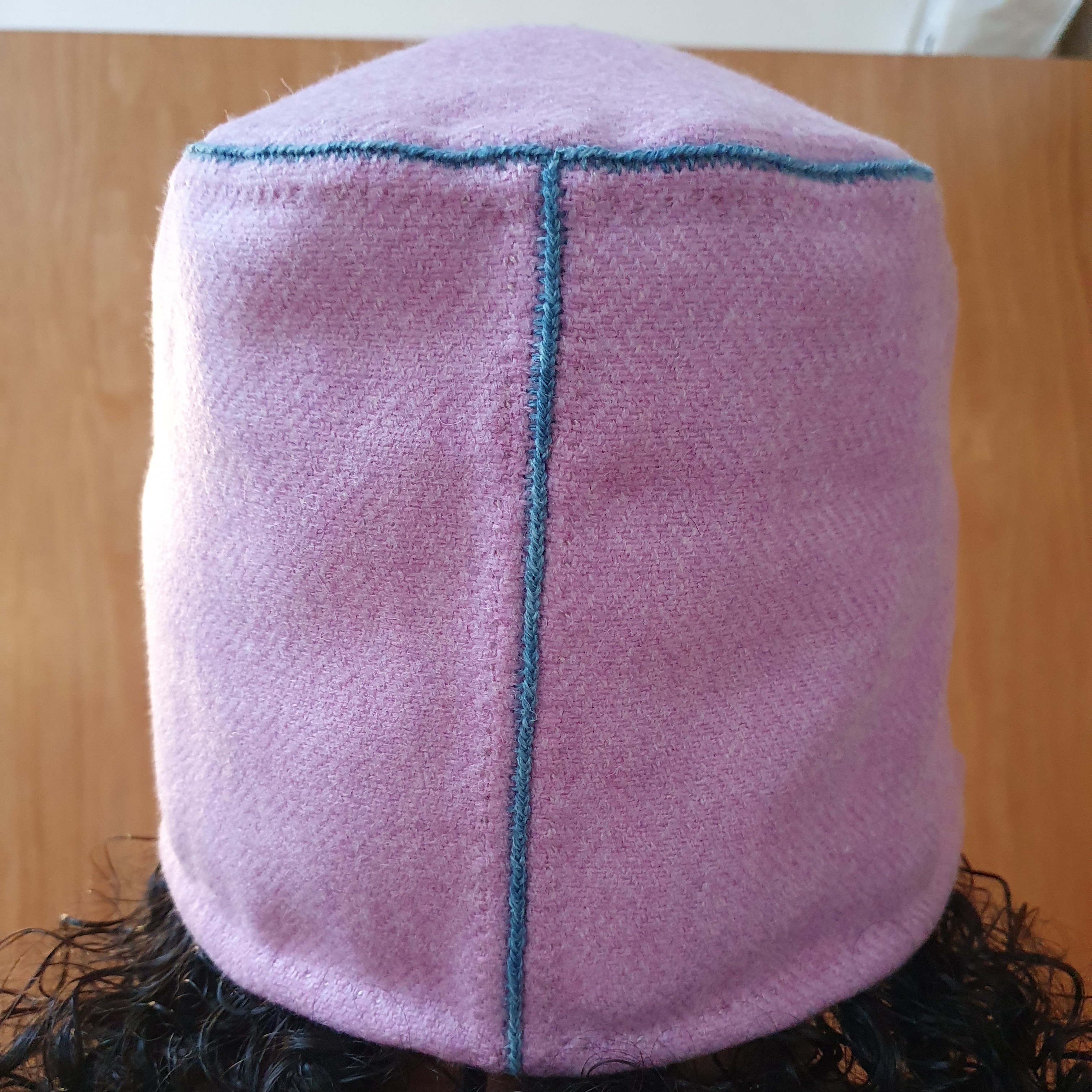
Stitchwise, I opted for a chain stitch variant similar to the examples found on the hats from Dokkum, Oostrum and Leens. Most of these examples had a chain stitch that was visible on the outside of the hat and was done in a darker coloured thread, which would imply decorative contrast being the intent.
But the most important part: what is it like to wear? Well, my very own Dubgaill said he found this style of hat to be perfectly comfortable. He liked that it would protect the back of his neck from the elements and it’s cosy around the ears. That’s good enough for me!
I also had enough left of the pink herringbone to make myself a Dublin cap. We now have matching 10-11th century Irish hats, meaning we can be one of those sickening couples in both 2021 and 1021. Always good to know.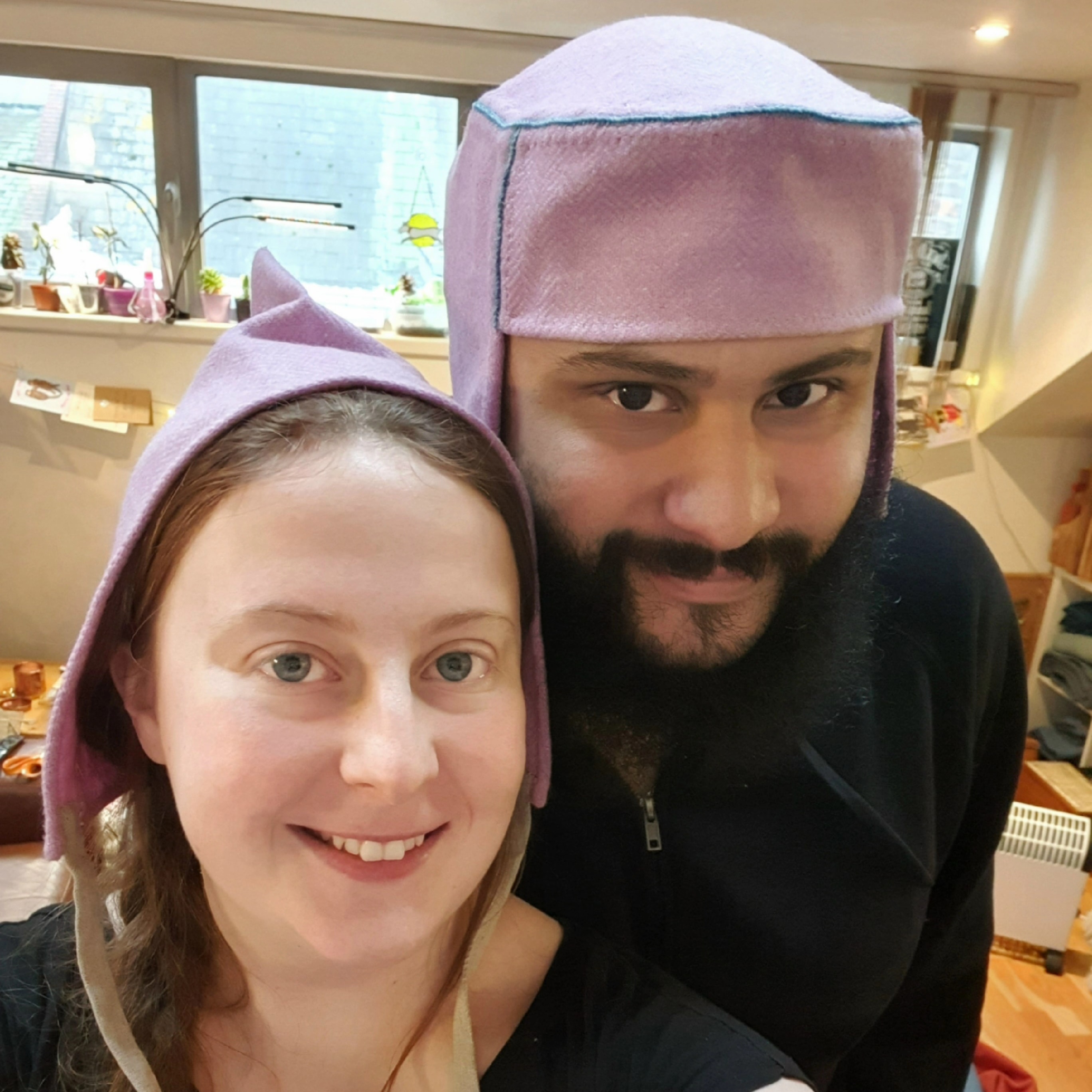
References:
Brandenburgh, C. R.. (2010). Early medieval textile remains from settlements in the Netherlands. An evaluation of textile production. Journal of Archaeology in the Low Countries. 2 (1), p41-79.
Flicke, G. (1545) Portrait of Thomas Cranmer. [Oil on panel] London: National Portrait Gallery. Found online at: https://commons.wikimedia.org/wiki/File:Thomas_Cranmer_by_Gerlach_Flicke.jpg
Lang, J. T. (1988). Viking-age Decorated Wood: A Study of Its Ornament and Style. Dublin: National Museum of Ireland. p32.
- Comment
- Reblog
-
Subscribe
Subscribed
Already have a WordPress.com account? Log in now.
 The Eoforwic Project

Excellent work!
LikeLike
Thank you Leah, very cool!
LikeLike
Love it!
LikeLike
Great article and beautiful headwear! Given that a fragment was found in Hedeby that is said to be the remnants of a pillbox hat (referencing the pillbox hat found in Leens) I don’t think it’s too far fetched that the Aalsum hat could have made it to Southern Danmark, too. But that’s one of these gaps where everyone/every group has to make their call.
LikeLike
very very interesting, again thank you for sharing!! 💚
LikeLike
It is important to remember that the wood figure is supposed to be a slight caricature in nature and not 100% accurate. For another example, although later in date, look at the gentleman wearing a black hat in the famous Oxford Print of Irishmen. Gaelicattire.com
LikeLike
You are of course quite right! Thankfully, I haven’t seen anyone claiming DW110 as a realistic depiction of a real human. The statue could depict a hat, a hairstyle or even a helmet of some kind- or nothing real at all. Nevertheless, it was a fun exercise, especially when compared to the extant hats from the Netherlands.
LikeLike
Excellent work. Any chance of a pattern?
LikeLike