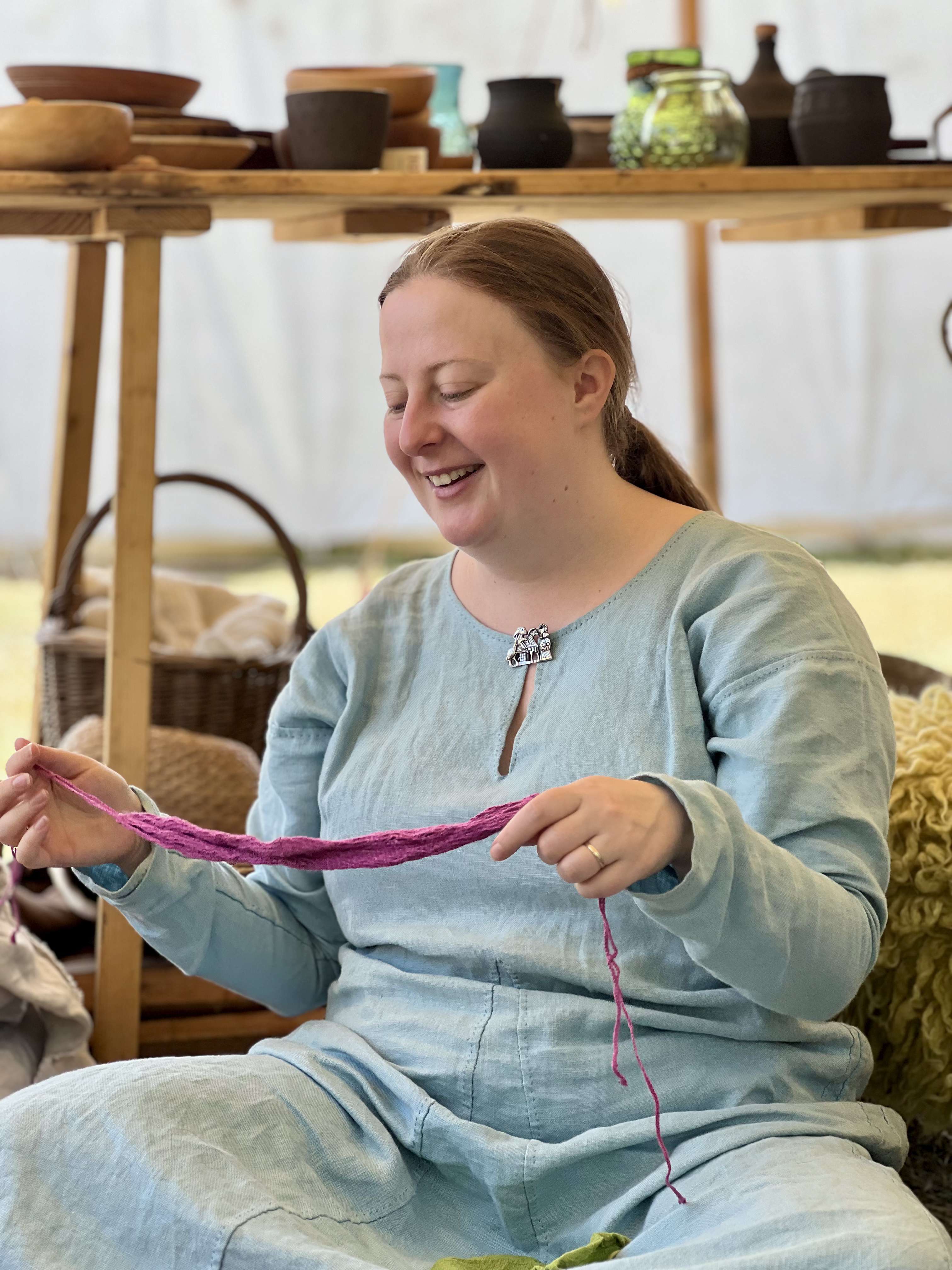
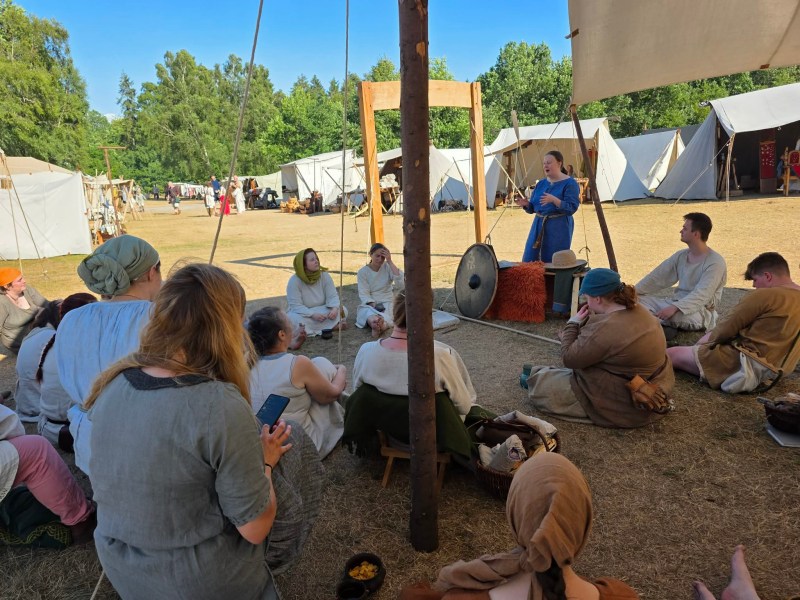
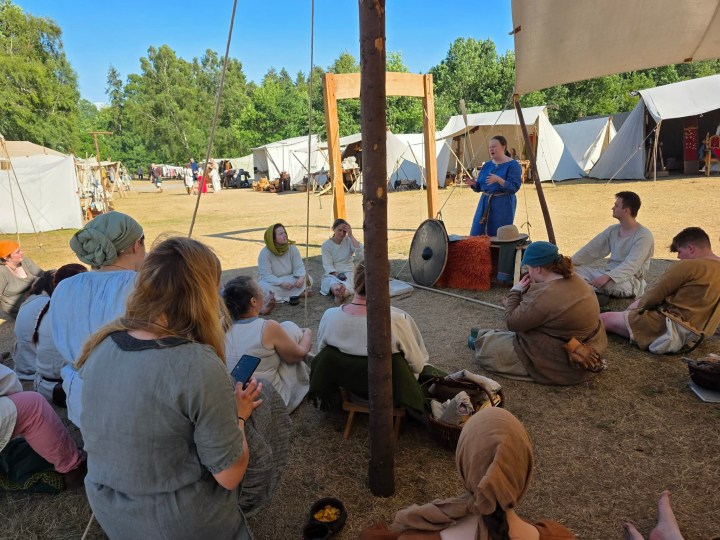
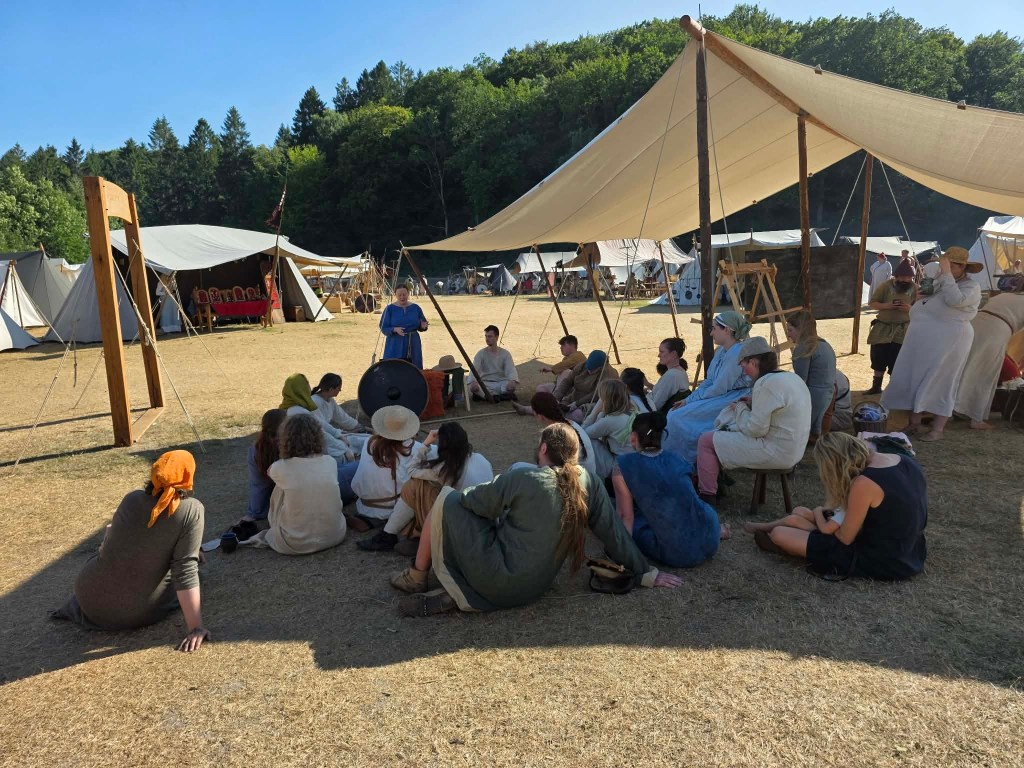
Welcome to the dyngja! This and all other photos featured are by Christina Dyhrberg Fotos, small edits by me.
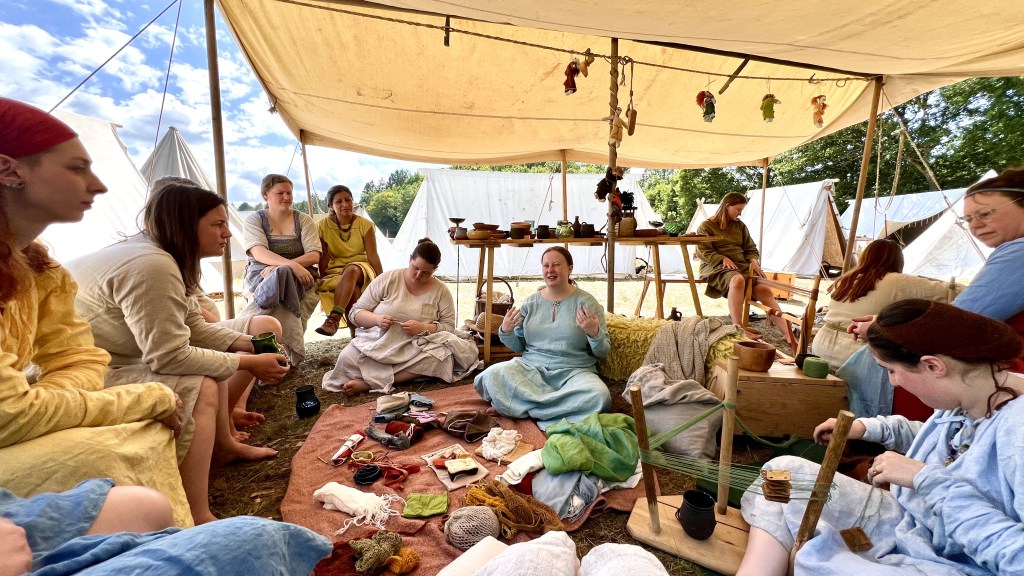
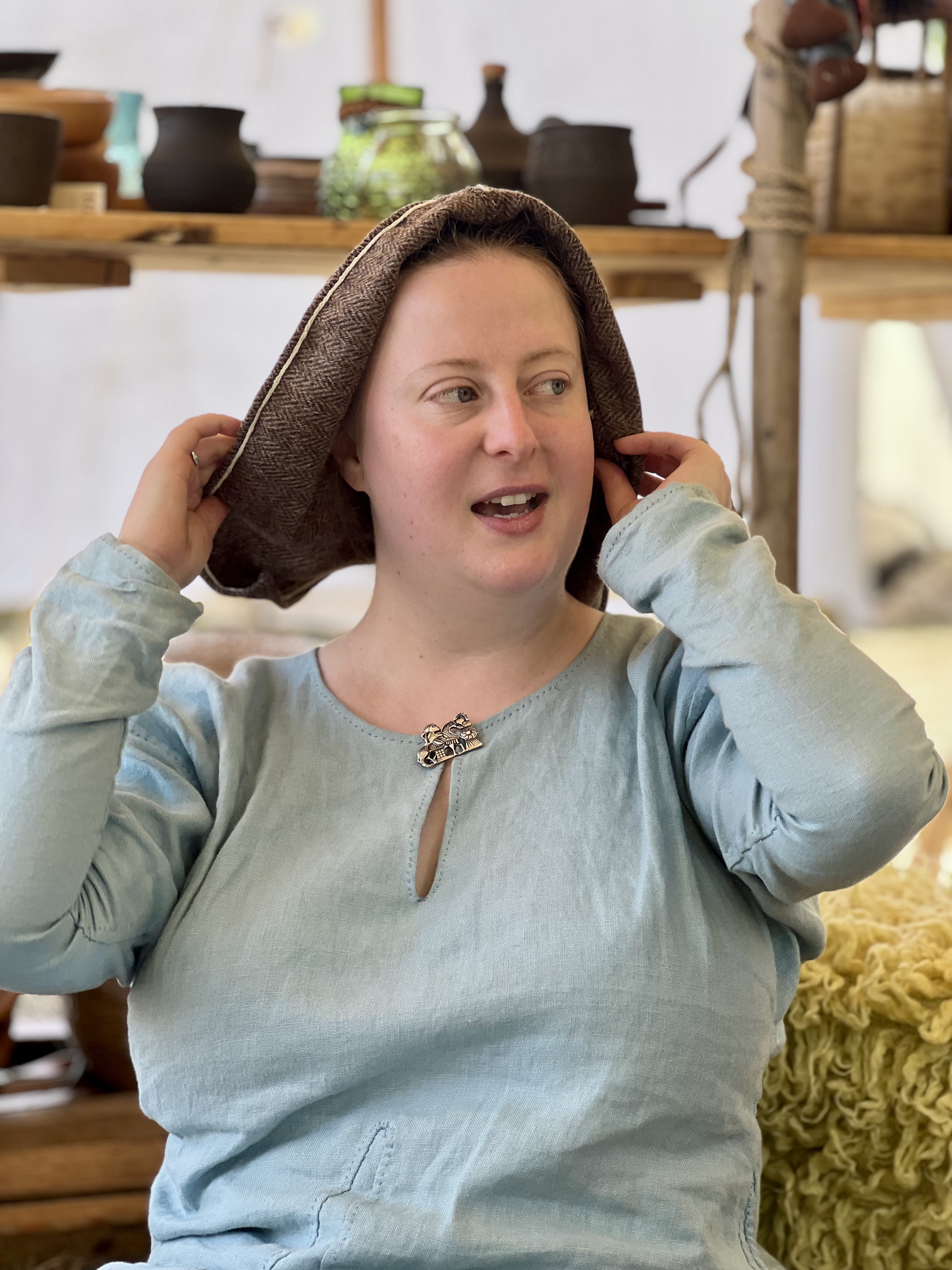
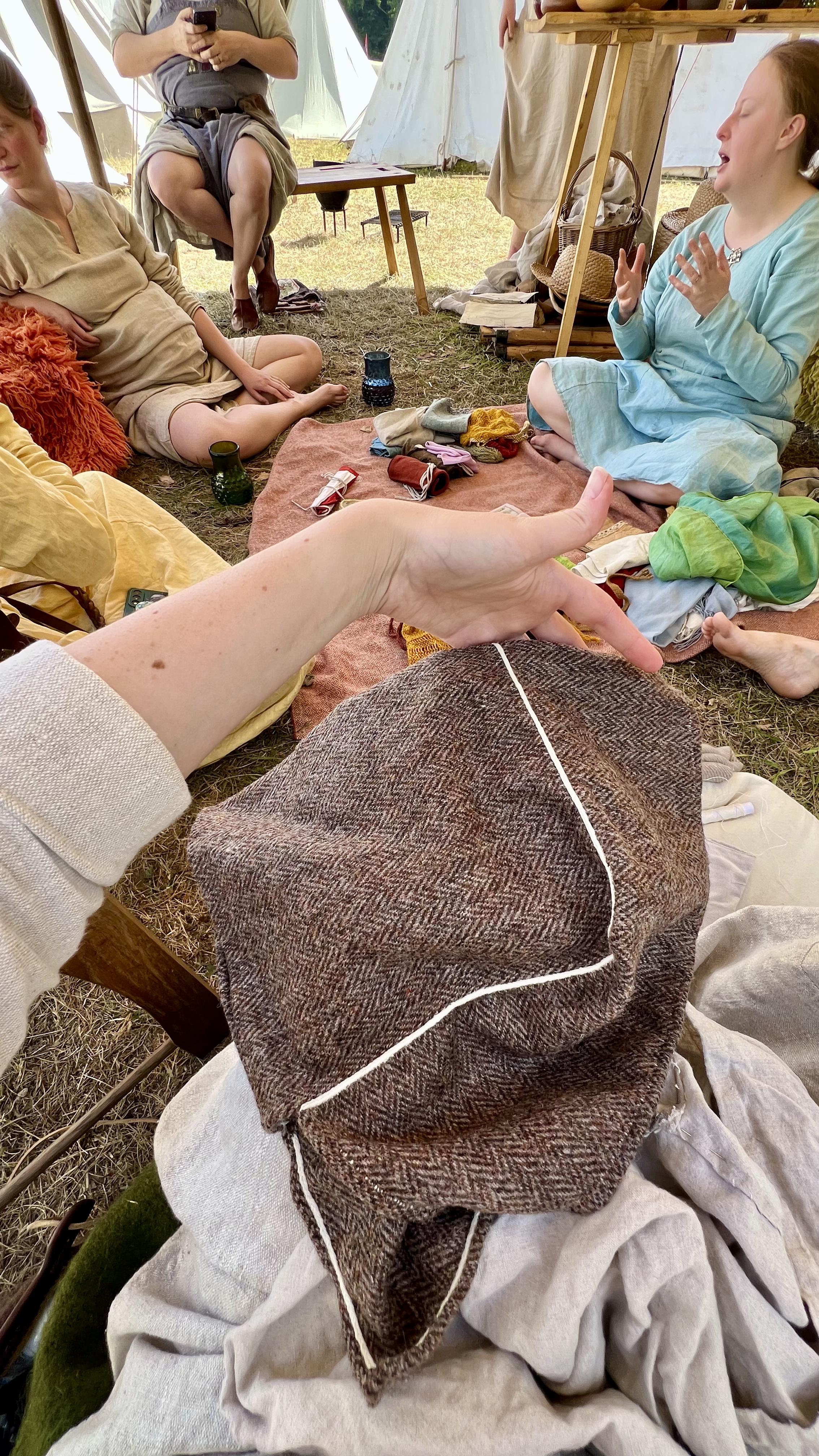
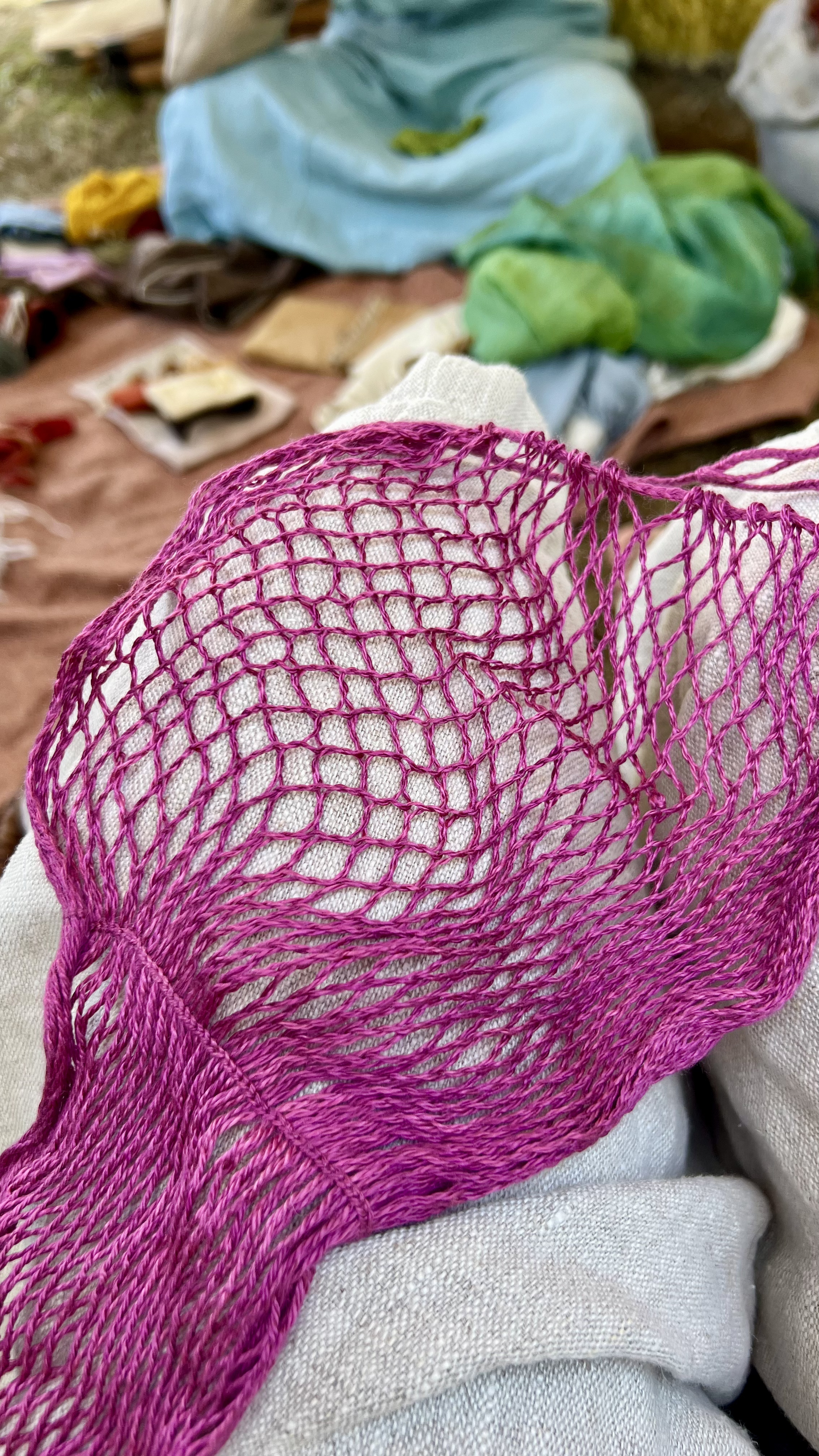
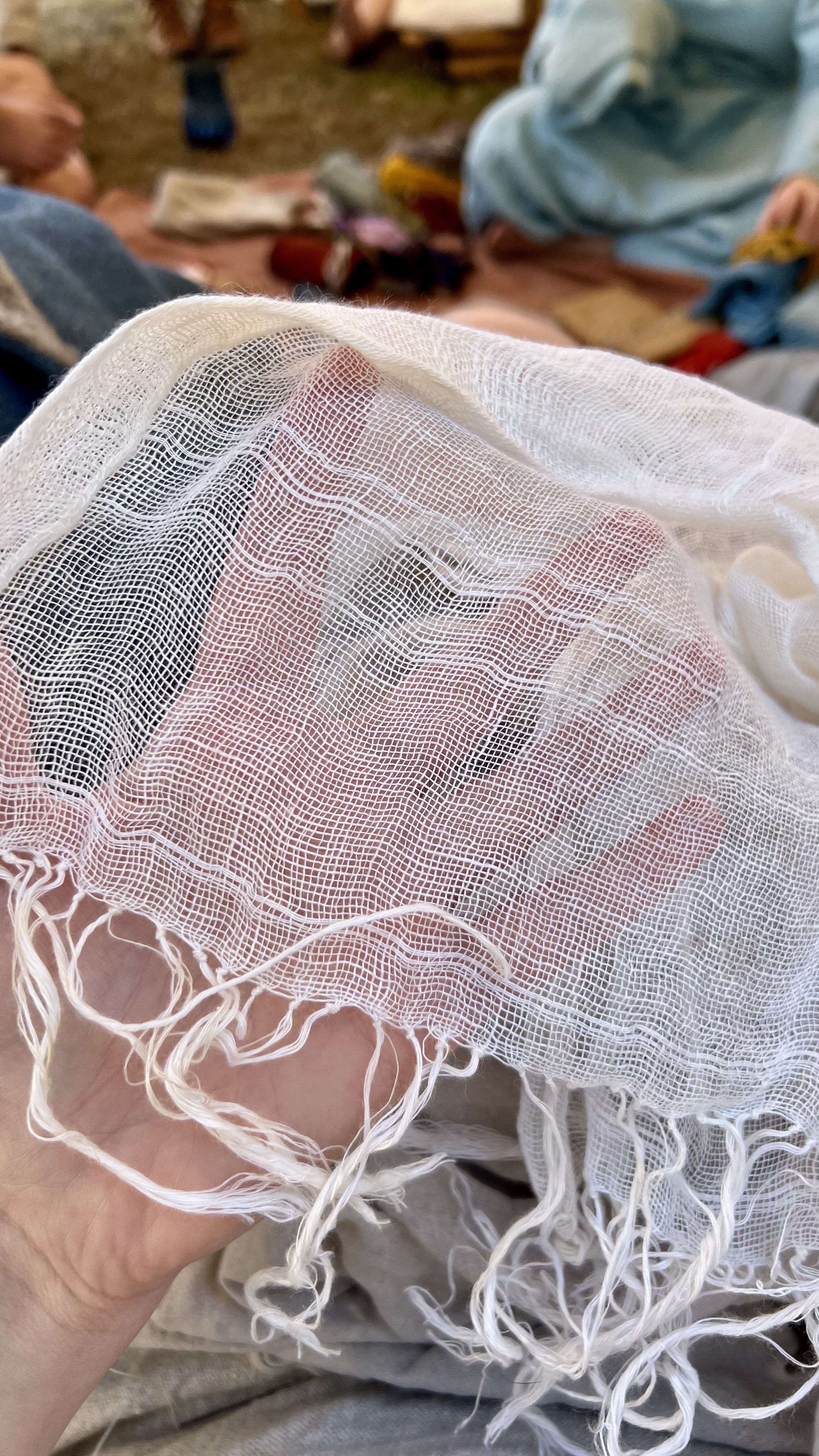
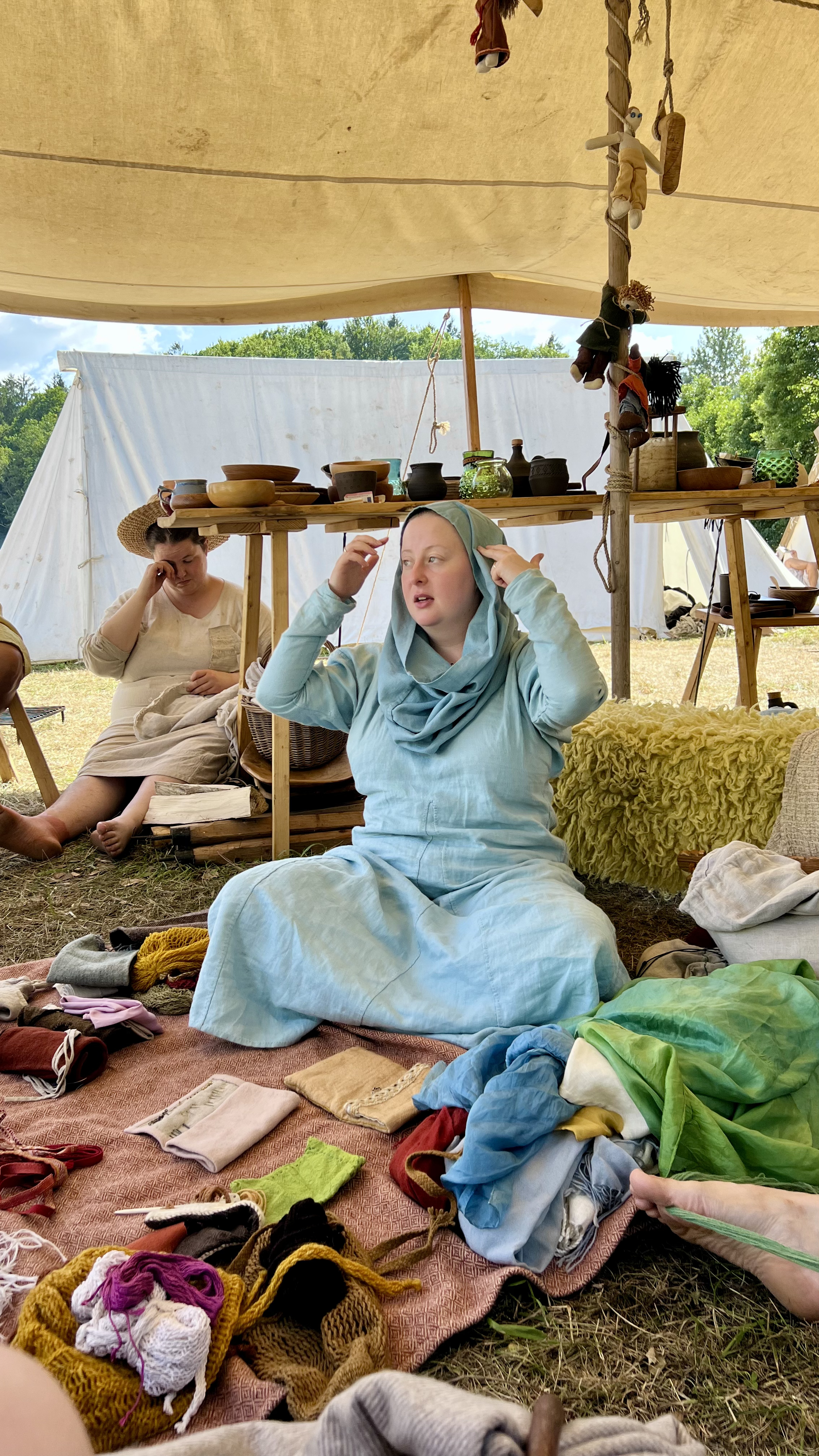
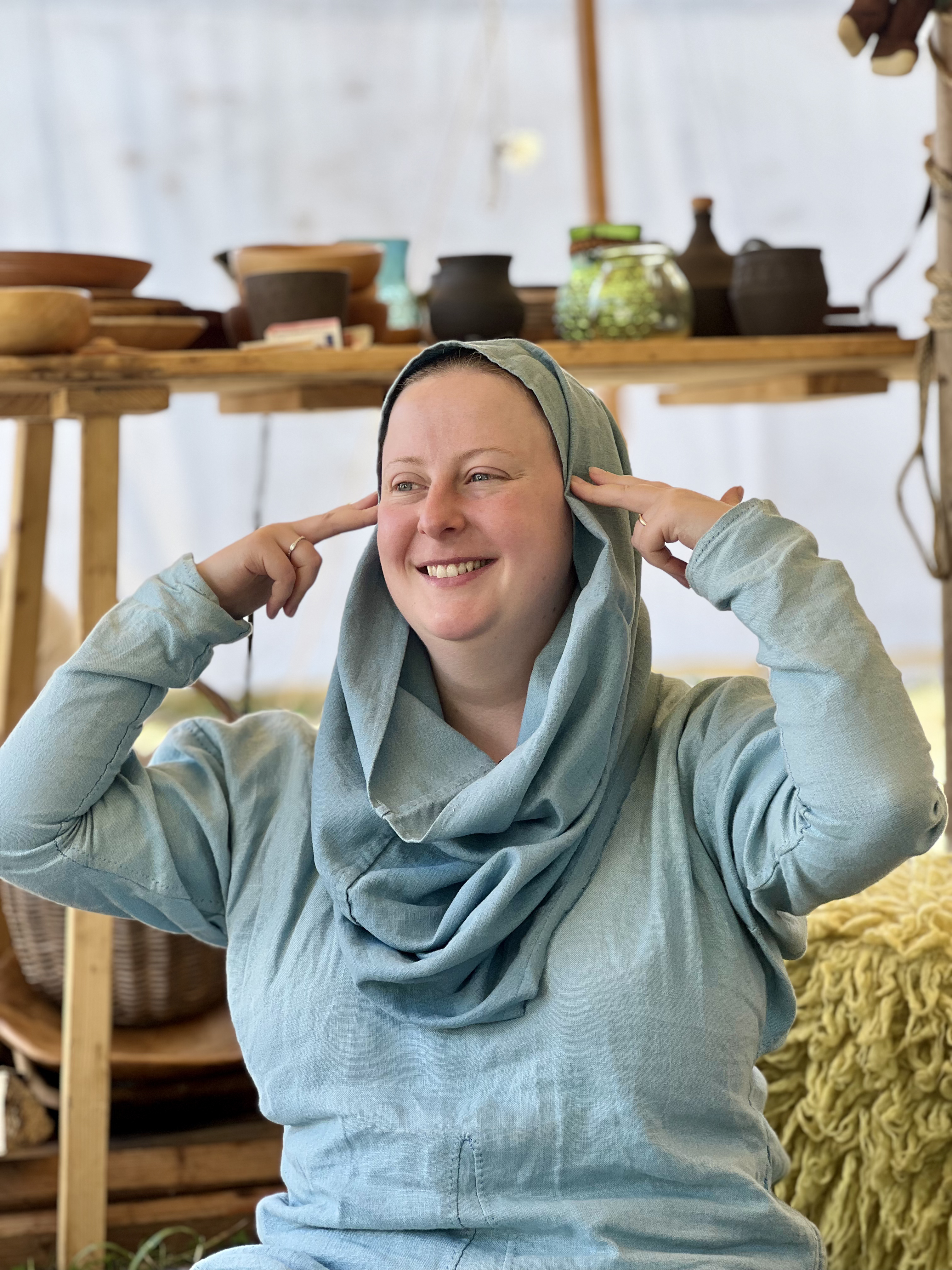
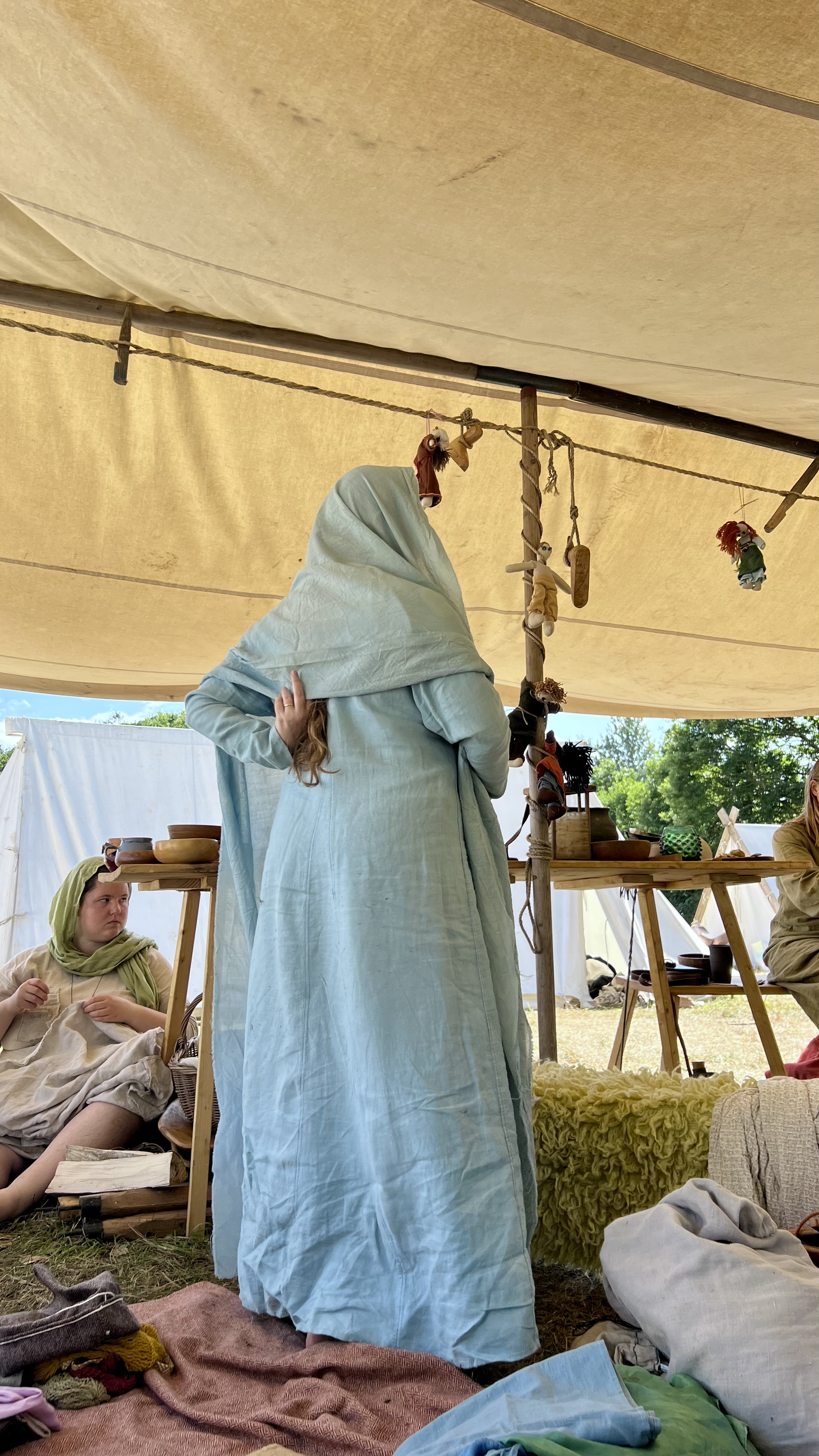
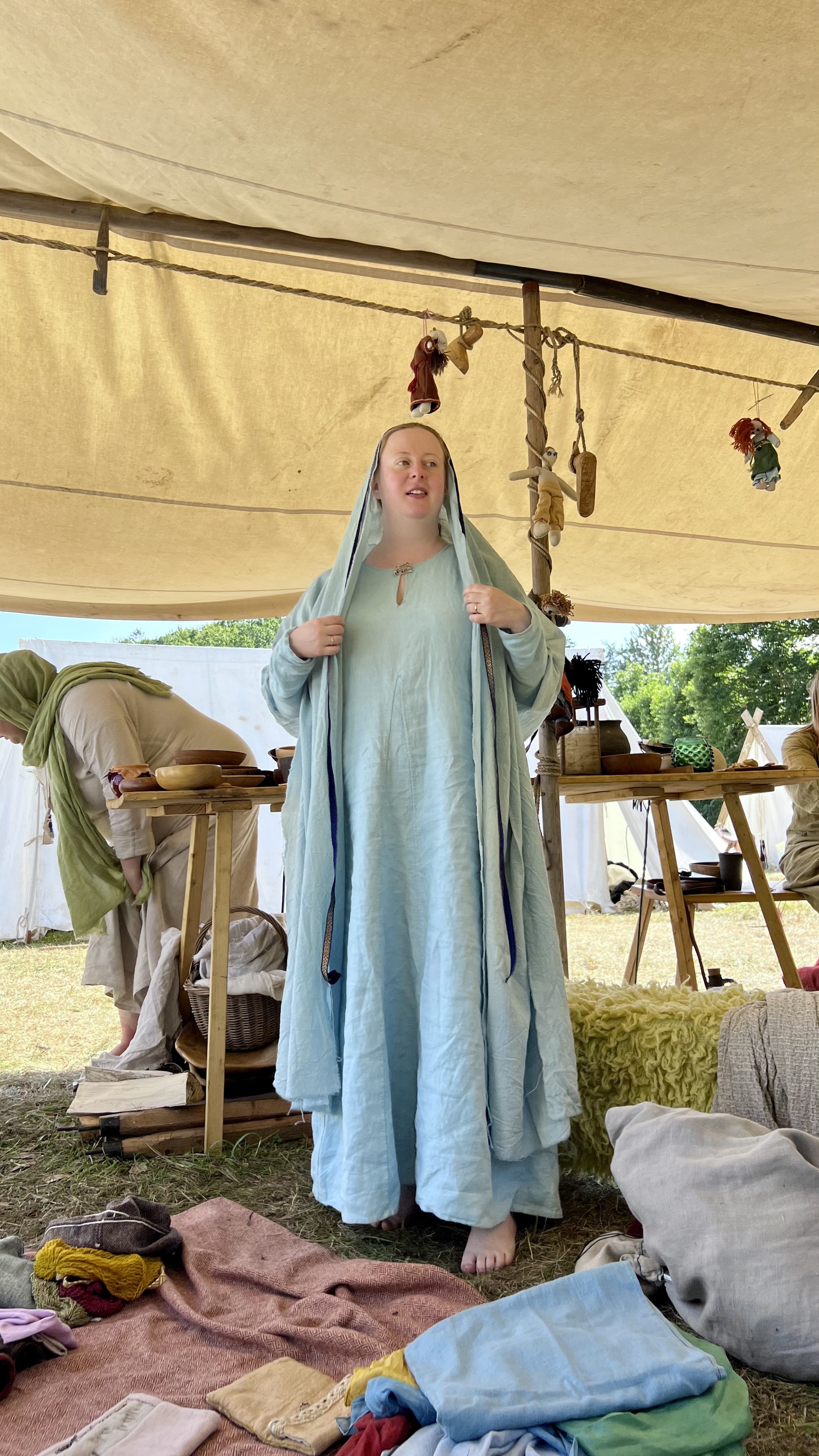
At Sletten (one of the biggest Viking gatherings in Denmark) this summer, I was delighted to host an updated version of my Female Headcoverings talk. This unplugged, casual workshop took attendees on a sartorial journey of the VA, handling my replicas of caps, veils, scarves, hairnets, headbands, pins and shawls. We also discussed more speculative items based on artwork and literature, while having a play with styling and looking into repairs.
Due to the unplugged nature of the talk, it wasn’t practical for me to share a reference list with attendees (I could have printed out paper copies beforehand, but that would have required me to be more organised than I am!) So, here is the digital list. Even if you did not attend the talk, you may find the resources useful: especially if you’re wishing to expand your Viking wardrobe with some evidence-based little hats or step up your veil game.
References
Anglo-Saxon & Continental style veils, including finds in Scandinavia:
Ewing, T. (2006). Viking Clothing. Brimscombe Port: The History Press. Ingstad, A. S. (1992). Hva var textilerne vært brugt til?. In: Christensen, A. E., Ingstad, A. S. & Myhre, B. (Eds). Oseberg Dronningens grav. Oslo: Schibsted. English translation available online: http://www.forest.gen.nz/Medieval/articles/Oseberg/dress/OSEBERG.HTM
Owen-Crocker, G. R. (2010). Dress in Anglo-Saxon England. Martlesham: Boydell Press.Rabiega, K. (2019). Viking Dress Code. Szczecin: Wydawnictwo TRIGLAV.
Voss, O. (1991). Hørning-graven: En kammergrav fra o. 1000 med kvinde begravet i vognfading. In: Mammen: Grave, kunst og samfund i vikingetid. Jysk Arkæologisk Selskab.Walton Rogers, P. (2006). Cloth and clothing in early Anglo-Saxon England, AD 450-700. York: Council for British Archaeology.
O’Cuinneagain-De Bernardi, L. (2025). Viking Age Mending: The Gift That Keeps on Giving. Living Medieval. 1 December 2025, p.6. Available at: https://heyzine.com/flip-book/f8bfb4d4e4.html
Pritchard, F. (1992). Aspects of the Wool Textiles from Viking Age Dublin. In: Bender Jørgensen, L. and Munksgaard, E. (Ed). Archaeological Textiles in Northern Europe: Report from the 4th NESAT Symposium. Copenhagen: Det Kongelige Danske Kunstakademi. pp.93-104.
Pritchard, F. (2026). Re-clothing the Inhabitants of Tenth-century Dublin based on Archaeological Evidence. In: Lester-Makin, A. & Owen-Crocker, G. R. (Eds). Textiles of the Viking North Atlantic. Martlesham: Boydell Press.
Wallace, P. F,. (2016). Viking Dublin. Newbridge: Irish Academic Press.
Wincott Heckett, E. (2003) Viking Age Headcoverings from Dublin. Dublin: Royal Irish Academy.
Hairnets:
Freke, David (2002). Excavations on St Patrick’s Isle, Peel, Isle of Man, 1982–88. Prehistoric, Viking, Medieval and later
Pritchard, F. (1988). Silk Braids and Textiles of the Viking Age from Dublin. NESAT. 2(1), pp.149-161.
Wincott Heckett, E. (1997). Textiles, Cordage, Basketry and Raw Fibre. In: Hurley, M. F. & Scully, O. M. B. (Eds). Late Viking Age and Medieval Waterford: Excavations 1986-1992. Waterford: Waterford Corporation.
Wincott Heckett, E. (2025). Medieval Textiles from Waterford City. In: Williams, M. A. (Ed). Textiles of Ireland. Cork: Cork University Press. pp.267-280.
Tablet weave: Geijer, A. (1938). Birka III. Die Textilfunde aus den gräbern. [Online]. Kungl. Vitterhets Historie och Antikvitets Akademien. Available at: https://archive.org/details/BirkaIII/page/n1/mode/2up [Accessed 20 August 2026].
Pritchard, F. (2021). Evidence of tablet weaving from Viking-age Dublin. In: Pritchard, F. (Ed). Taken from Crafting Textiles (Tablet Weaving, Sprang, Lace and Other Techniques. Oxford: Oxbow Books.
Pins:
Mainman, A. J. and Rogers, N. S. H. (2000) Craft, Industry and Everyday Life:
Unimus.no. (2026). Collections search. [Online]. Unimusportalen. Available at: https://www.unimus.no/portal/ [Accessed 20 August 2026].
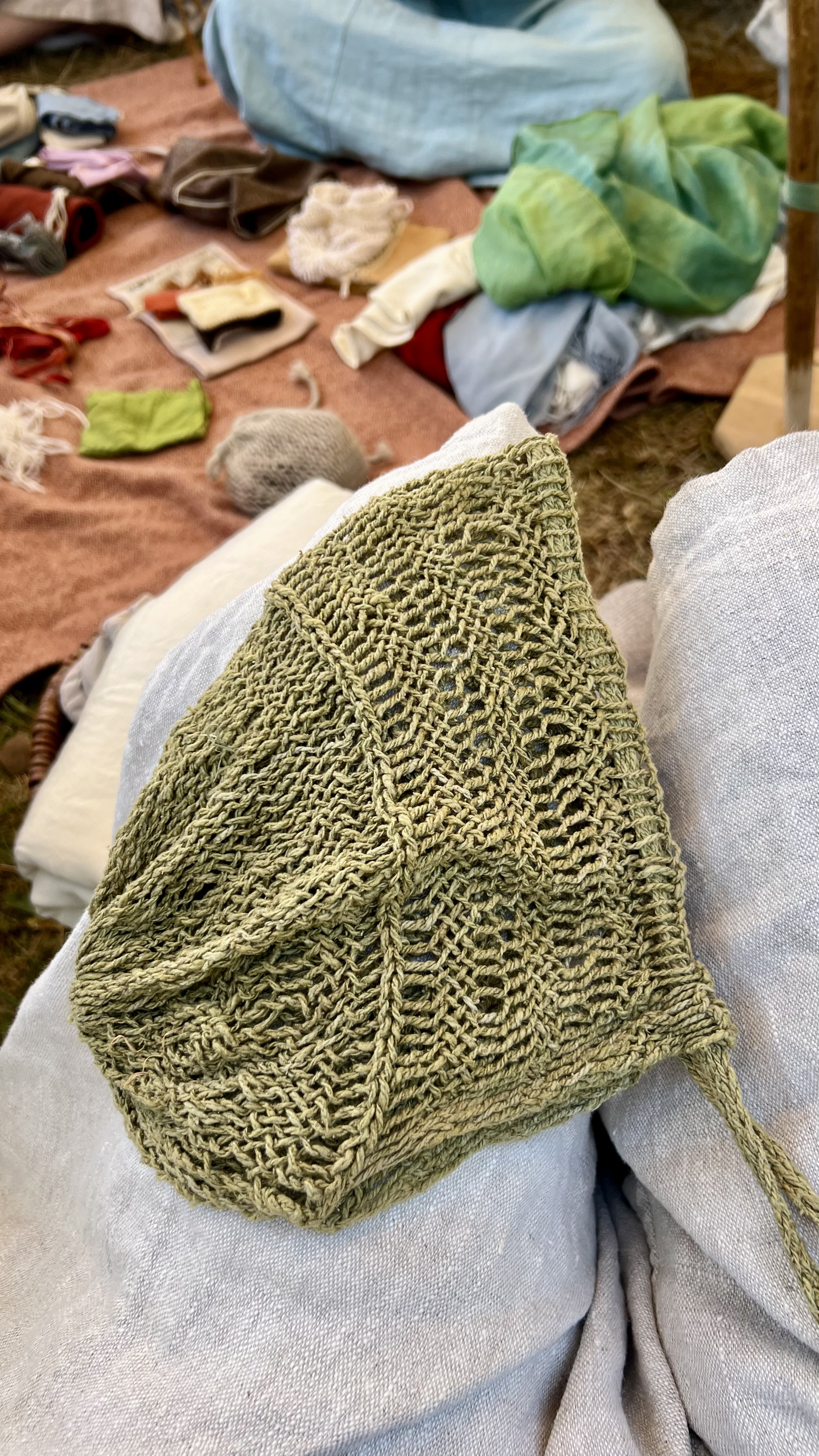
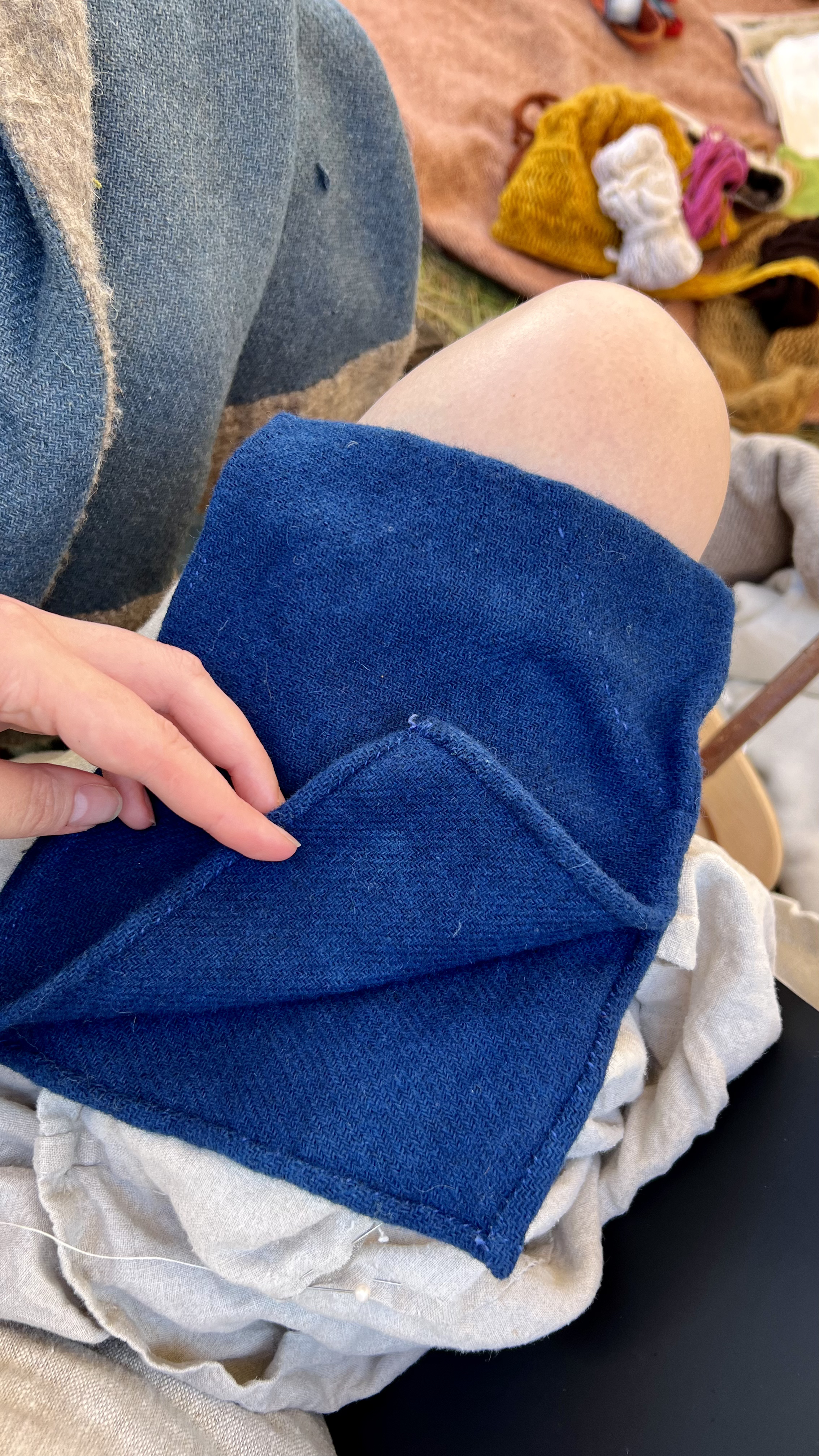
Featuring an unintentionally-high rate of blue items, including my WIP “Continental-style veil” inspired by very light textile fragments found with the lady at Hørning.
This list may end up being updated as and when I add new items to the workshop. Next year, I hope to host a male version, focusing on male hats and headbands we believe were being worn in Early Medieval Northern Europe. If that’s something that would interest you, please comment letting me know- I need all the encouragement I can to get sewing!
If you liked this article or found it handy, please share it with your friends and follow my blog to get updates of my future work. You can also follow me on Instagram and Facebook for more regular, informal updates and musings. Even a comment or a like gives me a little boost!
At the beginning of this year, I gave a talk on the clothing of Viking Age warrior women for the inaugural “Shieldmaidens: Women in Western Style” online conference. I repeated this talk in person in Denmark last week and it was both nerve-wracking and good fun! As is usually the case, repeating the talk with a new audience allowed for further reflections on the topic and fresh perspectives from attendees.
In passing, I discussed my idea that the Hårby valkyrie figurine could be inspired by Classical Greco-Roman depictions of Athena/Minerva and we had a great discussion about the practical applications of these speculative garments interpreted from artwork. I’m not even sure that *I* am convinced by my theory, but I think the topic may be a fun one to write a full article about- let me know if you’d be interested.
Piraeus Athena statue (4th century BCE) side-by-side with the Hårby Valkyrie figurine (800–900 CE).
As this iteration of the talk was (mostly) unplugged, I took e-mail addresses for anyone wanting my short list of references. I thought I’d share the love and simply post these on my site, so anyone interested in this or my other talk/workshop on “Female Headcoverings of the Viking Age” (references will be published for this and linked here ASAP, watch this space!) can check out my references for further reading.
References:
Anonymous. The Story of Burnt Njal. Translated by George W. DaSent (1861.) Icelandic Saga Database, Sveinbjorn Thordarson (ed.), [Accessed 30 January 2026.] Available online: http://www.sagadb.org/brennu-njals_saga.en
Gardeła, L. & Pentz, P. & Price, N. (2022). Revisiting the ‘Valkyries’: Armed Females in Viking Age Figurative Metalwork. Current Swedish Archaeology:30. pp.95-151. .
Hedenstierna-Jonson, C., Kjellström, A., Zachrisson, T., Krzewińska, M., Sobrado, V., Price, N., Günther, T., Jakobsson, M., Götherström, A., & Storå, J. (2017). A female Viking warrior confirmed by genomics. American journal of physical anthropology, 164(4), 853–860.
Jesch, J. (1991). Women in the Viking Age. 3rd ed. Woodbridge: Boydell Press.
Wåhlander, L. (2020). 10th century The Warrior Woman. In: Wåhlander, L. (Ed). Buried at Birka. Birka: Birka Vikingastaden. pp.91-176.
If you liked this article or found it handy, please share it with your friends and follow my blog to get updates of my future work. You can also follow me on Instagram and Facebook for more regular, informal updates and musings. Even a comment or a like gives me a little boost!
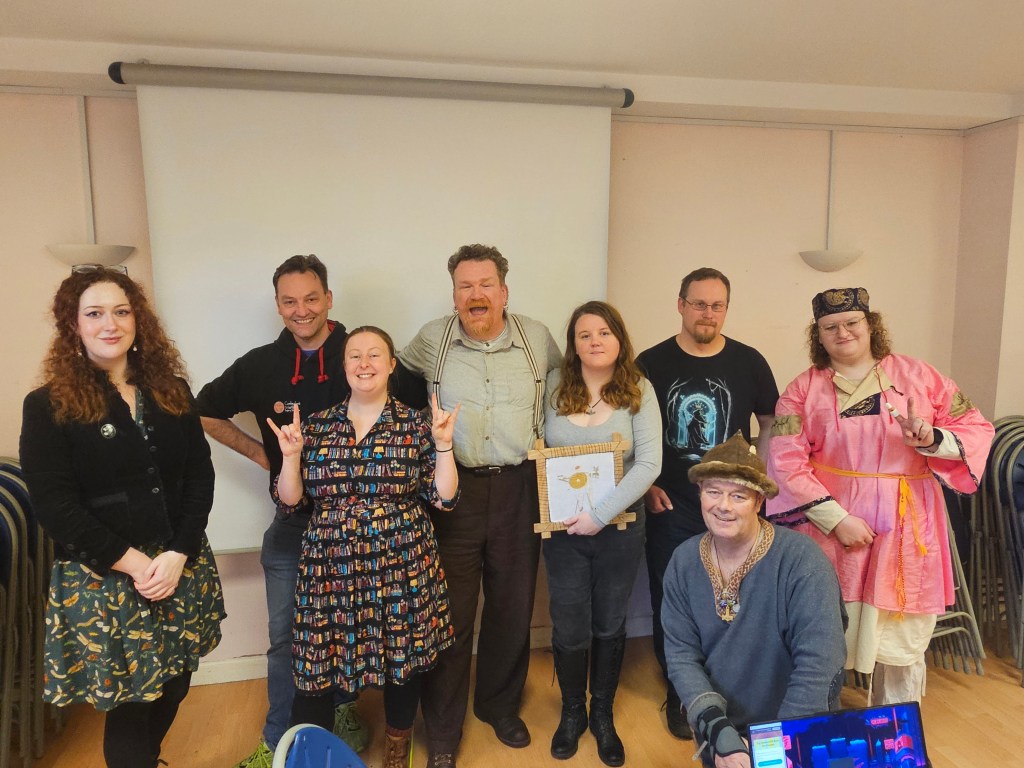
Our fabulous speakers, poster presenters and crew (minus Mary, Eric and my sainted mother Jo!)
The year has almost come to a close and 2026’s edition of my conference VALHAll:A (Viking Age Living History for All: Assembly) is fast approaching- the date is set for Thursday 19th February 2026. The programme will be published and ticket sales opened in mid January, so keep your eyes peeled on my social media.
To whet your appetite, the full videos of all the 2025 talks are now on YouTube. You can find them in a playlist here (please like them, comment any questions or queries and share to show the love!)
(It only seemed fair that I fell on my weaving sword and went first, so prepare yourselves for my dulcet Yorkshire tones.)
The running order was as follows:
Leah O’Cuinneagain-De Bernardi (myself) – “Hedeby Hygge: Domestic Textiles in the Viking Age Home”
Dr Mary Garrison – “Home and Away in the 8th Century: Home nostalgia and Homesickness in the World of Alcuin”
Adam Parsons – “Keeping Up with The Ragnarsons: The Archaeology of Early Medieval Homes in North West England in Context”
James Wright – “Finding Your Way Home: Theories on Viking Era Navigation”
Trix Randerson – “Home is where the Hack is: Contrasting Uses of Insular Metalwork in Britain and Scandinavia”
You can also watch all the 2024 talks if you fancy, they have their own playlist for your viewing convenience.
I’ve been quiet on my website in 2025, but hope to publish a lot more in 2026. I’ve got some BIG projects in the works; a few invitations to speak online and at events and of course, some articles to publish here, there and everywhere. You can hear me speak next at the inaugural Shieldmaidens: Women Warriors in Western Style online conference on Sunday 1st February, tickets are on sale here.
I hope you all had a lovely holiday season and I wish you all a peaceful and fulfilling New Year. See you online or at a market near you!
My Instagram message request folder is a place I approach with caution and suspicion. Social media connects us and brings us together, but it also attracts bots and an alarming number of beautiful women in my area (and weird men sending me anatomical photographs.)
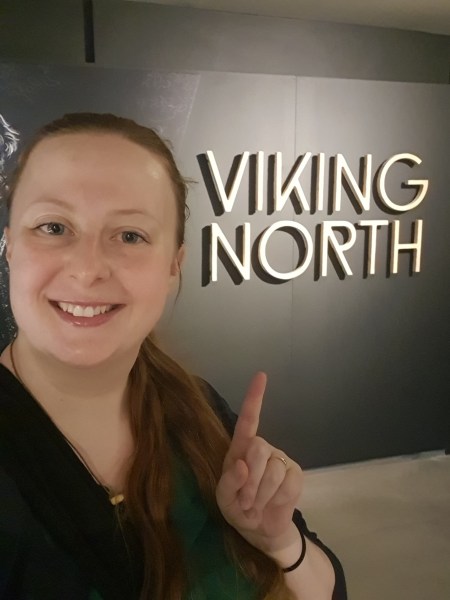
This week, however, was different. The Yorkshire Museum contacted me to kindly invite me to the press preview of their new exhibition, Viking North. Two days before it opened to the general public on Friday 11th of July!
I couldn’t quite believe my luck: I grew up in York and frequently visited the museum as a little girl to pore over the fossils and their fantastic collection of archaeological finds. The idea that I could be inches away from Neolithic arrowheads or a Roman oil lamp that was made, touched, held and discarded by York citizens of the past blew my little child mind. Museums are magic to me and despite having visited MANY, I will always have a special fondness for the ones in my hometown.
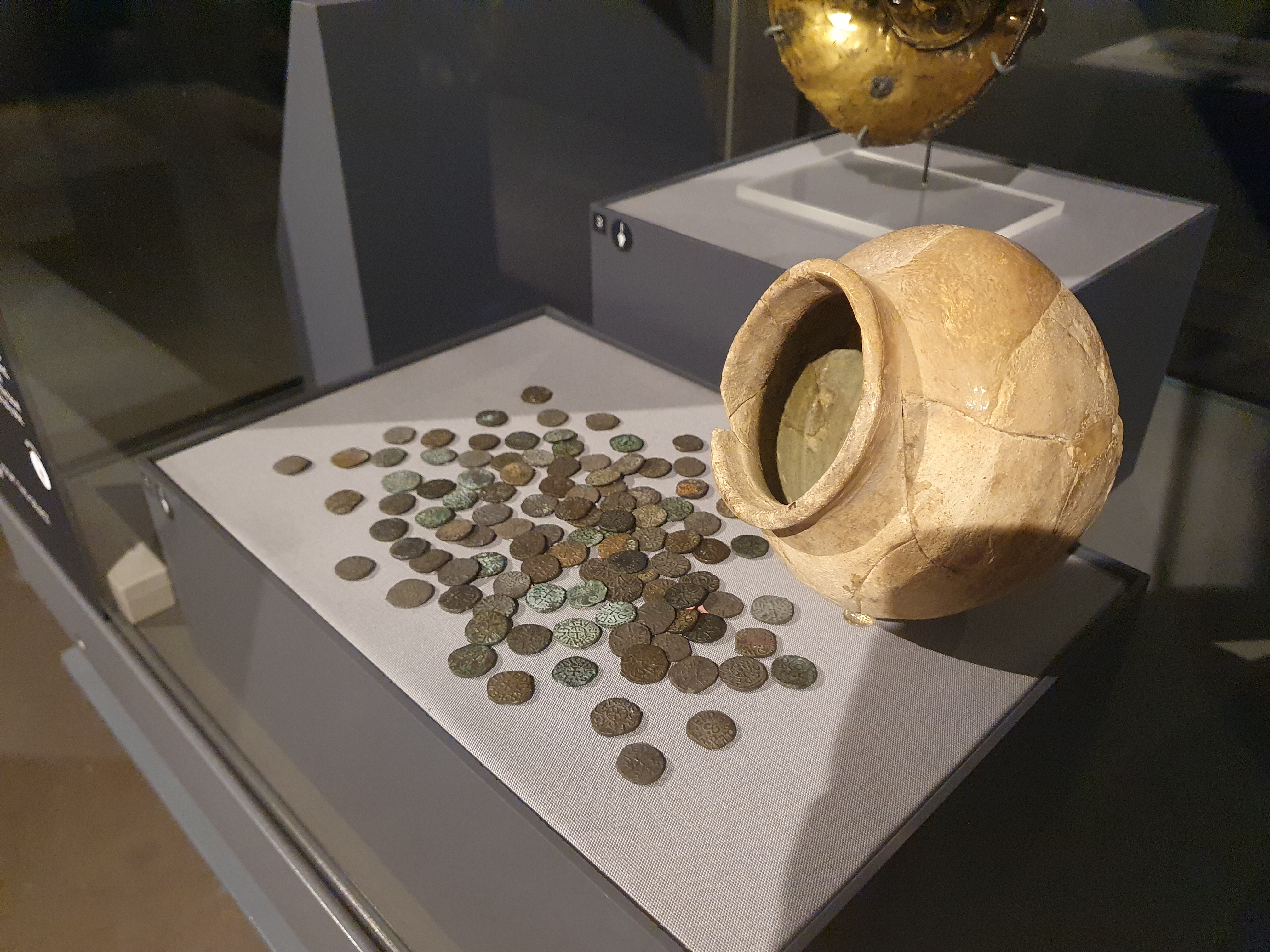
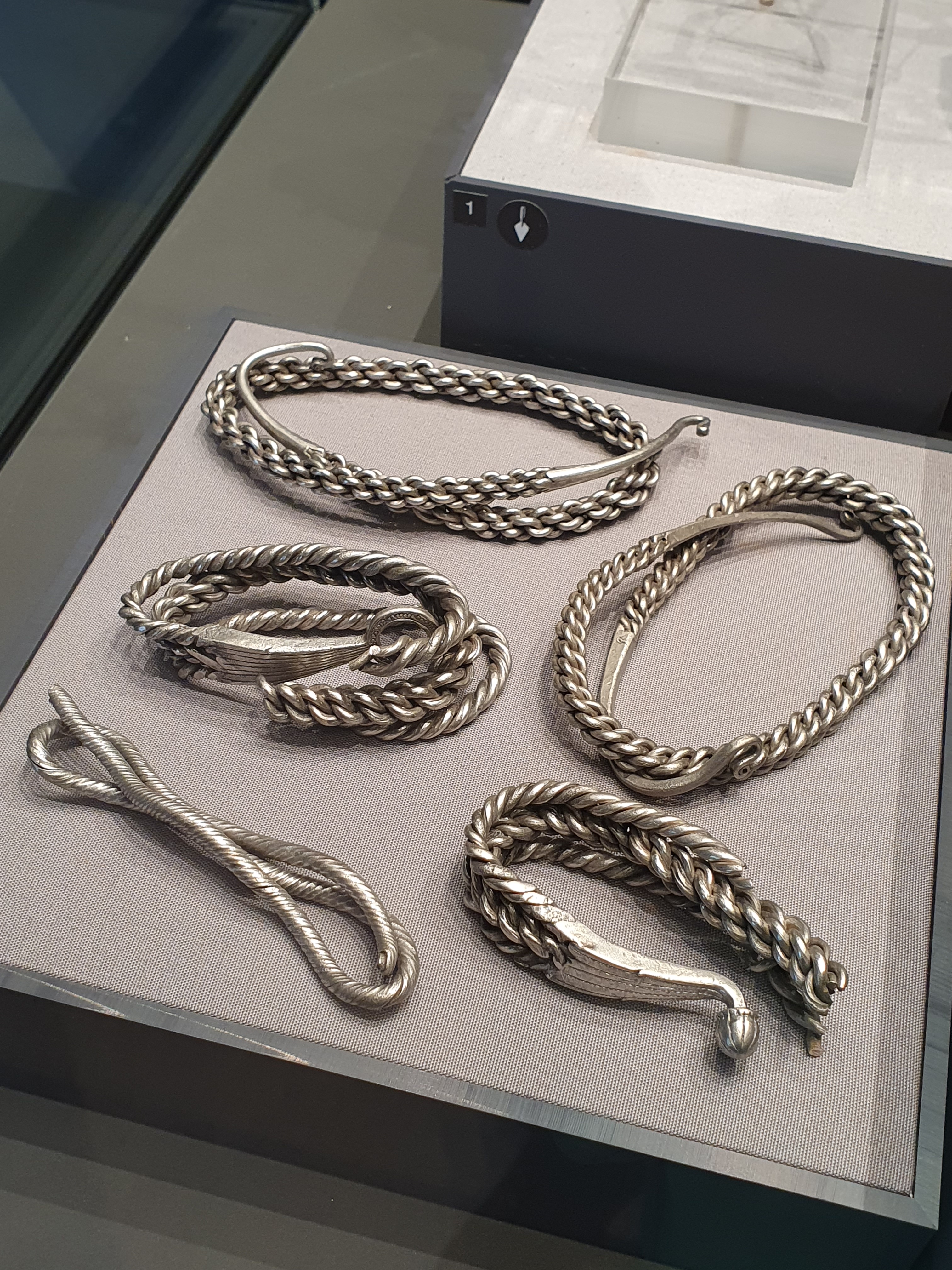
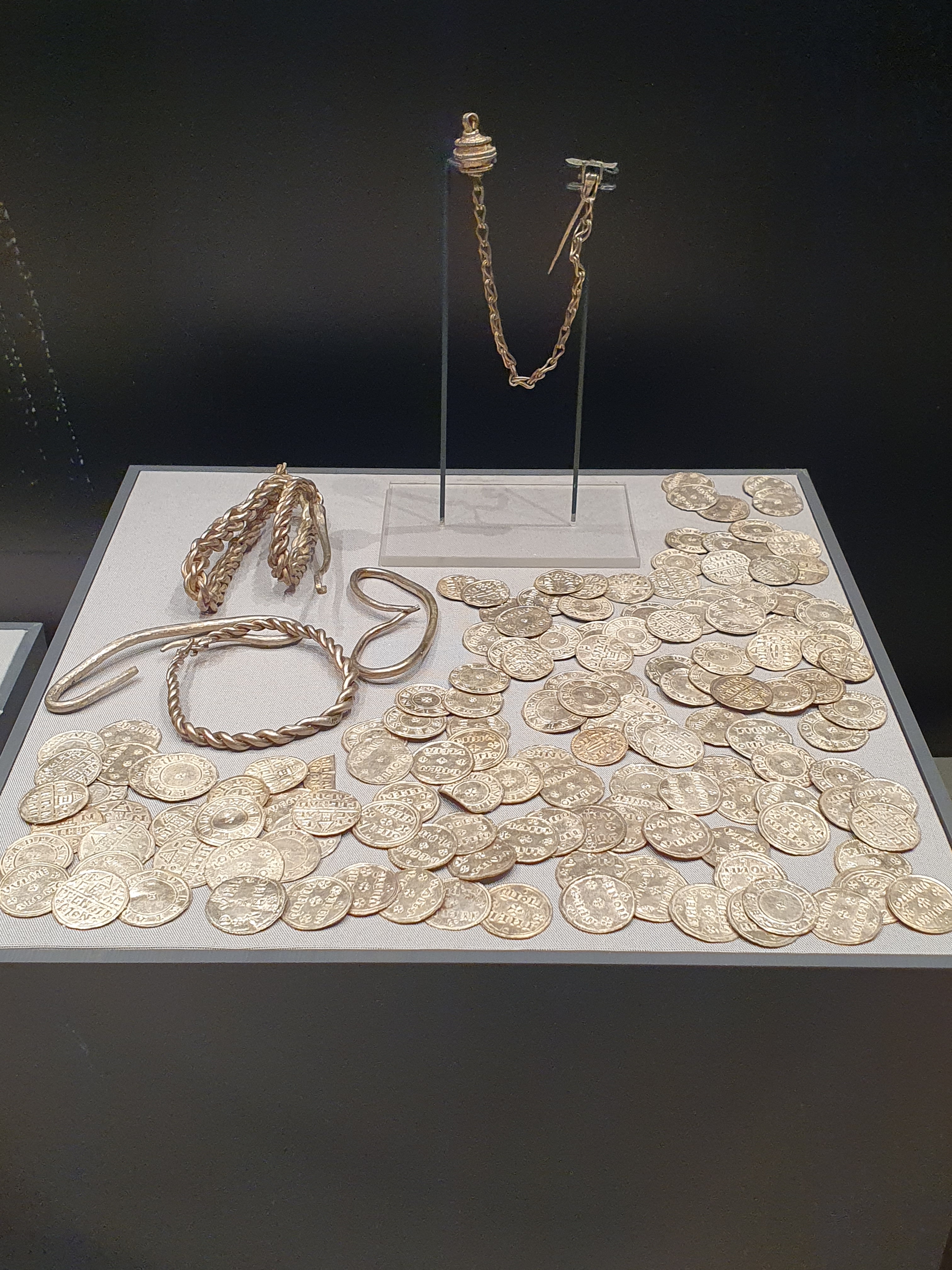
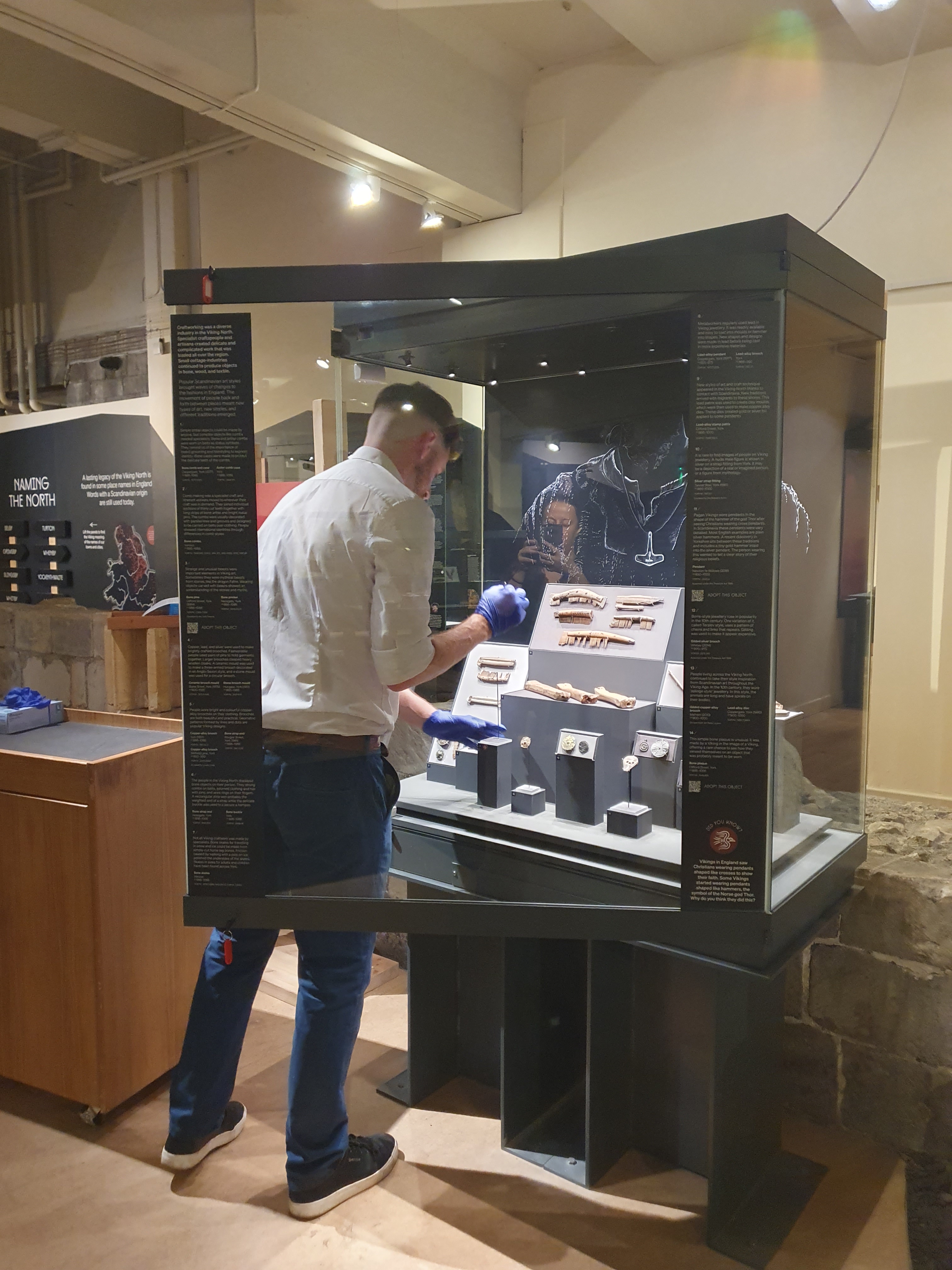
Viking North is the culmination of years of work by a multidisciplinary team and replaces the previous Medieval gallery in the museum’s basement. I was greeted by Andrew Woods, senior curator of the Museum, who gave us an introduction to the exhibition and the ideas behind it. With the Bedale Hoard as an example, he described the flow of wealth in the Viking Age, how silver migrated along with people from across Europe and even from the Islamic world. This is a topic that has been discussed extensively in work by Dr Jane Kershaw, one of the exhibition’s advisory panel: she was joined by Dr Steve Ashby, Prof Dawn Hadley and Prof Matthew Townend.
If you are familiar with Viking Age studies, you will recognise this team as a band of absolute academic juggernauts! Their guidance and the curatorial team’s love for the period has resulted in a well-rounded presentation, with a good balance of text for us nerds and spacious display to really let the artefacts sing.
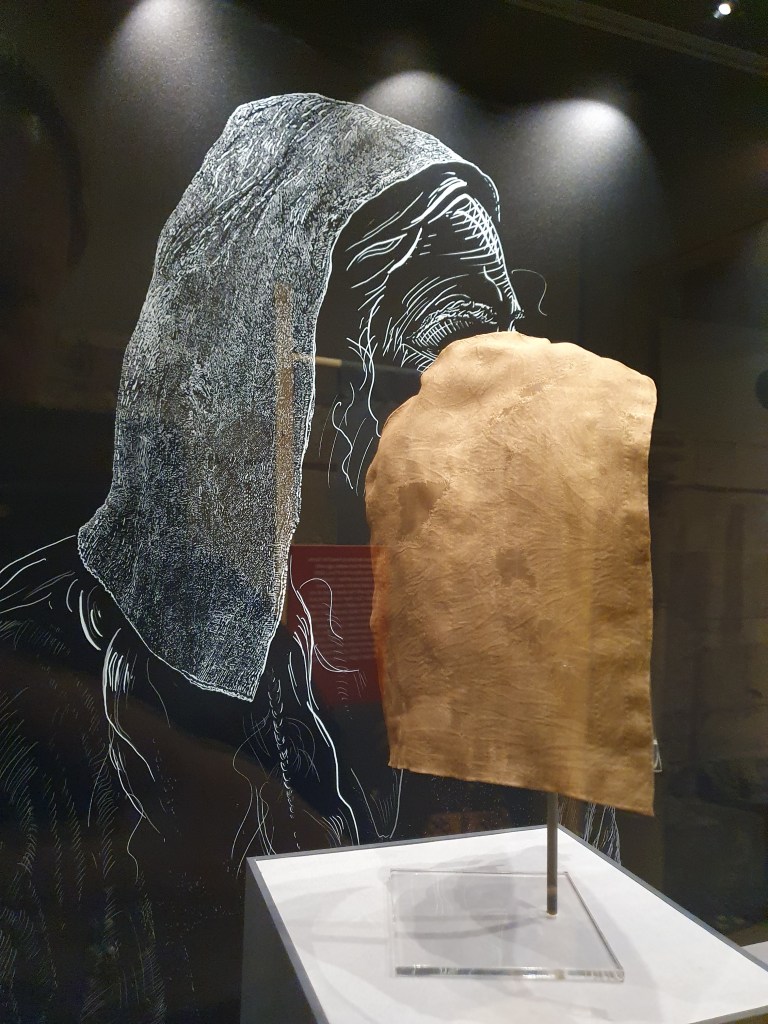
Curator Andrew Woods, showing us the newly rehoused York silk cap.
So, what exactly can you see in Viking North?
Hoards, glorious hoards! The Bolton Percy Hoard, Bedale Hoard and the Vale of York Hoard are on display, along with many other shiny treasures of hacksilver, coins and jewellery from across the Danelaw.
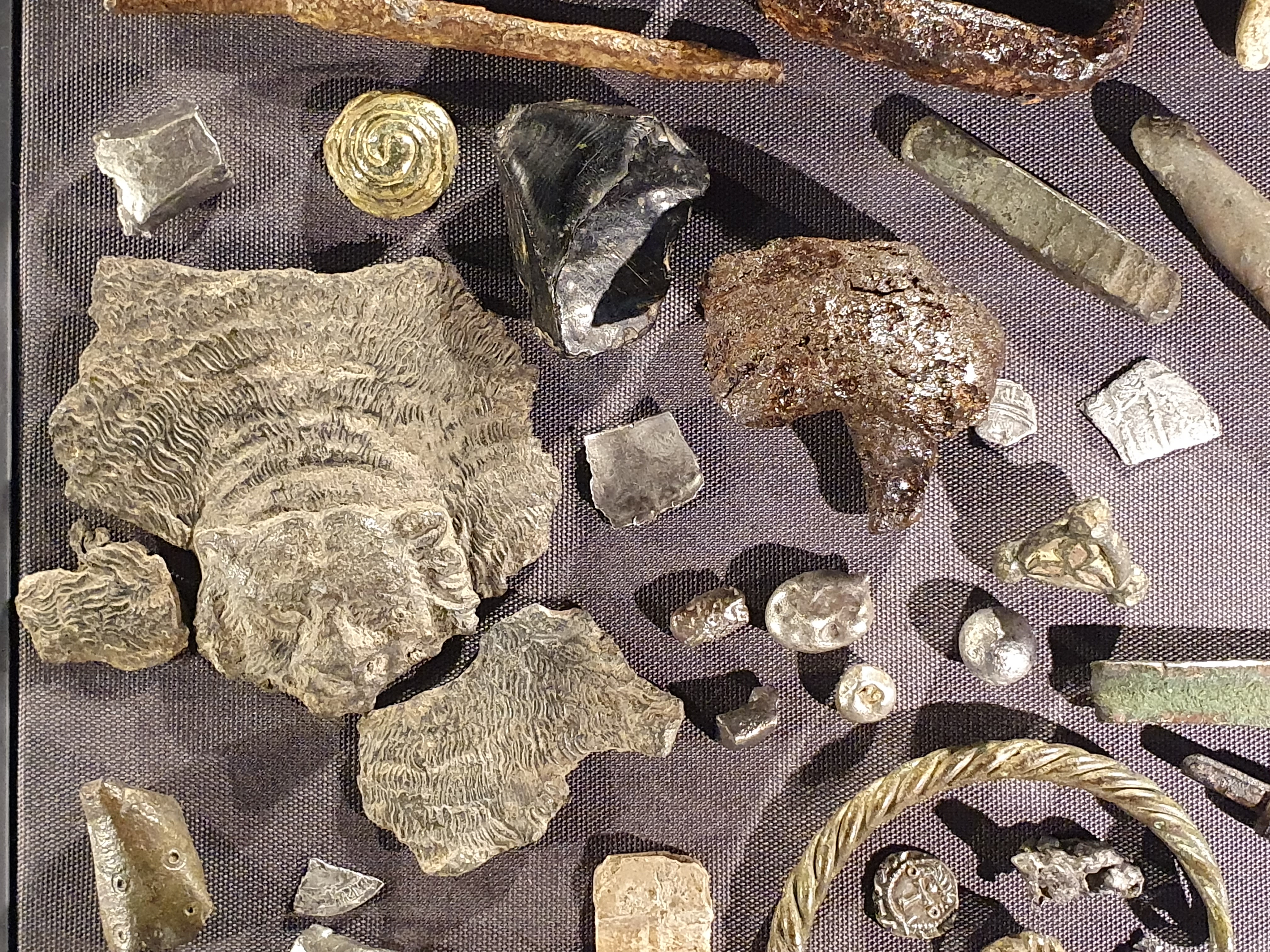
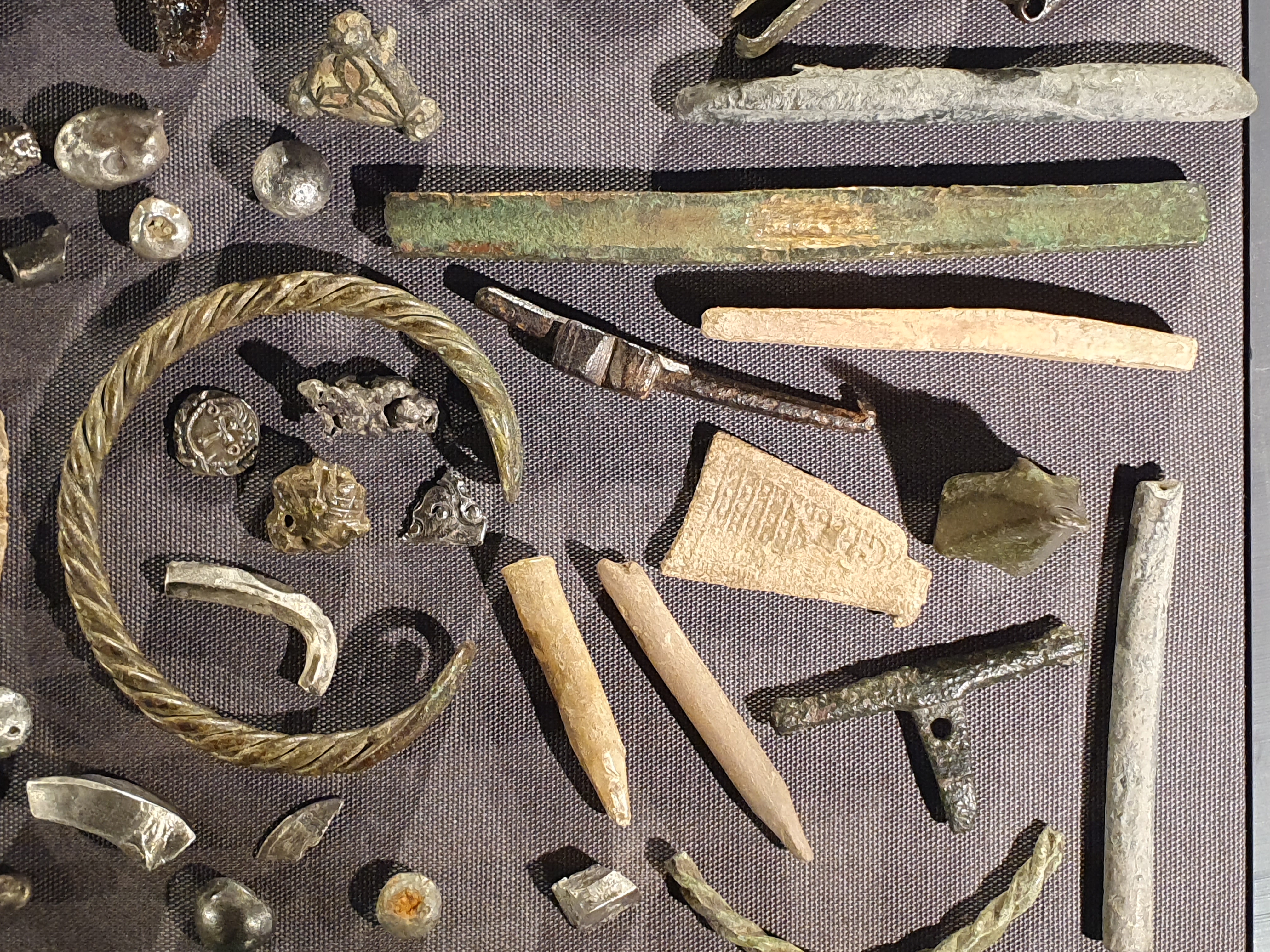
Items found at the Great Army camp at Aldwark. These are remarkable and a little distinct from items found in Jorvík, as the camps were not permanent domestic spaces. As such, they’ve remained elusive and have their own signature items that are commonly found there (think lead gaming pieces, hackmetal, Insular and Anglian jewellery that may be repurposed.) It was great for me personally to see this collection, as my friend Trix Randerson has written extensively on the camp at Aldwark and gave multiple talks on aspects of these objects at my living history conference, VALHAll:A!) You can watch one of his talks (for free) on the use of dress accessories by folks in the Great Army here.
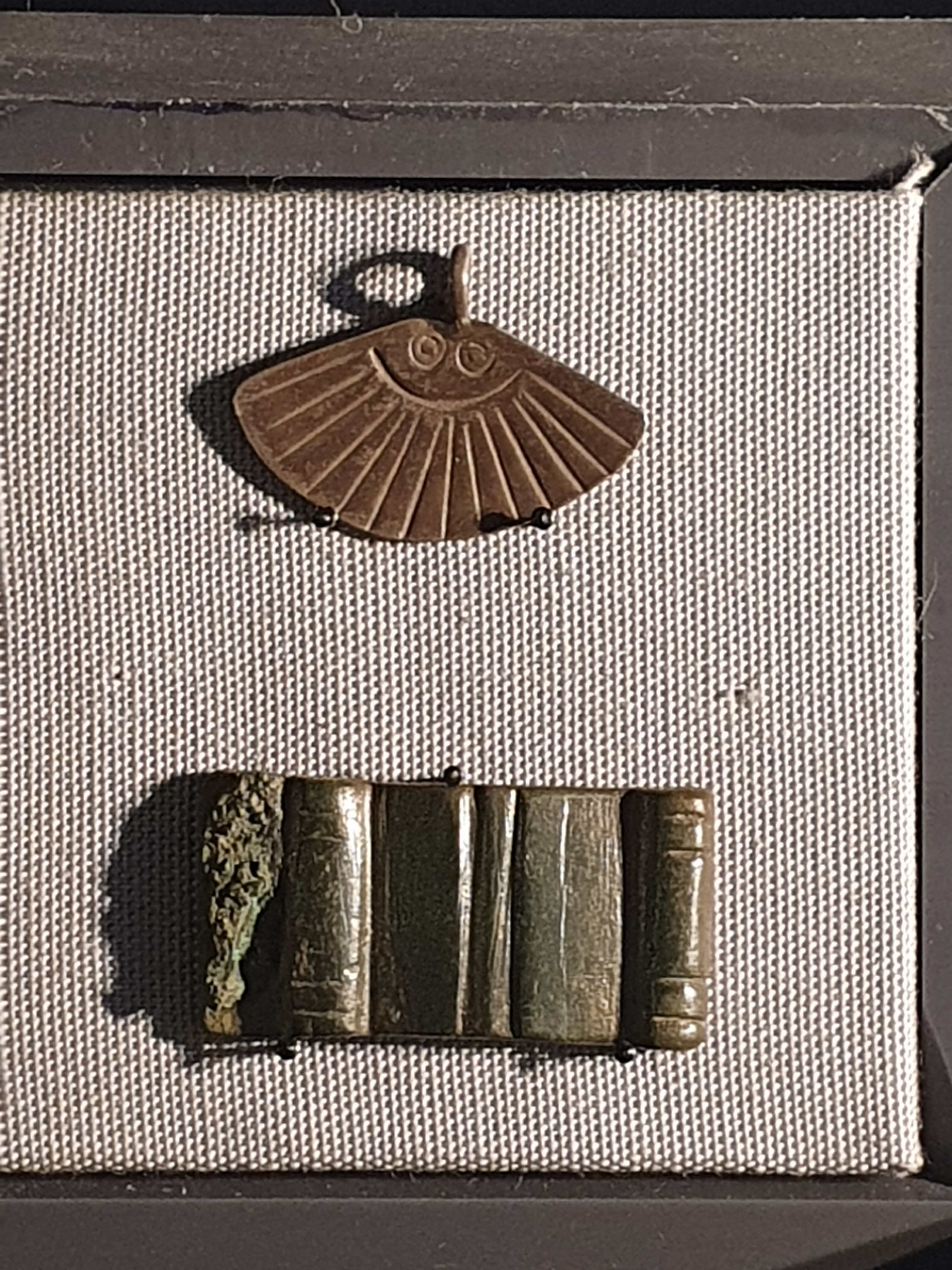
Many items from Viking York that have not been exhibited before, at least not in my lifetime! Most excitingly for me, there were quite a few bits from Hungate. I’ve been working on a speculative Hungate impression for a year now and seeing some of these items “in person” was touching, when I’ve spent so long looking at line drawings in ancient grey lit.
Beautiful Anglo-Scandinavian stonework, some pieces borrowed from churches and some already in the museum’s collection. The Sigurd stone is a favourite of mine!
The famous York cap is now rehoused in a much better, more spacious cabinet, worthy of its majesty. This is good, as it’s one of the only textile elements of the collection on display.
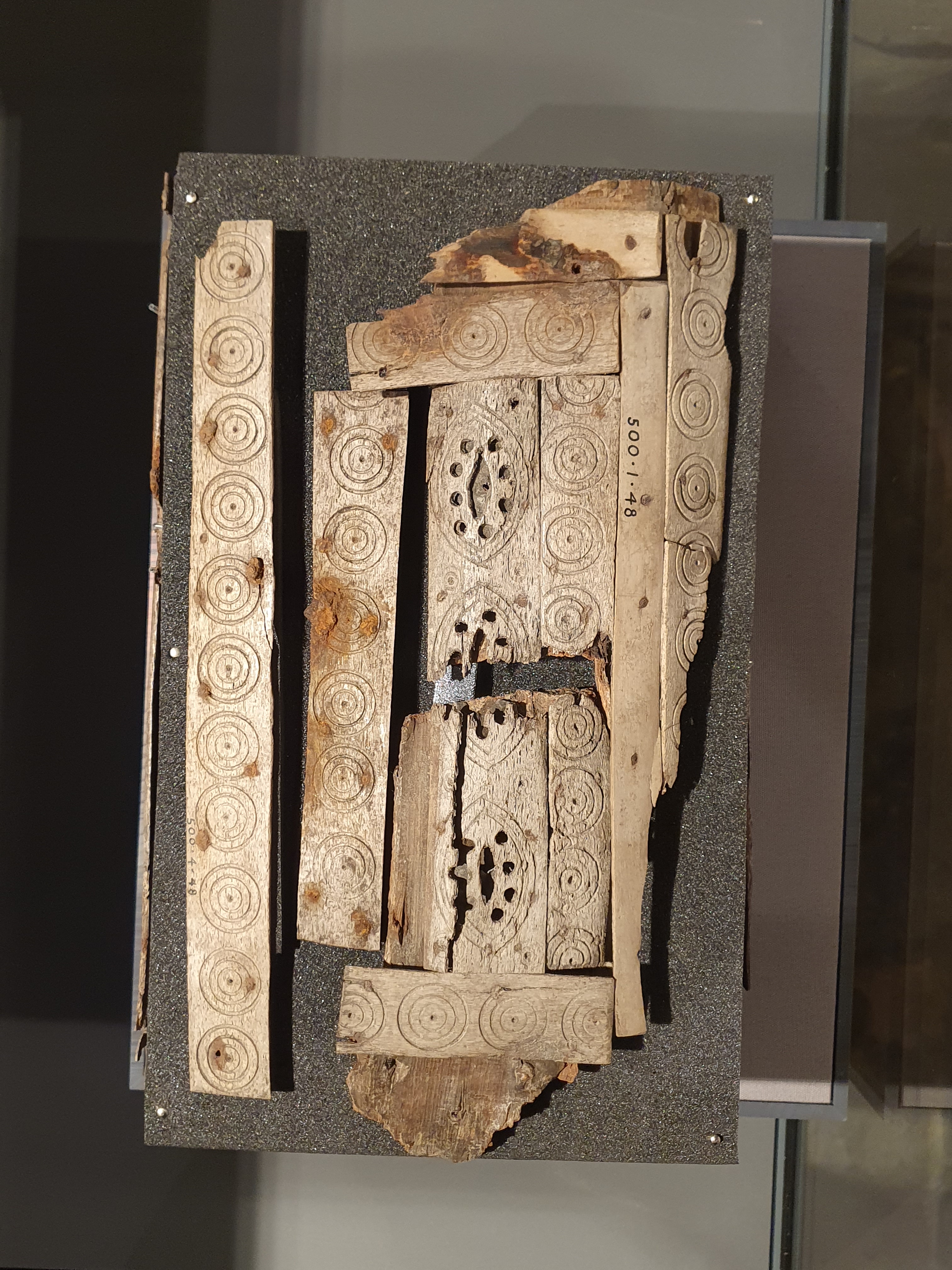
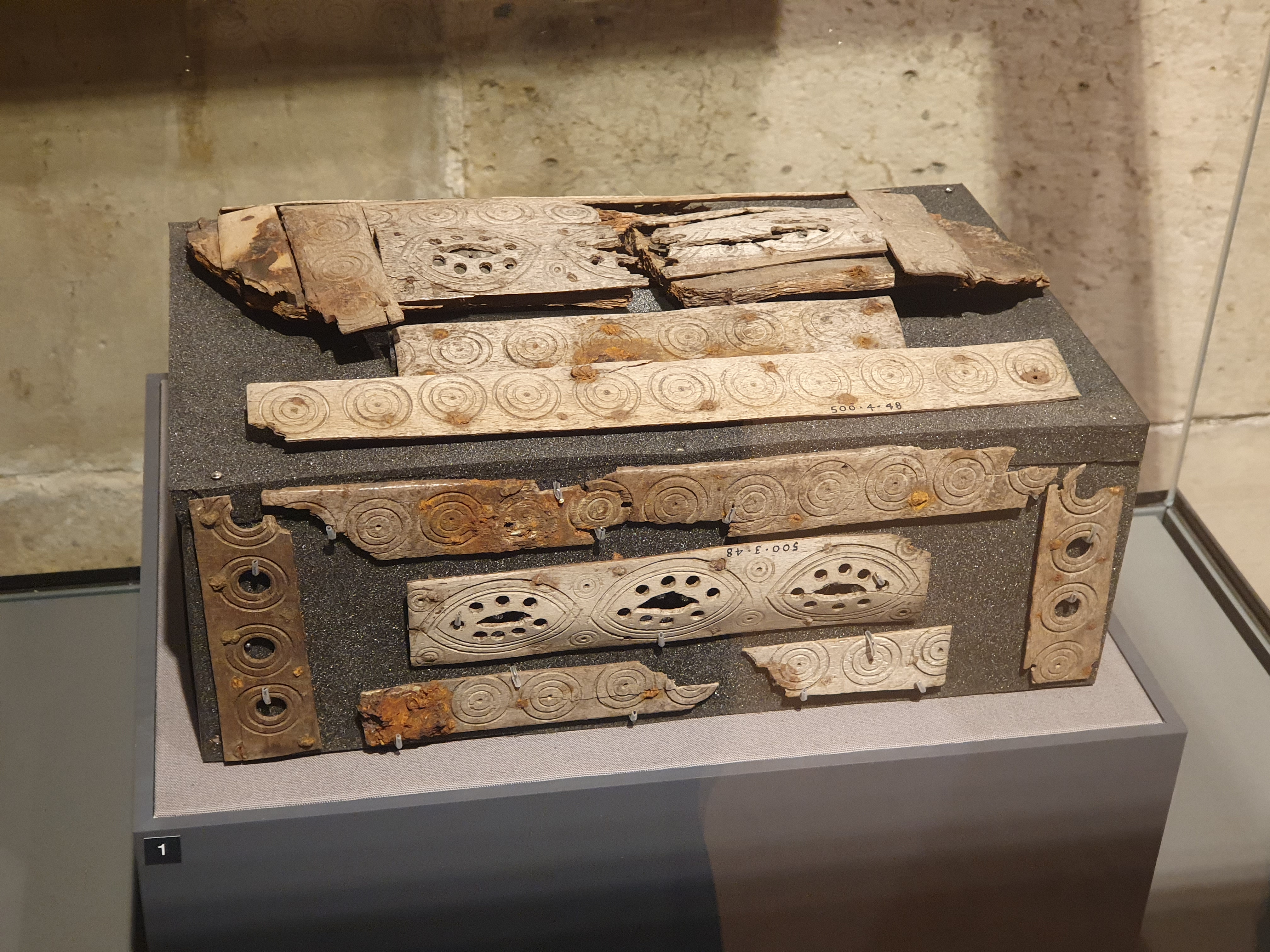
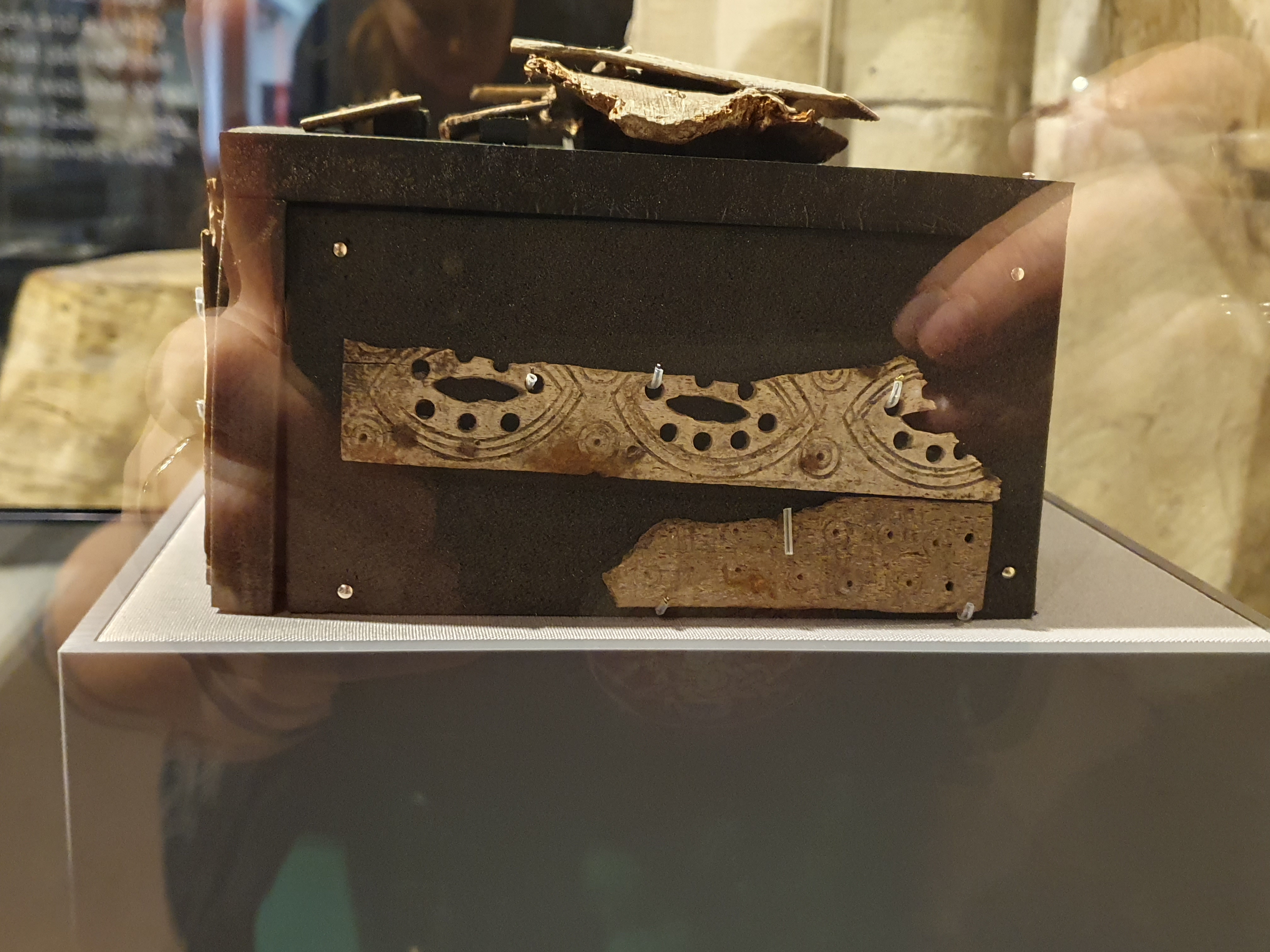
One of the stunning bone-topped caskets/boxes found in York. Remains of two such box lids have been found in York and they seem to have been a popular item in Viking Age towns, with similar examples being found in Dublin and Waterford just to name a few.
An honorary special mention: I asked YMT’s Curator of Archaeology Dr Adam Parker for his favourite artefact on display. Without hesitation, he showed me this STUNNING mjolnir pendant found in 2018 in Newton-le-Willows:
Made from silver with a gold inlay, it is simple but elegant in design. Even more excitingly, it is totally unparalleled: no pendants exactly like it have been found anywhere. Dr Parker explained its significance: Thors hammer pendants gained popularity in Scandinavia after the Christian community there showed their faith with cross pendants. Scandinavian examples are often extremely ornate, while Anglo-Scandinavian mjolnirs are generally plain silver. With a simple shape but precious gold inlay on its surface, the new Newton-le-Willows example straddles these two styles.
The original owner wanted those he encountered to know who he was, what he believed in and his high social standing. Objects like this are so special for this reason: they transport us back in time and give us a fleeting view of a stranger, separated by 10 centuries. The pendant was acquired by the Museum barely a month ago and it has never been exhibited before publicly, so it was a particular honour to see it up close!
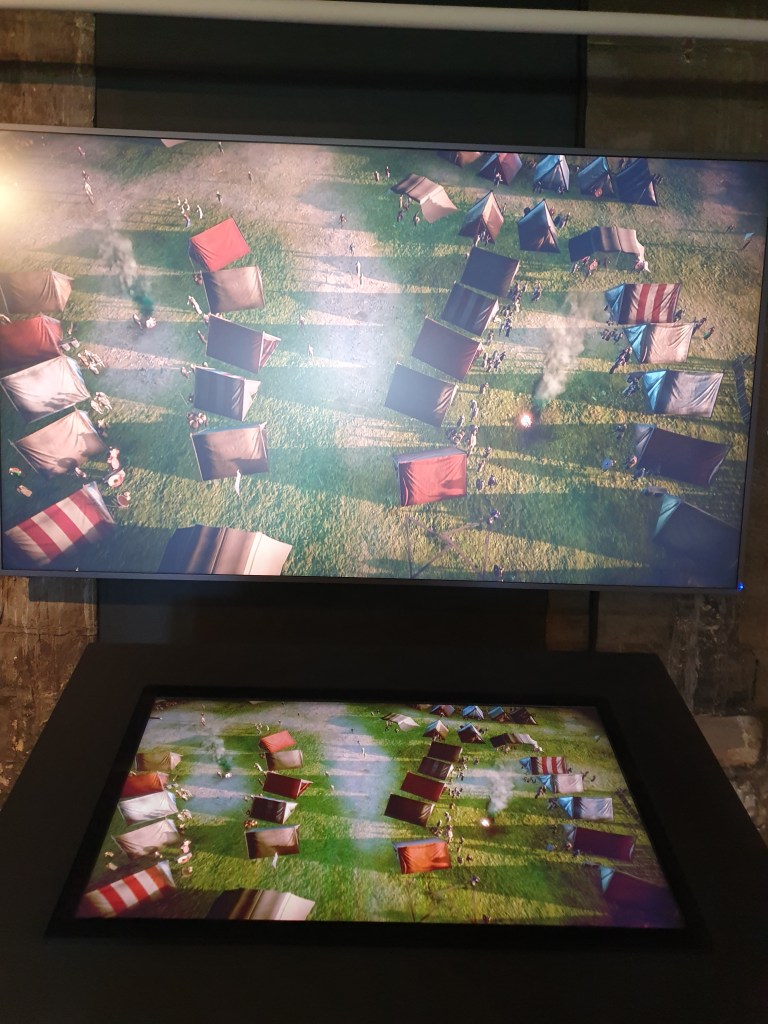
There’s so much more to see and I spent an extremely happy hour or two marvelling at it all and exploring the more interactive elements of the exhibition. They’ve added a digital installation of a “raven’s eye view” of the camp at Aldwark, something I loved zooming in on and watching folks going about their daily business. You can also learn to spell your name in Younger Futhark (my MA by Research in Linguistics did not diminish my urge to play with the runes, though my sense of professionalism restrained me from writing something crude.)
I was the only living historian present at the preview, but I was informed that this summer, a team of dedicated costumed interpreters from History Riot will bring the gallery to life for visitors. (You’ll have to check The Yorkshire Museum’s social media/contact them for specific dates to see them, to avoid disappointment!)
Entry to Viking North is included in your ticket price and will be on display for two years. It’s suitable for all ages and attention spans. There’s plenty to see and do, whether you’re a little one who wants to learn about Viking life or a big nerdy one like me, who wants to take my time reading about Viking life.
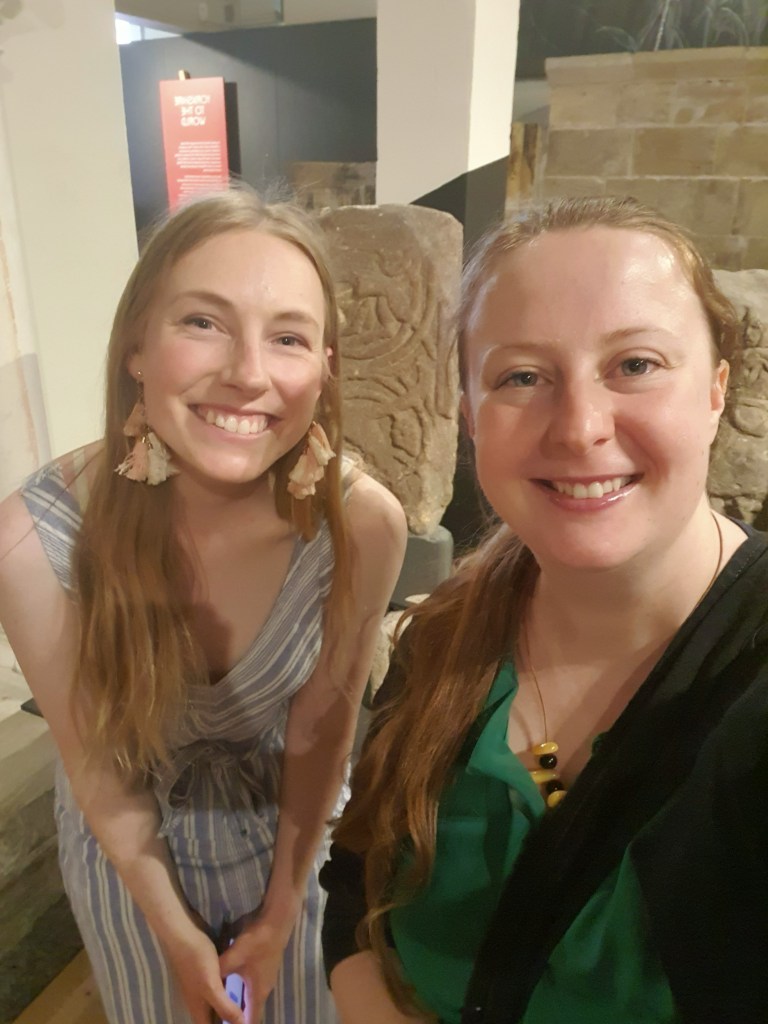
I also got to meet some fellow big nerds, including the lovely Giselle @awanderingarchaeologist !
A huge thank you again to The Yorkshire Museum for inviting me to see this fantastic new exhibition, it’s a memory I’ll cherish for a long time!
If you liked this article, please share it with your friends and follow my blog to get updates of my future work. You can also follow me on Instagram and Facebook for more regular, informal updates and musings.
This is a quick wee article, because I am extremely busy with commission work right now! Last weekend, I travelled to the annual Battle of Hastings event down in Sussex. I’ve taken part about 9 times over the years, so Eric and I made a compromise that I would attend only on the Saturday. Sunday would be reserved for touristy shenanigans and japes.
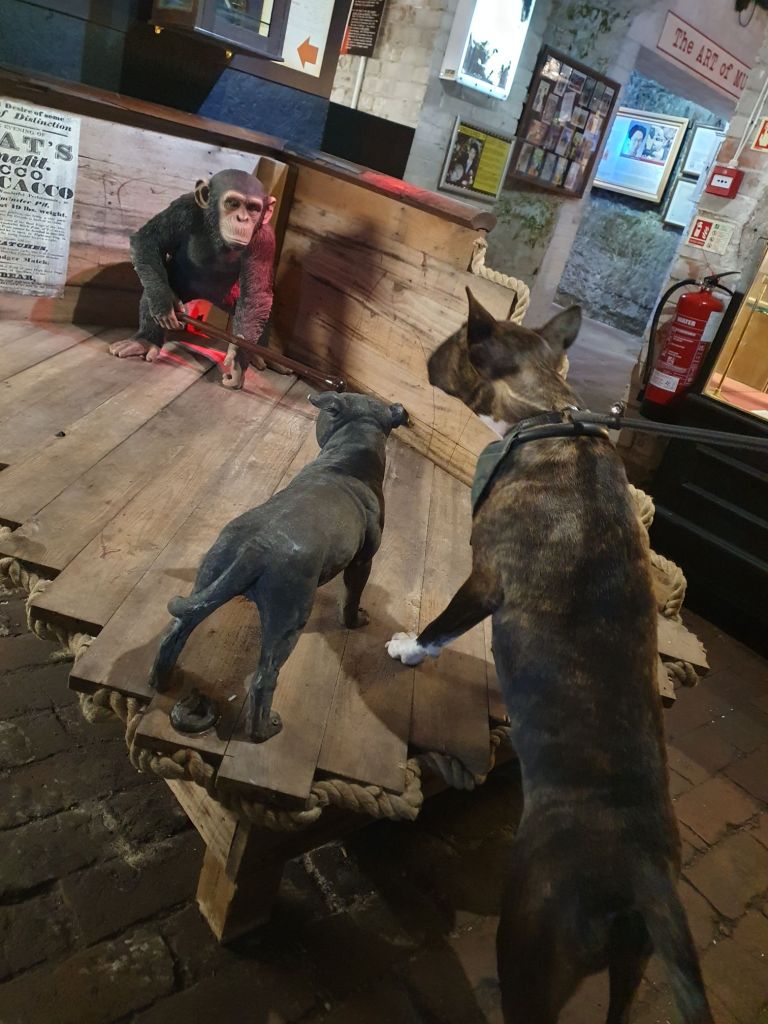
Touristy shenanigans, which here means triggering Peanut’s ancestral bloodlust against armed apes at the “True Crime Museum” in Hastings.
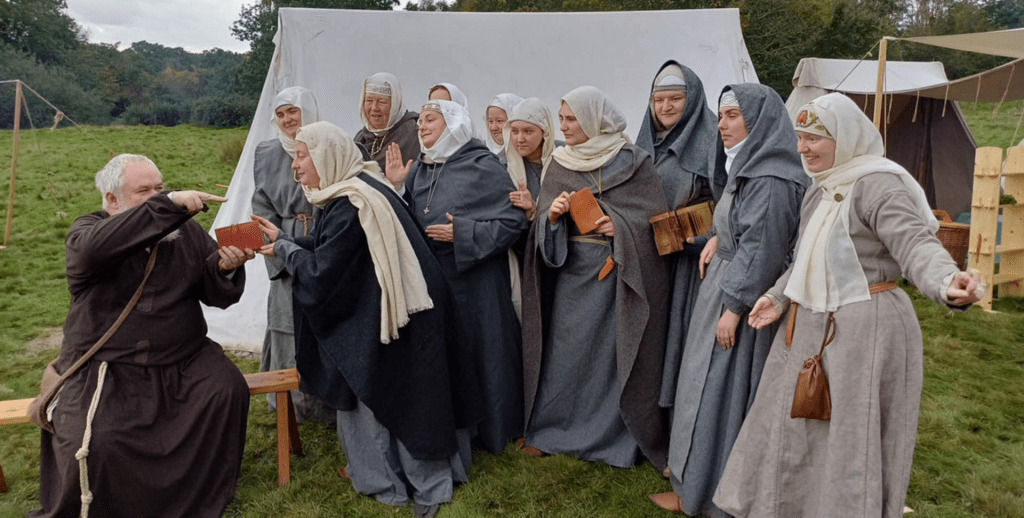
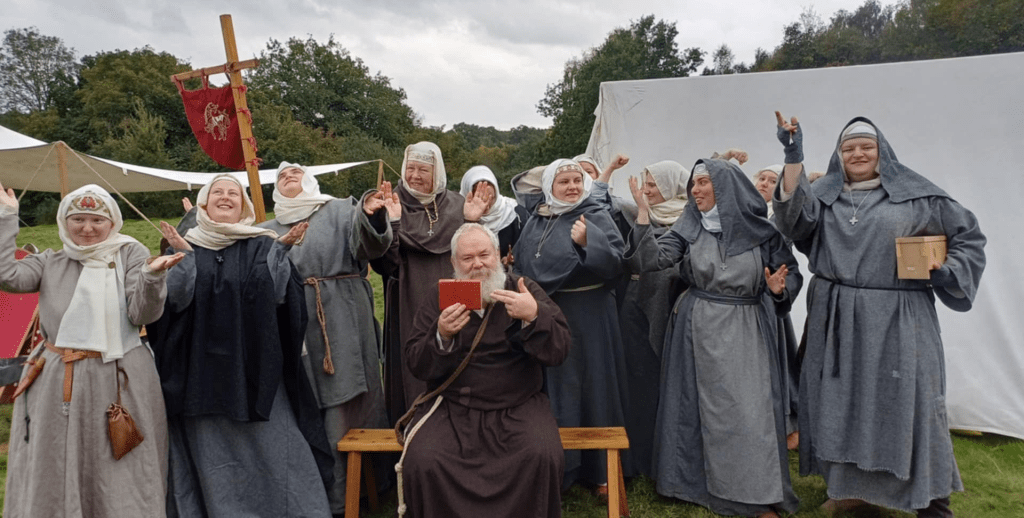
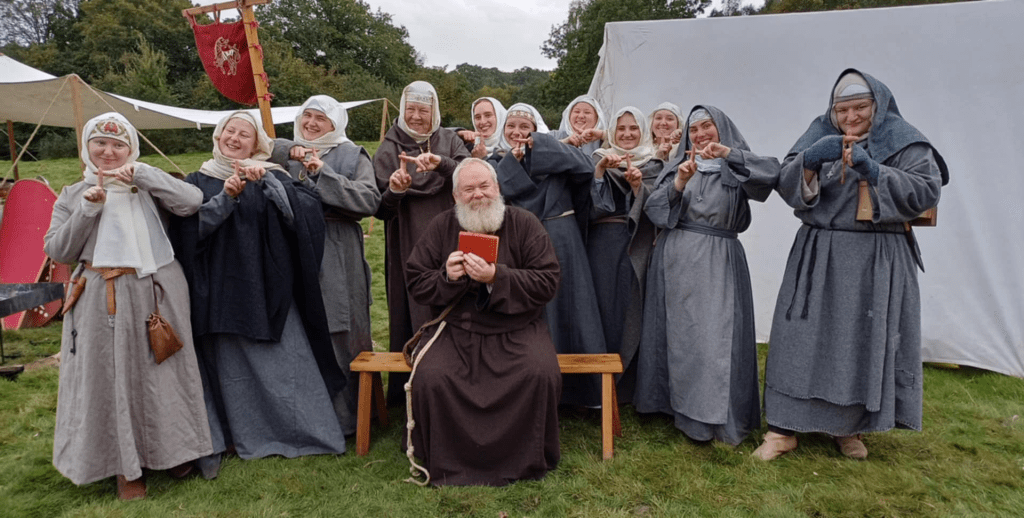
On Saturday, I opted to dust off my ancient ecclesiastical clothing and join my sisters as nuns for the day. The historical battle did not feature nuns, however, many women fled to convents after the Conquest and we wanted to represent those religious who may have been forced to flee their communities for safety.
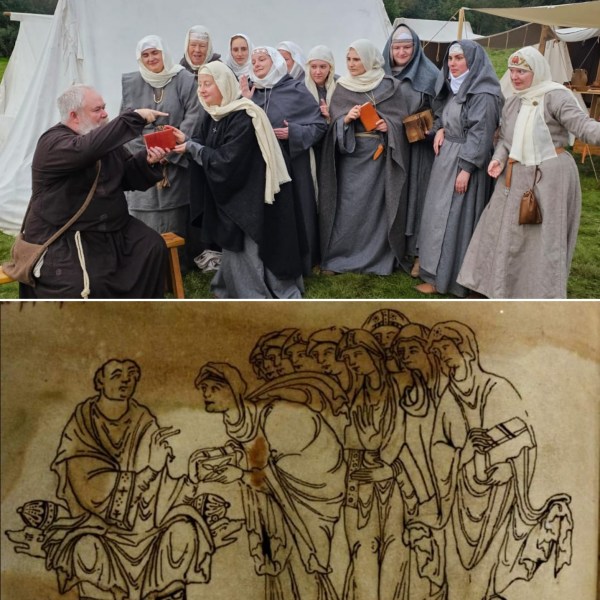
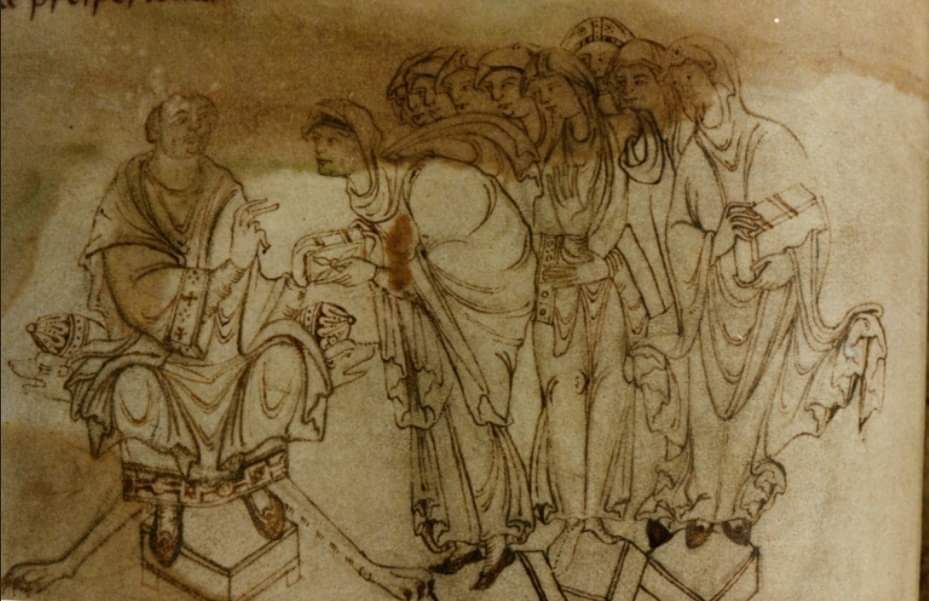
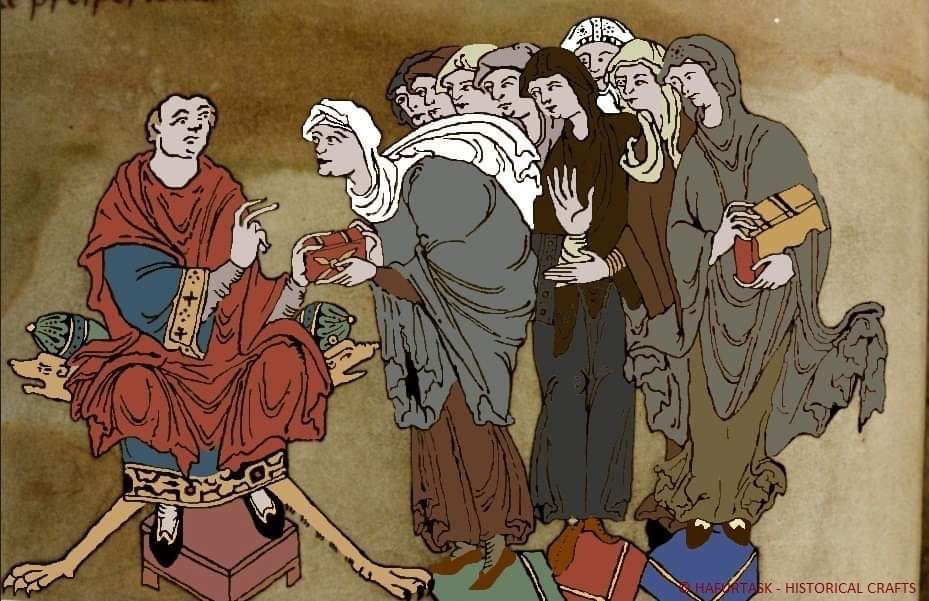
As we had so many nuns in one place, I asked if we could recreate one of my favourite illuminations in an Old English manuscript: Aldhelm presenting his De Virginitate “On Virginity” to Abbess Hildelith and her nuns of Barking Abbey (f68v in MS200, owned by Lambeth Palace Library.)
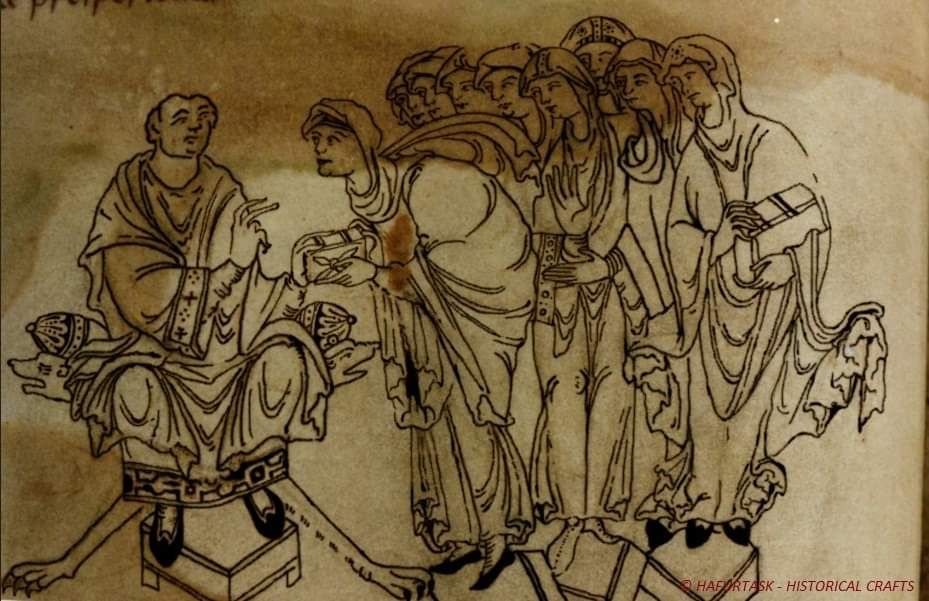
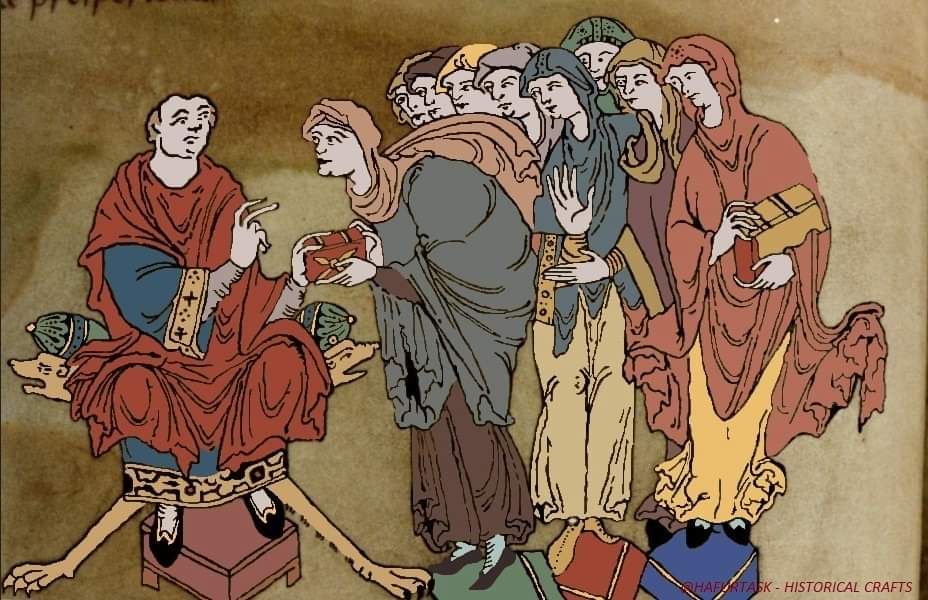
The original isn’t especially clear, so in the pandemic, I had a go at recolouring it and made a few versions. (Please note, I created these pieces before I had my blog, so they are clumsily labeled with my business name “Hafurtask- Historical Crafts.”)
A simple line drawing, making some of the details a little clearer.A coloured version, with the nuns wearing secular, colourful clothing. This can be seen in contemporary artwork of the time e.g. the nuns in The Benedictional of St Æthelwold. I used colours from those same contemporary volumes.This was an attempt at depicting some more realistic monastic colouring. The nuns are clad in different natural tones of undyed wool and linen.I created this in 2020, what else could I do?
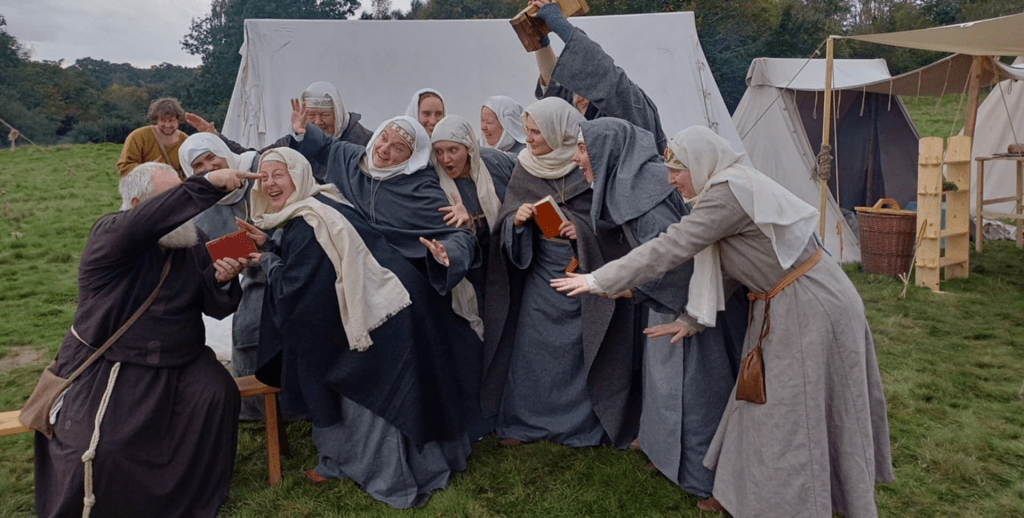
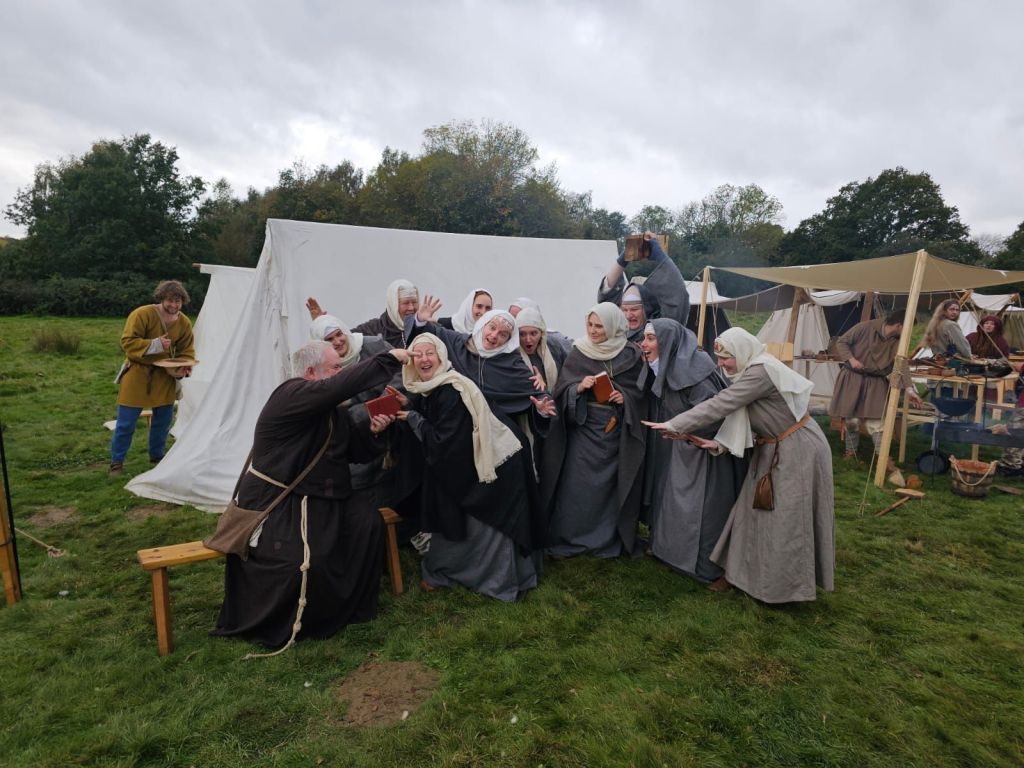
I think that this is probably the best recreation of the scene that we managed, though as you can see, it is not exact. We had 2 more nuns than Barking Abbey did, we fudged a couple of the hand/veil positions and we didn’t have fancy vestments or pillows for Brother Mark (we will be accepting likes and prayers for his sake.)
We did however have a blast trying to defy physics like the original (look at the colourful versions and count the heads of the nuns, then look out for their legs and bodies) and a lot of giggling ensued. We also think that Aldhelm looks like he’s about to poke poor Hildelith in the eyes.
We decided that a finger cross is the 10thC hot girl’s V sign ✌️
I loved gathering with so many other ecclesiastical re-enactors and it’s really given me a kick up the bum to get sewing my new habit over winter. My old one is raggedy and doesn’t fit especially well, so it needs a spruce up and then I can donate it to a sassy novice.
What do you think of our recreation? I need to give a massive thanks to Brother Mark and Sisters Katie, Larissa, Christine, Miriam, Lyndsey, Chloe, Harri, Olivia, Thea and Sasza- for taking part and being such good eggs while I was manic and it was drizzling! Nun- and monk-wrangling is a taxing sport. Thank you also to Lyndsey and Ant for taking pictures for us!
If you like my articles, please consider following my blog for updates when I post. If you really like them, please consider donating to my Ko-Fi account and help me afford to keep the lights on! You don’t need to make an account and I keep 100% of whatever you decide to tip me.
Alternate title: The Eoforwic Project isn’t dead, it’s just dusty.
I have been exceedingly quiet on this blog in 2024, with my last post dating back to New Year! My apologies for this. I have the bones of about 10 different projects scattered around me, but a period of fairly intense illness at the beginning of the year stalled their progress. I’m much better now, but it really threw me for a loop.
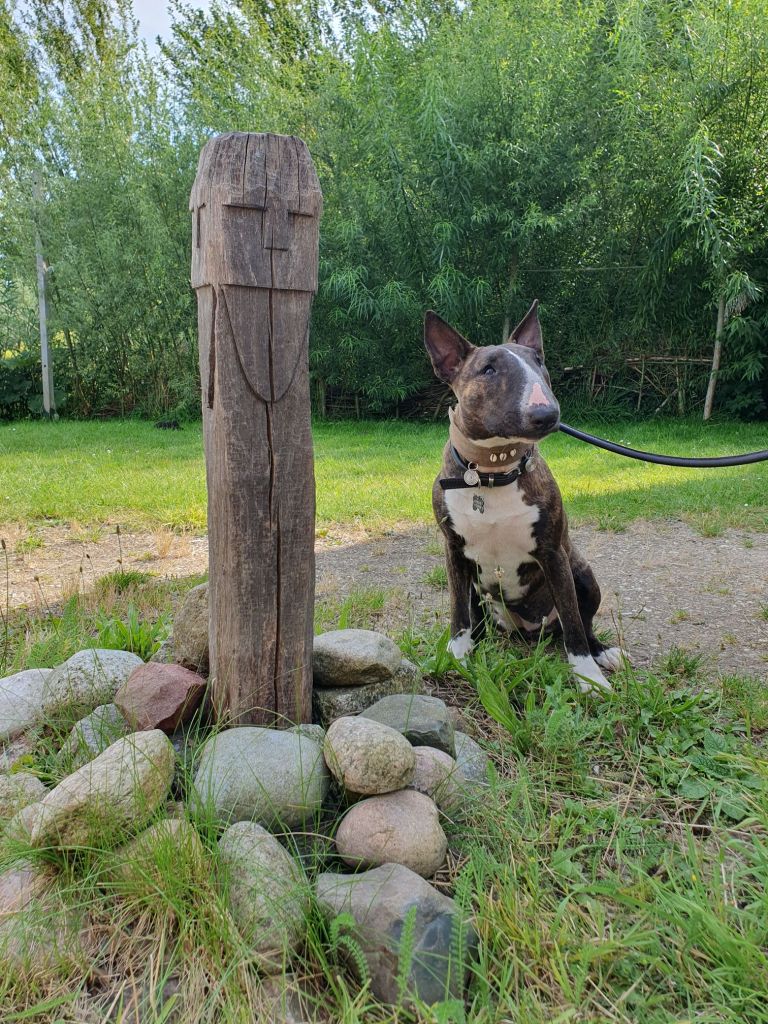
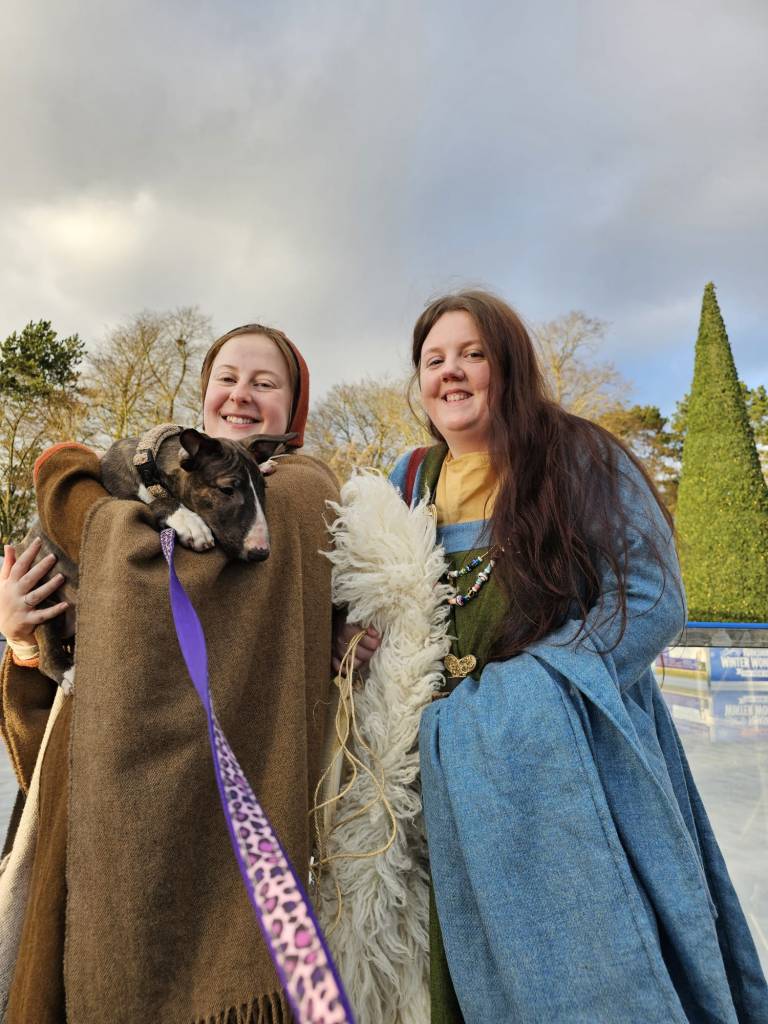
We also welcomed a furry comrade to the fold in December of 2023- raising my first puppy alongside health troubles has been a baptism of fire, but she is amazing. This is Peanut, last seen as a tiny baby in my skating article.
Who knew they made little dog-sized god poles?
I thought that I would return to the blog with a quick rundown of what I’ve been up to, followed by an idea of upcoming projects I am working on. If you find any of these inspiring, please do follow my blog and my social media platforms to keep updated. (I regularly share my comings and goings on Instagram!)
2024 so far
I hosted my first living history conference, VALHALL:A, at Jorvik Viking Festival 2024 in February. This was a lot of fun, I do hope to host another in 2025 (give me suggestions of speakers if you like!) and I will be posting the full edited talks on Youtube very shortly. We had some major issues with audio, which led to delays, but they’ll be online asap.
I’ve visited a great many museums and heritage sites in my time off, including some Roman sites- I’ve been flirting with Roman re-enactment since last summer and hope to consummate that relationship in 2025.
I also got to explore some new Hiberno-Scandinavian towns, with Waterford and Cork being ticked off the list. Waterford is my favourite!
My UK re-enactment group Vanaheim has gone from strength to strength, earning our Herred certification in living history excellence at the beginning of 2024. I could not be more proud of our community and all the hard work they put in.
My husband Eric and I have founded a second group, within Jomsborg this time: Gullinkambi! This is our outlet for more competitive fighting styles, European events and impressions outside of the UK (West and East Slavic, Eastern Scandinavia, etc.)
I attended some fantastic academic events, most recently the Women of the Viking World conference in Liverpool. These have been incredibly enriching and informative, I’ve come away with piles of notes and so many ideas for future projects.
2024 and beyond: upcoming projects
VA Dublin: I have the photos for two separate Dublin articles, both focusing on some weird and wonderful replicas of head-coverings. One of them is in a slightly strange narrative format: you’ll have to trust in the process and humour me. (It seemed like a good idea at the time.)
VA York: I have a working class, speculative York outfit to photograph and write up (Castlegate), with two slightly more glamorous ones planned (St Bishophill Senior and possibly post-Conquest).
#AfterHastings: 1066 season is fast approaching and my fantastic colleagues who took part in the #AfterHastings project last year gave me permission to collate all our posts together into one master post. This should allow readers to more easily follow the stories of our historical ladies and revisit them in time for Hastings.
Food: In spring of 2023, I reproduced my Week of Viking Age York cookery and filmed it as a vlog, planning it for Youtube. However, we filmed it on my phone and I’m not overly happy with it (I think it’s goofy.) However, I might see if it can be salvaged, if the interest is there from the community.
VA Waterford and Cork: I’m planning to write articles on aspects of these fascinating Hiberno-Scandinavian towns, with a full speculative outfit from late VA Waterford very much in the works- getting people to make replicas of the jewellery is proving to be the hardest part.
Misc grave reconstructions: Finglas (VA Ireland) and Fyrkat grave 4 (Denmark.) These two are very long-term projects, due to the sheer number of grave goods and again, the difficulties in finding jewellers willing to make me the right pieces. But I will finish them, one day!
Showing off the double-axe silk motif at a recent axe-throwing event!
Thanks for reading and welcome to any new followers, welcome back to my existing friends. I look forward to sharing more living history and museum adventures with you soon!
If you like my articles, please consider following my blog for updates when I post. If you really like them, please consider donating to my Ko-Fi account and help me afford to keep the lights on! You don’t need to make an account and I keep 100% of whatever you decide to tip me.
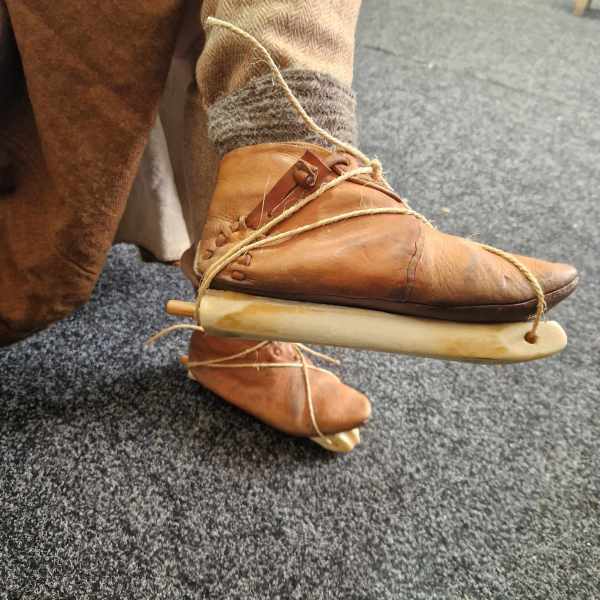
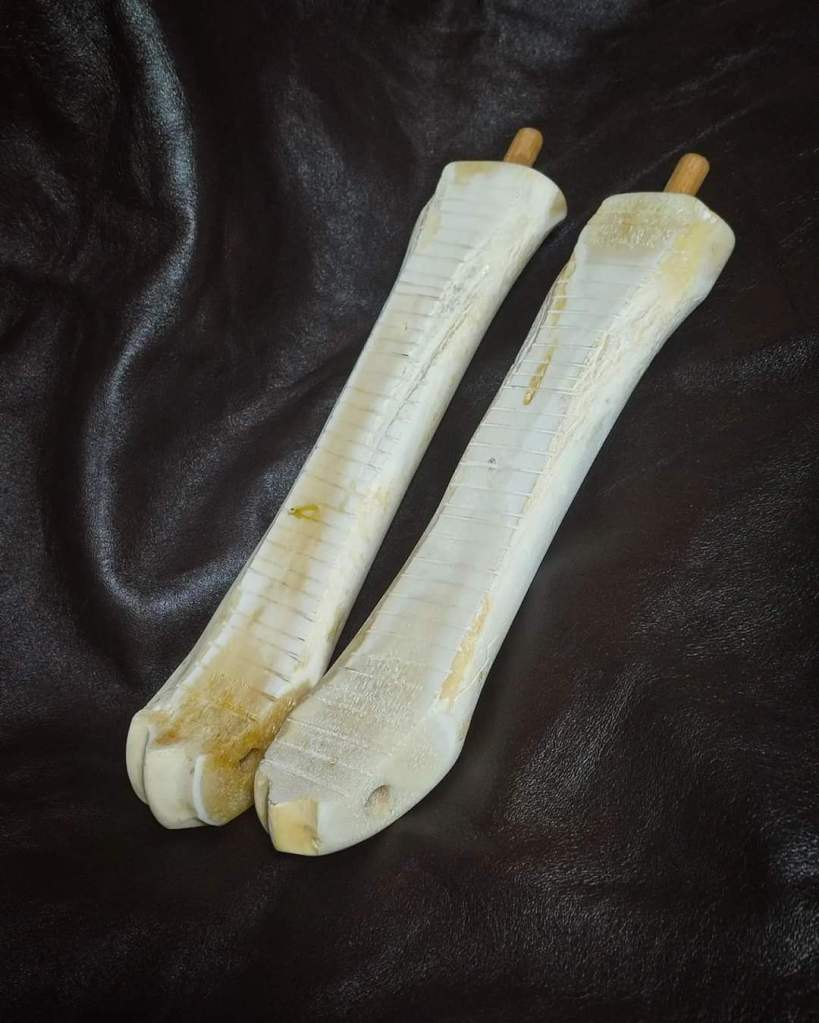
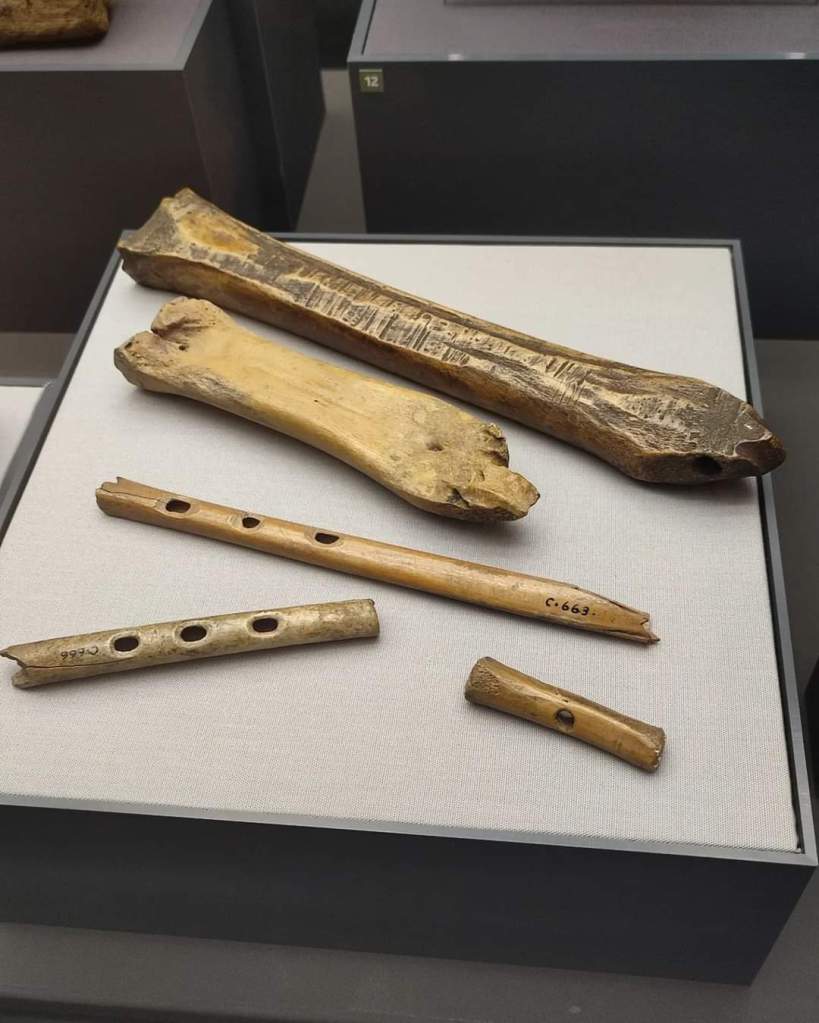
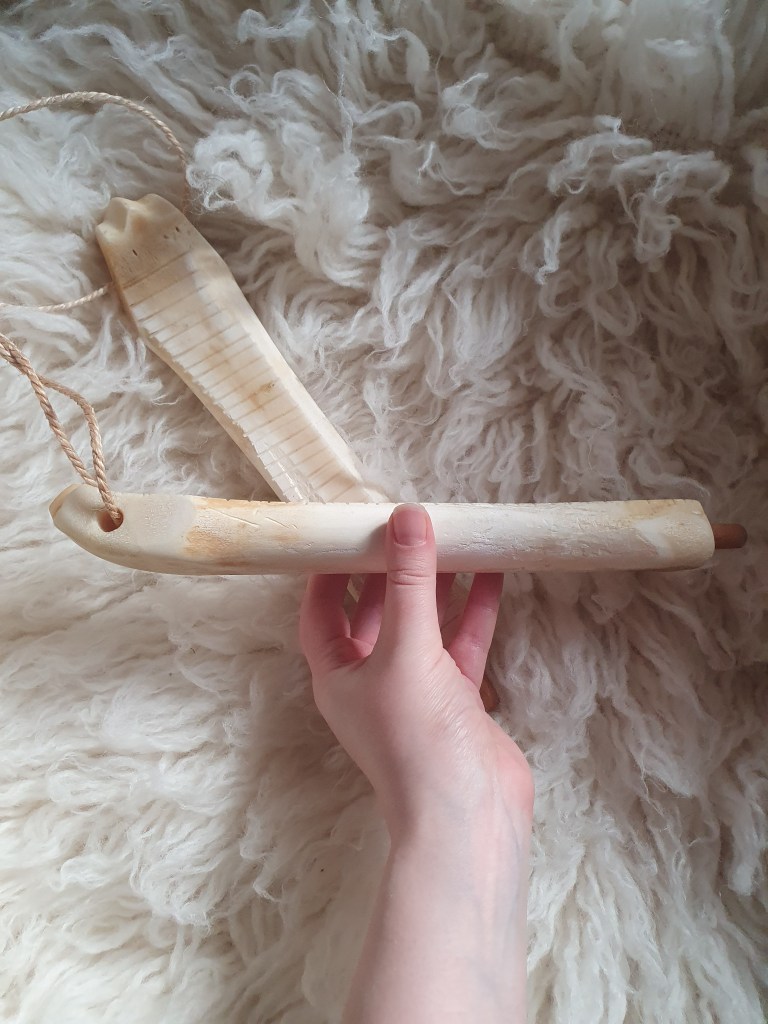
Ever since I saw my first pair of bone ice skates at the Jorvik Viking Centre and Yorkshire Museum, I’ve been charmed by them. After a brief period of madness where I convinced myself I could make my own (turns out getting ahold of horse metacarpals in the UK is borderline impossible!) I was delighted to find that Amber Wolf had made a pair. Even better, they were for sale at Jorvik Viking Festival! Just my luck.
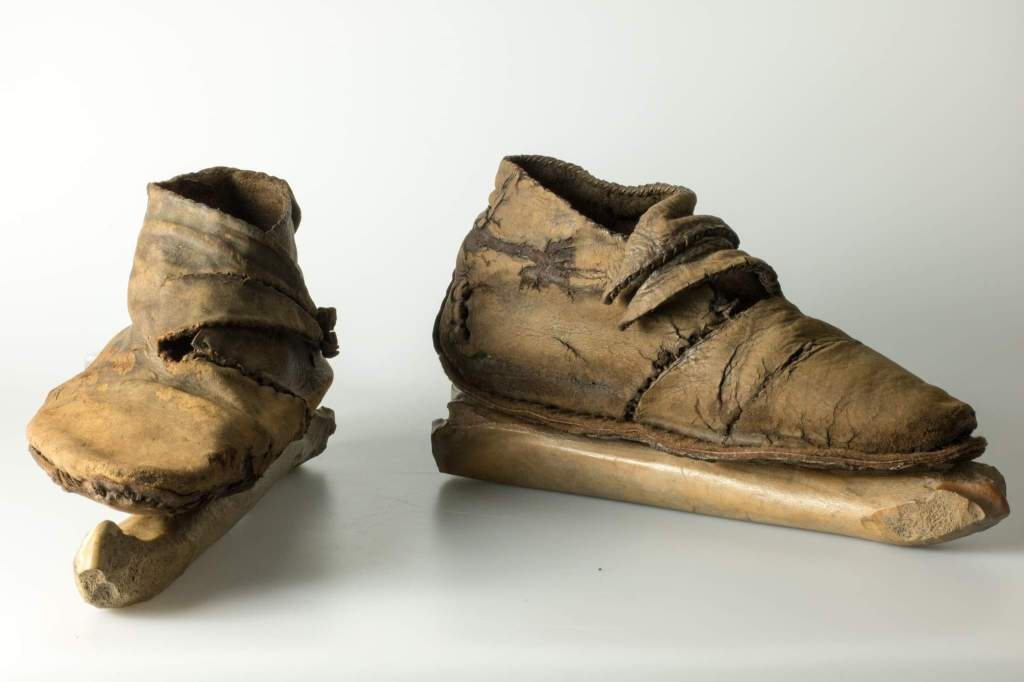
Image credit: Amber Wolf Workshop on Facebook. Second pic is the original skate in the Yorkshire Museum.
Bone skates are found all over the Viking world, with examples from Dublin, Hedeby and Birka just to name a few sites. Many pairs of skates were found in historical York, with 42 examples from Early Medieval Coppergate (MacGregor, Mainman and Rogers, 1999.) All of them were made from bone, with horse bones being the most popular, followed by cattle. If you want to learn more about the history of bone ice skates, there’s a fantastic paper by Küchelmann & Zidarov (2005) available free online– it was invaluable not only for historical background but also for technique!
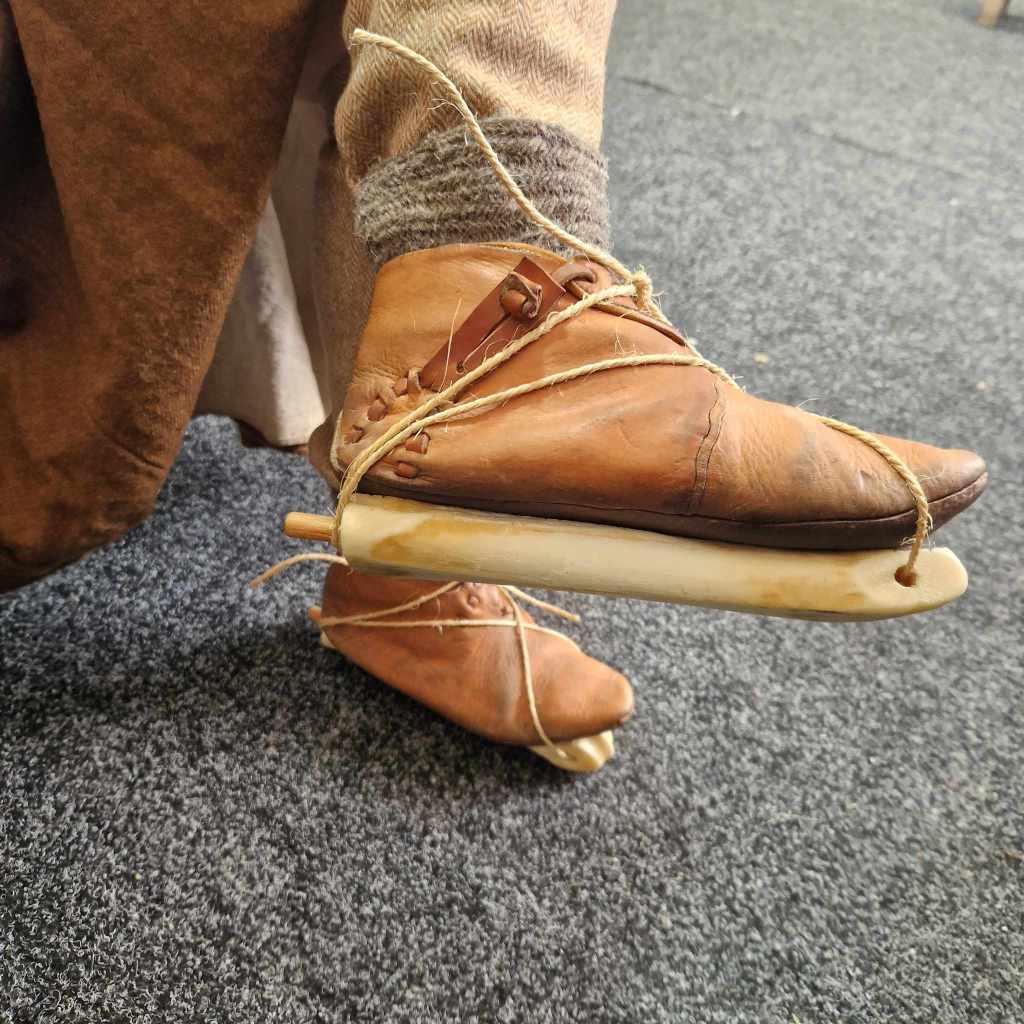
My pair are based on item number 7122 from 16-22 Coppergate, dating to period 3 (mid 9th- early 10th century) though it incorporates a toe hole where the original did not. This skate is unusual among the York assemblage in that it has a fragment of a wooden peg (possibly willow) still stuck within the heel hole, which is suggested to be to aid attachment to the feet with cordage. Only one other skate from York (7930) has wood remaining, though many others retain their heel holes. Like the original skate 7122, my pair are made from horse’s leg bones, which have a natural curve to them.
Figure.942, p.1984. MacGregor, Mainman and Rogers (1999.)
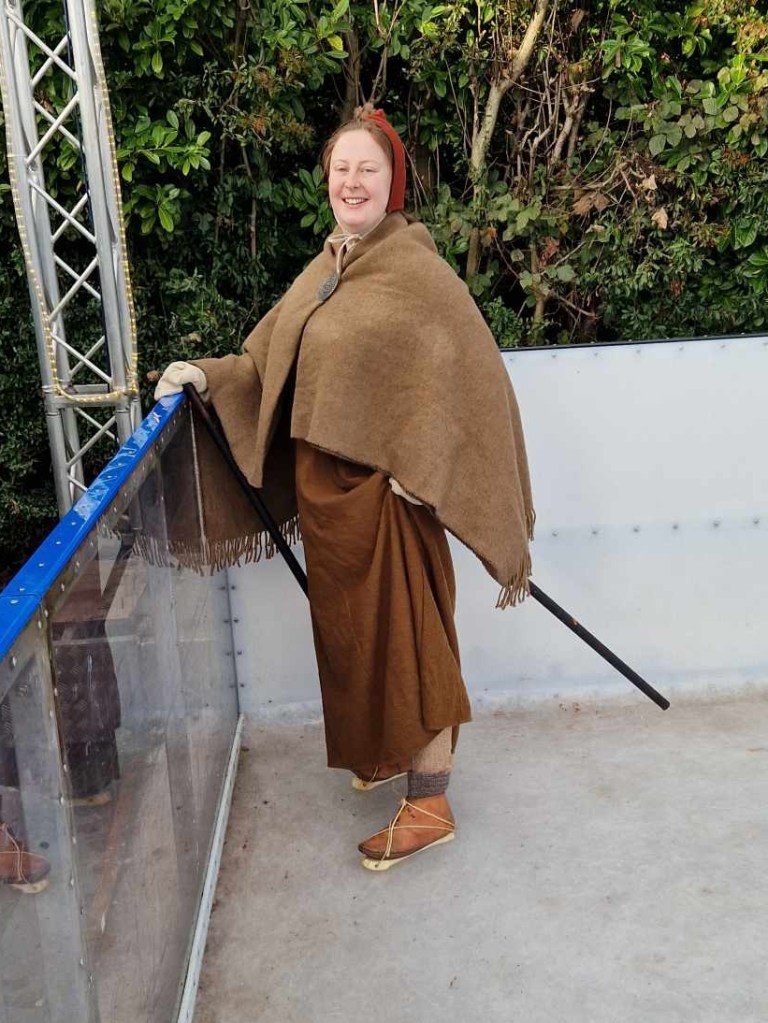
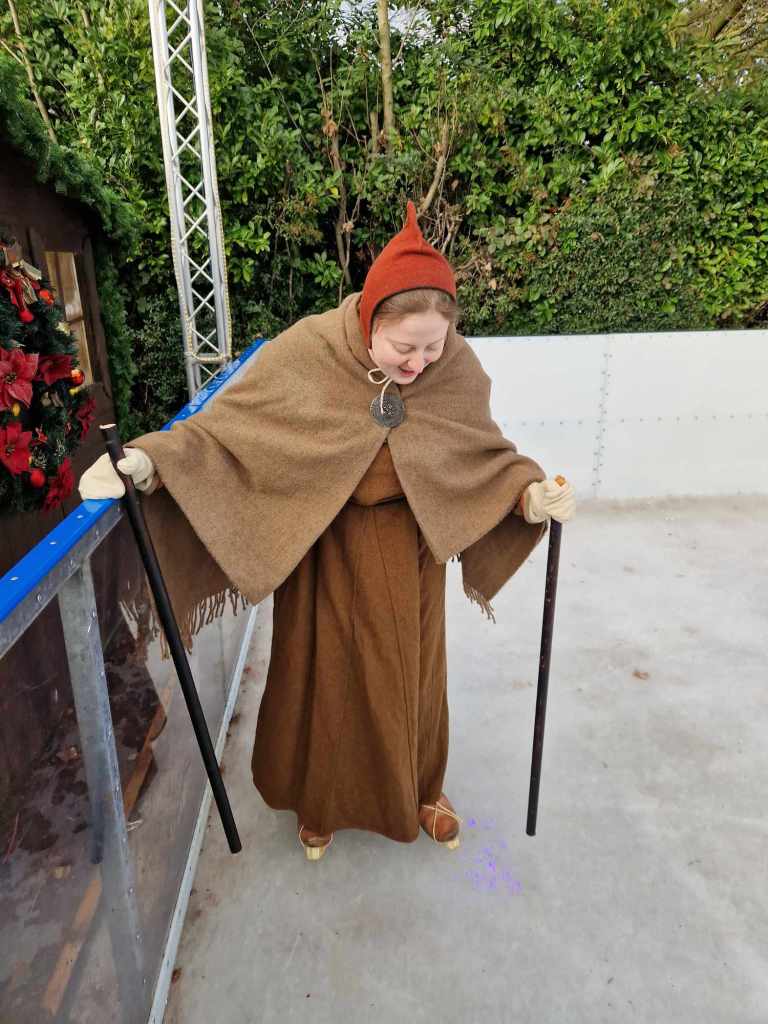
Now to the skating itself. It’s suggested that Viking Age skaters pushed themselves across the ice with sticks, rather than gliding across the ice like modern metal skates. This would be necessary, as the bone skates do not cut through the ice but rather sit flat on it. It’s not known whether skates were used purely for transport during winter or for leisure, but I suppose they could be for both.
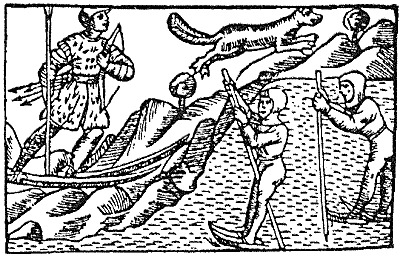
Since such propulsion poles would likely be just a wooden stick, maybe with a metal point on one end, none have been identified in the archaeological record. But some depictions and descriptions of skating from the Medieval and Early Modern period still survive and they do show evidence for people across Europe using staffs to propel them on skates. (A good round-up of this evidence can be found here.)
From HISTORIA DE GENTIBVS SEPTENTRIONALIBVS “Description of the Northern Peoples” by Olaus Magnus (1555.)
What I was interested in finding out when trying my skates was of course- how are they to skate on? But also- how do they attach to the foot? Do they stay on? Are they comfortable? All valid questions that if answered will give me a really interesting insight into one aspect of wintry life in the Viking Age.
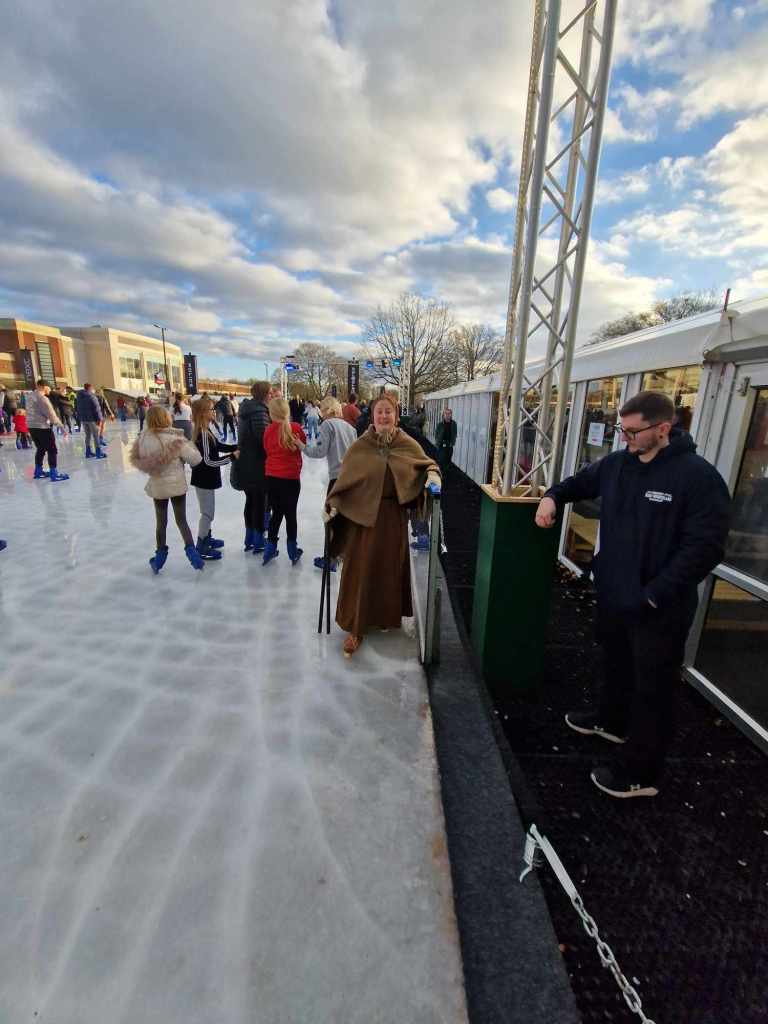
Unfortunately, I am both terrible at ice skating and a gigantic chicken.
Cluck, cluck (note the kind employee who was sent to make sure I didn’t get into any mischief with my weird skates and sticks.)
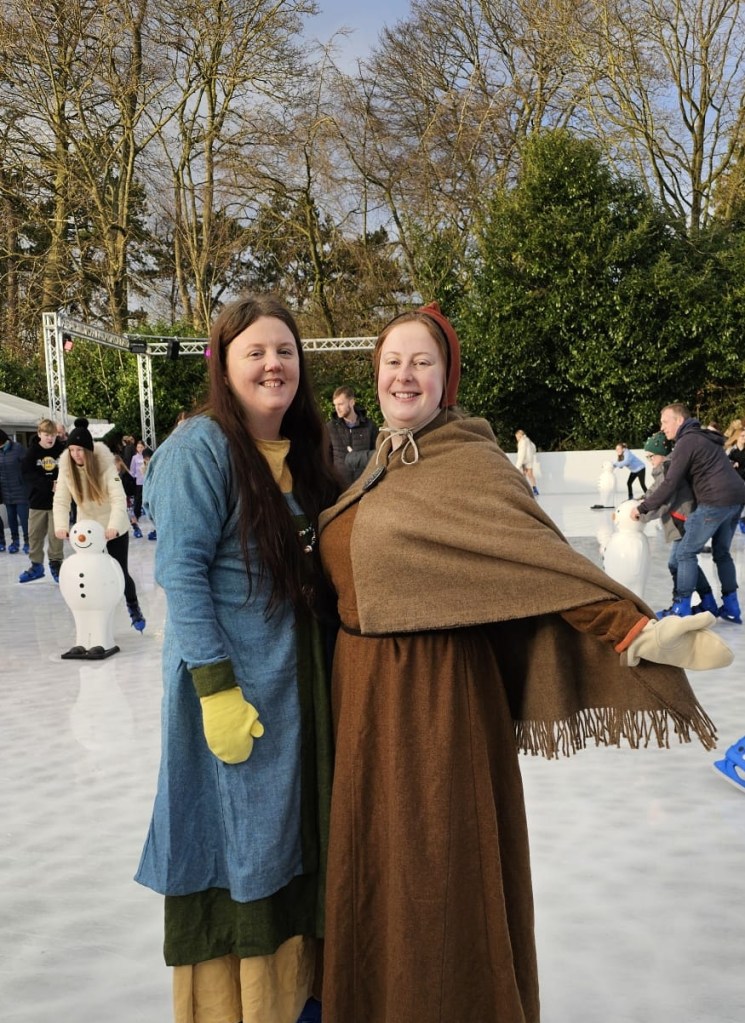
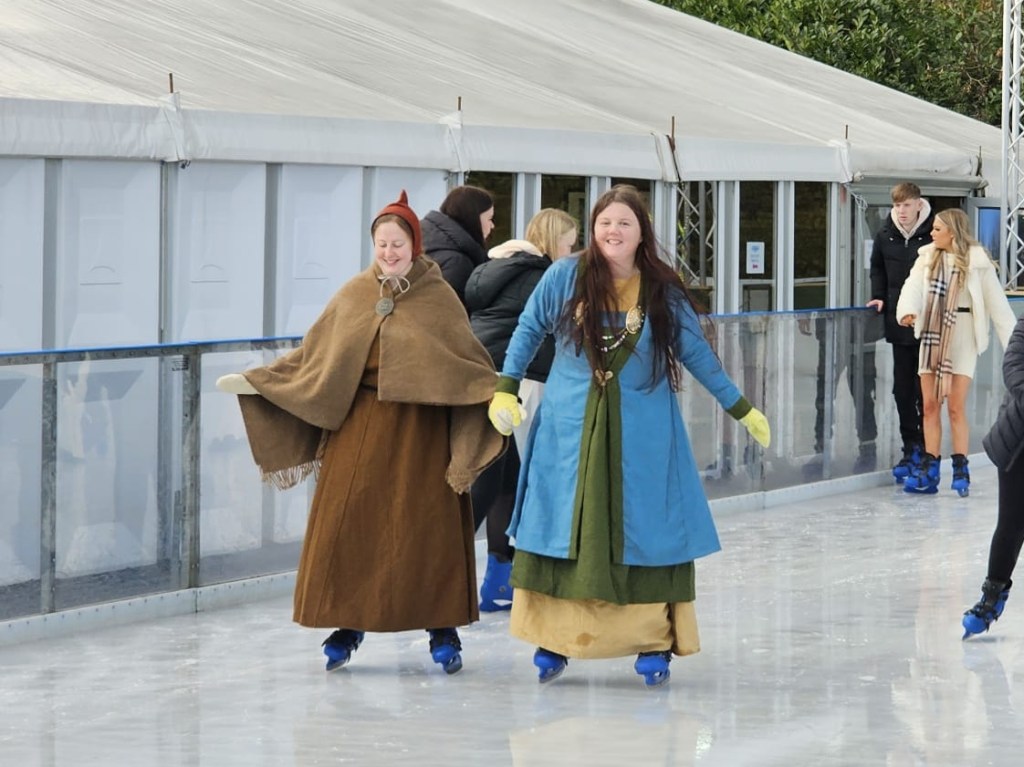
The nearest ice rink to me in York is quite a drive away, except for at Christmas, when a pop-up rink comes to the Designer Outlet every December. I decided to seize my chance and visit while my friend Ceara was down in York (for moral and at times quite literal support.)
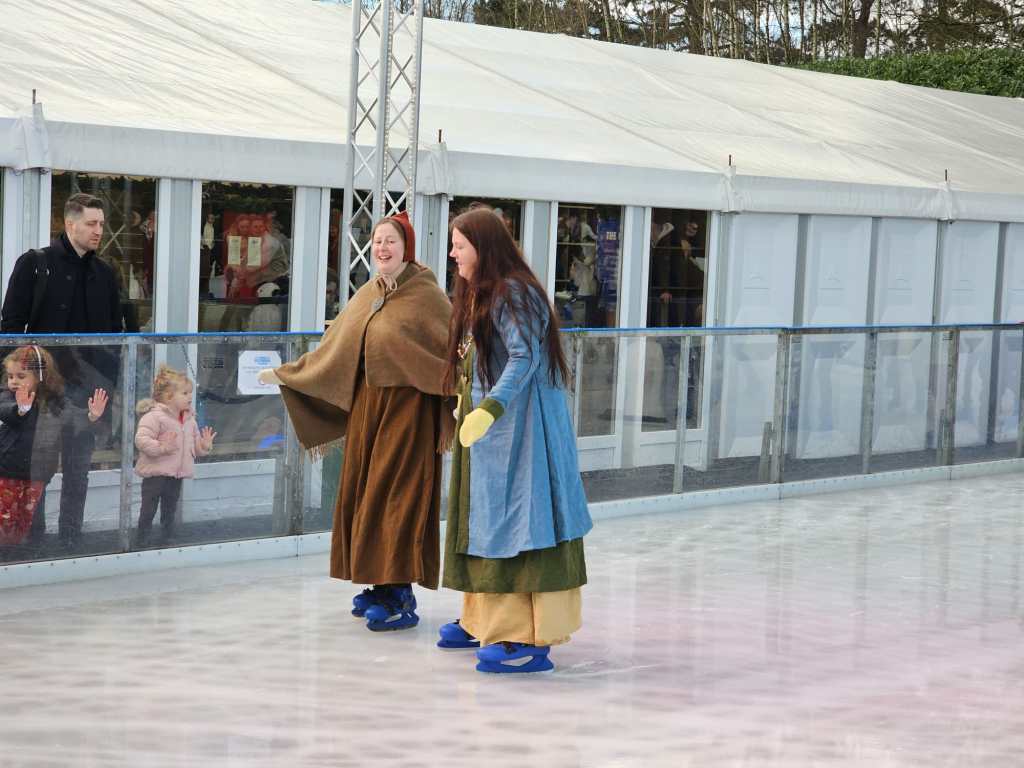
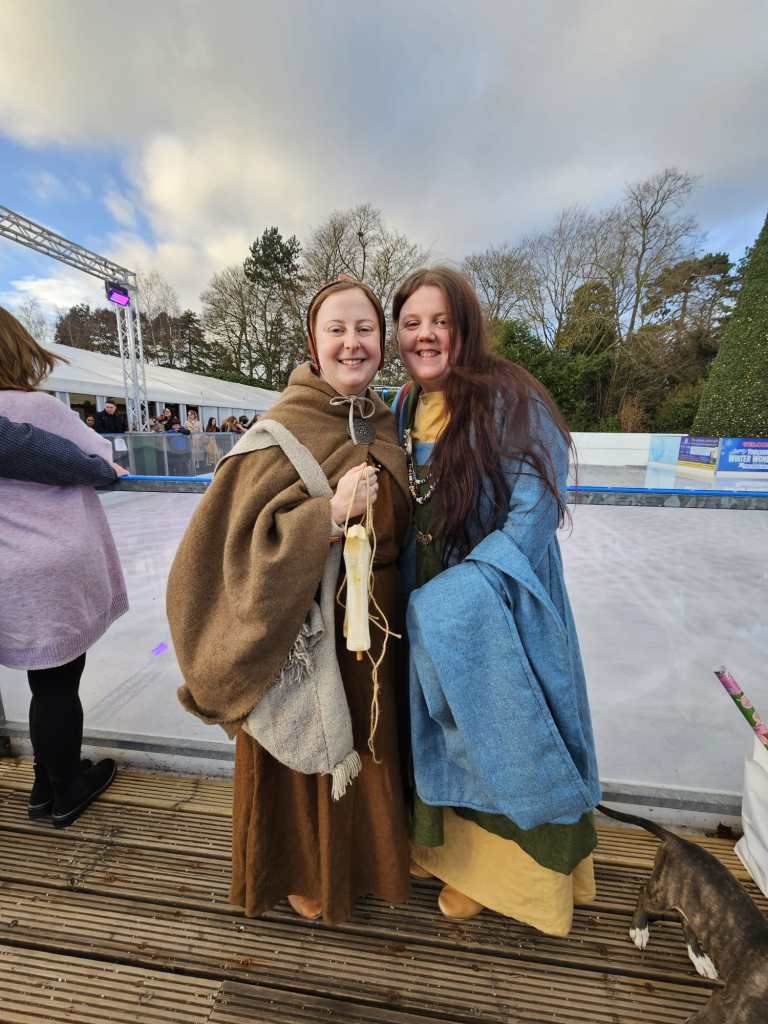
Ceara is not only pretty great at skating, but is as unafraid of looking a tit in kit as I am. We called ahead, received a bemused thumbs up to the weirdest request they’d had all week at the rink and headed over in our winter best.
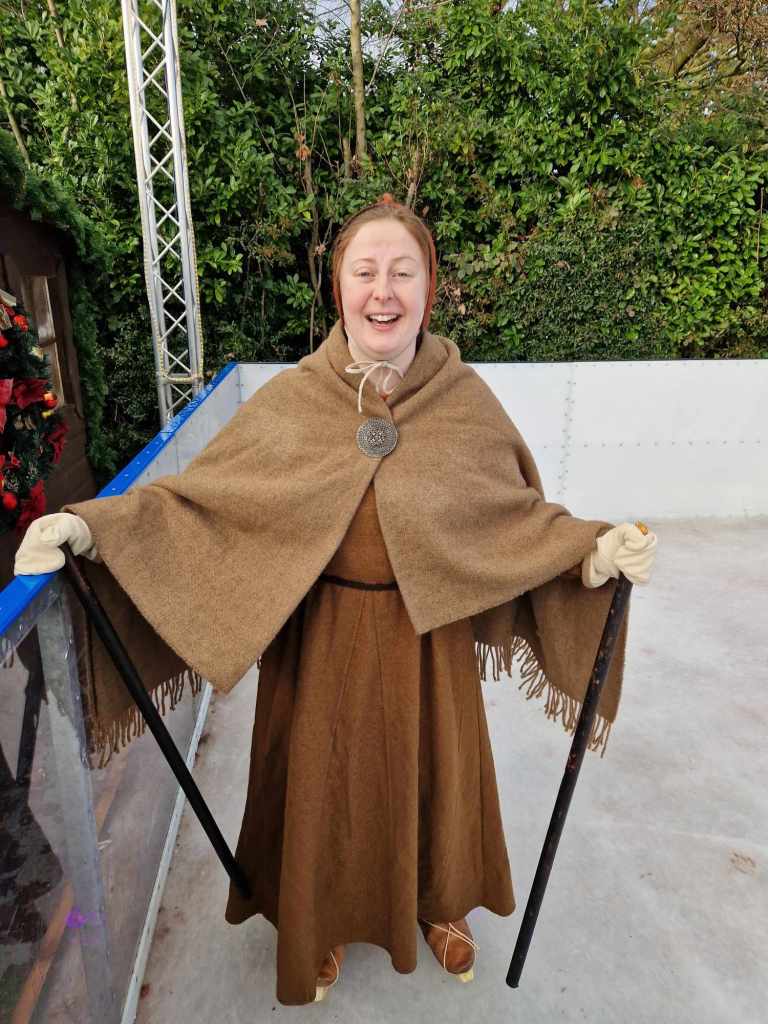
Apparently I thought we were posing like cast members at Disneyland. I don’t have any other pictures where I’m not doing that.
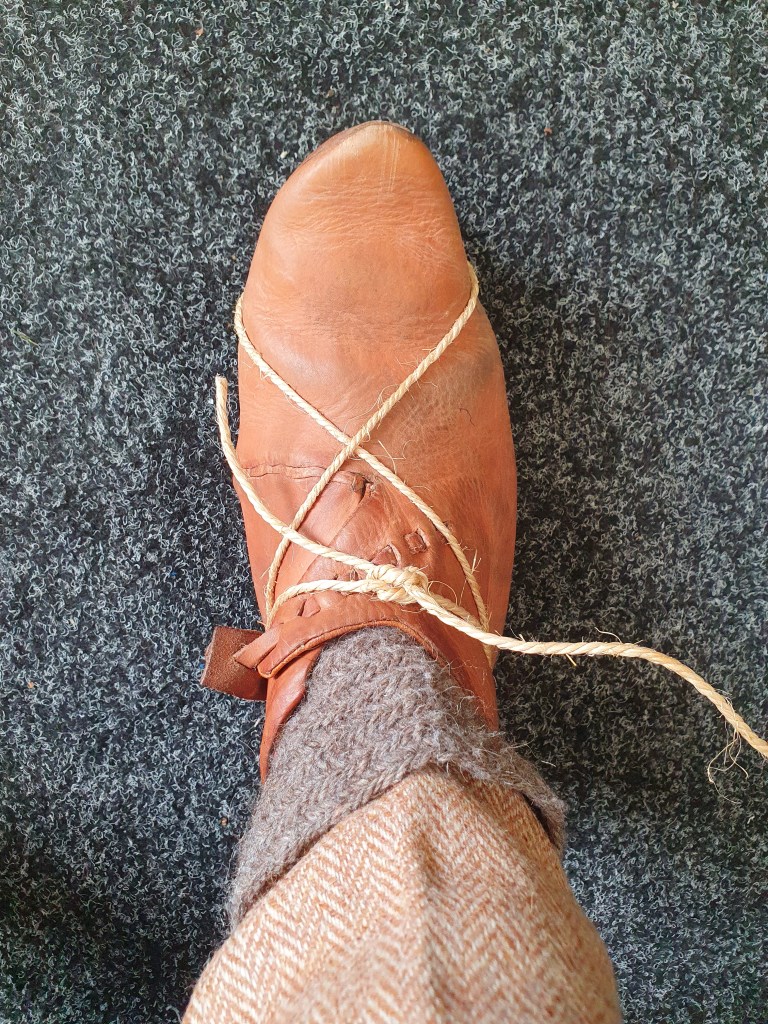
The bone skates turned out to be very comfortable and fit excellently onto my York turnshoes, made by my friend Dean. (They have their own article here!) At least with the wooden-pegged model of skates I tried, I found that the most secure way of wearing them was to thread your cordage through the front hole and criss-cross it over the foot in a figure eight, hooking both ends over the wooden peg and back up over the foot. It was easy and provided you use enough tension throughout, I found it to be very secure. It also helps that once you’re on your feet, your body weight kind of holds the skates in place and avoids any forward or backward slippage.
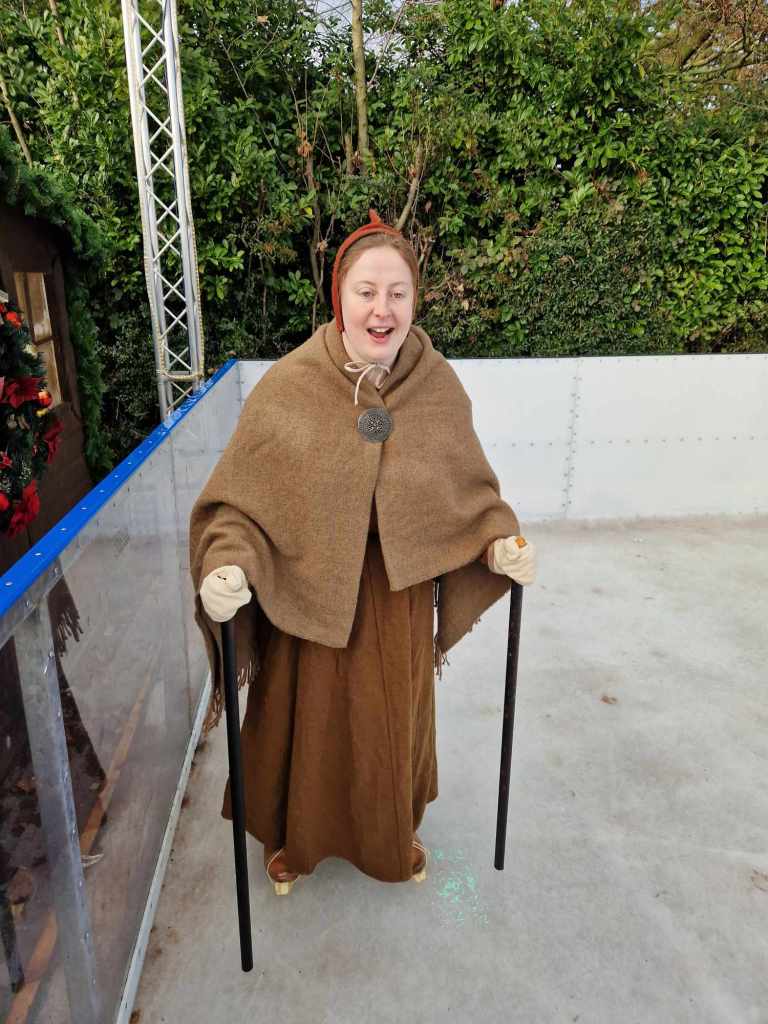
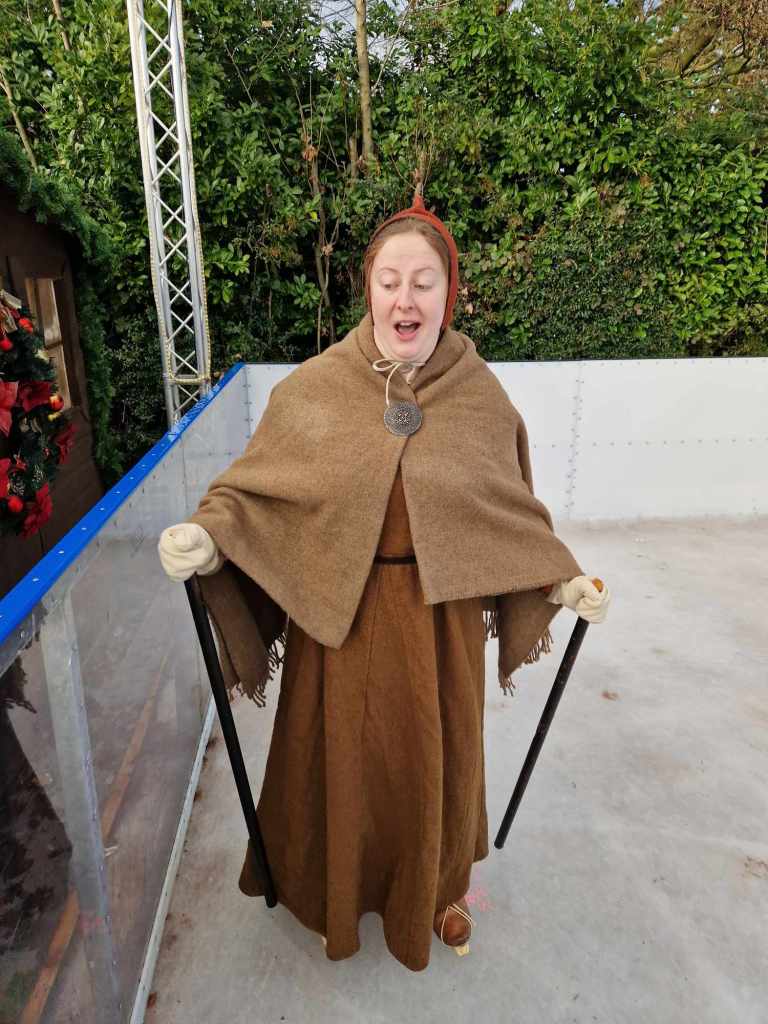
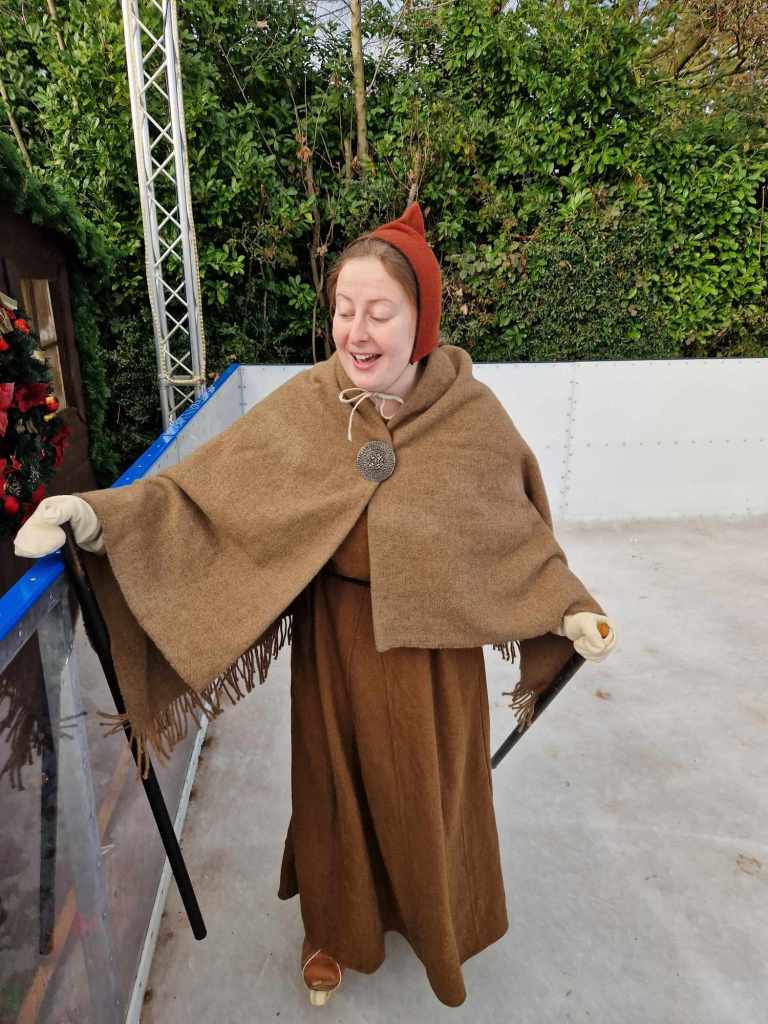
They’re quite comfortable too, far more than the modern skates we used afterwards. I couldn’t comment on their safety (I’m sure modern skates provide more ankle support) but *I* felt that my Viking skates were secure and that I was less likely to slip than on modern skates. The likelihood of me slipping was still worryingly high though, as I am not a good skater- picture Bambi on ice in a Dublin cap. My terror is quite evident in the pictures we took.
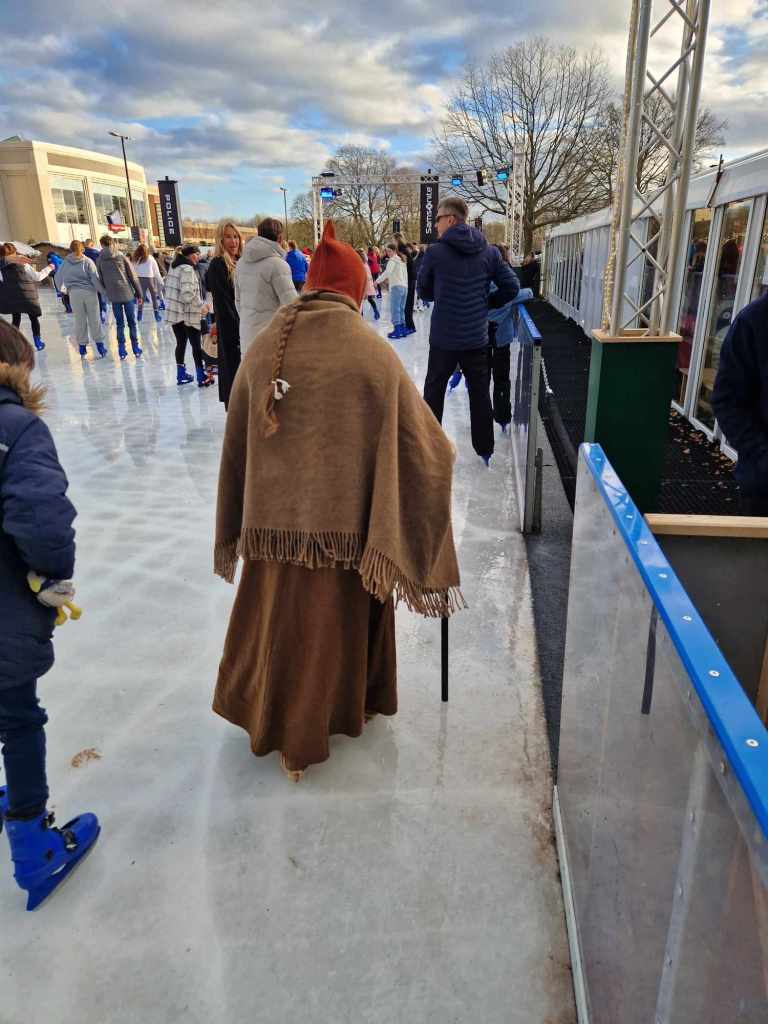
On the negative side, the Viking skates do limit your movement. As they are flat and don’t cut the ice, you have to push yourself along with a stick. This means a lot more physical exertion from the top of your body, whereas modern skates mostly require it from the legs to glide. I ended up bending over and kind of shuffling along, which was far from elegant and was pretty tiring. Ceara described it as like watching a 90 year old woman hobble along the ice and I can’t really argue with her.
I have no doubt that someone with more skill in skiing or skating would find them easier to use than I did and likely with practice and time, I would become more adept at using the skates. This would also have been easier if I wasn’t trying to learn on a very busy rink full of other curious skaters! (My terror was not decreased any when I swapped my Viking skates for modern ones.)
On modern skates that crushed our feet horribly, but don’t require poles to push yourself!
My experience skating on Viking Age skates made it clear to me why we switched to using metal blades rather than flat animal leg bones. However, I cannot deny that for the purposes of travel across ice, the skates *do* work and are far preferable to walking across on turnshoes alone. Maybe in the future, I’ll be lucky (and brave) enough to give them a try on a real frozen lake or river, like the people of Viking Age York!
From the bottom of my heart, I wish you all peace, joy and fun new experiences in 2024. Wæs hæl!
MacGregor, A., Mainman, A. J. and Rogers, N. S. H. (1999) Bone, Antler, Ivory and Horn from Anglo-Scandinavian and Medieval York. London: Council for British Archaeology. pp.1948-1999.
If you liked this article, please consider following my blog for updates when I post. If you really liked it, please consider donating to my Ko-Fi account and help me afford to keep the lights on! You don’t need to make an account and I keep 100% of whatever you decide to tip me.
Location: Wood Quay, Dyflin (Dublin), Ireland. Date: Mid 10th century and mid 11th century. Culture: Early Hiberno-Scandinavian. Estimated Social Status: Affluent urban freewoman.
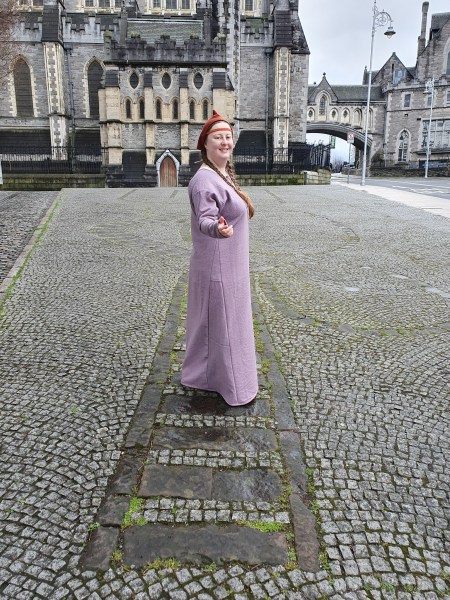
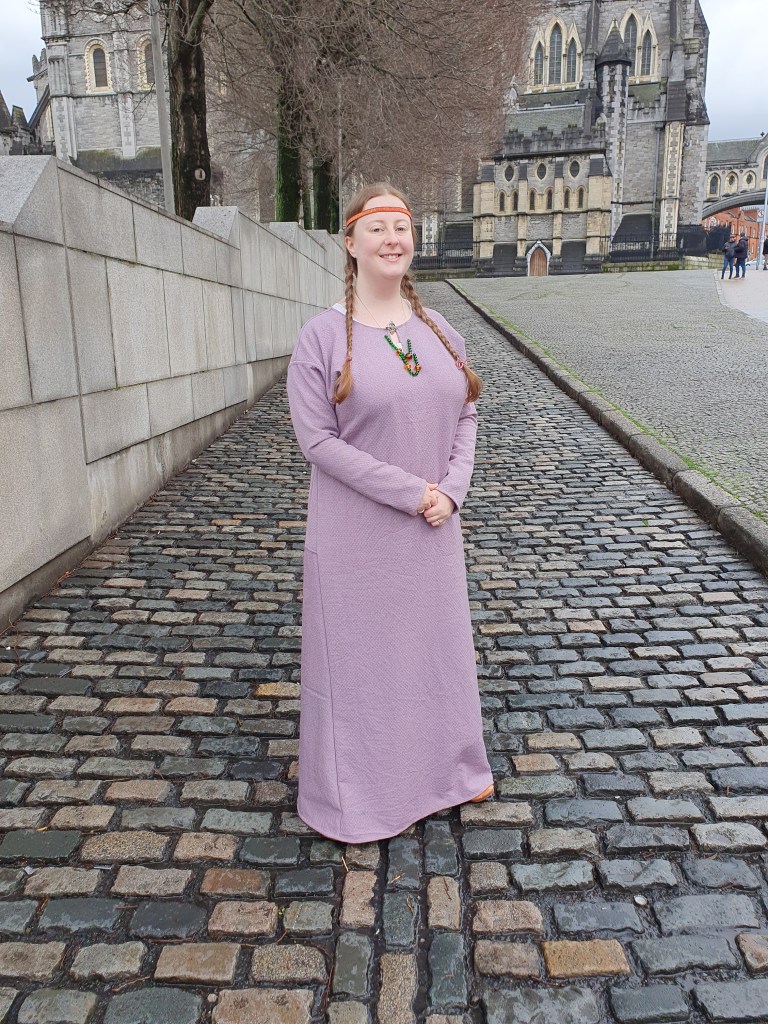
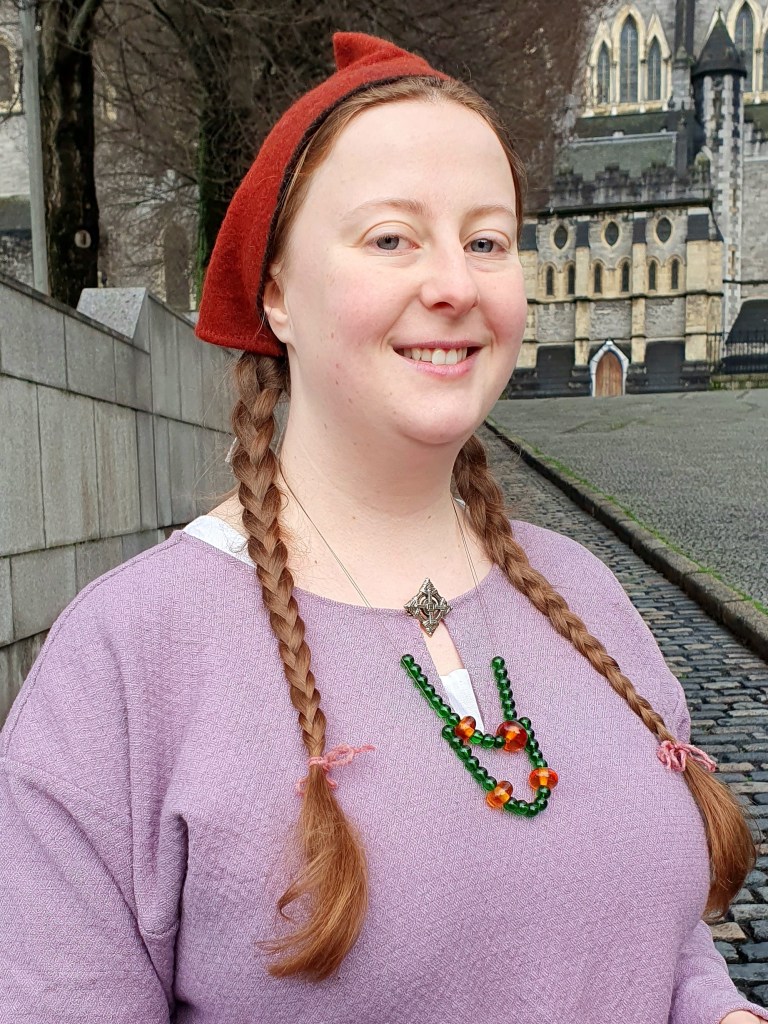
The following photos show two sets of speculative clothing based on archaeological finds from Viking Dublin, set approximately a century apart. My goal is to combine these items according to their proper dating and present them in context, to provide a more whole view of how a citizen of Dylfin could have looked. I also aim to demonstrate how fashion changed over that century, even if the changes might seem modest or slow when compared to our modern world.
It is unfortunate that there are almost no contemporary detailed images from Viking Dublin that show the people who lived there. As a result, I must rely primarily on metal, glass and bone items that have survived intact, with clothing being based upon Hiberno-Scandinavian textile remains from the town, Scandinavian finds and contemporary illuminations from Britain and Scandinavia. As a result, my interpretation is just that- an interpretation. You might examine the evidence available to us and come to a different conclusion of how it should be combined and therefore how people may have looked. That’s quite alright too!
As usual, unless mentioned, all photos are my own. Any photos taken from archaeological publications are referenced and used here for educational purposes. Most of the kit photos are taken on Winetavern Street, Fishamble Street or in the grounds of St Audoen’s Church on High Street, all areas of Dublin inhabited in the Hiberno-Scandinavian period.
Mid 10th century outfit
Dublin cap (DHC33.) Early-mid 10th century, Fishamble Street.
If this cap looks familiar to you, it is because I have already written about this last month in its own article! In dimensions, material and fabric weave, this wool cap is based on cap DHC33, as described in Wincott Heckett (2003.) It is woven in a plain/tabby weave and dyed by me with madder, though the original cap was not subjected to dye analysis. The braid on the front edge is made from naturally pigmented brown yarn and whipstitched in place.
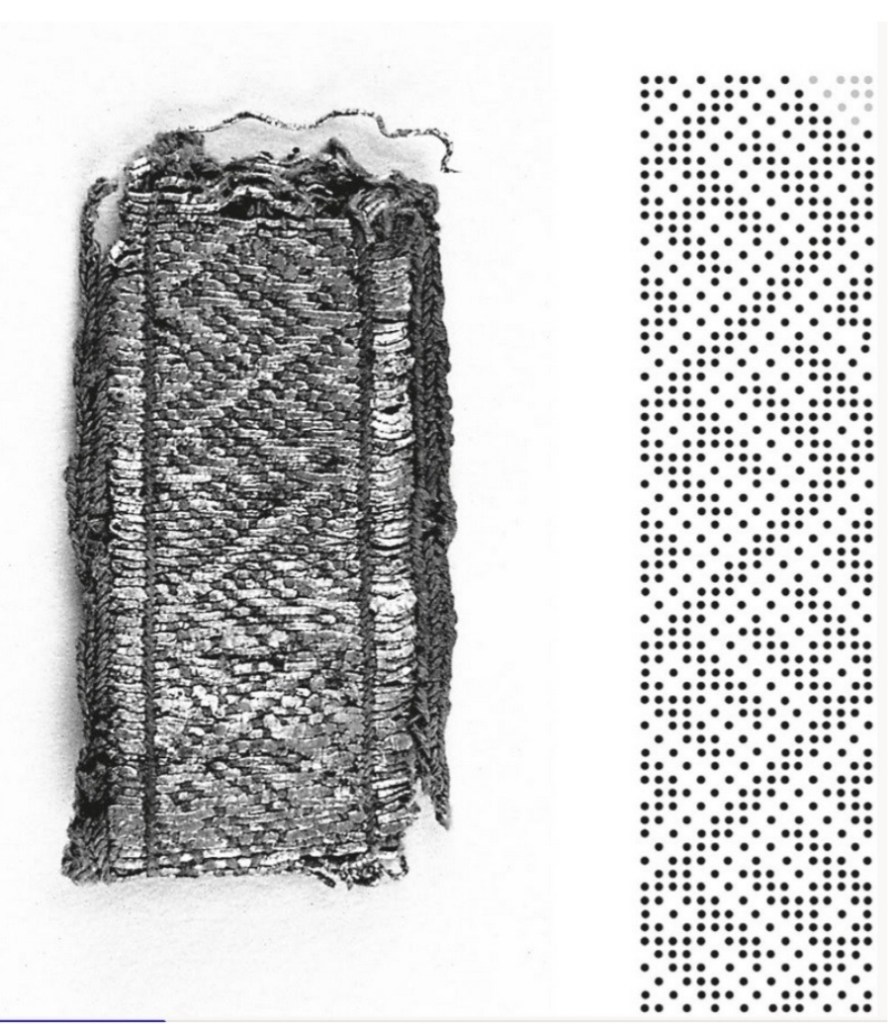
Gold and silk brocaded headband (E190:1194) 10th century, Fishamble Street.
This is a famous and much-replicated find among re-enactors. The so-called “Dublin dragons” motif is described by Pritchard (2021) as “gold-brocaded tablet-woven band, width 9 mm made with 31 tablets from Fishamble Street, Dublin.” Most bands seen in re-enactment with this pattern will be much wider than 9mm (no judgement- I love this pattern and have several very pretty wool items woven in this pattern!) but for this, I wanted something closer to the original. The extremely talented Alicja of Kram Ammy on Etsy wove this for me and despite using the finest silk she had, she still wasn’t able to weave it any narrower than 10mm without the pattern becoming warped. It dates to the latter half of the 10th century, though several other brocaded silk bands were found in Wood Quay in the 10th and late 11th century layers.
E190:1194 in Pritchard (2021.)
As all of the tablet woven remains at Dublin were fragmentary and not in a grave context, we are left to imagine of what they were originally part. Pritchard (2021) has suggested that they were part of narrow fillets (or at least in conjunction with some headcovering) following the contemporary evidence from Scandinavia- she says that in terms of technique, the Dublin brocaded bands are closest to finds from Denmark. No dye analysis was conducted on the silk part of E190:1194, but madder has been found on other silk and wool textiles in Dublin so I opted for a bright madder red. I’ve seen some truly stunning replicas done in ivory silk and gold (which could very well be what it looked like if the silk was undyed), like this example by Kristine Vike.
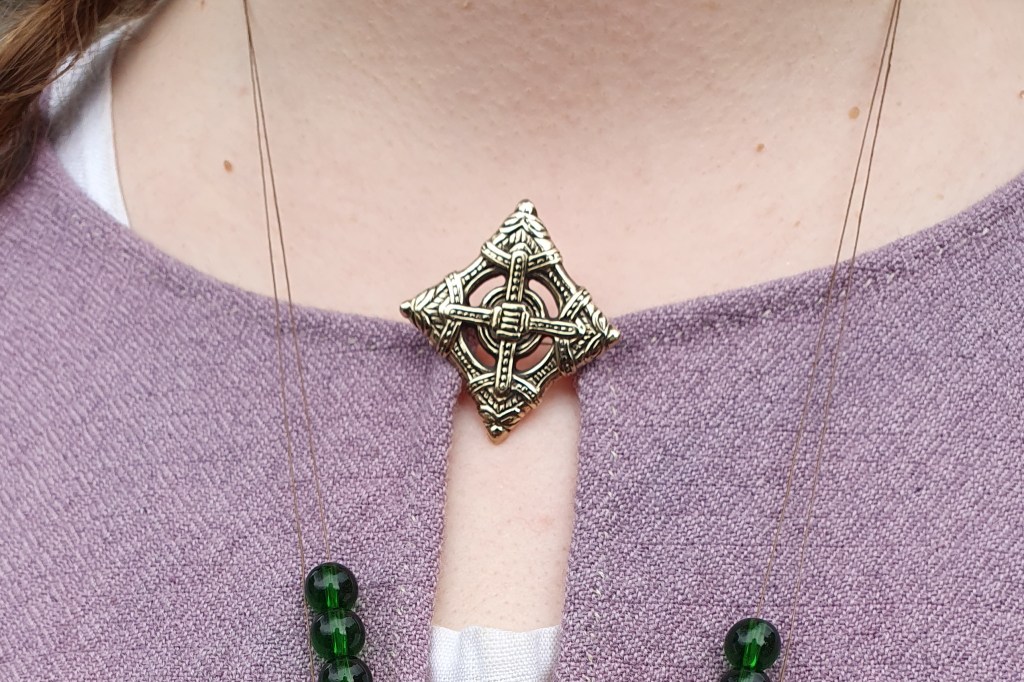
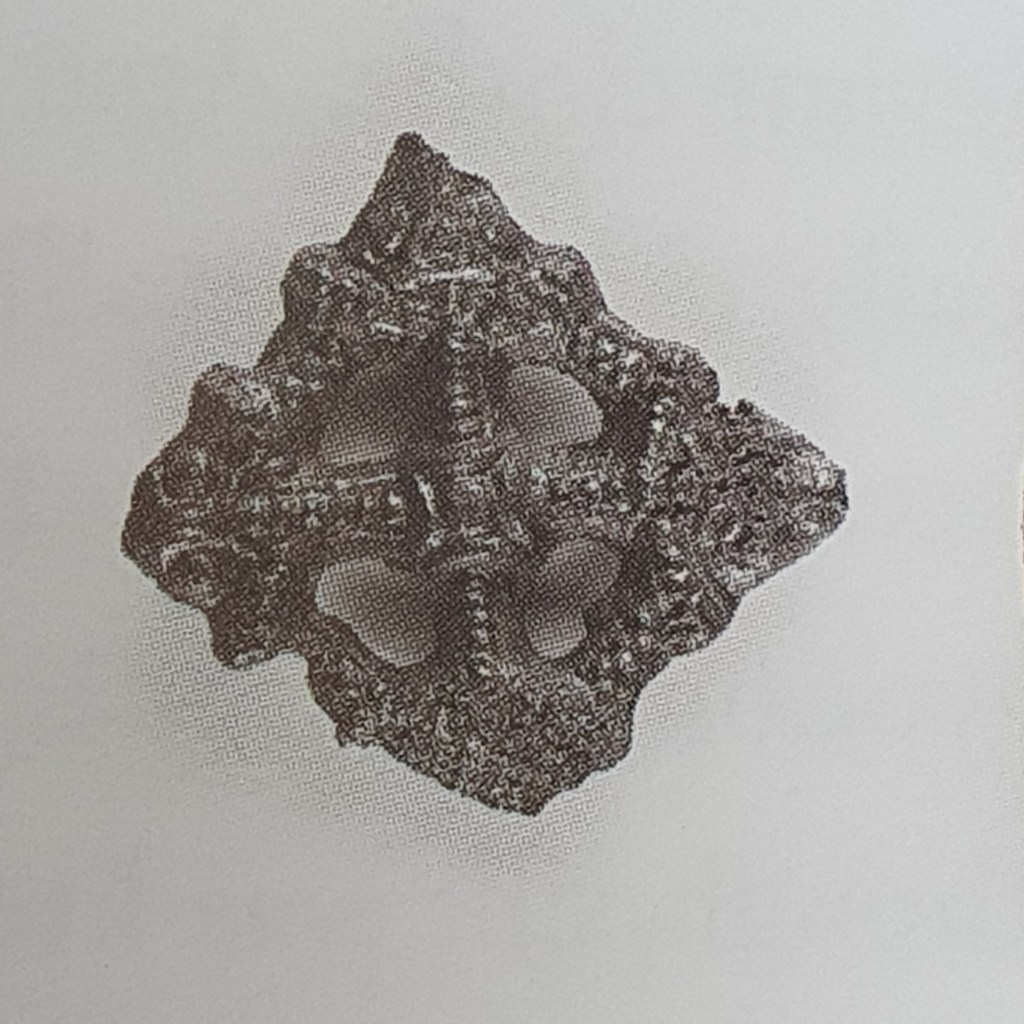
Lozenge brooch in lead alloy (E81:4681.) 10th century, Winetavern Street.
E81:4681. Source: Wallace (2016, p. 369.)
The brooch at my neckline is a pewter lozenge brooch, a style from England originally that made its way to Viking Dublin in the 10th century alongside the more common disc brooches. (Wallace, 2016.) Lead alloy jewellery items like these brooches have been found in large numbers at several English sites, most notably York and Cheapside in London, where they were most likely being produced. (You can see the whole Cheapside Hoard on the Museum of London collections website.) It is of course possible that local copies of these foreign pieces were being produced in Viking Dublin, but we cannot know for sure if this example is imported or a homegrown copy.
Such items would have been affordable and easy to produce, but might have cost a little more than some of the simpler styles of fastenings made from wood or bone. (Mainman & Rogers, 2000.) My version is not a replica of E81:4681, as I couldn’t find anybody making them. It is however a copy of an extremely similar brooch found in Lincolnshire, made by Blueaxe Reproductions.
Bead necklace (E81:4869 & E81:4870.) 10th century, Winetavern Street.
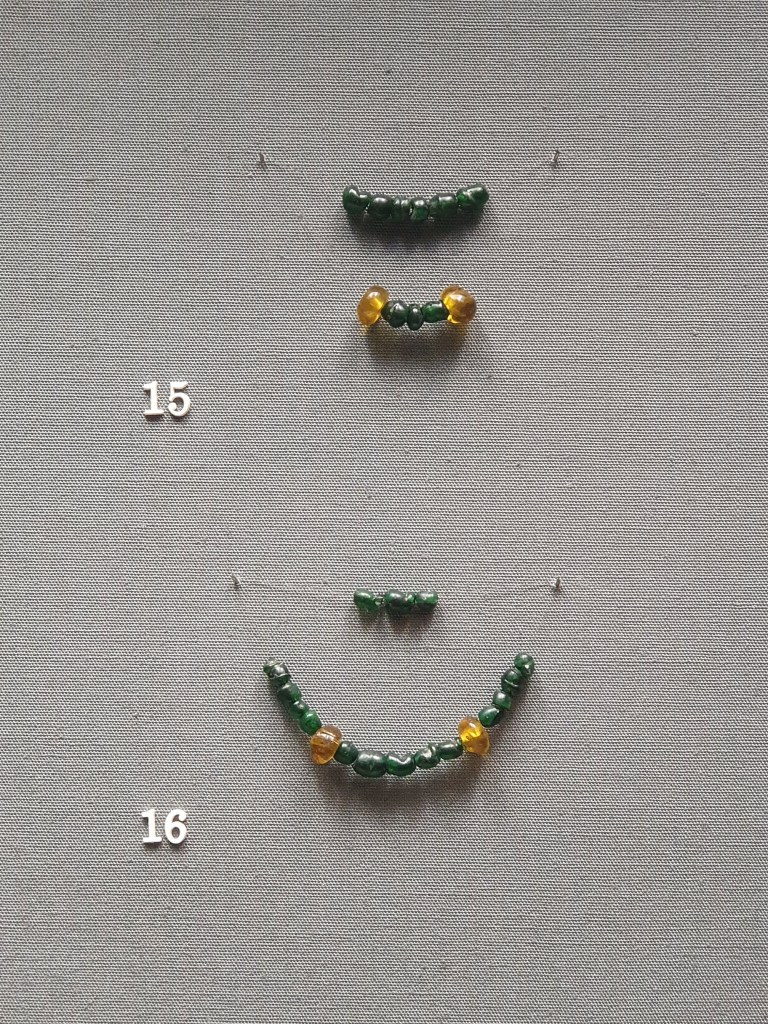
The Catalogue of Exhibition (1973) for the National Museum of Ireland describes E81:4870 as follows: “Thirteen green glass beads, two amber beads and four fragments of green glass beads (not exhibited.) The glass beads are globular and coiled and measure from 3mm. to 7mm. long. The amber beads, light in colour, are 6mm. in diameter. 10th century. Winetavern Street.” with E81:4869 being described as “Similar in every way to those described above.” They were found scattered together in the same area in the street, so were catalogued and displayed together.
E81:4869 & E81:4870 on display at the National Museum of Ireland.
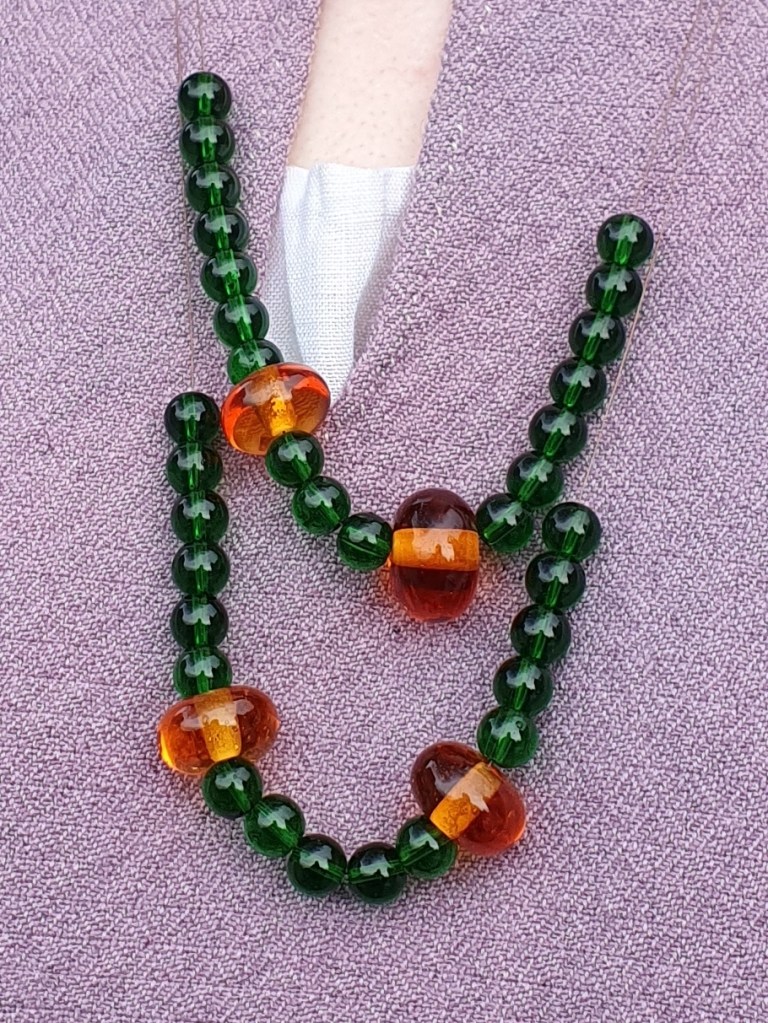
I put together my necklaces using some vintage green glass beads and some faux-amber glass beads from Tillerman Beads. My beads are ever so slightly larger than the originals and they are far more even- the original green glass beads were quite crudely made with lots of lumps and bumps. They are however close in colour and size, with the threading order being left up to interpretation. It is unknown what the originals were threaded with due to deterioration of the threading medium, but I chose to use undyed linen thread as it would have been readily available at the time.
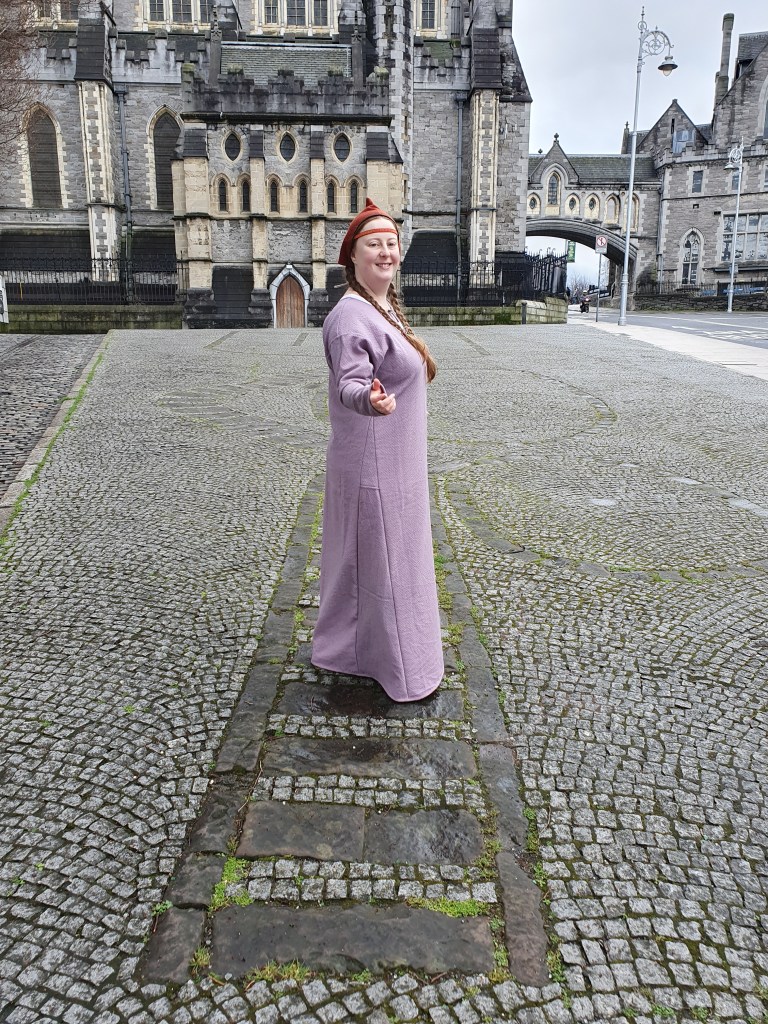
Wool dress in 2/1 diamond twill, mimicking lichen purple (and woad?) dye. 10th century, inspired by several Dublin textile fragments.
My 10th century dress is made of a lightweight and fine 2/1 diamond twill wool, which was bought secondhand from a friend. It was not dyed naturally, but with modern chemical dyes in the pursuit of quite a different shade than it ended up. I use it here in order to mimic a shade of lichen purple, a dyestuff that was found on numerous textiles in Viking Dublin (Walton, 1988.) An exhaustive catalogue of all the textiles found in Dublin (of the kind we have from York!) is sadly not available to my knowledge, so basing my textiles on specific individual finds has been challenging. Pritchard (2020) does however mention a mid-10th century fragment of 2/2 chevron twill from the Fishamble Street site that tested positive for lichen purple and describes it as the “finest of the warp-chevron twills” from that deposit. The finest examples of twill weave wools from Dublin are equivalent in quality to those found in high status contexts at Cnip, York, London and Birka. This indicates that there were Hiberno-Scandinavian folks living within Dyflin that had both the money and connections to own some very nice cloth, potentially imported from abroad. (Pritchard, 2014.)
I am stood on the site of the original Viking Age dwellings on Winetavern Street. I’d invite you in, but it’s a bit drafty these days!
When it comes to lichen purple itself, I cannot be certain that this shade is perfect as it was not dyed naturally. There are a great many species of lichen that produce orchil dye and many of them produce more of a magenta or hot pink than a modern purple! Lichen are also slow-growing and many species are protected, so collecting them for the purpose of anything other than mini-dyebaths is generally discouraged. If you are not convinced by this colour representing lichen purple alone, there is a contemporary find of fine diamond twill from London dyed with lichen purple and woad, both dyestuffs being commonly found (albeit not together) among the Dublin textiles (Pritchard, 2020.)
Another cool thing about this fabric that I wasn’t sure where else to mention: it has been suggested that fine diamond twills like these were being polished by Viking Age Dubliners in order to bring out the natural check pattern that is produced when weaving them. The broken remains of what is thought by archaeologists to be glass smoothing stones (found all over the Viking world, including in York) were recovered during the Dublin excavations. When rubbed with a smooth surface like these glass proto-irons, it can cause the surface of wool cloth to become shiny and smooth, bringing out the details of the weave (Pritchard, 2014, 2020.) I think that’s pretty cool, but it has not been proven just yet!
In terms of pattern, I kept it very simple as I generally do. I made a slim-fitting skirted dress with side gores from the waist, underarm gores for movement and a round keyhole neckline. The tunics from Skjoldehamn, Moselund and Kragelund (dated to late 10th-early 11th century) all feature similar constructions with mostly rectangular bodies and triangular gores to add width and shape. Contemporary English, Scandinavian and Continental sources show ankle-length dresses fitting this silhouette on all female figures. You might also notice that my side gores have been pieced using offcuts- this is not based on a specific Dublin find, but for economy. Piecing is evidenced in several extant Viking Age garments and it demonstrates that historical people didn’t necessarily share our need for symmetry. My dress is handsewn using fine linen thread, waxed in beeswax.
Underneath, I’m wearing a bleached linen underdress of much the same construction and pattern.
Needlebound textile, based on fragment (E190:7430.) 10th century, Fishamble Street.
Detail of E190:7430. Source: Pritchard (1992) p. 102.
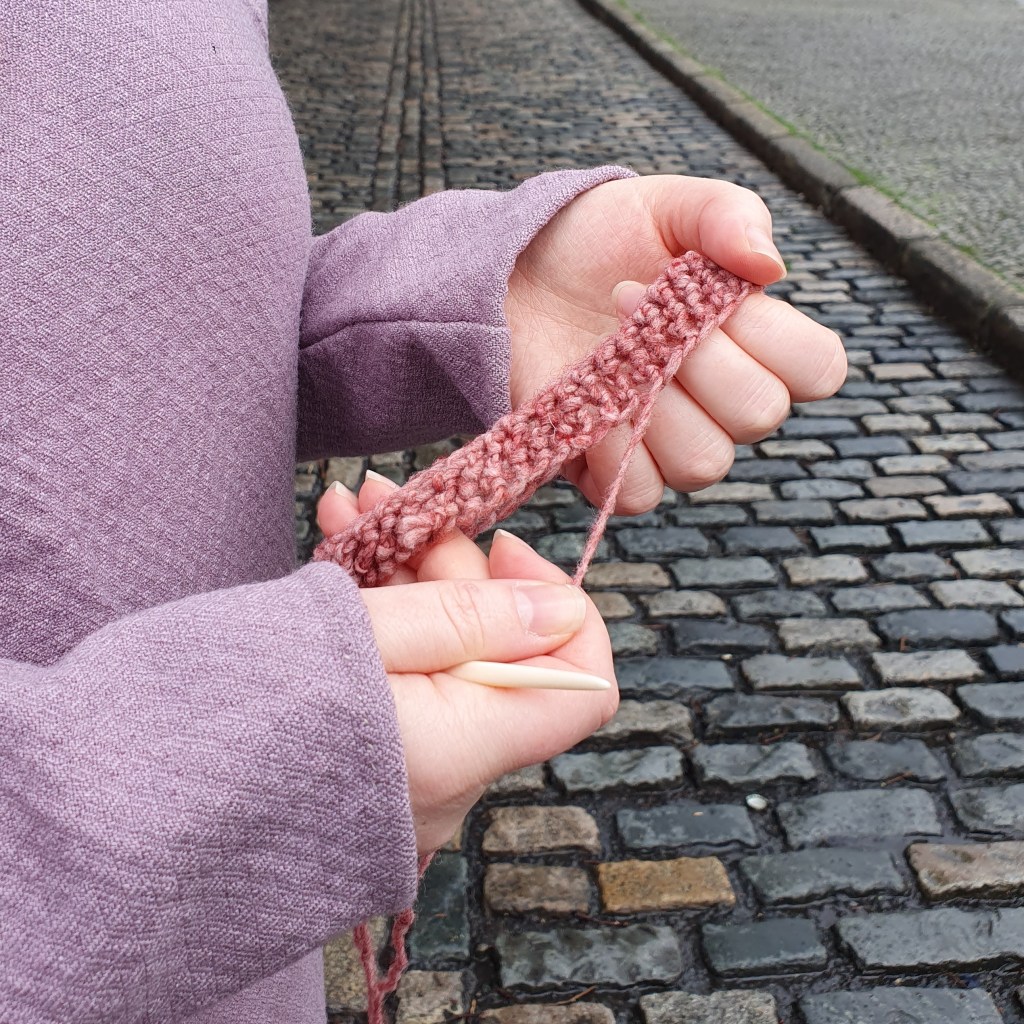
I am currently working on a pair of needlebound socks using the Dublin stitch, which was used in a tiny fragment found in Fishamble Street. The original fragment is too small to determine what item it belonged to, so I am taking inspiration from the York sock (the stitch type of which seems similar in structure to Dublin stitch!) E190:7430 is described in Pritchard (1992) as being made from two-ply (Z/S-ply) wool yarn dyed with lichen purple.
Since lichen purple is hard to come by and takes a long time to produce, I used a naturally dyed purplish madder yarn that I obtained several years ago at Wolin. My goal is eventually to have some real lichen dye to dye a fleece with and spin it into some yarn suitable for a better quality E190:7430 replica.
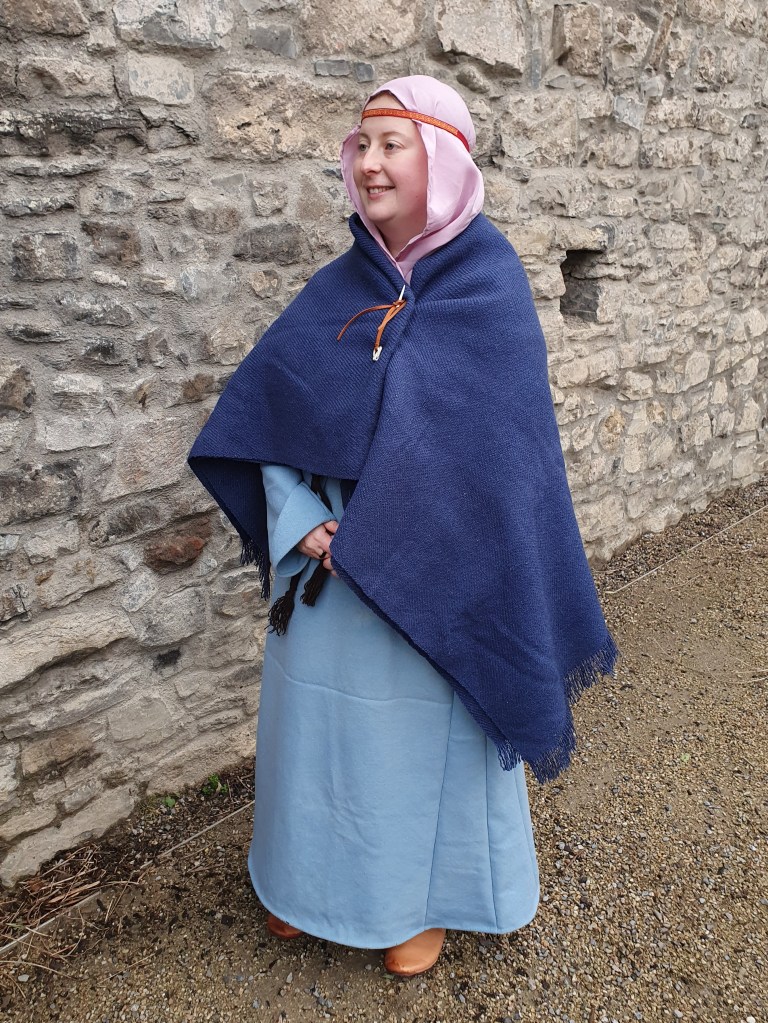
Cloak in 2/2 diagonal twill, mimicking woad dye. 10-11thC, based on several textiles from Fishamble Street and other Dublin sites.
At the top of Fishamble Street.
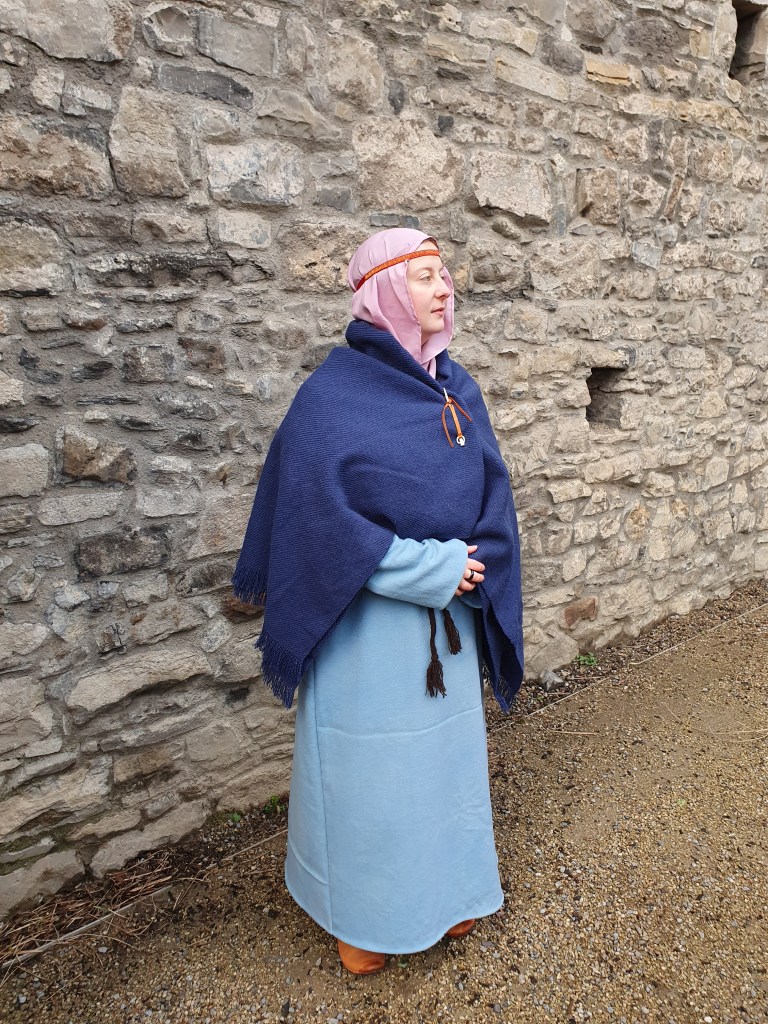
My cloak is a very simple square item measuring approximately 150x150cm, made by me from a heavy wool twill from Old Craft. Two of the edges are selvedge and the other two I unravelled for a fringe on each edge. I’m gradually working my way through tasselling it, though the current fringe seems to be holding up admirably in the meantime. It is not naturally dyed, but is similar in shade to a deep woad dye. Heavier twills using thicker and coarser yarns were found among the Fishamble Street textile assembly (Pritchard, 2014.) It is thought that some of these heavier twills may have made up outer garments like cloaks, though no whole cloak has been found there. A comprehensive discussion of the evidence for women’s cloaks in the Viking Age by Hilde Thunem can be found here.
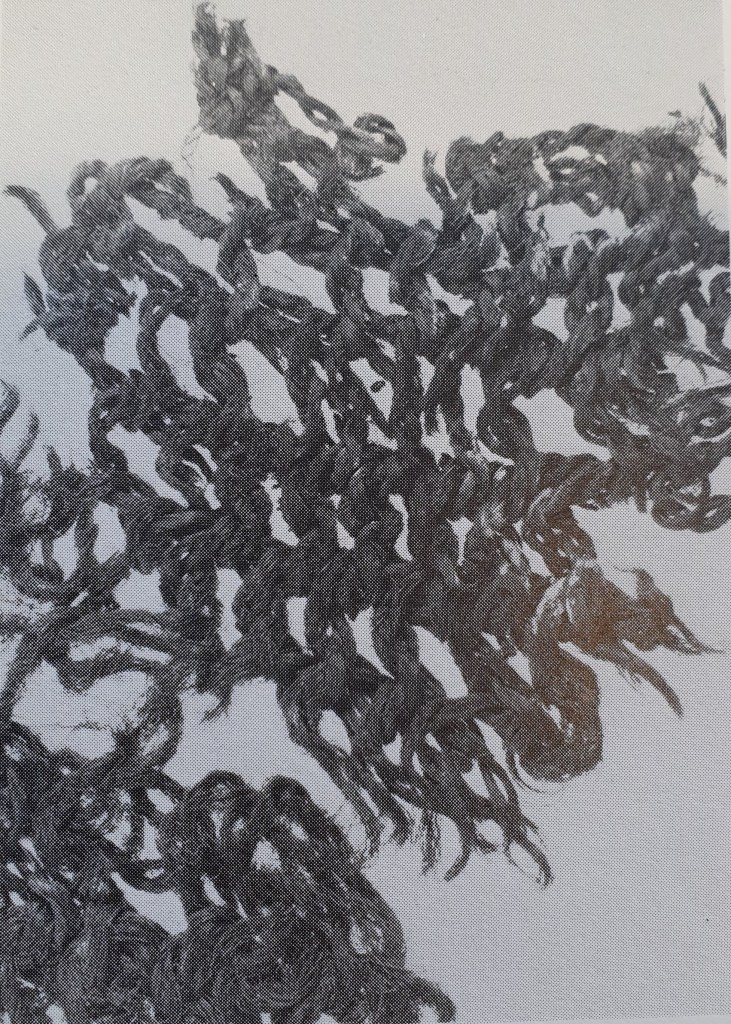
Some of these heavier twills show evidence of pile having been inserted into the weave, which would result in a shaggy and hard-wearing textile somewhat like a woollen faux fur (Pritchard, 1992.) 10-11th century finds of this type of textile from all across the Viking world supports the idea that shaggy cloaks were quite fashionable and it has been suggested that Ireland could have been one of the areas producing them. I’m already working on a pile woven cloak based on York fragments, but perhaps when I have a spare few months (so never), I could warp up my loom and weave myself a shaggy Dublin mantle. Watch this space!
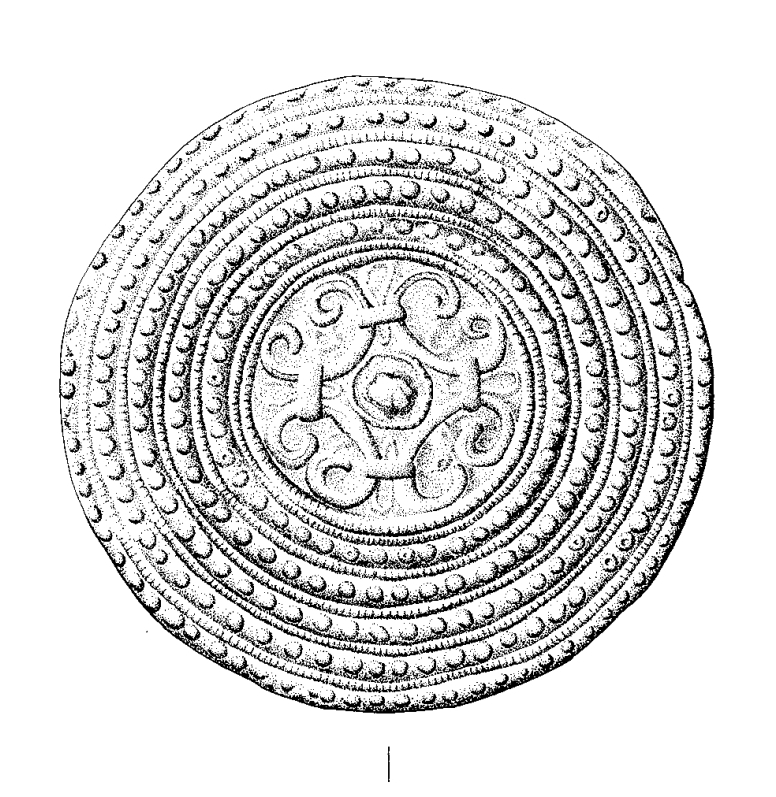
Regarding the brooch, it is an Asgard replica of a 10th century York find, 10601. (Mainman & Rogers, 2000.) Similar to my lozenge brooch at the neckline, I faced the problem of no jewellers selling good quality replicas of the Dublin finds. If I am wrong, please tell me- this is a case where I would love to be wrong (though my wallet may not.) In the discussion of my lozenge brooch, I mentioned that mass-produced lead-alloy brooches were being imported into Dublin from England, many of them being disc brooches. Over 30 disc brooches were found in the Dublin excavations (Wallace, 2016) and it’s fascinating to see how similar some of them are to finds from London and York.
York disc brooch 10601. Source: Mainman & Rogers. (2000.) p.2573.
So, I decided to choose a York brooch that was as similar to one of the Dublin examples as I could and I settled on York’s item 10601 as a replacement for Dublin’s E122:1 (found in Christchurch Place.) They are both cast lead-alloy disc brooches, decorated with a florid scrollwork design in the centre and surrounded by rings of “beaded” borders. This is a very English design and judging by their geographical spread, it would seem that mass-produced brooches like this were popular in Early Medieval trade centres like Dublin. While they were especially popular in the 10th century and that is when they first appear in Dublin, I could very well have worn this disc brooch for my 11th century impression too, as their popularity did continue well past 1000AD.
Mid 11th century outfit
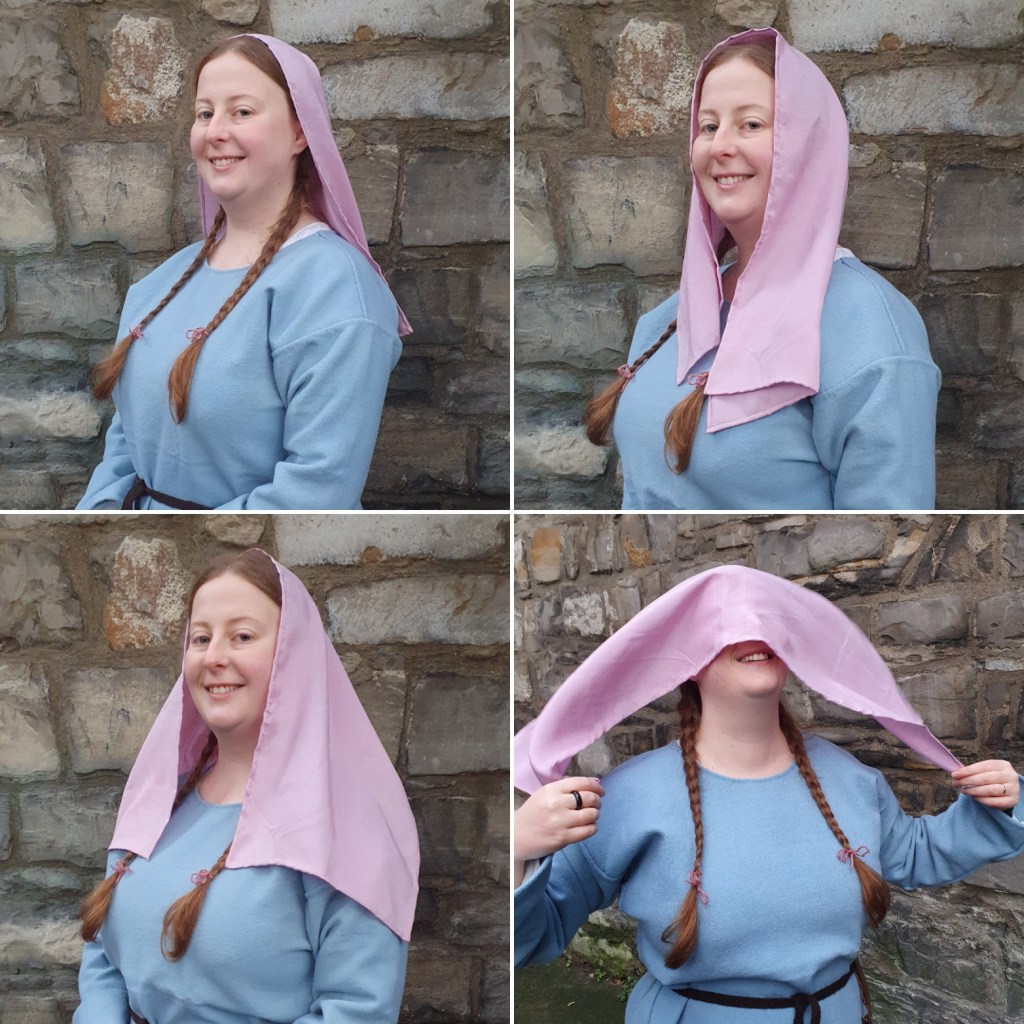
Silk veil (DHC17 or E172:9115) Early 11th century, Fishamble Street.
The various ways of wearing (and not wearing) the silk veil.
DHC17 is described as follows: “Veil-type cloth. Fishamble Street II, E172:9115. (…) Fibre: Silk. Weave: Tabby, open. Colour: Reddish brown (…) retains remains of red colour. (…) Dye: Analysis undertaken; lichen purple detected.” (Wincott Heckett, 2003.)
My replica of this item was made by Blueaxe Reproductions, using silk hand-dyed by the Mulberry Dyer. It is made to the same dimensions as the original and it is interesting to note that while this is the largest headcovering found in Viking Dublin, it doesn’t come close to the size of many veils or wimples seen in contemporary English art.
It is my personal belief that while DHC17 was undoubtedly a luxury item made from imported material, it could very well represent wealthy urban fashion as opposed to that being worn by the very highest echelons of society at the time. This could explain the restrained size of the item when compared to the idealised depictions in artwork, as it is not only more economical but prudent to wear a slightly less huge and voluminous piece of cloth in the muddy lanes of Dyflin, even if you are wealthy. This theory also applies to the size of silk caps found in Dublin and other Viking trade centres, which in reconstruction very rarely cover the whole head of an adult (I don’t buy the idea that they were all children’s garments.)
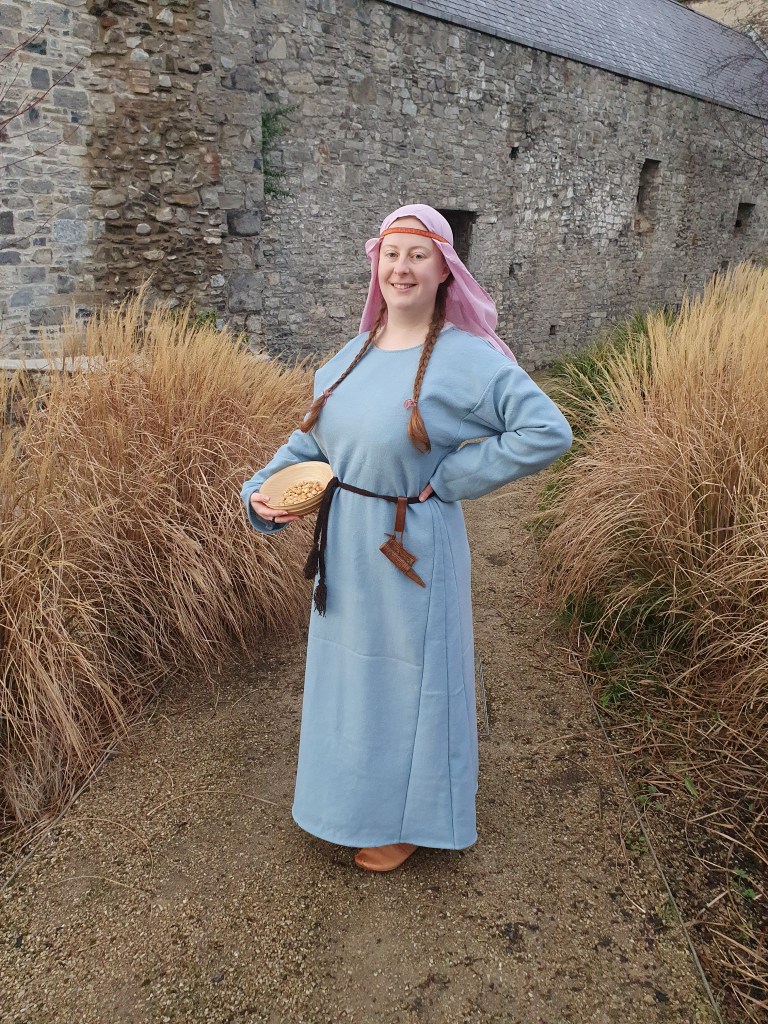
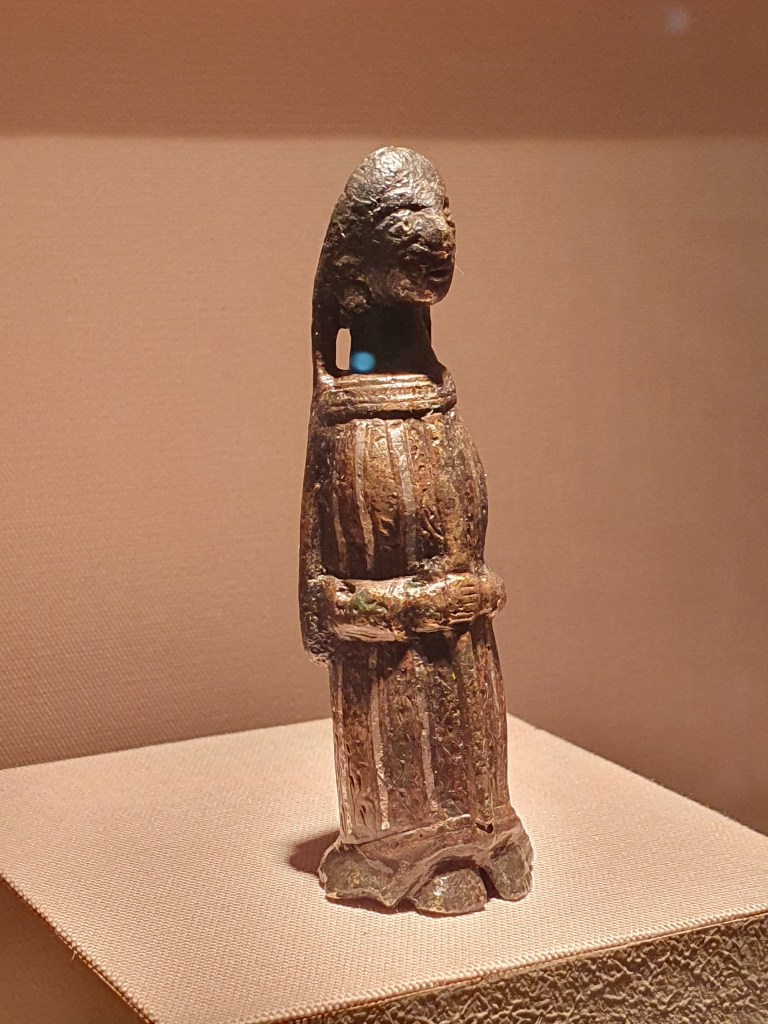
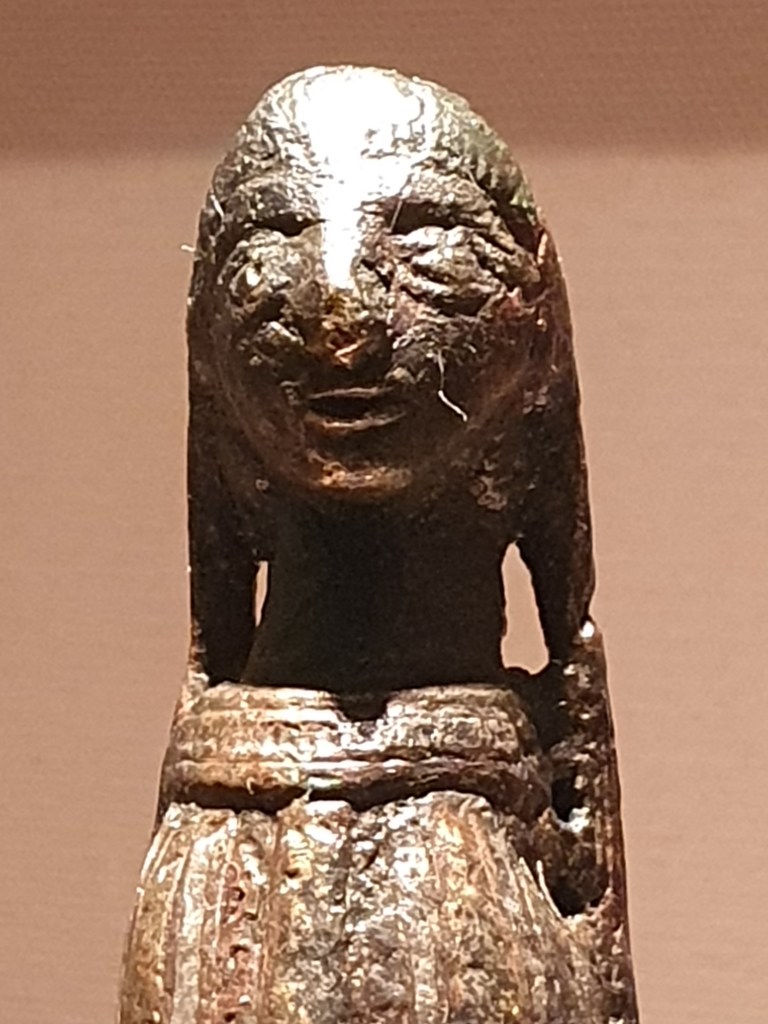
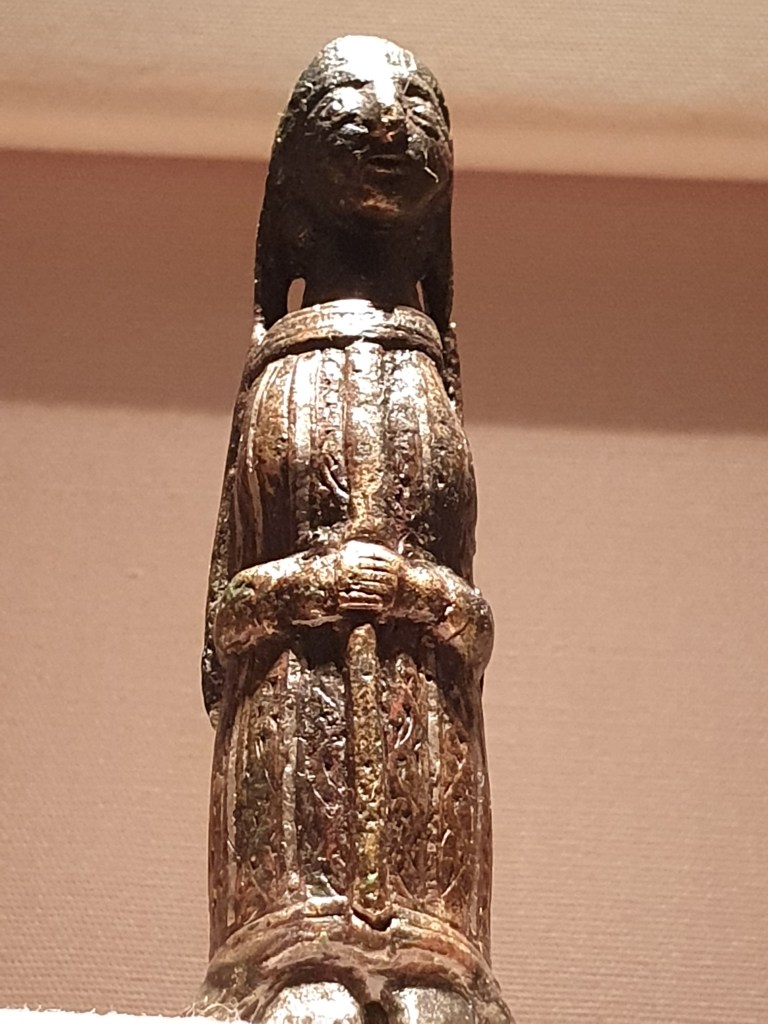
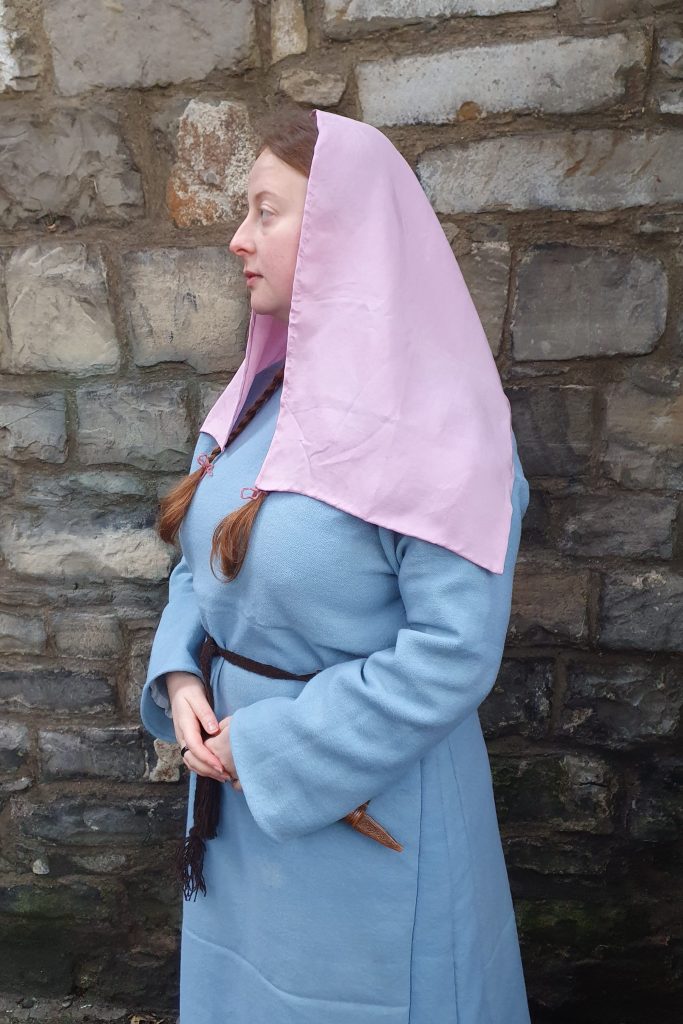
The size of DHC17 also contributed to my decision to wear my braids down- unless worn in conjunction with and weighed down by a heavy cloak, it’s not really possible to get DHC17 to cover your whole head and neck. It’s possible that commoners may have been less strict about covering their entire head and hairline in the way we see in artwork, so I tried that out here. We really don’t have much to go on, other than the remains of headcoverings (which are skimpy) and the drawings of veiled women (which are decidedly not skimpy.) A tiny 11-12th century figurine in the National Museum of Ireland (item 2002:85) is probably Irish rather than Hiberno-Scandinavian, but she also bucks the veiled trend with her braids and I am enchanted by her:
She is made from copper-alloy and came from an unknown locality in Ireland, which really sucks because she is adorable and a rare detailed female depiction from this period. If you really disagree with this styling of my veil for an 11th century impression, rest assured- I restyled it later when putting on my cloak and it resembles a more traditional 11th century silhouette.
Due to heavy winds while we were taking pictures of the rest of my outfit, I had to secure my veil with my brocaded headband in order to avoid losing it! While the Dublin dragons fragment dates to the 10th century rather than the 11th, these brocaded silk fillets were very much still in fashion by the time DHC17 was being worn. Remains of another gold brocaded band were found in nearby Christchurch Place, dating to the late 11th century. (Pritchard, 2021.)
Wool dress in 2/2 diamond twill, dyed with indigotin. 10-11thC, inspired by several Dublin textile fragments.
My dress is made from a 2/2 diamond twill wool, dyed using indigo- Viking Age Dubliners would have used woad, but the colour compound in indigo and woad (indigotin) is the exact same. Preferably I should have used a 2/1 diamond twill for this project: Pritchard (2020) notes that while 2/2 diamond twills do appear in 11th century levels at Fishamble Street, they are rare. Interestingly, plain 2/2 weaves made up the largest group of textiles at this site. Next time, I would replace this either with a 2/1 diamond twill or a plainer diagonal twill, which would be more inkeeping with evidence for Fishamble Street at this time. Underneath, I am wearing the same bleached linen underdress as I did for my 10th century set.
In terms of pattern, my blue dress is very similar to my purple one. To what extent we can really recreate a 10th century dress versus an 11th century one is limited, as we have no finds of dresses or even tunics from Ireland (or even from Britain!) for this era. My 11th century dress does have gores at the sides to add width at the skirt, but by the 11th century, women’s fashion tends to favour a long and relatively slim silhouette with skirts not being drawn as voluminous. This suited me well, as my fabric was composed of an offcut and I did not have the cloth to add too many gores.
Never underestimate the power of 24 hours in a suitcase to crease everything you own.
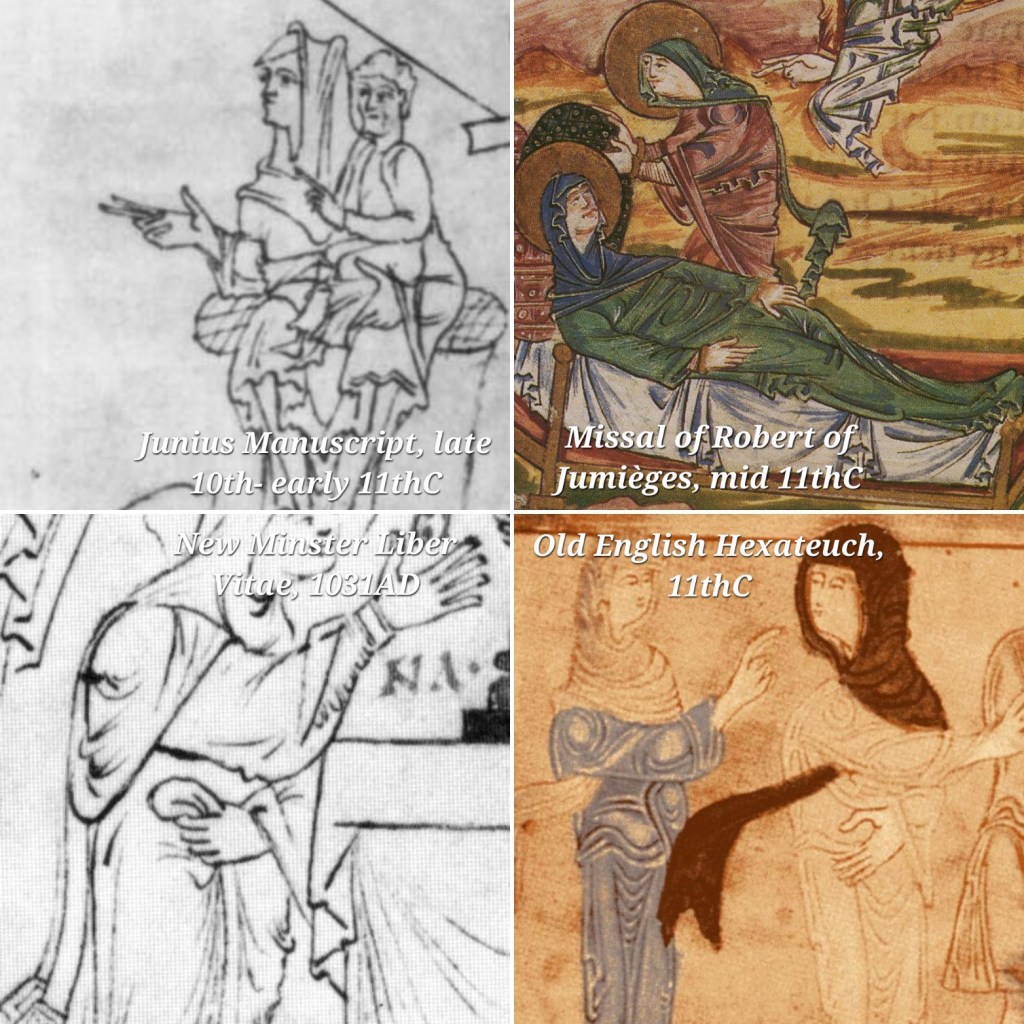
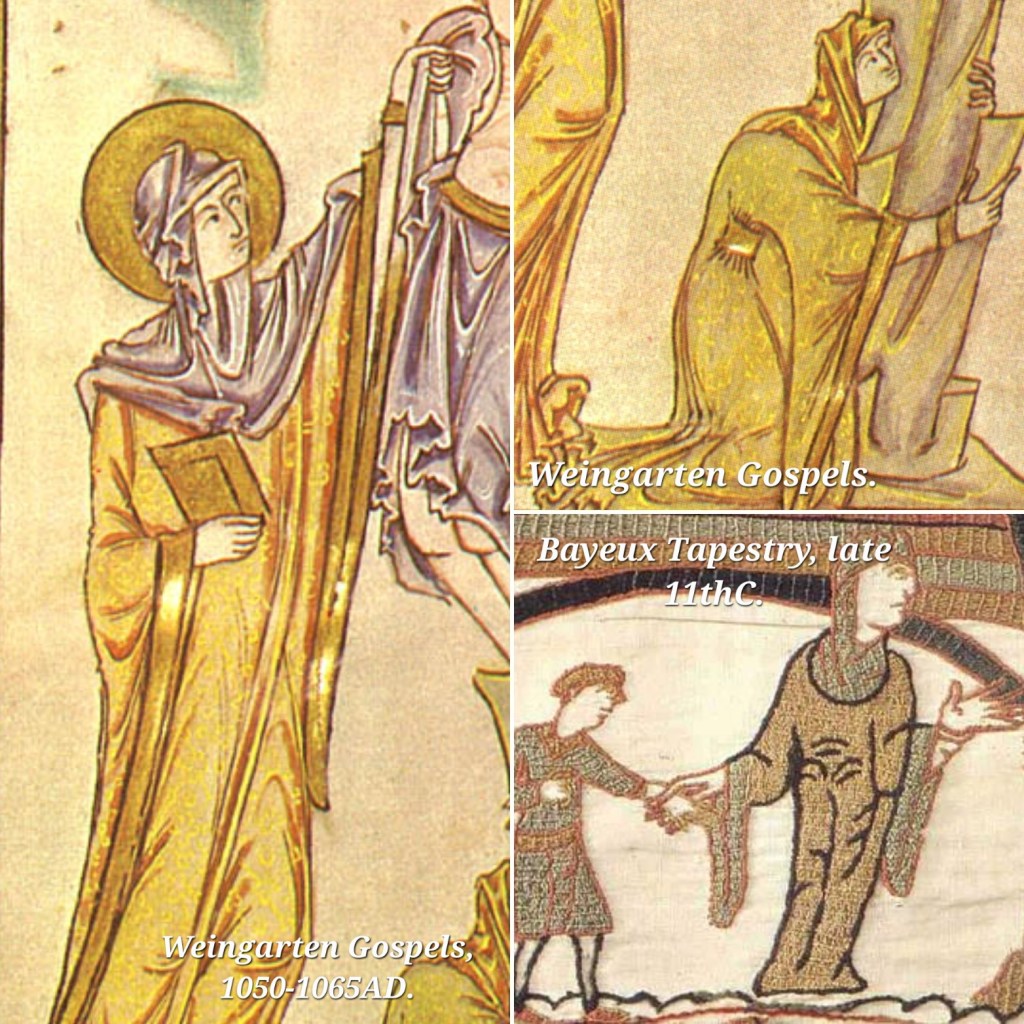
For my sleeves however, I did use a slightly looser cut, a trend which can be seen in English and Continental manuscripts from the 10th century onwards and only increases as the 11th century goes on. These sleeves would eventually become extremely wide (examples can be seen on queenly figures) and must be related to the Norman bliaut that would become in vogue in Britain after the Norman Conquest. Examine these examples of English illuminated manuscripts and artwork from the mid 10th to late 11th century and keep in mind that by the 11th century, a significant portion of the country’s ruling class was Anglo-Scandinavian:
As my Dublin 11th century lady is an urban commoner, I doubt that she would be sporting the floor-length sleeves of the royals. It would be incredibly impractical and potentially outside her price range, especially if she was using imported cloth. It is however my belief that she would be aware of the trends from abroad, as she lived in a bustling trade centre that we know was receiving regular imports from Britain and the Continent. While it’s unlikely that she would have access to the illuminated manuscripts featuring the elite that we use as our sources, we can observe a general trend of sleeve growth when comparing images of women throughout the Early Medieval period in Northern Europe. I see no reason why this trend could not have been reflective of actual clothing being worn contemporarily. I therefore feel comfortable in my mercantile lady indulging in a slightly baggier sleeve on her overdress than her grandmother might have.
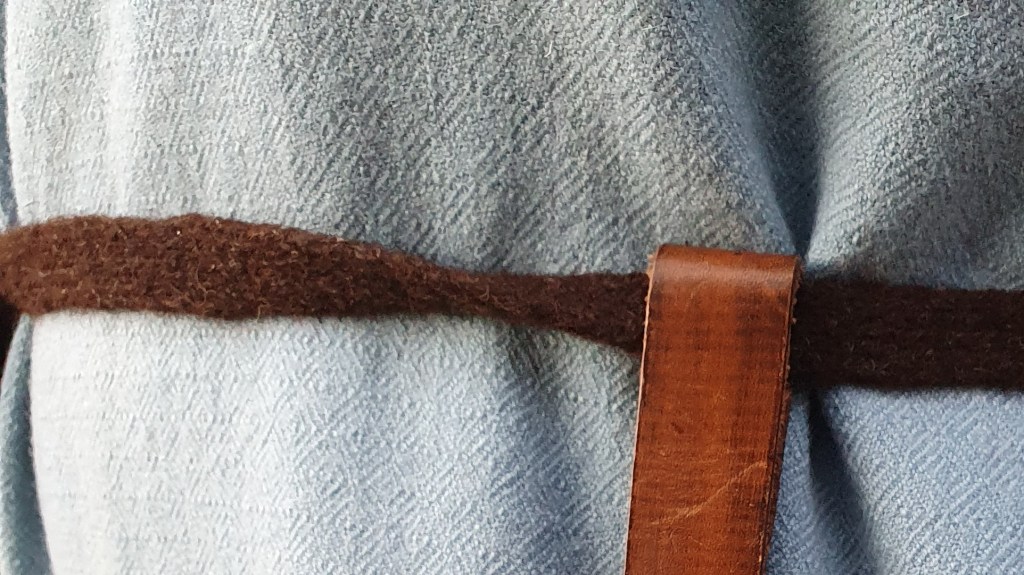
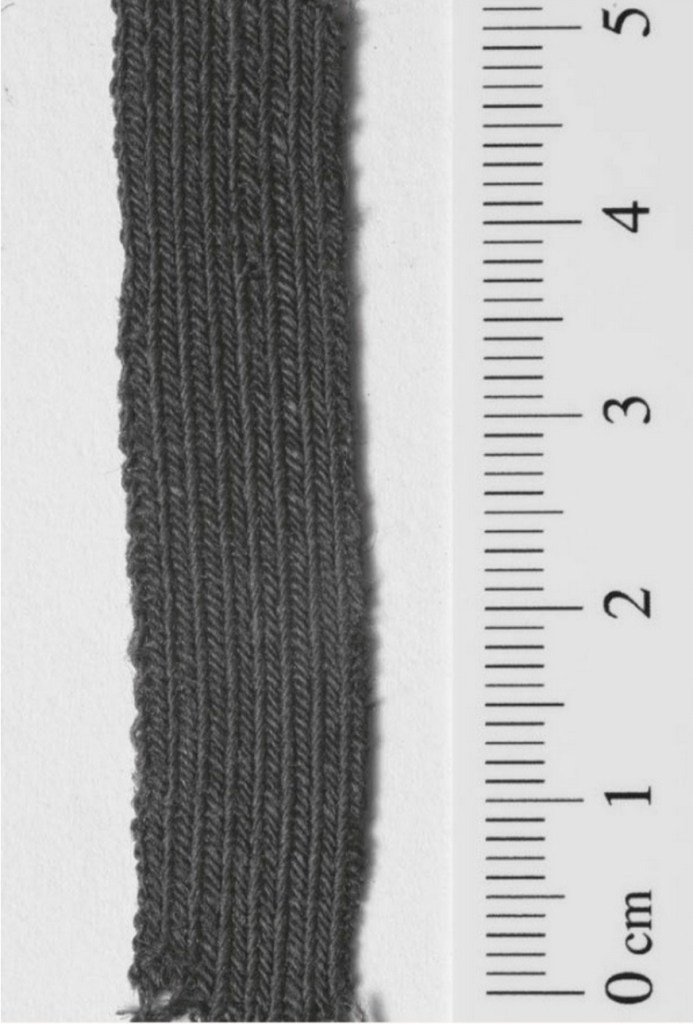
Tablet woven belt (E172:11815.) Late 10th- early 11th century, Fishamble Street.
This belt is based on tablet woven fragment of woollen braid, found in Fishamble Street and dating to the late 10th- early 11th century. The original item E172:11815 was woven on 16 four-hole tablets using a wool yarn of semi-fine fleece type (Pritchard, 2021.)
E172:11815 in Pritchard (2021.)
As I could find no details of dye analysis and images of the band show no discernable colour, I wove my first version in a naturally pigmented dark wool. Eventually my goal is to replace this with another replica made with a smoother and finer yarn, dyed with one of the natural dyes found on other Viking Dublin textiles. A smoother yarn would also improve the texture of the band, as the original still shows its pattern well and it is less defined on my version.
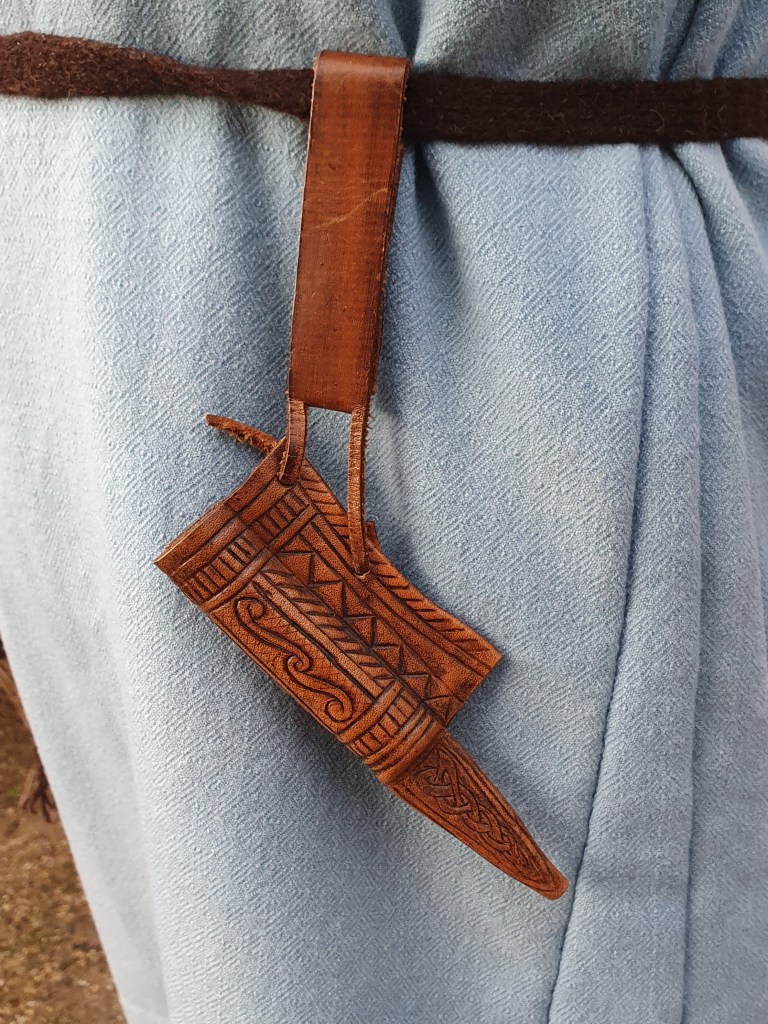
To what extent belts were worn by women in Viking Age Dublin is not known. As I wished to include my tooled leather knife sheath in this impression, I chose to include a belt so the sheath could be suspended from it. The original purpose of E172:11815 is also unknown as it survived only as a fragment, but its narrow width of 12mm and plain weave makes it quite suitable as a belt.
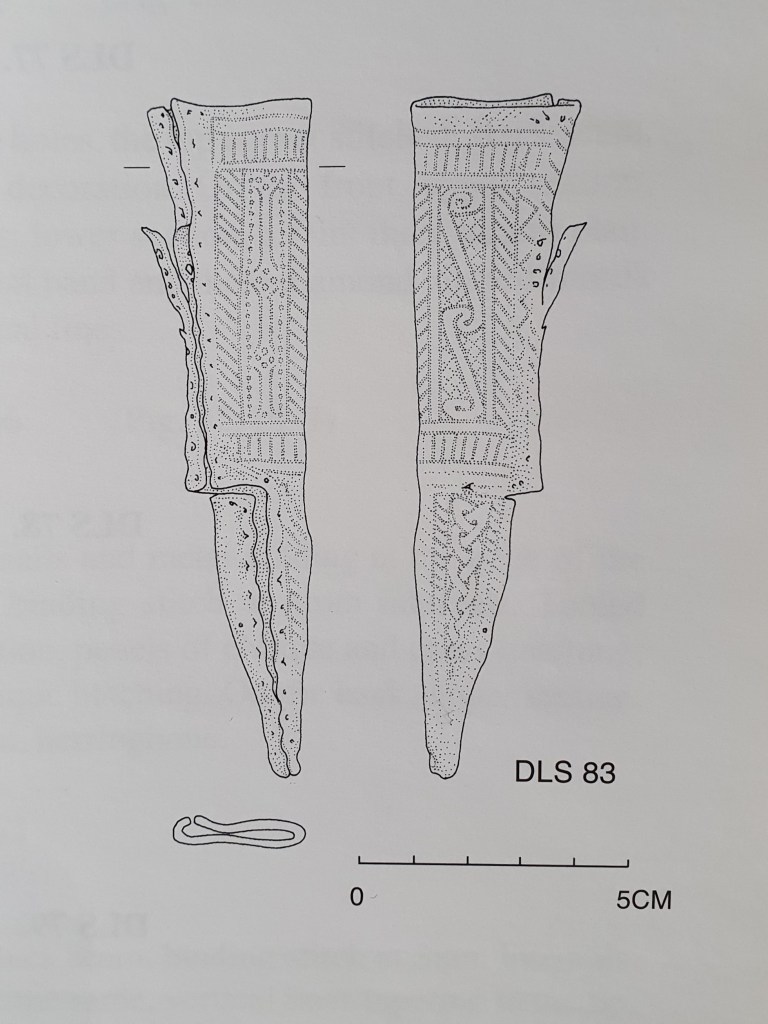
Tooled leather sheath (DLS 83 or E122:13138.) c. 1050-1070, Christchurch Place.
The leather sheath DLS 83 or E122:13138 is described in Cameron (2007) as follows: “Sheath; complete. The flap has three holes, the top corner stitched. Back seam, stitched at 5mm intervals. Tooled decoration. On the front, upper section, running scroll with hatched borders; lower section, a faint three-strand plait. On the back, upper section, a vertical band and three diamond-shaped motifs in a panel; lower section, two vertical lines.”
Dating to the mid 11th century, my sheath is classified as a “B2, winged” type. B2, winged was a new style of sheath that first starts appearing in the 11th century and apparently some of the oldest examples of it were found during the Dublin excavations. This new style was inspired by a combination of sheaths from various cultures present in 10th century Dublin, taking design features from them all in turn. The style was seemingly adopted with gusto by the leatherworkers in Hiberno-Scandivian Dublin and sheaths belonging to this style are found there for another 250 years, even surviving Ireland’s Norman invasion (Cameron, 2007.) B2, winged sheaths are commonly found tooled with decorative abstract designs, my sheath is therefore quite representative of its type.
My version was created several years ago by Merchant of Menace, to accompany a little knife with a bone handle that I use for my day-to-day Viking household tasks. I couldn’t bring my knife along with me to Ireland in my hand luggage, so you shall have to imagine I have it somewhere out of shot. (This is an issue that I am sure would have proved extremely problematic for the early Scandinavians “visiting” the Dublin area in the 9th century, had they travelled via Ryanair longships.)
DLS 83 (or E122:13138) line drawing. Source: Cameron (2007, p. 85.)
Jet ring (E81:10, E172:10608, etc.) Winetavern Street, Fishamble Street.
A selection of jet or lignite items on display at the National Museum of London.
Finger rings were found in Dublin, as well as bracelets with a D-cross section that seem to have been popular and many other fragments. The broken and unfinished pieces would provide evidence for jet being worked in the town, after being imported from Whitby. Wallace (2016, p.298) suggests that one possible location for jet working could be in Yard 2 of Fishamble Street, where it is certain that amber was being worked on a commercial level in the Viking Age.
My ring is made from agate instead of jet, as I couldn’t find an affordable jet ring in one piece like this. However, it has the same D-cross section as several of the Dublin rings and is solidly black enough (and light enough in weight) to give the same impression as jet. If I could ever find a piece of jet large enough and a craftsperson willing to make it, I’d love to replace it with a jet or lignite version in the future.
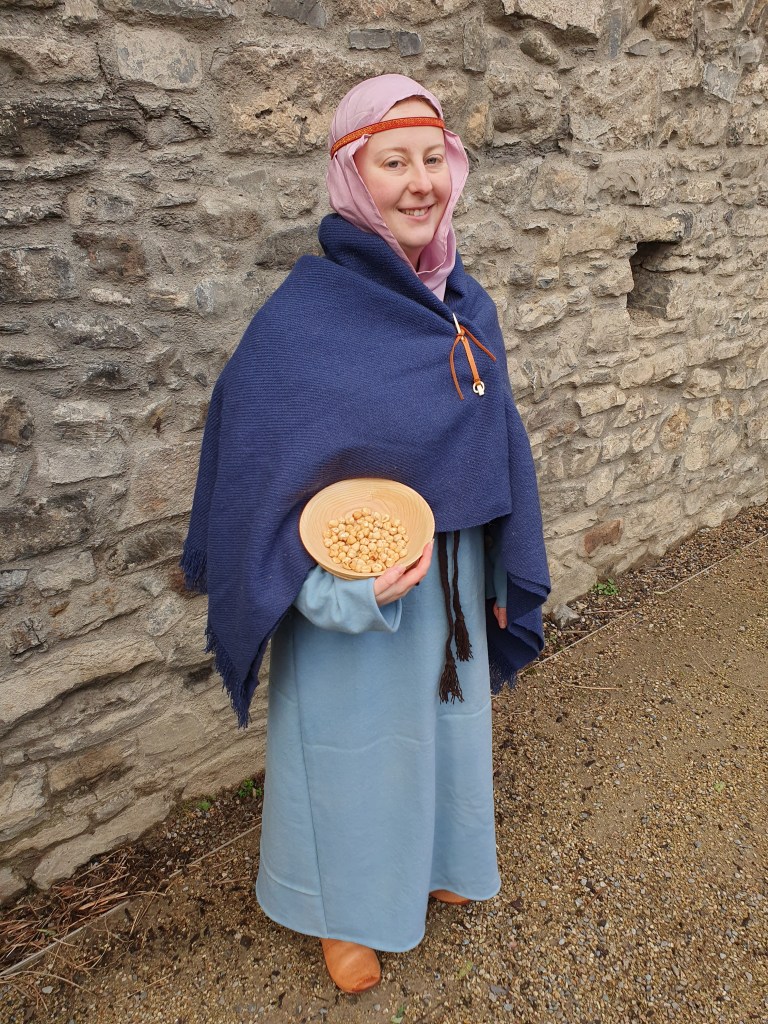
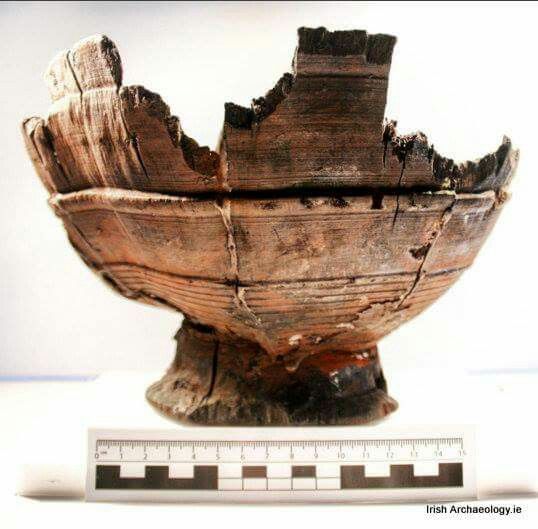
Turned wooden bowl. 11th century, Fishamble Street.
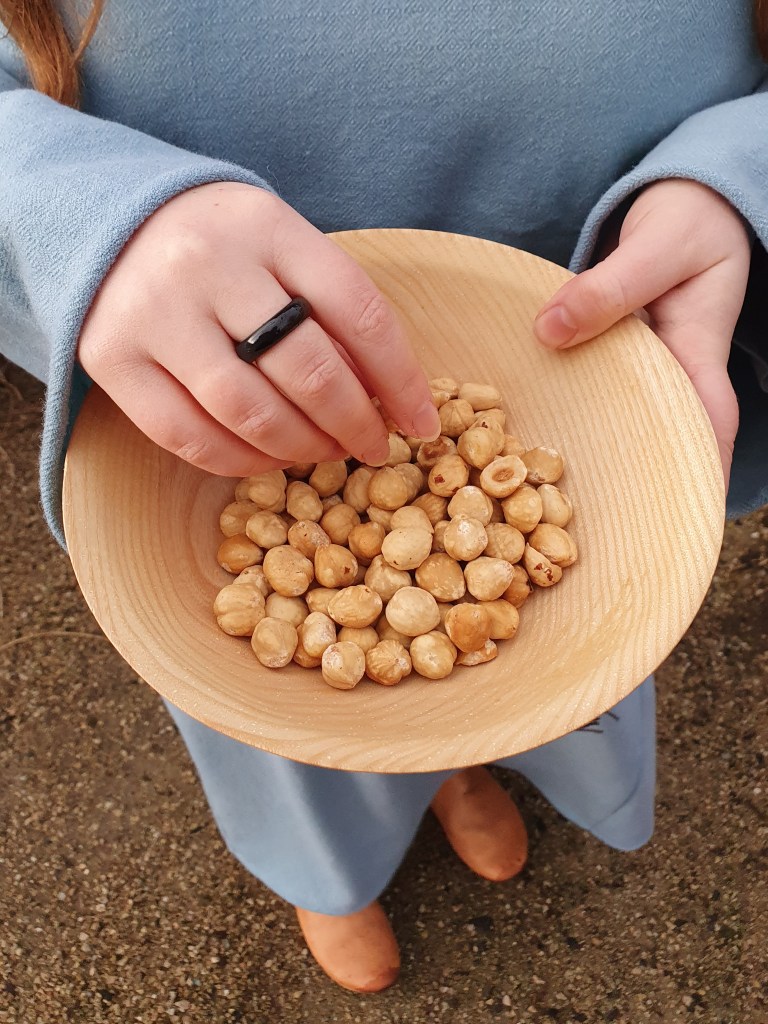
The original was made of alder, whereas mine is of ash. It was made by Waffle and Wood based upon a photo shared by Irish Archaeology.ie. It is not mentioned in Viking-Age Decorated Wood (Lang, 1988), however, this is not unusual- I don’t know of a publicly available exhaustive catalogue of all the wood found in Wood Quay. Turned bowls and cups are commonly found at Early Medieval sites and Dublin is no exception. The fragments of at least 600 turned wooden vessels and 300 cores were found across numerous sites in the town. Wallace (2016, p.251) suggests that the sheer volume of finds would support turned vessels not only being used in the town often but also being produced there too.
My replica.
Stylistically, the Dublin bowls generally tend to be straight-sided- this bowl does not fit the trend. However, it is decorated on the outside with incised lines, which is a feature seen on other contemporary bowls from the area. The fact that the bowl retained its foot after the turning process is interesting, as they are usually removed. We’re not sure exactly what the bowl was made to contain or if it even had a specific purpose- I used mine to hold some hazelnuts, which were a popular foodstuff in Viking Dublin (Geraghty, 1996.)
I for one would absolutely love some more information on this item from Fishamble Street!
Source: Irish Archaeology.ie
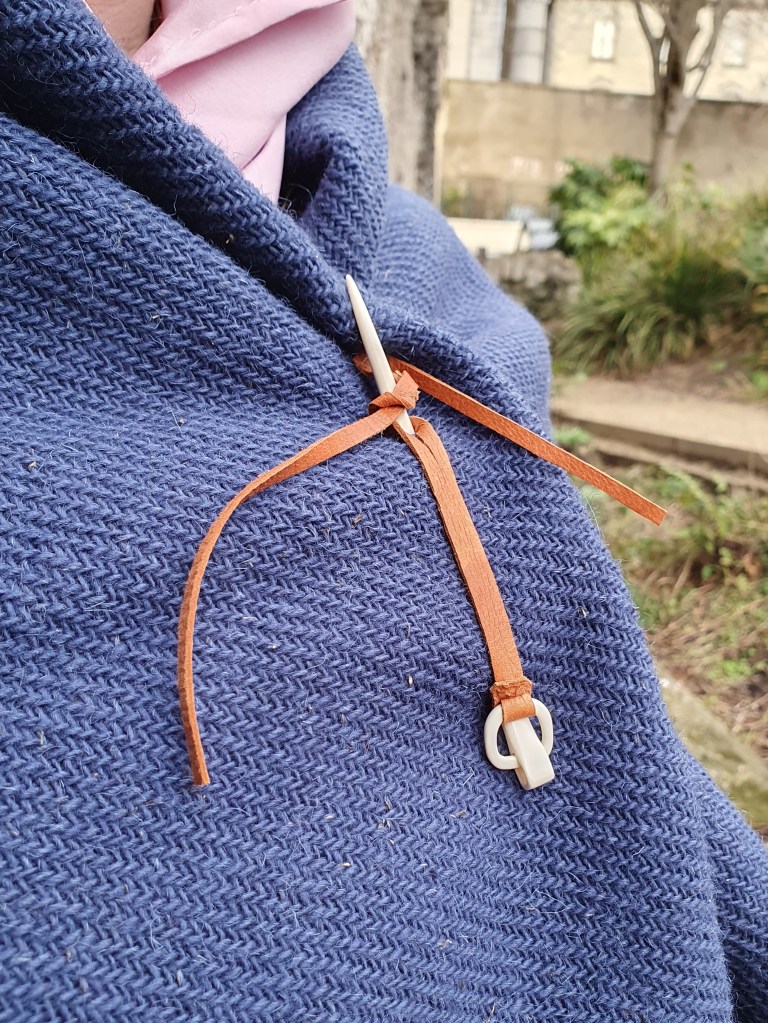
Bone ringed pin (E172:13988.) 945-55AD, Fishamble Street.
Now is my time to admit a small mistake. I’m not sure if it was the wind, the cold or the excitement getting to me, but I somehow got it into my head that the bone ringed pin E172:13988 dated to the 11th century. It does not, it was dated quite concretely using a coin found on its level to 945-55AD- so it would have been more at home perhaps with my 10th century set. Whoops! Then again, ringed pins of this design (albeit in metal) are a Hiberno-Scandinavian specialty that became popular in the 10th century in Dublin and remained so for another 200 years at least (Fanning, 1994.) They are thought to be Irish in origin and adopted into Hiberno-Scandinavian fashion, where they spread in popularity to Britain and Scandinavia. So perhaps, had I worn a metal version of this pin, it wouldn’t be such a mistake after all!
E172:13988 on display at the National Museum of Ireland.
The remarkable and rare thing about E172:13988 is that it is made entirely from bone. My replica (which is highly cherished and only worn this once for the photos!) was made and gifted to me by my friend Peter Merrett. Peter, like the Viking Age craftsman who made the original must have been, is marvellously talented and has decades of experience in boneworking. Despite this, he said that he would not be making any more of these in a hurry, as they are difficult to make and too easy to break. He reckons that E172:13988 may have been a show of skill for the craftsman or perhaps one of those “really good ideas” that you quickly realise is not so good once you start.
Fanning (1994) describes E172:13988 as follows: “Bone. Polished bone shank tapers to fine point. Head is actually perforated in an hourglass fashion but is nicked below to give the impression of being looped, hence skeuomorphic of a metal looped-over pin. The small lozenge-sectioned ring is slightly damaged, with one narrowed end complete. It swivels freely in the pin-head.” (p. 113.)
I had to look up what “skeuomorphic” meant and apparently it means when a thing has a feature that is included to make it look functional, but it’s purely decorative. In the case of E172:13988, that means that the original ring didn’t originally swivel round in the hole of the pin, whereas Peter’s version does (as he is a master of his craft and was able to manage without breaking it!) You learn something every day!
References
Cameron, E. (2007). Scabbards and Sheaths from Viking and Medieval Dublin. Dublin: National Museum of Ireland.
Fanning, T. (1994). Viking Age Ringed Pins from Dublin. Dublin: Royal Irish Academy.
Geraghty, S. (1996). Viking Dublin: Botanical Evidence from Fishamble Street. Dublin: Royal Irish Academy. p.43.
Mainman, A. J. & Rogers, N. S. H. (2000) Craft, Industry and Everyday Life: Finds from Anglo-Scandinavian York. York: Council for British Archaeology. p.2571-2574.
National Museum of Ireland. (1973). Catalogue of Exhibition. Dublin: Department of Education.
Pritchard, F. (1992). Aspects of the Wool Textiles from Viking Age Dublin. In: Bender Jørgensen, L & Munksgaard, E. (Eds). Archaeological Textiles in Northern Europe: Report from the 4th NESAT Symposium. Copenhagen: Det Kongelige Danske Kunstakademi. pp.93-104.
Pritchard, F. (2014). Textiles from Dublin. In: Coleman, N. L. & Løkka, N. (Eds). Kvinner i vikingtid. Oslo: Scandinavian Academic Press. pp.224-240.
Pritchard, F. (2020). Twill Weaves from Viking Age Dublin. In: Bravermanová, M., Březinová, H. & Malcolm-Davies, J. (Eds). Archaeological Textiles – Links Between Past and Present NESAT XIII. Langenweißbach: Verlag Beier & Beran. pp.115-123.
Pritchard, F. (2021). Evidence of tablet weaving in Viking-age Dublin. In: Pritchard, F. (Ed). Crafting Textiles: Tablet Weaving, Sprang, Lace and Other Techniques from the Bronze Age to the Early 17th Century. Oxford: Oxbow Books.
Wallace, P. F. (2016). Viking Dublin: The Wood Quay Excavations. Sallins: Irish Academic Press. pp.251-309.
Wincott Heckett, E. (2003) Viking Age Headcoverings from Dublin. Dublin: Royal Irish Academy.
If you liked this article, please consider following my blog for updates when I post. If you really liked it, please consider donating to my Ko-Fi account and help me afford to keep the lights on! You don’t need to make an account and I keep 100% of whatever you decide to tip me.
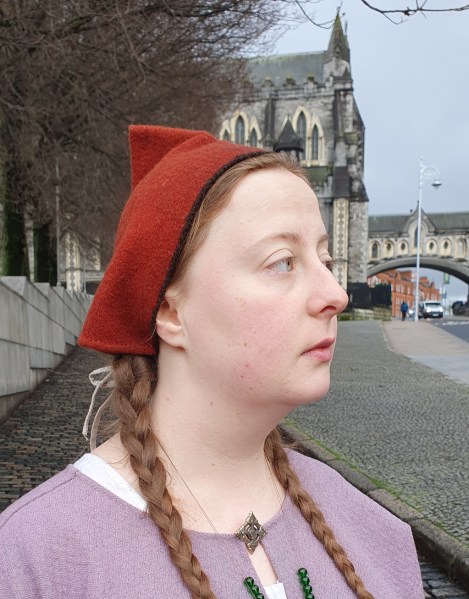
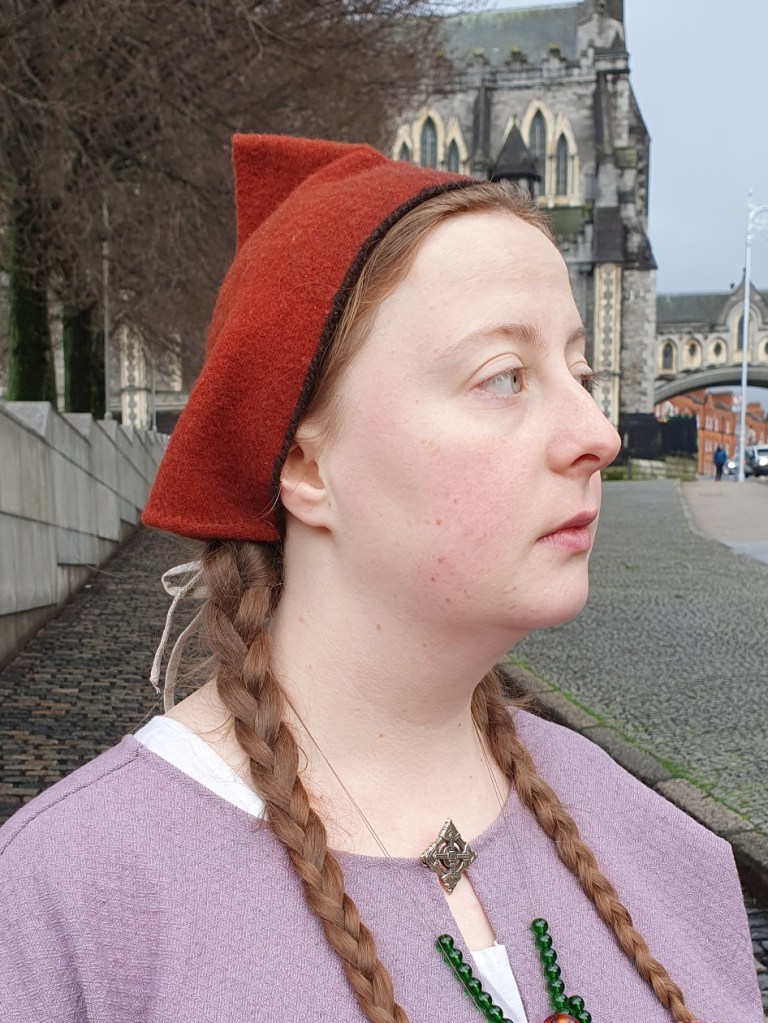
This cap is based on item DHC33 from Fishamble Street, just one of the roads in Viking Dublin’s Wood Quay neighbourhood. All of the street photographs were taken on location in nearby Winetavern Street, Dublin.
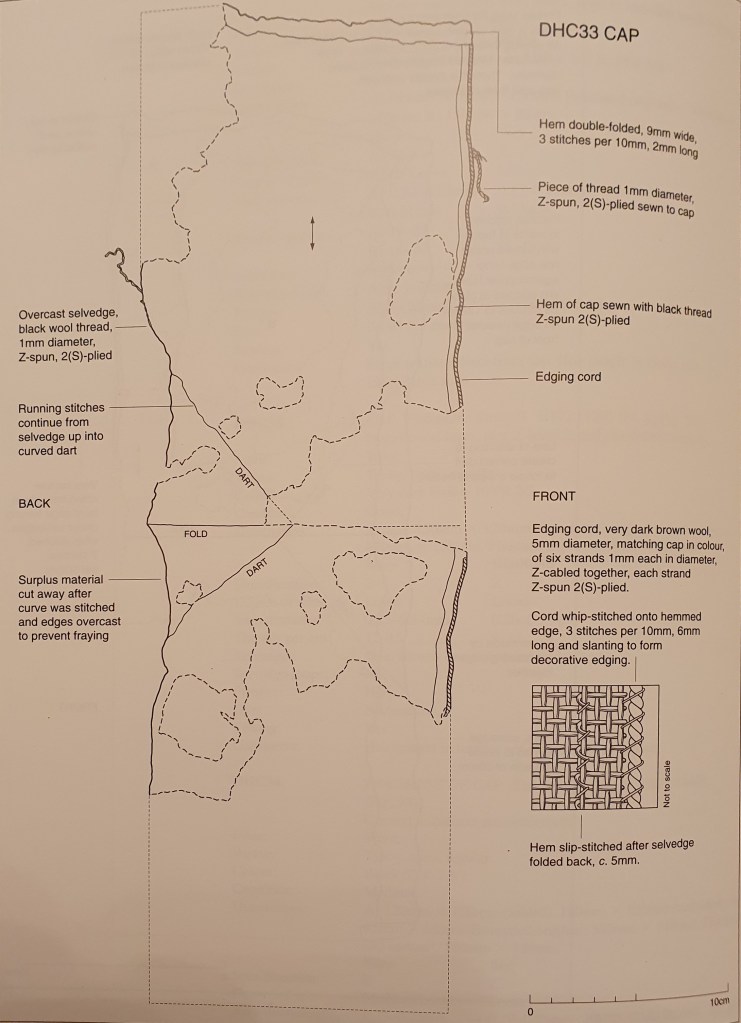
DHC33 was made of wool and like all of the Dublin caps (silk or wool) it was woven in tabby/plain weave. It was found in layers that dated to the early-mid 10th century and its estimated size as a cloth piece was 490mm x 185mm. (Wincott Heckett, 2003). The other caps found in Dublin are extremely similar in size to DHC33, which could indicate a central production site somewhere in Viking Dublin.
Fig. 53. DHC33 (E172:11205), cap from Fishamble Street. From Wincott Heckett, E. (2003) p. 60.
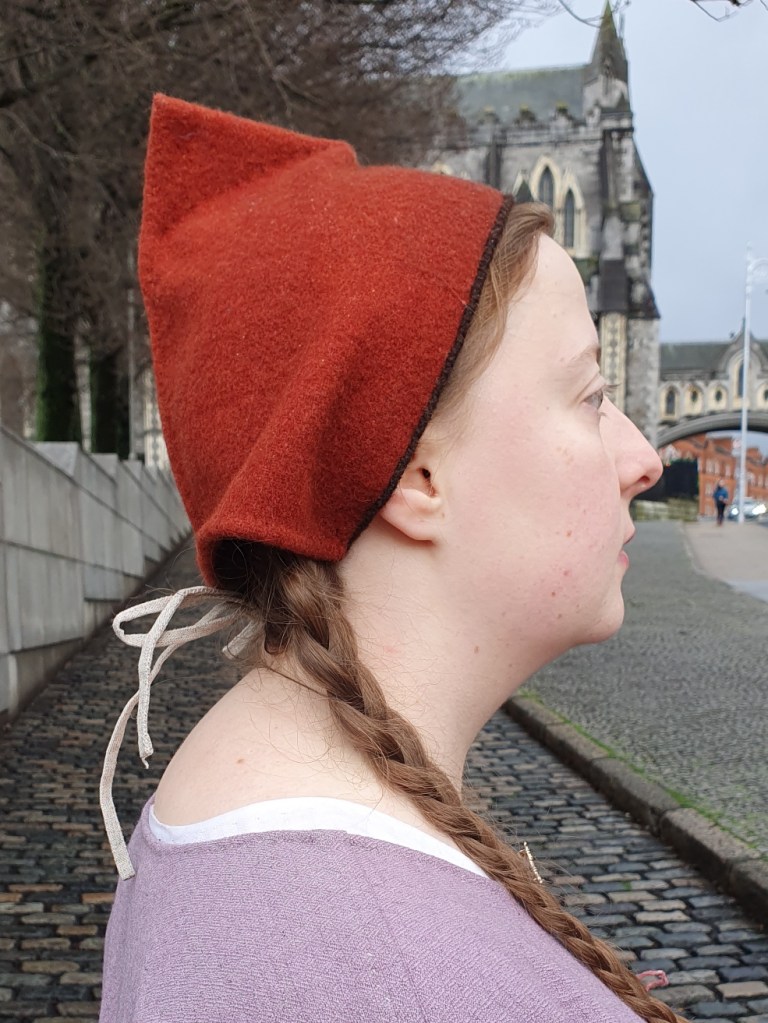
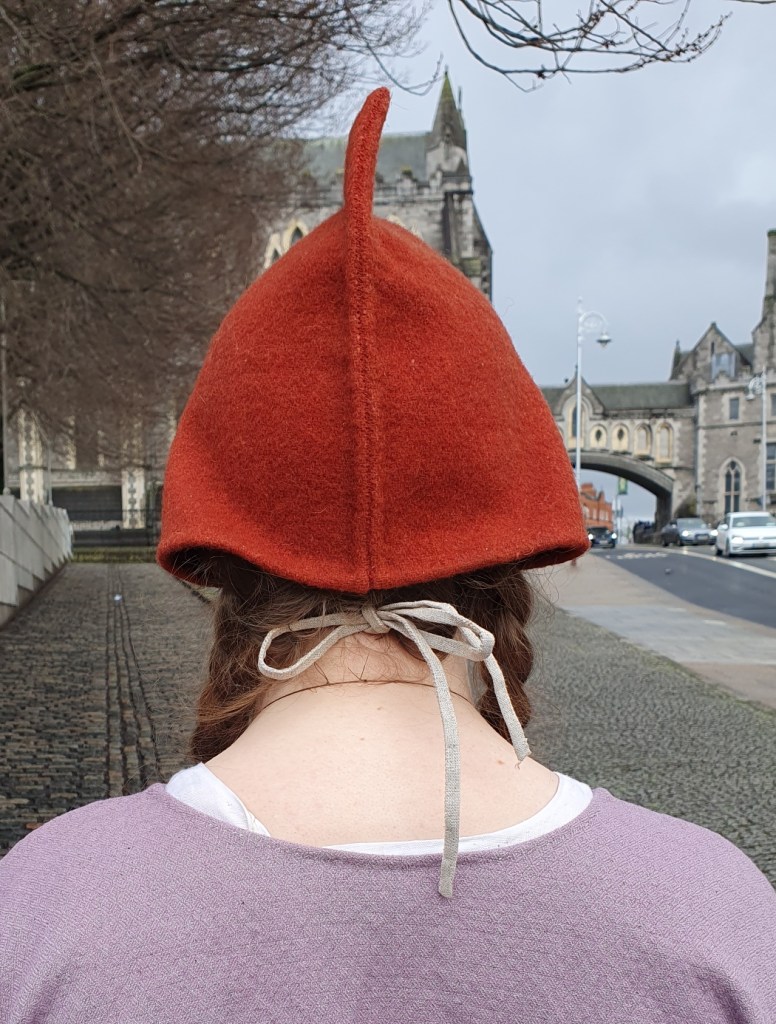
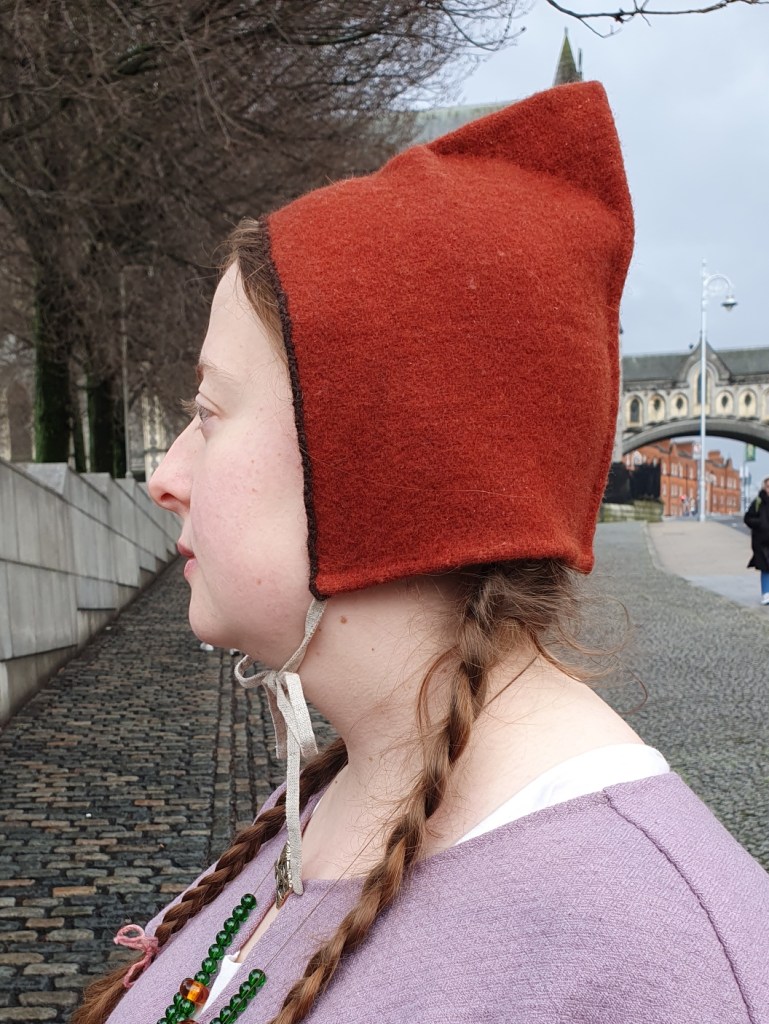
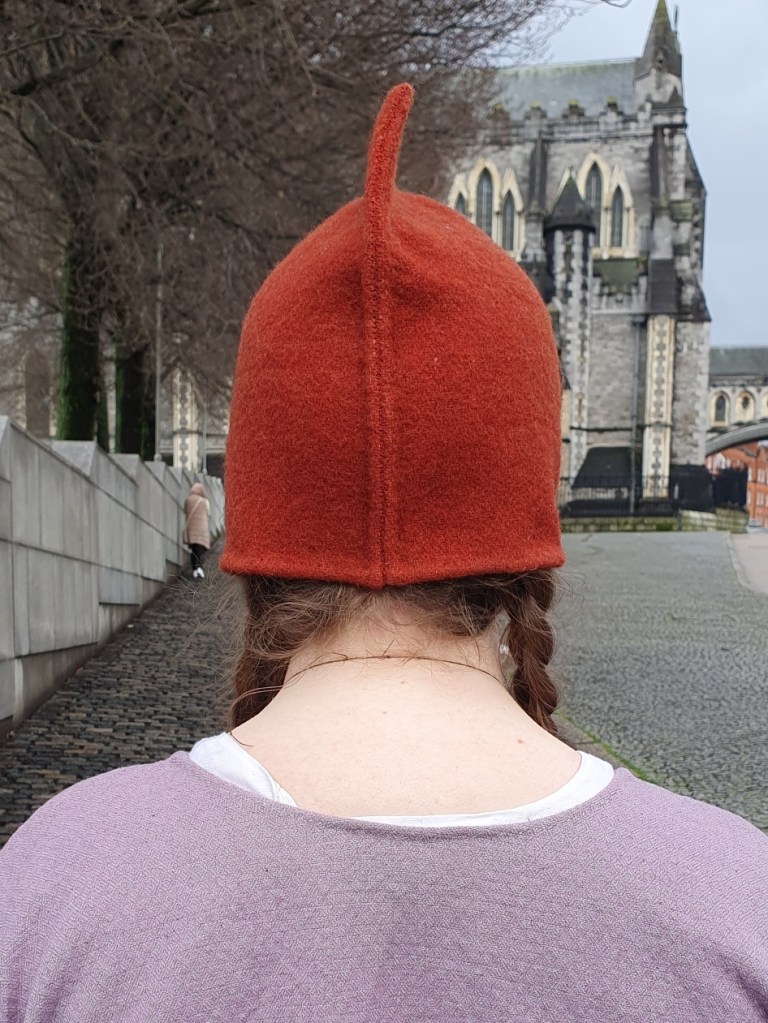
Similar to all the other suspected caps from Wood Quay, DHC33 showed evidence of a curved seam along the outside of the crown. This results in the distinctive shark’s fin look I am sporting here. Something I didn’t include in my own version was that a small amount of fabric was cut away from the back “fin” after the curve was sewn and then whipstitched to prevent fraying. To my shame, I will admit that I didn’t include this because I didn’t read the literature closely enough before making it- the drawings show such a small amount having been removed that I cannot fathom why they did it.
This trimming of the “fin” is not a feature shared by any of the other caps, though there are other small, conspicuous variations in how the caps were put together. I wonder if these were slightly different methods used by different craftspeople within the same workshop- I know I have my own preferences of how I sew that differ from my friends!
Due to the incomplete nature of DHC33, we’re not sure if the back seam would have been originally sewn closed the entire way up the back or left half open at the bottom, like some recreations of the Lincoln silk cap and caps DHC39 and 40 from Dublin. I decided to keep mine closed, but I’d like to make a version of an open cap soon- I think this would look really nice over a bun held in place with one of the many small pins found in Wood Quay.
The cap worn tied behind the head, side profile.
What you might find interesting is that the silk caps from York and Lincoln (fairly contemporary to the Dublin caps) both feature the curved type of seam over the crown too, except on the inside of the garments- see my recreation of the York one here. This results in a cap curved to fit the contour of the wearer’s head, with the excess point of fabric being hidden inside the cap. These resemble later Medieval coifs more closely.
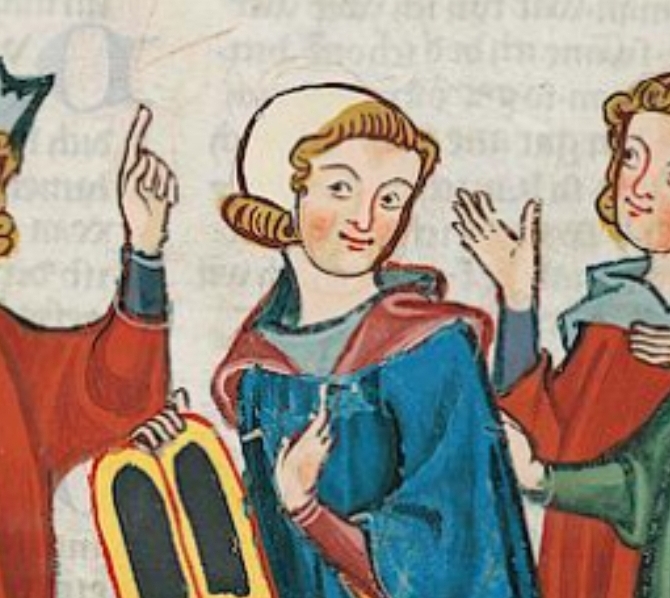
Detail of 364r “Meister Gottfried von Straßburg” from the Manesse Codex, 14thC. Source. (I just wish I looked this cute and sassy in my caps!)
Like the majority of the Dublin textile remains, this cap was not analysed for dye. In my recreation, I decided to dye my cap fabric with madder and was surprised to achieve a really good robust red for once. Madder was detected on some of the Dublin textiles that were subjected to dye analysis (Pritchard, 1992) and it is commonly found at other sites across the Viking world. (Walton, 1989.)
The cap worn tied behind the head, back view.
Another distinctive feature of this cap is the decorative braid along its front edge. It is described as:
“Edging cord, very dark brown wool, 5mm diameter, matching cap in colour, of six strands 1mm each in diameter, Z-cabled together, each strand Z-spun 2(S)-plied. Cord whip-stitched onto hemmed edge, 3 stitches per 10mm, 6mm long and slanting to form decorative edging.” (Wincott Heckett, 2003)
I chose to use a naturally pigmented dark brown wool for my cord in order to have a bit of contrast, but it’s not clear if the original would have since no dye analysis was performed. DHC33 also had a small piece of wool yarn sewn to the front edge, a few inches above the corner. Could this be the remains of a tie? I chose to use more robust linen ties, inspired by the small remaining piece of sewn linen tie extant on the front edge of DHC40, a contemporary silk cap found in the same level of Fishamble Street.
How were the Dublin caps worn?
The cap tied under the chin, front view.The cap tied underneath the chin, side profile.The cap tied underneath the chin, back view.
Personally, I think that wearing the Dublin caps tied behind the head results in the overall most flattering fit from the front and side. This is of course informed by my modern aesthetics and sense of style, so my own preference doesn’t necessarily indicate which way of wearing it is most accurate or likely. Wearing the caps with the ties underneath the chin is a bit goofy, but it does make it fit more securely and tightly to the head, which is warmer in the windy and rainy terrain near the Liffey.
If you like my Viking Dublin content, please stay tuned- I created this cap as part of a whole speculative Wood Quay outfit. These photos are just a handful of a larger photo-shoot on location and the outfit article is coming very soon.
References
Pritchard, F. (1992). Aspects of the Wool Textiles from Viking Age Dublin. In: Bender Jørgensen, L. and Munksgaard, E. (Ed). Archaeological Textiles in Northern Europe: Report from the 4th NESAT Symposium. Copenhagen: Det Kongelige Danske Kunstakademi. pp.93-104.
Walton, P. (1989) Textiles, Cordage and Raw Fibre from 16–22 Coppergate. York: York Archaeological Trust. PDF.
Wincott Heckett, E. (2003) Viking Age Headcoverings from Dublin. Dublin: Royal Irish Academy.
If you liked this article, please consider following my blog for updates when I post. If you really liked it, please consider donating to my Ko-Fi account and help me afford to keep the lights on! You don’t need to make an account and I keep 100% of whatever you decide to tip me.
Last year, I published an article on a set of Coppergate-inspired clothing. In that article, I mentioned that the shoes and socks I was wearing with that outfit were not exactly what I had hoped to include. I remedied this not long after we took the photo set and so now I’d like to share the new items with you!
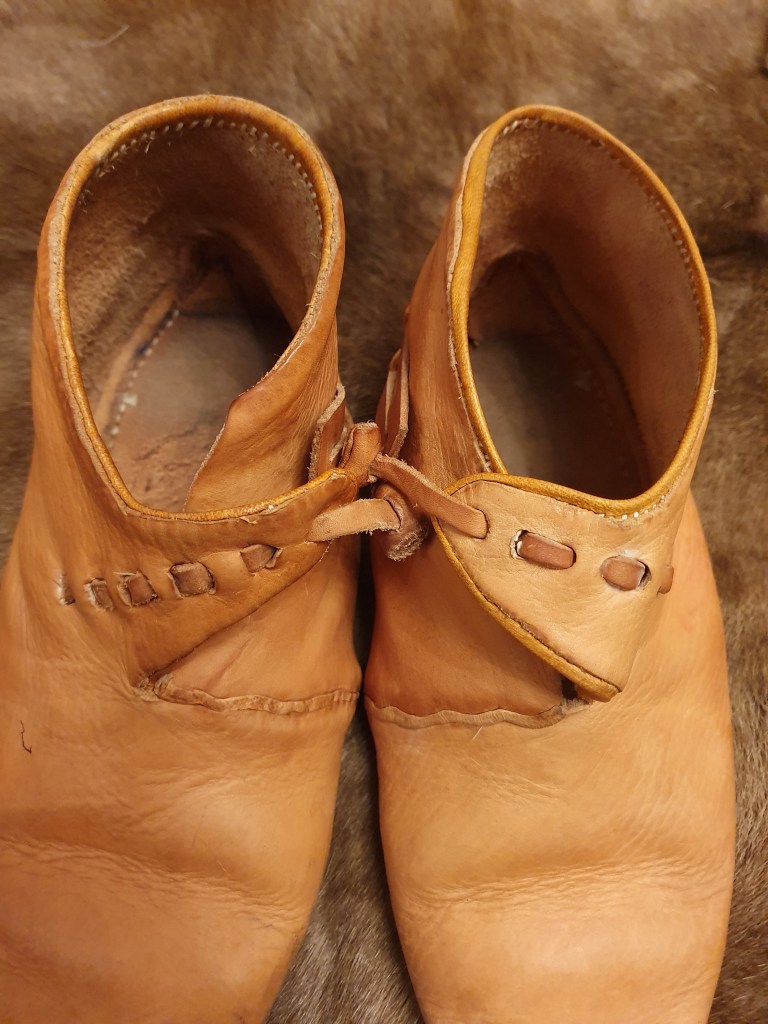
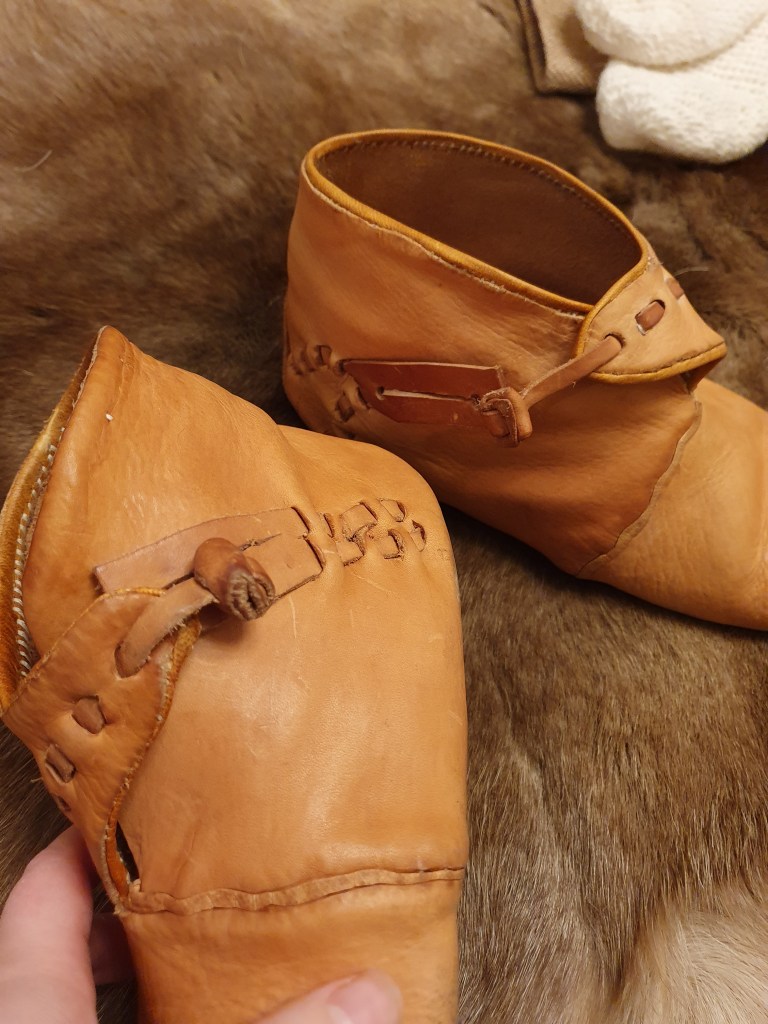
One-piece ankle-shoes, fastened with a single toggle and flap (classified as Style 4a1)
These shoes were made for me by my friend Dean, who is a wonderful shoemaker. They’re entirely handsewn on maple sewing supports, with the purpose of making them as close to the original finds as possible.
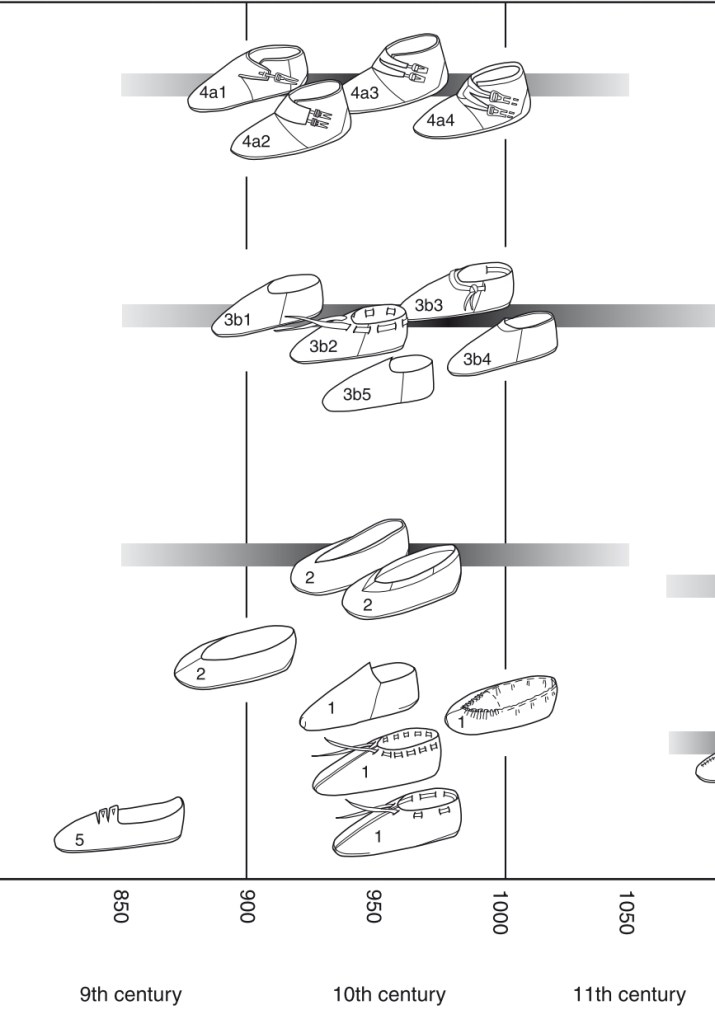
Detail of diagram on p.3275 of Mould, Carlisle and Cameron (2003.)
Shoes with a single flap and toggle are dated to c.930/5–c.975 AD in York, with seventeen examples from 16-22 Coppergate. Single examples were found in deposits each dating to the late 9th century and to the 11th century, but it does seem that this style saw its heyday in the mid 10th century. Shoes belonging to this style have been found at other VA sites in York and further afield. (Mould, Carlisle, & Cameron, 2003. p.3304.)
Detail of the upper edge and the goatskin binding.
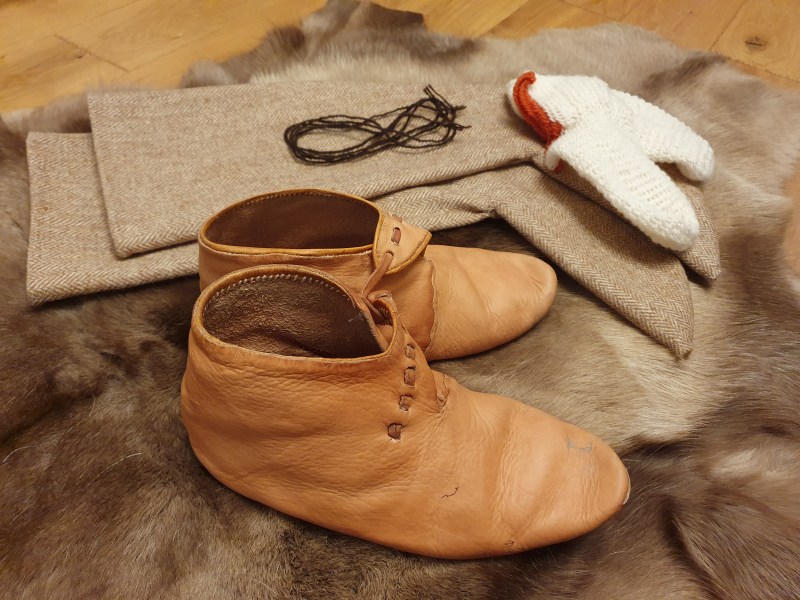
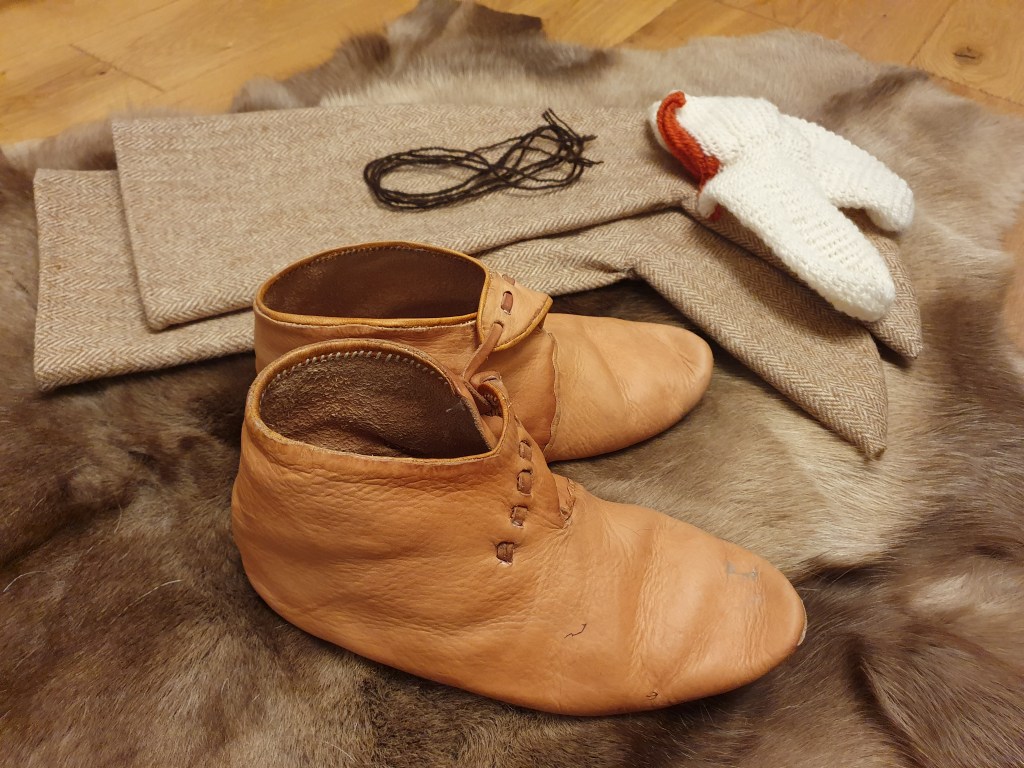
My shoes are made of soft calfskin uppers and thicker bovine leather for the soles. They have a decorative edge binding along the top edge made from goatskin, which is folded over and whipstitched down on the inside. This binding also serves to stiffen the fine leather of the uppers. To sew my shoes, Dean used a saddle stitch of a strong linen thread coated in shoemaker’s coad, a homemade blend of beeswax and birch tar. The most common stitching medium in the York shoes seems to have been animal fibre such as wool or leather thonging (MacGregor (1978), p.53), however, there is a find from Feasegate that appears to have been sewn with flax.
Details of the toggles.
Something interesting you may notice about these shoes is that both the toggle flaps and the single seams in the uppers are on the inside of the shoe. You will likely have seen many reproductions of boots like these with the toggles on the outside, which might seem more logical. However, the examples of these shoes from York all fasten over the instep and when you put them on, it is indeed easier to fasten them that way!
The toggles are very simple T-shapes of leather, with a slit cut in the top of the T and the length being pulled through in order to roll the toggle itself. The toggles and the loops they go through are secured to the shoe in one of several ways, but the most common is also the most simple- they are threaded through a series of slits cut into the flaps and inner quarters of the shoe. The tension of the leather holds the straps in place, but this method also allows for the fit to be adjusted. (Mould, Carlisle and Cameron, 2003. pp. 3302.)
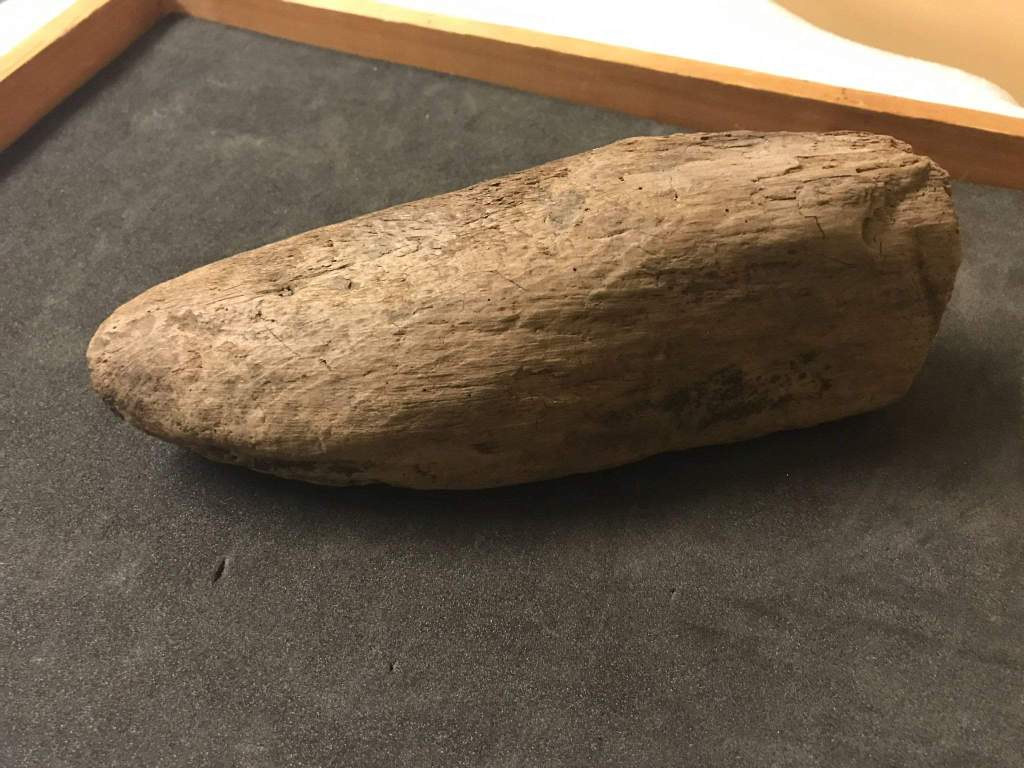
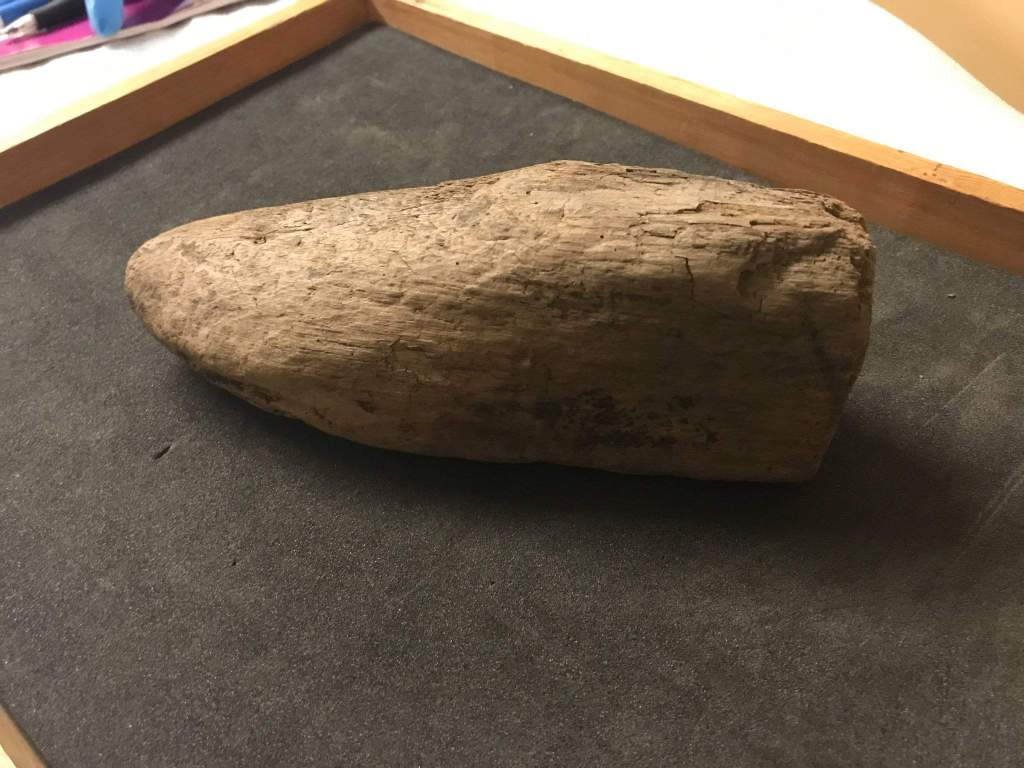
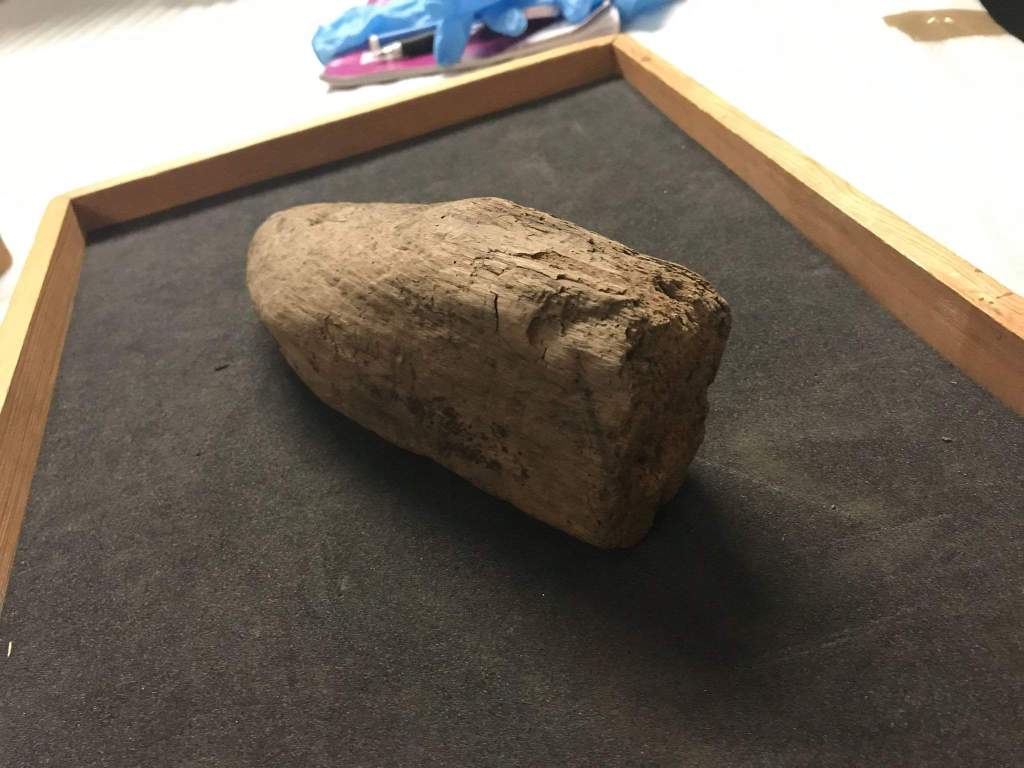
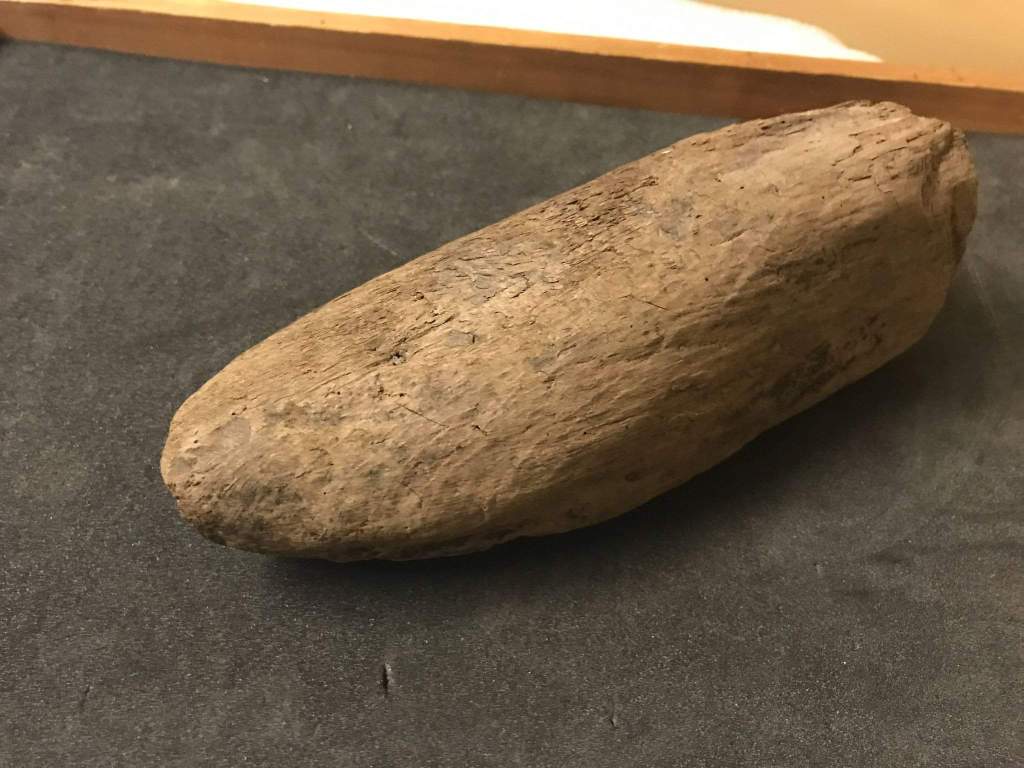
The original wooden last, item 494 from the Lloyds Bank site. Photo credit Dean Thompson.
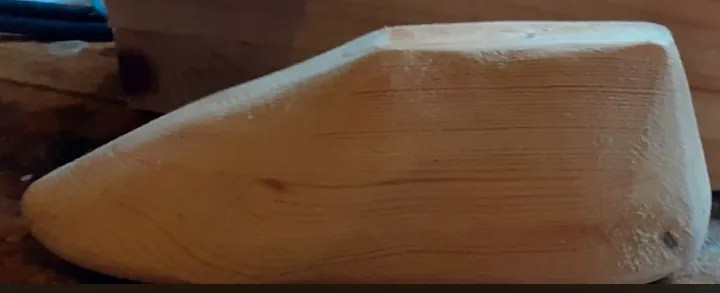
The last/support that Dean made my shoes on was based on a find from Lloyds Bank, item 494. (MacGregor, 1982. pp. 144.) The original dated to the 10th century and was made from alder, whereas Dean’s is made of maple. I thought it was interesting to note that item 494 still had pieces of leather attached to the wood with iron nails, but probably not from shoes. It appears that there was an attempt to build up the surface of the last using these pieces of leather, either from wear and tear from use or indeed from being a little axe-happy in the initial shaping of the last.
Dean’s replica in maple wood.
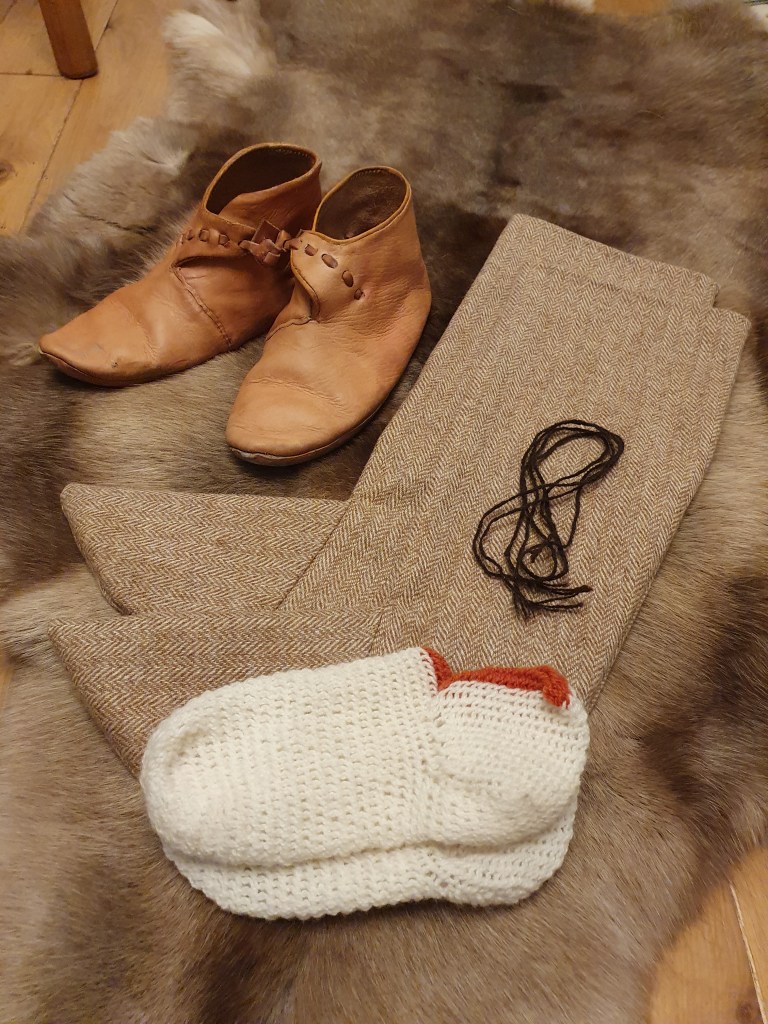
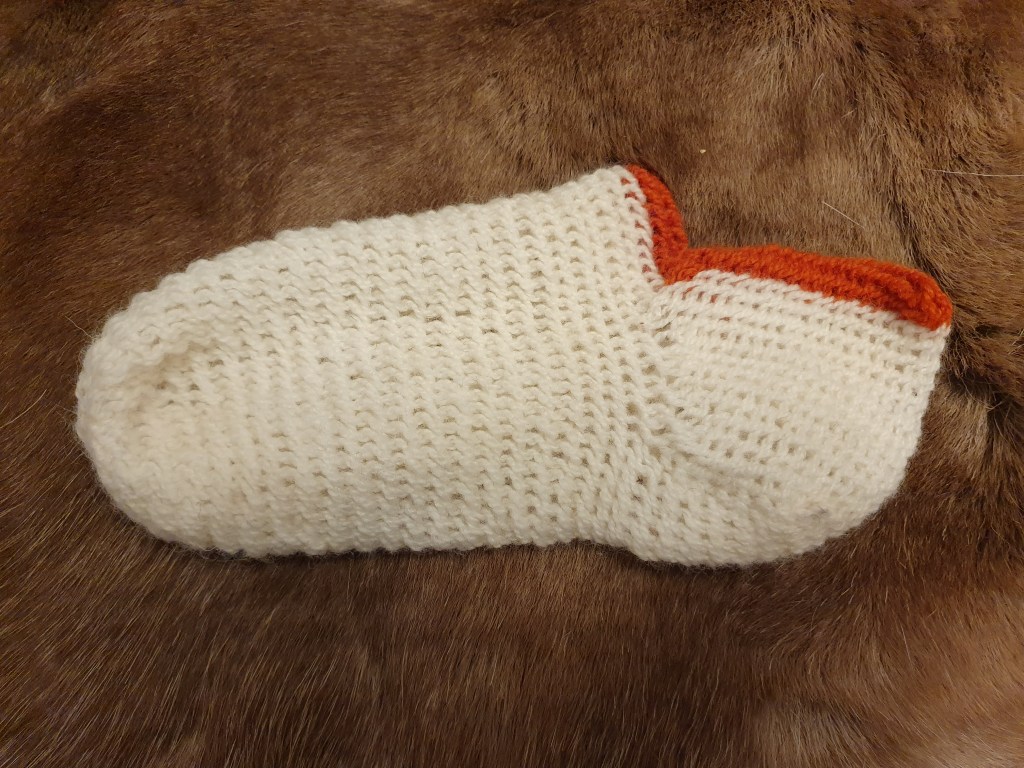
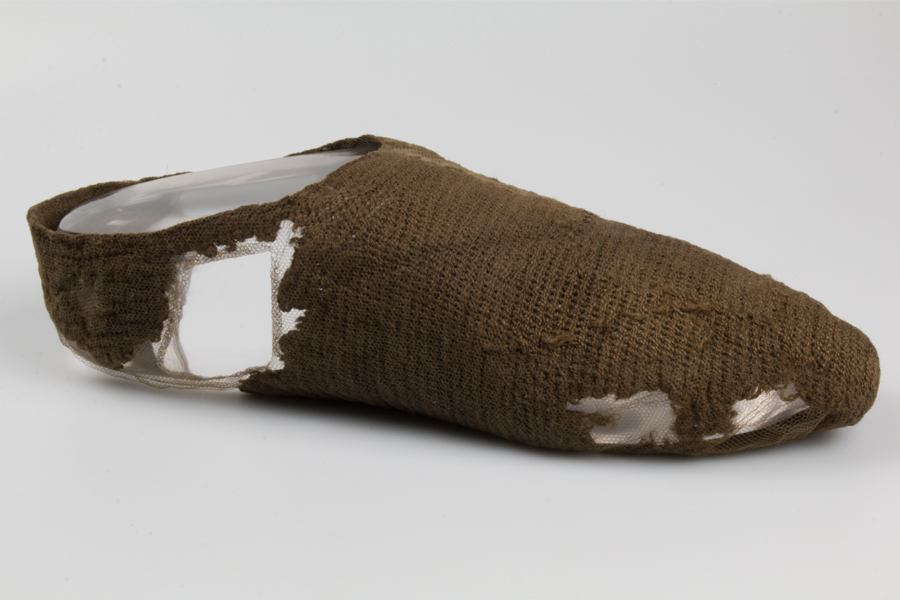
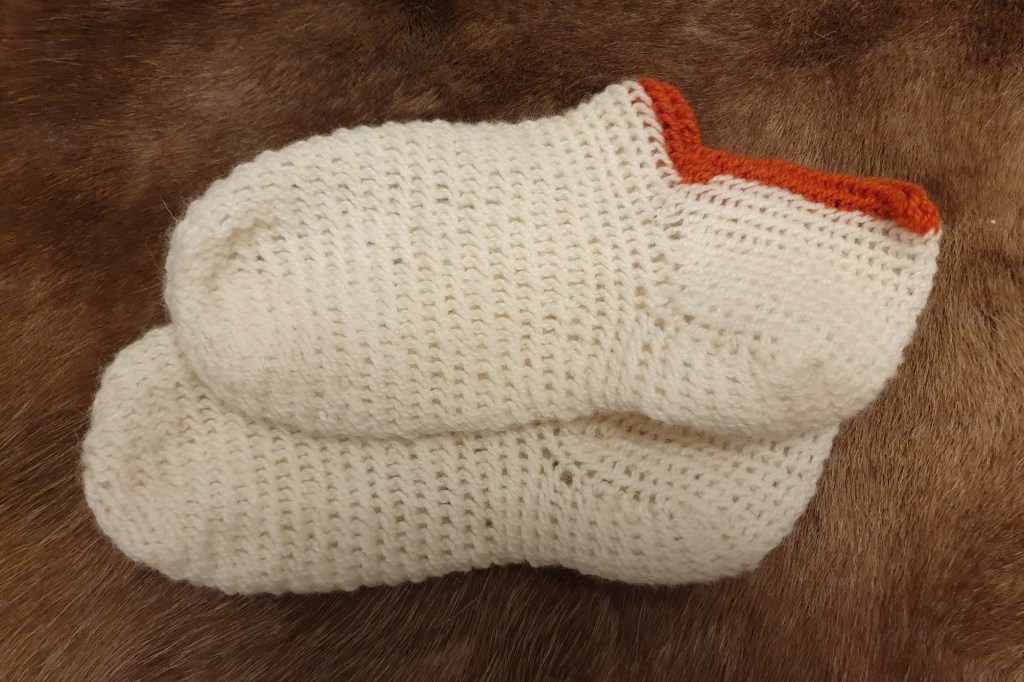
Woollen needlebound (nalbound) socks in York/Coppergate stitch. Based on item 1309 from 16-22 Coppergate (Period 4B.)
One of the most famous surviving textiles of Viking Age Britain: the York sock! For many readers, it will need no introduction. For those who are not familiar with it, I’ll briefly explain what needlebinding (or nalebinding or naalbinding) is and quite why this sock is so special.
Illustration from Walton (1989), pp. 342.
Needlebinding is a technique for making cloth that only uses a single needle and lengths of yarn that have to be added as you go. It’s an ancient technique with examples being found dating back to the 3rd or 4th century AD in Sweden (though it could even have been practiced as far back as the Neolithic.) (Walton, 1989.) There are many different needlebinding stitches and each results in a slightly different texture, pattern, density and level of elasticity. Something that all needlebinding has in common is that it doesn’t unravel, unlike knitting or crochet.
At the time of its discovery, the York sock was the only example of needlebinding found in England. York/Coppergate stitch, the stitch the sock is worked in, was named after the sock and is described in needlebinding terminology as uu/ooo F2. The sock itself is in pretty good condition, with most of its structure remaining. It was made up of undyed S2Z plied wool yarn with a narrow band at the top of the sock being dyed with madder.
In my reconstruction, I chose to use a Shetland sock weight yarn from Highfield Textiles, a local wool producer from East Yorkshire. I hand-dyed the same yarn for the ankle band using madder, which resulted in a lovely rich orange-red. Like the original, my socks are slipper-style and don’t reach above the ankle. York stitch is also super stretchy, so when taken off, they tend to curl up- you can see this in the photos!
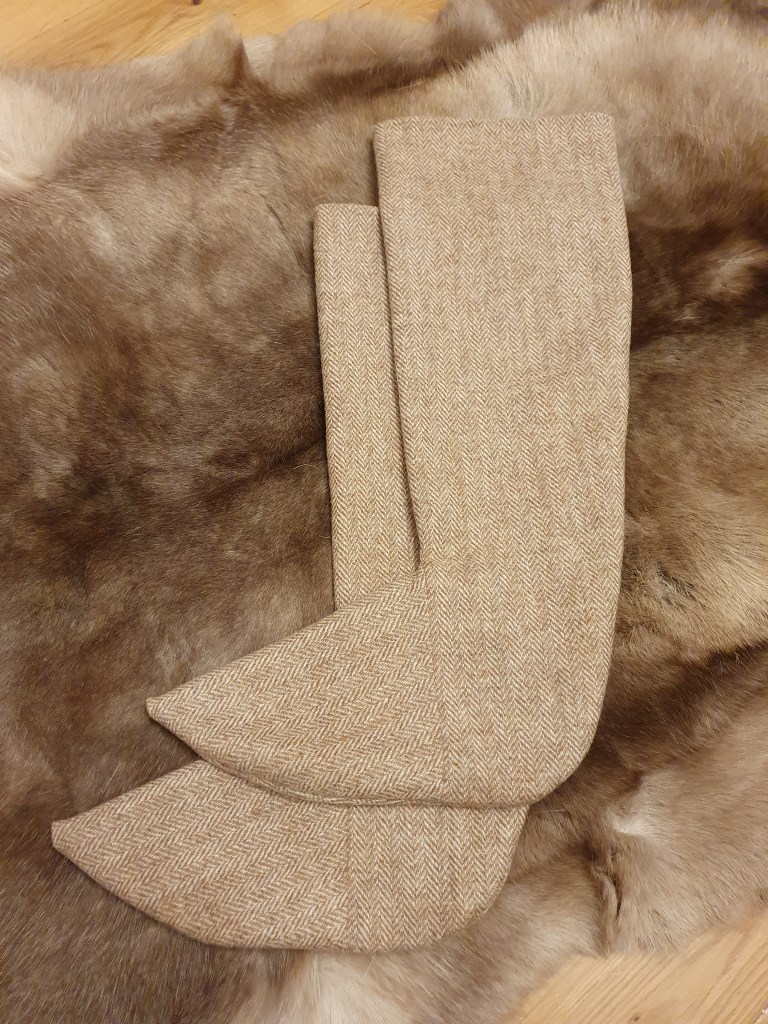
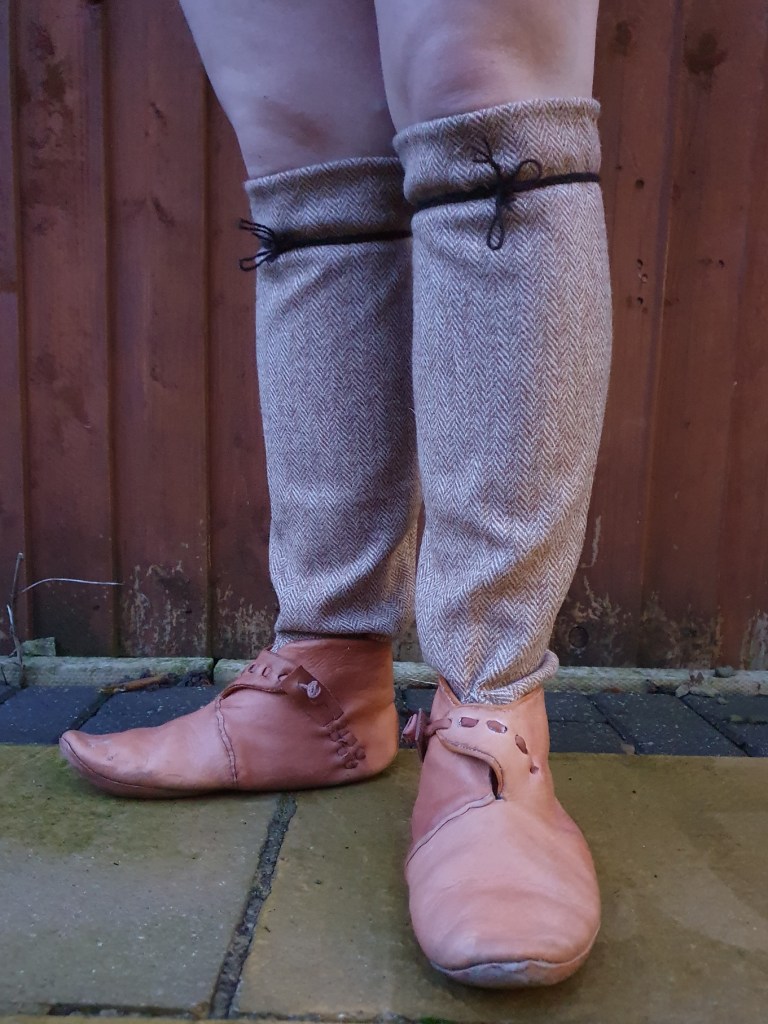
Footed short hose, inspired by various historical finds and fragment 1303 (Period 4B.)
The shape of these short hose is entirely speculative. Thunem (2018) gave a comprehensive overview of the topic of socks and hose in the Early Medieval period, which I highly recommend for further information. I made my first pair of these hose during the pandemic in a Zoom class taught by Astri Bryde and this pair is my second (with some alterations to improve personal fit.) As they are cut straight on the bias, they are not stretchy and so are not as tightly-tailored as later Medieval hose.
They’re inspired by earlier finds like the 2nd century stockings from Martres-de-Veyres, later finds like the 14th century Bocksten footed hose and of course the VA fragments from Haithabu Harbour. They’re made in two pieces, a long leg piece and a curved foot piece with the seam going under the foot (like the Skjoldehamn socks!) You might think that this would be uncomfortable, but it’s really not that noticeable and definitely not uncomfortable.
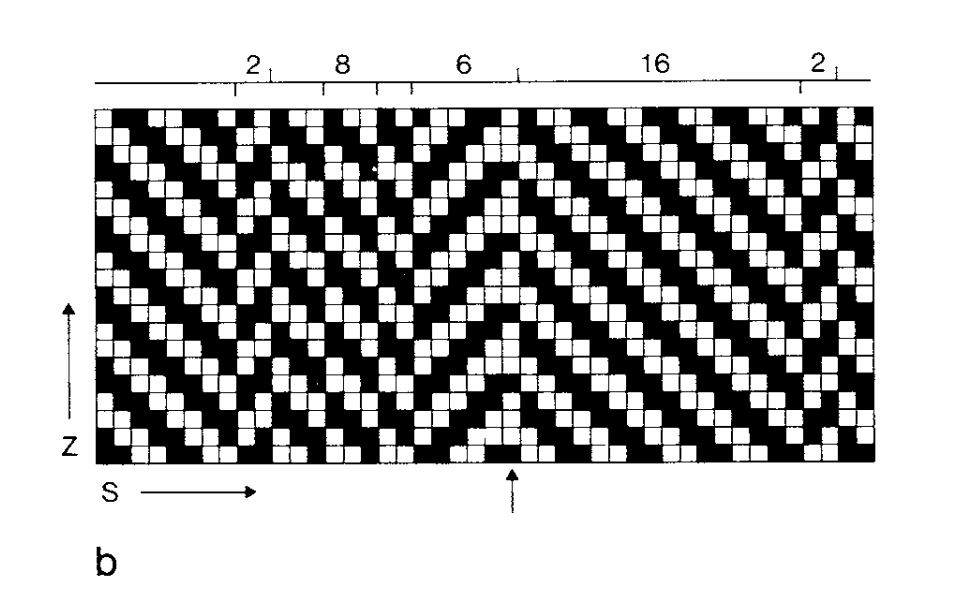
Diagram of fragment 1303, with weaving fault marked by an arrow. (Walton, 1989. pp.324.)
I chose to make these hose from a woven British tweed cloth, inspired by fragment 1303 from Coppergate. This fragment of 2/2 chevron twill was found in association with the naalbound York sock 1309. It is described in Walton (1989) as:
“Fragment, 140 x 60mm, of 2/2 chevron twill with dark combed warp and lighter non-combed weft, and selvedge. (…) Warp hairy fleece type, naturally pigmented, weft hairy medium fleece type, not pigmented. No dye detected. The softer weft has become heavily matted in places. The side of the fragment opposite the selvedge has been cut, there are two overstitches, possibly part of a hem at right-angles to the selvedge: sewing yarn plied wool, S2Z (…)”
Fabric woven in two shades is uncommon in the Viking Age generally, not just in York. Using two different shades for the warp and weft will make the pattern “pop” in a way that is less obvious when using one colour of yarn. Walton (1989) identifies 1303’s similarity to a fragment from Haithabu (thought to be a pair of hose!) and the lack of similar English finds lead her to conclude that 1303 was a foreign import. This idea is supported by the fact that 1303 was found in association with the York sock, also thought to be either a Scandinavian import or the handiwork of a Scandinavian settler.
I find it interesting that matting is mentioned, as I’ve only worn these hose twice and yet matting is visible underfoot and a little underneath the ties at the knee. This is to be expected with the friction, warmth and slight damp that comes with items worn on the feet.
Detail of ties.
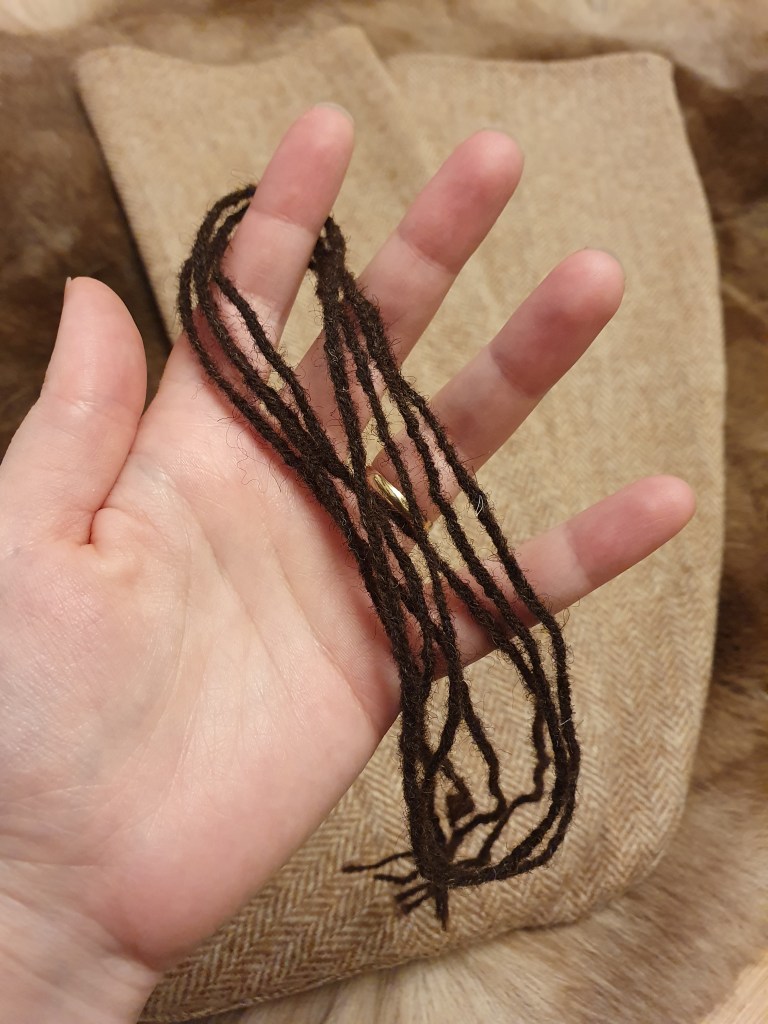
The ties I used to hold up the hose were made in a hurry- they are thin braided cords made from fine naturally-pigmented brown wool yarn. Similar cords are found in 10th century levels at Coppergate, however they are generally cabled rather than plaited. Woven or tablet woven garters like the ones worn with later Medieval hose might well be another option in future.
The whole ensemble
Overall, I found this collection of garments comfortable and functional to wear. On both occasions, it was cold winter weather and provided I didn’t take them off to film a reel for Instagram (ahem), my feet were kept dry and well-insulated. I have worn the hose with socks underneath and without and naturally the combination was warmer. The seam underneath the sole of the foot did not affect my comfort and the hose didn’t slip down my leg once tied at the knee.
Being made to fit my feet, my shoes are extremely cosy and supportive. They are of course more comfortable on grass and earth than on concrete, but that is the case for all turnshoes. I am really won over by toggled shoes that fasten on the instep- I already have a pair with ties round the angles and these are just as comfy with a cooler silhouette.
If you’d like to see how this footwear looks as part of a complete outfit and also how they are put on, I made a Get Ready With Me video that features them on my Instagram.
Maybe she’s born with it? Maybe it’s Coppergate…
References
MacGregor, A. (1978). Industry and commerce in Anglo-Scandinavian York. In: Hall, R. A. (Ed). Viking Age York and the North. York: Council for British Archaeology. pp.37-57.
MacGregor, A. (1982). Anglo-Scandinavian Finds from Lloyds Bank, Pavement, and Other Sites. York: York Archaeological Trust. pp.144-145.
Mould, Q., Carlisle, I. and Cameron, E. (2003). Leather and Leatherworking in Anglo-Scandinavian and Medieval York. York: York Archaeological Trust. pp.3185-3535.































 The Eoforwic Project