Impressions: A Hiberno-Scandinavian Townsperson of Dyflin, Mid 10th Century

Or, Adventures In Wood Quay!

Location: Dyflin (Dublin), Ireland
Date: Mid to late 10th Century
Culture: Hiberno Scandinavian
Estimated Social Class: Free working woman
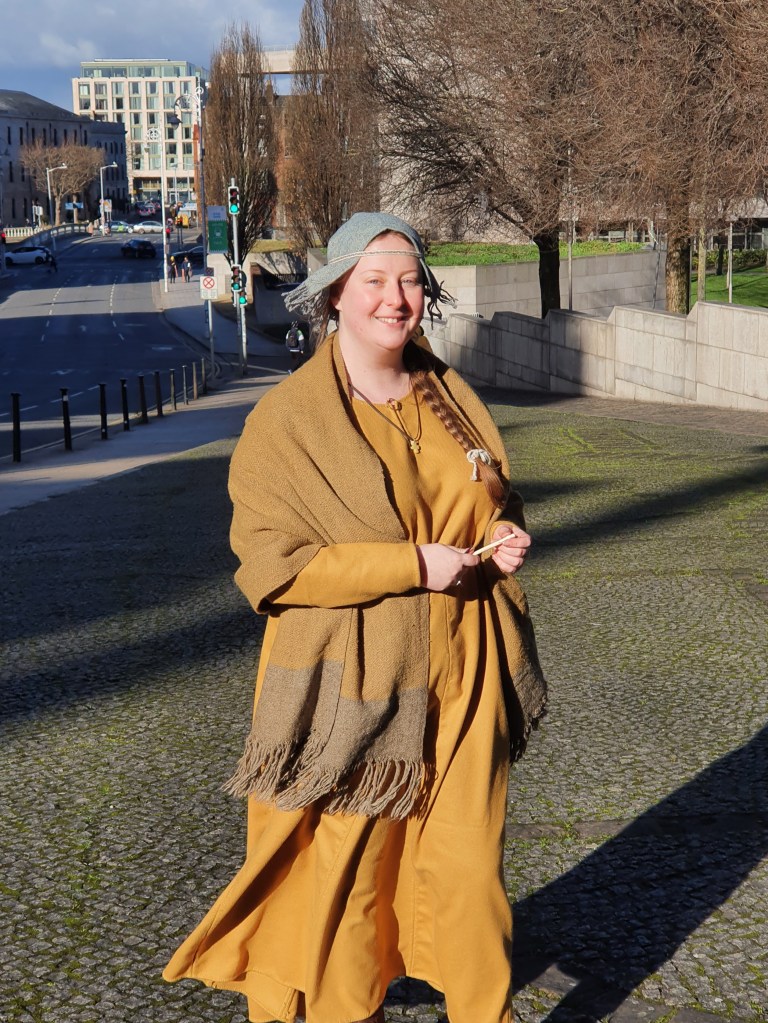
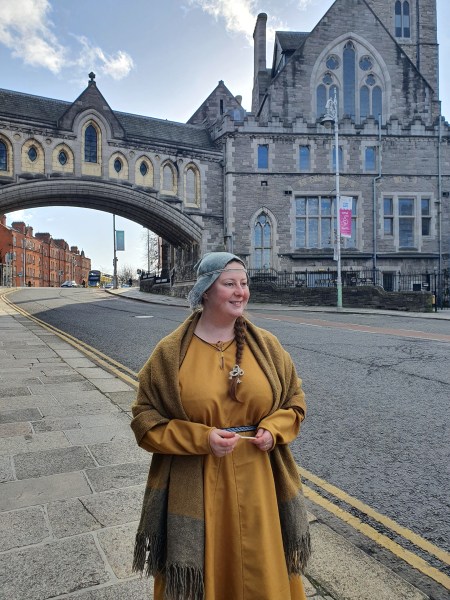
This Valentines Day wasn’t especially traditional, but it was one of my best ever. Due to Coronavirus nerfing many routes to Luxembourg from England, Eric and I had to fly via Dublin in order to see our family. We decided to make the most of it and stay for Valentines Day on the way back.

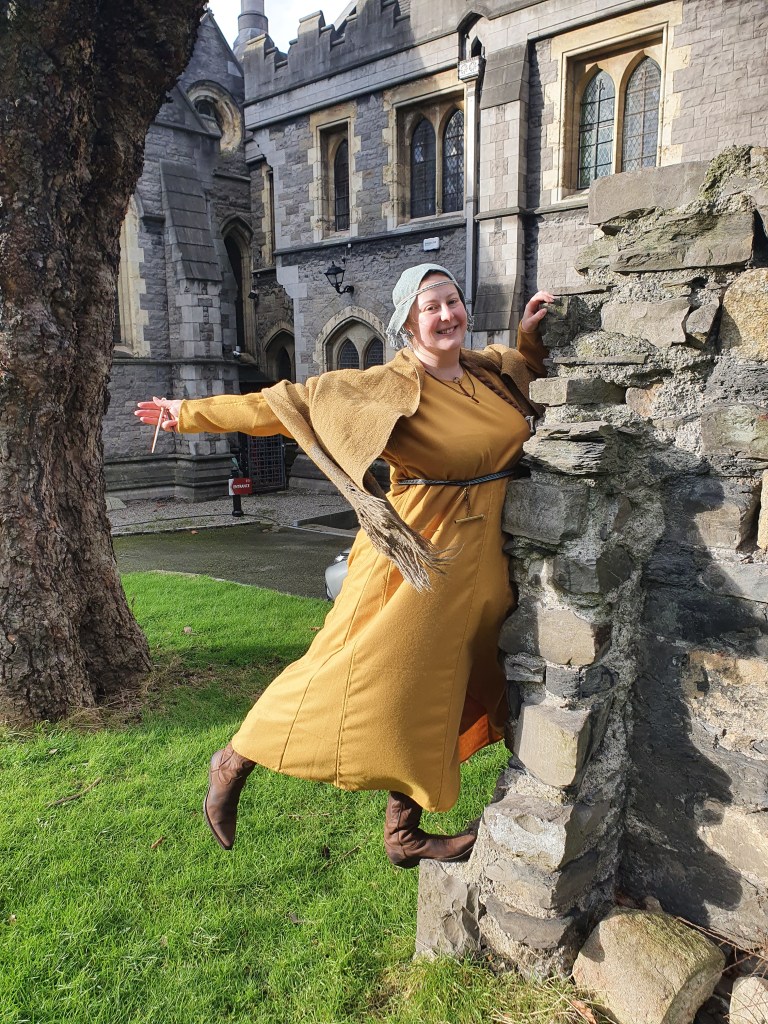
What did I want to do? I wanted to go to Wood Quay and pose in the cold in a quickly cobbled-together Dublin impression.
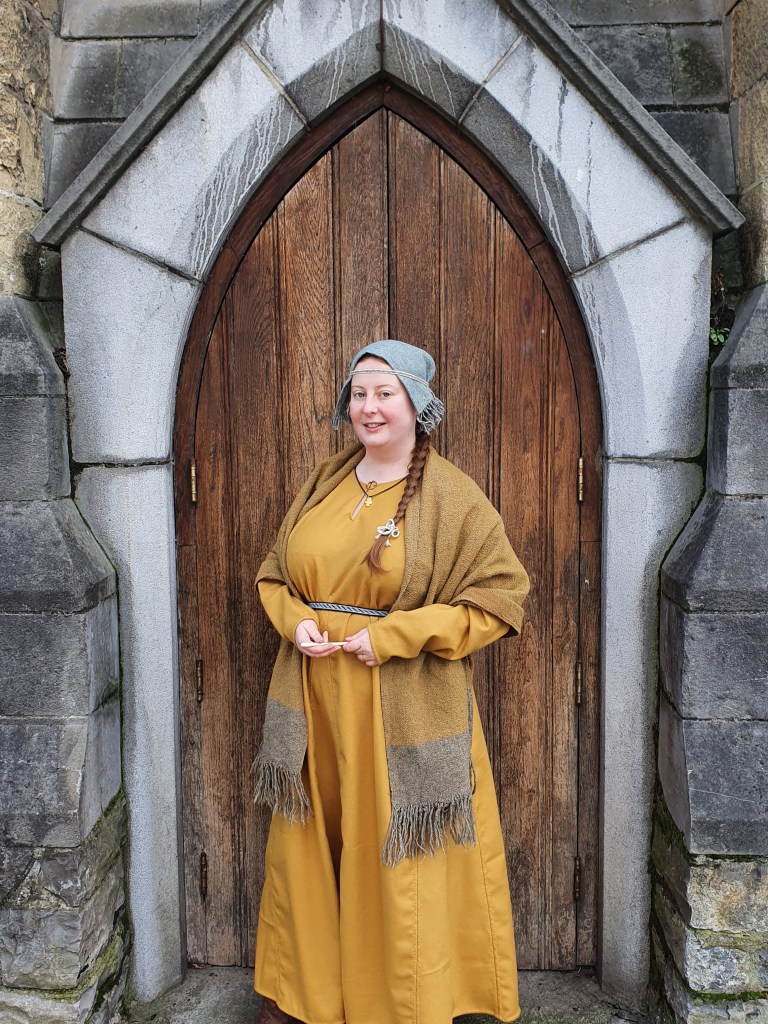
This outfit isn’t especially complex, as I could only take a small bag that would fit within my cabin luggage. That means no undertunic and no turnshoes- you can see my cowboy boots in later pictures. This set of gear is a work in progress and in future, I’ll be getting a few pairs of suitable shoes based on Dublin remains. (Note: if anyone has access to good publications on shoes from Viking Age Dublin, please hit me up!)
Wood Quay is a historic area of Dublin, only a stone’s throw away from bustling Temple Bar and the Ha’penny Bridge. It made headlines worldwide in the 1970s when the area was revealed to be an archaeological goldmine during the building of a new Dublin City Council headquarters. The story is actually fascinating and I can write a “For Dummies” article in future in folks are interested.
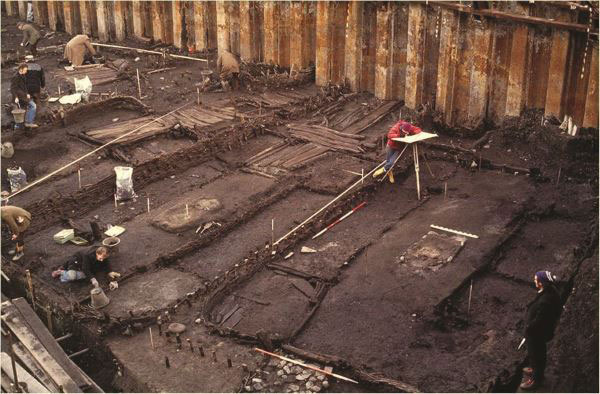
Excavations on Fishamble Street, showing the outlines of Hiberno-Scandinavian homes- they are Type 1 in shape. Photo credit: National Museum of Ireland.

The short version, however, is that there was nationwide and international protest against the development, in order to first properly excavate the whole block of all its rich historical goodies. Dublin City Council ignored them and built their new civic offices on the site anyway, with excavations finishing in the March of 1981 (Wallace, 2016.)

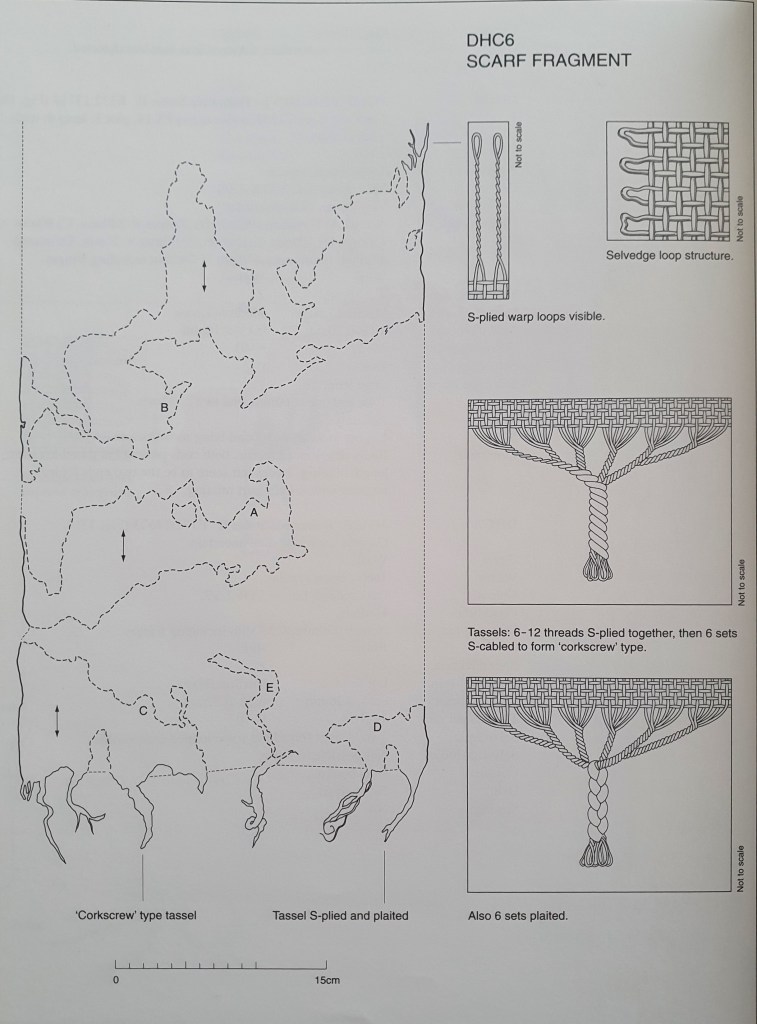
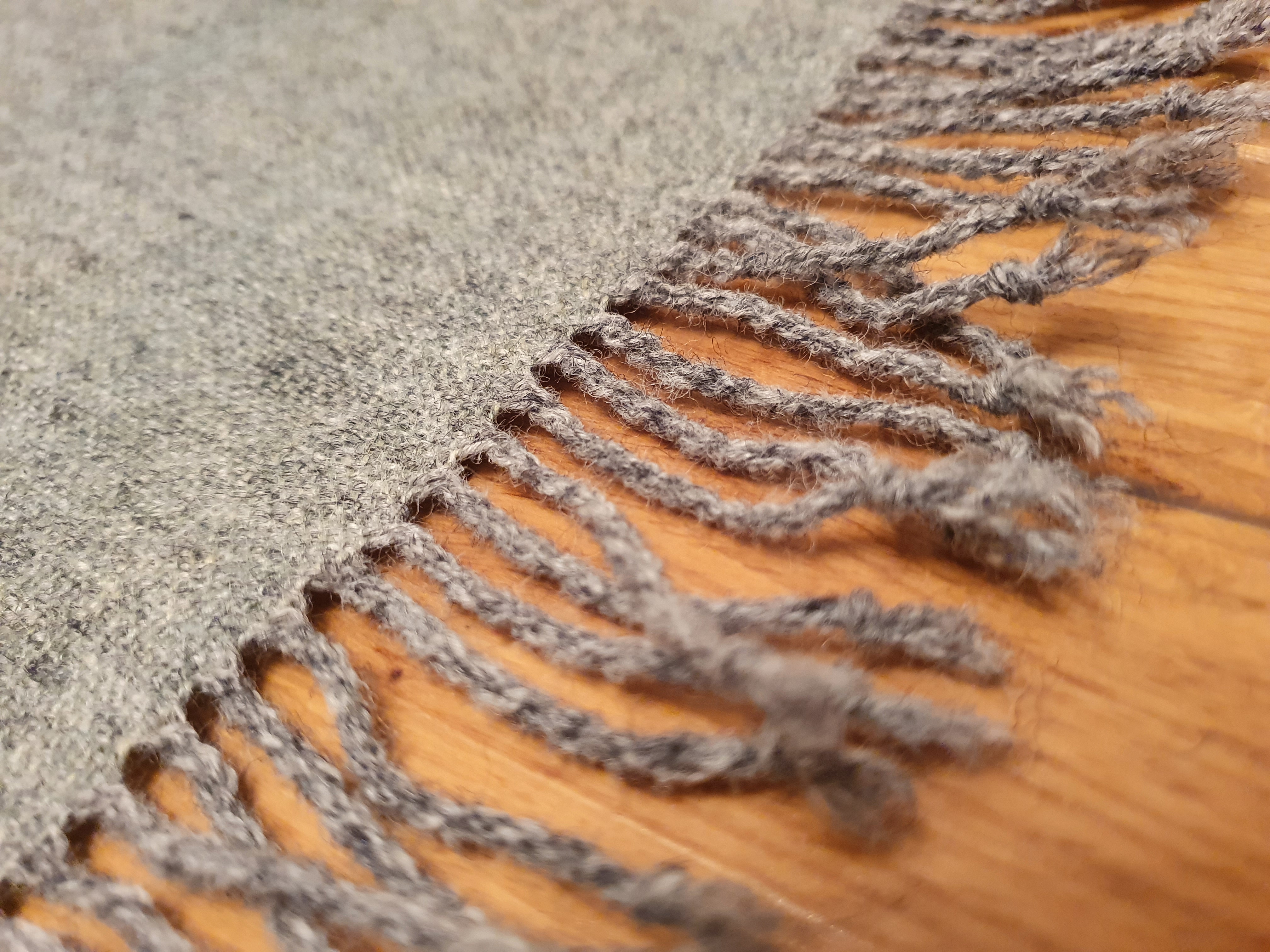
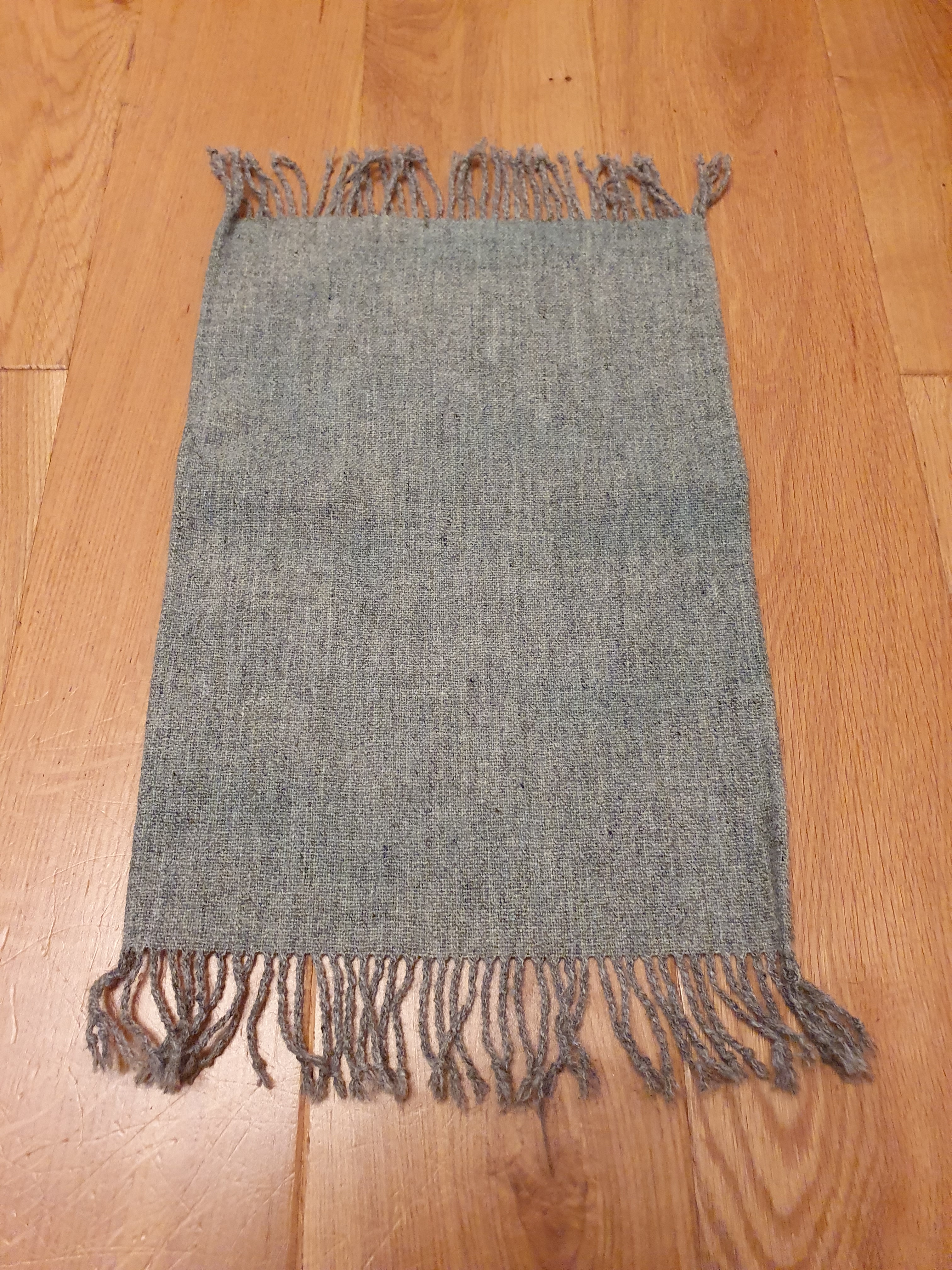
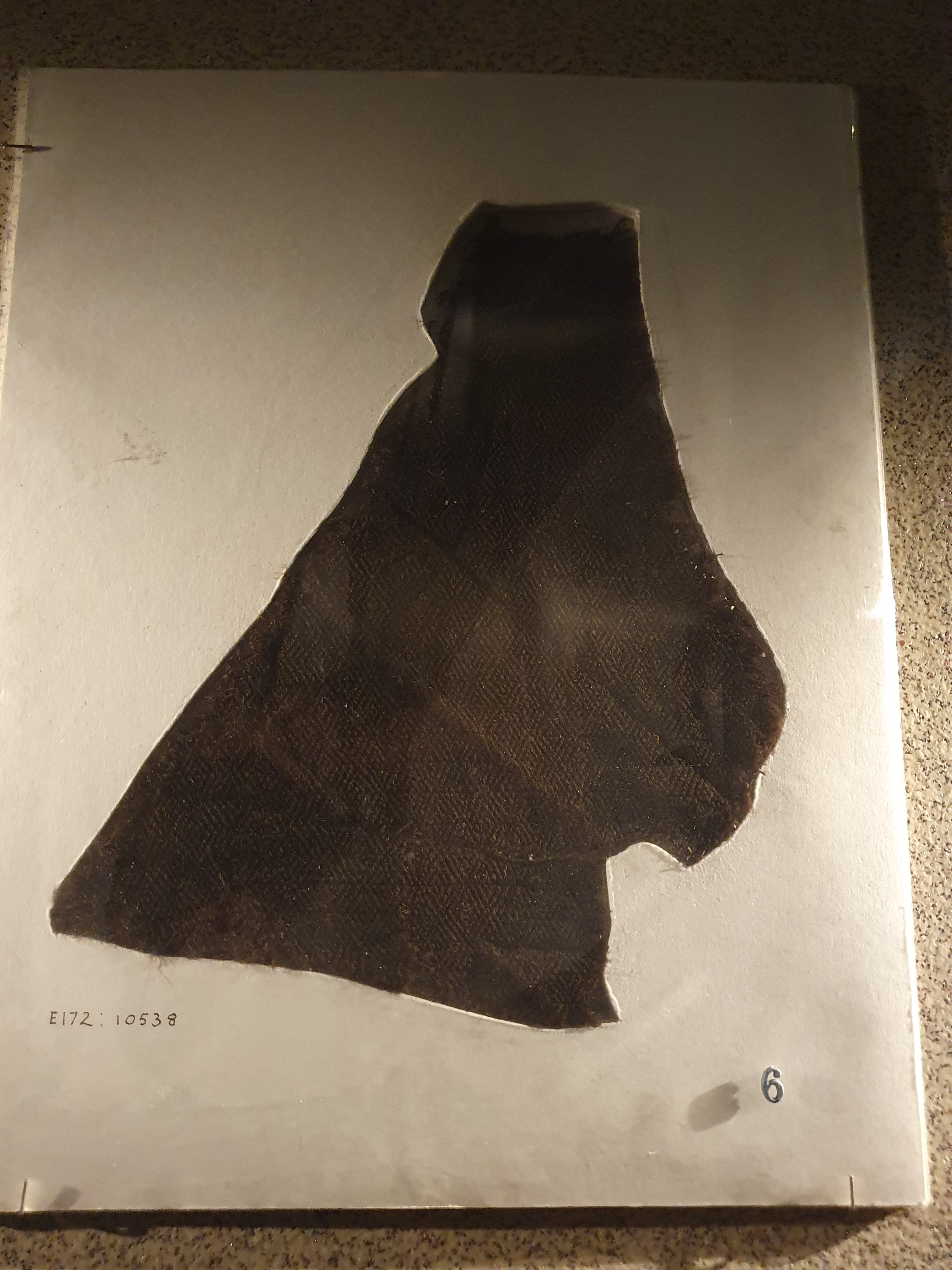
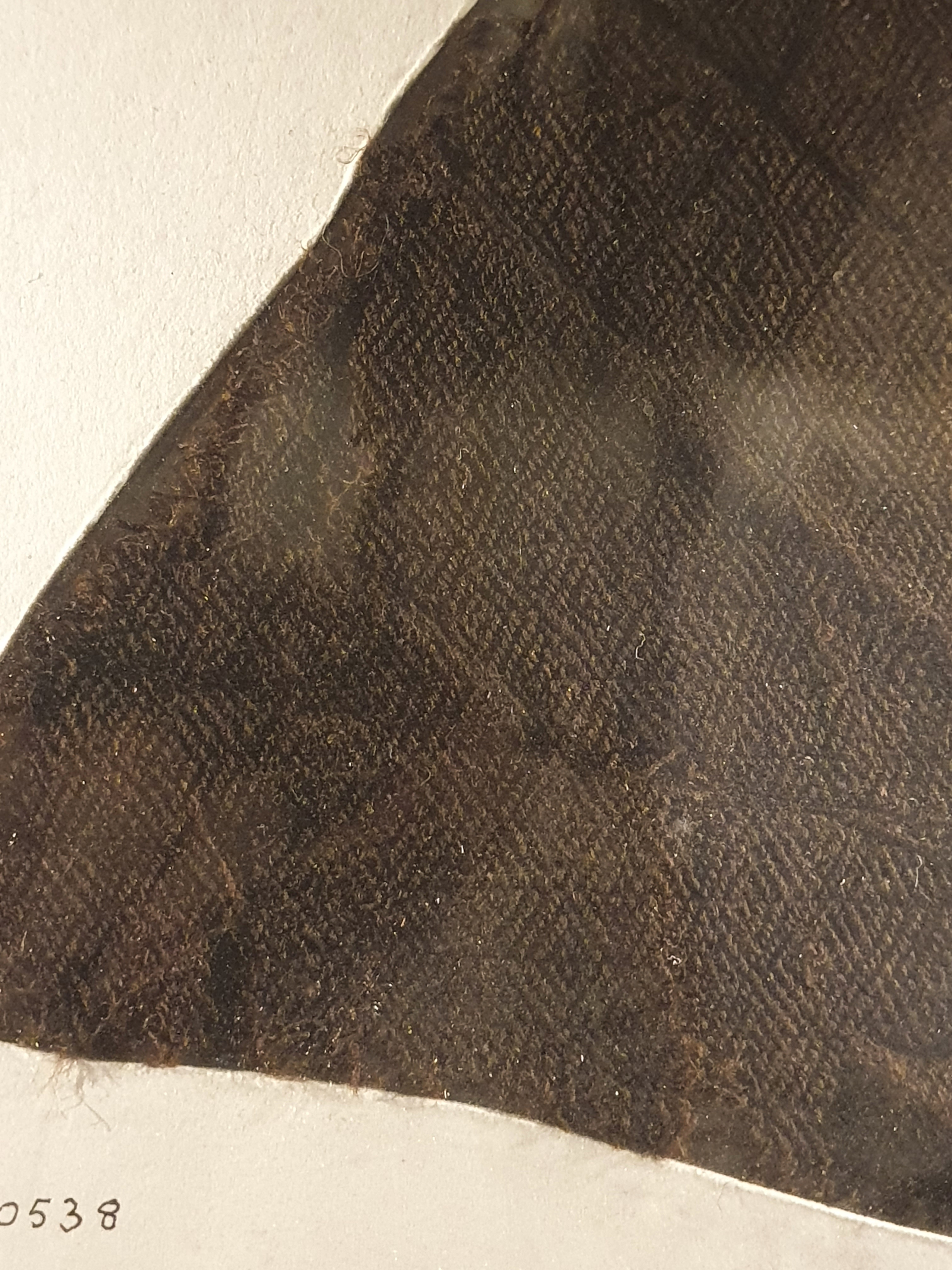
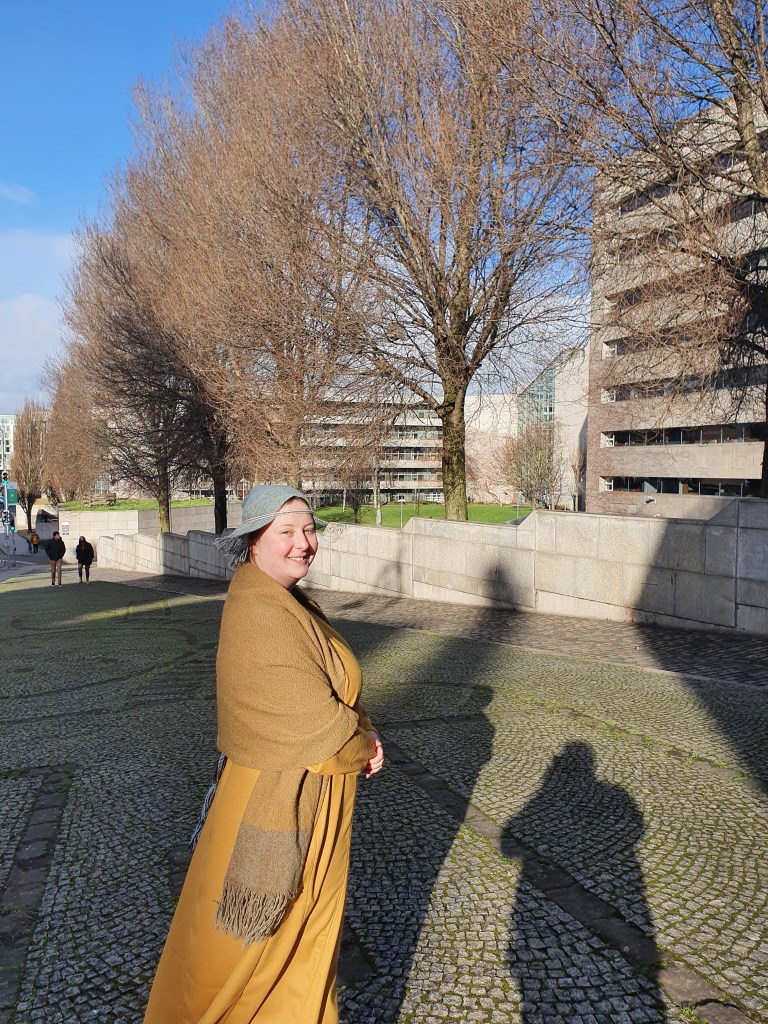
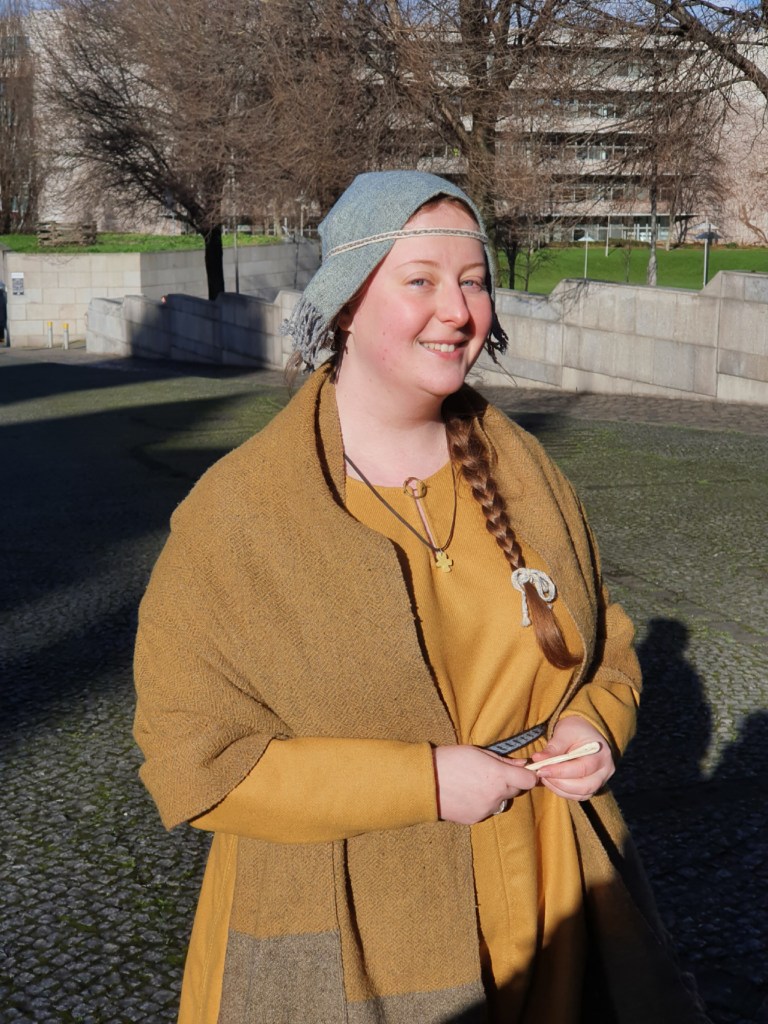
Headscarf based on fragment DHC6 (Fishamble Street)
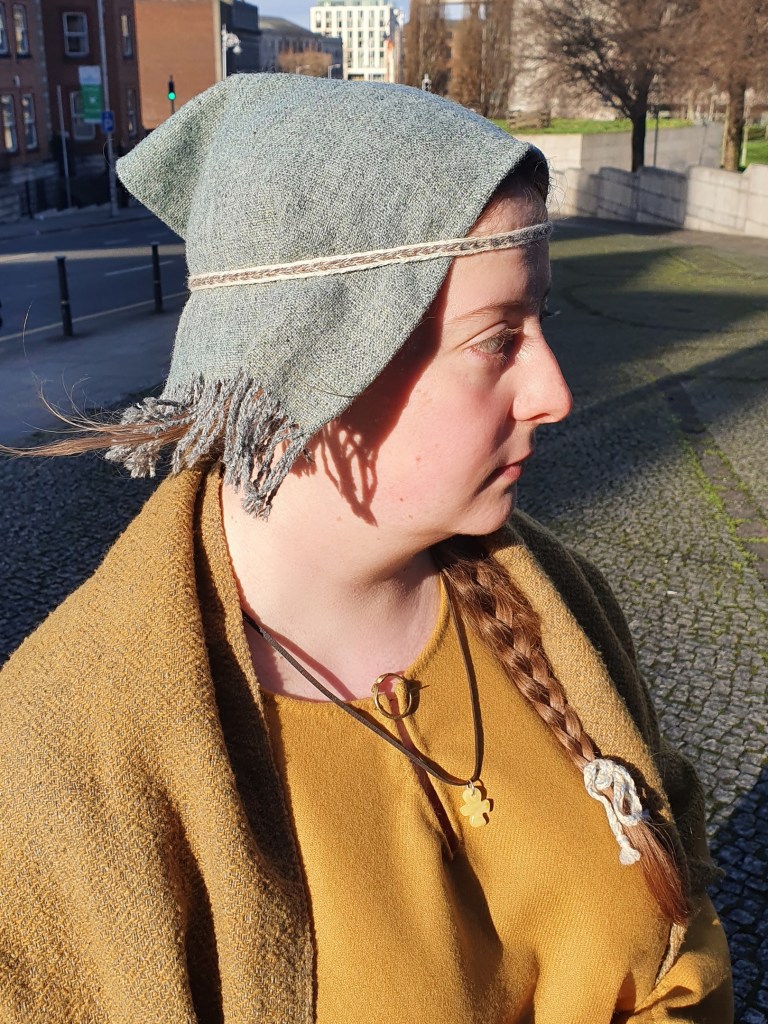
I’ve written about this piece before (my article about it can be read here.) It’s a plain weave woollen scarf, dyed with an exhaust woad bath over a naturally pale grey. It was found on Fishamble Street and dated to the mid 10th century. I tasselled the ends by hand and the dimensions of the scarf are based directly on the textile remains labelled DHC6, though my tassels are slightly simpler than the original.

I like to wear it by itself without a cap and with a simple woollen fillet (tablet woven), but it could easily be combined with other headbands and caps to give different looks. I tied my hair with a very simple finger loop braid- we don’t have any evidence that I know of for hair ties in the Viking Age, but simple cords, braids and thonging must have been used.

I imagine that a weakly dyed item of wool such as this could reasonably have been worn by an average city dweller wanting to keep up with trends. It isn’t a large item and so likely would not have carried the same prestige as the huge voluminous veils worn by queens and saints in manuscripts, however, it could have served to provide either some form of modesty or just fashion for the wearer. Wincott-Heckett (2003) suggests that these small tasselled scarves were of local production and so could indicate a local fashion.

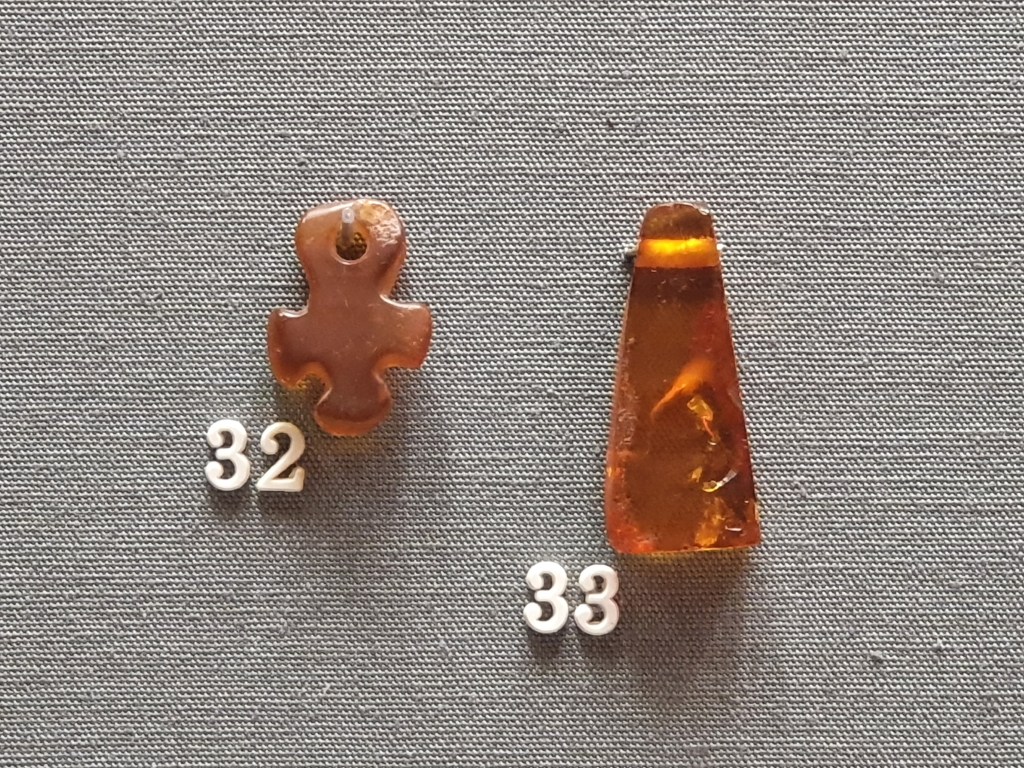
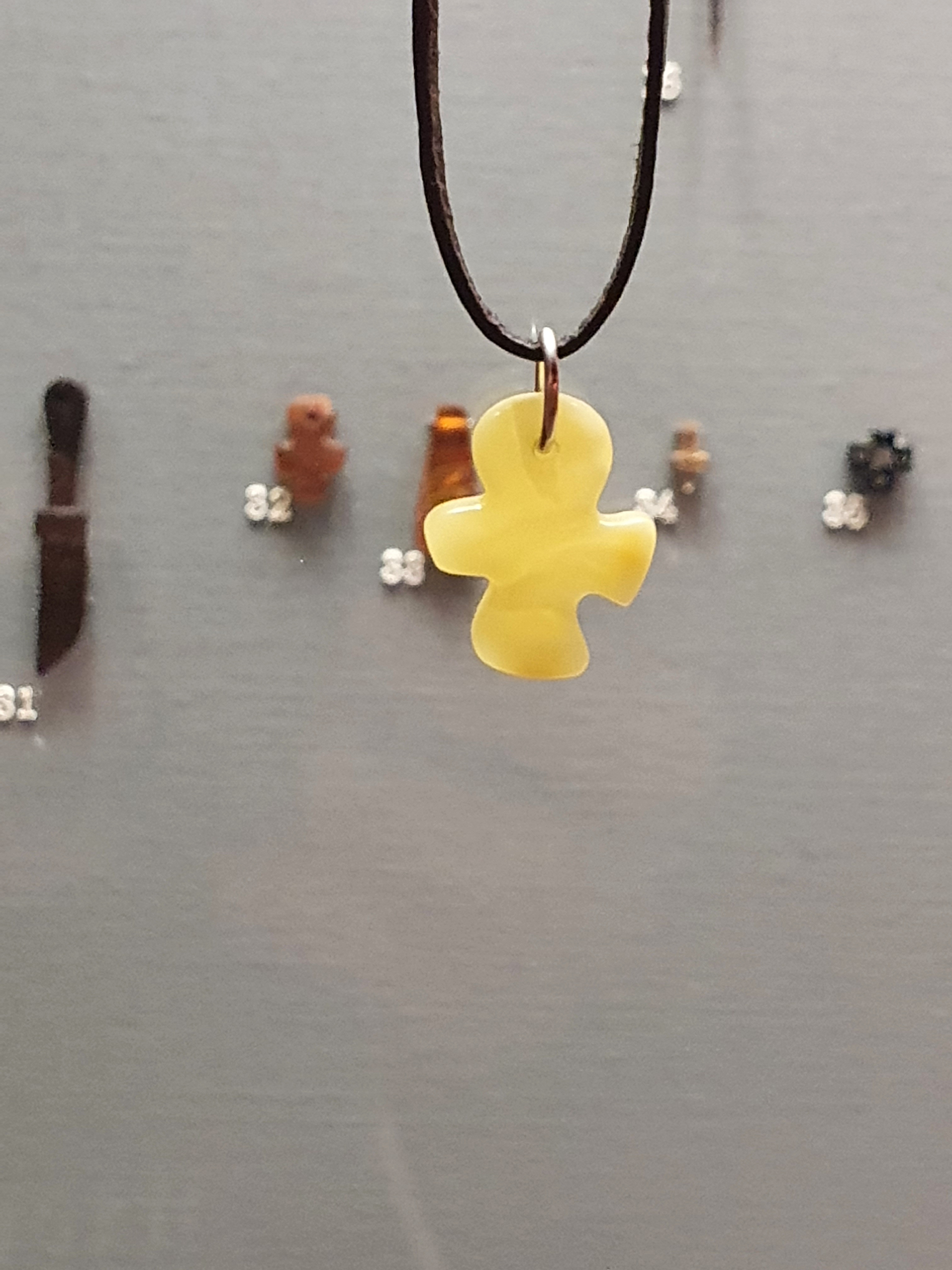
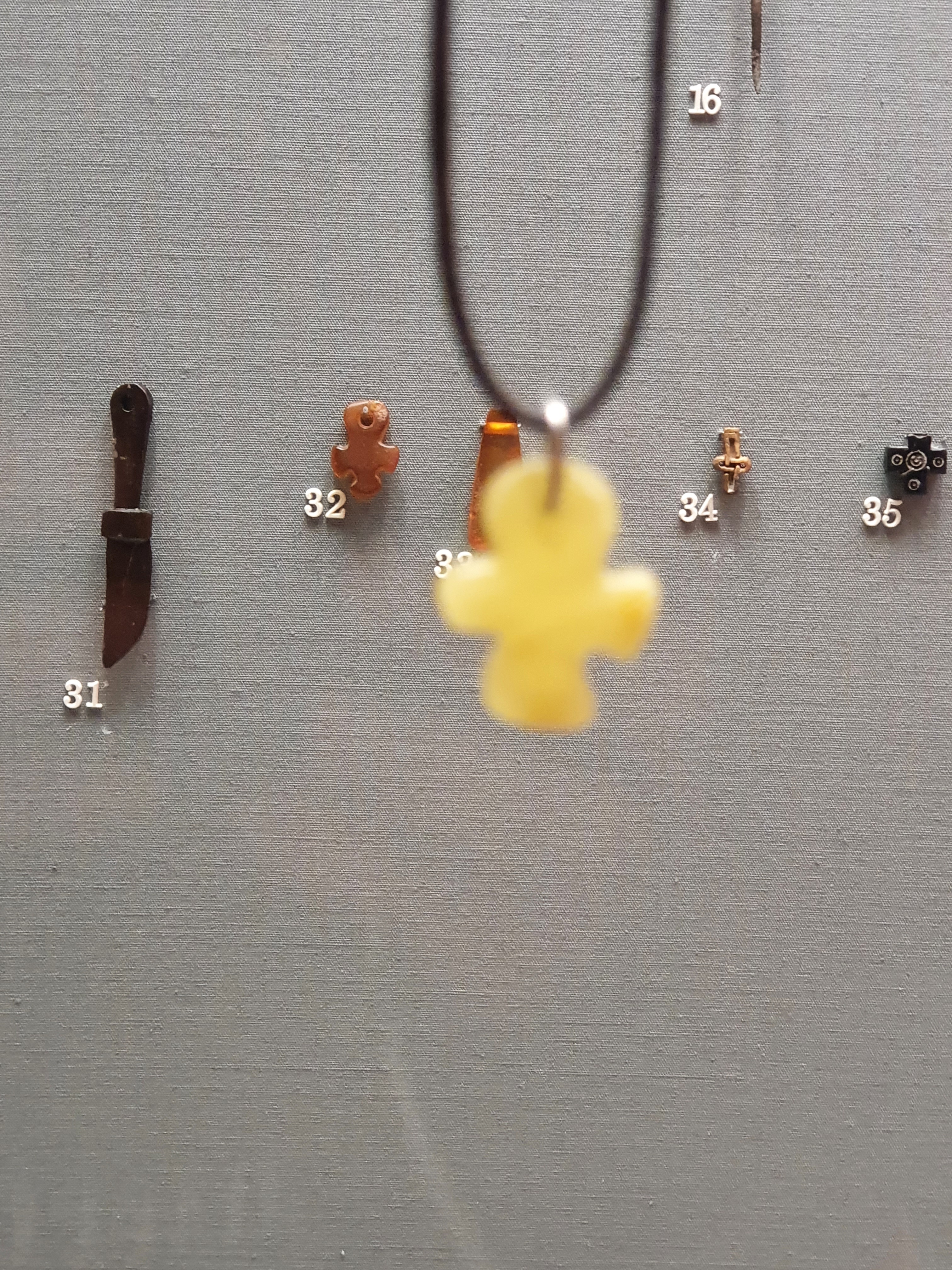
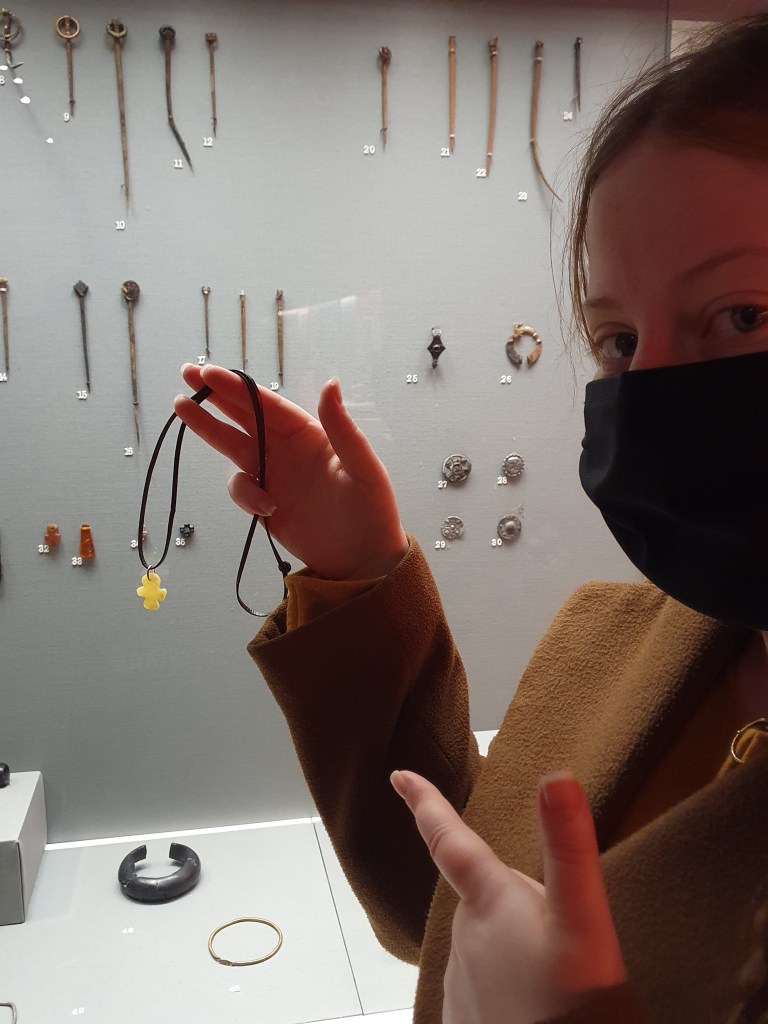
Amber pendant in cross shape (Fishamble Street)
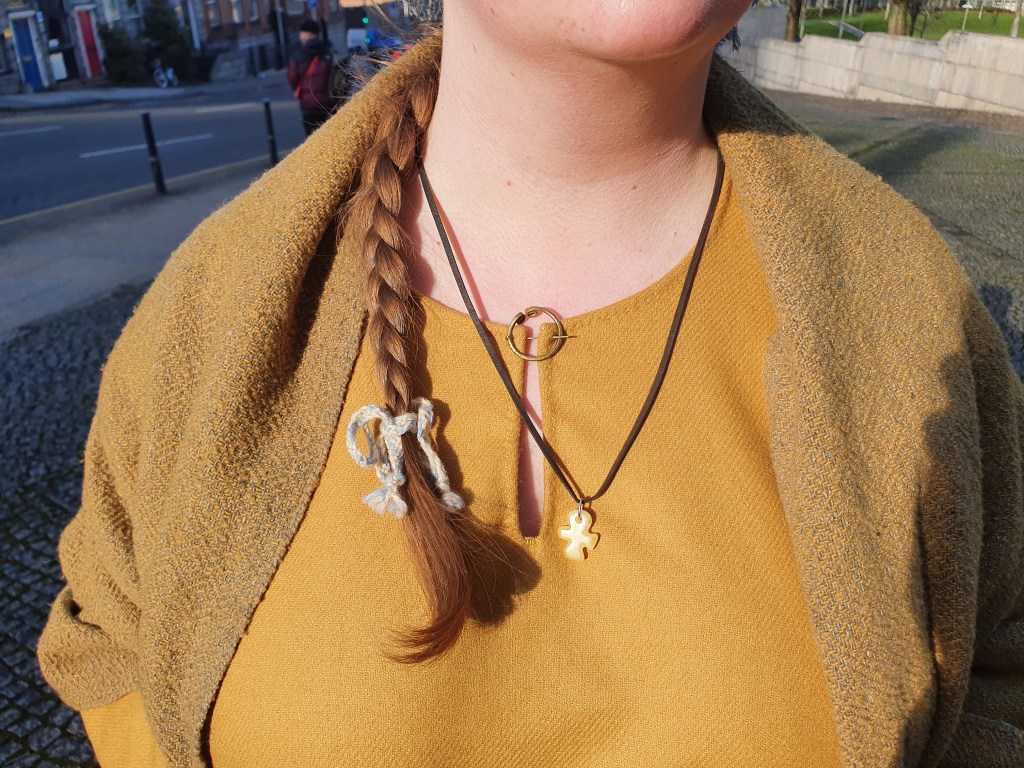
This pendant was made for me by my friend Peter Merrett, based on an example found on Fishamble Street (E190:6248.) It was dated to the mid to late 10th century.

My version is in a lighter amber than the original, which was more orange. Lots of amber fragments were found in the Wood Quay area and particularly in Fishamble Street. Wallace (2016, p.291) explains how at least one house specifically (FS 20 at building level 5 in yard 2) showed evidence that it was the main centre of amber production in late 10th century Dyflin. 257 objects were found in and around the site, while 1,240 worked amber pieces in various stages of completion were also discovered there.

Amber was found in fifty-three of the buildings on Fishamble Street, with 41% of them being recovered from FS 20 and its yard. The Dublin amber finds were made up of beads, pendants, rings and of course the waste and unworked amber nuggets. While some of the amber items for sale in Dublin may have been for a foreign market, it seems that the cruciform pendants had a local flavour- cross pendants in amber haven’t been found in England and the English jet crosses aren’t especially similar in style in my opinion.

Since amber would have been a commonly traded good in the Wood Quay neighbourhood, I envision my Dublin woman as having a piece or two. Perhaps like me, she bought her cross pendant from her craftsman friend up the road or indeed, perhaps she was the craftsperson herself.

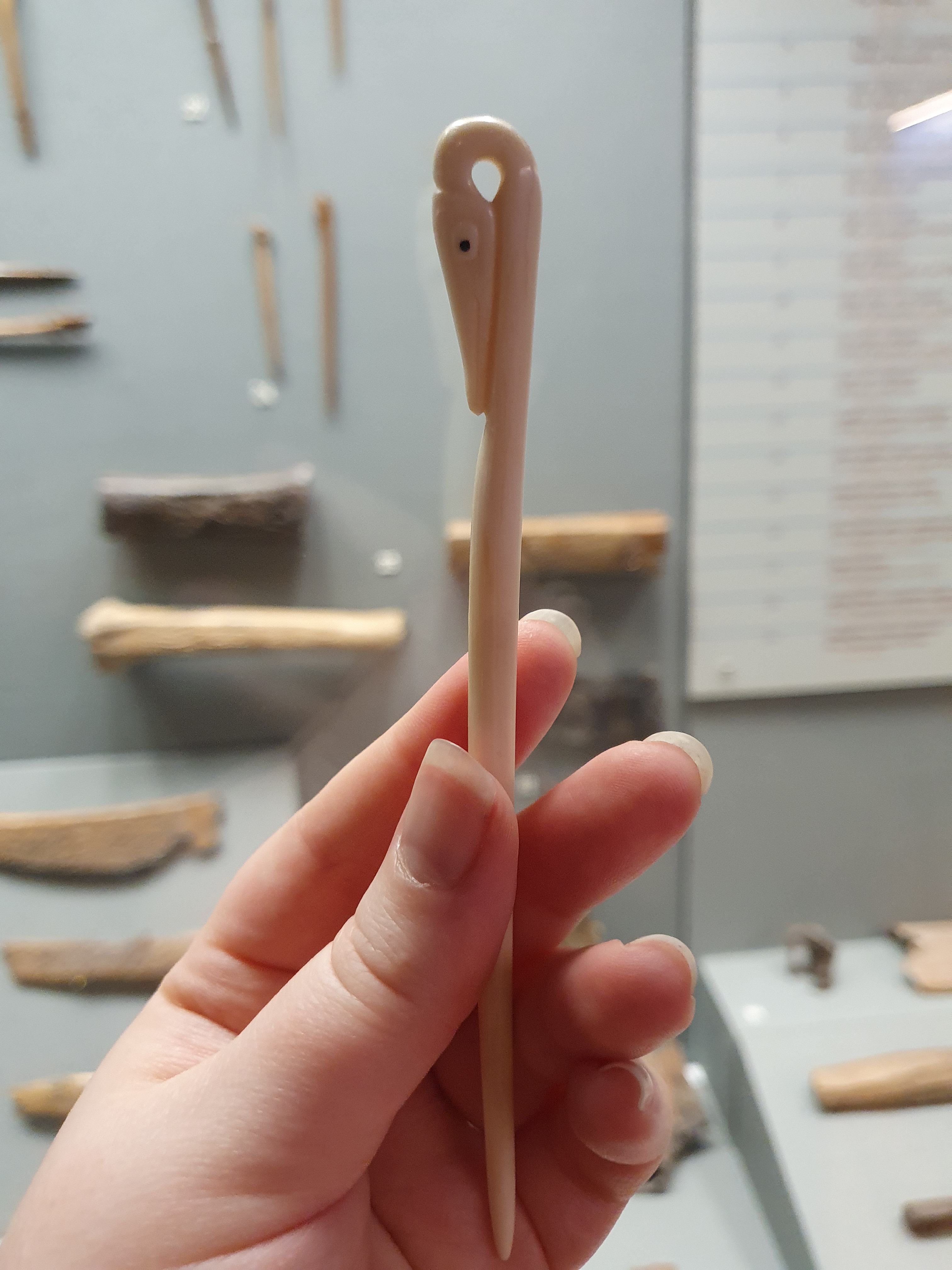
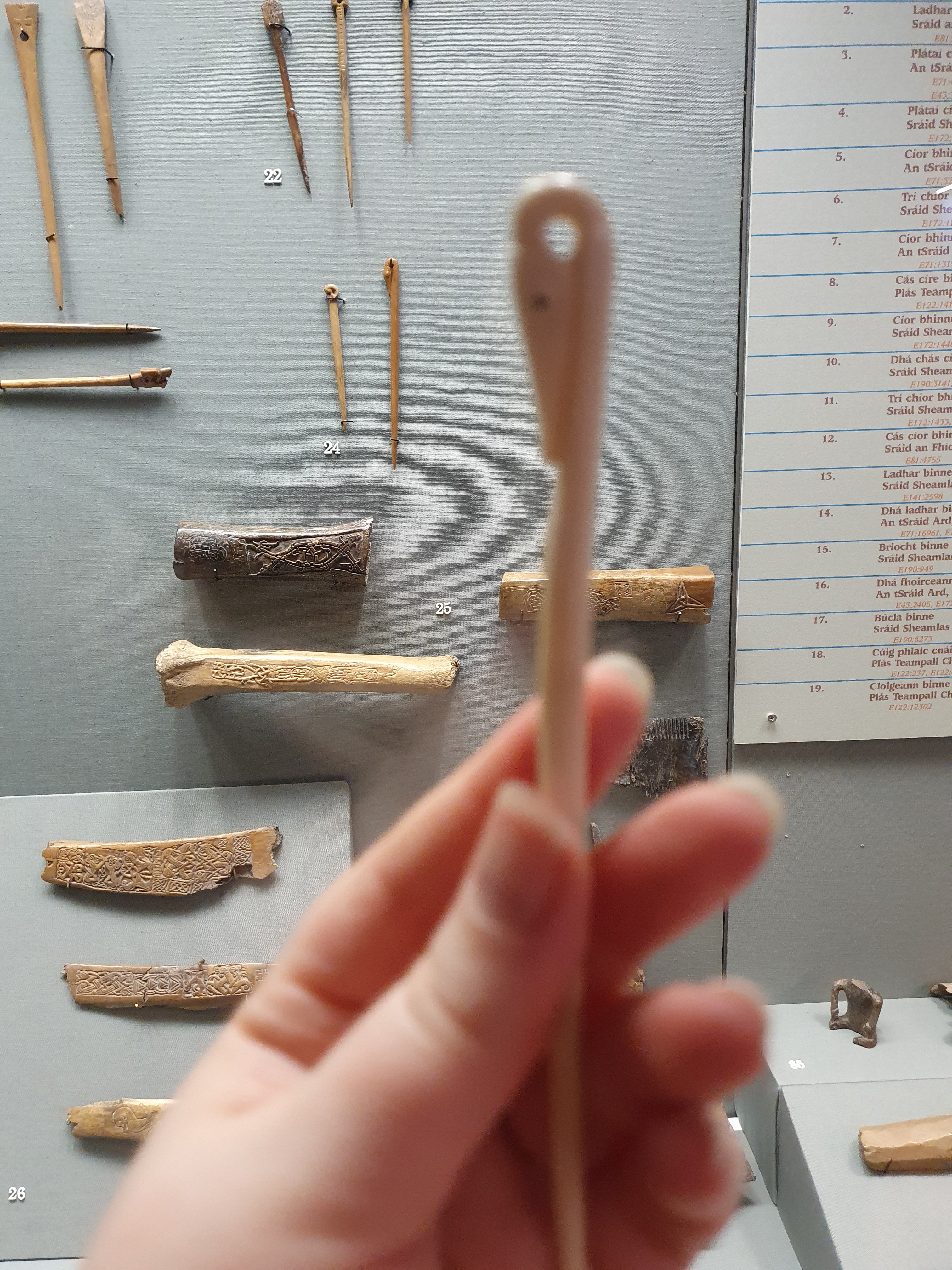
Bone bird-headed pin (Winetavern Street/Christchurch Place)
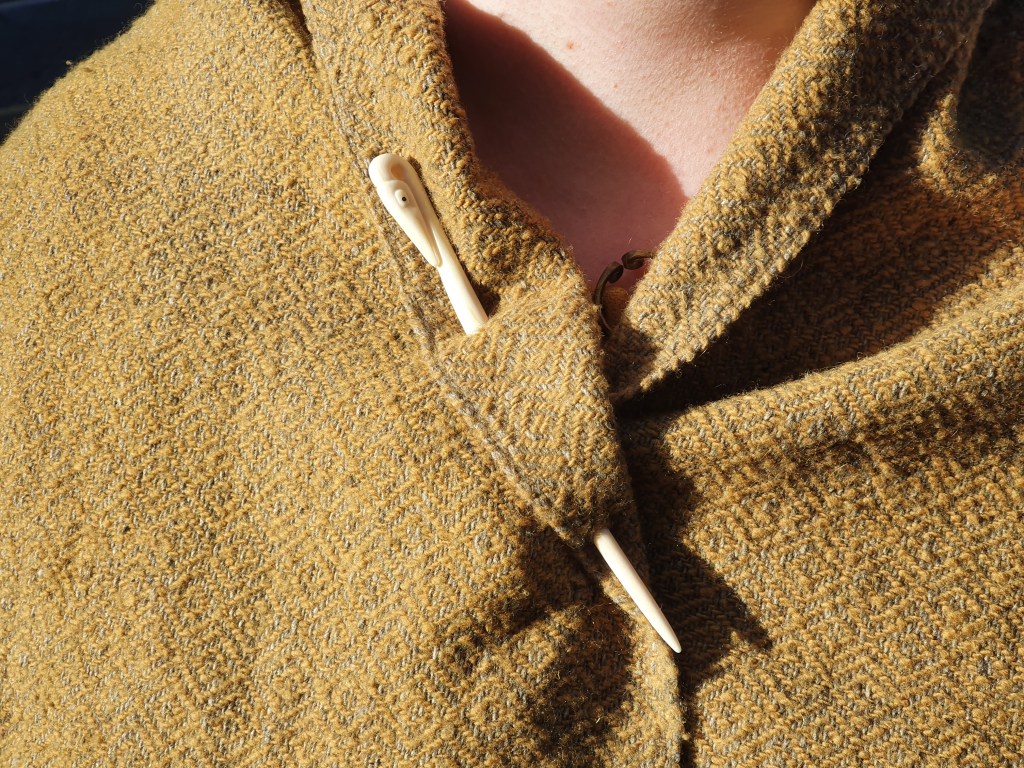
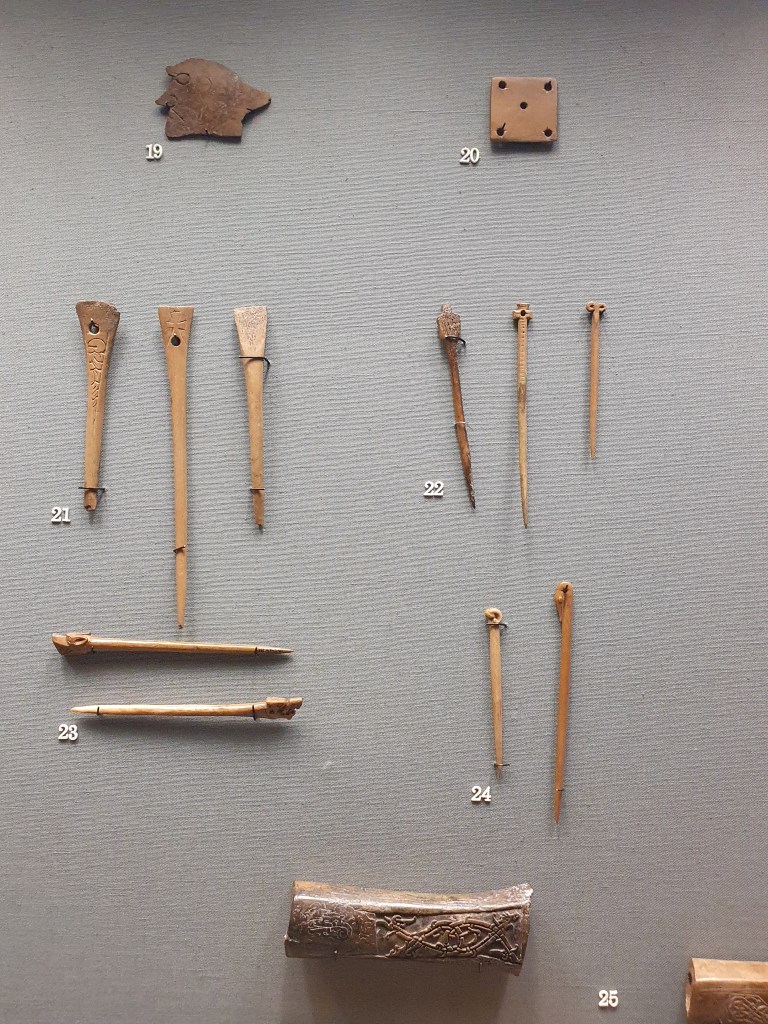
This pin is based on a bone pin (E122:61) found on either Winetavern Street (Wallace, 2016. p.303) or Christchurch Place (National Museum of Ireland, 1973)- different publications give different find sites. It has a carved terminal in the shape of a bird and was dated quite vaguely to the 10-11th century.

A multitude of bone pins were found in Viking Age Dublin. Like the York examples, they range from plain all the way to ornate- some of the more decorative examples include cruciform tops, ram’s horn and animal-headed. We can’t tell for certain if they were used for fastening clothing, as hair pins or indeed for some other purpose.
Do you think it looks more like a swan or a goose, a duck, a pelican? I can’t decide but I like it a lot.

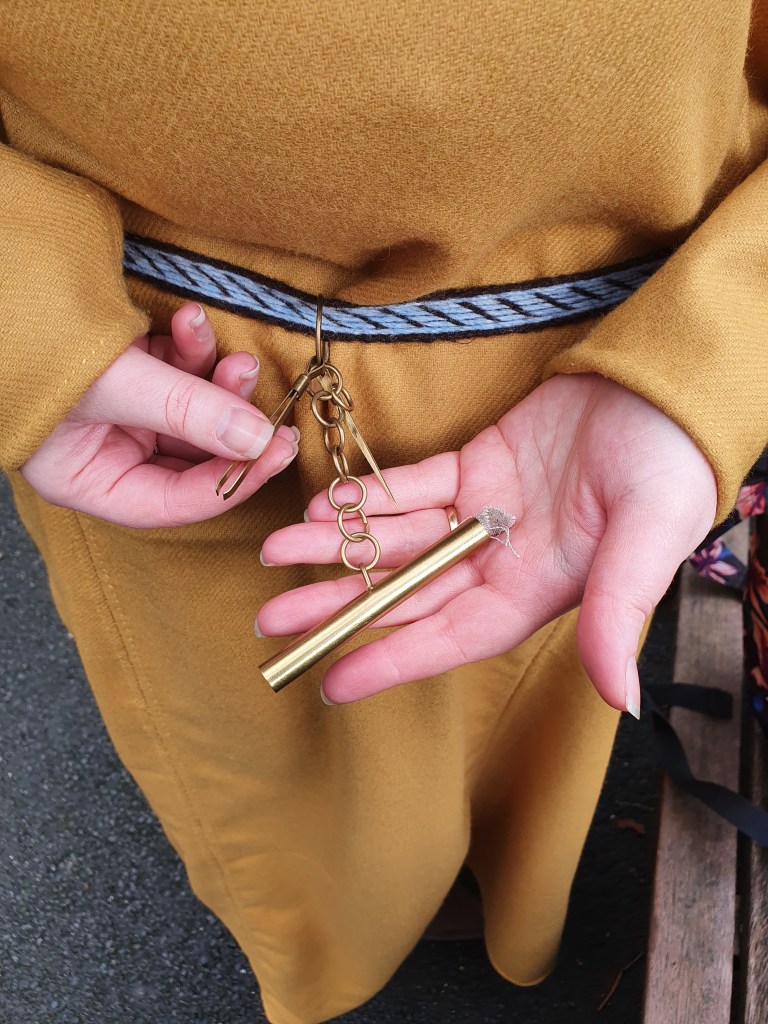
Copper alloy toiletry set (Fishamble Street)
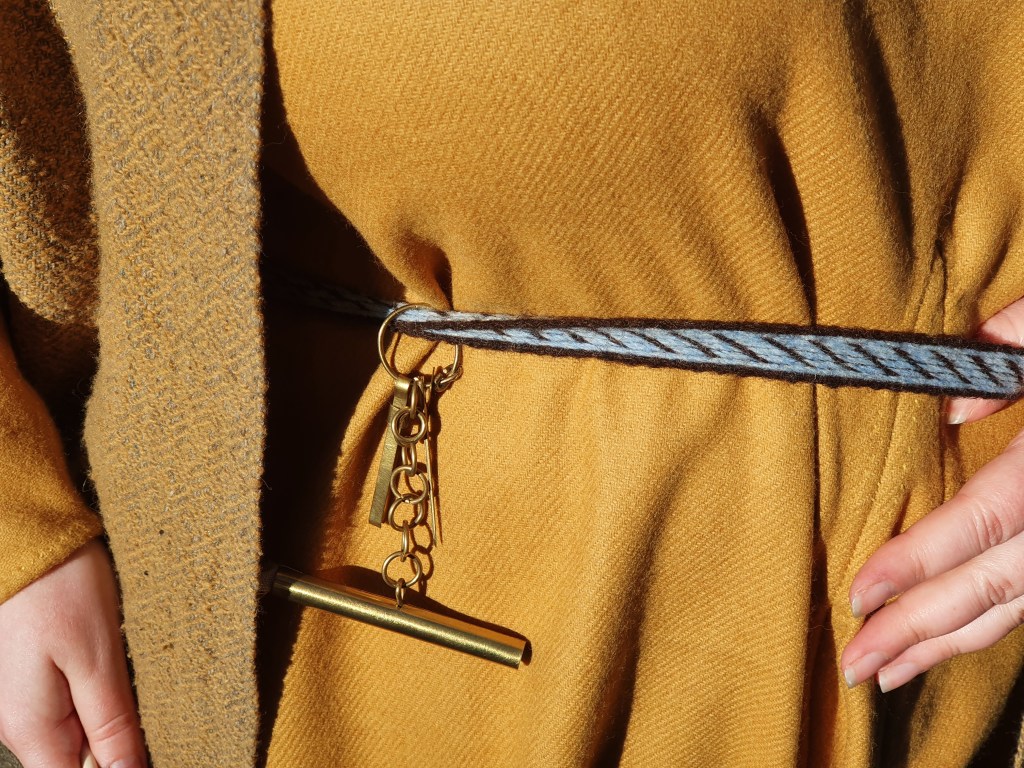
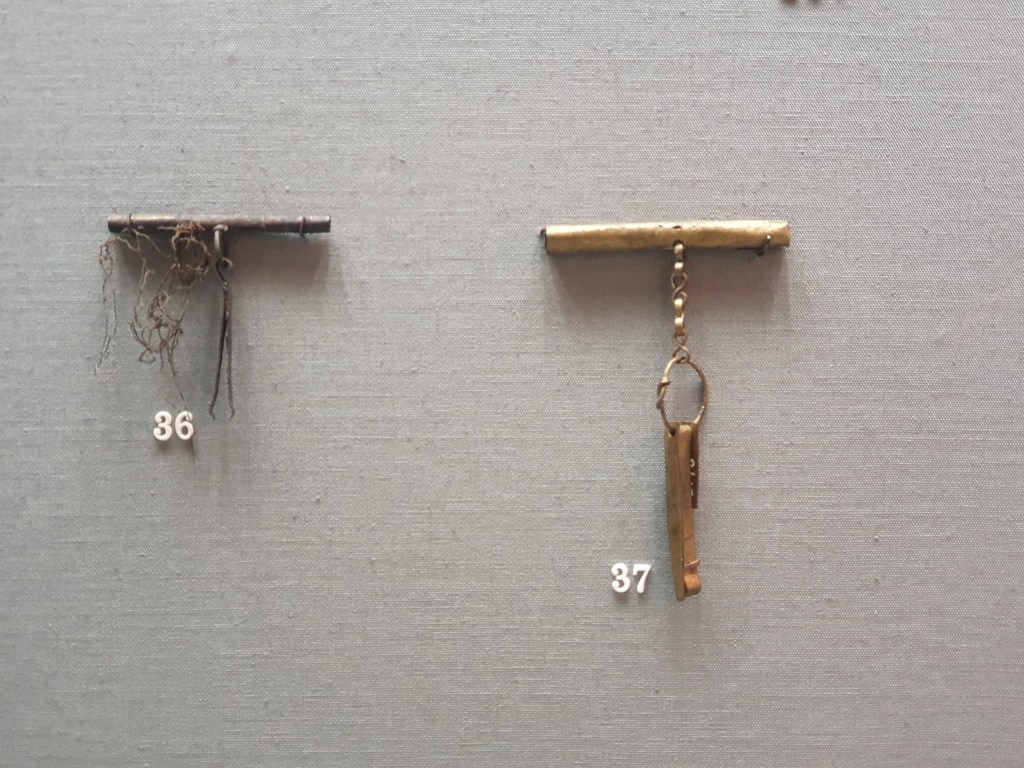
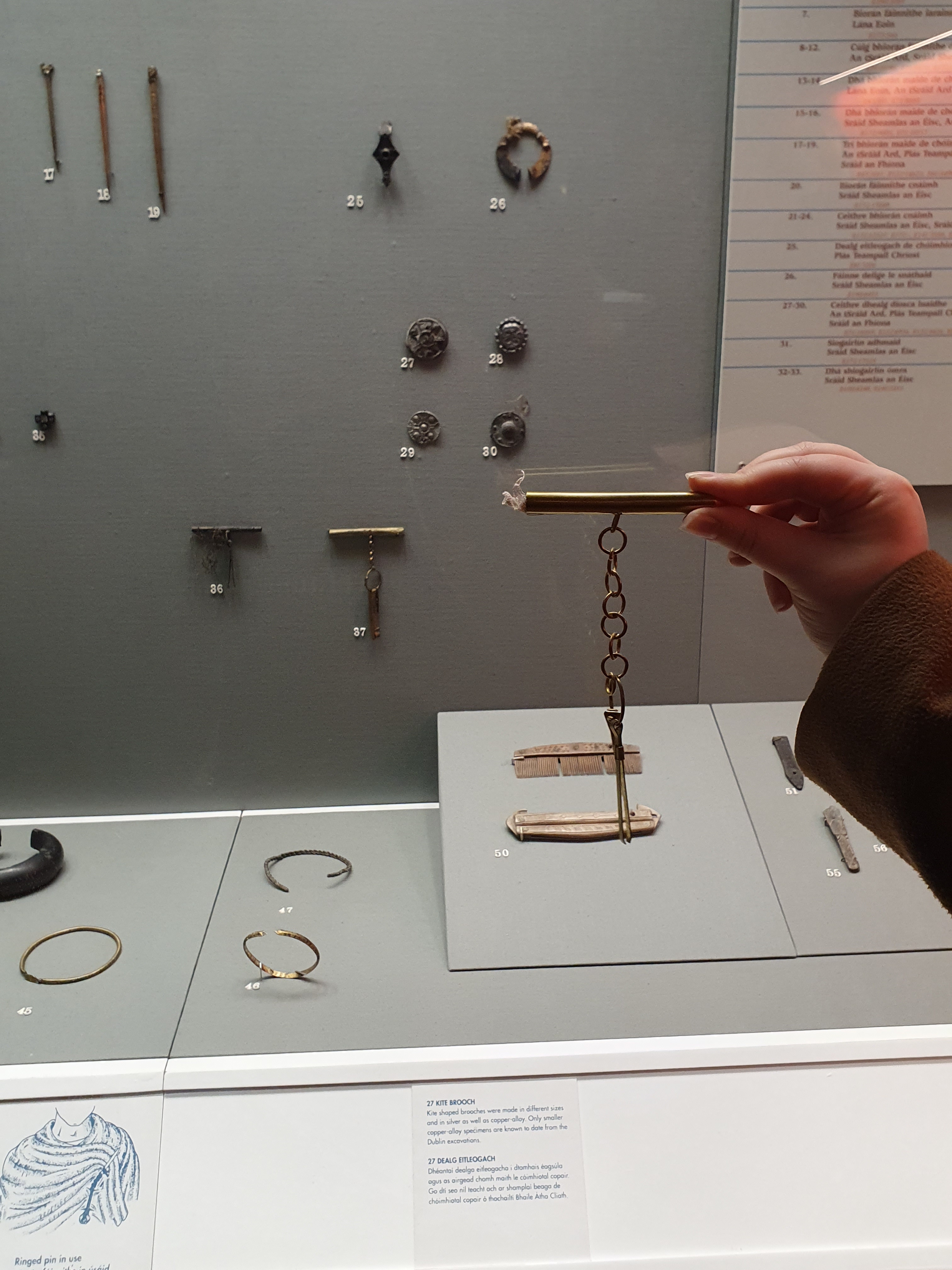
Toiletry sets like this one (E190:0000) are a relatively common find across the Viking world- other examples can be found from York, Hedeby, Birka, Gotland and many other sites. Mine is one of two found on Fishamble Street and is dated to the 10th century. It is made of copper alloy and consists of a little tube, hanging from a ring by a chain, along with several other tools- a pair of tweezers, a nail/tooth pick and one other unknown item which was broken.

The tube would have been used as a needlecase, either with a roll of fibre shoved inside with the needles or indeed with something blocking each end to make a sealed tube. Other examples from the Viking world indicate that sealed needle cases were common, though neither needle case found at Wood Quay had a stopper or a lid. I put a little linen cloth inside mine, more for appearances than anything else. The needles that your Hiberno Scandinavian lady would carry with her could be made from iron, copper alloy or bone- needles are a common find at Viking Age sites.

Textiles
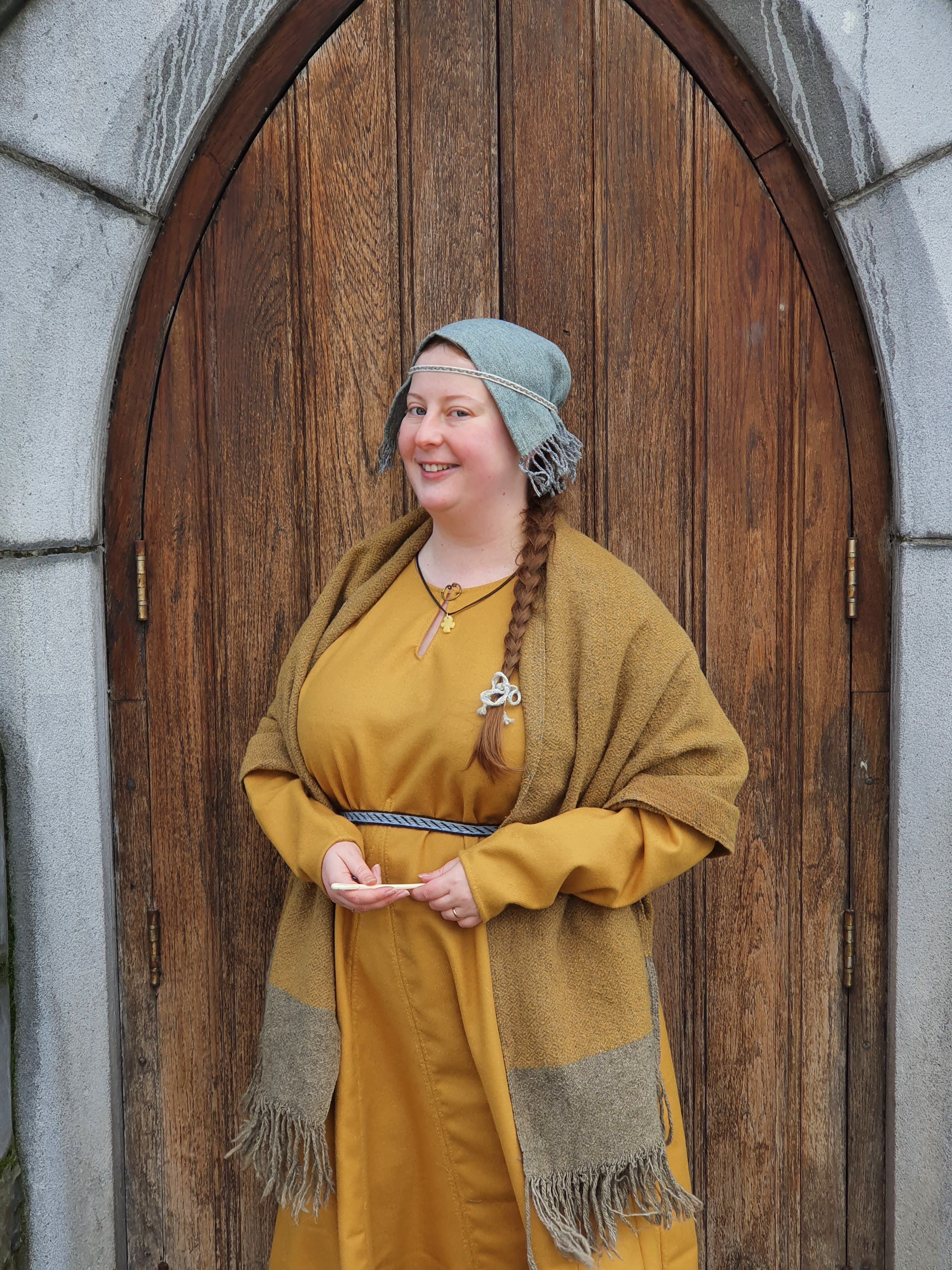
I didn’t plan the textiles for this outfit specifically for a Dublin impression- so they aren’t perfect. I opted for a mustard yellow wool dress and a diamond twill shawl in a khaki green-mustard. Both colours can be achieved on wool using natural dyes used in period, namely dyer’s greenweed and weld.

In the absence of any Viking Age tunic finds from Ireland, the pattern for my dress was based on the 11th century Skjoldehamn find from Andøya, Norway. It has four gores from the waist, two at the sides, one at the front and one at the back. I feel like this gives a more swooshy skirted look that I really like and that fits with what few contemporary images of women from Ireland and Britain we have. My shawl is rectangular with tassels at each end.

The dress is made from a simple 2/2 twill, which is found commonly at many Viking Age sites. Under normal circumstances, I would also wear a tabby woven linen underdress- but I couldn’t fit one in my luggage! Next time, I’ll take the longship instead of flying Ryanair.

Pennanular brooch

For some stupid reason, I didn’t take any photos of the brooches in the museum! They’re in the background of a few other glamour shots of the toiletry sets, mocking me, but not sharp enough to show. Sorry!

Preferably, I would have a suitable little disc brooch to close my neckline for a Dublin impression. 30 such brooches have been found in 10-11th century contexts there and Wallace (2016, p.368) describes how they were likely imports from England or Germany, where they were very fashionable at the time. It’s also striking to note how similar many examples are to York and London finds. That being said, I didn’t want to use York brooches for a Dublin outfit! I’m searching for a good replica as we speak.

One example of a pennanular brooch from Fishamble Street is E190:6455. It’s made of copper alloy and dates to the 10th century. Wallace (p.280) relates this to another brooch from Ballinderry crannog among others, labeling the penannular style as an indigenously Irish one. He explains that this could indicate that Hiberno-Scandinavian townspeople had a taste for Irish jewellery or simply that an Irish person came into the town wearing their own native fashion.

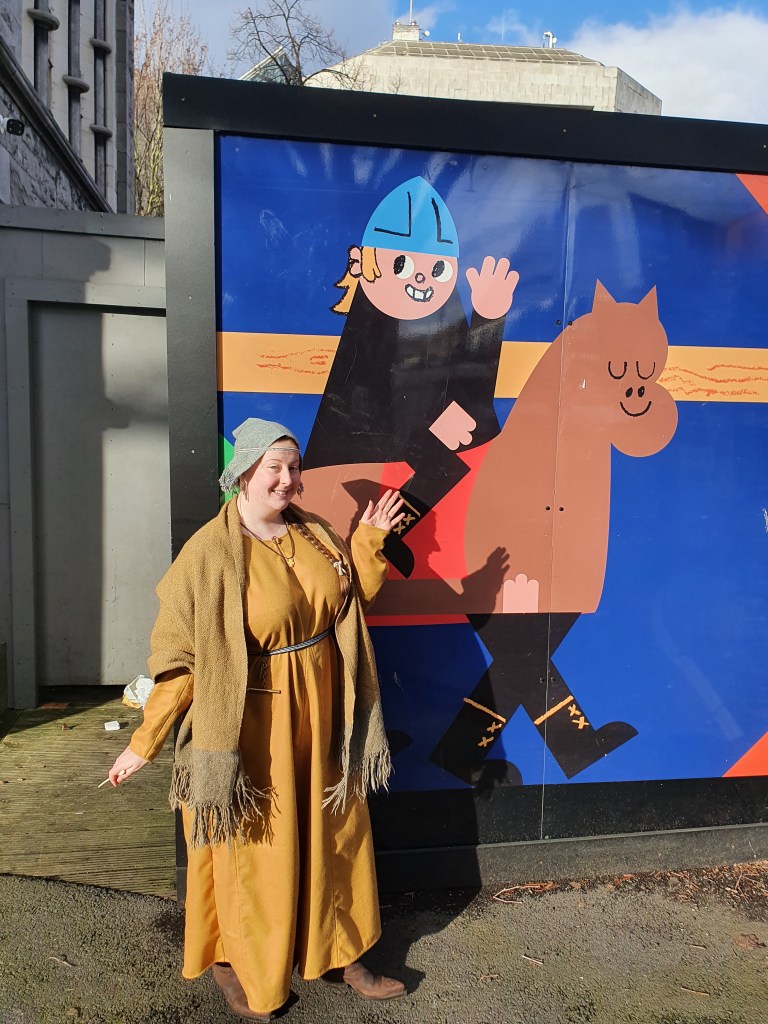
Bonus photo dump: street signs and Wood Quay pavement plaques

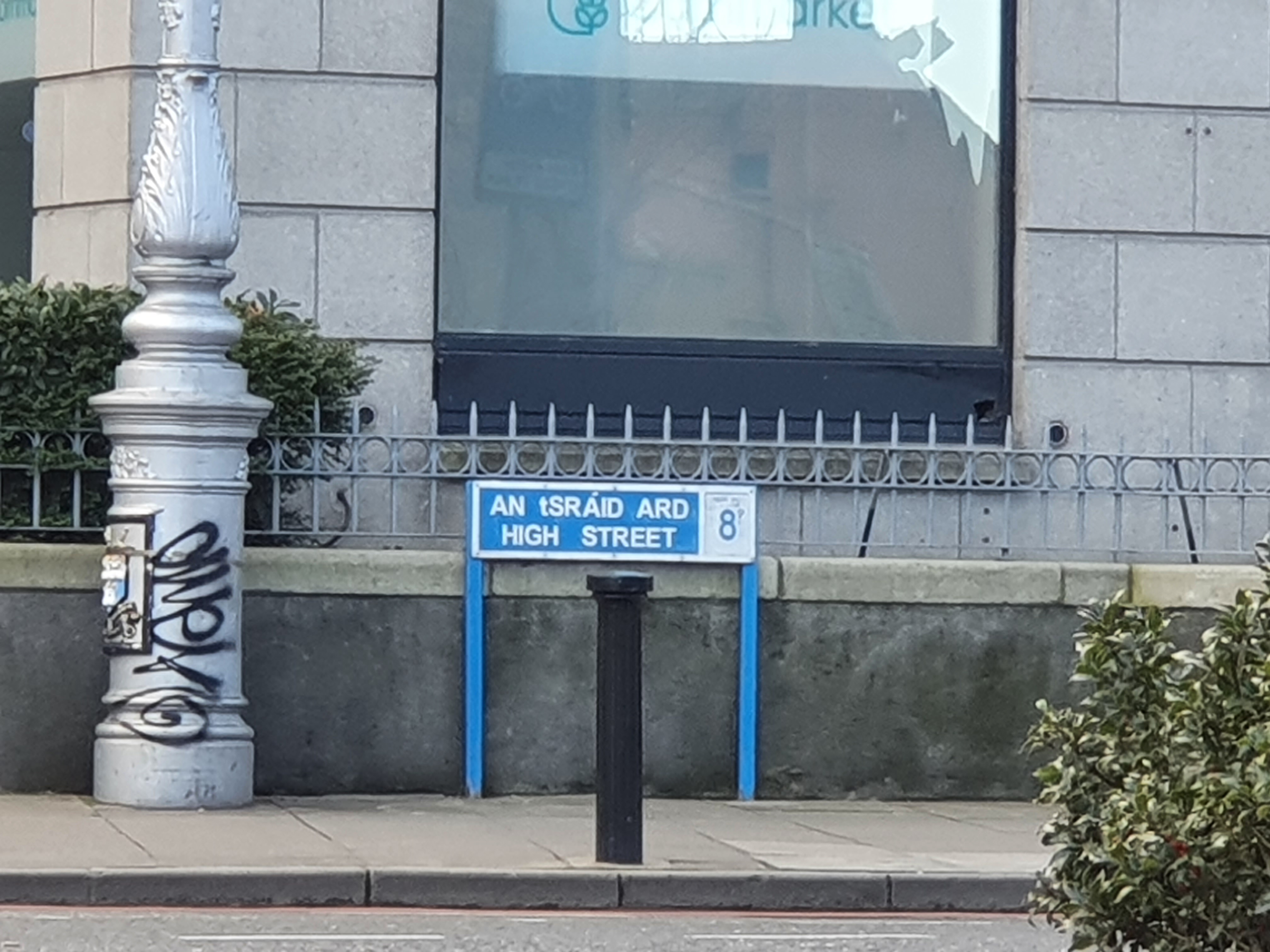
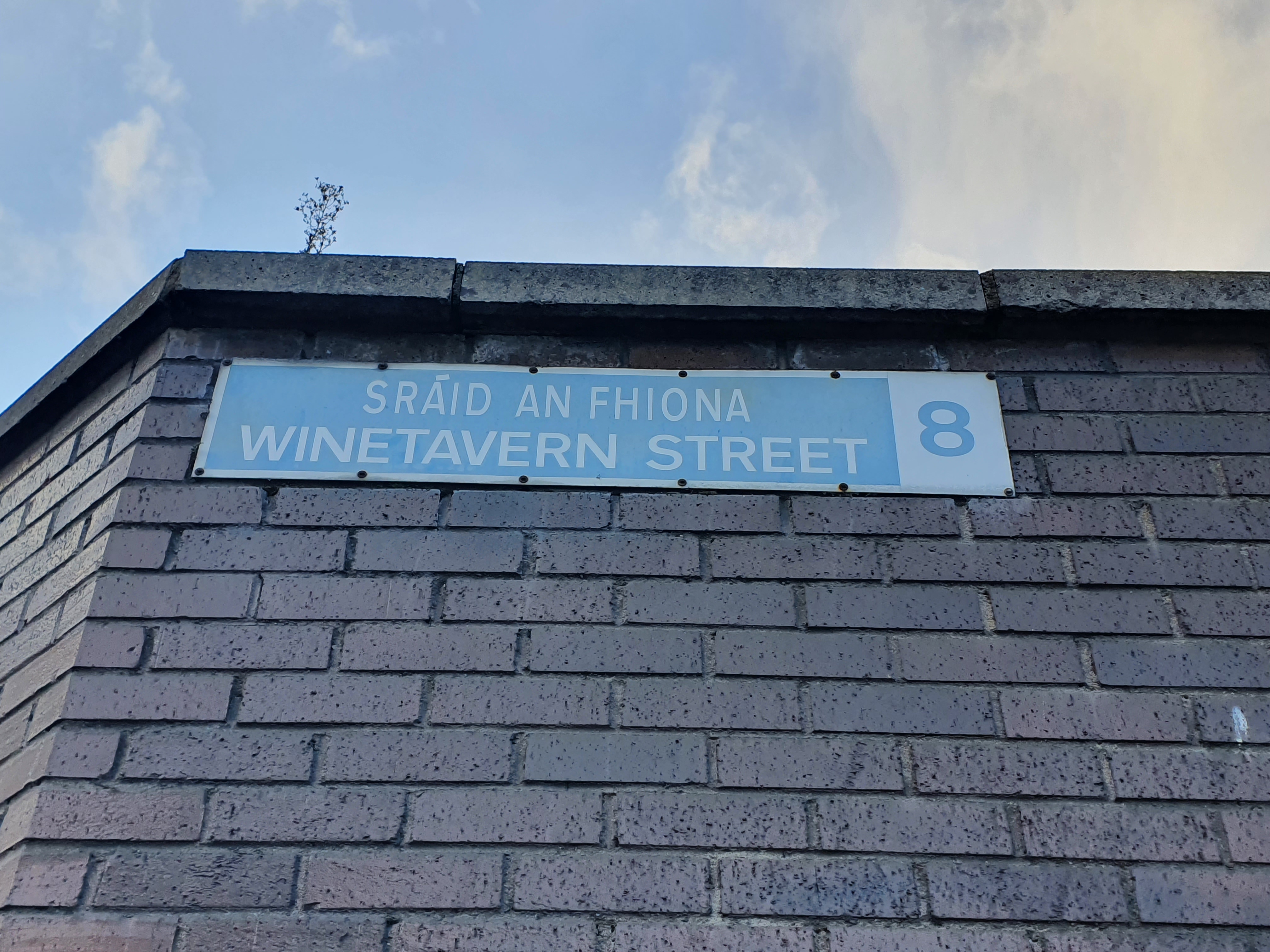
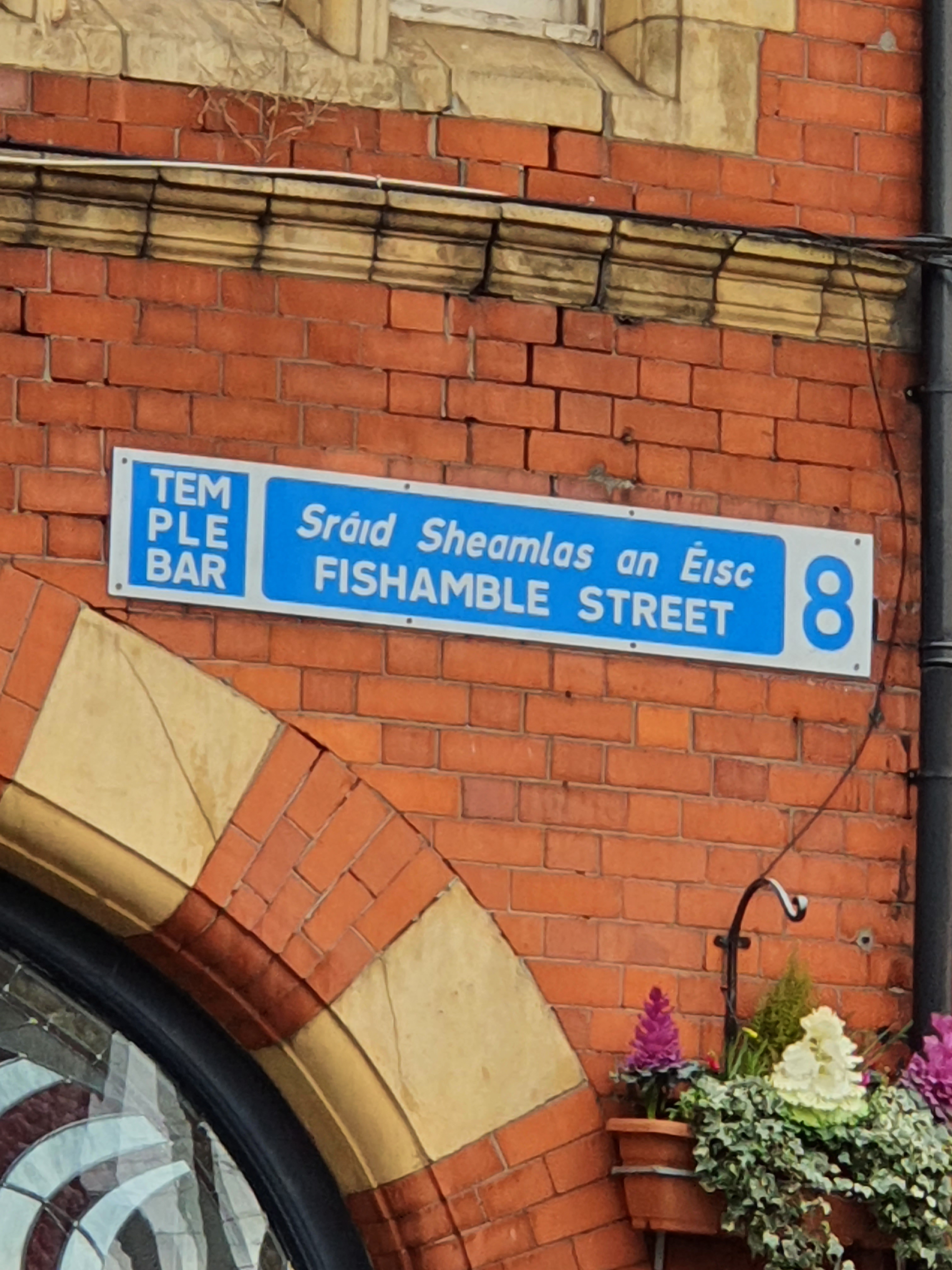
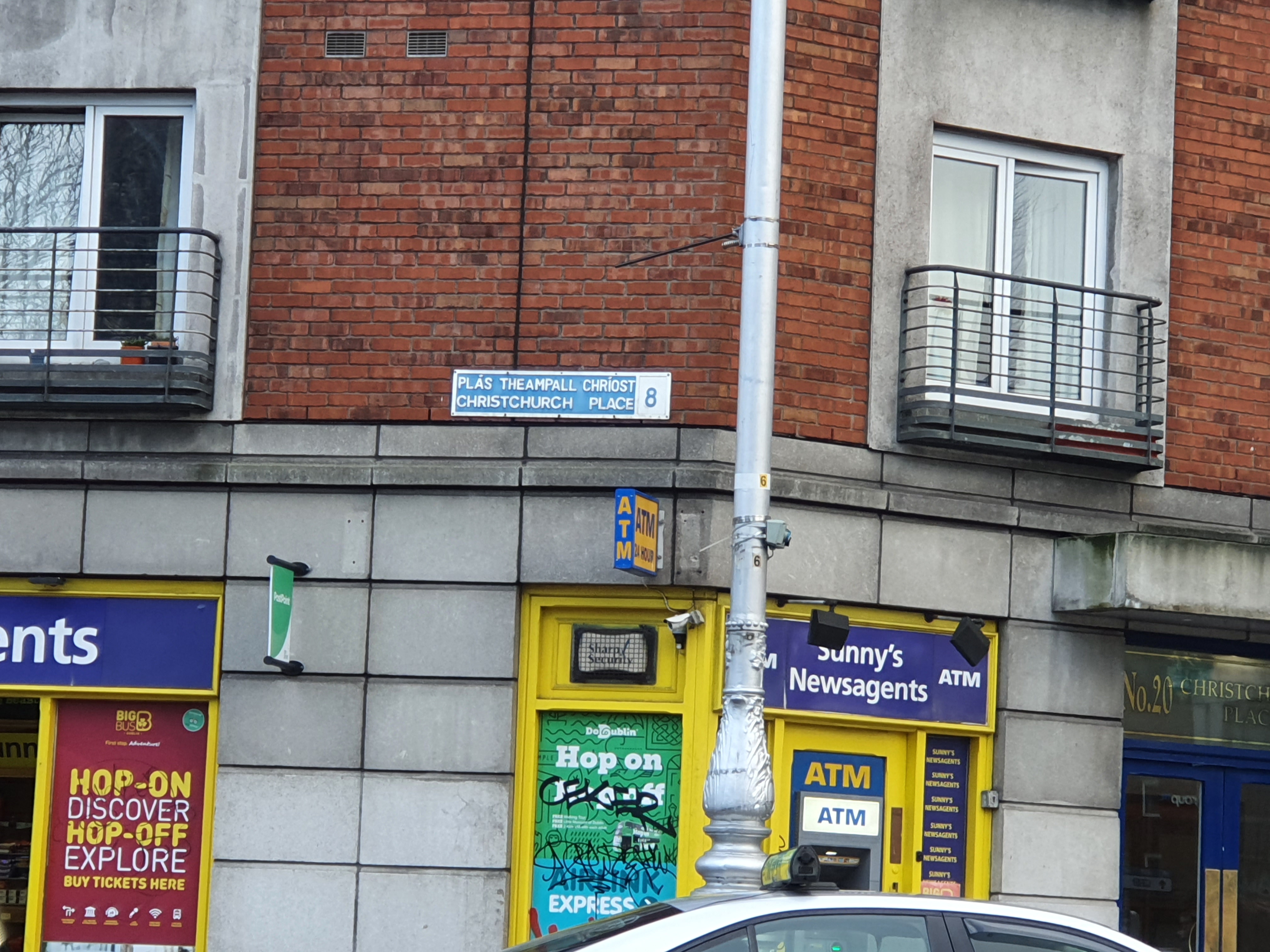
I’m just a massive nerd and I love seeing the street names I recognise from the archaeological reports.
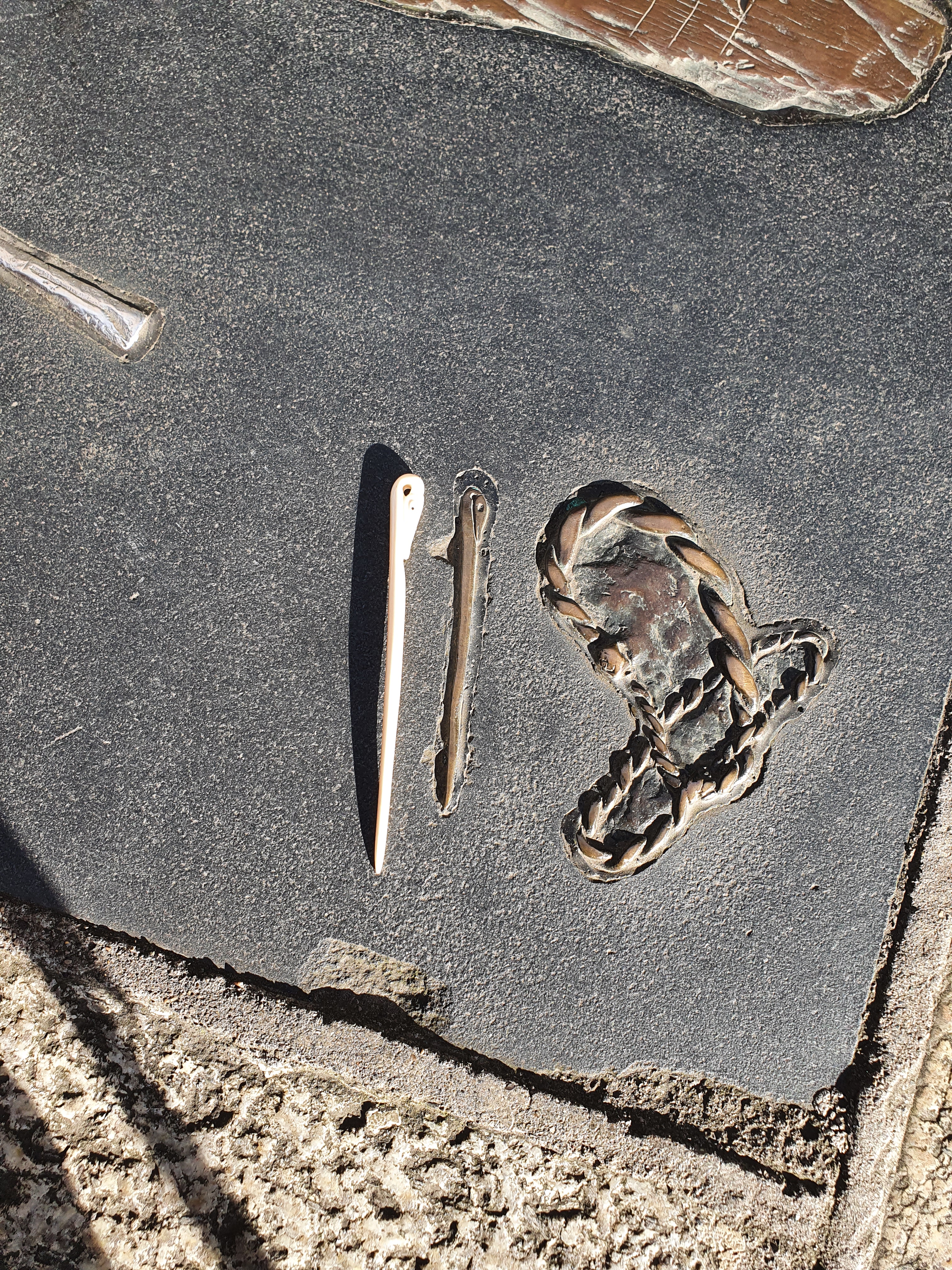
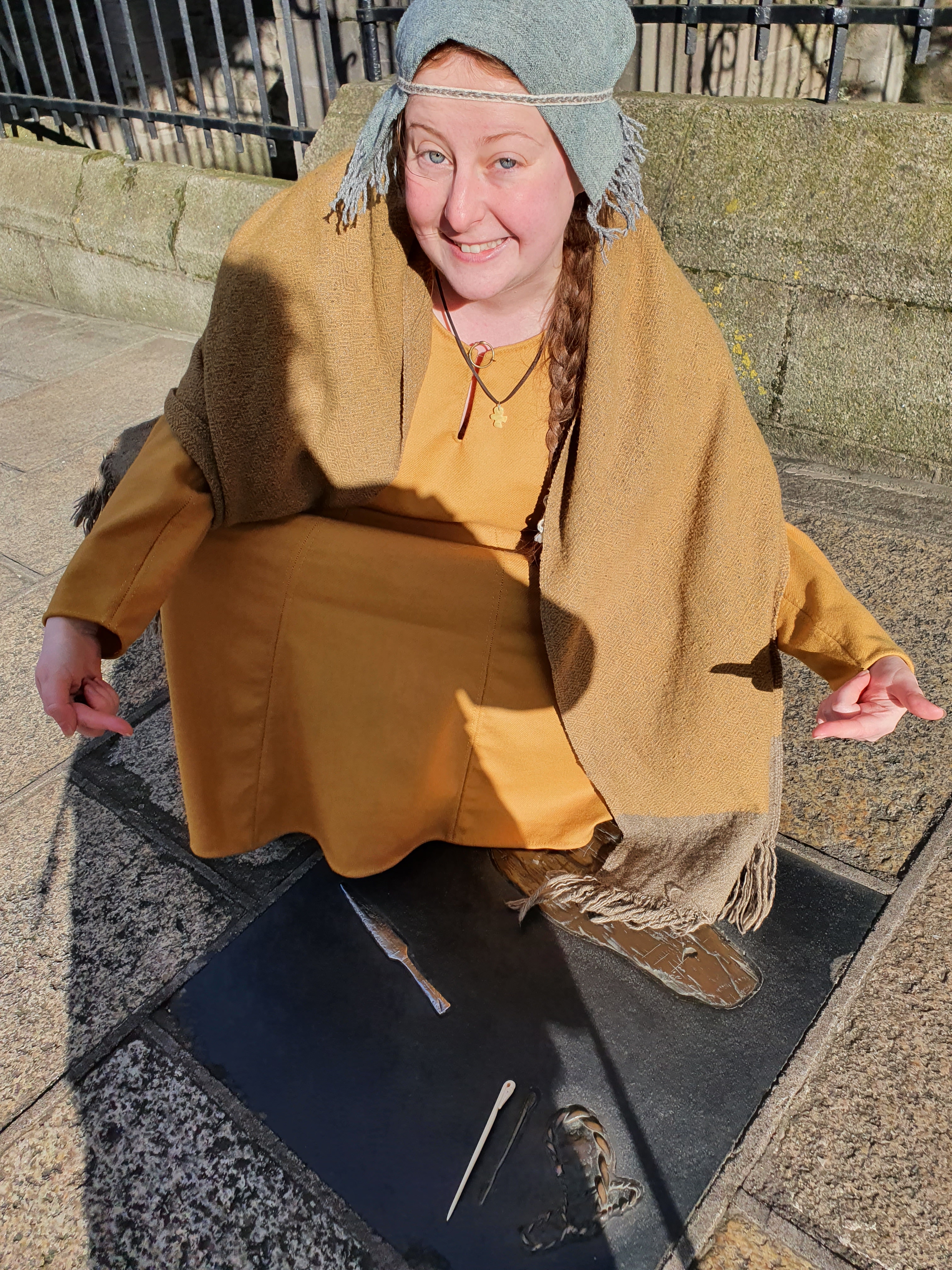
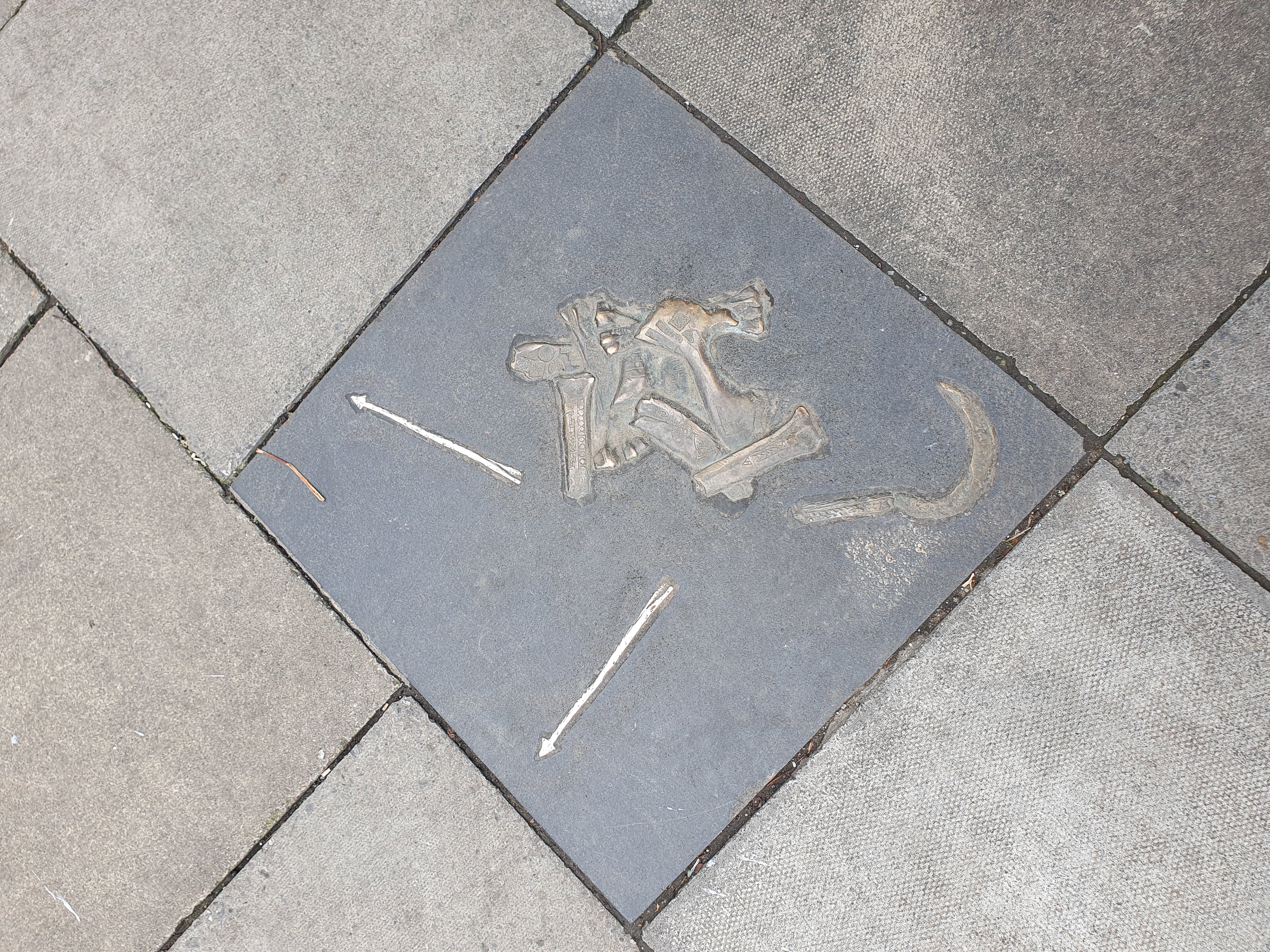
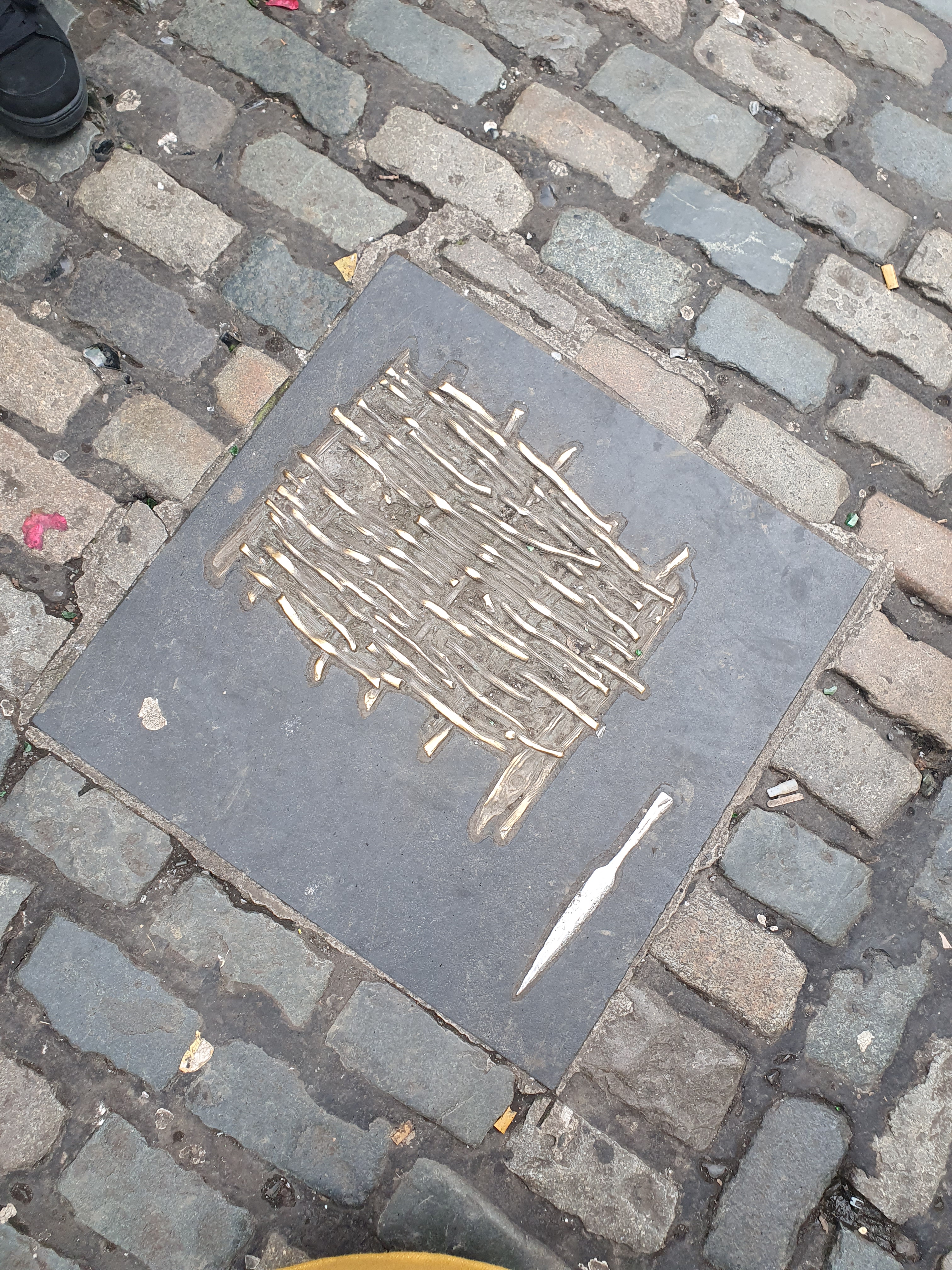
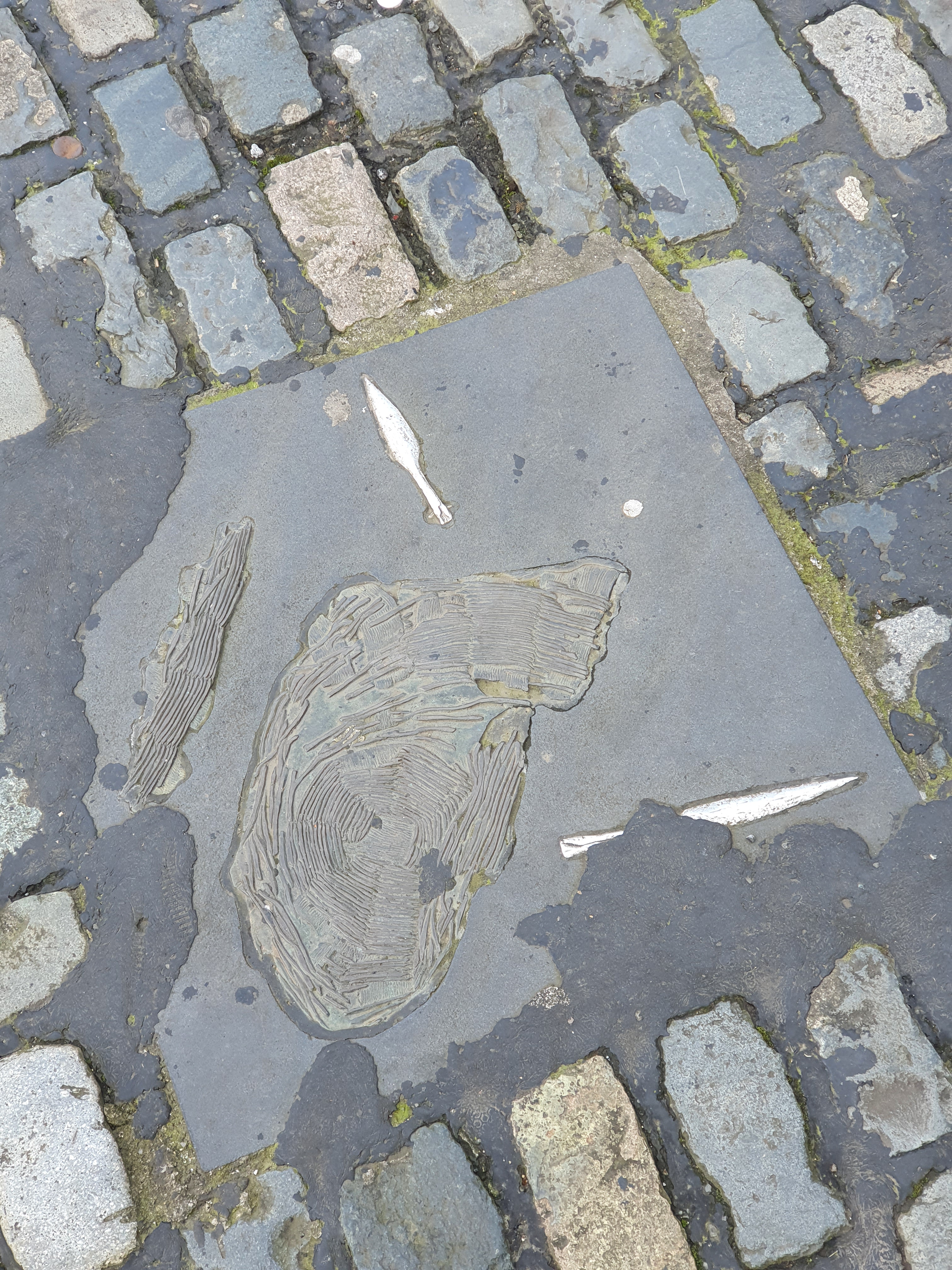
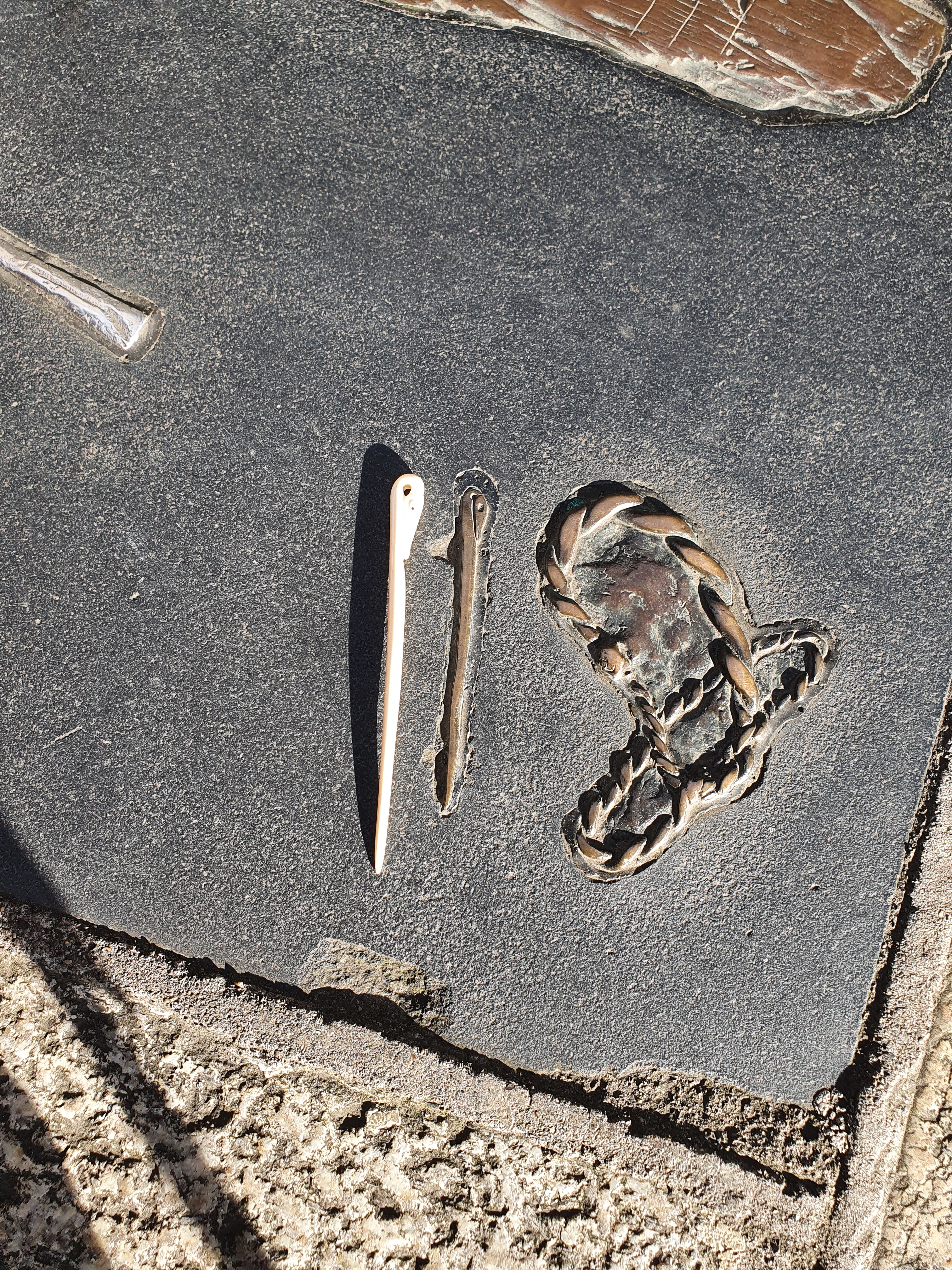
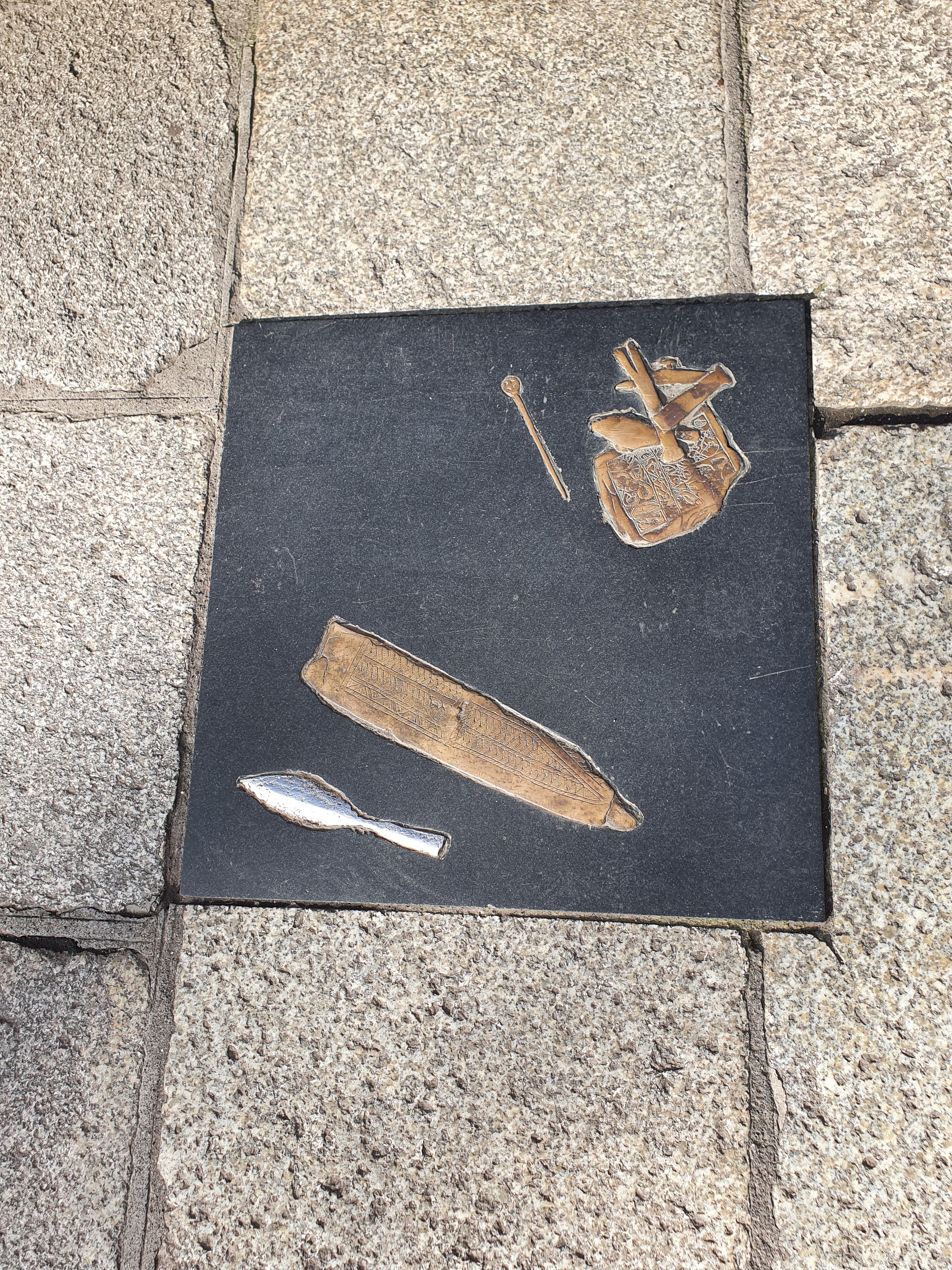
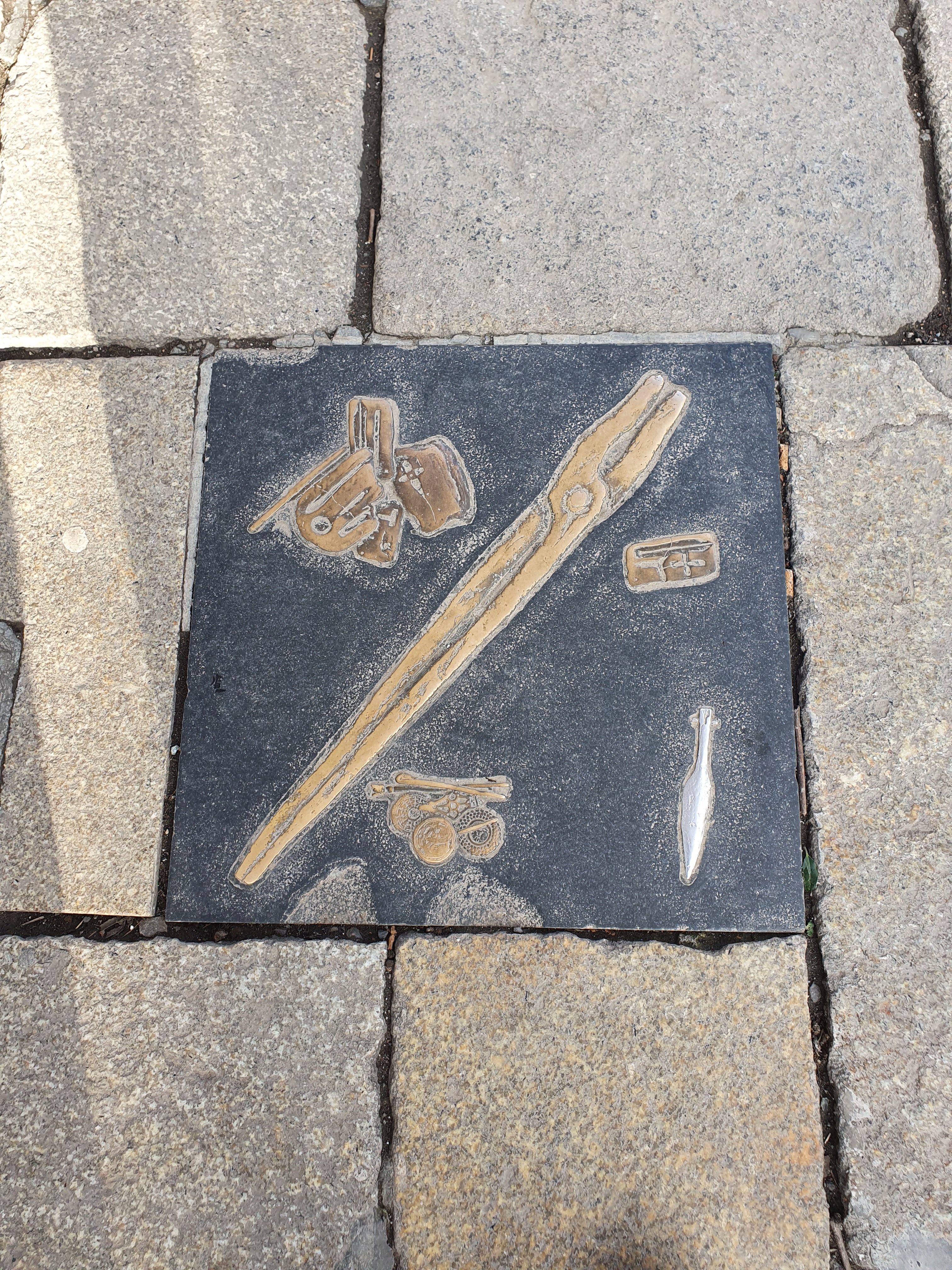
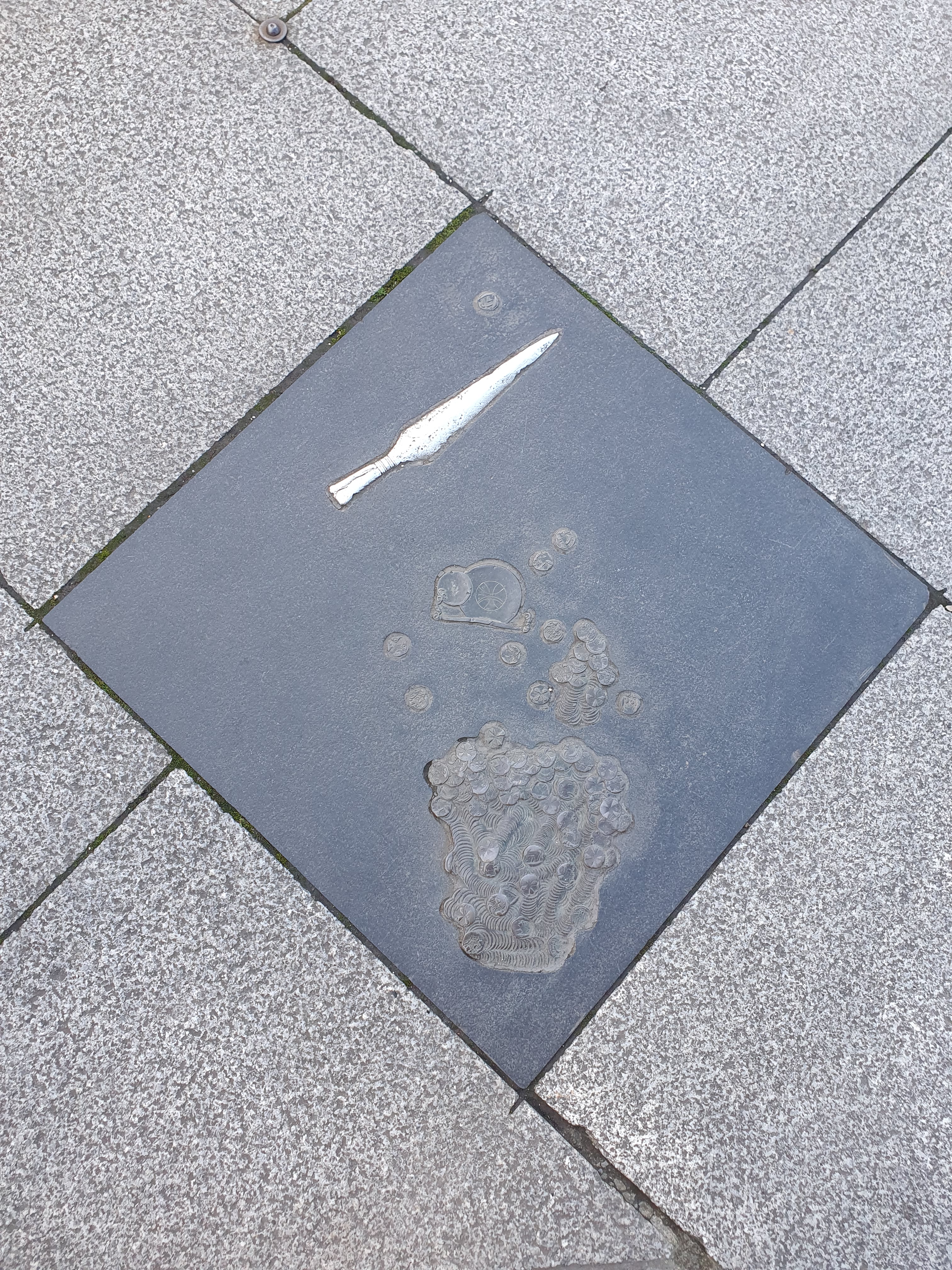
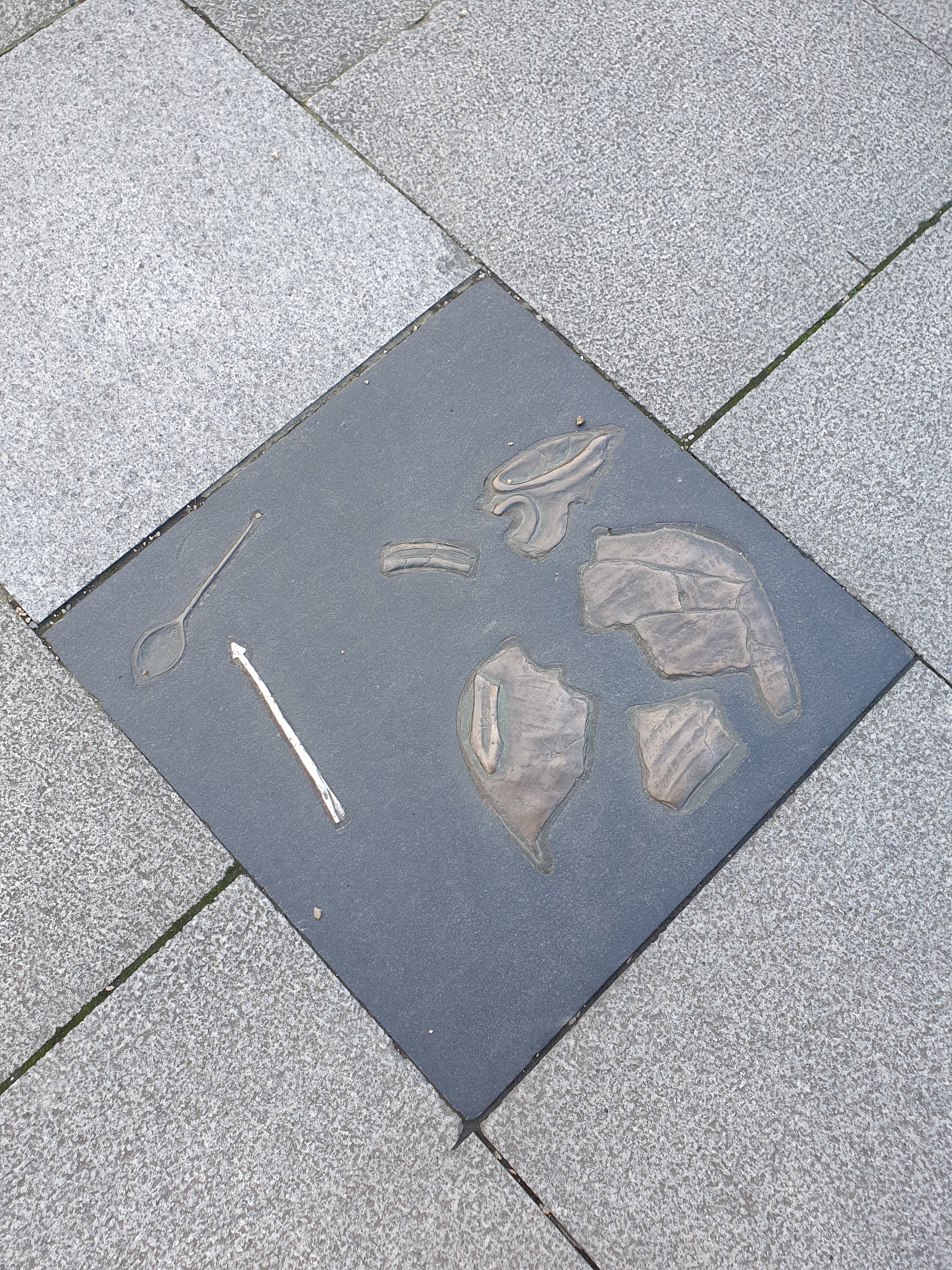
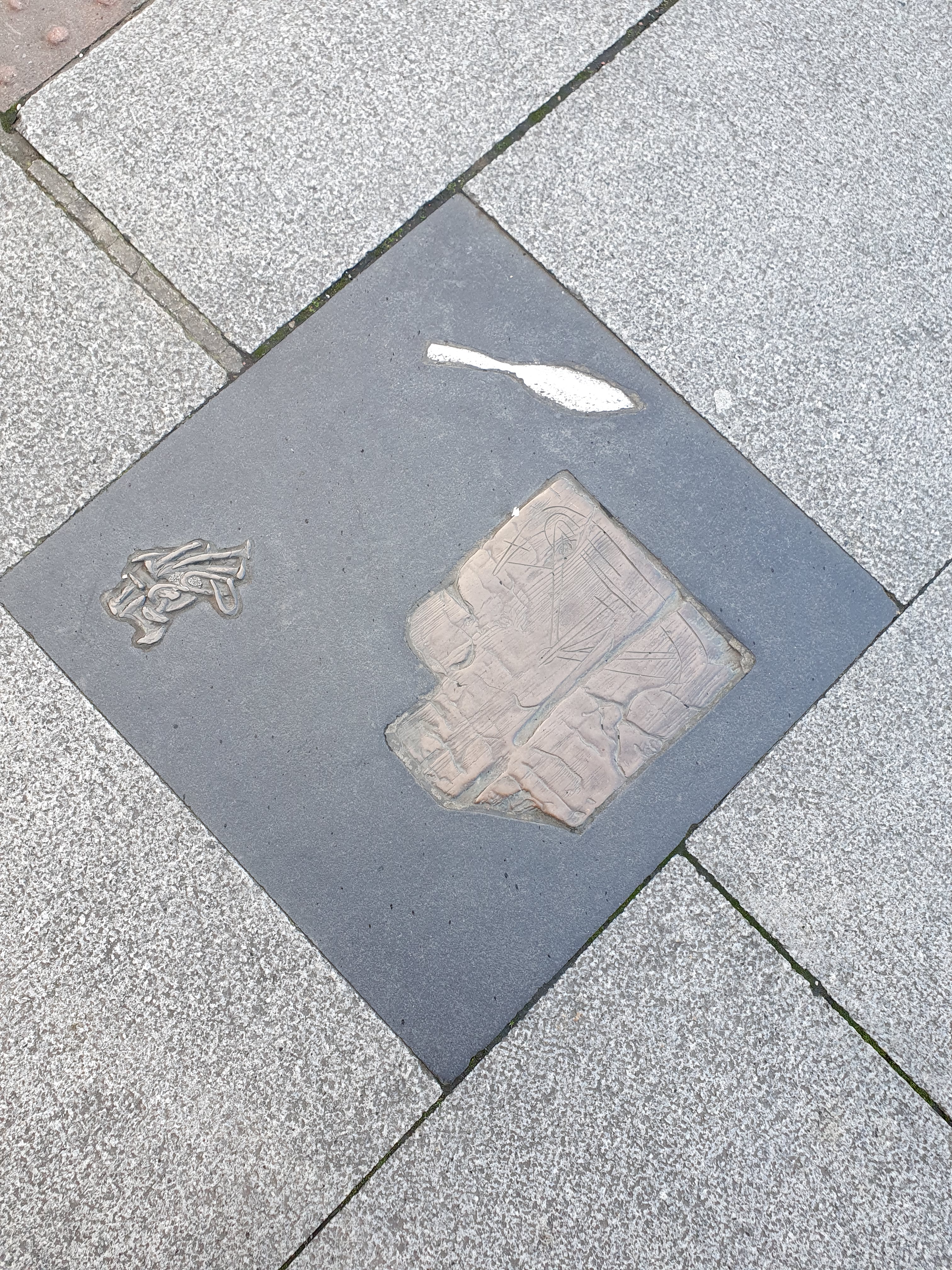
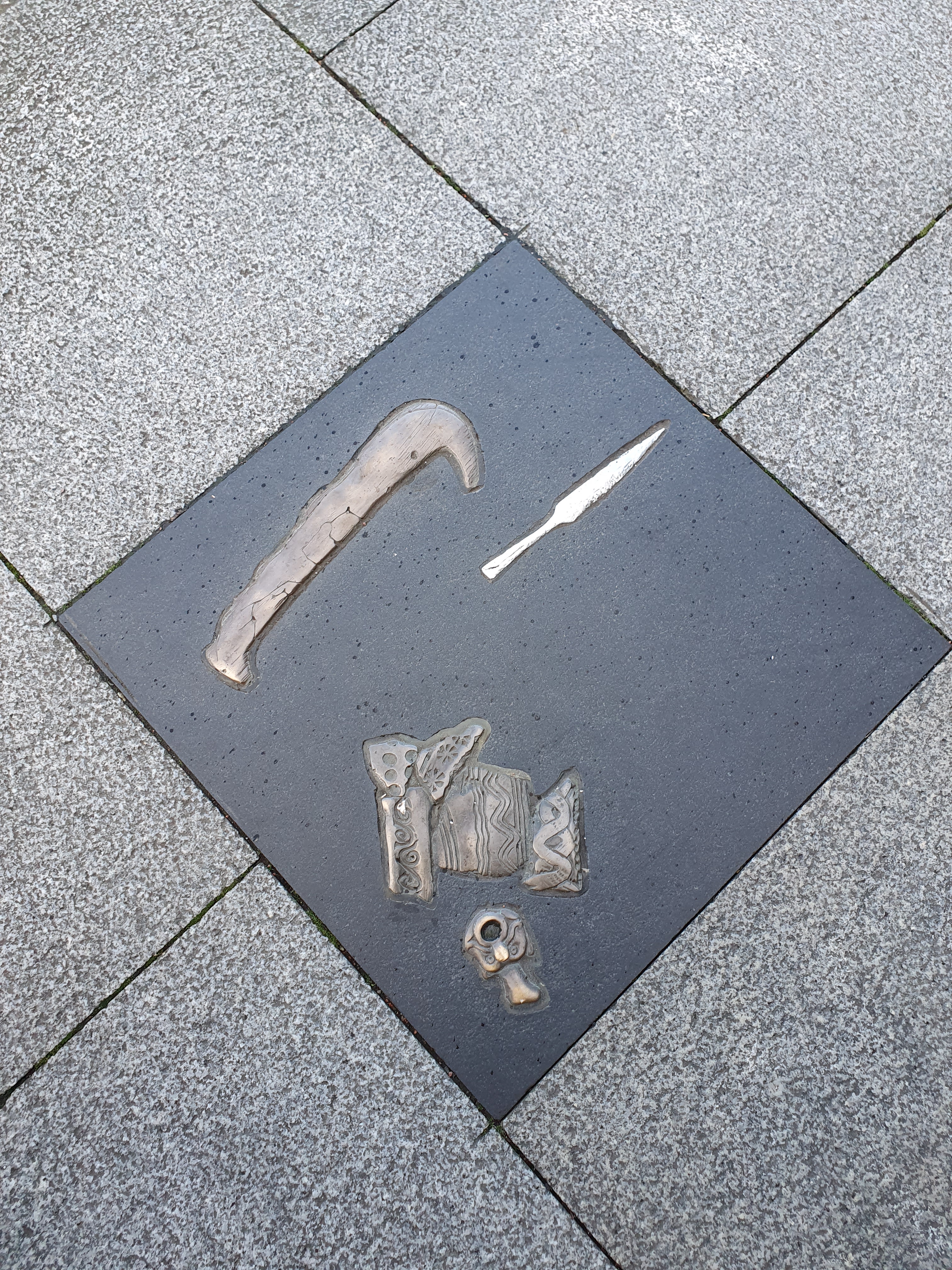
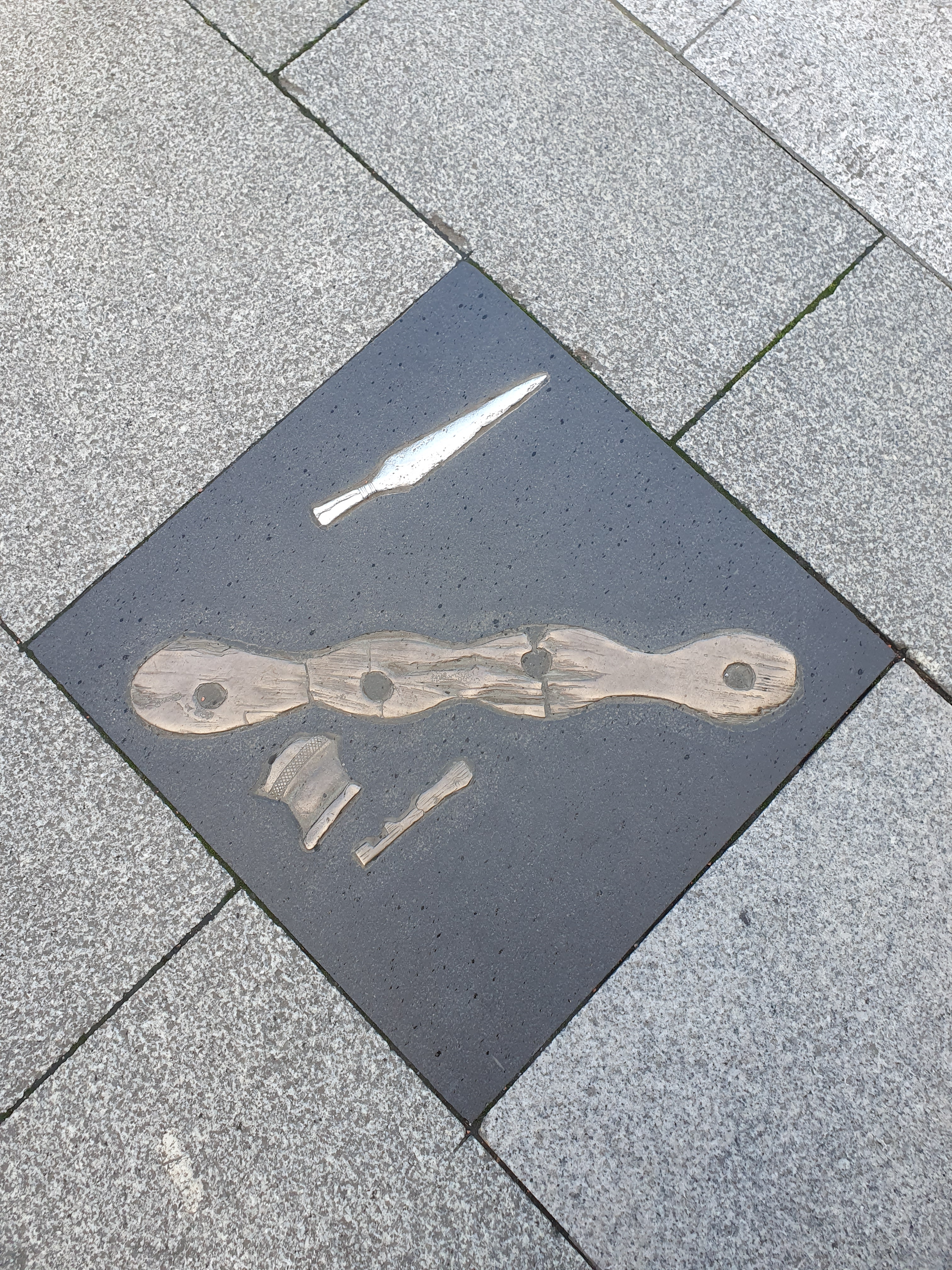
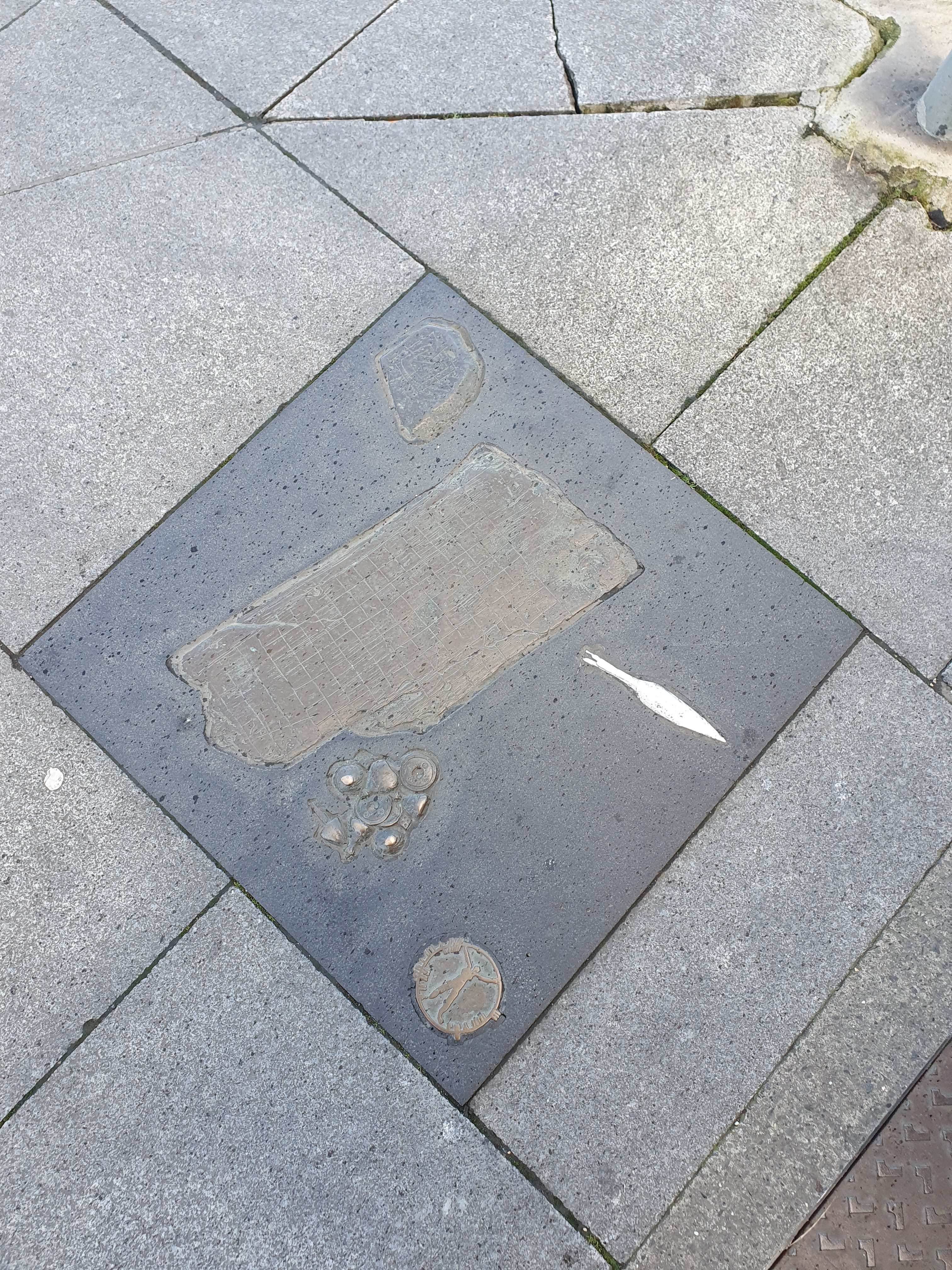
There are a series of bronze plaques in the pavements round Wood Quay, made by sculptor Rachel Joynt. An attempt to remind those walking the street of the history beneath their feet, they feature a great selection of the finds from the area- including a familiar bird pin!
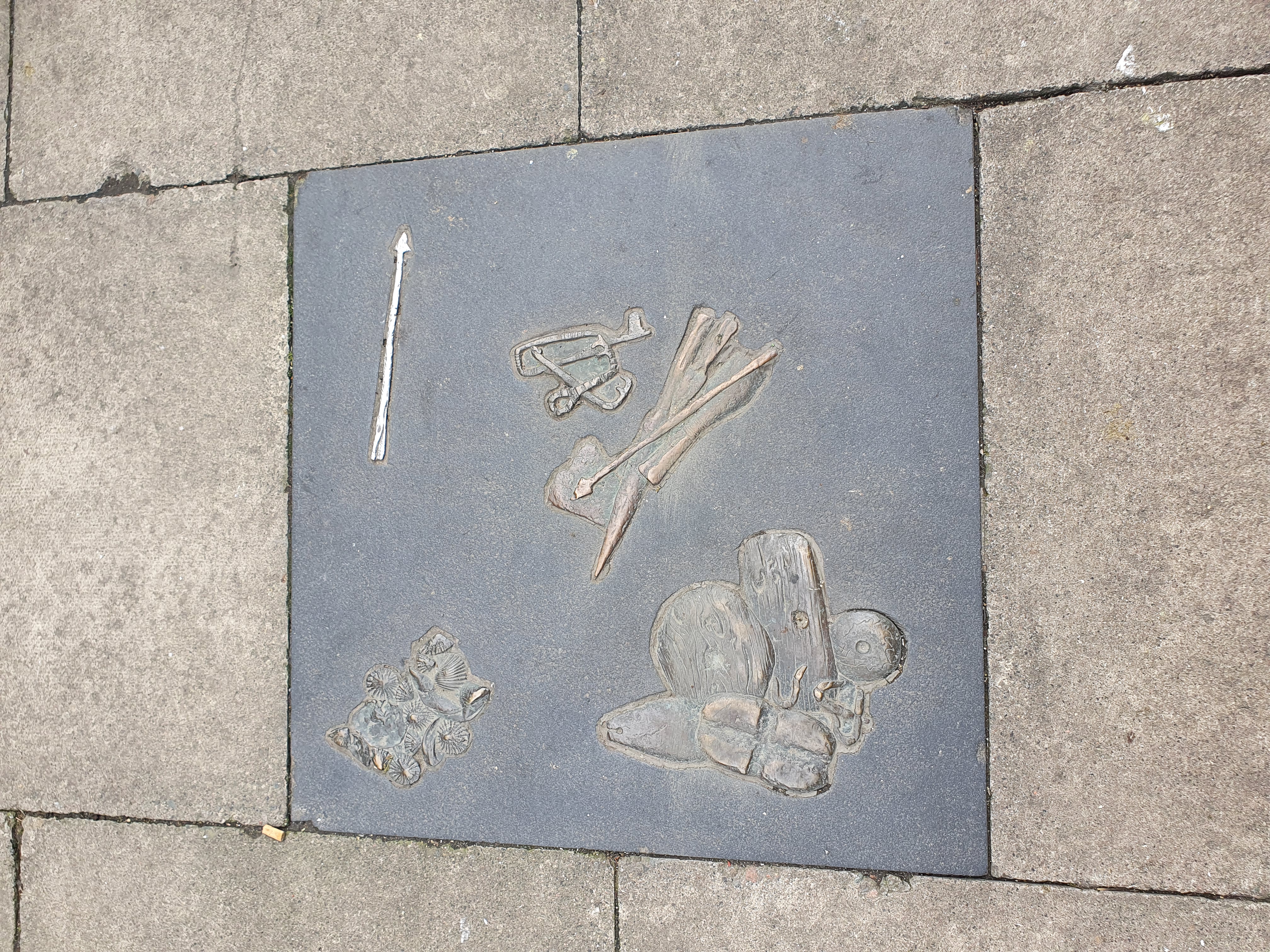
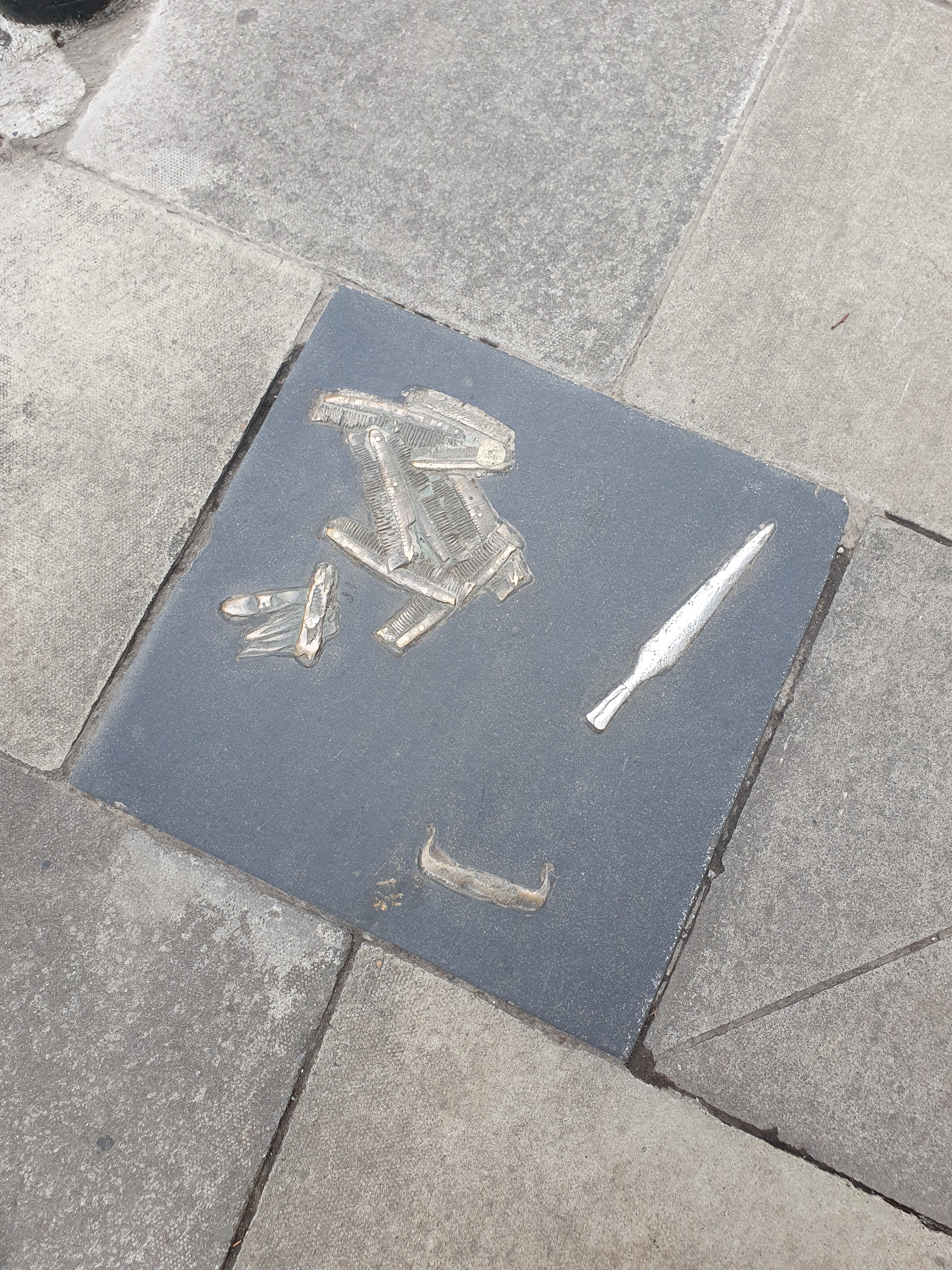
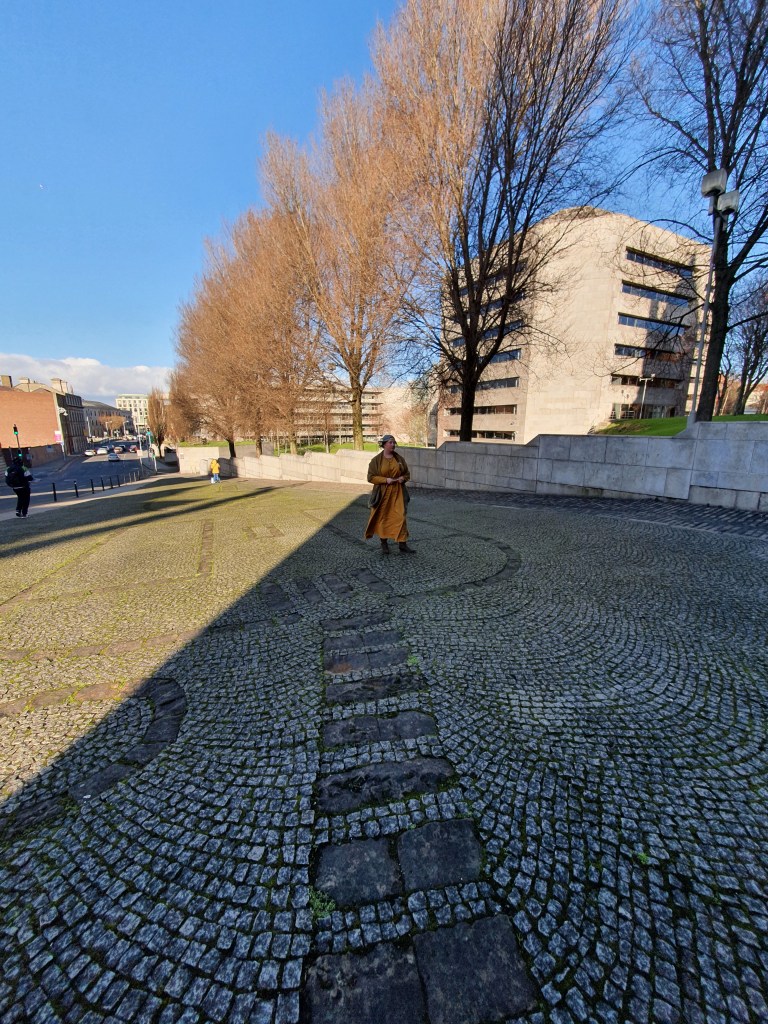
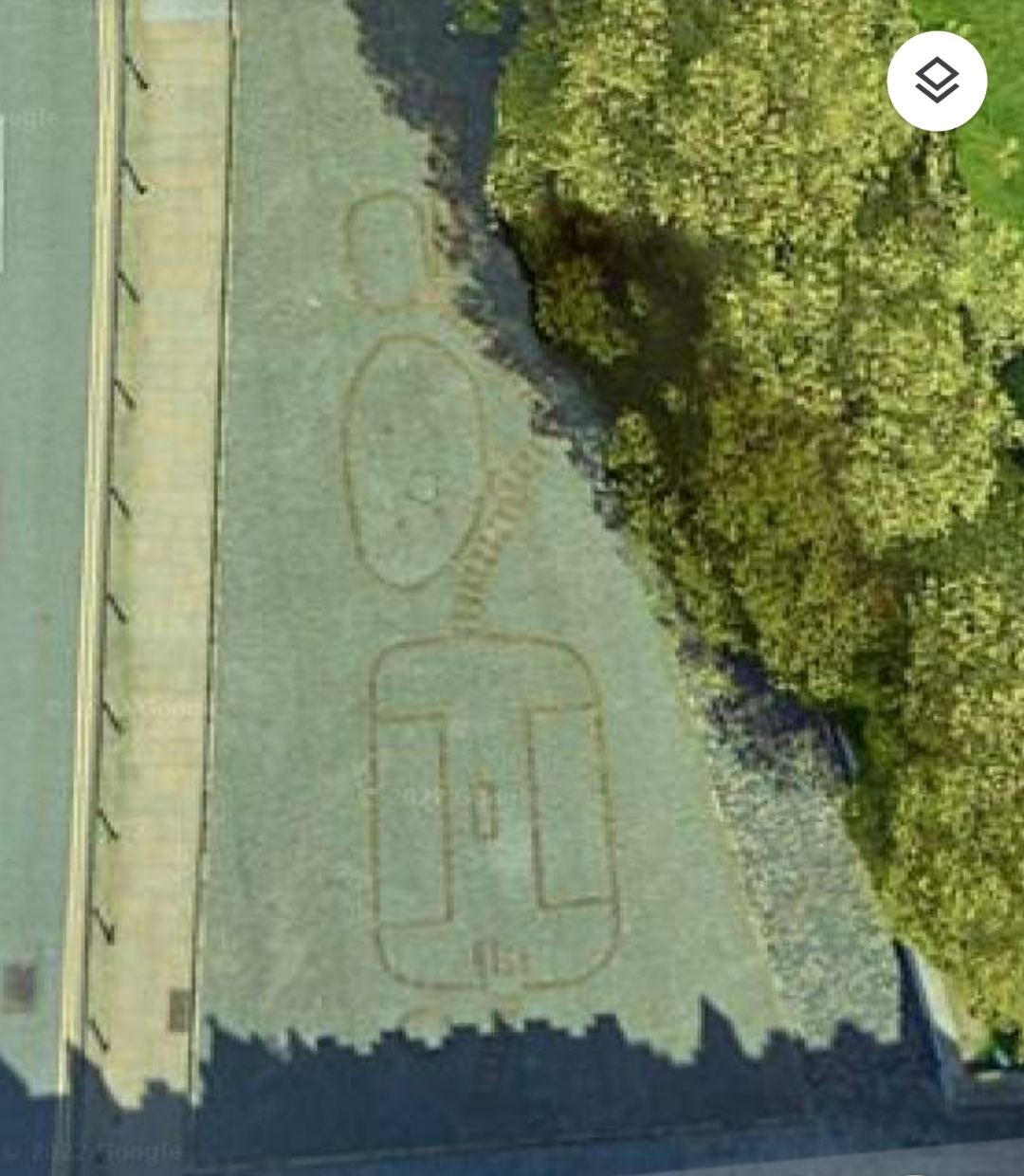
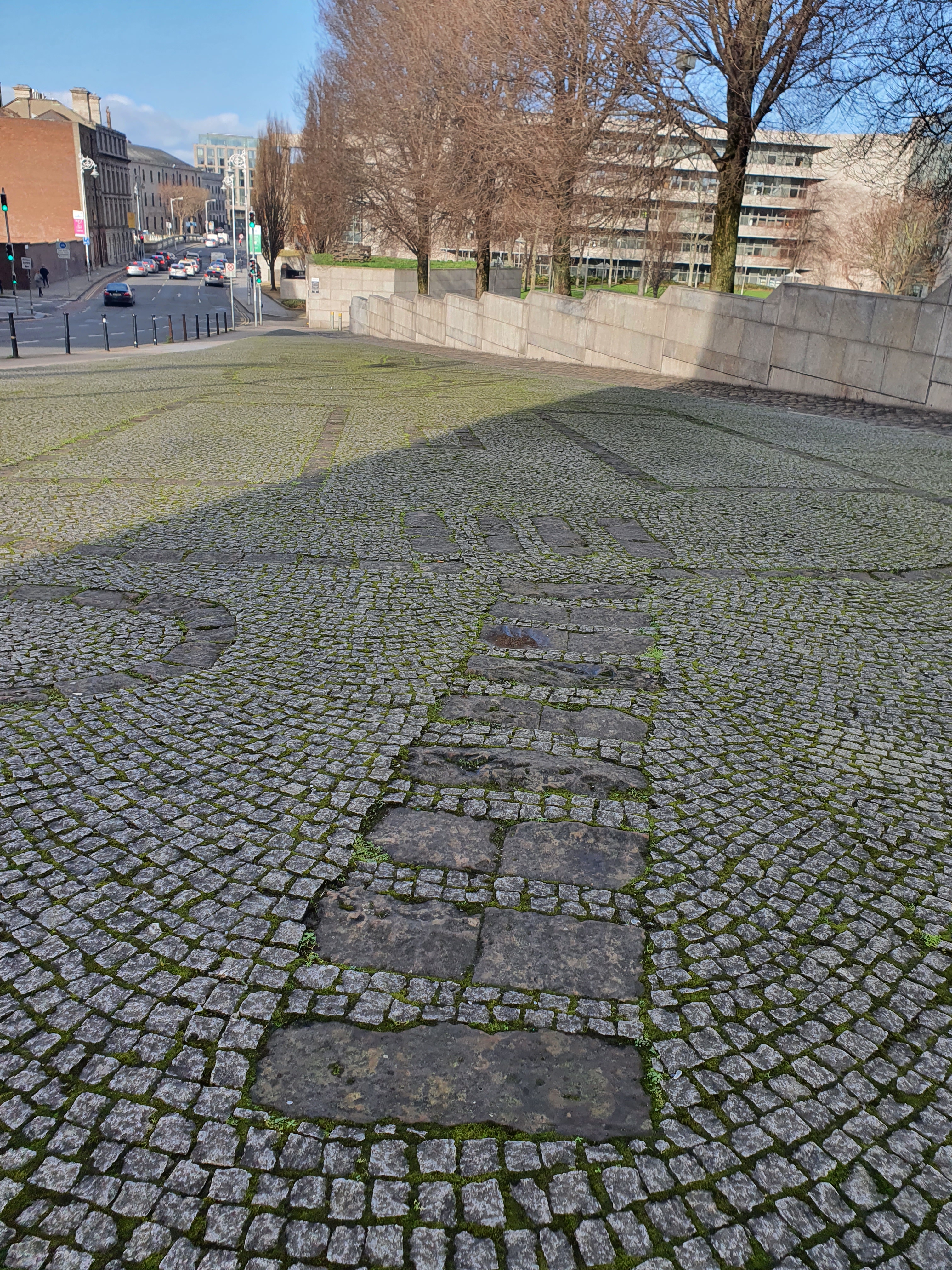
Another cool thing in Wood Quay is the outline of a few Viking homes on Winetavern Street. I took my photos stood in the porch of one such house, in the shadow of the cathedral and flanked by the imposing Dublin City Council offices. It was really cold that day, but it was powerful to stand in a little open space and to envision what came before and the quiet street that sits here now.
This was a spur of the moment thing and not as polished as I would normally like. I’m planning on finishing this set of clothing and have another one in the works- but I still had so much fun.
References

National Museum of Ireland (1973) Viking And Medieval Dublin. Catalogue of Exhibition . Dublin: An Roinn Oideachais. p51.

Wallace, P. F. (2016) Viking Dublin The Wood Quay Excavations. Sallins: Irish Academic Press. p1-558.

Wincott Heckett, E. (2003) Viking Age Headcoverings from Dublin. Dublin: Royal Irish Academy.
Impressions: A Wealthy Anglo-Scandinavian Woman of JorvĂ­k, Mid 10th Century

Location: Jorvík (York), England
Date: Mid to late 10th Century
Culture: Anglo Scandinavian
Estimated Social Class: Middle, wealthy urban

This will hopefully be the first of several speculative York impressions, built to showcase various artefacts and show how they potentially could have been worn/used in their day. It is not based on a grave nor is it to be taken as absolutely representative of the fashion of the place and time. My aim is to show a sensible and plausible outfit based on contemporary artefacts unearthed across York and give context to those remains and fragments.

Excuse my modern garden backgrounds, my 10th century longhouse was in the wash.

Starting from top to bottom:

Headscarf

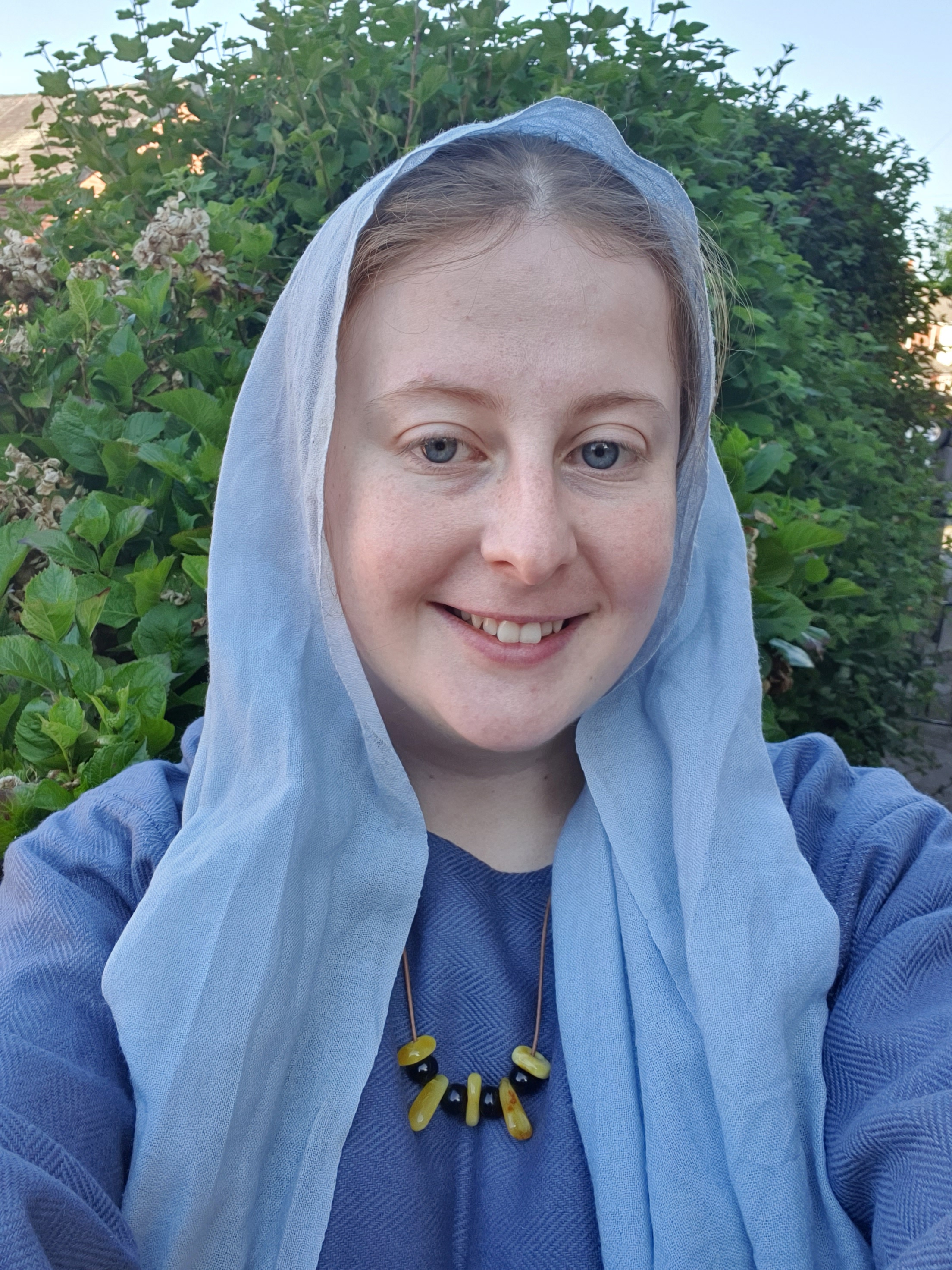
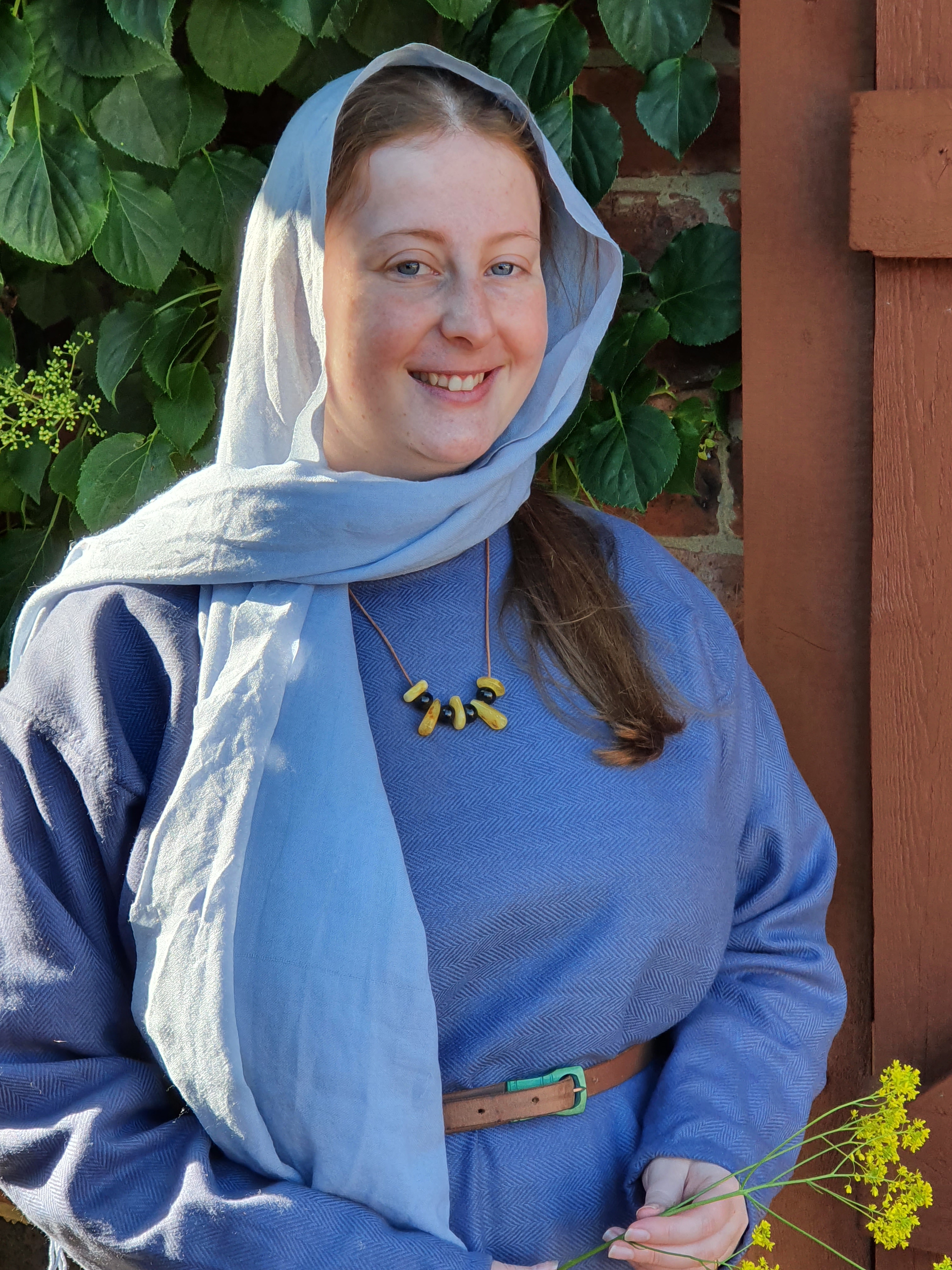
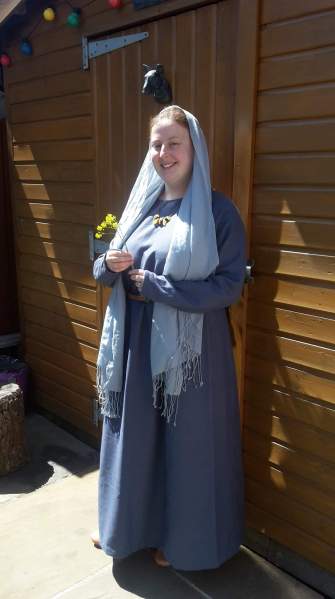
My veil is a plain weave, pale blue wool scarf. It is not naturally dyed, but in shade it closely mimicks woad. Women are almost exclusively portrayed veiled in Early Medieval English art, yet few examples of such veils are represented in the archaeological record. Fine woollen scarves with tassels have been found in Dublin, dating to the early 10th to mid 11th centuries (Wincott Heckett, 2003, pp.9-43). My veil is closer in size to the larger examples found at VA Dublin, such as the silk scarf DHC17 from Fishamble Street (dated to the early 11th century) but matches most closely with contemporary English manuscript depictions in size.

I wear this scarf several different ways even within the same day, tossing the ends over my shoulders as and when it’s required. The weather was balmy when I took these photos, so pins and a fillet weren’t needed. On windier days or if I’m feeling a little more haughty and austere, I’ll pin my veil onto a cap worn underneath and sometimes a fillet. Period variation in wimple/veil style is supported by English manuscript depictions, which show several different styles were worn. Presumably this was down to preference, though of course it could be an indicator of class or piety.

I could talk all day long about headcoverings, suffice to say that I will cover them in greater detail in a future post if people wish.

Necklace of amber and jet

The whole necklace, threaded on a fine leather thonging.
One of the triangular amber pendants.

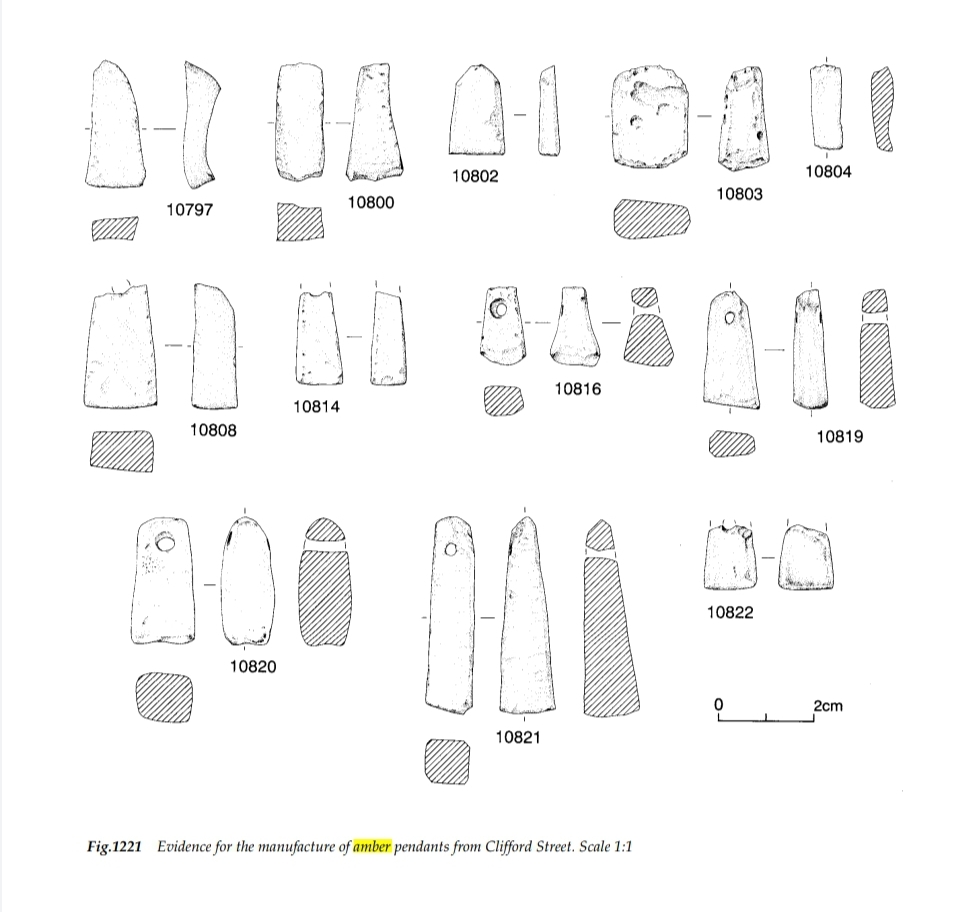
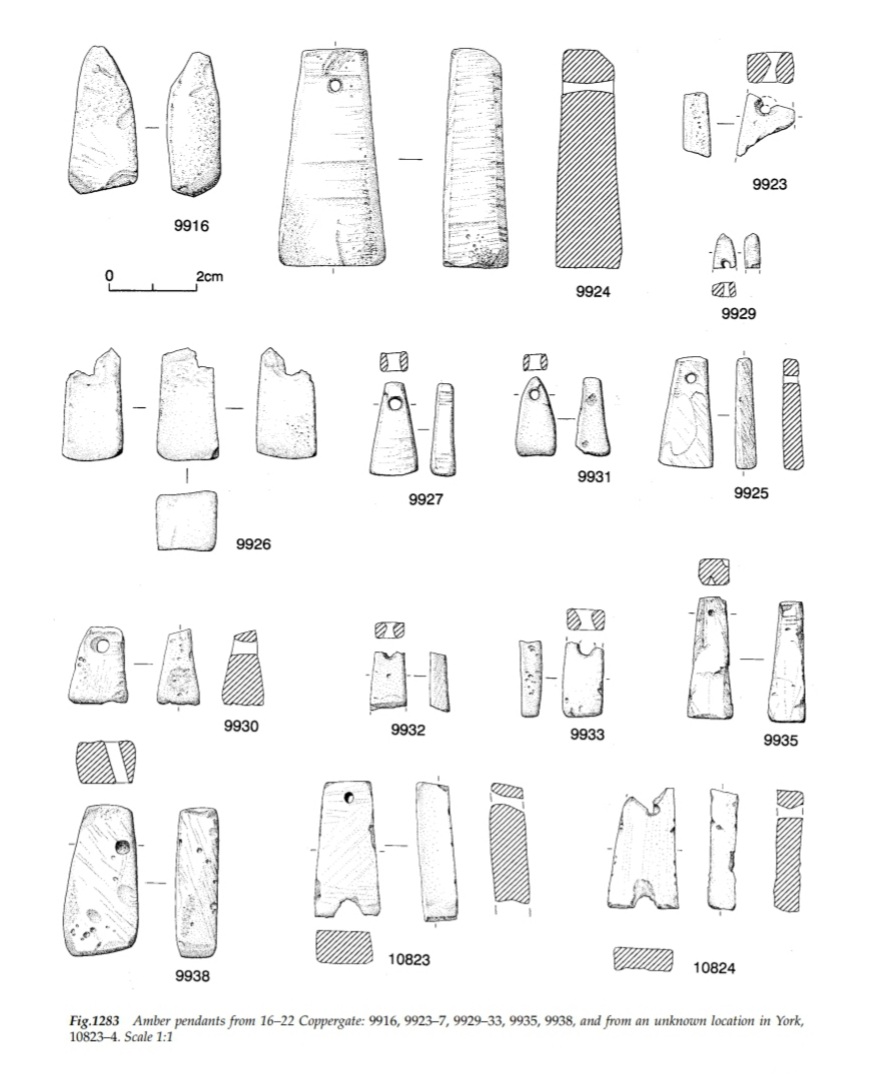
My necklace is made up of amber and jet, based on pendants and beads found at 16-22 Coppergate and other nearby sites. Extensive evidence for amber working in York was found at Clifford Street and 16-22 Coppergate, with fragments also being found at 22 Piccadilly and elsewhere on the Coppergate site (Mainman and Rogers, 2000). The wedge-shaped pendants I used are a little more rounded than the originals, but they can be replaced as and when I find a gemologist who will make me a more accurate replica. 😁 Many of the amber beads and pendants found at 16-22 Coppergate were dated to period 4B (c.930/5-c.975 AD.)

Found in (Mainman and Rogers, 2000, p.2507)
Found in (Mainman and Rogers, 2000, p.2589.)

The evidence for jet working at 16-22 Coppergate is definite, whether or not that evidence belongs to the Anglo-Scandinavian period is a subject of debate. Some items were found in Anglo-Scandinavian levels, but it has been argued that they were Roman items that ended up deposited in later levels through the passage of time. It does however remain possible that some of these jet items were indeed stratified correctly and I am working with that assumption.

The beads I used for my necklace are Whitby jet, dating to the late Victorian or early Edwardian period. They’d been reassembled into a new modern necklace, so I liberated them and used them for this project. Like their amber brethren, they are not perfect- they’re a little too spherical and neat. The jet finds from York consist of finger rings, bracelets, gaming pieces, pendants and manufacturing evidence (Mainman and Rogers, 2000). There was also an item identified as a bead (dated to the 5A period, approx 975 AD) but unfortunately it was stolen. I have included my beads in this impression based on the semi-worked fragments, the lost bead and the similar beads found in glass, amber and other materials.

Dress

The flower I am playing with is from my immortal woad plant, which is busy taking over my poor mum’s raised bed. I am pretending to be sorry about that.

My dress is made of a 2/2 chevron (herringbone) twill wool. I’ve dyed lots of wool blue using woad, but not this wool- it is chemically-dyed mimicking shades of a natural woad vat. It is handsewn by me with wool and linen thread. Textile fragments of broken chevron twill dyed with indigotin (the blue colour compound found in woad) were found at Coppergate, item number 1302 (Walton, 1989). The material was dated to period 4B, indicating a date of c.930/5-c.975 AD. It is described it thus:

“Fragments, largest 140 x 100mm, of mid brown 2/2 chevron twill, 8/Z/0.9 x 5-6/S/1.2 (Fig.134a). Yarn soft and unevenly spun. Fleece type, Z medium, S hairy. Dyed with indigotin. Hard concretions containing cess-like material adhere to parts of the textile.” (Walton, 1989)

In all the surviving textiles from Anglo-Scandinavian JorvĂ­k, woad is represented but it is not the most common dyestuff. Madder- and bedstraw-dyed fragments are the most numerous by leaps and bounds, which indicates a distinctly English taste in Anglo Scandinavian York (I’ll discuss this at more length in a future article.) Woad however certainly did feature in the clothing of JorvĂ­k city dwellers and I just so happened to have some suitable fabric leftover from a dress made for a dear friend many moons ago. Being a Yorkshire lass through and through, regardless of the century, I was using it.

No complete or near-complete garments have survived from JorvĂ­k apart from the famous sock and several head-coverings. I therefore kept the pattern of my dress and undertunic as generic as possible. Women in contemporary English art are always shown wearing ankle length, long-sleeved garments, usually with some indication of skirted construction. It is believed that this might have been the case in Scandinavia too, with women in contemporary art there usually being shown to wear garments that are at least longer than men’s (Ewing, 2007).

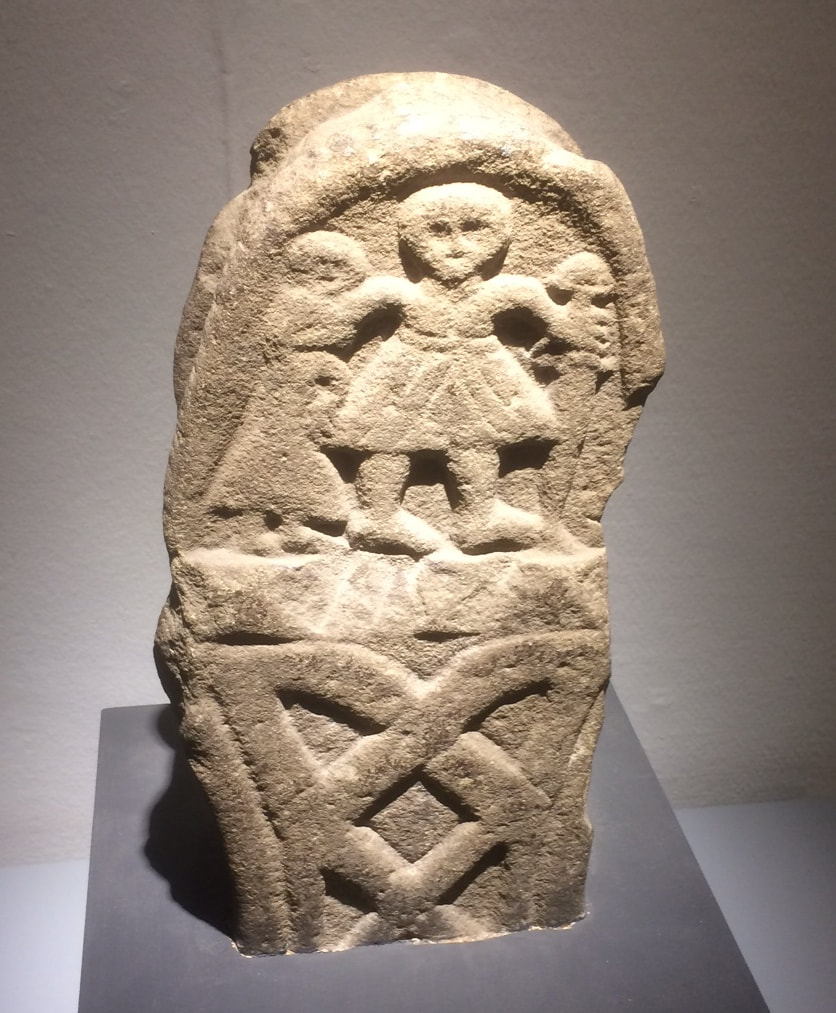
An Anglo-Scandinavian cross fragment from All Saints Church in Weston (North Yorkshire), dated to the 9th century. It is believed to show a warrior with a female captive and be a reworking of an original Anglian cross. Source.

Towards the end of the Viking Age in England, the sleeves on women’s overgarments appear to have grown wider, with tight-sleeeved garments being seen peeking from underneath them. I kept the sleeves on my dress relatively close to the arm so it would be more suitable for earlier impressions, with the opportunity to dress it up later with the simple addition of a mantle or baggier-sleeved overdress.

It is also prudent to note that almost all of the women portrayed in contemporary English art were very high in social status or were religious figures. They represent an ideal of the most aristocratic and modest women, not the daughters and wives of merchants (even wealthy ones) who might have walked through Coppergate. So, my York lady may well have worn her dresses with baggier sleeves on special occasions but likely not to go to the market.

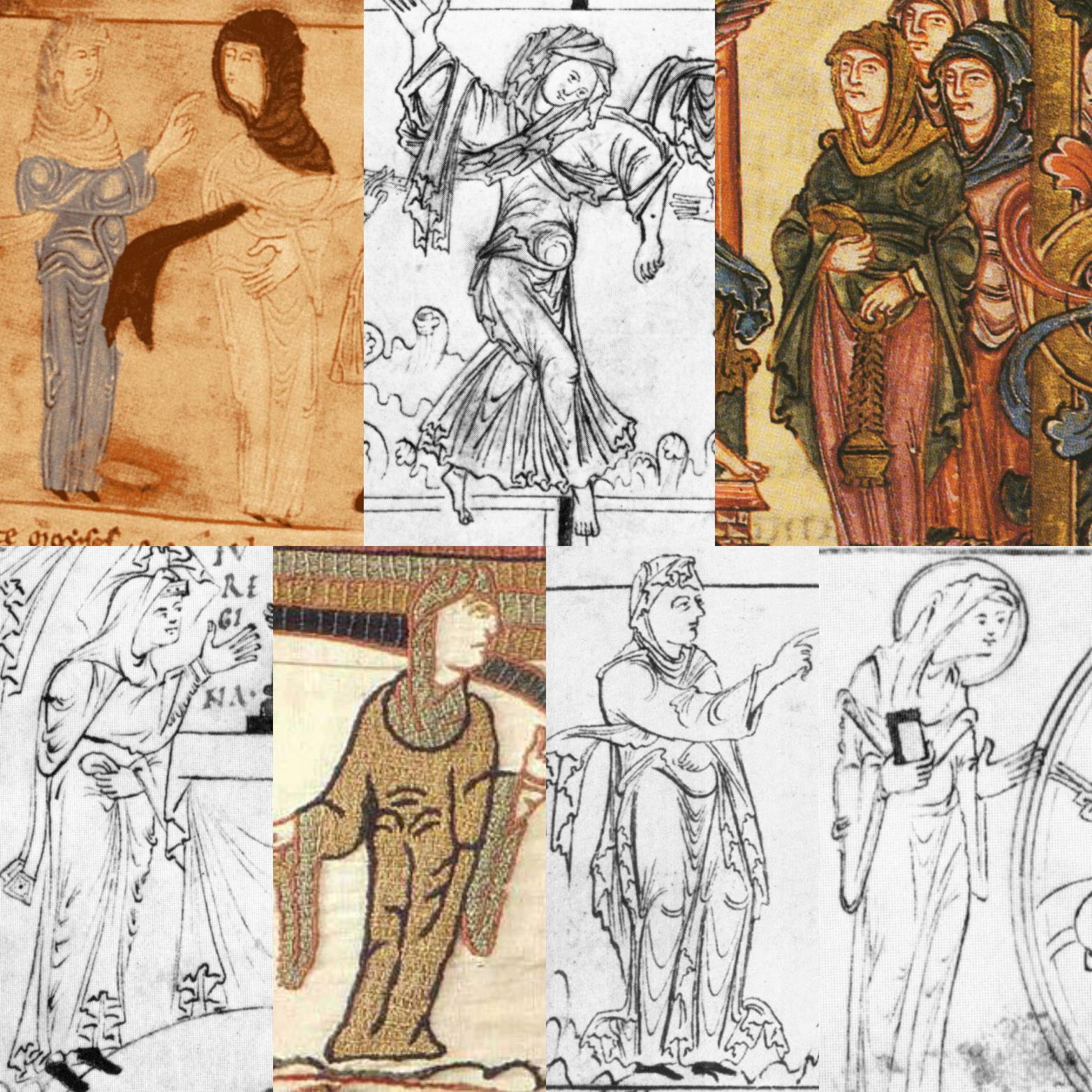
Details from various 10-11th century sources: Top left- Folio 10 of the Old English Illustrated Hexateuch, 11thC English. Top middle- Luxoria from Prudentius’ Psychomachia, late 10thC English. Top right- Detail of supplicants from the Benedictional of St Aethelwold, late 10thC English. Bottom left: Detail of Queen Emma from the New Minster Liber Vitae, 1031 AD English. Bottom middle left- Detail from the Bayeux Tapestry, late 11thC English (suspected.) Bottom middle right- Patentia also from Prudentius’ Psychomachia. Bottom right: Mary also from the New Minster Liber Vitae. Source.

Surviving remains of skirted tunics such as the Skjoldehamn, Haithabu and later Herjolfsnes finds show examples of how these women’s garments in the Viking Age could have been constructed. Due to cloth constraints and to better fit my body, I opted for bottle-shaped side gores starting at my underarm. This construction provided the correct period silhouette while remaining comfortable.

My undertunic (or serk) was made in a similar pattern, only in undyed linen with a plain round neckline and triangular gores.

Leather belt with dyed bone buckle

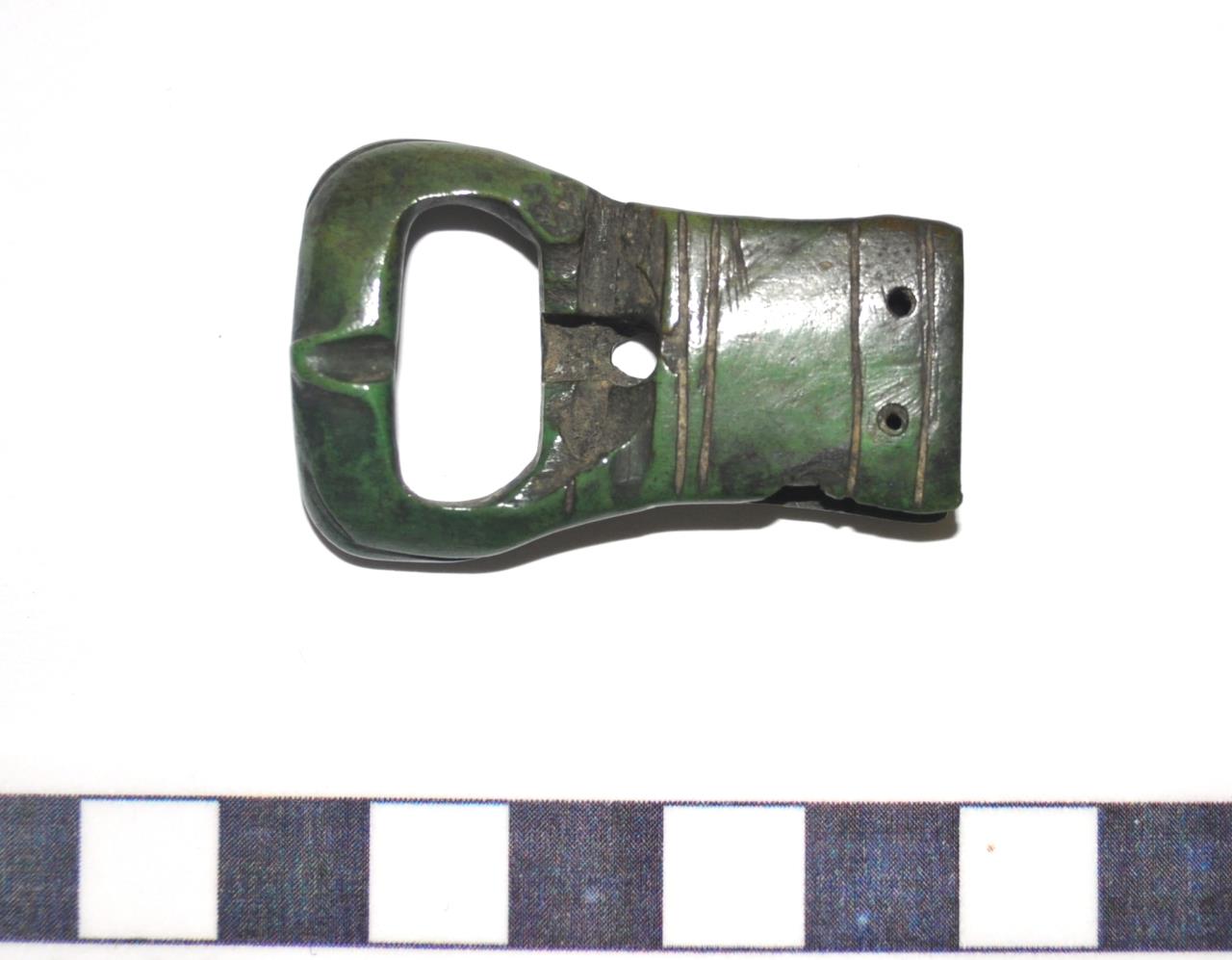
Source.

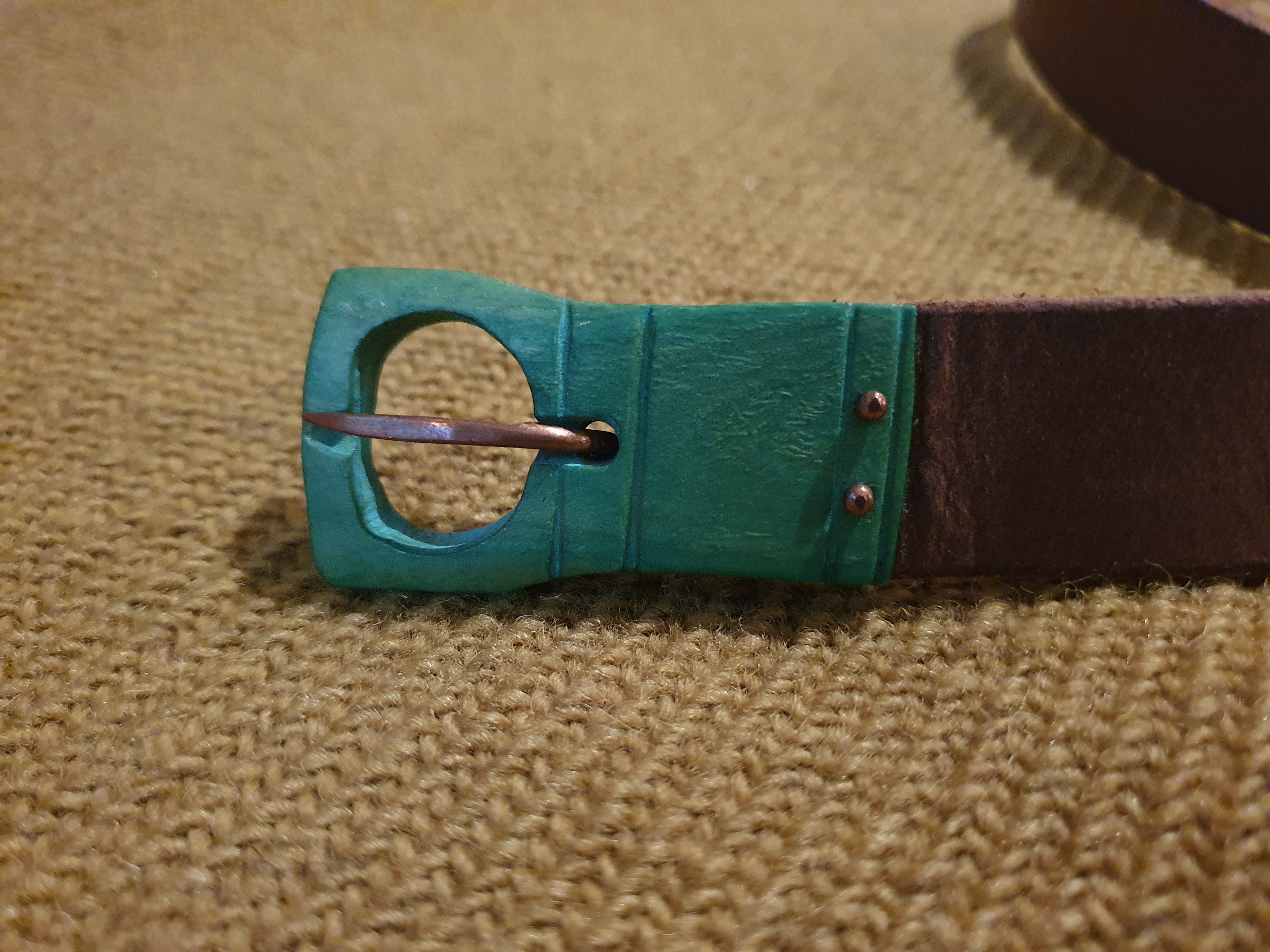
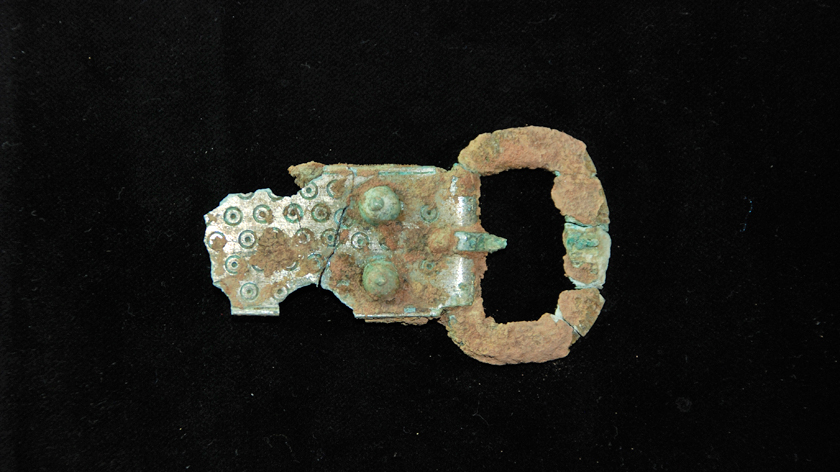
Over my dress, I wear a belt of dyed bone buckle. This is an unusual item, currently kept in the Yorkshire Museum. The museum lists it only as Anglo-Scandinavian and dating to between 866 and 1066. It is generally believed that Early Medieval women did not wear leather belts, either opting for textile belts that have rotted away since or foregoing belts altogether.

However, a 10th century grave of a woman in Cumwhitton (Cumbria) has challenged this assumption. One of the female graves contained a belt buckle and strap end, both made of copper alloy (Paterson, Parsons, Newman, Johnson & Howard Davis, 2014). I am fond of the York dyed buckle and since it was not found in a grave context, I feel comfortable including a leather belt as part of a wealthy female impression.

The Cumwhitton belt buckle from Grave 2. Source.

An interesting discussion of belt hardware surviving in female graves can be found in the bibliography. My replica of the belt and buckle was made by SĂĄndor Tar on Facebook.

Leather turnshoes

Type 4a3 leather turnshoes.

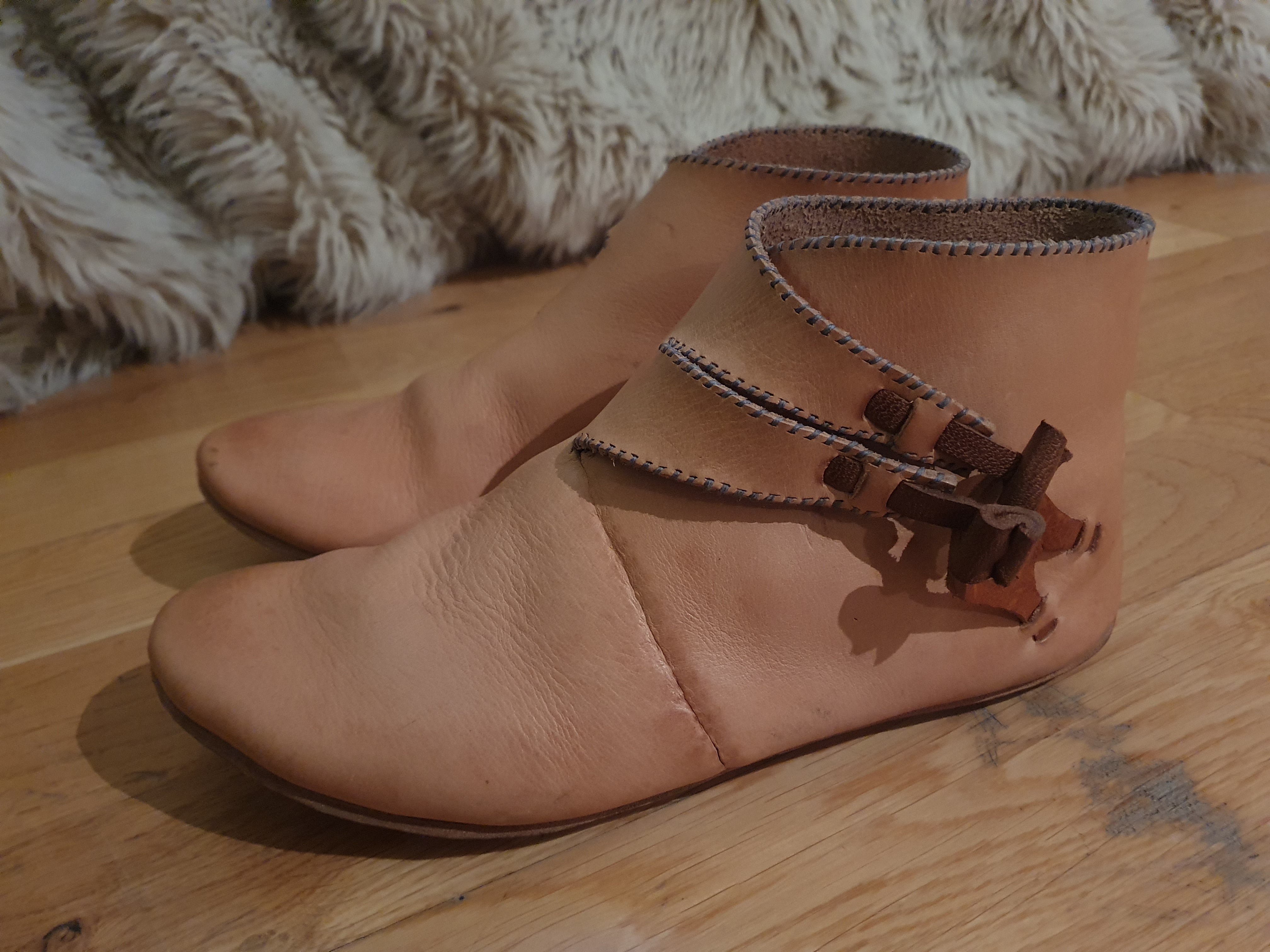
On my feet, I wear leather shoes, based on the Style 4a3. They are of a turnshoe construction and made of vegetable tanned leather. This pair was made by Torvald’s Leather Workshop.

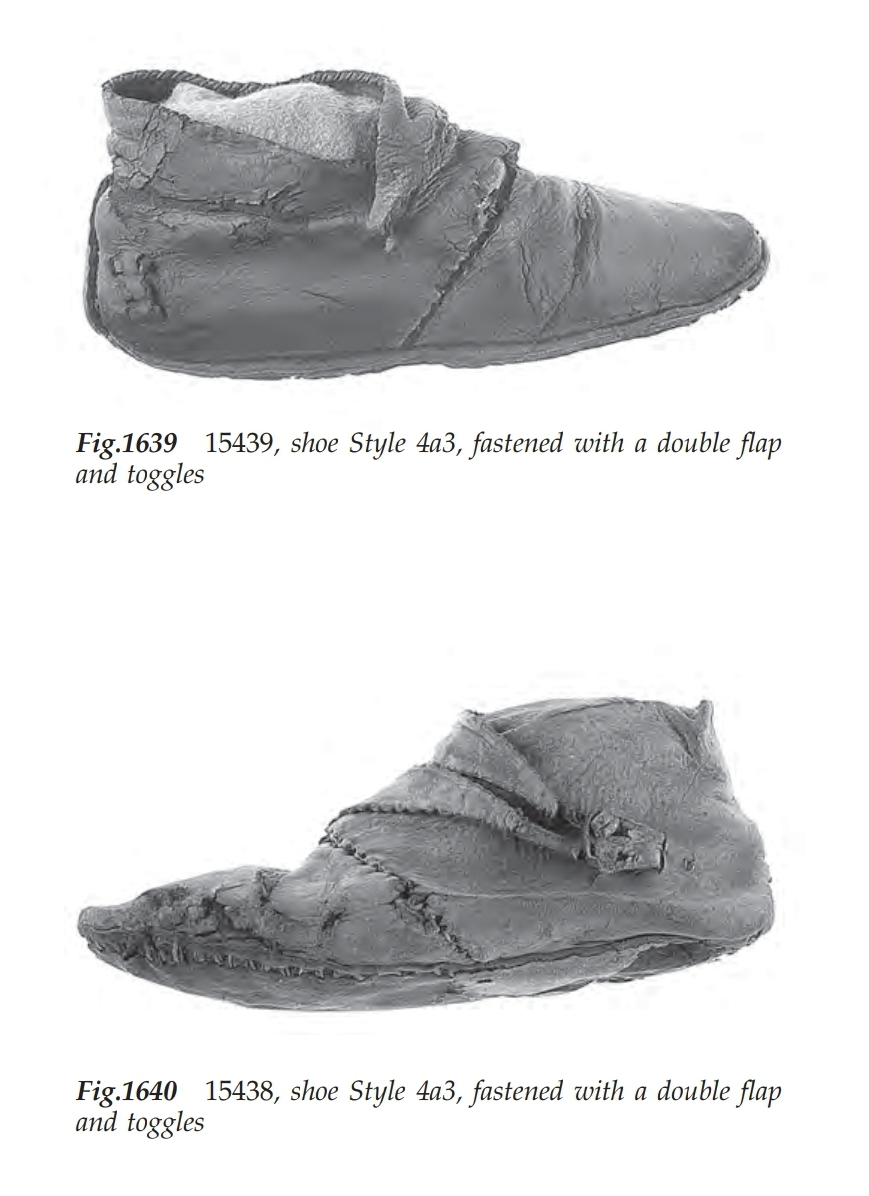
Shoes of Style 4a3 have been found at 16-22 Coppergate from the earliest layers of occupation (mid-late 9th century at the earliest) throughout the whole Anglo-Scandinavian period, but finds of this type are most numerous in the mid 10th century layers (Mould, Carlisle and Cameron, 2003). Shoes of this style were also found at nearby Hungate and fragments indicating this style have been found in Oxford also.

Style 4a3 shoes, image from Mould, Carlisle and Cameron, 2003, p.3306.

I love this style of shoe, I think they’re really cute and so evocative in their style of Viking Age fashion itself. The only problem? The pair I have have the flaps on the wrong side of the foot! A large group of the shoes found in JorvĂ­k had flaps and toggles over the instep- fastening on the inside of the foot, not the outside. Mould, Carlisle and Cameron (2003) even acknowledge that it seems like toggles on the outside of the foot would be more practical, but I found the opposite to be the case when actually putting them on. I’m aiming to replace these shoes in the future with ones closer to the originals, but they are gorgeous nevertheless and being handmade they are very comfortable.

Underneath these shoes, I wore a pair of woollen naalbound socks, loosely based on the Coppergate socks. However, they have graciously served me for several years now in all weathers and are not fit to be seen. I will certainly cover the mighty Coppergate sock in the future though.

Who might have worn this?

The wife or daughter of a wealthy urban merchant perhaps, someone who had the cash spare to afford dyed garments such as my dress and scarf. Worked amber and jet beads too would likely have been status items, with amber being imported from abroad from the Roman period.

It is also possible that a wealthy woman from more rural areas could wear an outfit like this, the wife of a rich farmer perhaps. This is not the kind of clothing one wears during the working day however, so it would be relegated to Sunday best or feasting clothing (I suspect that this would also be the case for an urban woman.)

References

Ewing, T. (2007) Viking Clothing. Stroud: Tempus Publishing. p9-70.

Mainman, A. J. & Rogers, N. S. H. (2000). Craft, Industry and Everyday Life: Finds from Anglo-Scandinavian York. York: Council for British Archaeology. p2451-2671.

Mould, Q., Carlisle, I. & Cameron, E (2003). Craft, Industry and Everyday Life: Leather and Leatherworking in Anglo-Scandinavian and Medieval York. York: Council for British Archaeology. p3306-3310.

Paterson, C., Parsons, A. J, Newman, R. M, Johnson, N & Howard Davis, C. (2014) Shadows in the Sand: Excavation of a Viking-age cemetery at Cumwhitton, Cumbria. Oxford: Oxford Archaeology North.

Walton, P (1989). Textiles, Cordage and Raw Fibre from 16-22 Coppergate . York: Council for British Archaeology. p285-474

Wincott Heckett, E (2003). Viking Age Headcoverings from Dublin. Dublin: Royal Irish Academy. p9-43.

Bibliography

The entry for the dyed bone buckle from York in the York Museum Trust online collection. https://www.yorkmuseumstrust.org.uk/collections/search/item/?id=7484&search_query=bGltaXQ9MTYmc2VhcmNoX3RleHQ9QnVja2xlJlZWJTVCMCU1RD0mR3MlNUJvcGVyYXRvciU1RD0lM0UlM0QmR3MlNUJ2YWx1ZSU1RD04NjYmR2UlNUJvcGVyYXRvciU1RD0lM0MlM0QmR2UlNUJ2YWx1ZSU1RD0xMDY2JkZOPQ%3D%3D

An article on belt hardware present in female graves in the Viking Age. http://www.medieval-baltic.us/vikbuckle.html

A corpus of 10-11th century images of English clothing in art. http://www.uvm.edu/~hag/rhuddlan/images/index.html

More information about the All Saints Church cross fragment (Weston, North Yorkshire.) https://m.megalithic.co.uk/article.php?sid=26680