My Instagram message request folder is a place I approach with caution and suspicion. Social media connects us and brings us together, but it also attracts bots and an alarming number of beautiful women in my area (and weird men sending me anatomical photographs.)
This week, however, was different. The Yorkshire Museum contacted me to kindly invite me to the press preview of their new exhibition, Viking North. Two days before it opened to the general public on Friday 11th of July!
I couldn’t quite believe my luck: I grew up in York and frequently visited the museum as a little girl to pore over the fossils and their fantastic collection of archaeological finds. The idea that I could be inches away from Neolithic arrowheads or a Roman oil lamp that was made, touched, held and discarded by York citizens of the past blew my little child mind. Museums are magic to me and despite having visited MANY, I will always have a special fondness for the ones in my hometown.
Viking North is the culmination of years of work by a multidisciplinary team and replaces the previous Medieval gallery in the museum’s basement. I was greeted by Andrew Woods, senior curator of the Museum, who gave us an introduction to the exhibition and the ideas behind it. With the Bedale Hoard as an example, he described the flow of wealth in the Viking Age, how silver migrated along with people from across Europe and even from the Islamic world. This is a topic that has been discussed extensively in work by Dr Jane Kershaw, one of the exhibition’s advisory panel: she was joined by Dr Steve Ashby, Prof Dawn Hadley and Prof Matthew Townend.
If you are familiar with Viking Age studies, you will recognise this team as a band of absolute academic juggernauts! Their guidance and the curatorial team’s love for the period has resulted in a well-rounded presentation, with a good balance of text for us nerds and spacious display to really let the artefacts sing.
Curator Andrew Woods, showing us the newly rehoused York silk cap.
So, what exactly can you see in Viking North?
Hoards, glorious hoards! The Bolton Percy Hoard, Bedale Hoard and the Vale of York Hoard are on display, along with many other shiny treasures of hacksilver, coins and jewellery from across the Danelaw.
Items found at the Great Army camp at Aldwark. These are remarkable and a little distinct from items found in Jorvík, as the camps were not permanent domestic spaces. As such, they’ve remained elusive and have their own signature items that are commonly found there (think lead gaming pieces, hackmetal, Insular and Anglian jewellery that may be repurposed.) It was great for me personally to see this collection, as my friend Trix Randerson has written extensively on the camp at Aldwark and gave multiple talks on aspects of these objects at my living history conference, VALHAll:A!) You can watch one of his talks (for free) on the use of dress accessories by folks in the Great Army here.
Many items from Viking York that have not been exhibited before, at least not in my lifetime! Most excitingly for me, there were quite a few bits from Hungate. I’ve been working on a speculative Hungate impression for a year now and seeing some of these items “in person” was touching, when I’ve spent so long looking at line drawings in ancient grey lit.
Beautiful Anglo-Scandinavian stonework, some pieces borrowed from churches and some already in the museum’s collection. The Sigurd stone is a favourite of mine!
The famous York cap is now rehoused in a much better, more spacious cabinet, worthy of its majesty. This is good, as it’s one of the only textile elements of the collection on display.
One of the stunning bone-topped caskets/boxes found in York. Remains of two such box lids have been found in York and they seem to have been a popular item in Viking Age towns, with similar examples being found in Dublin and Waterford just to name a few.
An honorary special mention: I asked YMT’s Curator of Archaeology Dr Adam Parker for his favourite artefact on display. Without hesitation, he showed me this STUNNING mjolnir pendant found in 2018 in Newton-le-Willows:
Made from silver with a gold inlay, it is simple but elegant in design. Even more excitingly, it is totally unparalleled: no pendants exactly like it have been found anywhere. Dr Parker explained its significance: Thors hammer pendants gained popularity in Scandinavia after the Christian community there showed their faith with cross pendants. Scandinavian examples are often extremely ornate, while Anglo-Scandinavian mjolnirs are generally plain silver. With a simple shape but precious gold inlay on its surface, the new Newton-le-Willows example straddles these two styles.
The original owner wanted those he encountered to know who he was, what he believed in and his high social standing. Objects like this are so special for this reason: they transport us back in time and give us a fleeting view of a stranger, separated by 10 centuries. The pendant was acquired by the Museum barely a month ago and it has never been exhibited before publicly, so it was a particular honour to see it up close!
There’s so much more to see and I spent an extremely happy hour or two marvelling at it all and exploring the more interactive elements of the exhibition. They’ve added a digital installation of a “raven’s eye view” of the camp at Aldwark, something I loved zooming in on and watching folks going about their daily business. You can also learn to spell your name in Younger Futhark (my MA by Research in Linguistics did not diminish my urge to play with the runes, though my sense of professionalism restrained me from writing something crude.)
I was the only living historian present at the preview, but I was informed that this summer, a team of dedicated costumed interpreters from History Riot will bring the gallery to life for visitors. (You’ll have to check The Yorkshire Museum’s social media/contact them for specific dates to see them, to avoid disappointment!)
Entry to Viking North is included in your ticket price and will be on display for two years. It’s suitable for all ages and attention spans. There’s plenty to see and do, whether you’re a little one who wants to learn about Viking life or a big nerdy one like me, who wants to take my time reading about Viking life.
I also got to meet some fellow big nerds, including the lovely Giselle @awanderingarchaeologist !
A huge thank you again to The Yorkshire Museum for inviting me to see this fantastic new exhibition, it’s a memory I’ll cherish for a long time!
If you liked this article, please share it with your friends and follow my blog to get updates of my future work. You can also follow me on Instagram and Facebook for more regular, informal updates and musings.
My group Vanaheim at this year’s festival. I’m very proud of them all, even if we do “all look the same” as the other re-enactors in the parade. Yes, the barriers are accurate to the Viking Age. /s
I met a lovely gentleman this weekend at Jorvik Viking Festival- he was hovering near the muster point and ended up joining myself and a friend in conversation. He is currently a fashion student and he asked if I could send him any sources to give him a BASIC grounding in Viking Age clothing. I get asked some variation of this question multiple times a year, so I decided to share my response to him for future reference.
I won’t lie, this request has coincided with the annual Re-enactor Bash-a-thon on Facebook that comes after JVF every year. The repeated erroneous claim from some members of the public that “we don’t know what Early Medieval people wore” (ergo, there is no point in attempting clothing based on evidence and my black poly-cotton fetish gear is more accurate than your peasanty plant-dyed wool, probably) being the most annoying claim to me personally. This is because it almost always comes from someone who clearly knows little to NOTHING about the topic.
JVF has always been a broad church and everyone is and *should* be welcome, provided we treat each other with respect. Many of the fantasy costumers and LARPers who attend do so annually and are courteous, enthusiastic and extremely creative. Long may that continue!
So, respectfully, here is a very brief 5 minute read of sources for folks who do want to learn about Viking Age clothing. If you are not interested in accuracy or evidence-based costume, I GENUINELY wish you the best- this post isn’t for you. May the Force be with you, etc. Take any subsequent jests as they were intended- with my tongue firmly in my cheek. If you still want to tell me I suck/am mean/a snob/don’t know what I’m talking about, please do it in the comments and share the post: it’s great for the social media algorithms!
(This is a NON-EXHAUSTIVE list for a huge topic, but please do tell me what you would add! I used the first URL available for the books to save time, but do buy from independent booksellers if you can! #notsponsored)
As good as my girl gang would look in black spandex and Siouxsie Sioux face paint, we made a nice little rainbow instead!
This is a generally good beginners guide for Viking Age clothing, including some of the pre-Viking evidence to show the evolution of style in the regions covered. It’s not a pattern book, but it’s comprehensive and the reference list will be useful for you too.
This is another great sourcebook and contains a lot of clear line drawings taken from manuscript illuminations. There’s a lot of overlap between Anglo-Saxon and Norse clothing, especially if you make Anglo-Scandinavian impressions like my group and I frequently do!
Nille is a famous face in VA re-enactment, she’s made a number of reconstructions for museums all over the world and her pattern books are a common sight in museum shops. This volume contains a bunch of actual patterns and some advice on materials to use, though I’d still look at other more specific sources for cloth and weaves. It’s also quite traditional and isn’t very beginner-friendly for those not familiar with scaling patterns etc.
This is a similar kind of book to Thor Ewing’s, a general source book suitable for total newcomers to the scene and provides a lot of sources. It’s a bit more recent too, so contains a few bits that Ewing’s doesn’t. It is also a Polish publication, so it contains a lot more info from regions outside the traditional Scandinavian heartlands- if you’re interested in Slavic, Rus, Steppe and nomad fashion, there’s more of that here than in some other VA books.
Here’s some free sources that I also use very frequently or recommend:
Holy moley, this one is a good resource. Three books, detailing a massive research project by the Uni of Copenhagen’s Centre for Textile Research, the National Museum of Denmark and Lejre’s Land of Legends. The goal was to explore recreation of Viking Age clothing and textiles on a fastidiously archaeological basis. They came up with some very interesting interpretations, which sparked a lot of discussion online. All three volumes are available to download in .PDF for free, which rarely is the case. This is perhaps not for beginners, but I recommend it anyway.
I will repeat this one until the cows come home! Hilde is a Norwegian re-enactor and costumer who does FANTASTIC, extremely evidence-based articles on VA clothing. She focuses mostly on female clothing, but her articles are excellent and her reference lists and images are impeccable. She is also very nice and has always been patient with any questions I had.
Jen Culler is an American re-enactor and her blog is a great resource. She explains her choices in her interpretations and has a lot of great source images in her articles (she saved my sweet butt before my conference paper by including references and an image of the Rolvsøy textile in an article!) Check out her post on checks and plaids in the VA in particular!
Cathy is an American living historian and focuses on historical costume. She covers a broad variety of crafts and shares lots of cool articles and resources as she finds them.
I don’t actually know who is behind this site, but they’re presumably a scholar/academic at Vassar College in the USA. They have SO many resources, just go and have a look. The site is pretty old-fashioned and some of the sources are a little out-of-date, but you can always top up your knowledge with other stuff. Personally, I get excited when I see a black-and-white old-school webpage like this, because they often contain gems.
He hasn’t uploaded in a little while, but he’s still active on Instagram and I’m sure he’d be happy to answer any questions. Caleb Burch is the author of the site and he’s a costumer of several different periods, but he always posts his sources. He’s done some REALLY nice speculative reconstructions of some of the Hedeby fragments and his insights into the wearability of different reconstructions is valuable.
All of the publications from YAT have been digitised and are free to download online. “Textiles, Cordage and Raw Fibre from 16-22 Coppergate” by the late Penelope Walton Rogers is such an important resource for me as someone who re-enacts Anglo-Scandinavian York, but the leather book is great for models of shoes and the small finds volumes talk all about jewellery and dress accessories (belts, pins, clothes fastenings, etc) found in York.
As said above, this list is far from exhaustive. For any newbies to Viking Age clothing and re-enactment however, I think at least some of these sources will be of use to you. If not, there’s always leather armour and top knots. 😉
Victorian opera singer Rosa Sucher as Wagner’s Brunhilde would have loved Jorvik Viking Festival, I am sure! (It’s an absolutely EXCELLENT look, in fairness.) York’s goose population had better watch out, I’d love a new helmet!
This is a quick wee article, because I am extremely busy with commission work right now! Last weekend, I travelled to the annual Battle of Hastings event down in Sussex. I’ve taken part about 9 times over the years, so Eric and I made a compromise that I would attend only on the Saturday. Sunday would be reserved for touristy shenanigans and japes.
Touristy shenanigans, which here means triggering Peanut’s ancestral bloodlust against armed apes at the “True Crime Museum” in Hastings.
On Saturday, I opted to dust off my ancient ecclesiastical clothing and join my sisters as nuns for the day. The historical battle did not feature nuns, however, many women fled to convents after the Conquest and we wanted to represent those religious who may have been forced to flee their communities for safety.
As we had so many nuns in one place, I asked if we could recreate one of my favourite illuminations in an Old English manuscript: Aldhelm presenting his De Virginitate “On Virginity” to Abbess Hildelith and her nuns of Barking Abbey (f68v in MS200, owned by Lambeth Palace Library.)
The original isn’t especially clear, so in the pandemic, I had a go at recolouring it and made a few versions. (Please note, I created these pieces before I had my blog, so they are clumsily labeled with my business name “Hafurtask- Historical Crafts.”)
A simple line drawing, making some of the details a little clearer.A coloured version, with the nuns wearing secular, colourful clothing. This can be seen in contemporary artwork of the time e.g. the nuns in The Benedictional of St Æthelwold. I used colours from those same contemporary volumes.This was an attempt at depicting some more realistic monastic colouring. The nuns are clad in different natural tones of undyed wool and linen.I created this in 2020, what else could I do?
I think that this is probably the best recreation of the scene that we managed, though as you can see, it is not exact. We had 2 more nuns than Barking Abbey did, we fudged a couple of the hand/veil positions and we didn’t have fancy vestments or pillows for Brother Mark (we will be accepting likes and prayers for his sake.)
We did however have a blast trying to defy physics like the original (look at the colourful versions and count the heads of the nuns, then look out for their legs and bodies) and a lot of giggling ensued. We also think that Aldhelm looks like he’s about to poke poor Hildelith in the eyes.
We decided that a finger cross is the 10thC hot girl’s V sign ✌️
I loved gathering with so many other ecclesiastical re-enactors and it’s really given me a kick up the bum to get sewing my new habit over winter. My old one is raggedy and doesn’t fit especially well, so it needs a spruce up and then I can donate it to a sassy novice.
What do you think of our recreation? I need to give a massive thanks to Brother Mark and Sisters Katie, Larissa, Christine, Miriam, Lyndsey, Chloe, Harri, Olivia, Thea and Sasza- for taking part and being such good eggs while I was manic and it was drizzling! Nun- and monk-wrangling is a taxing sport. Thank you also to Lyndsey and Ant for taking pictures for us!
If you like my articles, please consider following my blog for updates when I post. If you really like them, please consider donating to my Ko-Fi account and help me afford to keep the lights on! You don’t need to make an account and I keep 100% of whatever you decide to tip me.
Location: Wood Quay, Dyflin (Dublin), Ireland. Date: Mid 10th century and mid 11th century. Culture: Early Hiberno-Scandinavian. Estimated Social Status: Affluent urban freewoman.
The following photos show two sets of speculative clothing based on archaeological finds from Viking Dublin, set approximately a century apart. My goal is to combine these items according to their proper dating and present them in context, to provide a more whole view of how a citizen of Dylfin could have looked. I also aim to demonstrate how fashion changed over that century, even if the changes might seem modest or slow when compared to our modern world.
It is unfortunate that there are almost no contemporary detailed images from Viking Dublin that show the people who lived there. As a result, I must rely primarily on metal, glass and bone items that have survived intact, with clothing being based upon Hiberno-Scandinavian textile remains from the town, Scandinavian finds and contemporary illuminations from Britain and Scandinavia. As a result, my interpretation is just that- an interpretation. You might examine the evidence available to us and come to a different conclusion of how it should be combined and therefore how people may have looked. That’s quite alright too!
As usual, unless mentioned, all photos are my own. Any photos taken from archaeological publications are referenced and used here for educational purposes. Most of the kit photos are taken on Winetavern Street, Fishamble Street or in the grounds of St Audoen’s Church on High Street, all areas of Dublin inhabited in the Hiberno-Scandinavian period.
Mid 10th century outfit
Dublin cap (DHC33.) Early-mid 10th century, Fishamble Street.
If this cap looks familiar to you, it is because I have already written about this last month in its own article! In dimensions, material and fabric weave, this wool cap is based on cap DHC33, as described in Wincott Heckett (2003.) It is woven in a plain/tabby weave and dyed by me with madder, though the original cap was not subjected to dye analysis. The braid on the front edge is made from naturally pigmented brown yarn and whipstitched in place.
Gold and silk brocaded headband (E190:1194) 10th century, Fishamble Street.
This is a famous and much-replicated find among re-enactors. The so-called “Dublin dragons” motif is described by Pritchard (2021) as “gold-brocaded tablet-woven band, width 9 mm made with 31 tablets from Fishamble Street, Dublin.” Most bands seen in re-enactment with this pattern will be much wider than 9mm (no judgement- I love this pattern and have several very pretty wool items woven in this pattern!) but for this, I wanted something closer to the original. The extremely talented Alicja of Kram Ammy on Etsy wove this for me and despite using the finest silk she had, she still wasn’t able to weave it any narrower than 10mm without the pattern becoming warped. It dates to the latter half of the 10th century, though several other brocaded silk bands were found in Wood Quay in the 10th and late 11th century layers.
E190:1194 in Pritchard (2021.)
As all of the tablet woven remains at Dublin were fragmentary and not in a grave context, we are left to imagine of what they were originally part. Pritchard (2021) has suggested that they were part of narrow fillets (or at least in conjunction with some headcovering) following the contemporary evidence from Scandinavia- she says that in terms of technique, the Dublin brocaded bands are closest to finds from Denmark. No dye analysis was conducted on the silk part of E190:1194, but madder has been found on other silk and wool textiles in Dublin so I opted for a bright madder red. I’ve seen some truly stunning replicas done in ivory silk and gold (which could very well be what it looked like if the silk was undyed), like this example by Kristine Vike.
Lozenge brooch in lead alloy (E81:4681.) 10th century, Winetavern Street.
E81:4681. Source: Wallace (2016, p. 369.)
The brooch at my neckline is a pewter lozenge brooch, a style from England originally that made its way to Viking Dublin in the 10th century alongside the more common disc brooches. (Wallace, 2016.) Lead alloy jewellery items like these brooches have been found in large numbers at several English sites, most notably York and Cheapside in London, where they were most likely being produced. (You can see the whole Cheapside Hoard on the Museum of London collections website.) It is of course possible that local copies of these foreign pieces were being produced in Viking Dublin, but we cannot know for sure if this example is imported or a homegrown copy.
Such items would have been affordable and easy to produce, but might have cost a little more than some of the simpler styles of fastenings made from wood or bone. (Mainman & Rogers, 2000.) My version is not a replica of E81:4681, as I couldn’t find anybody making them. It is however a copy of an extremely similar brooch found in Lincolnshire, made by Blueaxe Reproductions.
Bead necklace (E81:4869 & E81:4870.) 10th century, Winetavern Street.
The Catalogue of Exhibition (1973) for the National Museum of Ireland describes E81:4870 as follows: “Thirteen green glass beads, two amber beads and four fragments of green glass beads (not exhibited.) The glass beads are globular and coiled and measure from 3mm. to 7mm. long. The amber beads, light in colour, are 6mm. in diameter. 10th century. Winetavern Street.” with E81:4869 being described as “Similar in every way to those described above.” They were found scattered together in the same area in the street, so were catalogued and displayed together.
E81:4869 & E81:4870 on display at the National Museum of Ireland.
I put together my necklaces using some vintage green glass beads and some faux-amber glass beads from Tillerman Beads. My beads are ever so slightly larger than the originals and they are far more even- the original green glass beads were quite crudely made with lots of lumps and bumps. They are however close in colour and size, with the threading order being left up to interpretation. It is unknown what the originals were threaded with due to deterioration of the threading medium, but I chose to use undyed linen thread as it would have been readily available at the time.
Wool dress in 2/1 diamond twill, mimicking lichen purple (and woad?) dye. 10th century, inspired by several Dublin textile fragments.
My 10th century dress is made of a lightweight and fine 2/1 diamond twill wool, which was bought secondhand from a friend. It was not dyed naturally, but with modern chemical dyes in the pursuit of quite a different shade than it ended up. I use it here in order to mimic a shade of lichen purple, a dyestuff that was found on numerous textiles in Viking Dublin (Walton, 1988.) An exhaustive catalogue of all the textiles found in Dublin (of the kind we have from York!) is sadly not available to my knowledge, so basing my textiles on specific individual finds has been challenging. Pritchard (2020) does however mention a mid-10th century fragment of 2/2 chevron twill from the Fishamble Street site that tested positive for lichen purple and describes it as the “finest of the warp-chevron twills” from that deposit. The finest examples of twill weave wools from Dublin are equivalent in quality to those found in high status contexts at Cnip, York, London and Birka. This indicates that there were Hiberno-Scandinavian folks living within Dyflin that had both the money and connections to own some very nice cloth, potentially imported from abroad. (Pritchard, 2014.)
I am stood on the site of the original Viking Age dwellings on Winetavern Street. I’d invite you in, but it’s a bit drafty these days!
When it comes to lichen purple itself, I cannot be certain that this shade is perfect as it was not dyed naturally. There are a great many species of lichen that produce orchil dye and many of them produce more of a magenta or hot pink than a modern purple! Lichen are also slow-growing and many species are protected, so collecting them for the purpose of anything other than mini-dyebaths is generally discouraged. If you are not convinced by this colour representing lichen purple alone, there is a contemporary find of fine diamond twill from London dyed with lichen purple and woad, both dyestuffs being commonly found (albeit not together) among the Dublin textiles (Pritchard, 2020.)
Another cool thing about this fabric that I wasn’t sure where else to mention: it has been suggested that fine diamond twills like these were being polished by Viking Age Dubliners in order to bring out the natural check pattern that is produced when weaving them. The broken remains of what is thought by archaeologists to be glass smoothing stones (found all over the Viking world, including in York) were recovered during the Dublin excavations. When rubbed with a smooth surface like these glass proto-irons, it can cause the surface of wool cloth to become shiny and smooth, bringing out the details of the weave (Pritchard, 2014, 2020.) I think that’s pretty cool, but it has not been proven just yet!
In terms of pattern, I kept it very simple as I generally do. I made a slim-fitting skirted dress with side gores from the waist, underarm gores for movement and a round keyhole neckline. The tunics from Skjoldehamn, Moselund and Kragelund (dated to late 10th-early 11th century) all feature similar constructions with mostly rectangular bodies and triangular gores to add width and shape. Contemporary English, Scandinavian and Continental sources show ankle-length dresses fitting this silhouette on all female figures. You might also notice that my side gores have been pieced using offcuts- this is not based on a specific Dublin find, but for economy. Piecing is evidenced in several extant Viking Age garments and it demonstrates that historical people didn’t necessarily share our need for symmetry. My dress is handsewn using fine linen thread, waxed in beeswax.
Underneath, I’m wearing a bleached linen underdress of much the same construction and pattern.
Needlebound textile, based on fragment (E190:7430.) 10th century, Fishamble Street.
Detail of E190:7430. Source: Pritchard (1992) p. 102.
I am currently working on a pair of needlebound socks using the Dublin stitch, which was used in a tiny fragment found in Fishamble Street. The original fragment is too small to determine what item it belonged to, so I am taking inspiration from the York sock (the stitch type of which seems similar in structure to Dublin stitch!) E190:7430 is described in Pritchard (1992) as being made from two-ply (Z/S-ply) wool yarn dyed with lichen purple.
Since lichen purple is hard to come by and takes a long time to produce, I used a naturally dyed purplish madder yarn that I obtained several years ago at Wolin. My goal is eventually to have some real lichen dye to dye a fleece with and spin it into some yarn suitable for a better quality E190:7430 replica.
Cloak in 2/2 diagonal twill, mimicking woad dye. 10-11thC, based on several textiles from Fishamble Street and other Dublin sites.
At the top of Fishamble Street.
My cloak is a very simple square item measuring approximately 150x150cm, made by me from a heavy wool twill from Old Craft. Two of the edges are selvedge and the other two I unravelled for a fringe on each edge. I’m gradually working my way through tasselling it, though the current fringe seems to be holding up admirably in the meantime. It is not naturally dyed, but is similar in shade to a deep woad dye. Heavier twills using thicker and coarser yarns were found among the Fishamble Street textile assembly (Pritchard, 2014.) It is thought that some of these heavier twills may have made up outer garments like cloaks, though no whole cloak has been found there. A comprehensive discussion of the evidence for women’s cloaks in the Viking Age by Hilde Thunem can be found here.
Some of these heavier twills show evidence of pile having been inserted into the weave, which would result in a shaggy and hard-wearing textile somewhat like a woollen faux fur (Pritchard, 1992.) 10-11th century finds of this type of textile from all across the Viking world supports the idea that shaggy cloaks were quite fashionable and it has been suggested that Ireland could have been one of the areas producing them. I’m already working on a pile woven cloak based on York fragments, but perhaps when I have a spare few months (so never), I could warp up my loom and weave myself a shaggy Dublin mantle. Watch this space!
Regarding the brooch, it is an Asgard replica of a 10th century York find, 10601. (Mainman & Rogers, 2000.) Similar to my lozenge brooch at the neckline, I faced the problem of no jewellers selling good quality replicas of the Dublin finds. If I am wrong, please tell me- this is a case where I would love to be wrong (though my wallet may not.) In the discussion of my lozenge brooch, I mentioned that mass-produced lead-alloy brooches were being imported into Dublin from England, many of them being disc brooches. Over 30 disc brooches were found in the Dublin excavations (Wallace, 2016) and it’s fascinating to see how similar some of them are to finds from London and York.
York disc brooch 10601. Source: Mainman & Rogers. (2000.) p.2573.
So, I decided to choose a York brooch that was as similar to one of the Dublin examples as I could and I settled on York’s item 10601 as a replacement for Dublin’s E122:1 (found in Christchurch Place.) They are both cast lead-alloy disc brooches, decorated with a florid scrollwork design in the centre and surrounded by rings of “beaded” borders. This is a very English design and judging by their geographical spread, it would seem that mass-produced brooches like this were popular in Early Medieval trade centres like Dublin. While they were especially popular in the 10th century and that is when they first appear in Dublin, I could very well have worn this disc brooch for my 11th century impression too, as their popularity did continue well past 1000AD.
Mid 11th century outfit
Silk veil (DHC17 or E172:9115) Early 11th century, Fishamble Street.
The various ways of wearing (and not wearing) the silk veil.
DHC17 is described as follows: “Veil-type cloth. Fishamble Street II, E172:9115. (…) Fibre: Silk. Weave: Tabby, open. Colour: Reddish brown (…) retains remains of red colour. (…) Dye: Analysis undertaken; lichen purple detected.” (Wincott Heckett, 2003.)
My replica of this item was made by Blueaxe Reproductions, using silk hand-dyed by the Mulberry Dyer. It is made to the same dimensions as the original and it is interesting to note that while this is the largest headcovering found in Viking Dublin, it doesn’t come close to the size of many veils or wimples seen in contemporary English art.
It is my personal belief that while DHC17 was undoubtedly a luxury item made from imported material, it could very well represent wealthy urban fashion as opposed to that being worn by the very highest echelons of society at the time. This could explain the restrained size of the item when compared to the idealised depictions in artwork, as it is not only more economical but prudent to wear a slightly less huge and voluminous piece of cloth in the muddy lanes of Dyflin, even if you are wealthy. This theory also applies to the size of silk caps found in Dublin and other Viking trade centres, which in reconstruction very rarely cover the whole head of an adult (I don’t buy the idea that they were all children’s garments.)
The size of DHC17 also contributed to my decision to wear my braids down- unless worn in conjunction with and weighed down by a heavy cloak, it’s not really possible to get DHC17 to cover your whole head and neck. It’s possible that commoners may have been less strict about covering their entire head and hairline in the way we see in artwork, so I tried that out here. We really don’t have much to go on, other than the remains of headcoverings (which are skimpy) and the drawings of veiled women (which are decidedly not skimpy.) A tiny 11-12th century figurine in the National Museum of Ireland (item 2002:85) is probably Irish rather than Hiberno-Scandinavian, but she also bucks the veiled trend with her braids and I am enchanted by her:
She is made from copper-alloy and came from an unknown locality in Ireland, which really sucks because she is adorable and a rare detailed female depiction from this period. If you really disagree with this styling of my veil for an 11th century impression, rest assured- I restyled it later when putting on my cloak and it resembles a more traditional 11th century silhouette.
Due to heavy winds while we were taking pictures of the rest of my outfit, I had to secure my veil with my brocaded headband in order to avoid losing it! While the Dublin dragons fragment dates to the 10th century rather than the 11th, these brocaded silk fillets were very much still in fashion by the time DHC17 was being worn. Remains of another gold brocaded band were found in nearby Christchurch Place, dating to the late 11th century. (Pritchard, 2021.)
Wool dress in 2/2 diamond twill, dyed with indigotin. 10-11thC, inspired by several Dublin textile fragments.
My dress is made from a 2/2 diamond twill wool, dyed using indigo- Viking Age Dubliners would have used woad, but the colour compound in indigo and woad (indigotin) is the exact same. Preferably I should have used a 2/1 diamond twill for this project: Pritchard (2020) notes that while 2/2 diamond twills do appear in 11th century levels at Fishamble Street, they are rare. Interestingly, plain 2/2 weaves made up the largest group of textiles at this site. Next time, I would replace this either with a 2/1 diamond twill or a plainer diagonal twill, which would be more inkeeping with evidence for Fishamble Street at this time. Underneath, I am wearing the same bleached linen underdress as I did for my 10th century set.
In terms of pattern, my blue dress is very similar to my purple one. To what extent we can really recreate a 10th century dress versus an 11th century one is limited, as we have no finds of dresses or even tunics from Ireland (or even from Britain!) for this era. My 11th century dress does have gores at the sides to add width at the skirt, but by the 11th century, women’s fashion tends to favour a long and relatively slim silhouette with skirts not being drawn as voluminous. This suited me well, as my fabric was composed of an offcut and I did not have the cloth to add too many gores.
Never underestimate the power of 24 hours in a suitcase to crease everything you own.
For my sleeves however, I did use a slightly looser cut, a trend which can be seen in English and Continental manuscripts from the 10th century onwards and only increases as the 11th century goes on. These sleeves would eventually become extremely wide (examples can be seen on queenly figures) and must be related to the Norman bliaut that would become in vogue in Britain after the Norman Conquest. Examine these examples of English illuminated manuscripts and artwork from the mid 10th to late 11th century and keep in mind that by the 11th century, a significant portion of the country’s ruling class was Anglo-Scandinavian:
As my Dublin 11th century lady is an urban commoner, I doubt that she would be sporting the floor-length sleeves of the royals. It would be incredibly impractical and potentially outside her price range, especially if she was using imported cloth. It is however my belief that she would be aware of the trends from abroad, as she lived in a bustling trade centre that we know was receiving regular imports from Britain and the Continent. While it’s unlikely that she would have access to the illuminated manuscripts featuring the elite that we use as our sources, we can observe a general trend of sleeve growth when comparing images of women throughout the Early Medieval period in Northern Europe. I see no reason why this trend could not have been reflective of actual clothing being worn contemporarily. I therefore feel comfortable in my mercantile lady indulging in a slightly baggier sleeve on her overdress than her grandmother might have.
Tablet woven belt (E172:11815.) Late 10th- early 11th century, Fishamble Street.
This belt is based on tablet woven fragment of woollen braid, found in Fishamble Street and dating to the late 10th- early 11th century. The original item E172:11815 was woven on 16 four-hole tablets using a wool yarn of semi-fine fleece type (Pritchard, 2021.)
E172:11815 in Pritchard (2021.)
As I could find no details of dye analysis and images of the band show no discernable colour, I wove my first version in a naturally pigmented dark wool. Eventually my goal is to replace this with another replica made with a smoother and finer yarn, dyed with one of the natural dyes found on other Viking Dublin textiles. A smoother yarn would also improve the texture of the band, as the original still shows its pattern well and it is less defined on my version.
To what extent belts were worn by women in Viking Age Dublin is not known. As I wished to include my tooled leather knife sheath in this impression, I chose to include a belt so the sheath could be suspended from it. The original purpose of E172:11815 is also unknown as it survived only as a fragment, but its narrow width of 12mm and plain weave makes it quite suitable as a belt.
Tooled leather sheath (DLS 83 or E122:13138.) c. 1050-1070, Christchurch Place.
The leather sheath DLS 83 or E122:13138 is described in Cameron (2007) as follows: “Sheath; complete. The flap has three holes, the top corner stitched. Back seam, stitched at 5mm intervals. Tooled decoration. On the front, upper section, running scroll with hatched borders; lower section, a faint three-strand plait. On the back, upper section, a vertical band and three diamond-shaped motifs in a panel; lower section, two vertical lines.”
Dating to the mid 11th century, my sheath is classified as a “B2, winged” type. B2, winged was a new style of sheath that first starts appearing in the 11th century and apparently some of the oldest examples of it were found during the Dublin excavations. This new style was inspired by a combination of sheaths from various cultures present in 10th century Dublin, taking design features from them all in turn. The style was seemingly adopted with gusto by the leatherworkers in Hiberno-Scandivian Dublin and sheaths belonging to this style are found there for another 250 years, even surviving Ireland’s Norman invasion (Cameron, 2007.) B2, winged sheaths are commonly found tooled with decorative abstract designs, my sheath is therefore quite representative of its type.
My version was created several years ago by Merchant of Menace, to accompany a little knife with a bone handle that I use for my day-to-day Viking household tasks. I couldn’t bring my knife along with me to Ireland in my hand luggage, so you shall have to imagine I have it somewhere out of shot. (This is an issue that I am sure would have proved extremely problematic for the early Scandinavians “visiting” the Dublin area in the 9th century, had they travelled via Ryanair longships.)
DLS 83 (or E122:13138) line drawing. Source: Cameron (2007, p. 85.)
Jet ring (E81:10, E172:10608, etc.) Winetavern Street, Fishamble Street.
A selection of jet or lignite items on display at the National Museum of London.
Finger rings were found in Dublin, as well as bracelets with a D-cross section that seem to have been popular and many other fragments. The broken and unfinished pieces would provide evidence for jet being worked in the town, after being imported from Whitby. Wallace (2016, p.298) suggests that one possible location for jet working could be in Yard 2 of Fishamble Street, where it is certain that amber was being worked on a commercial level in the Viking Age.
My ring is made from agate instead of jet, as I couldn’t find an affordable jet ring in one piece like this. However, it has the same D-cross section as several of the Dublin rings and is solidly black enough (and light enough in weight) to give the same impression as jet. If I could ever find a piece of jet large enough and a craftsperson willing to make it, I’d love to replace it with a jet or lignite version in the future.
Turned wooden bowl. 11th century, Fishamble Street.
The original was made of alder, whereas mine is of ash. It was made by Waffle and Wood based upon a photo shared by Irish Archaeology.ie. It is not mentioned in Viking-Age Decorated Wood (Lang, 1988), however, this is not unusual- I don’t know of a publicly available exhaustive catalogue of all the wood found in Wood Quay. Turned bowls and cups are commonly found at Early Medieval sites and Dublin is no exception. The fragments of at least 600 turned wooden vessels and 300 cores were found across numerous sites in the town. Wallace (2016, p.251) suggests that the sheer volume of finds would support turned vessels not only being used in the town often but also being produced there too.
My replica.
Stylistically, the Dublin bowls generally tend to be straight-sided- this bowl does not fit the trend. However, it is decorated on the outside with incised lines, which is a feature seen on other contemporary bowls from the area. The fact that the bowl retained its foot after the turning process is interesting, as they are usually removed. We’re not sure exactly what the bowl was made to contain or if it even had a specific purpose- I used mine to hold some hazelnuts, which were a popular foodstuff in Viking Dublin (Geraghty, 1996.)
I for one would absolutely love some more information on this item from Fishamble Street!
Source: Irish Archaeology.ie
Bone ringed pin (E172:13988.) 945-55AD, Fishamble Street.
Now is my time to admit a small mistake. I’m not sure if it was the wind, the cold or the excitement getting to me, but I somehow got it into my head that the bone ringed pin E172:13988 dated to the 11th century. It does not, it was dated quite concretely using a coin found on its level to 945-55AD- so it would have been more at home perhaps with my 10th century set. Whoops! Then again, ringed pins of this design (albeit in metal) are a Hiberno-Scandinavian specialty that became popular in the 10th century in Dublin and remained so for another 200 years at least (Fanning, 1994.) They are thought to be Irish in origin and adopted into Hiberno-Scandinavian fashion, where they spread in popularity to Britain and Scandinavia. So perhaps, had I worn a metal version of this pin, it wouldn’t be such a mistake after all!
E172:13988 on display at the National Museum of Ireland.
The remarkable and rare thing about E172:13988 is that it is made entirely from bone. My replica (which is highly cherished and only worn this once for the photos!) was made and gifted to me by my friend Peter Merrett. Peter, like the Viking Age craftsman who made the original must have been, is marvellously talented and has decades of experience in boneworking. Despite this, he said that he would not be making any more of these in a hurry, as they are difficult to make and too easy to break. He reckons that E172:13988 may have been a show of skill for the craftsman or perhaps one of those “really good ideas” that you quickly realise is not so good once you start.
Fanning (1994) describes E172:13988 as follows: “Bone. Polished bone shank tapers to fine point. Head is actually perforated in an hourglass fashion but is nicked below to give the impression of being looped, hence skeuomorphic of a metal looped-over pin. The small lozenge-sectioned ring is slightly damaged, with one narrowed end complete. It swivels freely in the pin-head.” (p. 113.)
I had to look up what “skeuomorphic” meant and apparently it means when a thing has a feature that is included to make it look functional, but it’s purely decorative. In the case of E172:13988, that means that the original ring didn’t originally swivel round in the hole of the pin, whereas Peter’s version does (as he is a master of his craft and was able to manage without breaking it!) You learn something every day!
References
Cameron, E. (2007). Scabbards and Sheaths from Viking and Medieval Dublin. Dublin: National Museum of Ireland.
Fanning, T. (1994). Viking Age Ringed Pins from Dublin. Dublin: Royal Irish Academy.
Geraghty, S. (1996). Viking Dublin: Botanical Evidence from Fishamble Street. Dublin: Royal Irish Academy. p.43.
Mainman, A. J. & Rogers, N. S. H. (2000) Craft, Industry and Everyday Life: Finds from Anglo-Scandinavian York. York: Council for British Archaeology. p.2571-2574.
National Museum of Ireland. (1973). Catalogue of Exhibition. Dublin: Department of Education.
Pritchard, F. (1992). Aspects of the Wool Textiles from Viking Age Dublin. In: Bender Jørgensen, L & Munksgaard, E. (Eds). Archaeological Textiles in Northern Europe: Report from the 4th NESAT Symposium. Copenhagen: Det Kongelige Danske Kunstakademi. pp.93-104.
Pritchard, F. (2014). Textiles from Dublin. In: Coleman, N. L. & Løkka, N. (Eds). Kvinner i vikingtid. Oslo: Scandinavian Academic Press. pp.224-240.
Pritchard, F. (2020). Twill Weaves from Viking Age Dublin. In: Bravermanová, M., Březinová, H. & Malcolm-Davies, J. (Eds). Archaeological Textiles – Links Between Past and Present NESAT XIII. Langenweißbach: Verlag Beier & Beran. pp.115-123.
Pritchard, F. (2021). Evidence of tablet weaving in Viking-age Dublin. In: Pritchard, F. (Ed). Crafting Textiles: Tablet Weaving, Sprang, Lace and Other Techniques from the Bronze Age to the Early 17th Century. Oxford: Oxbow Books.
Wallace, P. F. (2016). Viking Dublin: The Wood Quay Excavations. Sallins: Irish Academic Press. pp.251-309.
Wincott Heckett, E. (2003) Viking Age Headcoverings from Dublin. Dublin: Royal Irish Academy.
If you liked this article, please consider following my blog for updates when I post. If you really liked it, please consider donating to my Ko-Fi account and help me afford to keep the lights on! You don’t need to make an account and I keep 100% of whatever you decide to tip me.
Location: Coppergate, Jorvík (York), England. Date: 930-975AD (Periods 4B and 5A.) Culture: Anglo-Scandinavian. Estimated Social Status: Affluent urban freewoman.
This impression combines replicas of some of my favourite items found in the 10th century levels of 16-22 Coppergate. When combining them, I envisioned the daily life of someone living there and what she might wear day-to-day. As you can see, I thought there was nowhere better to photograph this impression than on Coppergate itself.
This, like all my impressions, is a continual work in progress- you can always improve and add to what you have. I’ve got household goods, personal grooming equipment and textile-working tools that would fit within this impression- they will feature in their own articles rather than making this one even longer!
That being said, I feel like this article shows several different ways the fragments and artefacts I have chosen could be pieced together to make a plausible outfit: to be dressed up or down as needed by its owner.
All photographs of me are taken by Sarah Murray. Photographs of the original finds are my own unless otherwise stated, illustrations or other images from archaeological publications are shared for educational purposes.
Zoomorphic bone pin. Item no. 6811, period 4B (c.930-975AD.)
MacGregor, Mainman & Rogers (1999.) p. 1948.
This is described in MacGregor, Mainman and Rogers (1999) as being a “classic Viking Age type” of pin, with a toothy grinning beast atop it. It’s quite short at just over 11cm long and with no hole drilled through it, it would make a poor cloak pin. I chose to use mine as a hairpin and it works fairly well, though I am very precious with it. My replica is a pretty close one (albeit missing a funny little asymmetrical design on the shank) and was made for me by commission by my friend Peter Merrett.
Regarding my hairstyle, it is a really simple braid wound into a bun and secured with my pin and a fine wool braid (dyed with madder to match my dress.) I didn’t base it on anything, it is just an easy way to keep it out of my face without any modern pins or elastics. Amusingly, a friend pointed out how similar my hair looked to a disembodied bun found in the grave of a late Roman lady from York (now kept on the Yorkshire Museum, just upstairs from the Viking items!)
Wool dress in 2/2 diamond twill, dyed with madder. Inspired by fragment 1308, period 4B.
Walton (1989) describes fragment 1308 as follows:
“Tattered fragments, largest c.40x30mm, of reddish 2/2 diamond twill, (…) Dyed with madder. See also 1301.”
1301 is a “red non-reversed 2/2 twill” also dyed with madder. It was suggested that they could have been part of the same cloth originally, though I’m not sure if this implies that maybe one of the two different weaves was in fact a weaving fault. I chose to make my dress out of the diamond twill, a weave found elsewhere in the late Anglo-Scandinavian period at York (Tweddle, D. 1986)
It is interesting to note that 1301 and 1308 were also found in conjunction with another cloth, this time a mineralised grey tabby thought to be vegetable fibre, 1330. If it was indeed a vegetable fibre cloth like linen, hemp or nettle: could this represent an undershirt/dress? I usually wear a simple underkirtle made of linen tabby, but I foolishly chose not to on the hot day we took photos. This made quick costume changes a bit challenging.
In terms of pattern, I kept it very simple. I made a slim-fitting skirted dress with side gores from the waist, underarm gores for movement and a keyhole neckline. The tunics from Skjoldehamn, Moselund and Kragelund (dated to late 10th-early 11thC) all feature similar constructions with mostly rectangular bodies and triangular gores to add width and shape. English sources show ankle-length dresses fitting this silhouette on all female figures. My dress is handsewn using a mixture of madder-dyed wool thread and fine linen thread.
Glass bead necklace. Based on item no. 10350 and a selection of small beads found in 16-22 Coppergate, period 4B.
Mainman & Rogers (2000) p.2594.
289 glass beads and fragments were found in Coppergate. This necklace is a creation of my own design, using a combination of beads found commonly in 16-22 Coppergate. The centre piece is a glass bead based on item no. 10350, described as a “barrel-shaped glass bead. Very dark, appearing black, decorated with green blobs surrounded by a red circle with yellow lines through” (Mainman & Rogers, 2000.) The original measured 14.5mm in diameter. My reproduction is a little more rounded than the original.
The other beads are small monochrome globular glass beads in shades of yellow, green and black. Along with blue, these are the most common colours of globular beads found in Coppergate in period 4B, with the most popular types of beads numerically being Globular (Type 2), Cylindrical (Type 3) or Segmented (Type 7.) Only 10 percent of the beads found in York were polychrome, so I wanted monochrome beads make up most of my necklace. I struggled to get appropriate segmented beads of the type I wanted, so for now I chose to make a necklace using only globular beads. These are all from Tillerman Beads and threaded on a string of linen thread.
Copper alloy ansate brooch. Item no. 10426, period 4B.
Mainman & Rogers (2000.) p. 2570.
Item 10426 is described as follows:
“Equal-armed bow brooch of the ‘caterpillar’ type, with a subrectangular bow with unexpanded subsquare terminals with indented edges. The catch-plate, attachment plate and part of the pin survive on the reverse. The upper faces of the terminals are decorated with incised lines, and the bow with mouldings.” (Mainman & Rogers, 2000.)
I hadn’t seen this type of brooch before and was very surprised to see it dated to the mid tenth century, as it looked alien to me. Apparently, it used to be believed that ansate brooches were most popular between the 7th and 9th centuries, but several finds in York, London and Lincolnshire indicate that they stayed in use until the 10th century.
I’m a sucker for novelty and vintage fashion, so I relished the opportunity for an alternative to the disc brooch. My replica is from Asgard.
Copper alloy toiletry set with glass bead. Item no. 10531, period 5B (c.975- mid 11thC.)
Mainman & Rogers (2000.) p. 2600.
This object is a bit cheeky and I will be replacing it in the future. I included it in my photo set without double-checking date and so despite kicking myself now, here it is. 10531 is a copper alloy toiletry set, with a set of little tweezers set on a twisted suspension ring.
It dates to period 5B, which is approximately 975AD to the early to mid 11th century. The lower end of this scale fits the end of my goal period, but it’s not close enough really. Thankfully, there is a similar pair found on site that dates to period 5A (the same as my silk cap) which is specifically 975AD.
Mainman & Rogers (2000.) p. 2600.
You can also see a peek of what I’m up to here- with my bone needle, I’m making the York sock! It will be the subject of its own article soon, so please don’t think that I forgot the iconic naalbound sock (I could never.)
Silk cap. Item no. 1372, period 5A (c.975)
This cap is a replica of the most complete of several potential silk caps found in VA York, item no. 1372. With the exception of one fragment, they are all believed to be made of undyed silk imported from Iran. (Walton, 1989.) Of course, this would be a very expensive status symbol to own and we can imagine that the original owners would have been proud of them. Similar caps have been found in Lincoln and Dublin, with the latter providing caps made from both wool and silk. (Wincott-Heckett, 2003.)
I made my cap exactly to the measurements of the original, now kept in the Yorkshire Museum. This included placing the linen ties (not extant but indicated by stitch holes and pull marks) about halfway up the front edge of the cap- this didn’t fit me especially well.
It’s my personal opinion that this cap was originally made for an adult, with the ties being added higher up on the cap to alter it for a child’s use. Reuse of caps like this can be seen among the Dublin and York examples alike, with holes and tears being lovingly repaired to extend their use. I think with my next cap, I’ll make it to the same dimensions but attach my ties a little lower at chin level. I think I’ll alter the curve at the crown too, I made it as close as possible to the original measurements but it simply doesn’t fit my head as well as it could.
Bone weaving tablet (item no. 6679) and silk tablet woven braid (item no. 1340.) Both period 4B.
MacGregor, Mainmain and Rogers (1999.) p. 1969.
Firstly, we have a set of bone tablets based on a single example found in Tenement C, 16-22 Coppergate. It’s a very thin bone plate that is almost but not quite square: 27x24mm in dimension. My set is a little more evenly square, but that’s actually better for tablet weaving so I’m not too upset about it.
Weaving tablets from the Viking Age usually tend to be made from wood or bone, however, the average tablet is bigger than the York example at 30-40mm square. MacGregor, Mainman and Rogers (1999) suggest that the dainty nature of item 6679 means it was used for weaving fine silk braids, like the one found contemporarily on Coppergate (1340.)
Walton, P. (1989.) p. 382.
I’ve already written an article on the silk and linen tablet woven band, that you can read here. In short, the original fragment was a tangled length of silk (1.47m) with a knot at one end. A few inches show evidence of having been woven with tablets, with gaps being left in the pattern that it is believed was filled with vegetable fibre, like linen.
Chemical analysis of the fibres indicated that some were dyed with madder and woad, with others only madder or no dye detected. In my recreation, I interpreted the undyed silk as being golden yellow in colour- this was based on a belief on my part that undyed silk would have been golden in period. This came from Walton’s (1989) quoting from an Old English leechbook, describing a jaundiced patient as ageolwað swa god seoluc “yellow as good silk.” If I made another version of this band, I would replace the yellow silk in the border with white or cream silk instead.
White veil in undyed 2/2 twill wool. Inspired by item no. 1300, period 4B.
This alleyway beside the Jorvik Viking Centre had beautiful natural lighting, but was filled with rubbish and leaves. I figured that this was pretty accurate for a Viking street.
My wool veil is mostly inspired in cut by contemporary English art from the 10th century. Women are almost exclusively depicted as veiled, with the only rare exceptions being sinners in religious texts (Lot’s daughters are seen with their heads uncovered, but even they are shown veiled before they sin.)
I chose a light soft wool veil like the fabrics used in the Dublin caps and scarves (Wincott-Heckett, 2003) but unlike the Dublin examples, my scarf is a 2/2 twill, not a tabby. I aim to rectify this in the future, but for now, I feel that the length and drape of my scarf matches the period depictions and 2/2 twill is a commonly found weave in Anglo-Scandinavian York.
This is a little earlier than my general timeline, but I thought it would be a fun thing to include. A panther cowrie shell found in early 10th century levels on Coppergate (11163) must have been brought by traders from abroad, as they are native to the Red Sea area. The original showed signs of saw marks, suggesting that it may have been used in the production of jewellery or ornamentation (Hall & Kenward, 2004.)
My cowrie is whole and shiny, I plan on keeping it that way. However, I am intrigued by the idea of jewellery featuring cut shell- I don’t know of any such jewellery found in York so far!
Low cut shoes. Item no. 15358, period 4B.
My stand-in shoes, based on a find from Hedeby and similar in cut to Style 2 shoes with a centre front seam. I made my socks, they are Oslo stitch and will be replaced by my Coppergate socks. Like the Coppergate sock, they are made of undyed wool.The treacherous articles themselves, mocking me.
I was supposed to have a pair of very simple slip-on shoes made by a lovely friend, based on several pairs of shoes of Style 2. And get them I did- but they do not fit. Harrumph.
Mould, Q., Carlisle, I. & Cameron, E. (2003.) p.3286
Style 2 is described as “low cut, slip on shoes with a seam at centre back” and they were found in copious amounts in York (Mould, Carlisle & Cameron, 2003.) Shoes of this style have also been found in London, Dublin and Hedeby. The York examples were constructed in a fairly standard way but variations exist, with decorative bands being added around the throat, tooling on the heel risers and the uppers being pieced using several pieces of leather.
As a style, this shoe saw popularity in York from Period 3 (mid 9thC-early 10thC) all the way until Period 5B (c.975- mid 11thC.) Interestingly, finds sharply decline to only 1 pair after the mid 11th century: coinciding with the Norman Conquest. Why didn’t the Normans like these cute shoes? We may never know. Perhaps, like me, they couldn’t get a pair to fit!
Mantle. Inspired by fragment 1308, period 4B (c.930-975AD.)
For my mantle, I used another 2/2 diamond twill wool dyed with madder, based on the same fragments that inspired my dress. While it is dyed with the same dyestuff, it is a different shade. I bought this lovely fabric from one of my favourite cloth sellers, A Selyem Turul from the Netherlands.
I drew up the pattern myself as it is quite simple, using several late English illuminations as a guide for the drape and silhouette. Towards the end of the Viking Age in England, mantles of this type replace cloaks increasingly on female figures in English art. I imagine that an affluent citydweller in a cosmopolitan place like York might seek to keep up with the fashion of the English elite by swapping her cloak for a closed garment like this.
Just a small selection of images compiled by me, many more examples exist. Many English sources can be seen in full online on the British Library website, the other sources can be found here.
Of course, a cloak could be just as appropriate for an impression like this- the archaeological record from the Anglo-Scandinavian period has left us a wonderful array of of cloak pins to choose from, as well as heavier textile fragments believed to belong to cloaks or overgarments.
An improvement I would incorporate for my next mantle would be to make the neckline smaller- I did not realise how much it would stretch!
Christianity in Anglo-Scandinavian York
I wanted to represent an aspect of daily life that likely would have been as meaningful to people in the 10th century as it is to people today- faith. York was already well-stocked with churches long before the Scandinavians arrived, though only traces of these early buildings survive today.
I tried to think of my York woman’s calendar and schedule: what would she have spent her time doing? Probably much the same as me: working, doing household chores, shopping, visiting with friends and relatives. Church on a Sunday? I was raised Christian, but don’t attend services regularly. I do however find quiet time to be alone with my thoughts vital. The peaceful surrounds of old stone and silence found in historical buildings is relaxing and comforting. Did early Christians feel the same way?
I wanted to take some photographs inside a church only a stone’s throw away from Coppergate- All Saints Pavement. The current building dates to the late Medieval period, but it is believed that an earlier church and burial ground existed on the site by the 10th century. This could very likely have been my York woman’s local church.
A tiny yet beautiful grave cover was found during excavations at All Saints in the 1960s, dated to the 10th century and probably belonging to a child. Every time I see it, I take a moment to stop and spare a thought for who it belonged to and who they might have become, had they lived. Their passing must have been an enormous loss to their family, who chose to honour their little life by laying them to rest somewhere familiar with a gorgeous carved gravestone covered in sprawling interlaced beasts.
(I feel it’s very important to note that to my knowledge, there are no human remains buried underneath the 10th century grave cover. However, there are other remains buried in All Saints Pavement and it continues to be an active, consecrated place of worship. Sarah and I were quiet and respectful during the entirety of our visit.)
Religion in the Viking Age is a gargantuan topic and one I would be happy to tackle in its own article, should there be interest. I already have several projects on the go that involve churches in York- you’ll just have to watch this space.
Hall, R. (1984) The Viking Dig. London: The Bodley Head Ltd.
Hall, A. & Kenward, H. (2004). Setting People in their Environment: Plant and Animal Remains from Anglo-Scandinavian York. In: Hall, R. A. (Ed). Aspects of Anglo-Scandinavian York. York: Council for British Archaeology. p.419.
MacGregor, A., Mainman, A. J. and Rogers, N. S. H. (1999) Bone, Antler, Ivory and Horn from Anglo-Scandinavian and Medieval York. London: Council for British Archaeology. pp.1948-1949.
Mainman, A. J. & Rogers, N. S. H. (2000) Craft, Industry and Everyday Life: Finds from Anglo-Scandinavian York. York: Council for British Archaeology. p2451-2671.
Tweddle, D. (1986) Finds from Parliament Street and Other Sites in the City Centre. London: Council for British Archaeology. pp.232-234.
Walton, P. (1989) Textiles, Cordage and Raw Fibre from 16–22 Coppergate. York: York Archaeological Trust. PDF.
Wincott Heckett, E. (2003) Viking Age Headcoverings from Dublin. Dublin: Royal Irish Academy.
The weather we’ve had this past month has been scorching. Since I got back from Denmark, I’ve been hiding in the house and using work as an excuse to avoid the sun. My lovely friend Daisy is similarly melanin-deficient, but we can never resist the draw of foraging.
The little woodland near us has exploded in growth. The brambles are heavy with fruit and we were eager to harvest a few before they were gobbled by other foragers.
Blackberries are found in the archaeological record at York (Hall & Kenward, 2004) during the Viking Age. As someone interested in historical food from the UK, I’m always excited to use ingredients that can add some sweetness and tartness to dishes- depending on the season, these can be few and far between in the VA. I picked just shy of a kilo of blackberries and decided to use them to make a full period-plausible meal to enjoy with Eric and Daisy. I’ve included two easy recipes using the blackberries below- I don’t think you all need a recipe to roast a chicken!
The Menu: Roast chicken with blackberry sauce, drunken mushrooms, fried and boiled eggs, buttery pearl barley and wheat bread. Stewed blackberries and cherries with hazelnut cookies and cream. (Not all pictured, because we’re greedy.)
Drunken mushrooms (mushrooms cooked in beer, with onions, garlic and thyme.)Leave it to pearl barley to look uninspiring- yet I love the stuff. Buttery Viking risotto!Fresh berries- I can never resist eating at least a couple before cooking!These wonderful eggs are from our lovely next-door neighbours, who keep some happy hens in their garden. They’re delicious eggs and it added a sense of authenticity to our meal that they came from the neighbours! We had them hard-boiled one day and fried the next, on top of our roast.
Blackberry Gravy
This sauce can be paired with any meat- I chose to do chicken this time because I’d not roasted one in a while. It will however go very nicely with gamey meats like venison and pigeon or even with more traditional roasts like beef or pork. I imagine the addition of apple would go fabulously with a fatty pork joint.
Using meat drippings for this gravy will cause the fat to rise to the top and be less pretty, but it tastes much better. Just make sure not to add salt if you use drippings- that’s a lot of sodium!
Ingredients:
2 tbsp butter or vegetable oil
1 small brown onion or handful of shallots, chopped finely
2 cloves garlic, peeled
200g fresh blackberries
1 tbsp white wine vinegar
Meat drippings from your roast or 150ml stock of your choice
2 tbsp honey (adjust to taste)
Method:
1. Melt your butter over a low-medium heat and add your chopped onions and garlic. Cook gently until onions are just softening.
2. Wash your blackberries well and pat dry with kitchen paper. Add your blackberries, vinegar and meat drippings/stock to your onions and combine over a medium heat. Allow to simmer gently for around 5 minutes, stirring frequently to prevent burning.
3. Once your berries have softened and released their juice, taste your gravy and if you like, add your honey. Make sure honey is melted and combined, then serve hot over your meat.
Stewed blackberries and cherries
Stewed blackberries and cherries, in my pretty new cup from Ribe.
This is pretty bog-standard. Recipes for fruit pottages exist from later in the Medieval period and fruit soups of many kinds exist in several European cuisines to this day. Therefore, I reason that Viking Age folks would also have stewed their fruit if they had a glut from the hedge or the garden. Cherries have not been found in the archaeological record at York, but evidence can be found in both Hedeby and Dublin (Mitchell, 1987) and wild cherry is native to the UK.
This recipe is very tasty with porridge and yoghurt, but I served it on this occasion warm from the pot with cream and hazelnut cookies. My favourite recipe is written by my friend Craig, author of Eat Like A Viking and can be found here: give them a go!
Hazelnut cookies or patties.
Ingredients:
500g cherries, stones removed and halved
500g blackberries
100ml water or good sweet mead
2 tbsp honey
Small pinch of salt
Method:
1. Place water/mead in a saucepan and heat over a medium-high heat. Wash your fruit well and add to pan. Stir gently and frequently until the fruit mix comes to a simmer- no need to let it boil. Turn down the heat to medium and keep it at a simmer for about 8 minutes, until the fruit is soft and the liquid has reduced a little.
2. Carefully taste your fruit mix (it will be very hot!) and add honey to taste. Some people prefer a more tart flavour to their stewed fruits, whereas I love the taste of honey. Less honey is probably more historically accurate!
3. Serve immediately with cream and cookies. If you have any left over, this would make a great crumble or pie filling- but bear in mind that without sugar, it will be more runny than modern recipes.
If you were interested how this all looked as modern dish, here we are:
Absolutely banging.
All the items included in our meal are either represented in the archaeological record in Anglo-Scandinavian York or indeed would have been available to people living there. It’s unlikely that people would have eaten as richly as this every day, but for a little feast among friends after foraging for berries in the sun, I think it does nicely.
References
Hall, R. A. & Kenward, H. (2004). Setting People in their Environment: Plant and Animal Remains from Anglo-Scandinavian York. In: Hall, R. A. (Ed). Aspects of Anglo-Scandinavian York. York: York Archaeological Trust. pp.372-426.
Mitchell, G. F. (1987). Archaeology & Environment in Early Dublin. Medieval Dublin Excavations 1962-81, Series C, Volume 1. Dublin: Royal Irish Academy and the National Museum of Ireland.
Location: Dyflin (Dublin), Ireland Date: Mid to late 10th Century Culture: Hiberno Scandinavian Estimated Social Class: Free working woman
This Valentines Day wasn’t especially traditional, but it was one of my best ever. Due to Coronavirus nerfing many routes to Luxembourg from England, Eric and I had to fly via Dublin in order to see our family. We decided to make the most of it and stay for Valentines Day on the way back.
What did I want to do? I wanted to go to Wood Quay and pose in the cold in a quickly cobbled-together Dublin impression.
This outfit isn’t especially complex, as I could only take a small bag that would fit within my cabin luggage. That means no undertunic and no turnshoes- you can see my cowboy boots in later pictures. This set of gear is a work in progress and in future, I’ll be getting a few pairs of suitable shoes based on Dublin remains. (Note: if anyone has access to good publications on shoes from Viking Age Dublin, please hit me up!)
Wood Quay is a historic area of Dublin, only a stone’s throw away from bustling Temple Bar and the Ha’penny Bridge. It made headlines worldwide in the 1970s when the area was revealed to be an archaeological goldmine during the building of a new Dublin City Council headquarters. The story is actually fascinating and I can write a “For Dummies” article in future in folks are interested.
Excavations on Fishamble Street, showing the outlines of Hiberno-Scandinavian homes- they are Type 1 in shape. Photo credit: National Museum of Ireland.
The short version, however, is that there was nationwide and international protest against the development, in order to first properly excavate the whole block of all its rich historical goodies. Dublin City Council ignored them and built their new civic offices on the site anyway, with excavations finishing in the March of 1981 (Wallace, 2016.)
Headscarf based on fragment DHC6 (Fishamble Street)
I’ve written about this piece before (my article about it can be read here.) It’s a plain weave woollen scarf, dyed with an exhaust woad bath over a naturally pale grey. It was found on Fishamble Street and dated to the mid 10th century. I tasselled the ends by hand and the dimensions of the scarf are based directly on the textile remains labelled DHC6, though my tassels are slightly simpler than the original.
I like to wear it by itself without a cap and with a simple woollen fillet (tablet woven), but it could easily be combined with other headbands and caps to give different looks. I tied my hair with a very simple finger loop braid- we don’t have any evidence that I know of for hair ties in the Viking Age, but simple cords, braids and thonging must have been used.
I imagine that a weakly dyed item of wool such as this could reasonably have been worn by an average city dweller wanting to keep up with trends. It isn’t a large item and so likely would not have carried the same prestige as the huge voluminous veils worn by queens and saints in manuscripts, however, it could have served to provide either some form of modesty or just fashion for the wearer. Wincott-Heckett (2003) suggests that these small tasselled scarves were of local production and so could indicate a local fashion.
Amber pendant in cross shape (Fishamble Street)
This pendant was made for me by my friend Peter Merrett, based on an example found on Fishamble Street (E190:6248.) It was dated to the mid to late 10th century.
My version is in a lighter amber than the original, which was more orange. Lots of amber fragments were found in the Wood Quay area and particularly in Fishamble Street. Wallace (2016, p.291) explains how at least one house specifically (FS 20 at building level 5 in yard 2) showed evidence that it was the main centre of amber production in late 10th century Dyflin. 257 objects were found in and around the site, while 1,240 worked amber pieces in various stages of completion were also discovered there.
Amber was found in fifty-three of the buildings on Fishamble Street, with 41% of them being recovered from FS 20 and its yard. The Dublin amber finds were made up of beads, pendants, rings and of course the waste and unworked amber nuggets. While some of the amber items for sale in Dublin may have been for a foreign market, it seems that the cruciform pendants had a local flavour- cross pendants in amber haven’t been found in England and the English jet crosses aren’t especially similar in style in my opinion.
Since amber would have been a commonly traded good in the Wood Quay neighbourhood, I envision my Dublin woman as having a piece or two. Perhaps like me, she bought her cross pendant from her craftsman friend up the road or indeed, perhaps she was the craftsperson herself.
Bone bird-headed pin (Winetavern Street/Christchurch Place)
My copy of the pin was made by Peter Merrett, who also made my amber cross.
This pin is based on a bone pin (E122:61) found on either Winetavern Street (Wallace, 2016. p.303) or Christchurch Place (National Museum of Ireland, 1973)- different publications give different find sites. It has a carved terminal in the shape of a bird and was dated quite vaguely to the 10-11th century.
A multitude of bone pins were found in Viking Age Dublin. Like the York examples, they range from plain all the way to ornate- some of the more decorative examples include cruciform tops, ram’s horn and animal-headed. We can’t tell for certain if they were used for fastening clothing, as hair pins or indeed for some other purpose.
Do you think it looks more like a swan or a goose, a duck, a pelican? I can’t decide but I like it a lot.
Copper alloy toiletry set(Fishamble Street)
Toiletry sets like this one (E190:0000) are a relatively common find across the Viking world- other examples can be found from York, Hedeby, Birka, Gotland and many other sites. Mine is one of two found on Fishamble Street and is dated to the 10th century. It is made of copper alloy and consists of a little tube, hanging from a ring by a chain, along with several other tools- a pair of tweezers, a nail/tooth pick and one other unknown item which was broken.
The tube would have been used as a needlecase, either with a roll of fibre shoved inside with the needles or indeed with something blocking each end to make a sealed tube. Other examples from the Viking world indicate that sealed needle cases were common, though neither needle case found at Wood Quay had a stopper or a lid. I put a little linen cloth inside mine, more for appearances than anything else. The needles that your Hiberno Scandinavian lady would carry with her could be made from iron, copper alloy or bone- needles are a common find at Viking Age sites.
Textiles
Fragment E172:10538, described by the museum as an example of broken lozenge twill wool. No wool examples of simple twills were on display.
I didn’t plan the textiles for this outfit specifically for a Dublin impression- so they aren’t perfect. I opted for a mustard yellow wool dress and a diamond twill shawl in a khaki green-mustard. Both colours can be achieved on wool using natural dyes used in period, namely dyer’s greenweed and weld.
In the absence of any Viking Age tunic finds from Ireland, the pattern for my dress was based on the 11th century Skjoldehamn find from Andøya, Norway. It has four gores from the waist, two at the sides, one at the front and one at the back. I feel like this gives a more swooshy skirted look that I really like and that fits with what few contemporary images of women from Ireland and Britain we have. My shawl is rectangular with tassels at each end.
The dress is made from a simple 2/2 twill, which is found commonly at many Viking Age sites. Under normal circumstances, I would also wear a tabby woven linen underdress- but I couldn’t fit one in my luggage! Next time, I’ll take the longship instead of flying Ryanair.
Pennanular brooch
For some stupid reason, I didn’t take any photos of the brooches in the museum! They’re in the background of a few other glamour shots of the toiletry sets, mocking me, but not sharp enough to show. Sorry!
Preferably, I would have a suitable little disc brooch to close my neckline for a Dublin impression. 30 such brooches have been found in 10-11th century contexts there and Wallace (2016, p.368) describes how they were likely imports from England or Germany, where they were very fashionable at the time. It’s also striking to note how similar many examples are to York and London finds. That being said, I didn’t want to use York brooches for a Dublin outfit! I’m searching for a good replica as we speak.
One example of a pennanular brooch from Fishamble Street is E190:6455. It’s made of copper alloy and dates to the 10th century. Wallace (p.280) relates this to another brooch from Ballinderry crannog among others, labeling the penannular style as an indigenously Irish one. He explains that this could indicate that Hiberno-Scandinavian townspeople had a taste for Irish jewellery or simply that an Irish person came into the town wearing their own native fashion.
Bonus photo dump: street signs and Wood Quay pavement plaques
I’m just a massive nerd and I love seeing the street names I recognise from the archaeological reports.
There are a series of bronze plaques in the pavements round Wood Quay, made by sculptor Rachel Joynt. An attempt to remind those walking the street of the history beneath their feet, they feature a great selection of the finds from the area- including a familiar bird pin!
I really wish we had some plaques like these in York!
Another cool thing in Wood Quay is the outline of a few Viking homes on Winetavern Street. I took my photos stood in the porch of one such house, in the shadow of the cathedral and flanked by the imposing Dublin City Council offices. It was really cold that day, but it was powerful to stand in a little open space and to envision what came before and the quiet street that sits here now.
Aerial view from Google maps, then POV from street level. Comically far-away Leah for scale.
This was a spur of the moment thing and not as polished as I would normally like. I’m planning on finishing this set of clothing and have another one in the works- but I still had so much fun.
References
National Museum of Ireland (1973) Viking And Medieval Dublin. Catalogue of Exhibition . Dublin: An Roinn Oideachais. p51.
Wallace, P. F. (2016) Viking Dublin The Wood Quay Excavations. Sallins: Irish Academic Press. p1-558.
Wincott Heckett, E. (2003) Viking Age Headcoverings from Dublin. Dublin: Royal Irish Academy.
Note: I wrote the majority of this article in Winter 2020 and have learned a lot more about Viking Age food in the meantime. There are things I would do differently in future and I do plan on repeating this experience again, with more planning. I considered abandoning this article and not publishing, but I thought some folks might appreciate it as it is. I’m also interested in seeing what recommendations (hopefully of a yummy kind) I might get before I try it again.
Food is universal, yet what is eaten in a place or time can tell us so much about the culture or people doing the eating. Mealtimes contribute in large to the structure of our day and many of us get huge enjoyment from them. Food is one of the simple pleasures, after all. Food is also something that can be recreated and experienced, just as our forefathers did. To taste a historical dish made with love and careful attention to remaining evidence is to experience a fleeting sense of time travel.
So, I decided before I even started this blog that I wanted to do something with early Medieval food. I attended an modern training event for re-enactors early last year (blessedly just before Covid really kicked off) as a member of the kitchen crew and I met several excellent living historians with a lot of experience cooking Viking Age food in camp. Conversations with them set me thinking about food and the types of things I’d prepared for camp prior.
I was usually the person who cooked for my group, however, I began to realise that much of my knowledge of food and cookery in period was inherited “re-enactor’s knowledge”. People ate a lot of soup and bread, meat was expensive and everyone drank ale instead of the fetid bacterial soup that sat in wells. While this stuff was not wrong per-se, it was very unspecific. I knew that most vegetables at the time were smaller and far less uniform than the hyper-farmed examples we have today and that their carrots were probably not orange. However, I couldn’t tell you what fruits and vegetables were most commonly grown and I certainly couldn’t describe what material evidence there was at various settlements. How much of all that has survived, let’s say in Anglo-Scandinavian York?
It turns out, quite a bit. We don’t have any recipe books from any Viking Age Gordon Ramsays, but cooking equipment and food waste was found in spades here. By examining the animal remains and traces of vegetal matter left behind, we can form a surprisingly varied diet for the 10th century denizen of Jórvík.
Carolyn Priest-Dorman compiled the following list:
Jorvík [York], Danelaw [England]
Meat — red deer, beef, mutton/lamb, goat, pork
Poultry — chicken, geese, duck, golden plover, grey plover, black grouse, wood pigeon, lapwing
I don’t know about you, but I saw this and thought “There’s a lot I can work with there.”
Being in the last week of the second national lockdown and not being one to do things by half, I decided on a week where I would use only foodstuffs from 10th century York. I toyed with the idea of doing a month, but I wasn’t quite that masochistic. This leniency extended to what I drank- I kept drinking water for obvious reasons and I allowed myself my various caffeinated beverages of choice. I didn’t fancy the splitting headaches that would come from going cold turkey and with the low amount of sugar in my 10th century diet, I knew that I would need the pick-me-up.
Furthermore, I must note the additional limitations of this little experiment- I did not pay much attention to seasonality of produce. This is something I would actually like to amend in future with more planning and preparation, however, this was a bit of fun and I just wanted to get stuck in with what I had access to. I also must state that in no way am I trying to claim that my menu is representative of what all Viking Age Yorkies would have eaten regularly, nor that my presentation or ingredient combinations are absolutely accurate. My aim was to educate myself on what foods there is evidence for in York and then to combine them in ways that would allow me to experience the flavour profiles possible with the ingredients available. I had to cook using modern cookware on a modern electric stove, but I did try to use cooking techniques that we have evidence for (e.g. boiling, shallow frying, roasting.) Despite these limitations, I do still believe that my very unscientific endeavour has merit (even if that is only to inspire others to look more into it and because I had fun.) Day One
I decided to start gently today, with meals that wouldn’t look all that unusual in a modern household. It was mostly a day of prepping, as I had to make all my stocks from scratch for meals throughout the week. Today, I made vegetable stock and boiled a ham for the week.
Brunch: Garlic mushrooms in a cream sauce with flatbread.
The mushrooms were shallow-fried in butter and garlic, with a dash of double cream added at the very end to bind it together and capture all the scrummy pan scrapings. The flatbread was (shamefully) shop-bought and consisted of wheat flour.
Dinner: Carrot and coriander pearl barley “risotto”, topped with cottage cheese.
This was super hearty and had me incredibly full- pearl barley is wondrous stuff. I cooked it slowly using some of the vegetable stock I had made earlier, crammed with lots of other veg (onions, carrots, parsnips, celery.) The cottage cheese added some needed creaminess and the coriander cut through the stodge of it all.
Snacks: Mint herbal tea and a handful of raspberries. I went to bed feeling pretty full.
Tuesday
Breakfast: Oat porridge with dried sour cherries, hazelnuts and rosehip syrup. I made the rosehip syrup myself with only 3 ingredients: local honey, distilled water and rosehips I picked nearby.
It’s nice stuff- I’m not sure if it was the honey I used or the rosehips themselves, but it had a very herbal taste. Almost a bit like old school medicinal drops I used to get as a child! However, it’s far from unpleasant and any sweetness is welcome in the 10thC diet. The porridge was made with oats, water, a little dash of milk and a pinch of salt.
Lunch: Viking Age Ploughmans, bread, cottage cheese, water cress, apple, ham, plum chutney.
For some, cottage cheese is a shuddery horror reminiscent of old-school fad diets. I happen to be quite a fan of the stuff, though it certainly needed the strong flavours of the oniony plum chutney and smokey ham. The water cress was just something I had growing at the time, but it added a nice bit of peppery flavour to the cheese. I was quite surprised how much I enjoyed this lunch, despite it not being my usual mature cheddar and Branston pickle affair.
I’ve eaten variations of this simple meal in encampments across Europe and I suspect that this kind of fare would have been common with working people in the Viking Age, as it was among agricultural workers throughout the centuries since. It would work well with dried meats or fishes instead of ham, as well as substituting the cottage cheese with hard cheese or yoghurts too. Eggs are also a fab addition to a Ploughmans, though I didn’t have one with this meal.
Dinner: Braised beef with garlic, roast parsnips and carrots with thyme.
Again, this dish wouldn’t look that unusual on a modern dinner table. The carrots eaten in 10th century York will have likely born more resemblance to wild carrots than the orange behemoths in supermarkets today. Unfortunately for me, wild carrots are not as common as one might hope in the centre of modern York. I did manage however to bag some gorgeous local-grown, organic heritage carrots- at my local Spar of all places! That all might sound very hipster, but they were teeny, sweet and came in all colours. I boiled them with the parsnips before roasting and actually saved the purple boil water to use for stock later in the week- I think you’ll agree that it was too pretty not to.
Thyme has not been found in the archaeological record in York, however, strains of wild thyme are native to the British Isles. It is also mentioned in 10-11th century English medical text the Lacnunga, under the Old English name “bothen” (Wyrtig, 2015.)
Wednesday
Breakfast: Buttermilk pancakes with rosehip honey syrup, topped with blackberries & double cream.
These pancakes were seriously decadent. I whipped up a huge jug of the batter (with honey in place of sugar) and got to frying up a couple of stacks, one for me, one for Eric and another for a dear friend. My friend and I took ours to go in very modern tupperware, while Eric devoured his at home. We had some errands to run in town that afternoon (the pigeons wouldn’t pick themselves up from the fishmongers, you know), so we had our brunch in a little corner near Coppergate itself.
The pancakes themselves were delicious, but very stodgy. I now know that one probably would have sufficed for me, but apparently that day I woke up and chose violence because we each had a stack of 3, plus cream and fruit. The acidity of the blackberries was welcome to cut through the stodge of the pancake, the cream too provided a necessary moistness and sweetness. Despite my whining though, the cakes themselves were very tasty and fluffy- I can’t be doing with a slimy pancake. Such a dish would have been possible with 10th century food stuffs, but I suspect they would have made their batter without a sweetener and relied on the topping for flavour.
Dinner: Mussels and clams cooked in Rhine wine with garlic, onions and coriander.
This was one of my favourite meals of the week and was pleasingly cheap and easy to make. I was inspired by the steamed mussel dish included in An Early Meal (Serra & Tunberg, 2013), but made some changes to suit my own palate. I adore coriander and I think the lovely green brightened up the seafood, as well as giving it a gorgeous aromatic quality. Clams were also on offer and so in the pot they went. The discarded shells were carefully saved and added to the pan of fish stock I made later that night.
I hadn’t a clue what Rhine wine was before this project, so I looked it up. It turned out that we happened to have some dry white wines that were suitable for this recipe already in our wine cupboard, so I popped open a bottle and tried to imagine what wines from the Rhine might have tasted like 1000 years ago. We happily sopped up the wine sauce with bread after the mussels and clams were demolished.
If you like seafood, you’ll know that steamed mussels are a simple but divine pleasure. The rich marine scent of the mussels, combined with the softened onions, garlic and celery was intoxicating. The white wine just made it *chef’s kiss*.
Snacks: An apple, a hard-boiled egg and handful of blackberries.
Thursday
Lunch: Pan-fried cod fillet on crushed fava beans with mint.
This was one of my favourite meals of the week and let me tell you, I needed it. By Thursday, I was feeling quite sluggish and my appetite was much reduced. I think that this was a combination of all the cooking I was doing (I made all my stocks from scratch and some dishes took a long time to slowly stew away) and the relative lack of sugar. Sure, I was eating a lot of vegetables and some fruit, but it was a lot less than my modern diet. I have quite a sweet tooth and look forward to tea and a chocolate chip shortbread during my work day, as well as pudding after dinner often. Hard-boiled eggs and fruit weren’t cutting it.
I got the cod on offer at one of our local supermarkets and being the Yorkshirewoman I am, I rejoiced. I pan-fried the cod in a little butter, making sure to get the skin all crispy. Meanwhile, I quickly boiled some tinned fava beans, drained and mashed them with some salt, butter and some freshly chopped mint leaves. Placing the cod on a little pile of the crushed beans, I added a little cream to the frying pan and made a quick sauce with the pan scrapings.
Like thyme, mint is a plant that has native strains found in the UK and was used extensively in medicine. I used peppermint as it was what I had access to, but other wild varieties would have been lovely too and would be closer to what could be found in Viking Age hedgerows.
Dinner: Traveller’s Pottage with apples, onions and ham.
This was heavily inspired by a fun video I saw on the Grimfrost YouTube channel. Hanna Thunberg (of An Early Meal authorship) made a simple winter dish that she terms a traveller’s pottage, as it contains ingredients that could be carried in a pack on a journey. Conveniently, it’s also exactly the kind of thing you would want to eat after a long hike. Her version is a Gotlandic twist on it, mine is a York kind of deal.
I made a simple porridge of pearl barley and my purple veg stock (it didn’t stay purple!!), combined with fried spring onions, some of my boiled ham chopped finely and some old apples I’d collected on a walk from Riccall to Stamford Bridge in September. Hanna talks about apples in the video, they will last heroically well if kept somewhere cool, dry and dark. They get sweeter over time and when cooked along with the onions, they really are delicious. I didn’t add hard cheese to mine as I didn’t feel confident in choosing a modern cheese that would be similar to historical examples- maybe in the future, I’ll make my own cheese and use that. Snacks: Flatbread with cottage cheese and prune chutney, mint tea.
Friday
Breakfast: Buttermilk pancakes with blueberries, double cream drizzle and chopped hazelnuts.
The pancakes returned with a vengeance. As you can see, I learned from my greedy mistake earlier in the week and only cooked one. This time, I topped my pancake with some blueberries that I quickly softened in a hot pan with a little water, as well as some chopped hazelnuts and cream. I liked this better than the fresh blackberries, though the hazelnuts took quite a bit of chewing.
Blueberries are actually a New World plant, but their Old World cousins bilberries were found in York. However, finding dried or even frozen bilberries in November proved an almost Herculean feat. They do grow in the wild, but are not widely commercially available. So, I committed a cardinal authenticity sin and used blueberries.
Dinner: Whitefish soup with cod, carrots, onions and thyme.
This dish was a bit of a trial. I was still feeling very lethargic and not especially hungry, but I had stunk out our entire flat making the fish stock and damn it, Mama didn’t raise a quitter. So, I fried up some remaining cod with some spring onions, celery and carrots, then topped it all up with the fish stock. A dash of cream later made it look a little less dire and more like a New England chowder. The taste was actually really nice and I do think making my own fish stock was worth it- the smell however lingered in the flat for days. This did nothing for my already diminished appetite.
Snacks: Rosehip tea, chopped ham.
Saturday
Breakfast: Hardboiled hen’s eggs, apple and flatbread.
Unfortunately, I didn’t photograph this. You will all have to console yourselves with imagining hardboiled eggs and apple.
Lunch: Kidney and ham soup with carrots, spring onions and ham broth.
I think soldiering on through Friday’s fish trauma may have rekindled my appetite somewhat. Offal can be a divisive foodstuff for some, but I’m quite partial to it! I got some chopped ox kidney from our butchers for pennies and using veg and the broth saved from boiling my ham (with celery, garlic and ground coriander), I was able to make quite a tasty soup.
Animal remains from Anglo-Scandinavian York indicate that when folks did eat meat, they followed the nose to tail approach. Everything remotely edible on an animal was likely eaten. Personally, I believe that much of our modern snobbery and aversion to offal would have been baffling to Early Medieval Yorkies, who will have lived alongside what were essentially open air abattoirs. That is, however, just my view.
Offal generally is extremely high in vitamins and nutrients, which would have been an excellent supplement to a Medieval person’s diet (not that they would have known this.) Ox kidneys are apparently a great source of vitamin B12, selenium and riboflavin– which among other benefits, boost the immune system and reduce fatigue. Yet, here we are mostly putting them in dog food!
Dinner: Wood pigeon topped with bacon and stewed apple, stuffed with hazelnuts, walnuts and prune chutney.Served with roast mixed veg.
This is another dish that sounds quite posh, like something on the menu of a countryside pub with notions (you know the type I mean.) I had to ask around about where to get wood pigeons, as my grandparents didn’t have any in the freezer and they’re not exactly a common site at the big supermarkets. My grandad, who is a canny countryside gent, suggested that I go ask at the fishmongers on Market Street. I thought he was taking the piss at first- “Oh aye?” “Aye,” he said, so off I went.
Turns out he was right and the fishmongers really do stock wood pigeons, when they can get them. You heard it here first. Quite delighted, I ordered a couple and got some venison while I was at it (naturally, at a fishmongers.)
I roasted my prize bird and stuffed it carefully with the nuts and thick spoonfuls of plum chutney I made earlier in the week. The plum chutney really was gratifyingly easy to make and I think it would be even nicer if using spices and proper onions rather than spring onions. The secret is to use dried plums of the kind that would have been imported into Viking Age York- it makes for a much jammier chutney than fresh plums.
Regarding the pigeon itself, it wasn’t for me. The actual taste of the meat was gamey and almost bitter to my palate, thankfully Eric found it much more to his taste. The chutney and nut stuffing I was fond of, as well as the parsnips and carrots I roasted with the bird.
Snacks: Milk, dried sour cherries, mint tea with honey.
I’ve always been fond of mint tea anyway, but even more so when sweetness is limited. Aromatic herbal flavours seemed a lot more intense to me when I wasn’t eating so much processed sugar.
Sunday
Breakfast: Scrambled eggs with spinach, on toast.
Just as it says on the tin, really. I did cheat somewhat and serve my hen’s eggs and spinach on top of regular sliced wheat bread- sue me. It was a Sunday, my entire home smelled of fish and if you’d asked me to bake a loaf or fry some griddle breads, I’d have strangled you.
Spinach is something I eat regularly in my modern diet, so I didn’t feel like eating it up until the end of the week. Leafy green vegetables like spinach would probably have featured prominently in the yards of Jorvík inhabitants, as they grow well year-round and are incredibly nutrient dense. To quickly wilt spinach with a little garlic and toss them with eggs seems as plausible a way to eat it as any, though I may be biased as this is how I often enjoy it in the 21st century.
Dinner: Braised venison with blackberries and dried sour cherries, with veg (onions, garlic, celery, carrots, parsnips and pigeon stock.)
This was a special dish to end the week. I slowly braised the chopped venison steak over a low heat, adding dried sour cherries and fresh blackberries along with stock I made from the pigeon bones. The dried berries soaked up all the savoury stock and cooking juices from the venison, while imparting a woody sweetness to the dish. It went perfectly with the mixed veg I roasted alongside the meat.
This might have been quite a posh dish in period, with venison being a hunted meat and the dried cherries being imported from the continent. It certainly tasted decadent and I’d say that this is one of the dishes I would definitely make again, perhaps if friends came over to feast.
Closing note
This was most certainly a week. Despite frying everything in oil and butter, I actually lost 4lbs. I believe that this was due to my lack of appetite and most importantly due to cutting out much of the sugar in my diet. Weight loss was absolutely not my intention, but I’d be interested to see what would happen if I followed this kind of diet for a month instead. The lack of sugar had me feeling fatigued and generally pretty crappy for much of the week, but I think this would lessen if I’d have continued.
I found that my diet was pretty varied despite being (mostly) limited to the list above. Of course, it is important to remember that most Viking Age people would have eaten much of the same things most of the time, dependent on the season. It is a virtue of the modern age oft taken for granted that we can open the fridge and say “Huh, yesterday I had BBQ ribs, corn and mashed potatoes. I think today I’ll have a chicken dhansak.” This is a luxury that the huge majority of Early Medieval people simply didn’t have. They had the same kind of ingredients available to them during a given season and if they were lucky, they might zhuzh up a meal with the addition of a little something-something they caught or preserved earlier in the year.
The variety in my diet was a result of modern availability of foodstuffs year round and of refrigeration. Had I stuck to a week of bread and vegetable pottage with grains however, I doubt many of you would have found it all that interesting (the flatulence would have been astronomical, though.)
If I do repeat this week in the future, there’s quite a few ingredients that I didn’t get chance to use- these will come centre stage next time. I also avoided baking my own bread- I absolutely loathe making bread, but it would have no doubt been an essential part of most Medieval women’s day. So, I should probably make more of an effort to get my bake on next time! I’ll pay better attention to seasonality too. For now however, I am enjoying being able to indulge in spices, potatoes, chocolate and hot sauce. Not necessarily all at once.
Location: Jorvík (York), England Date: Mid to late 10th Century Culture: Anglo Scandinavian Estimated Social Class: Middle, wealthy urban
This will hopefully be the first of several speculative York impressions, built to showcase various artefacts and show how they potentially could have been worn/used in their day. It is not based on a grave nor is it to be taken as absolutely representative of the fashion of the place and time. My aim is to show a sensible and plausible outfit based on contemporary artefacts unearthed across York and give context to those remains and fragments.
Excuse my modern garden backgrounds, my 10th century longhouse was in the wash.
Starting from top to bottom:
Headscarf
My veil is a plain weave, pale blue wool scarf. It is not naturally dyed, but in shade it closely mimicks woad. Women are almost exclusively portrayed veiled in Early Medieval English art, yet few examples of such veils are represented in the archaeological record. Fine woollen scarves with tassels have been found in Dublin, dating to the early 10th to mid 11th centuries (Wincott Heckett, 2003, pp.9-43). My veil is closer in size to the larger examples found at VA Dublin, such as the silk scarf DHC17 from Fishamble Street (dated to the early 11th century) but matches most closely with contemporary English manuscript depictions in size.
I wear this scarf several different ways even within the same day, tossing the ends over my shoulders as and when it’s required. The weather was balmy when I took these photos, so pins and a fillet weren’t needed. On windier days or if I’m feeling a little more haughty and austere, I’ll pin my veil onto a cap worn underneath and sometimes a fillet. Period variation in wimple/veil style is supported by English manuscript depictions, which show several different styles were worn. Presumably this was down to preference, though of course it could be an indicator of class or piety.
I could talk all day long about headcoverings, suffice to say that I will cover them in greater detail in a future post if people wish.
Necklace of amber and jet
The whole necklace, threaded on a fine leather thonging. One of the triangular amber pendants.
My necklace is made up of amber and jet, based on pendants and beads found at 16-22 Coppergate and other nearby sites. Extensive evidence for amber working in York was found at Clifford Street and 16-22 Coppergate, with fragments also being found at 22 Piccadilly and elsewhere on the Coppergate site (Mainman and Rogers, 2000). The wedge-shaped pendants I used are a little more rounded than the originals, but they can be replaced as and when I find a gemologist who will make me a more accurate replica. 😁 Many of the amber beads and pendants found at 16-22 Coppergate were dated to period 4B (c.930/5-c.975 AD.)
Found in (Mainman and Rogers, 2000, p.2507)Found in (Mainman and Rogers, 2000, p.2589.)
The evidence for jet working at 16-22 Coppergate is definite, whether or not that evidence belongs to the Anglo-Scandinavian period is a subject of debate. Some items were found in Anglo-Scandinavian levels, but it has been argued that they were Roman items that ended up deposited in later levels through the passage of time. It does however remain possible that some of these jet items were indeed stratified correctly and I am working with that assumption.
The beads I used for my necklace are Whitby jet, dating to the late Victorian or early Edwardian period. They’d been reassembled into a new modern necklace, so I liberated them and used them for this project. Like their amber brethren, they are not perfect- they’re a little too spherical and neat. The jet finds from York consist of finger rings, bracelets, gaming pieces, pendants and manufacturing evidence (Mainman and Rogers, 2000). There was also an item identified as a bead (dated to the 5A period, approx 975 AD) but unfortunately it was stolen. I have included my beads in this impression based on the semi-worked fragments, the lost bead and the similar beads found in glass, amber and other materials.
Dress
The flower I am playing with is from my immortal woad plant, which is busy taking over my poor mum’s raised bed. I am pretending to be sorry about that.
My dress is made of a 2/2 chevron (herringbone) twill wool. I’ve dyed lots of wool blue using woad, but not this wool- it is chemically-dyed mimicking shades of a natural woad vat. It is handsewn by me with wool and linen thread. Textile fragments of broken chevron twill dyed with indigotin (the blue colour compound found in woad) were found at Coppergate, item number 1302 (Walton, 1989). The material was dated to period 4B, indicating a date of c.930/5-c.975 AD. It is described it thus:
“Fragments, largest 140 x 100mm, of mid brown 2/2 chevron twill, 8/Z/0.9 x 5-6/S/1.2 (Fig.134a). Yarn soft and unevenly spun. Fleece type, Z medium, S hairy. Dyed with indigotin. Hard concretions containing cess-like material adhere to parts of the textile.” (Walton, 1989)
In all the surviving textiles from Anglo-Scandinavian Jorvík, woad is represented but it is not the most common dyestuff. Madder- and bedstraw-dyed fragments are the most numerous by leaps and bounds, which indicates a distinctly English taste in Anglo Scandinavian York (I’ll discuss this at more length in a future article.) Woad however certainly did feature in the clothing of Jorvík city dwellers and I just so happened to have some suitable fabric leftover from a dress made for a dear friend many moons ago. Being a Yorkshire lass through and through, regardless of the century, I was using it.
No complete or near-complete garments have survived from Jorvík apart from the famous sock and several head-coverings. I therefore kept the pattern of my dress and undertunic as generic as possible. Women in contemporary English art are always shown wearing ankle length, long-sleeved garments, usually with some indication of skirted construction. It is believed that this might have been the case in Scandinavia too, with women in contemporary art there usually being shown to wear garments that are at least longer than men’s (Ewing, 2007).
An Anglo-Scandinavian cross fragment from All Saints Church in Weston (North Yorkshire), dated to the 9th century. It is believed to show a warrior with a female captive and be a reworking of an original Anglian cross. Source.
Towards the end of the Viking Age in England, the sleeves on women’s overgarments appear to have grown wider, with tight-sleeeved garments being seen peeking from underneath them. I kept the sleeves on my dress relatively close to the arm so it would be more suitable for earlier impressions, with the opportunity to dress it up later with the simple addition of a mantle or baggier-sleeved overdress.
It is also prudent to note that almost all of the women portrayed in contemporary English art were very high in social status or were religious figures. They represent an ideal of the most aristocratic and modest women, not the daughters and wives of merchants (even wealthy ones) who might have walked through Coppergate. So, my York lady may well have worn her dresses with baggier sleeves on special occasions but likely not to go to the market.
Details from various 10-11th century sources: Top left- Folio 10 of the Old English Illustrated Hexateuch, 11thC English. Top middle- Luxoria from Prudentius’ Psychomachia, late 10thC English. Top right- Detail of supplicants from the Benedictional of St Aethelwold, late 10thC English. Bottom left: Detail of Queen Emma from the New Minster Liber Vitae, 1031 AD English. Bottom middle left- Detail from the Bayeux Tapestry, late 11thC English (suspected.) Bottom middle right- Patentia also from Prudentius’ Psychomachia. Bottom right: Mary also from the New Minster Liber Vitae. Source.
Surviving remains of skirted tunics such as the Skjoldehamn, Haithabu and later Herjolfsnes finds show examples of how these women’s garments in the Viking Age could have been constructed. Due to cloth constraints and to better fit my body, I opted for bottle-shaped side gores starting at my underarm. This construction provided the correct period silhouette while remaining comfortable.
My undertunic (or serk) was made in a similar pattern, only in undyed linen with a plain round neckline and triangular gores.
Over my dress, I wear a belt of dyed bone buckle. This is an unusual item, currently kept in the Yorkshire Museum. The museum lists it only as Anglo-Scandinavian and dating to between 866 and 1066. It is generally believed that Early Medieval women did not wear leather belts, either opting for textile belts that have rotted away since or foregoing belts altogether.
However, a 10th century grave of a woman in Cumwhitton (Cumbria) has challenged this assumption. One of the female graves contained a belt buckle and strap end, both made of copper alloy (Paterson, Parsons, Newman, Johnson & Howard Davis, 2014). I am fond of the York dyed buckle and since it was not found in a grave context, I feel comfortable including a leather belt as part of a wealthy female impression.
An interesting discussion of belt hardware surviving in female graves can be found in the bibliography. My replica of the belt and buckle was made by Sándor Tar on Facebook.
Leather turnshoes
Type 4a3 leather turnshoes.
On my feet, I wear leather shoes, based on the Style 4a3. They are of a turnshoe construction and made of vegetable tanned leather. This pair was made by Torvald’s Leather Workshop.
Shoes of Style 4a3 have been found at 16-22 Coppergate from the earliest layers of occupation (mid-late 9th century at the earliest) throughout the whole Anglo-Scandinavian period, but finds of this type are most numerous in the mid 10th century layers (Mould, Carlisle and Cameron, 2003). Shoes of this style were also found at nearby Hungate and fragments indicating this style have been found in Oxford also.
Style 4a3 shoes, image from Mould, Carlisle and Cameron, 2003, p.3306.
I love this style of shoe, I think they’re really cute and so evocative in their style of Viking Age fashion itself. The only problem? The pair I have have the flaps on the wrong side of the foot! A large group of the shoes found in Jorvík had flaps and toggles over the instep- fastening on the inside of the foot, not the outside. Mould, Carlisle and Cameron (2003) even acknowledge that it seems like toggles on the outside of the foot would be more practical, but I found the opposite to be the case when actually putting them on. I’m aiming to replace these shoes in the future with ones closer to the originals, but they are gorgeous nevertheless and being handmade they are very comfortable.
Underneath these shoes, I wore a pair of woollen naalbound socks, loosely based on the Coppergate socks. However, they have graciously served me for several years now in all weathers and are not fit to be seen. I will certainly cover the mighty Coppergate sock in the future though.
Who might have worn this?
The wife or daughter of a wealthy urban merchant perhaps, someone who had the cash spare to afford dyed garments such as my dress and scarf. Worked amber and jet beads too would likely have been status items, with amber being imported from abroad from the Roman period.
It is also possible that a wealthy woman from more rural areas could wear an outfit like this, the wife of a rich farmer perhaps. This is not the kind of clothing one wears during the working day however, so it would be relegated to Sunday best or feasting clothing (I suspect that this would also be the case for an urban woman.)
References
Ewing, T. (2007) Viking Clothing. Stroud: Tempus Publishing. p9-70.
Mainman, A. J. & Rogers, N. S. H. (2000). Craft, Industry and Everyday Life: Finds from Anglo-Scandinavian York. York: Council for British Archaeology. p2451-2671.
Mould, Q., Carlisle, I. & Cameron, E (2003). Craft, Industry and Everyday Life: Leather and Leatherworking in Anglo-Scandinavian and Medieval York. York: Council for British Archaeology. p3306-3310.
Paterson, C., Parsons, A. J, Newman, R. M, Johnson, N & Howard Davis, C. (2014) Shadows in the Sand: Excavation of a Viking-age cemetery at Cumwhitton, Cumbria. Oxford: Oxford Archaeology North.
Walton, P (1989). Textiles, Cordage and Raw Fibre from 16-22 Coppergate . York: Council for British Archaeology. p285-474
Wincott Heckett, E (2003). Viking Age Headcoverings from Dublin. Dublin: Royal Irish Academy. p9-43.
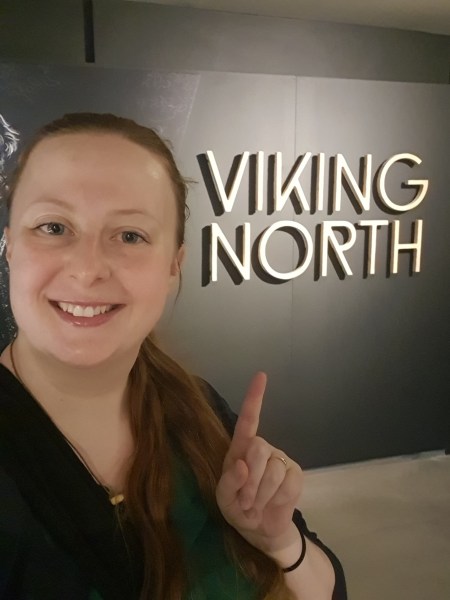


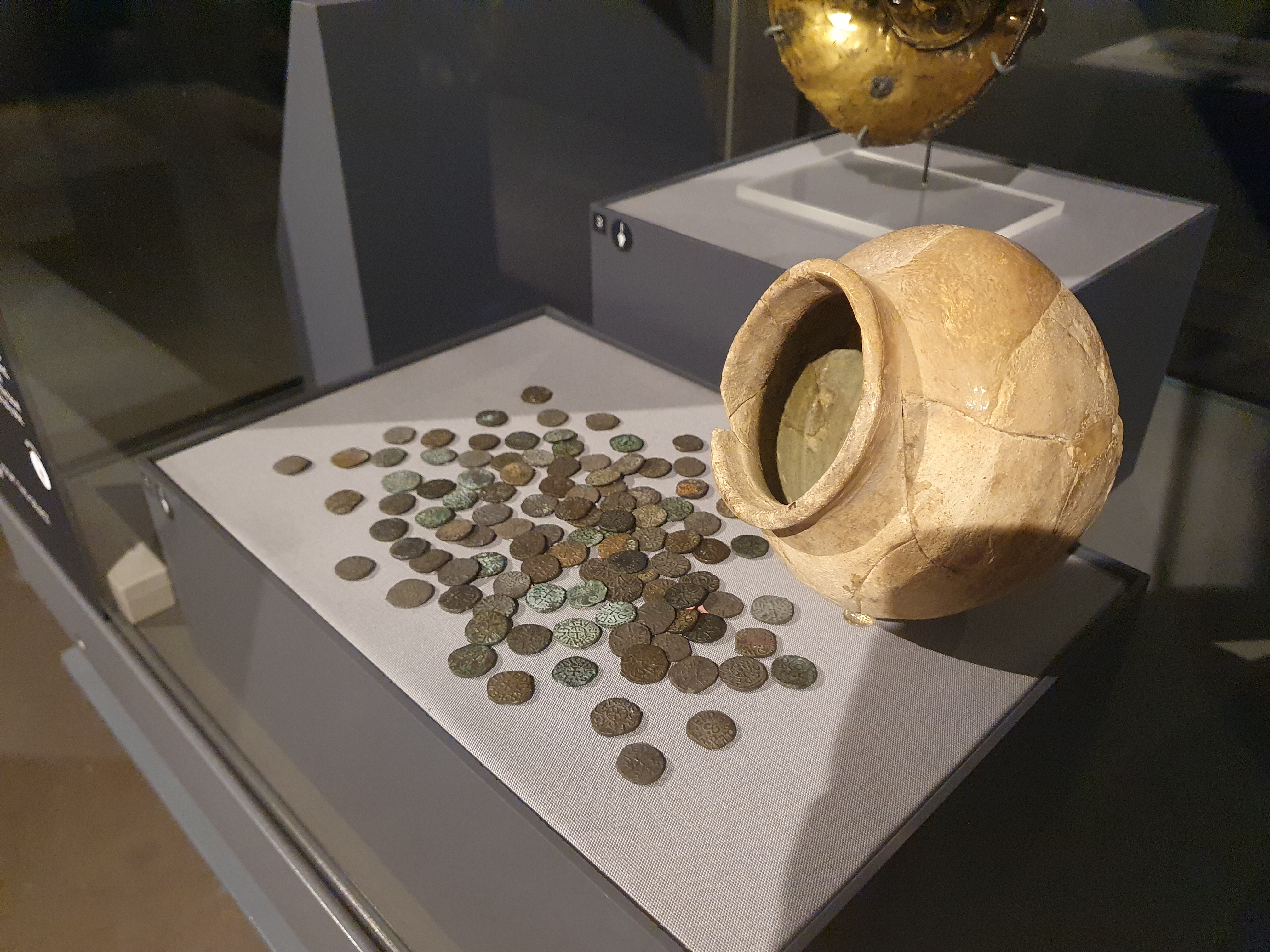
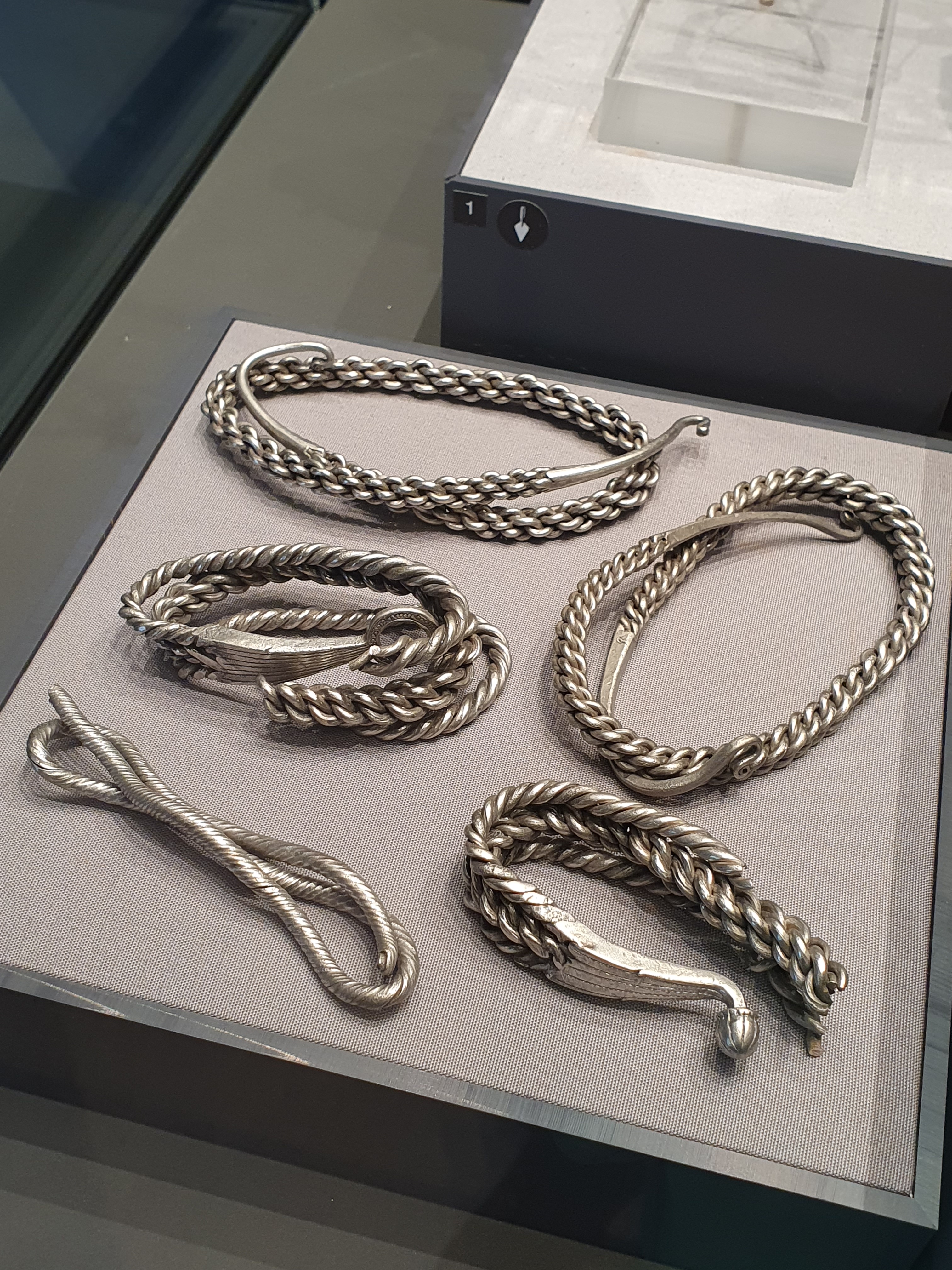

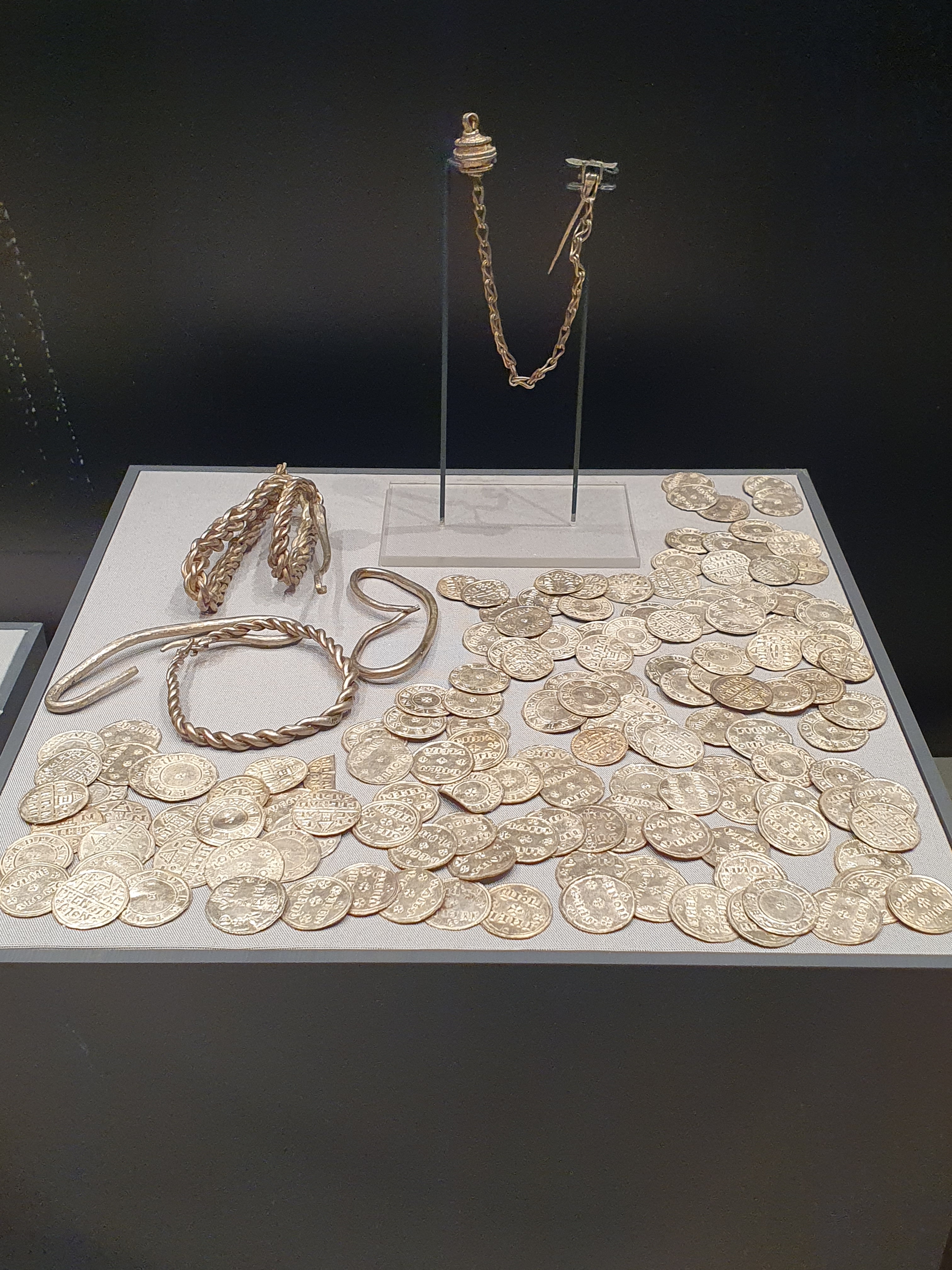
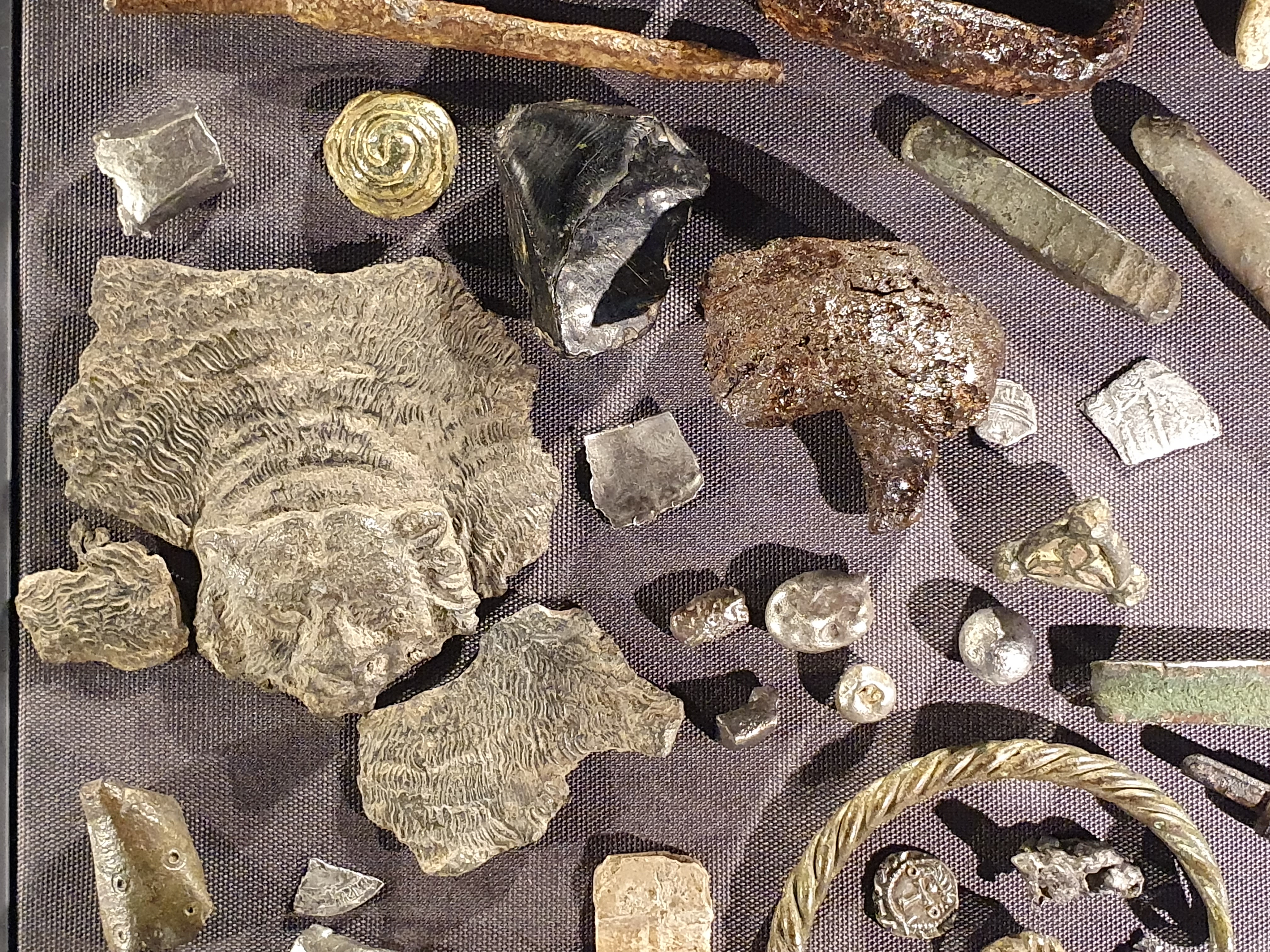
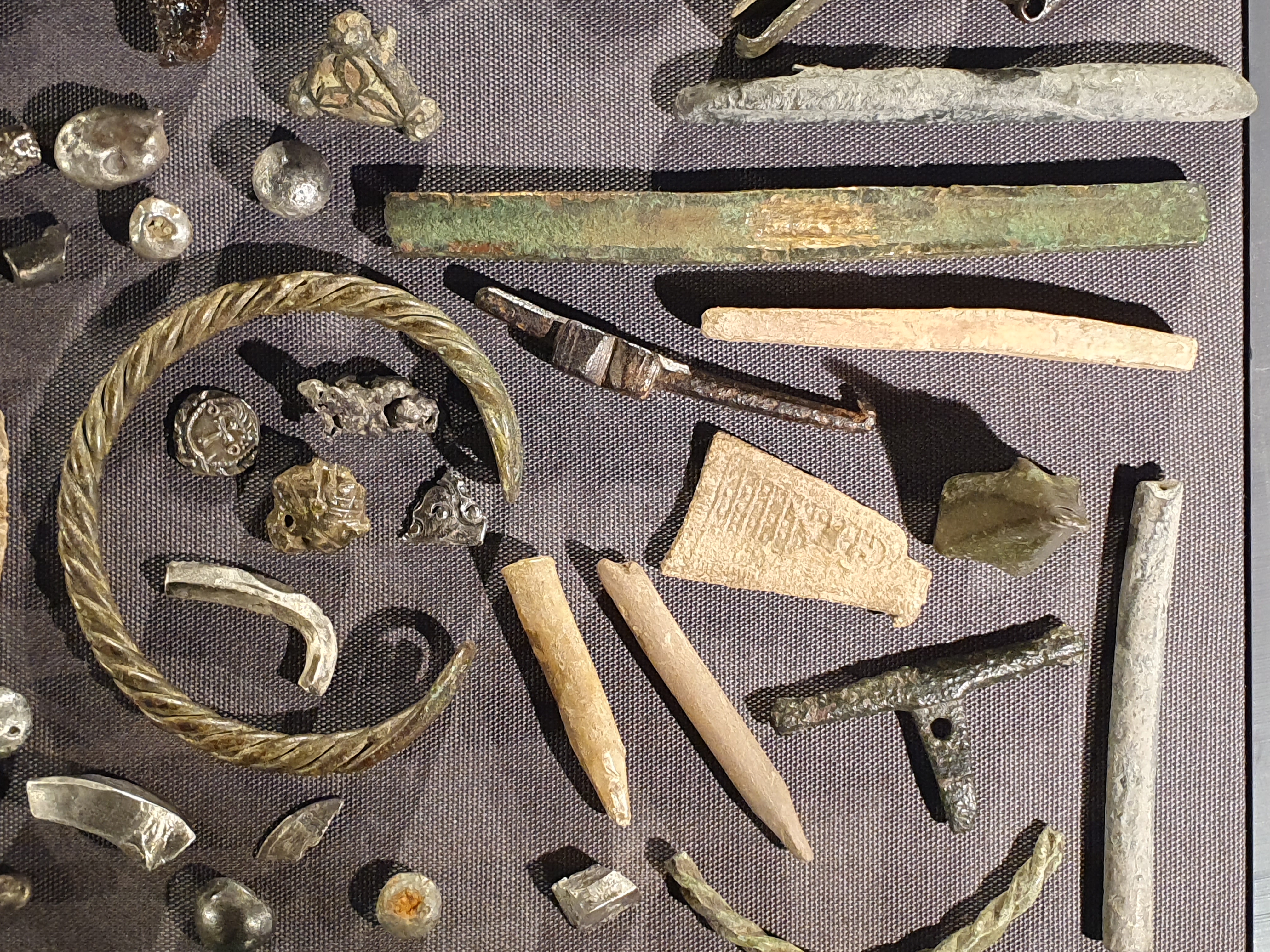
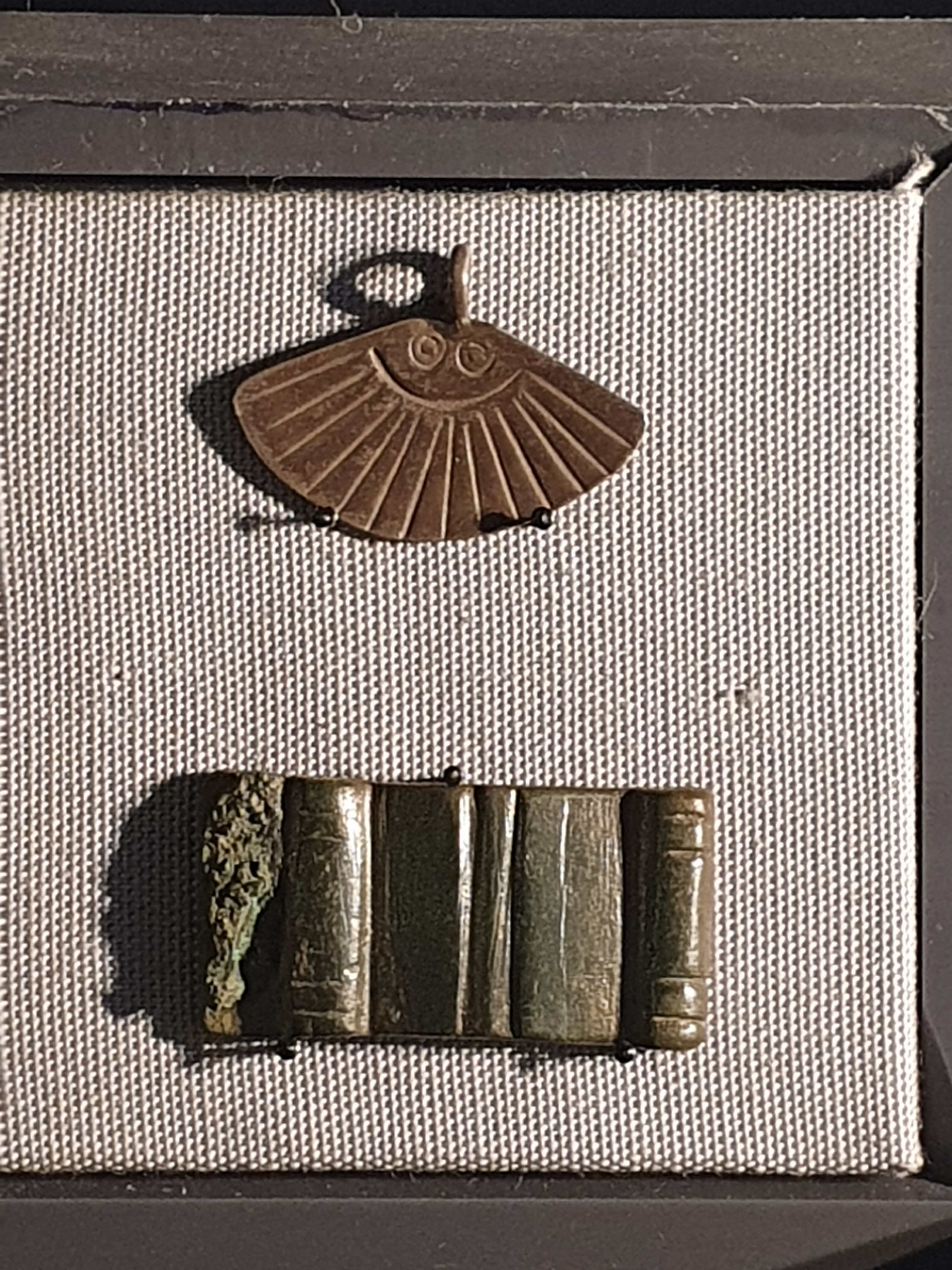
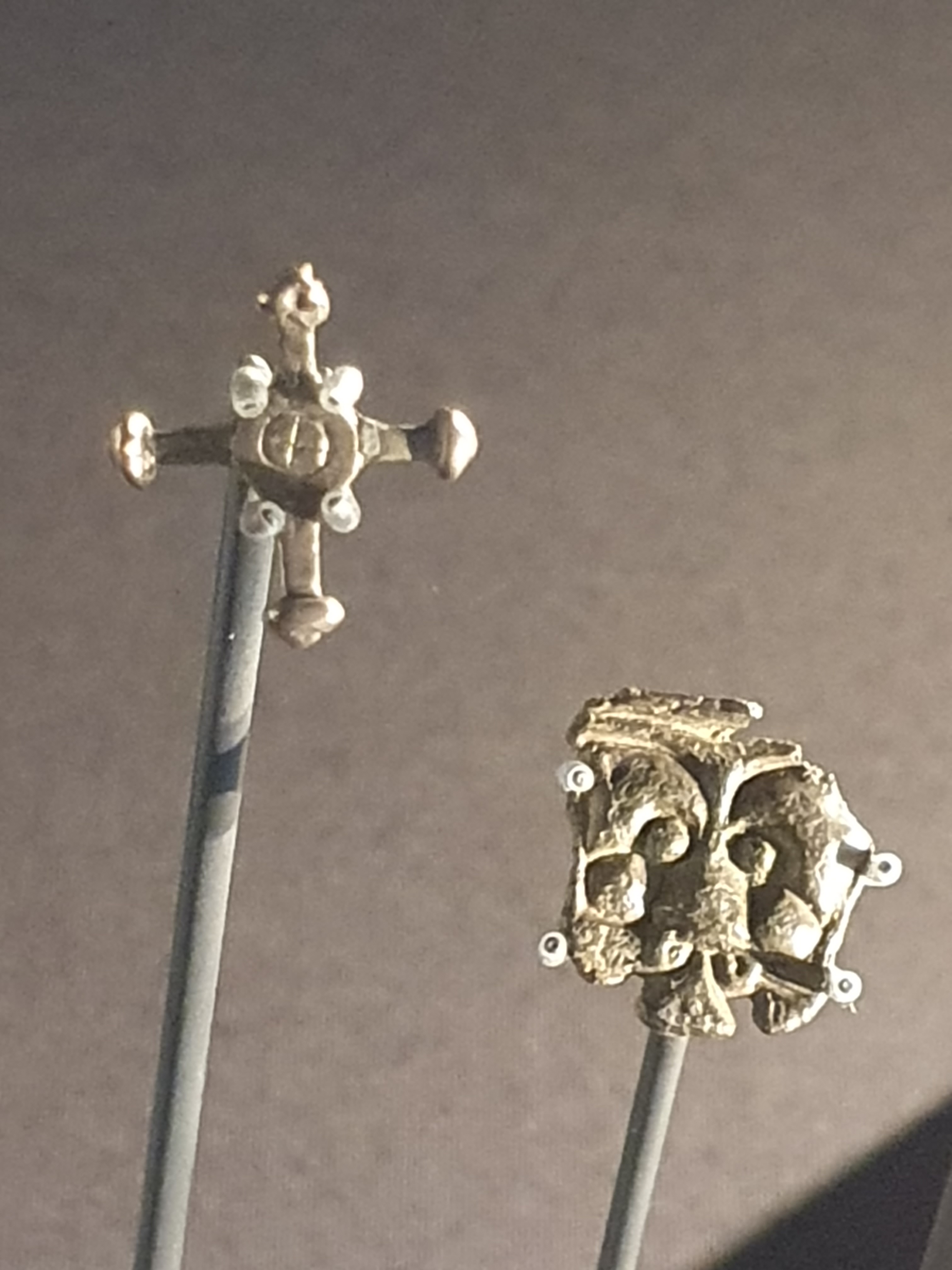
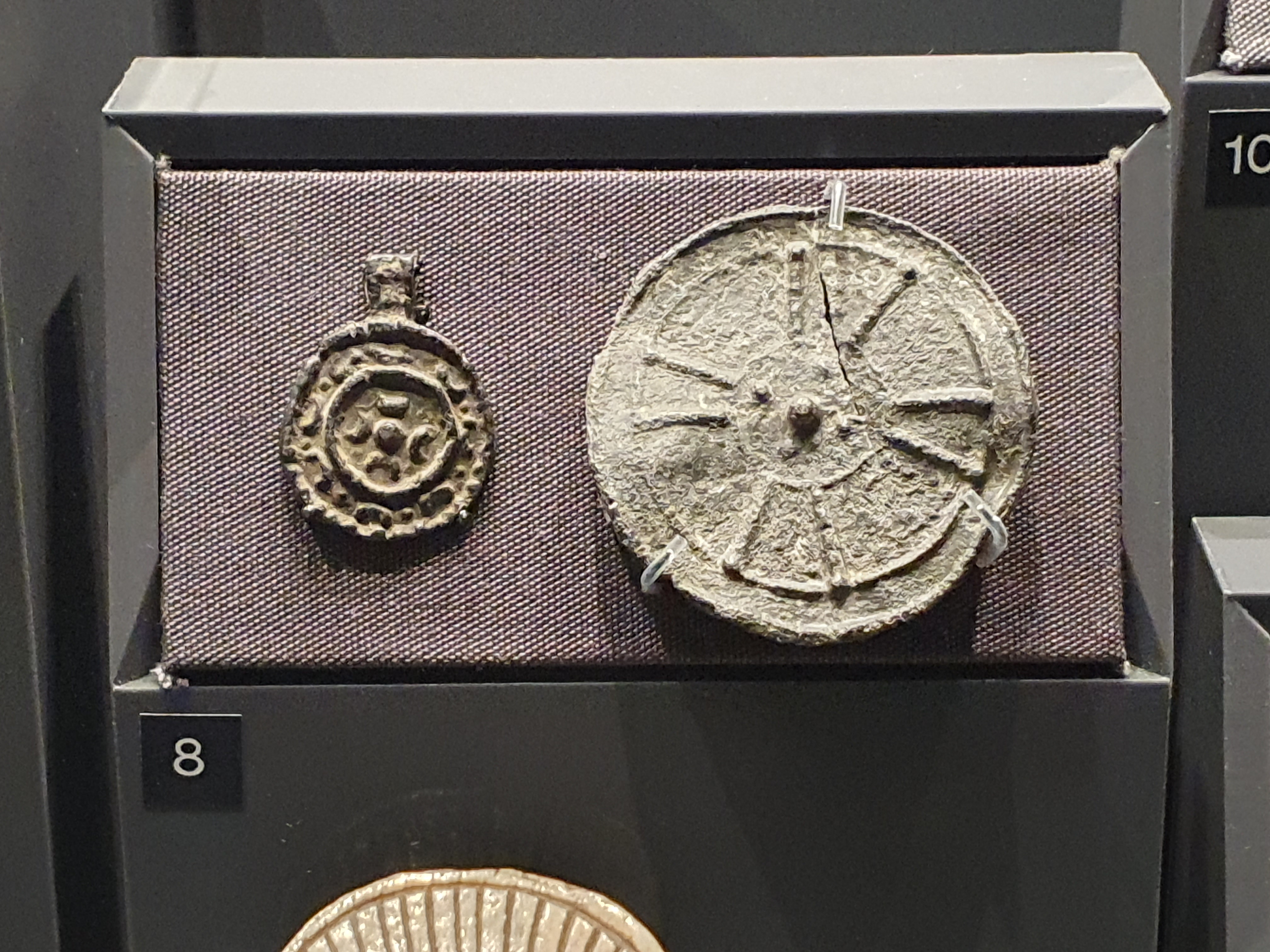
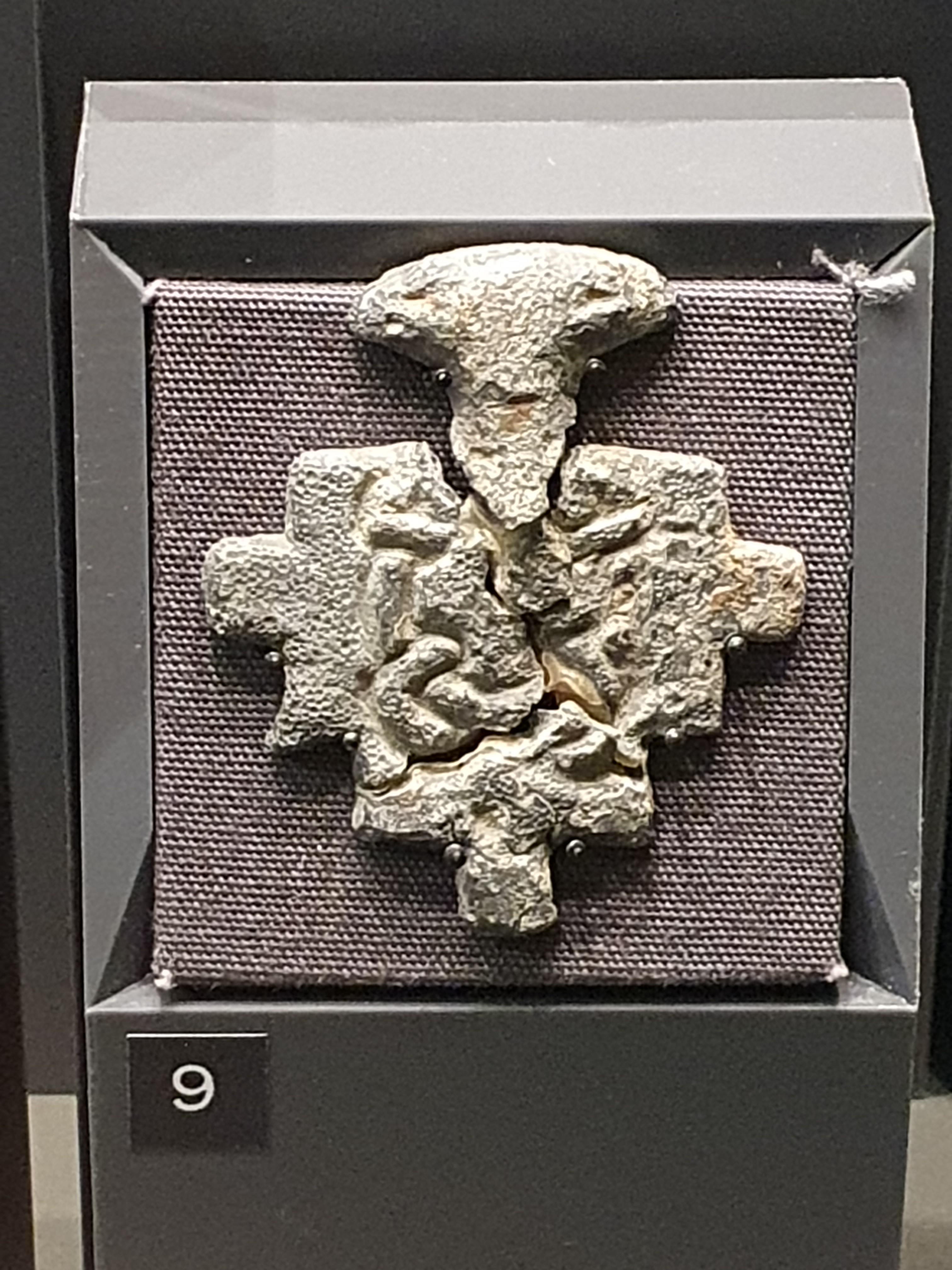

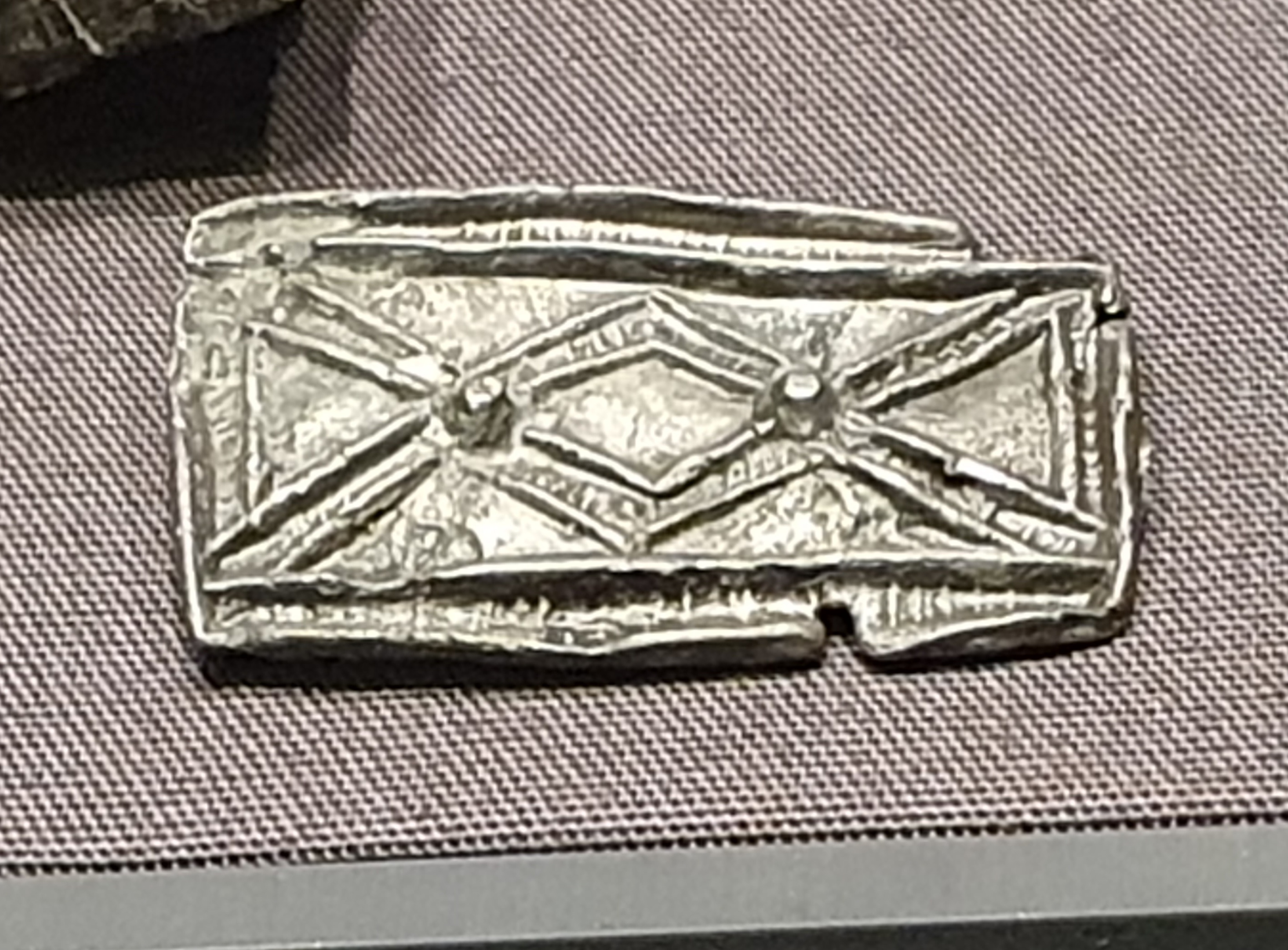
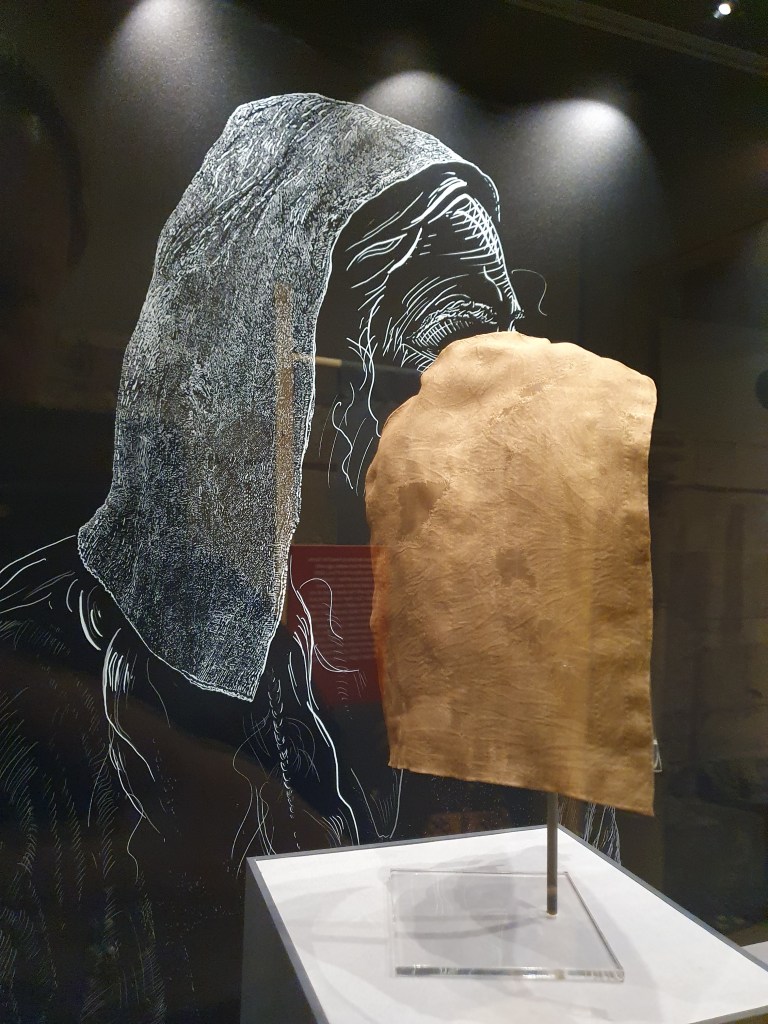
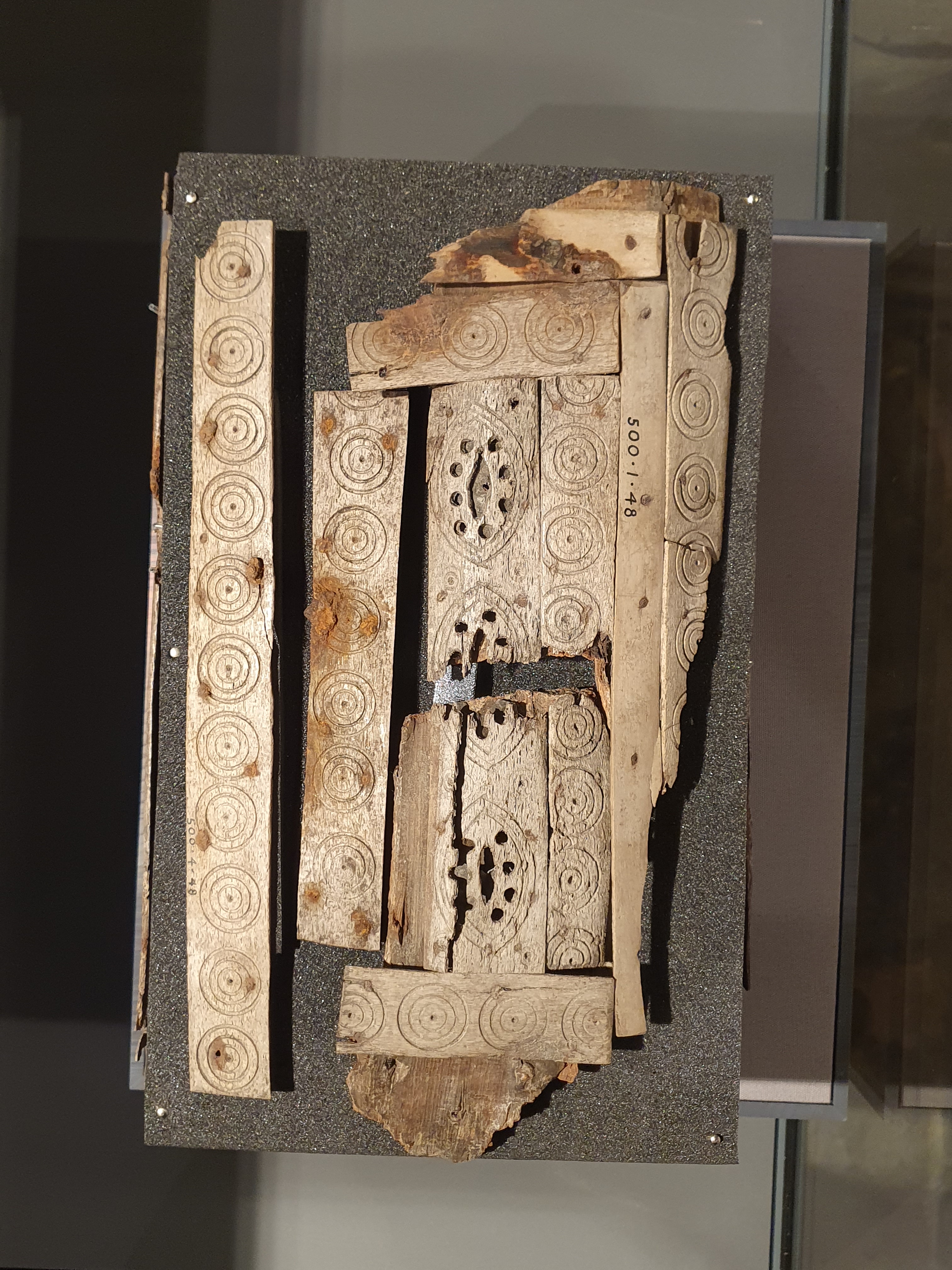
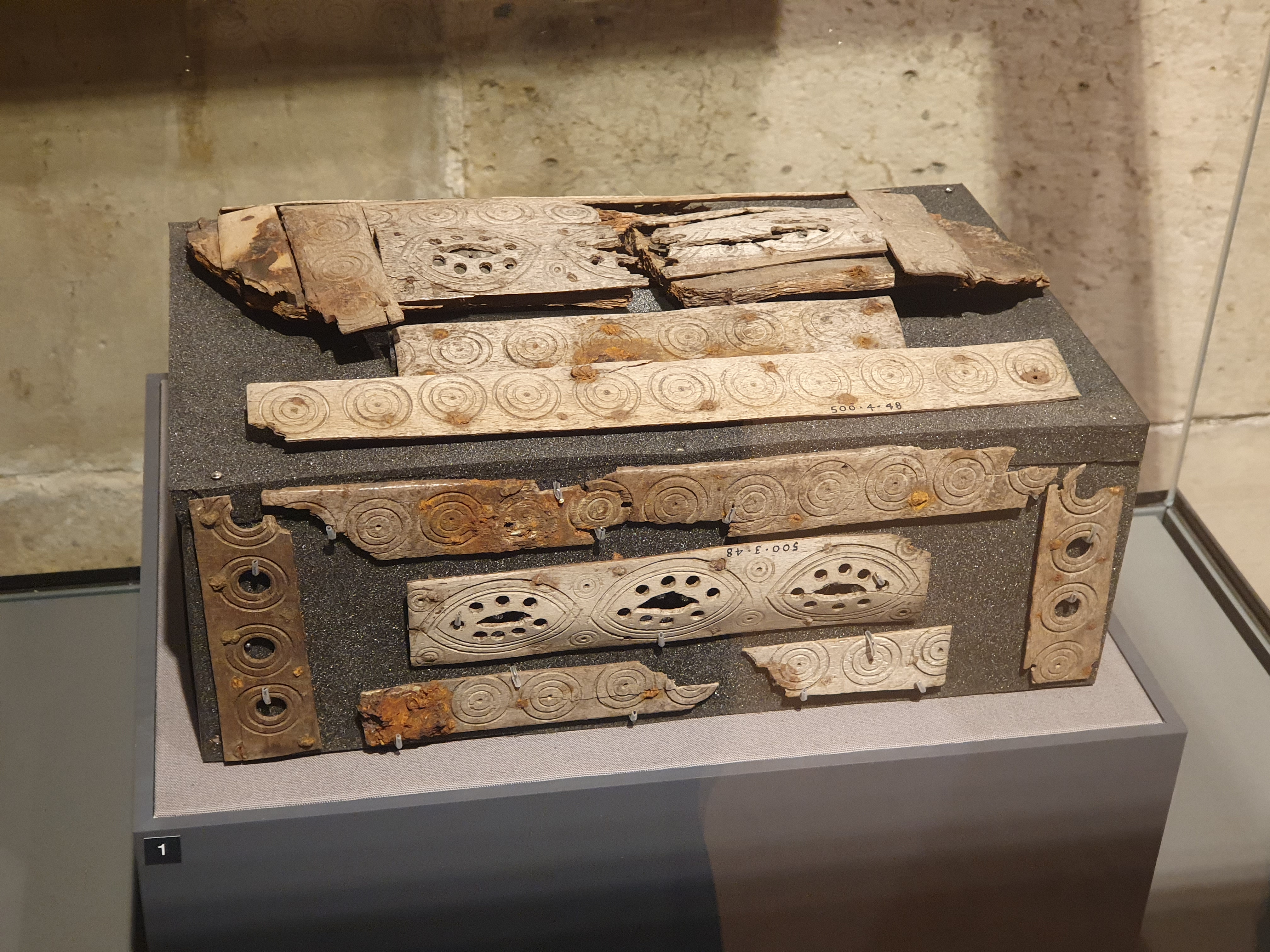
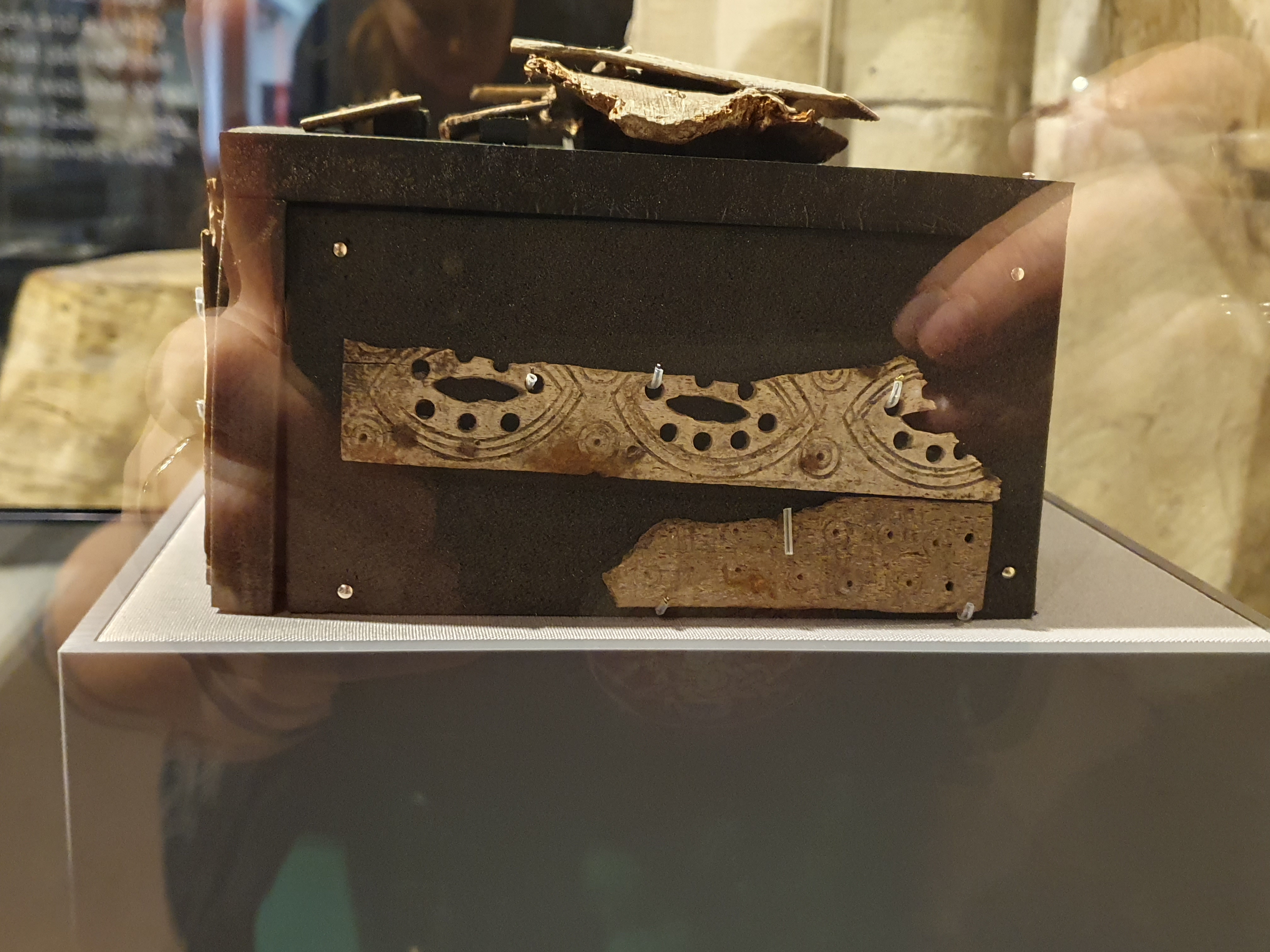
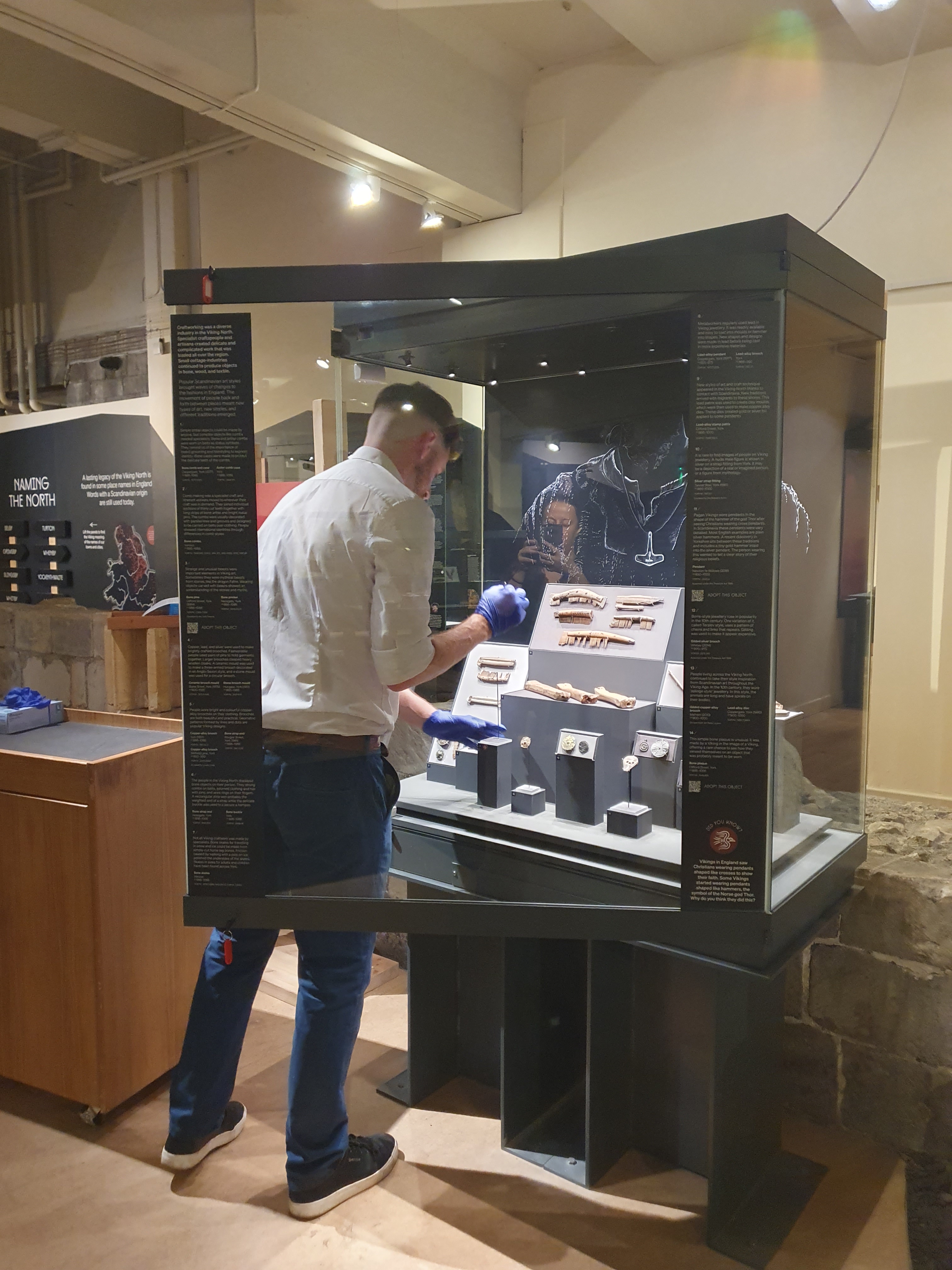

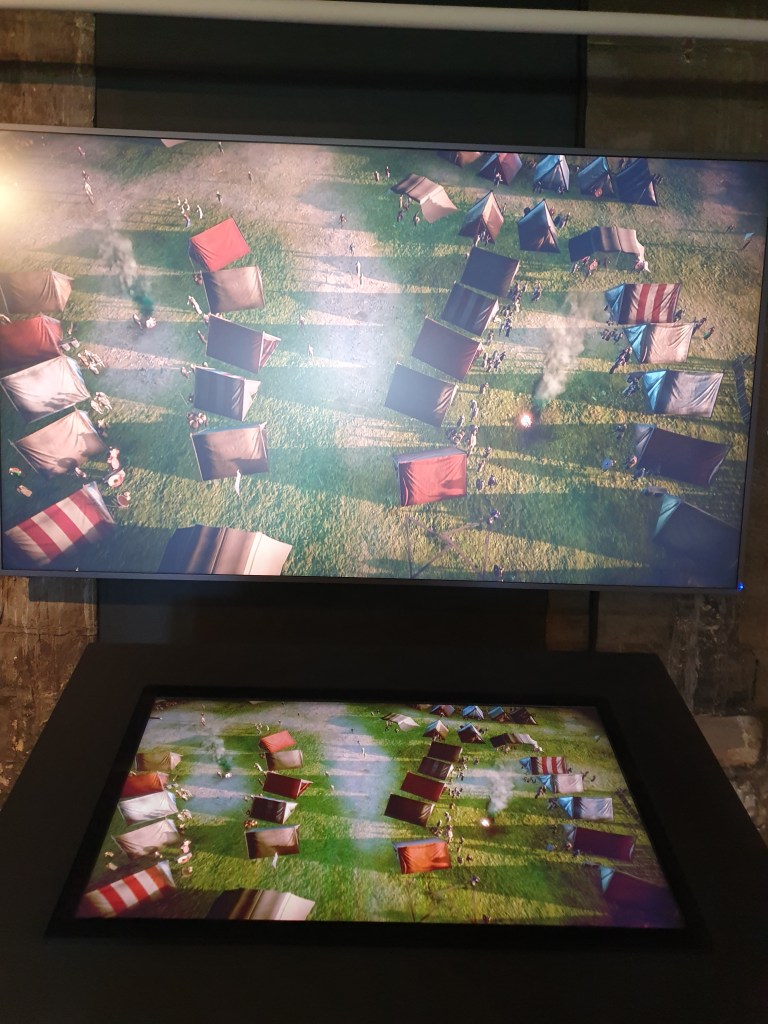
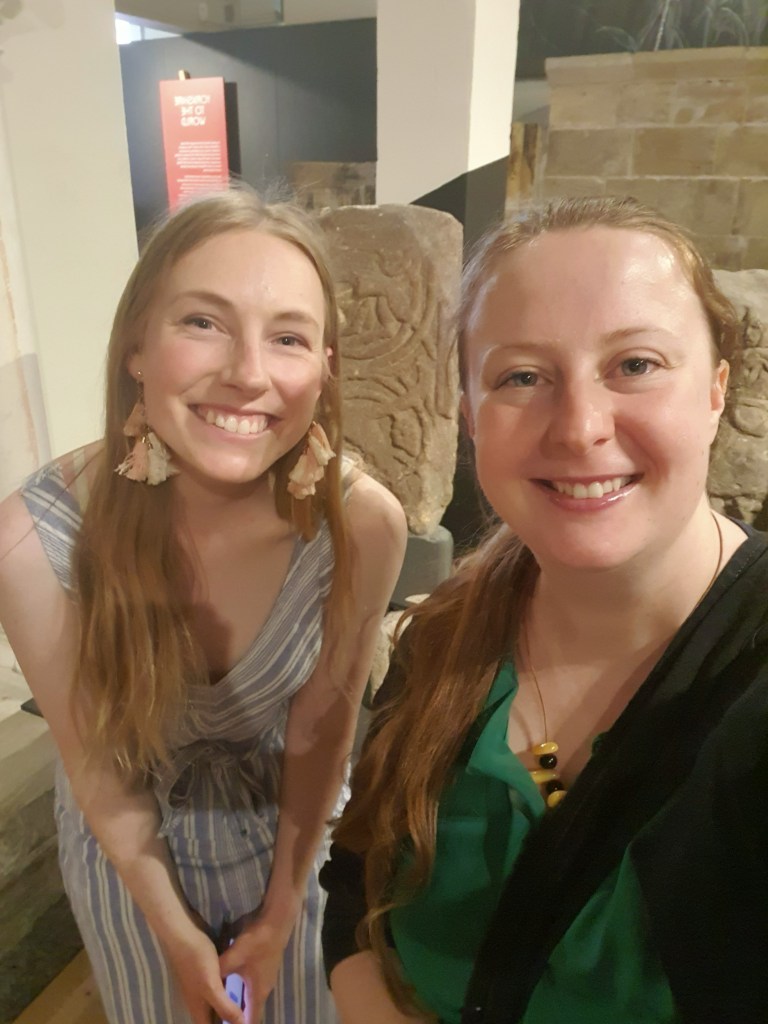
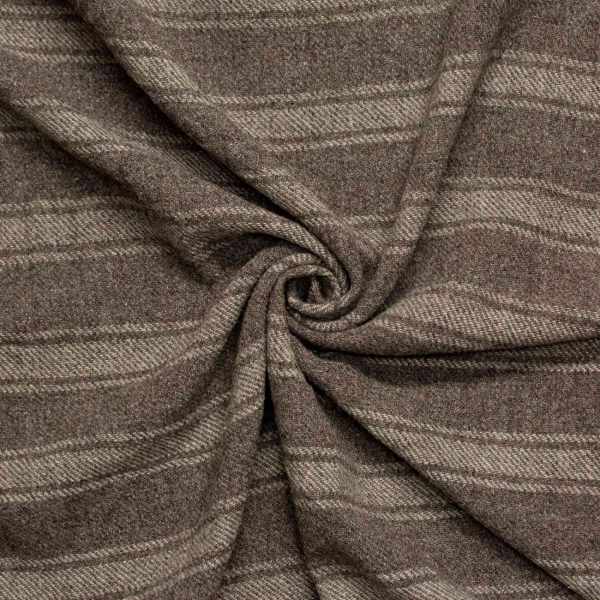
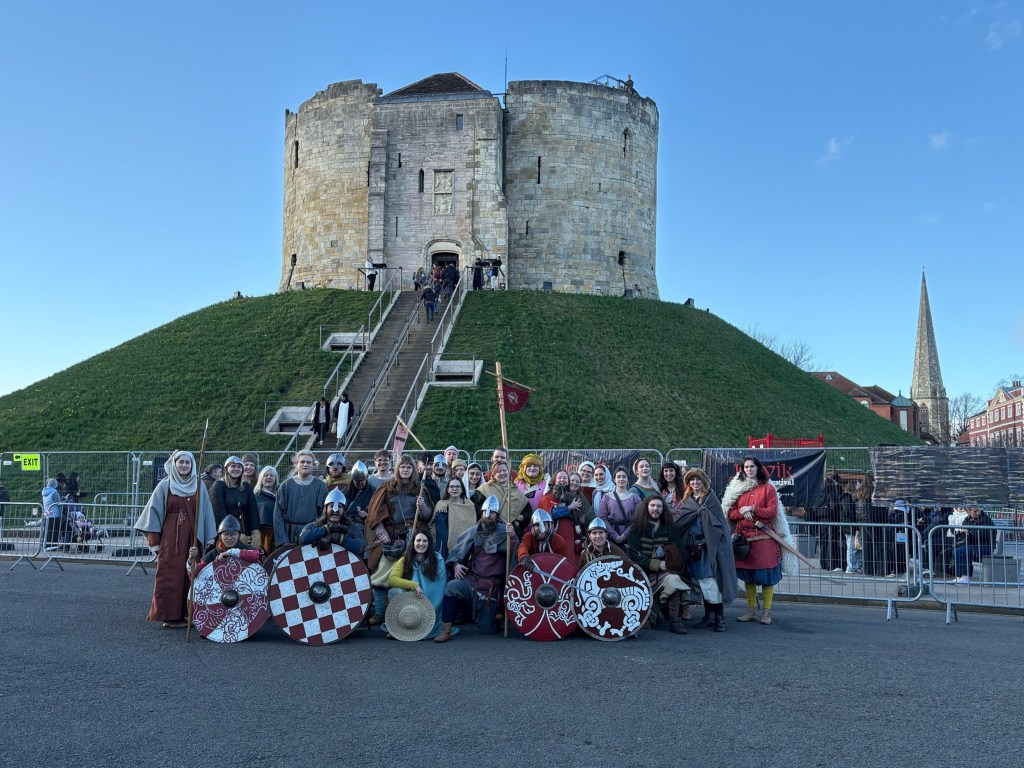
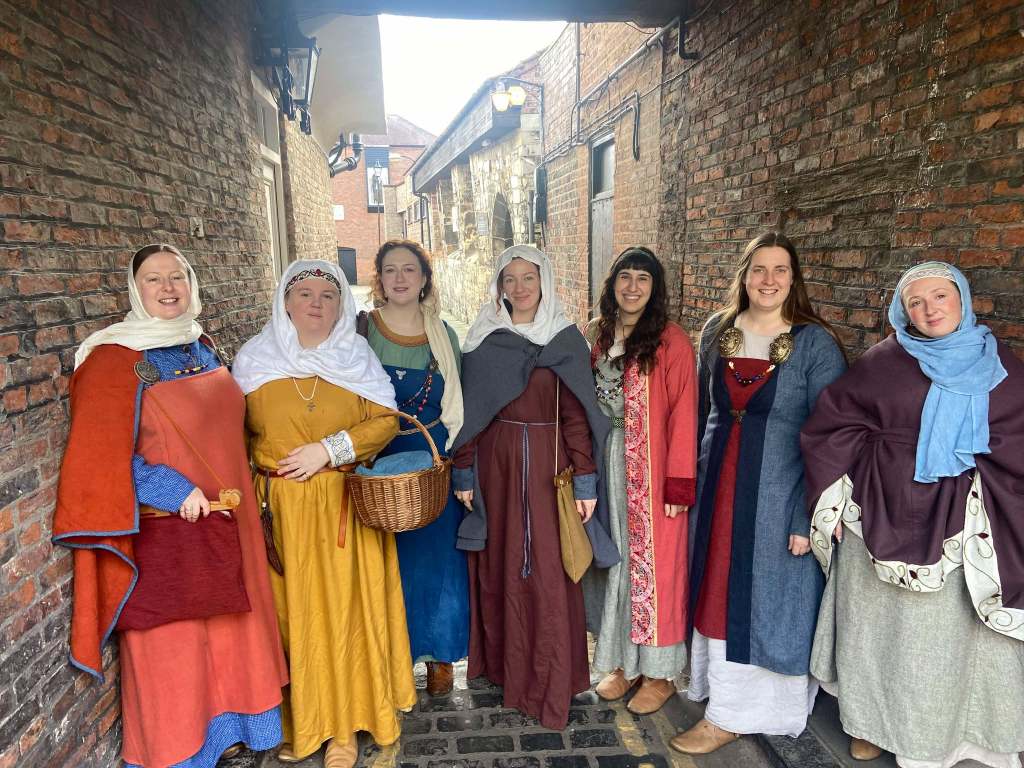
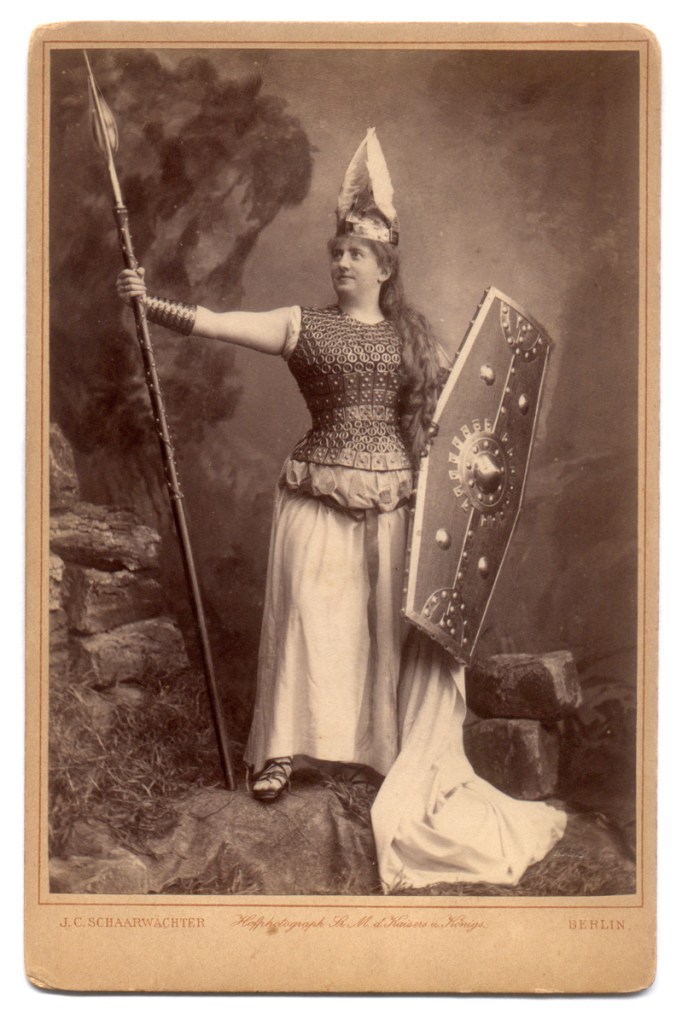
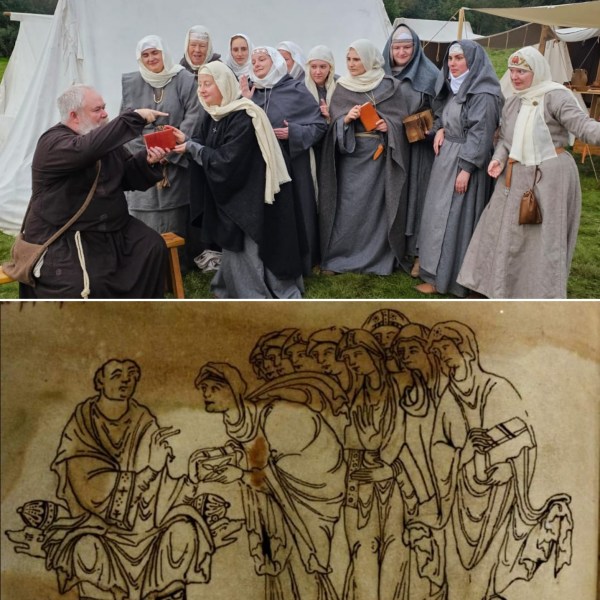
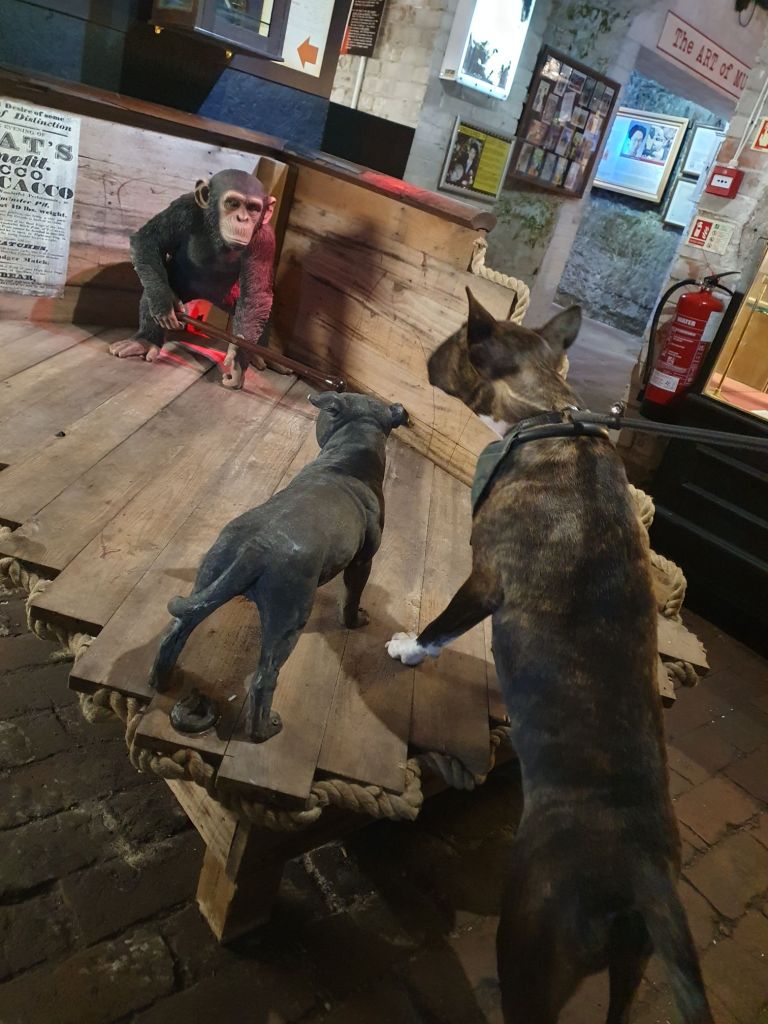

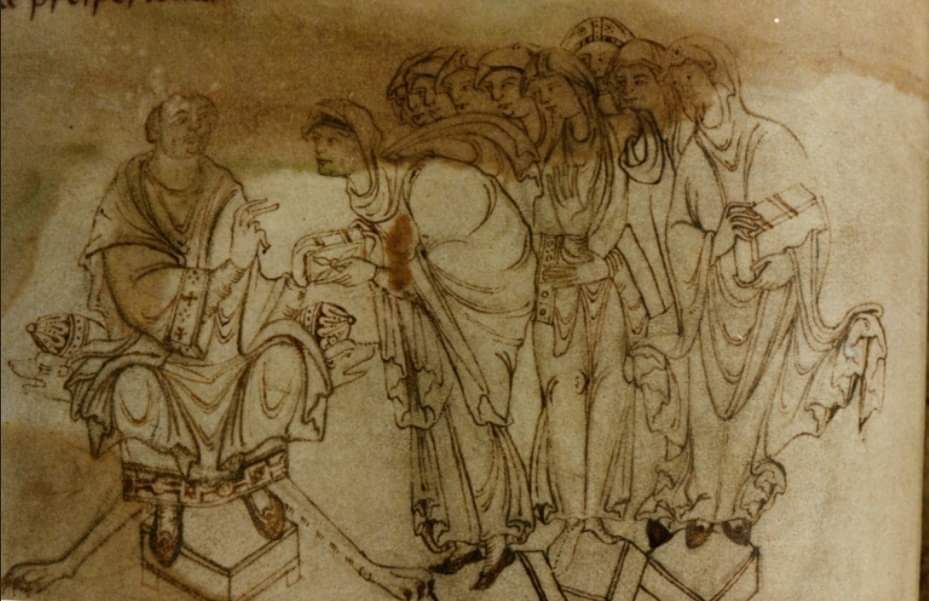
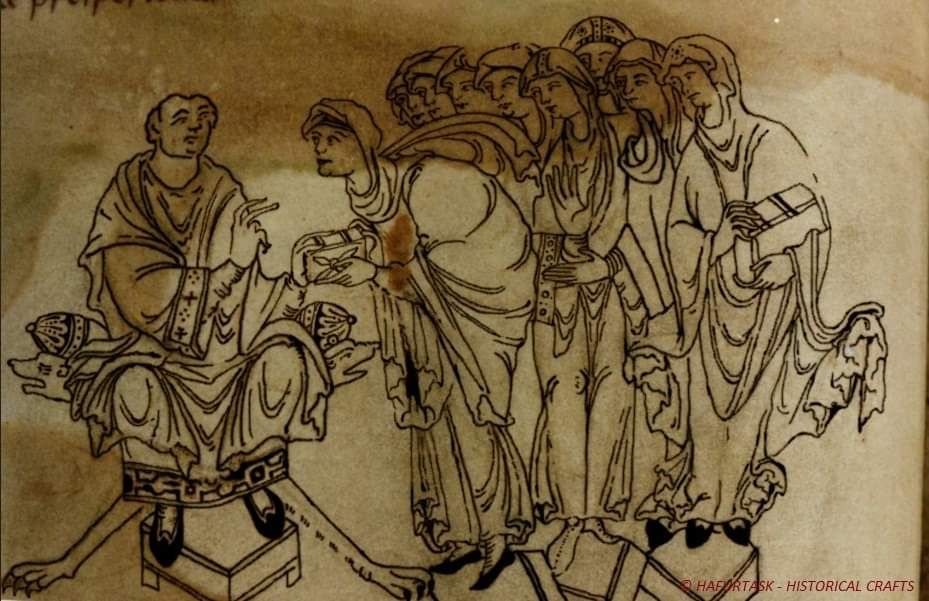
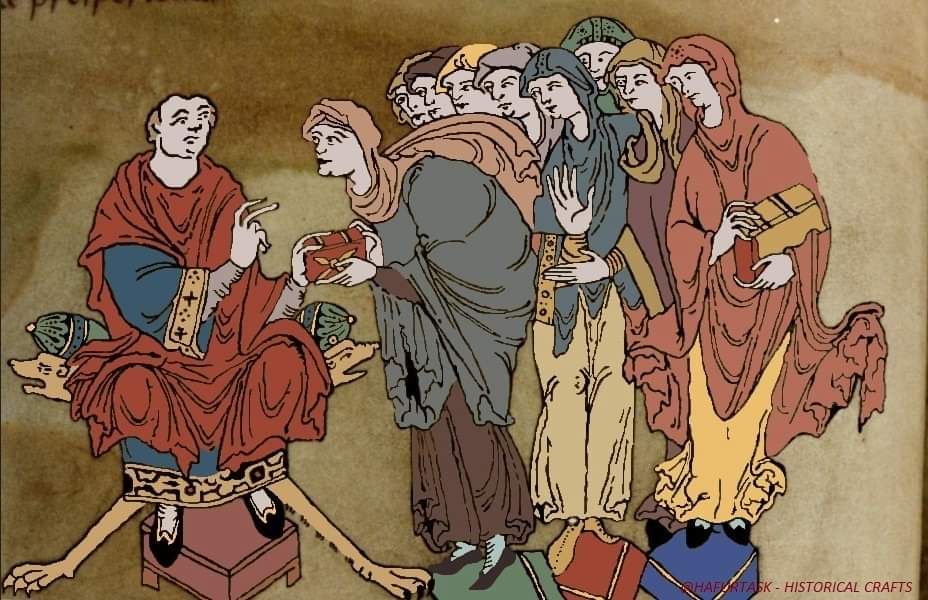
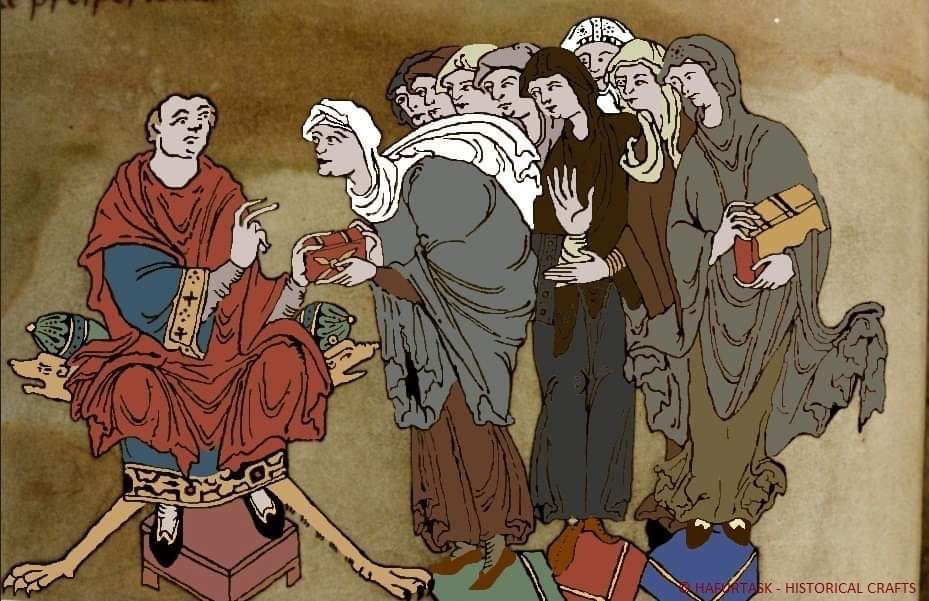


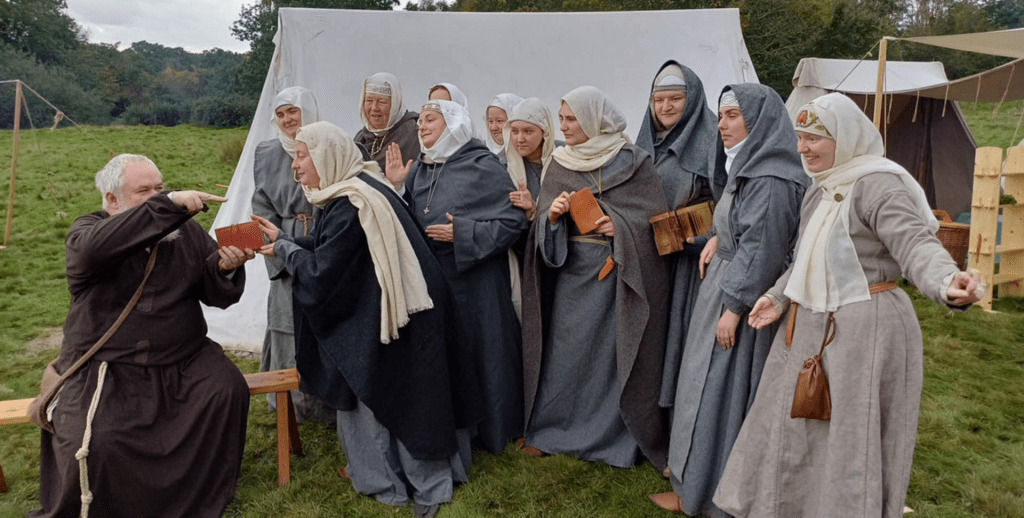
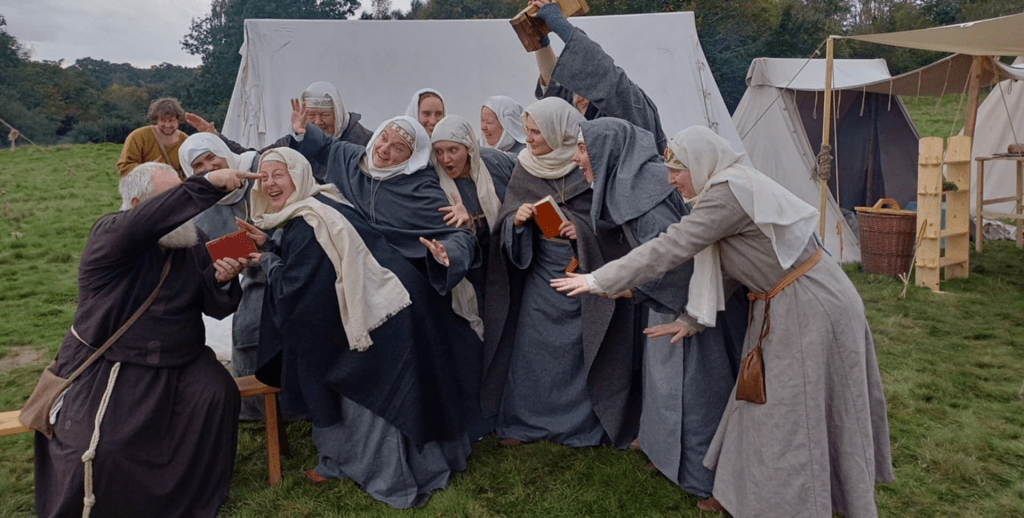
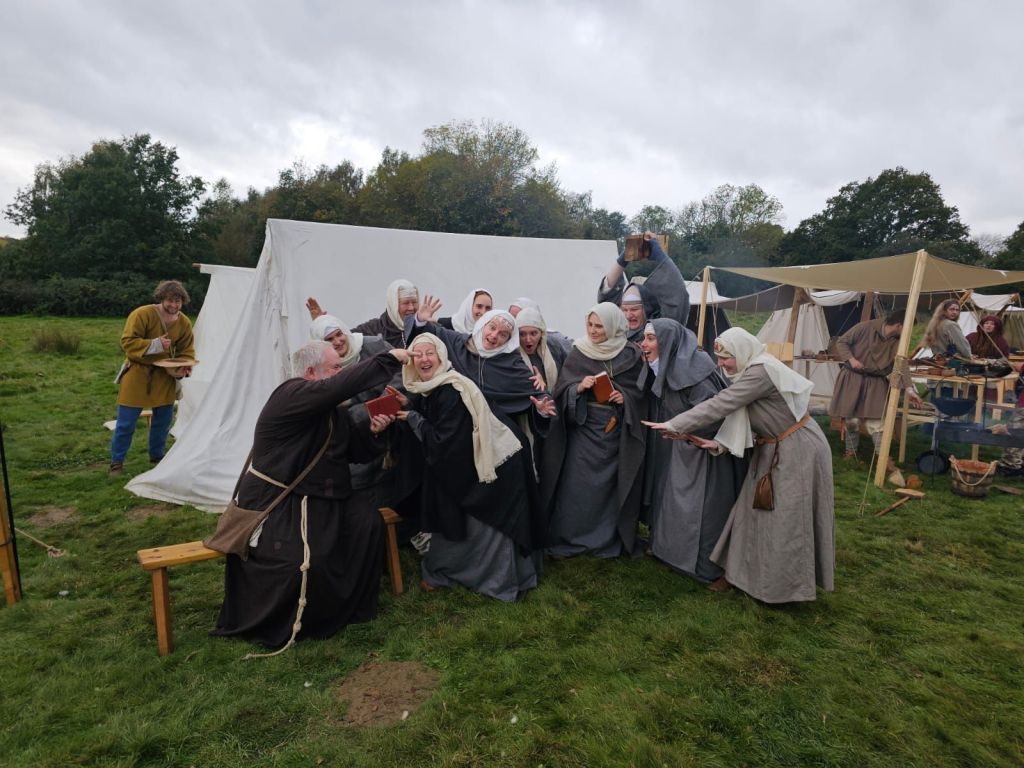

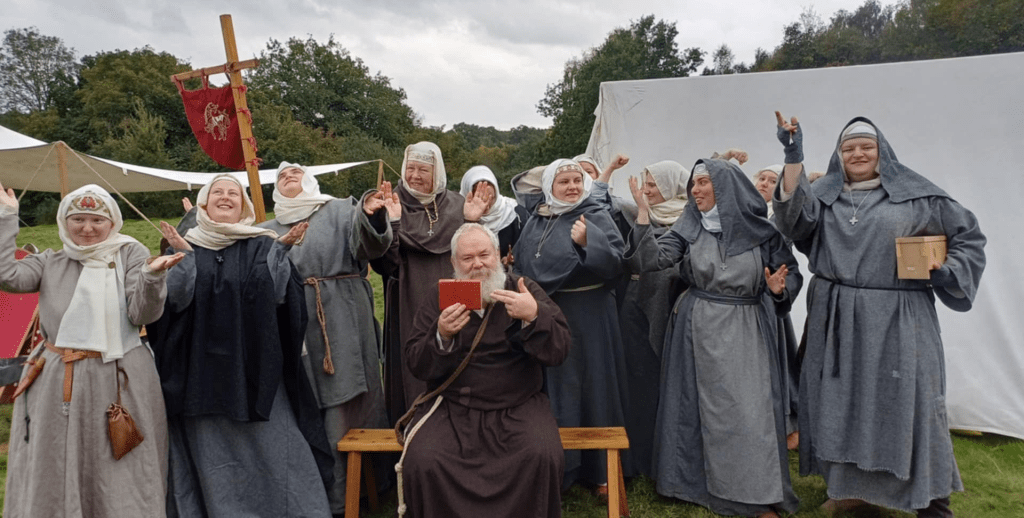
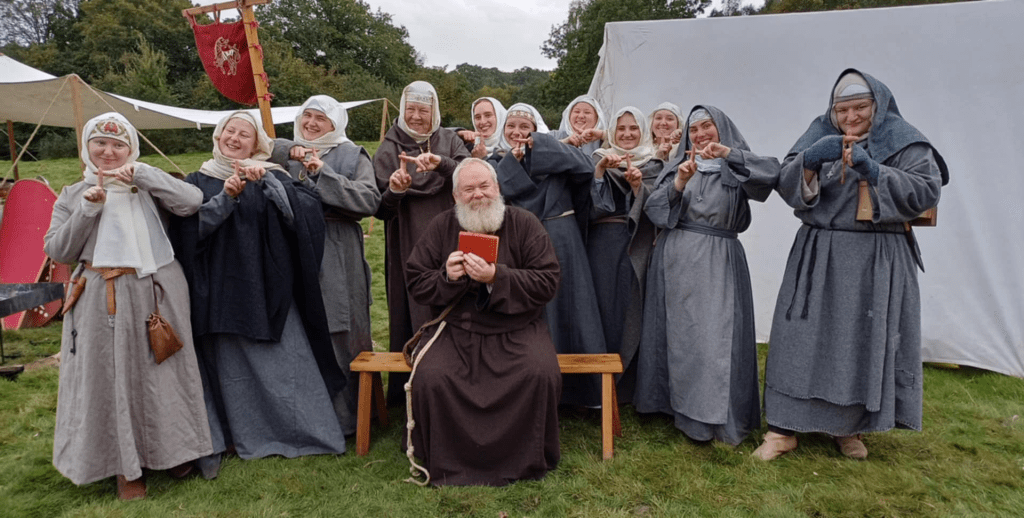
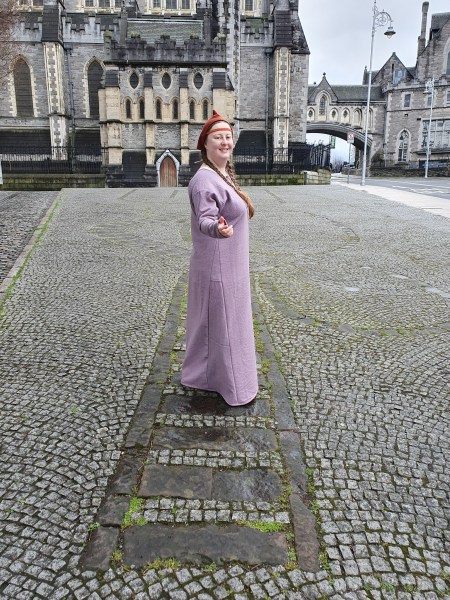

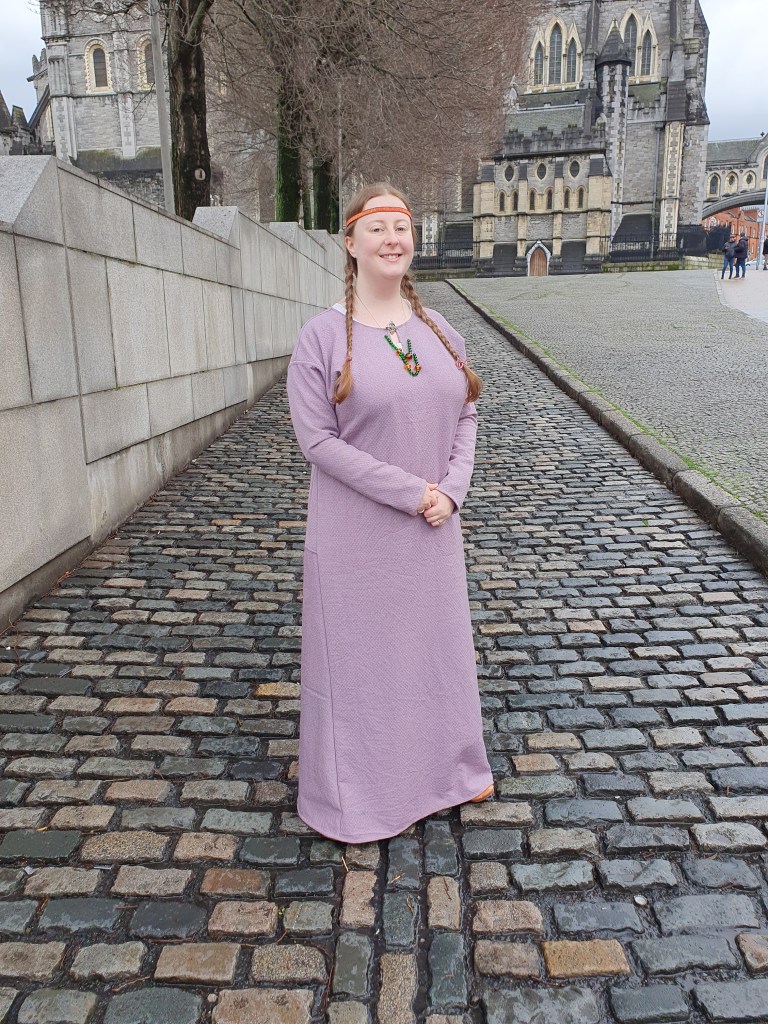

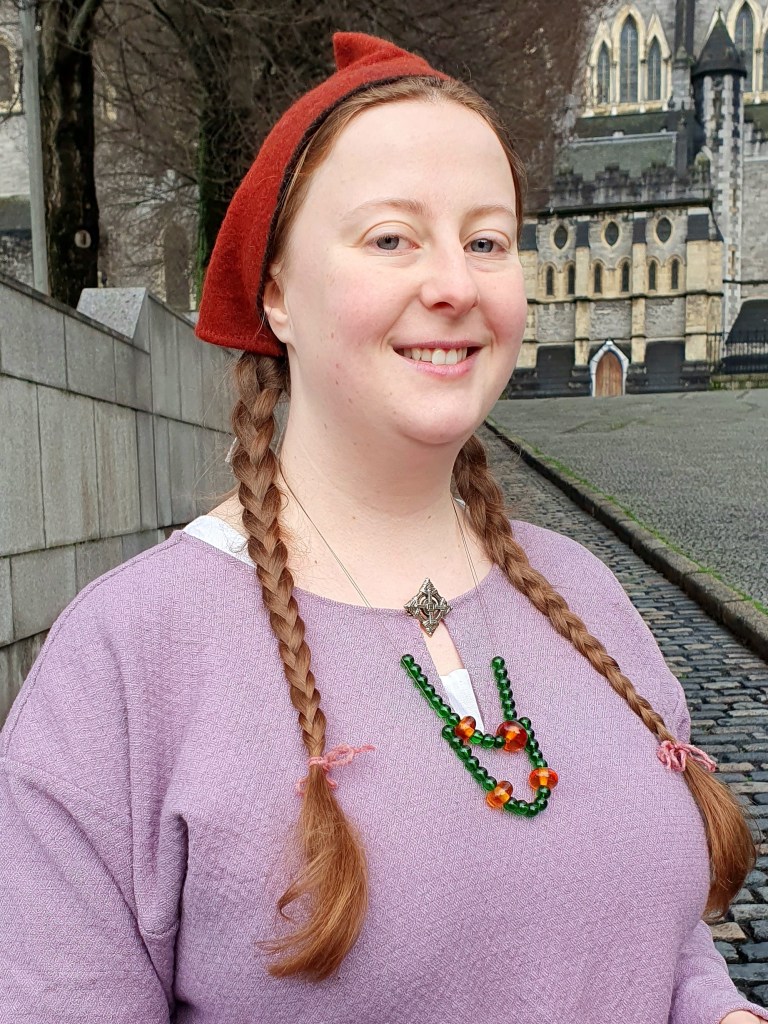

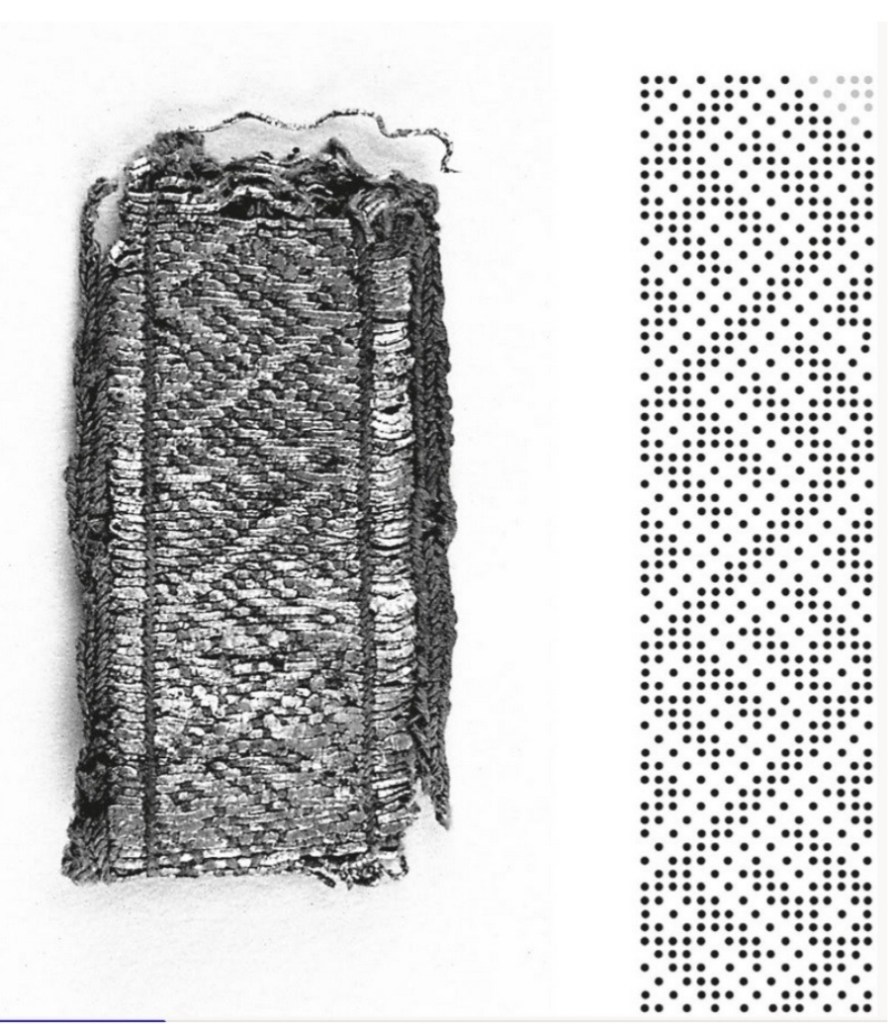
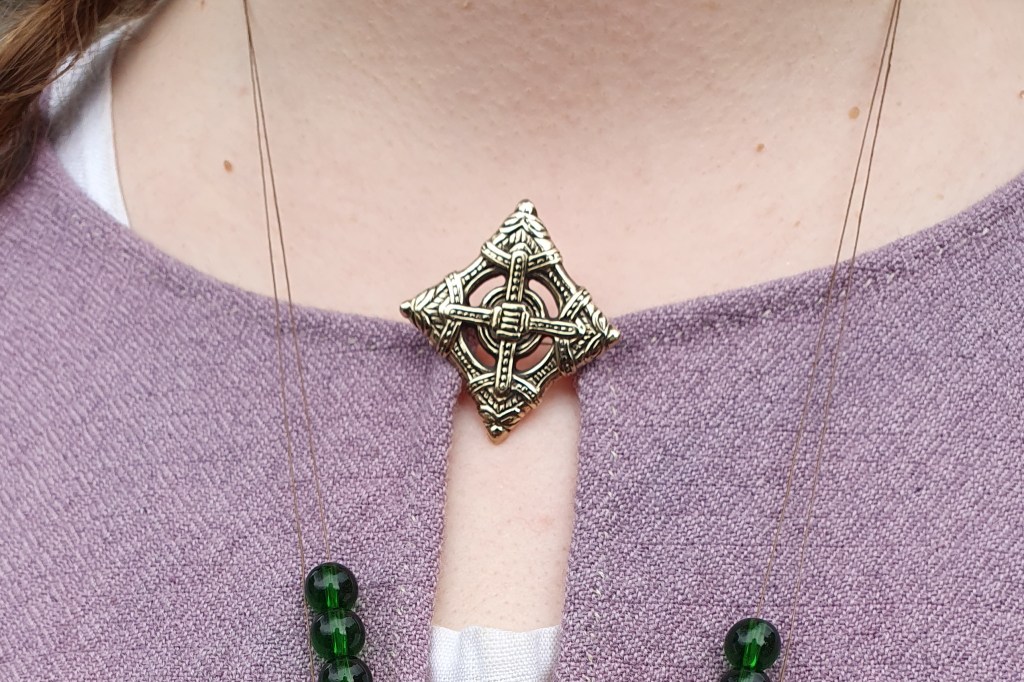
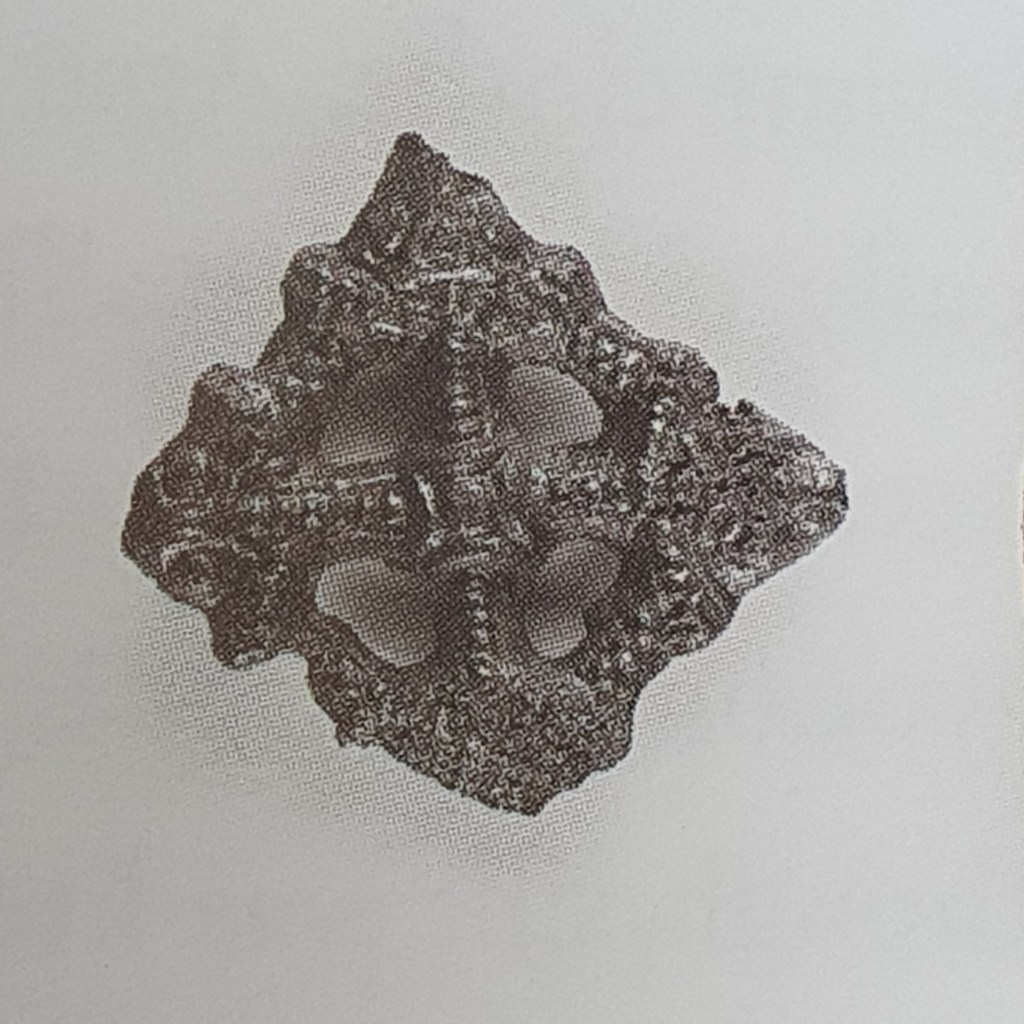
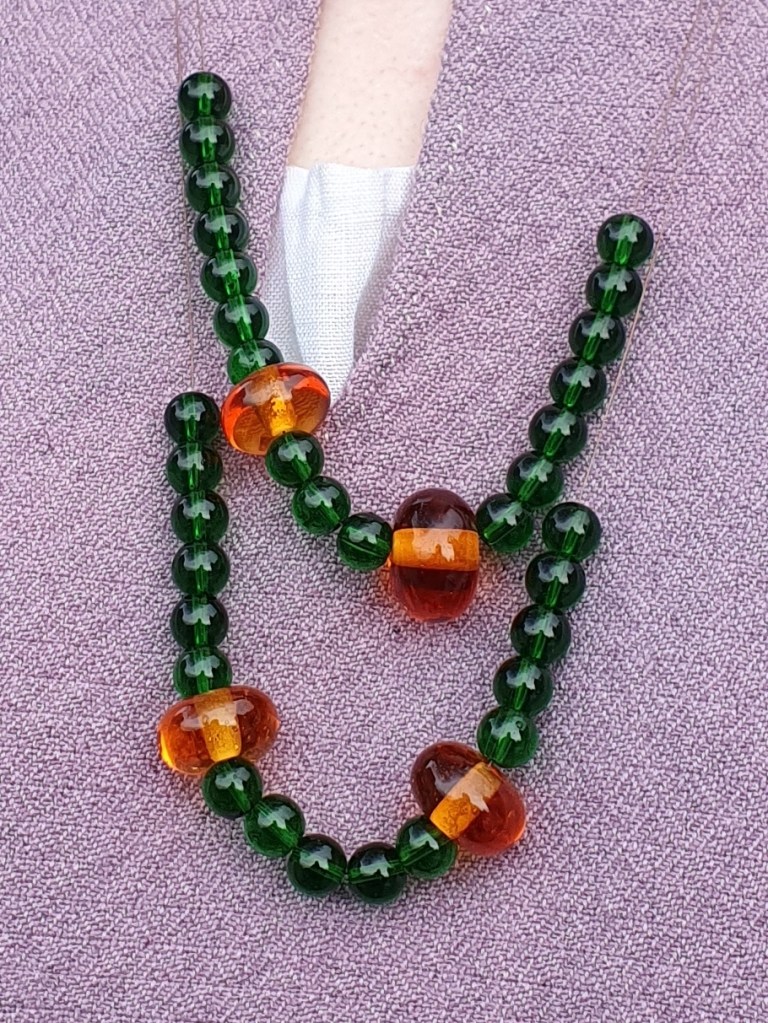
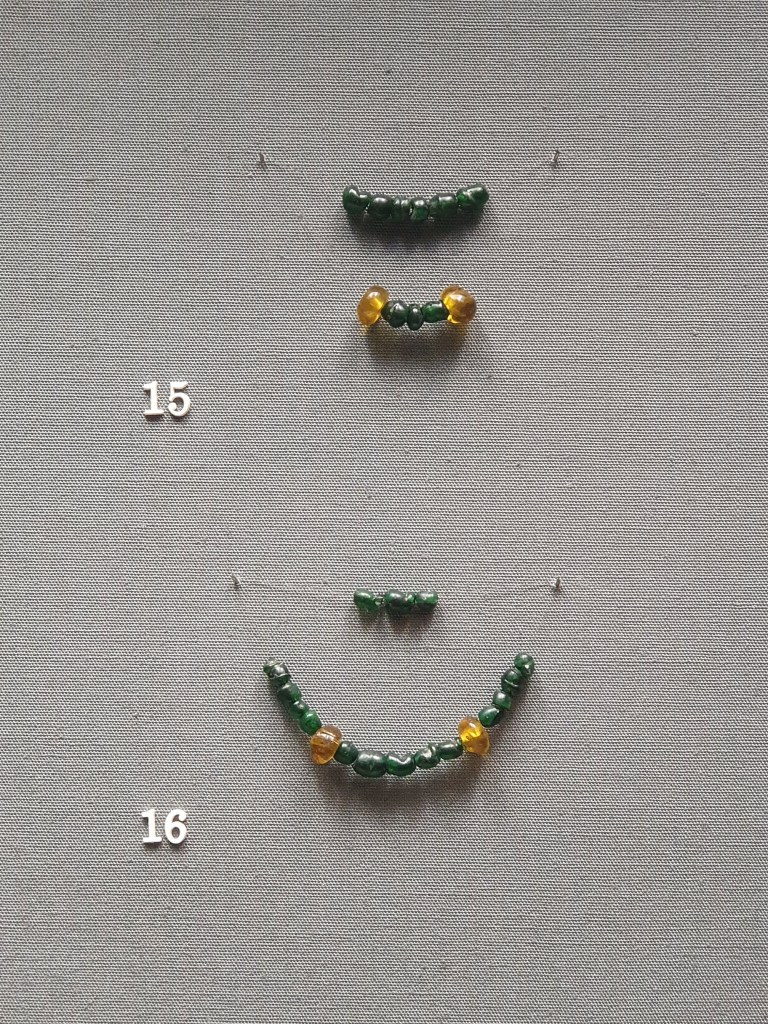
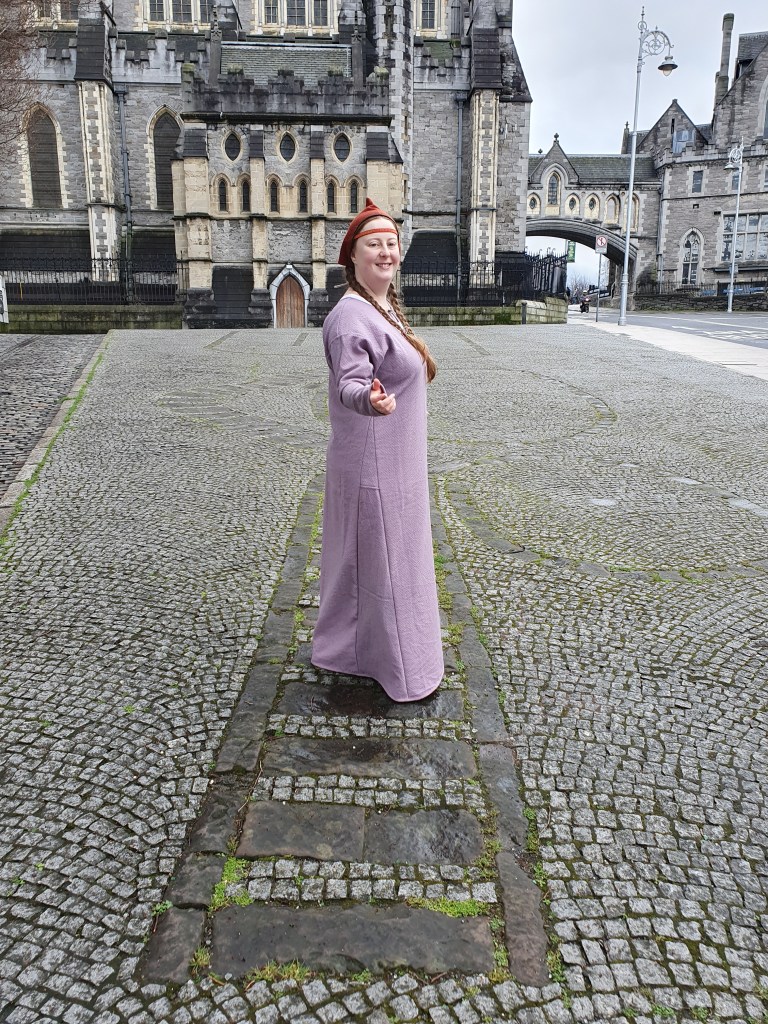
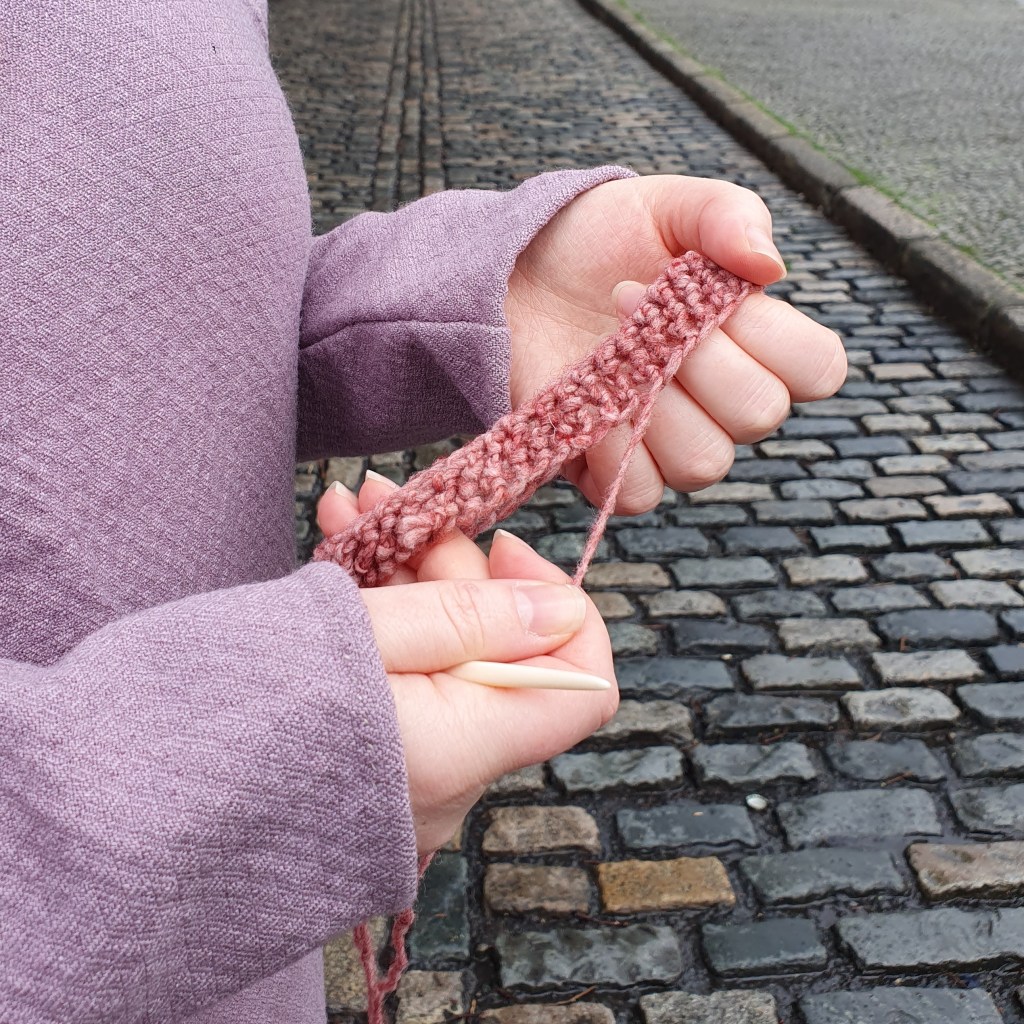
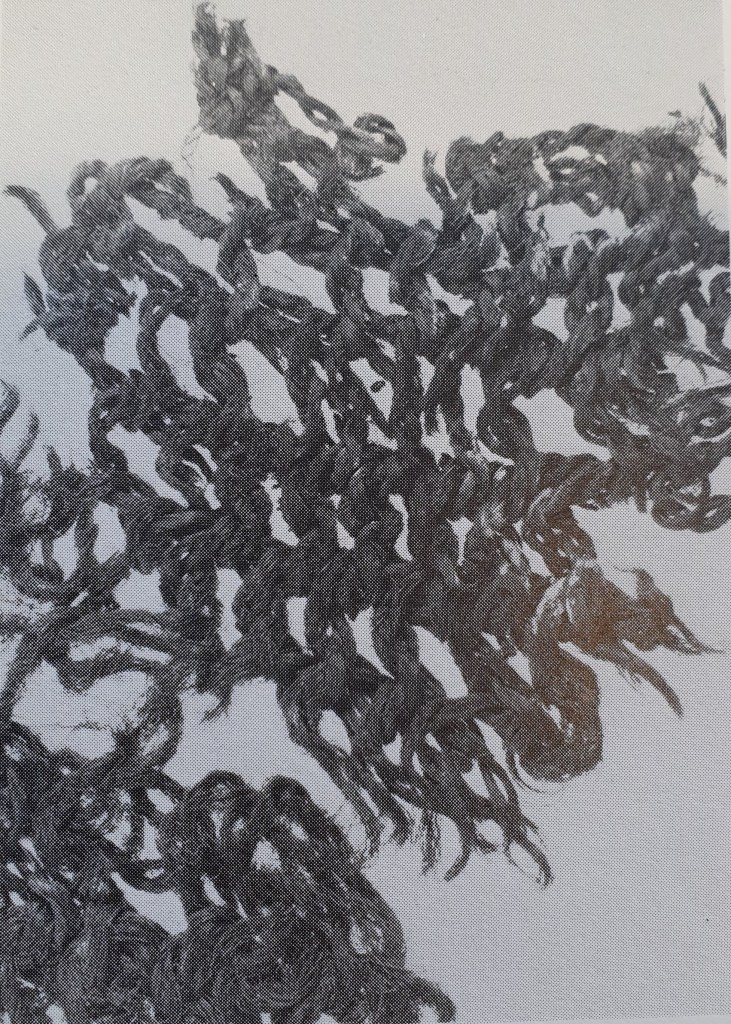


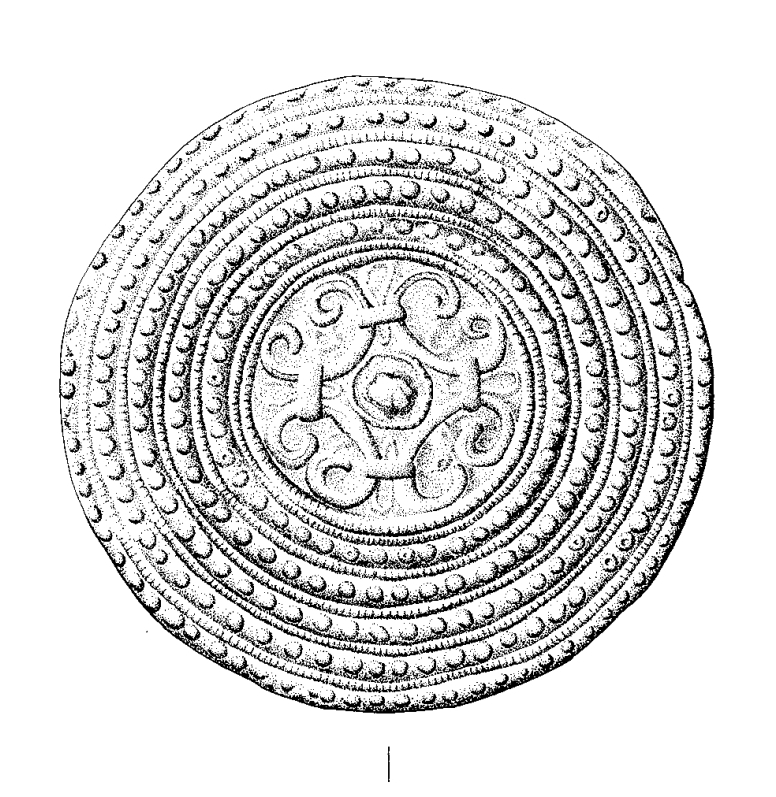
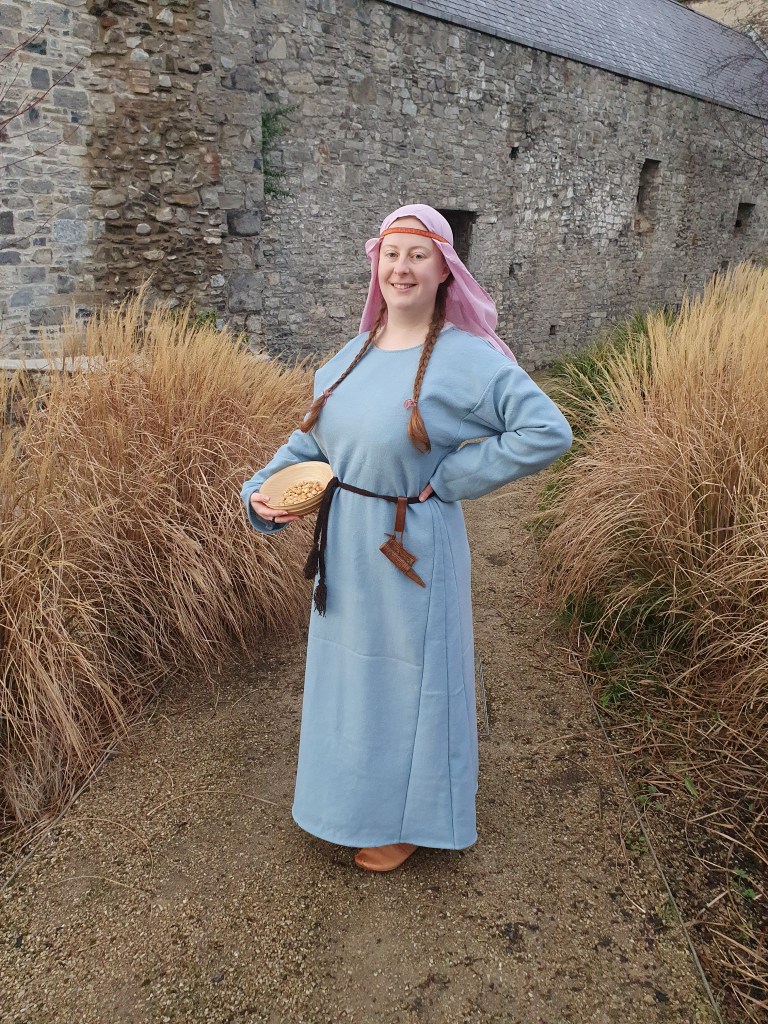
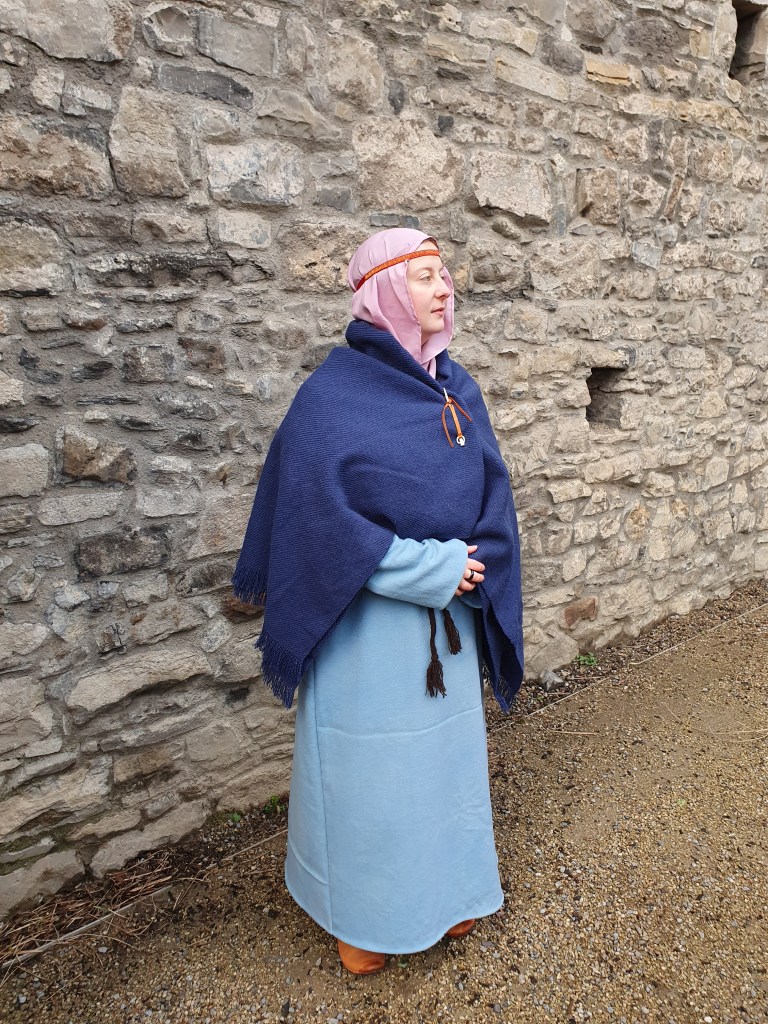
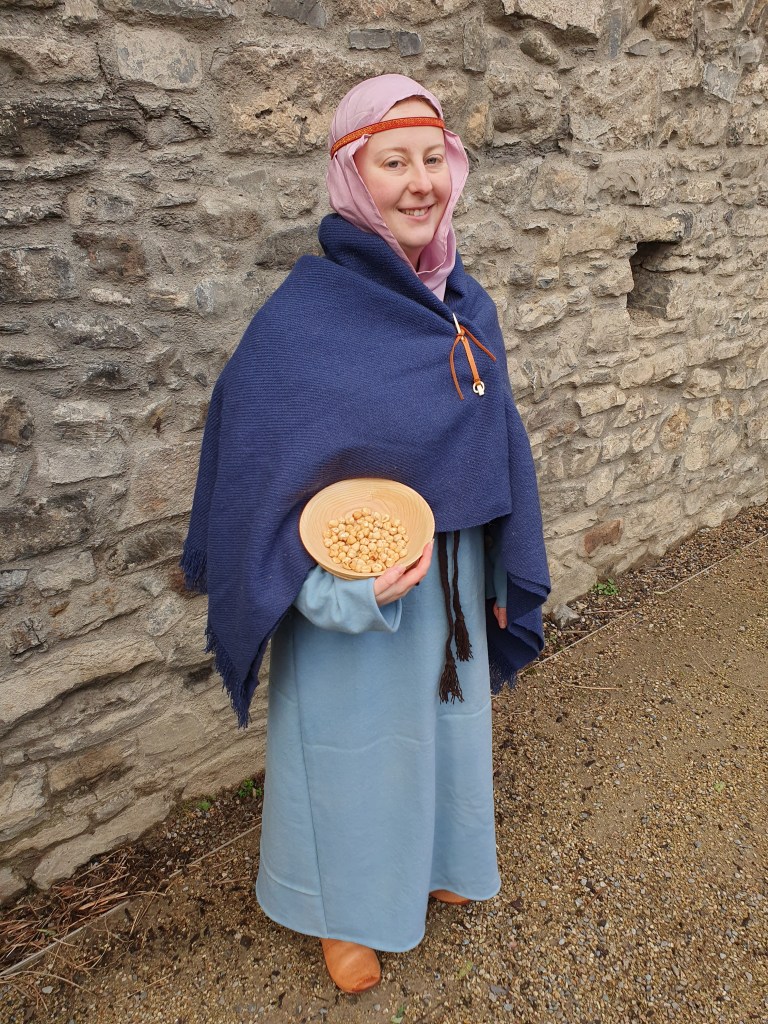
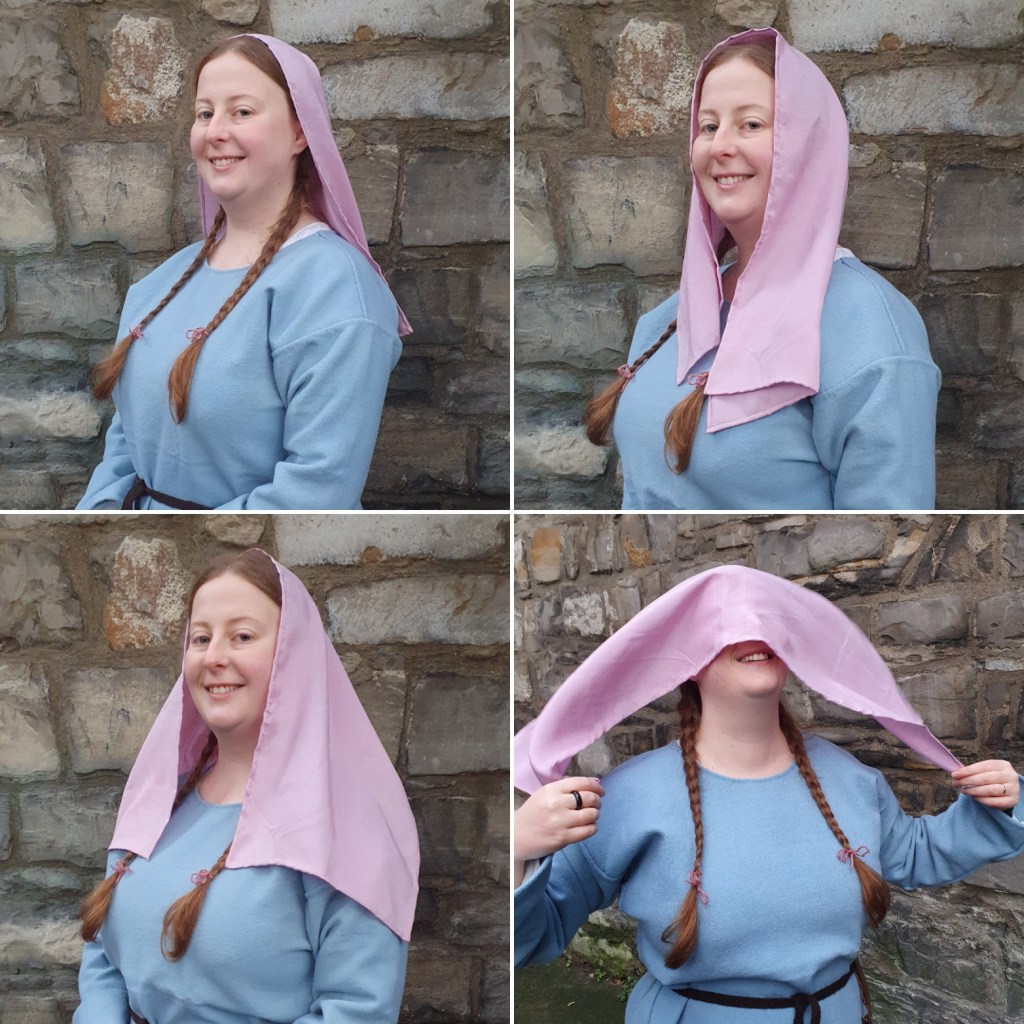
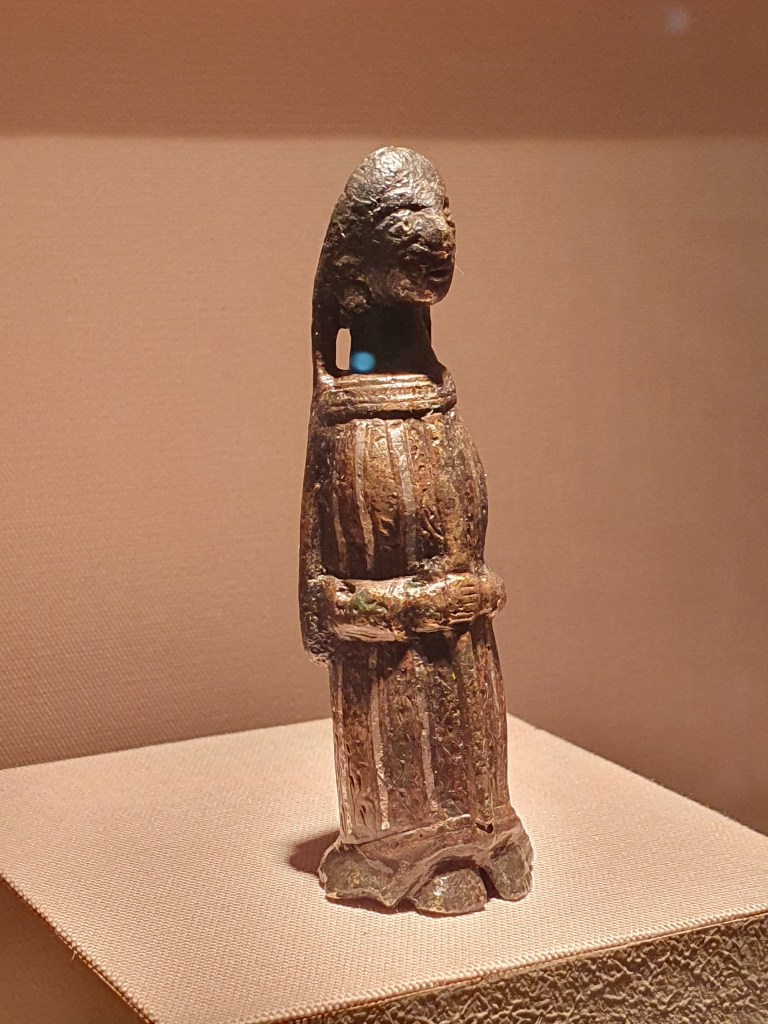
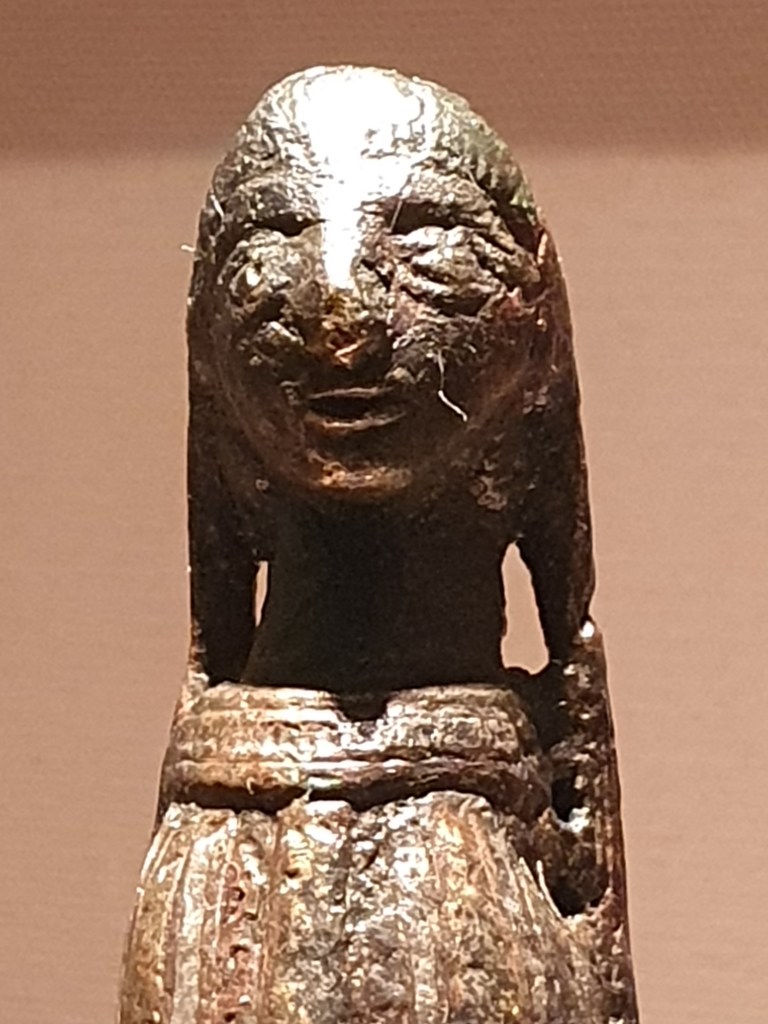
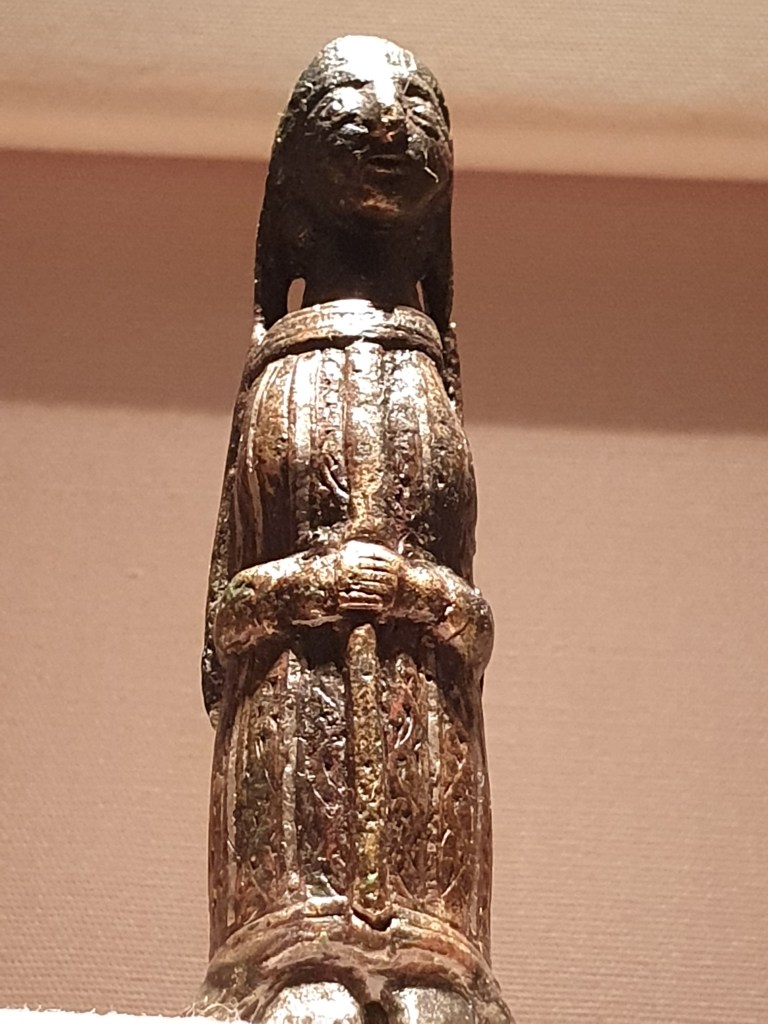
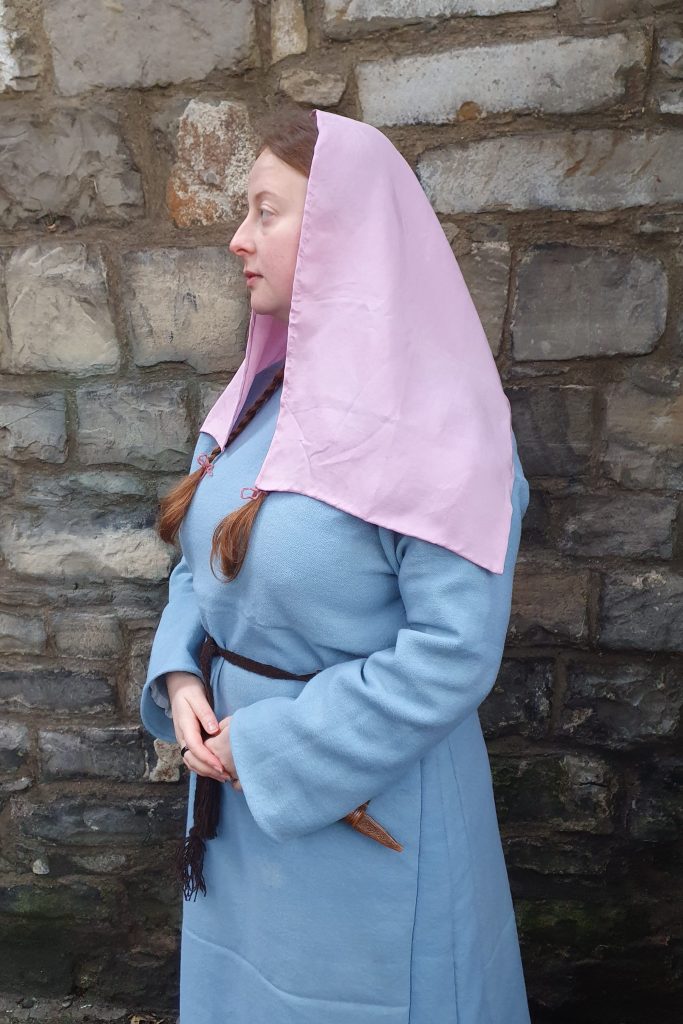


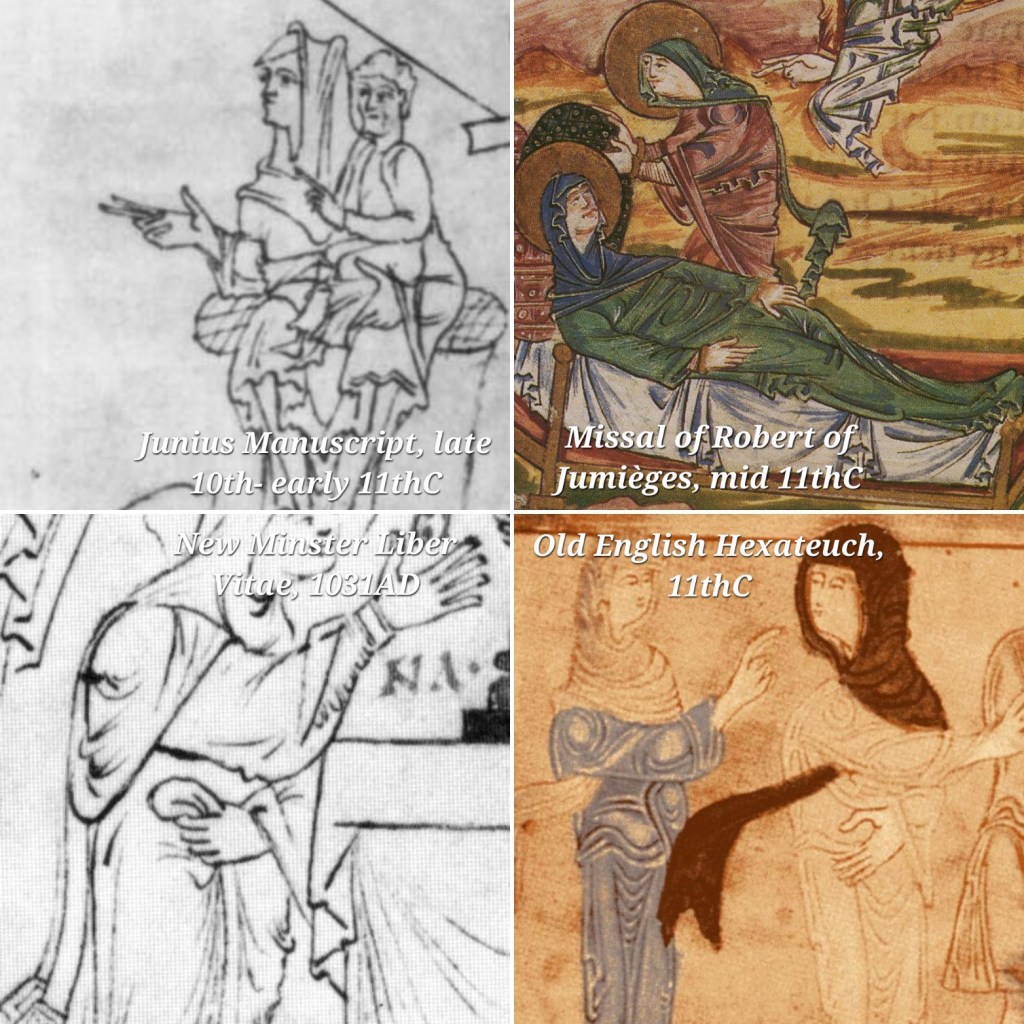
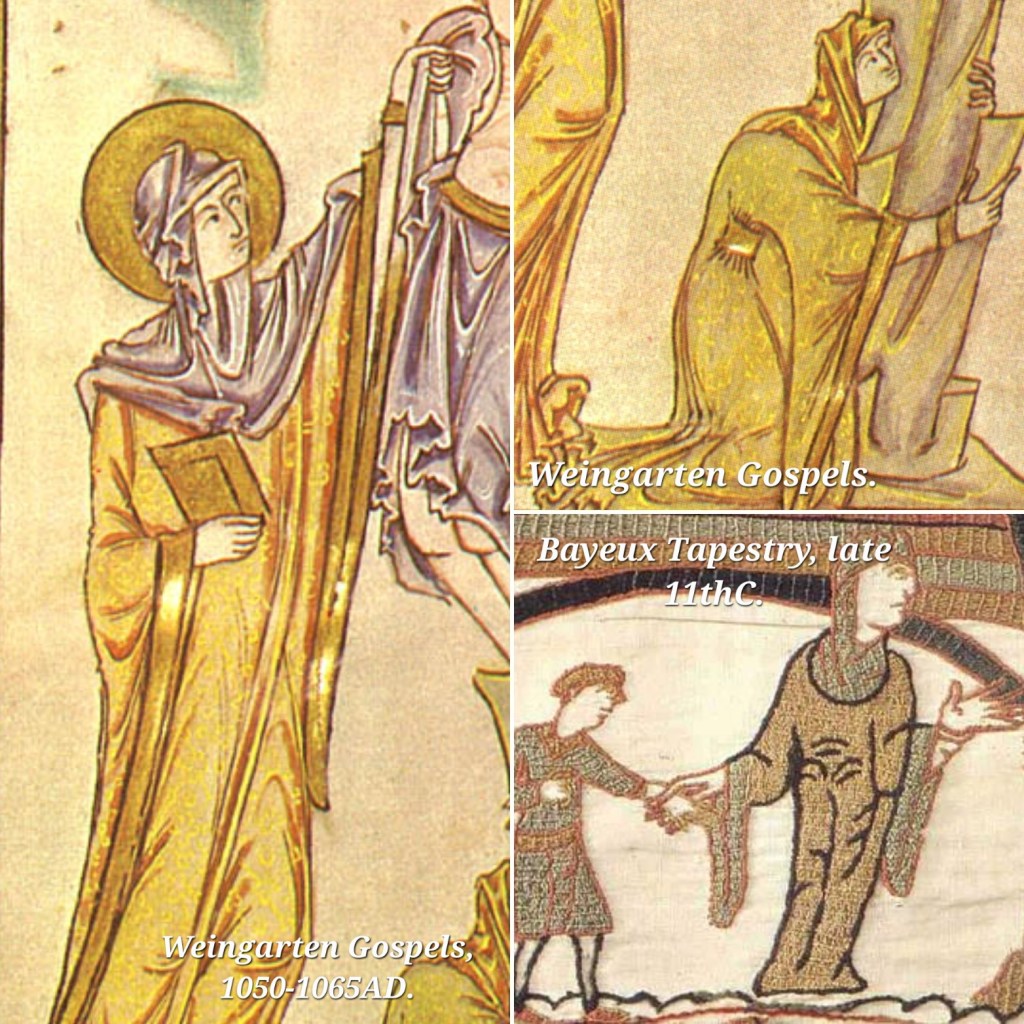
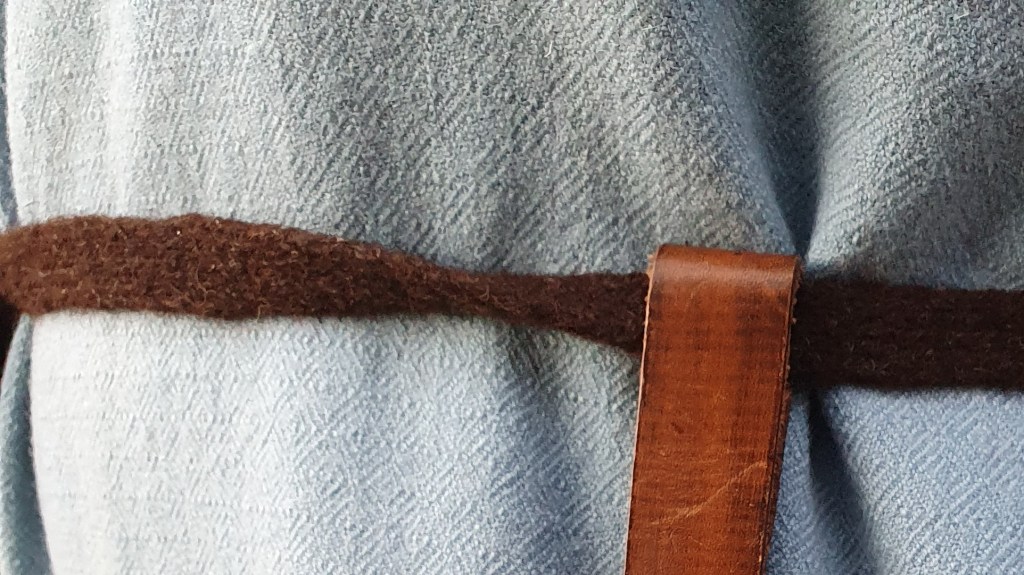
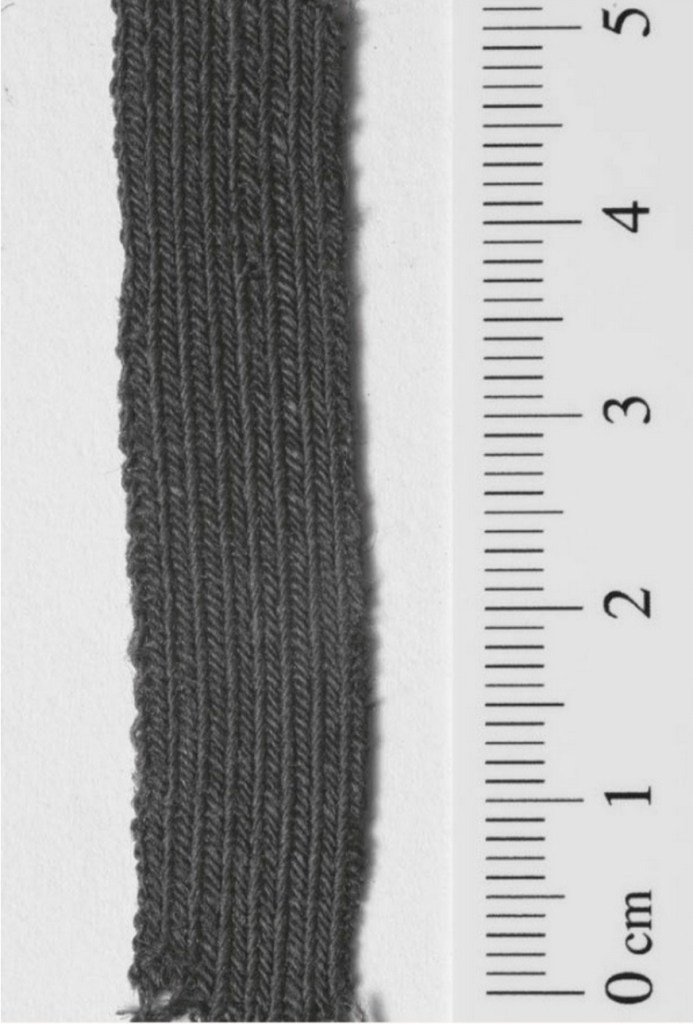
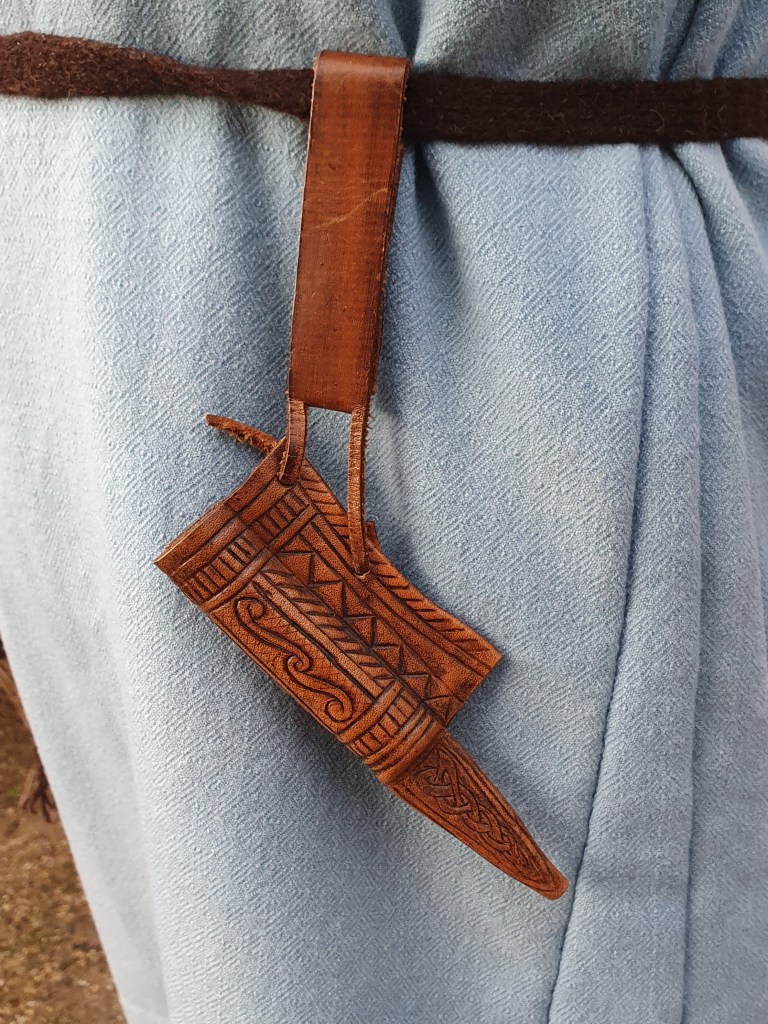
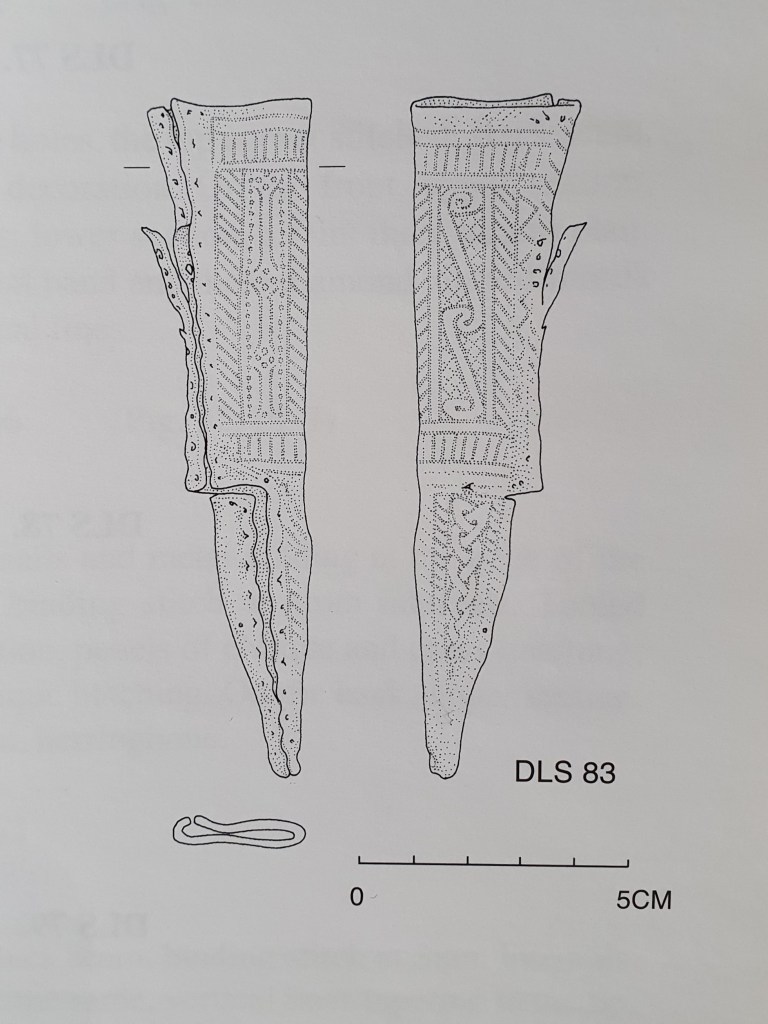
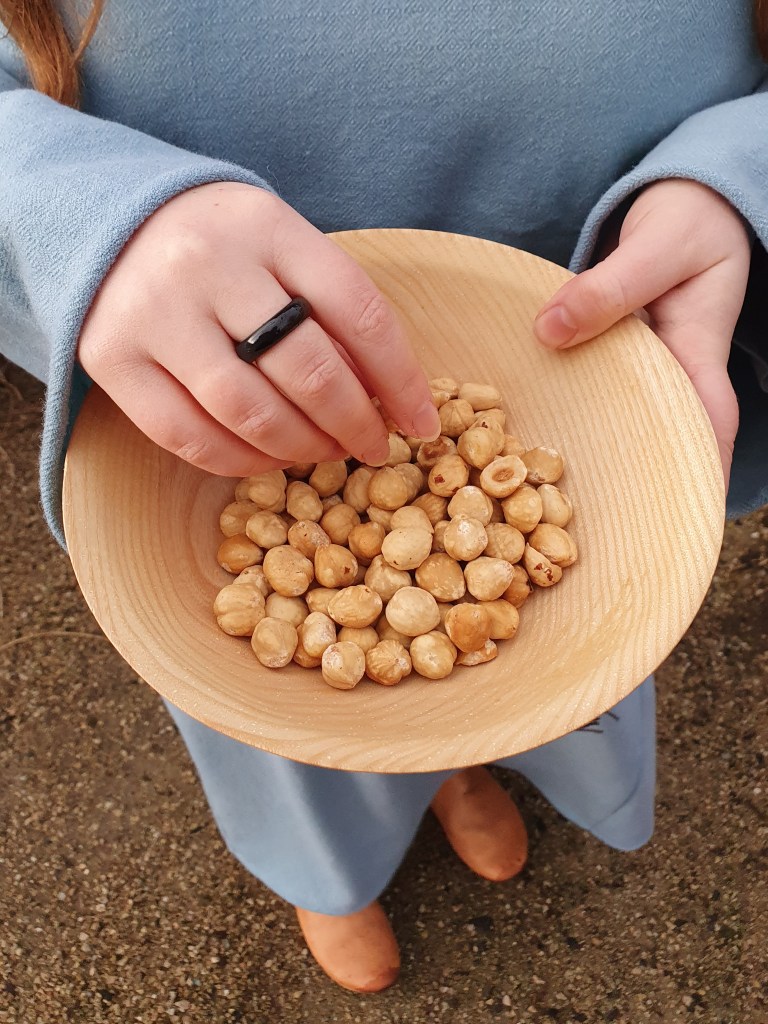


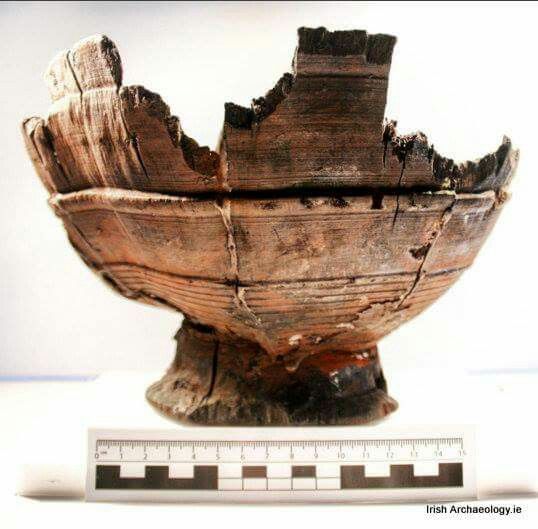
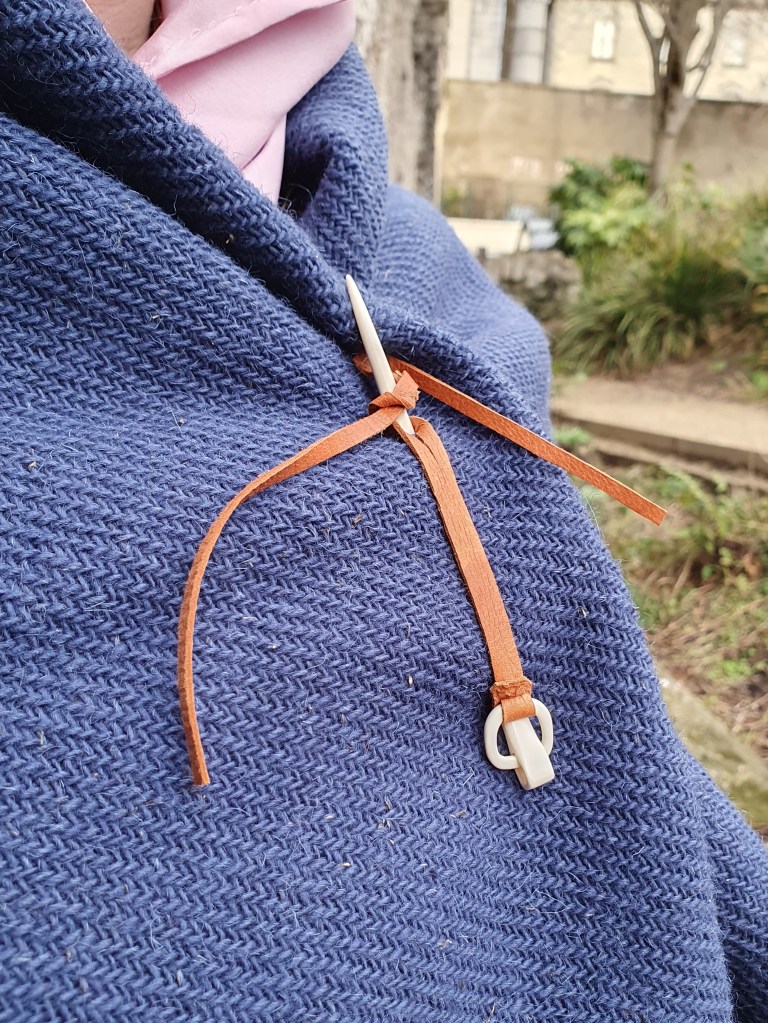


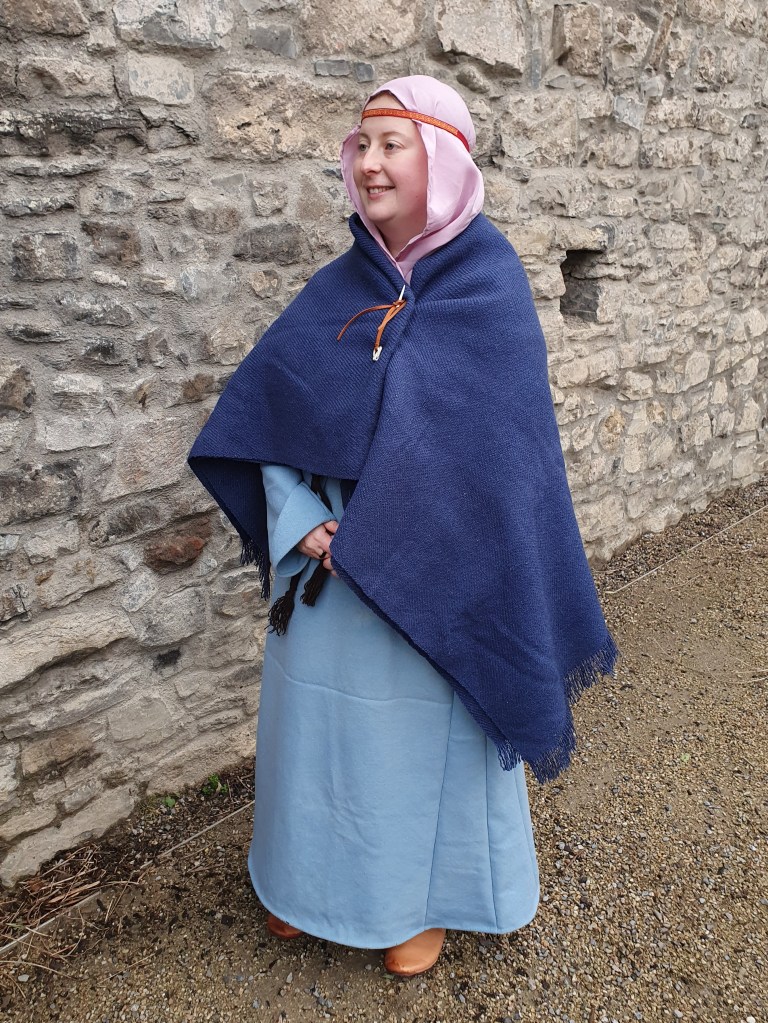
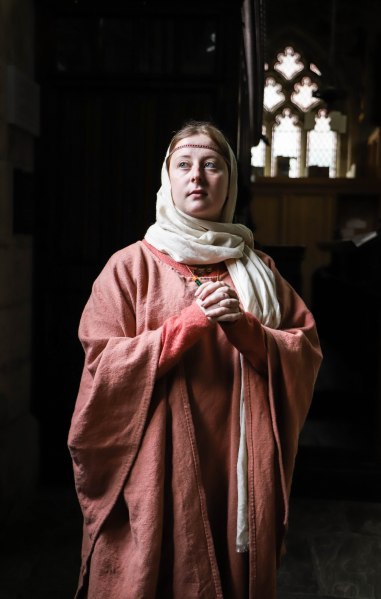
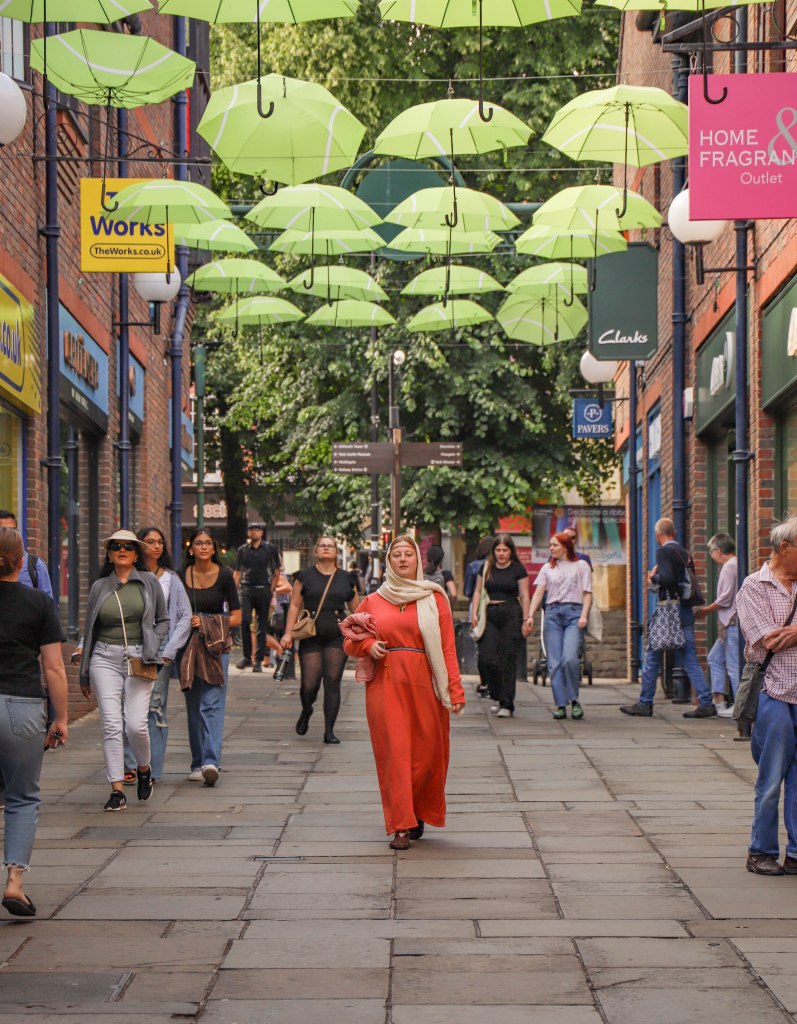
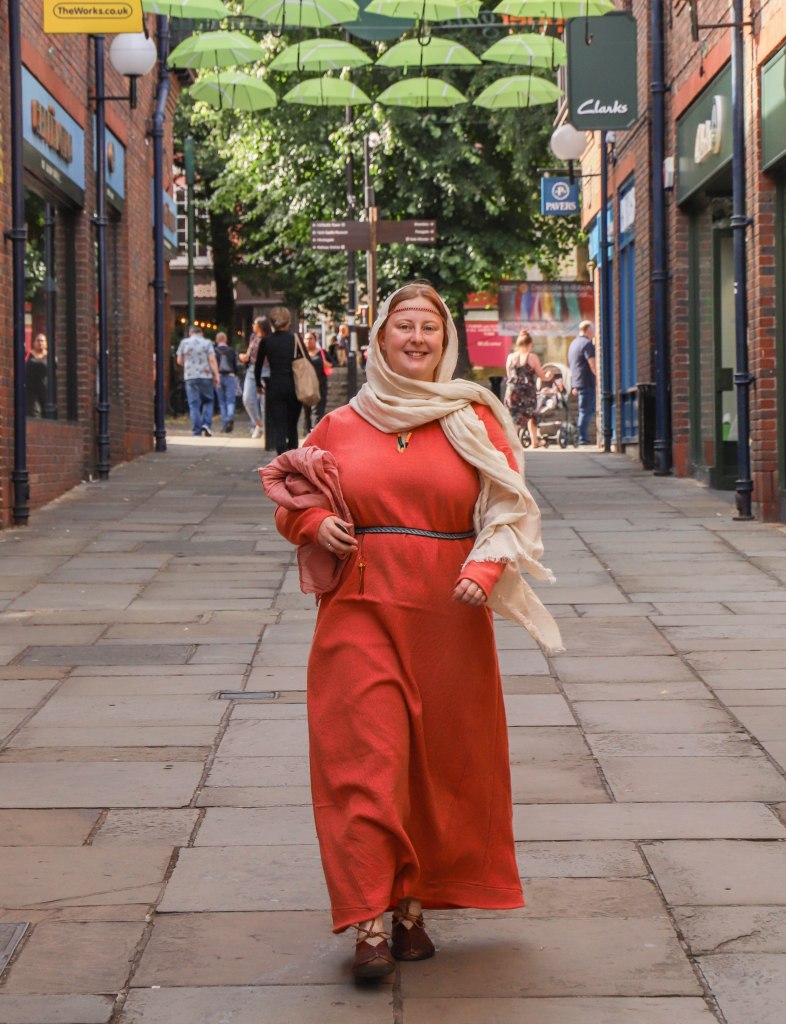

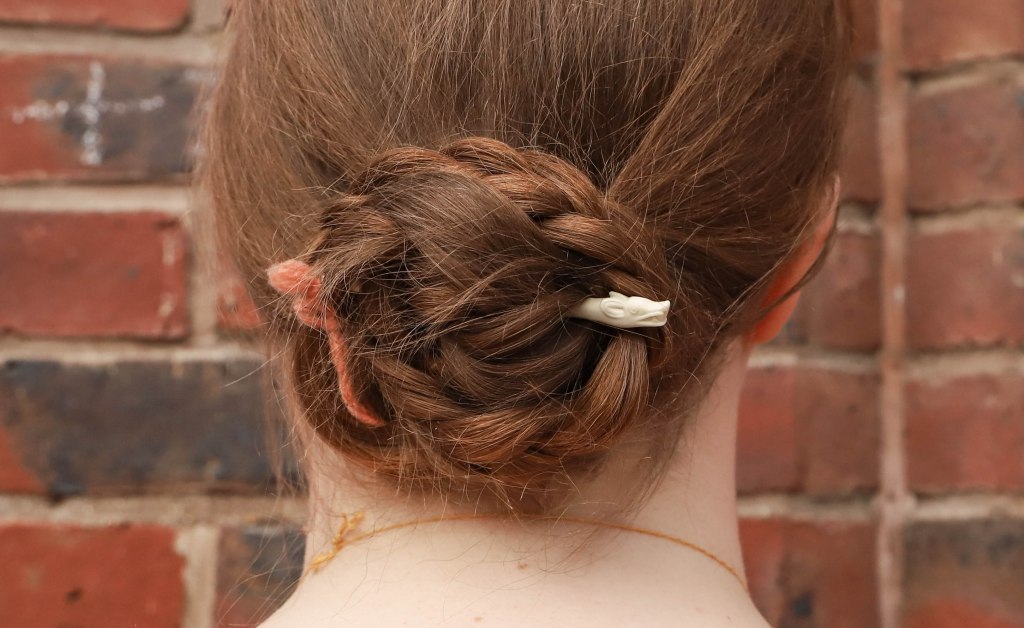
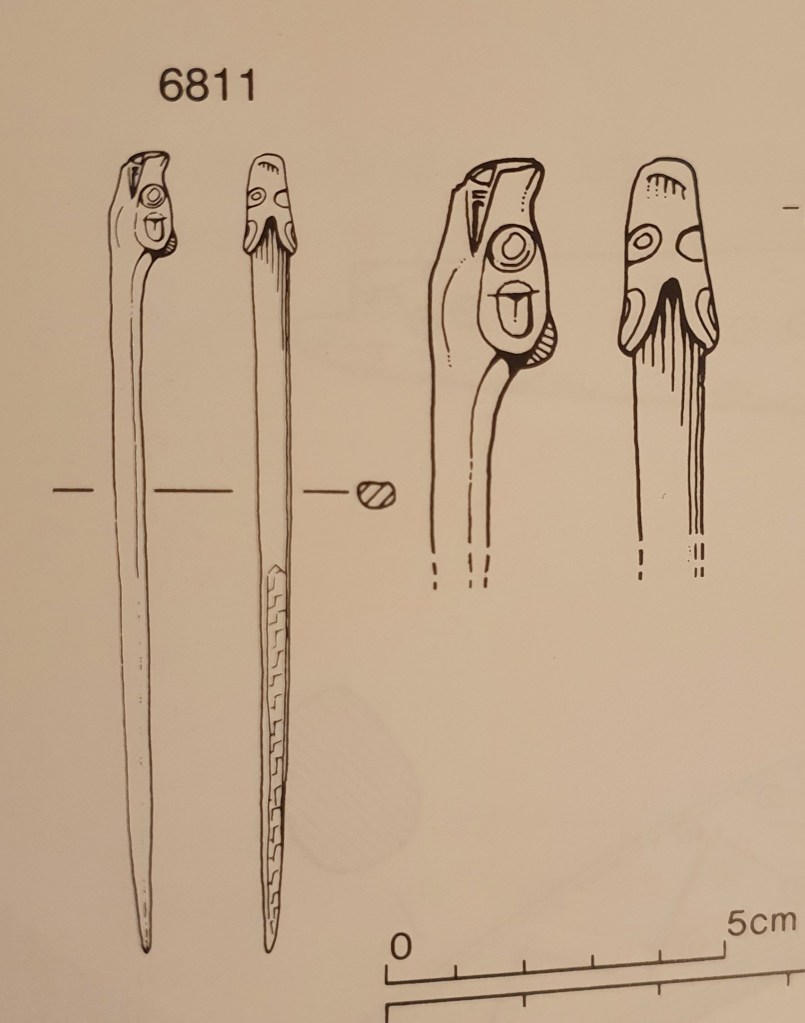

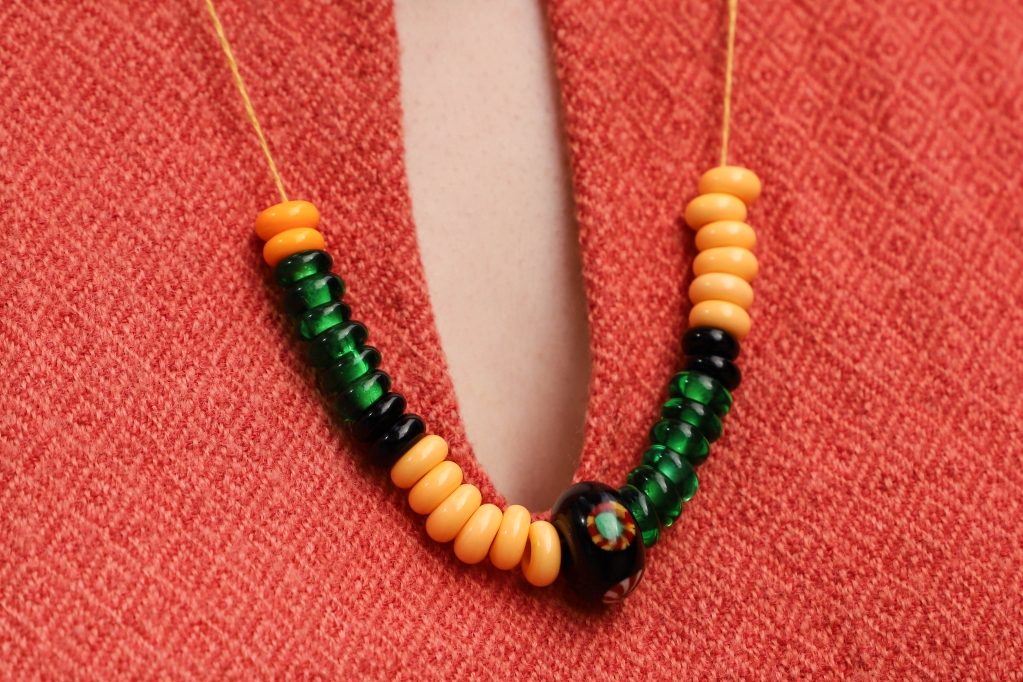
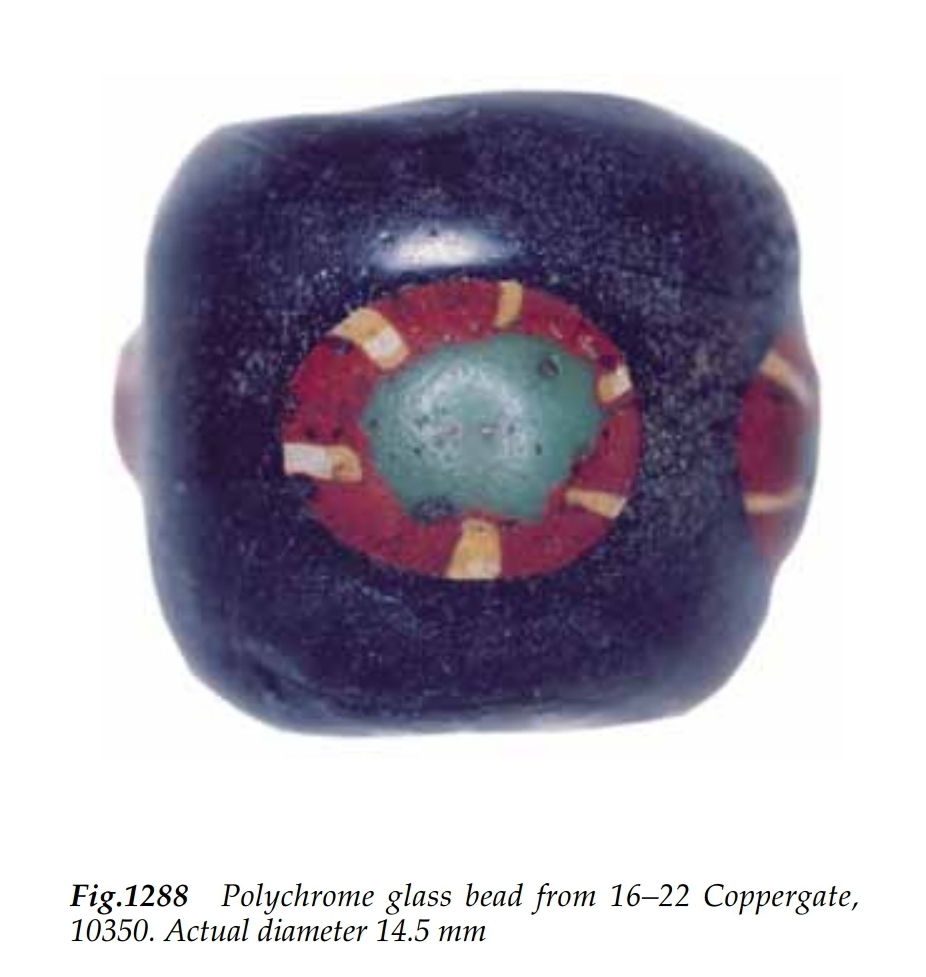
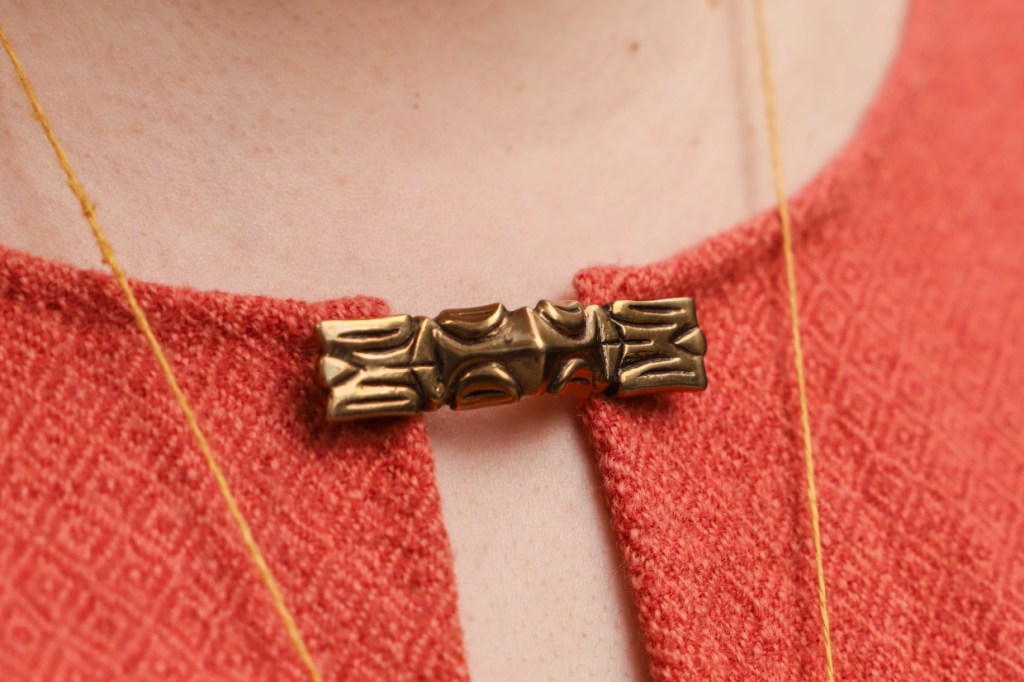
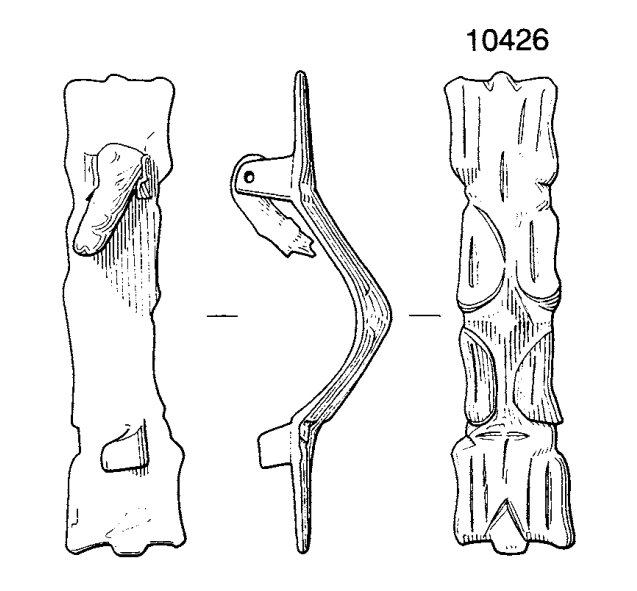
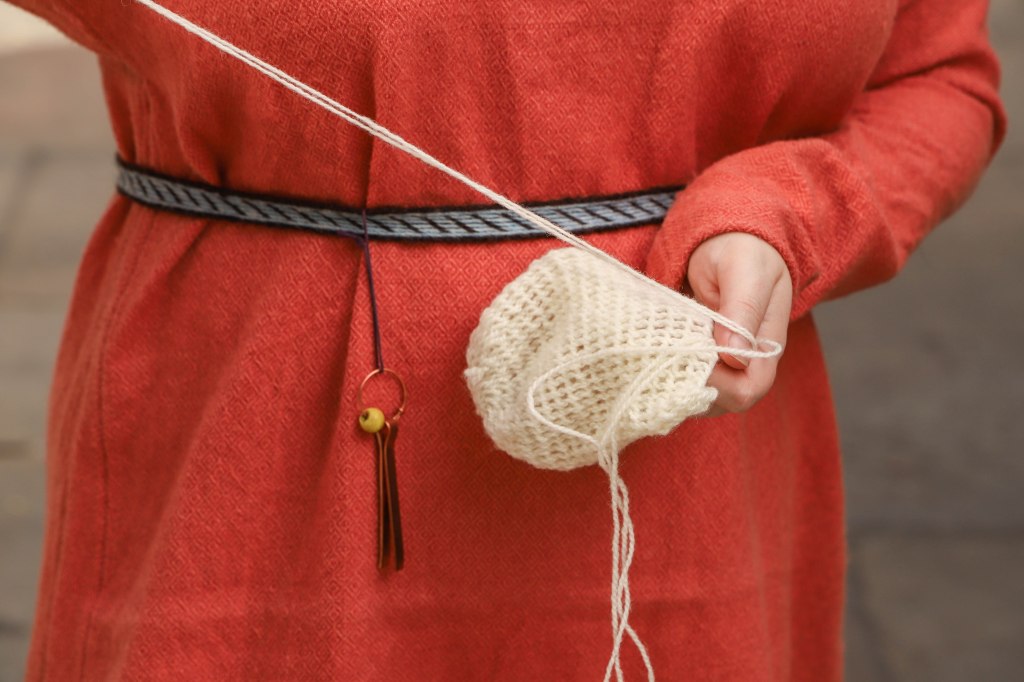
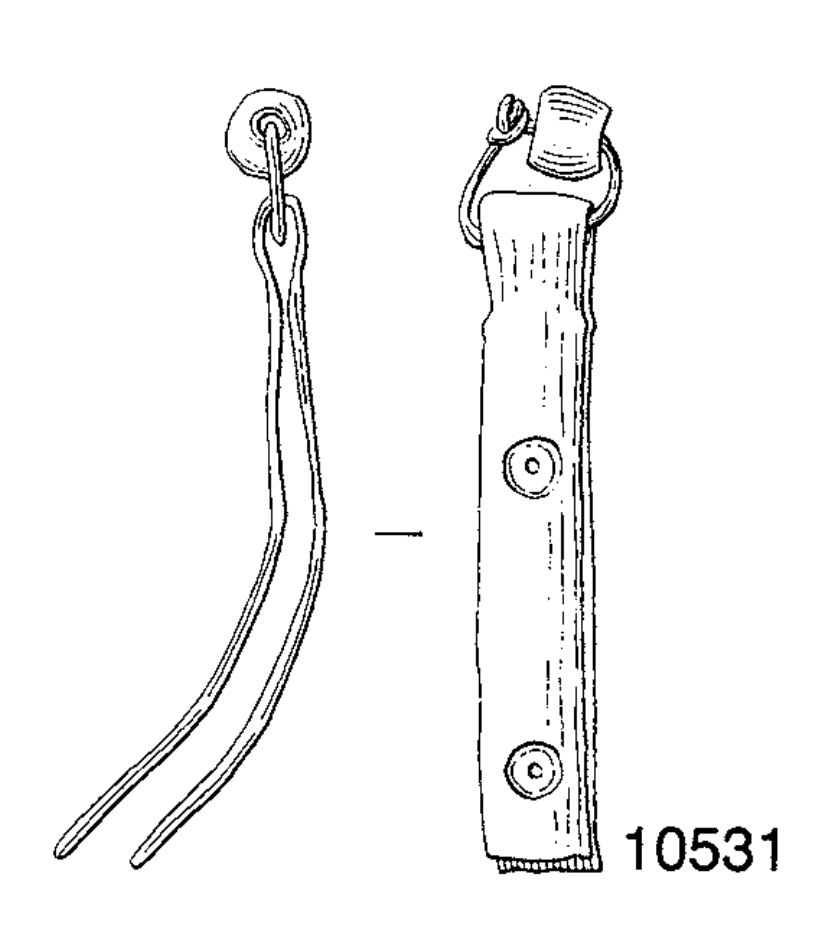
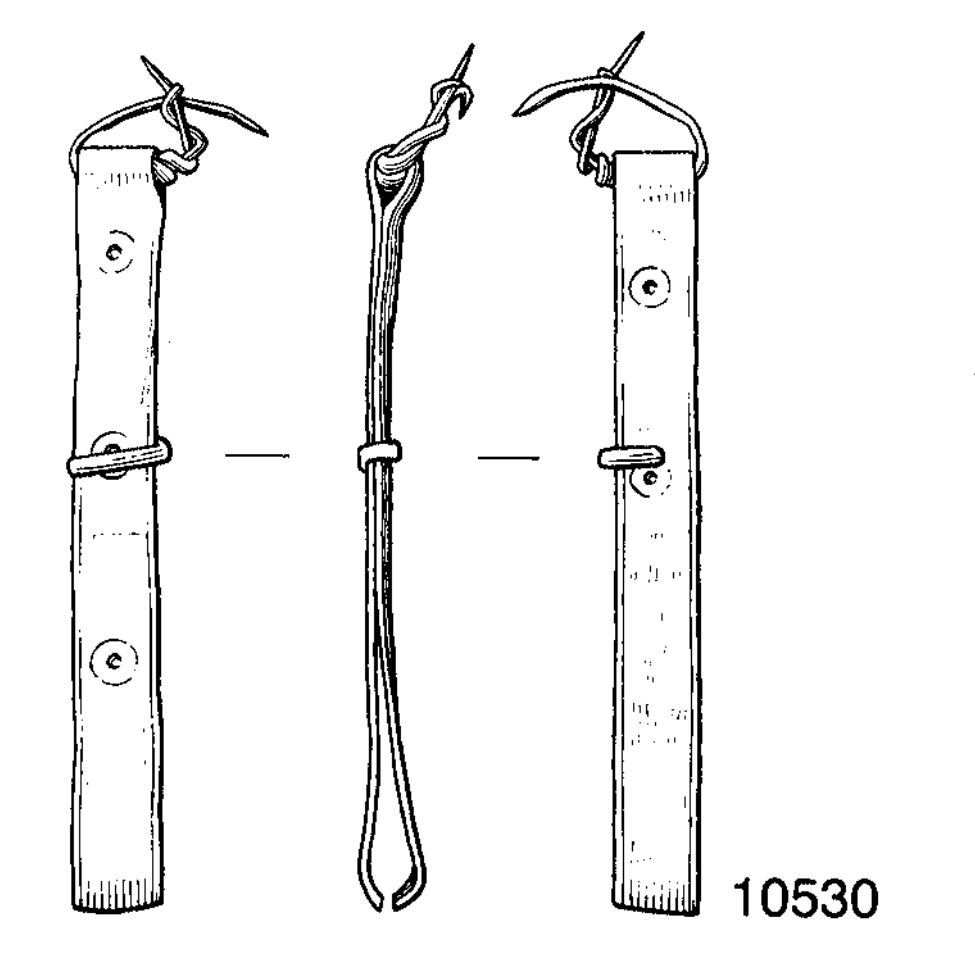
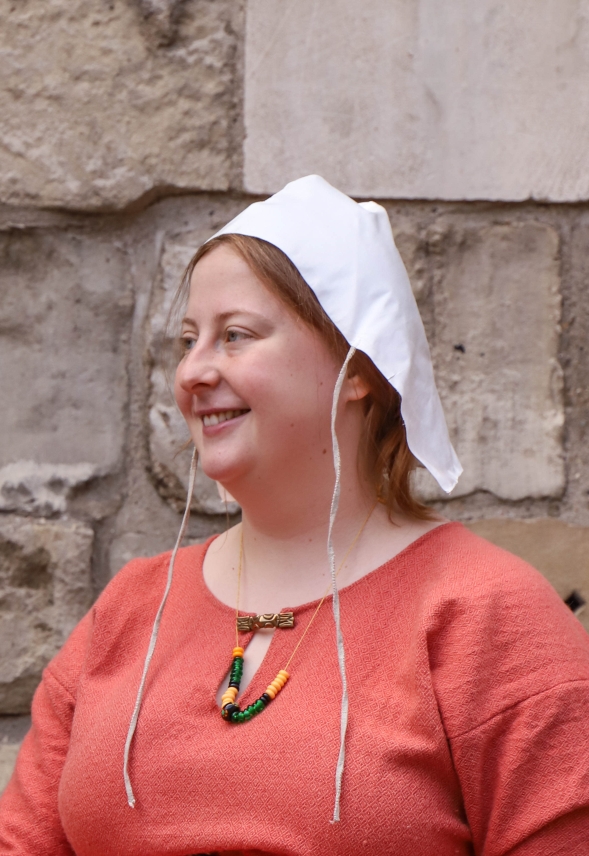
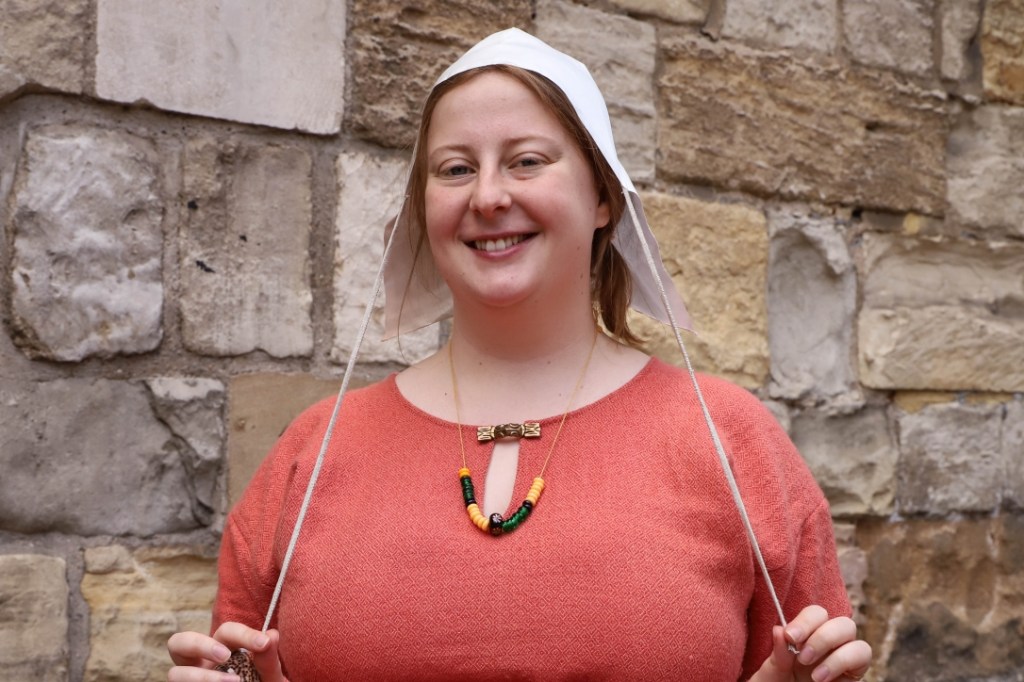

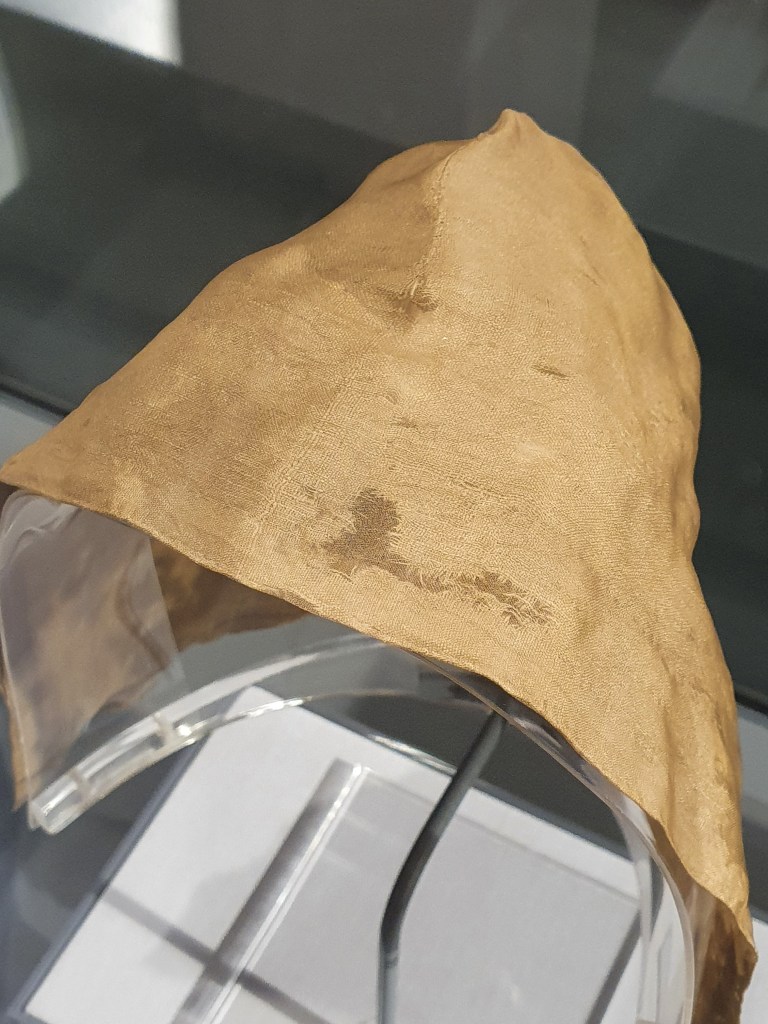
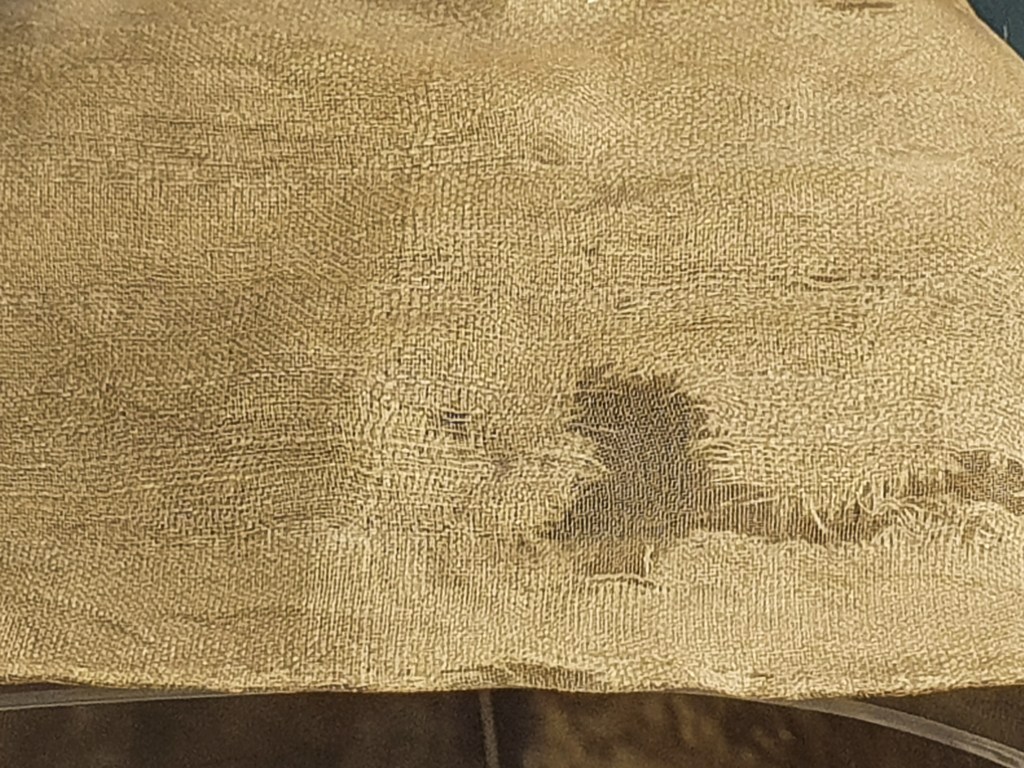
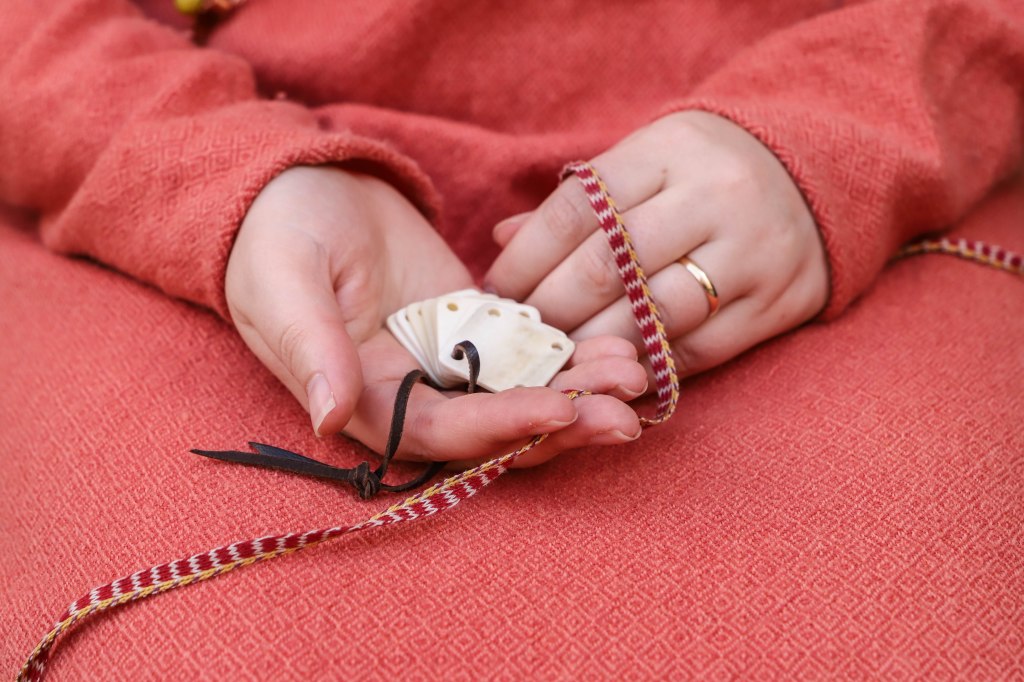
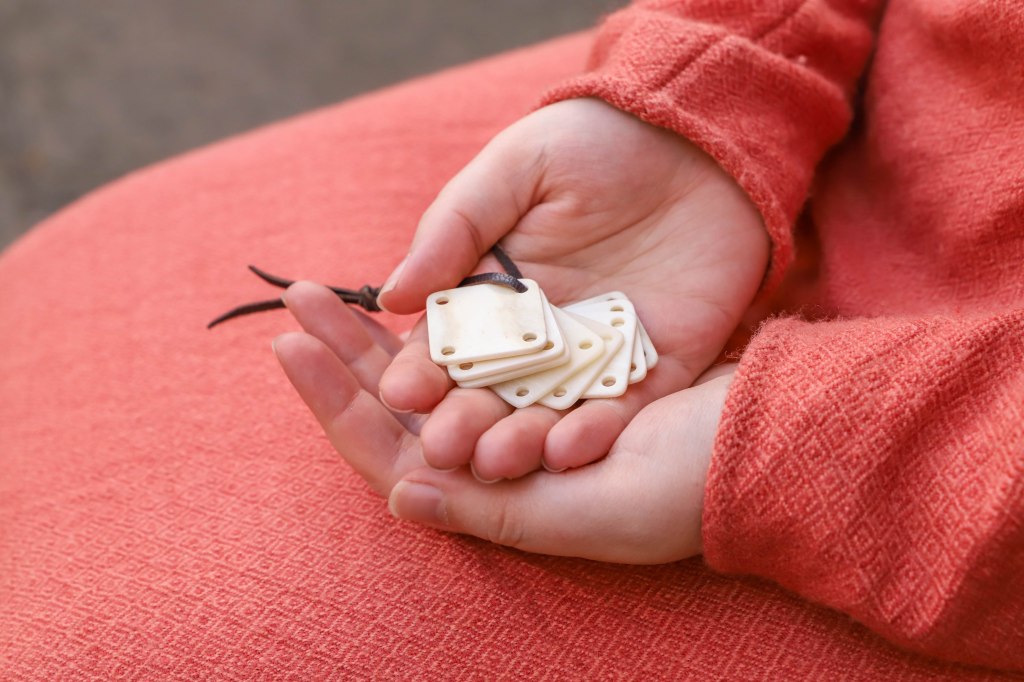

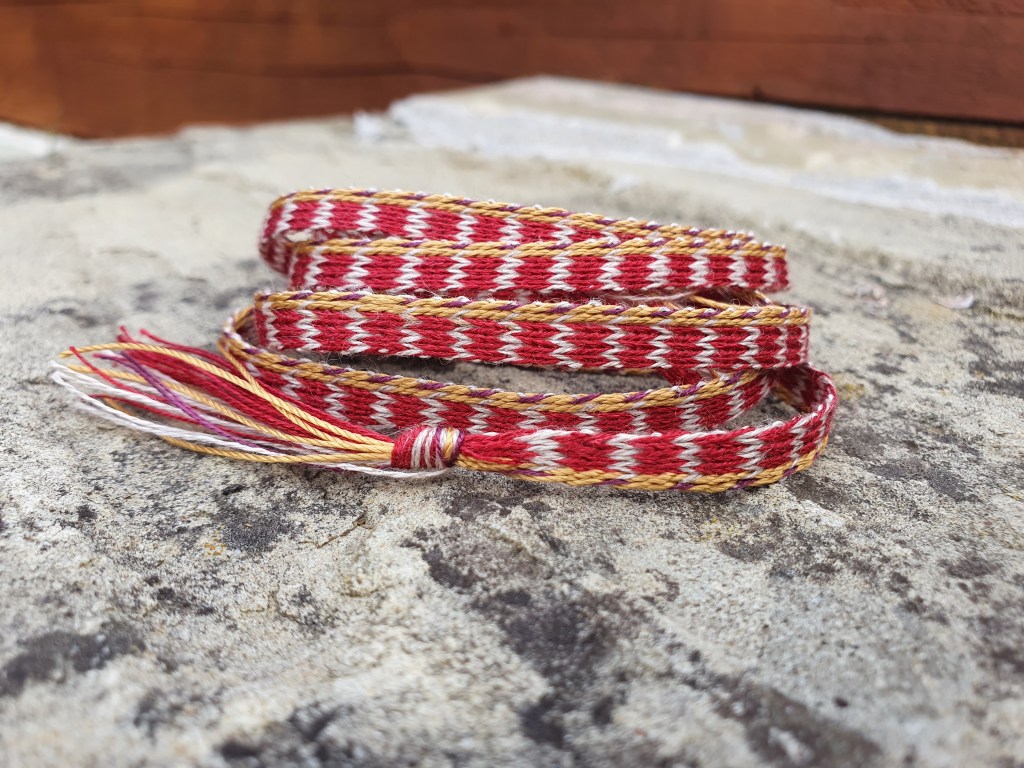

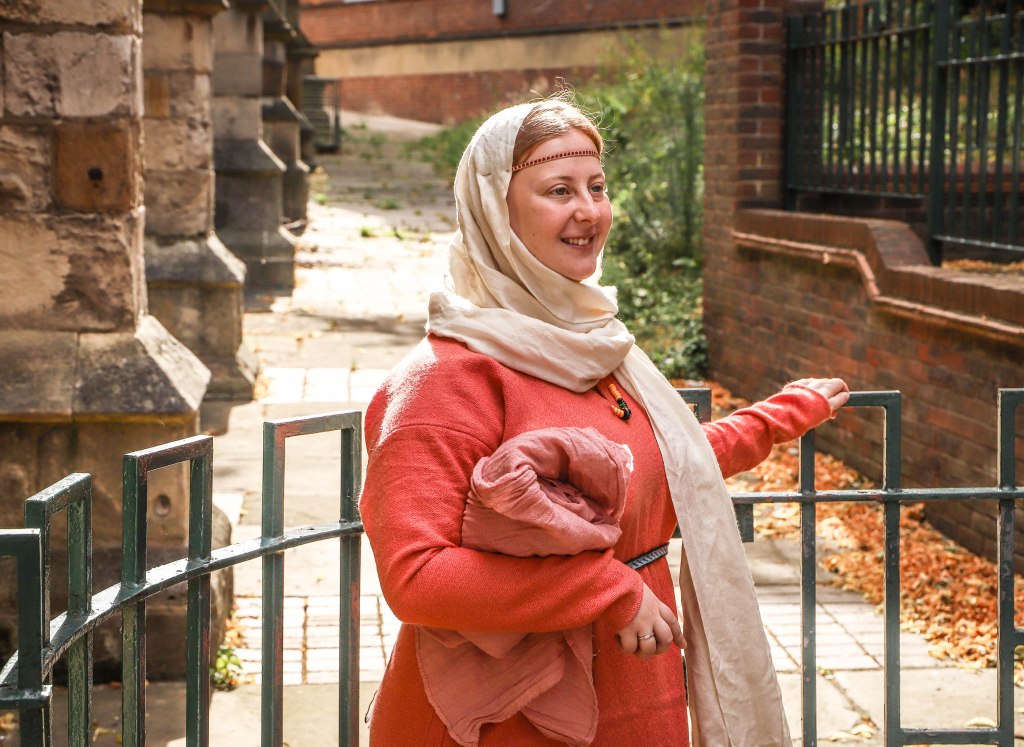
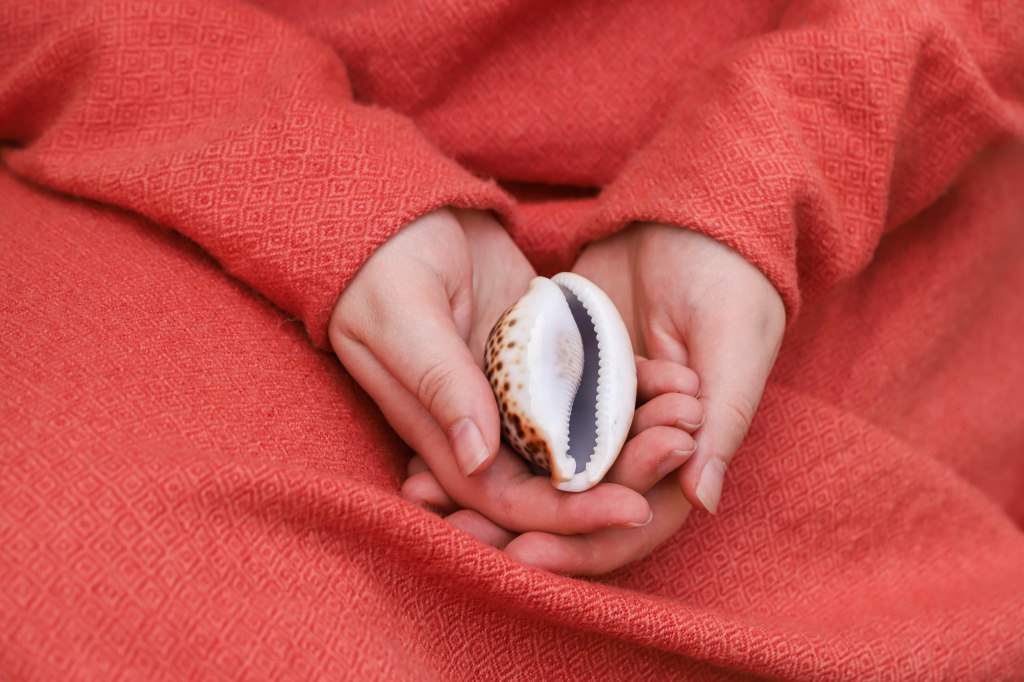
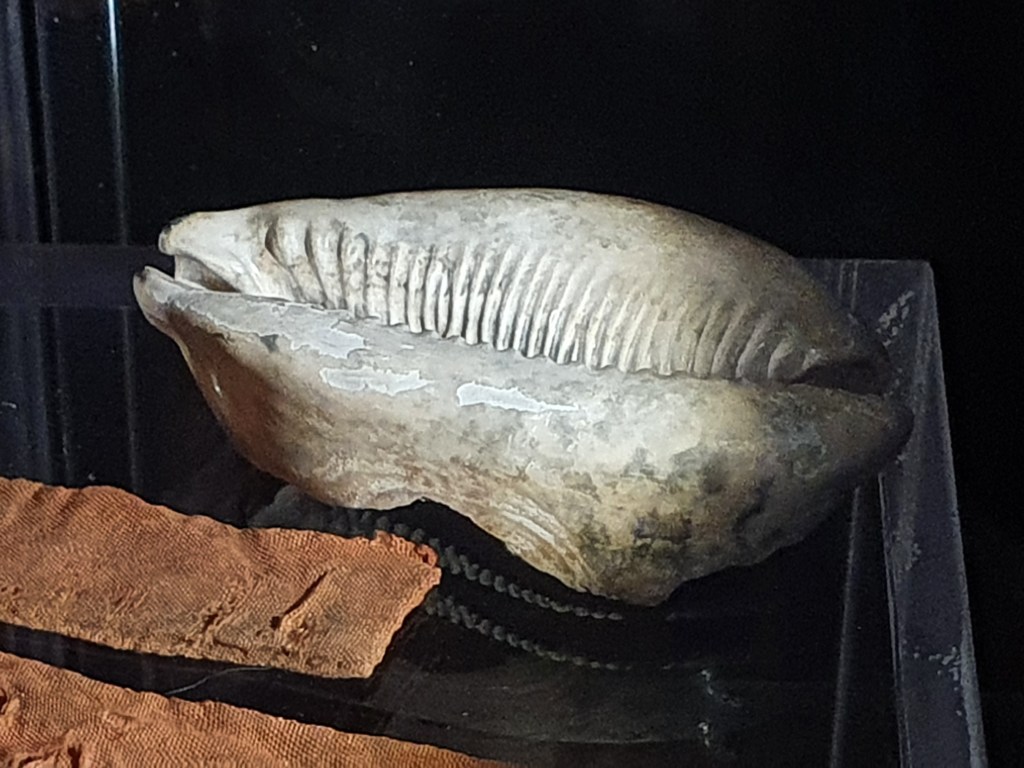
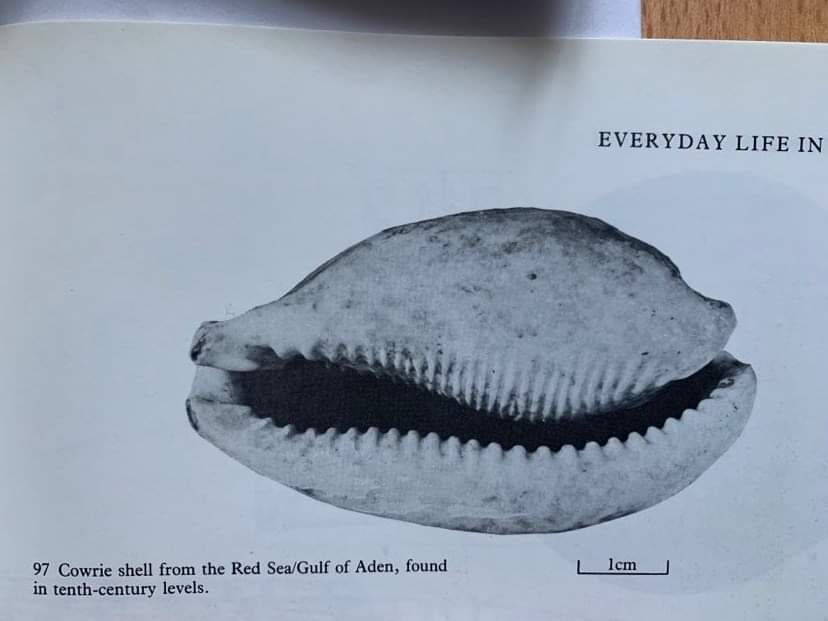
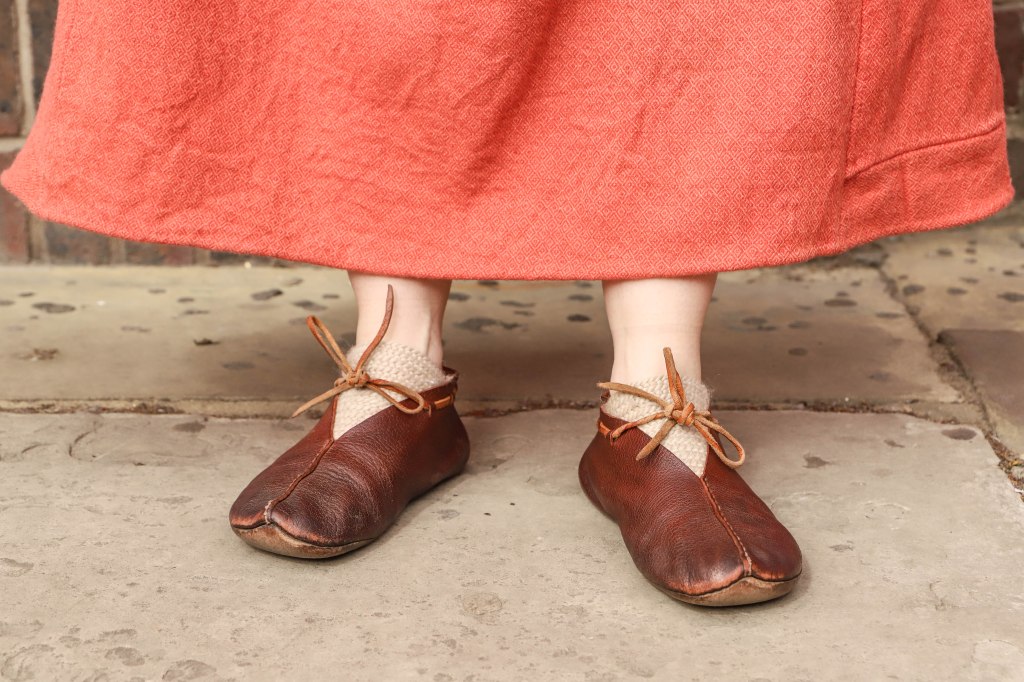
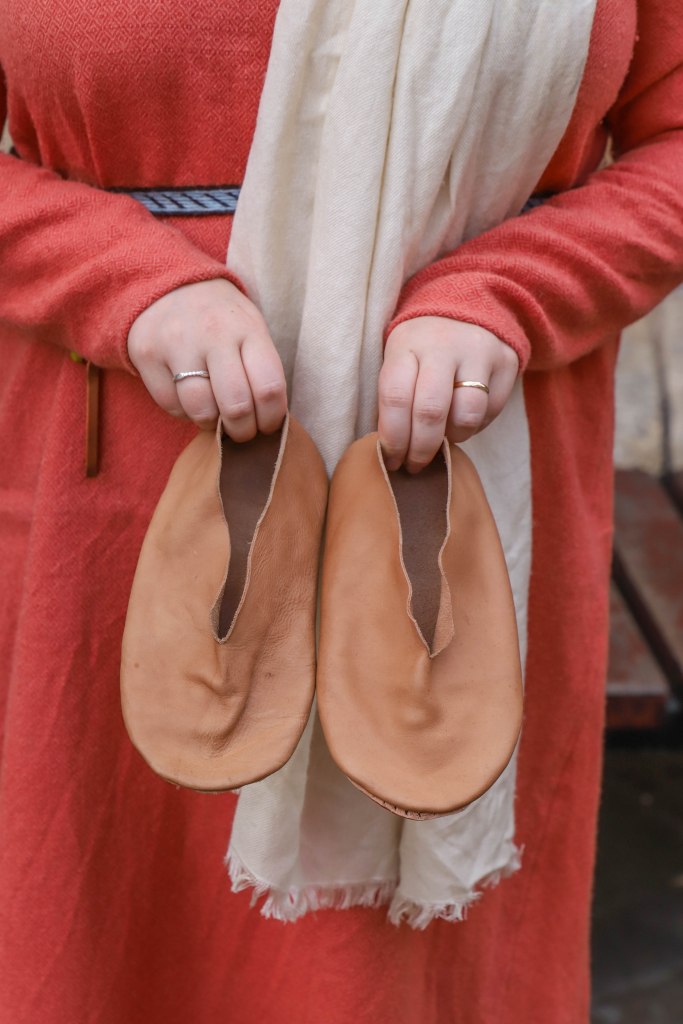
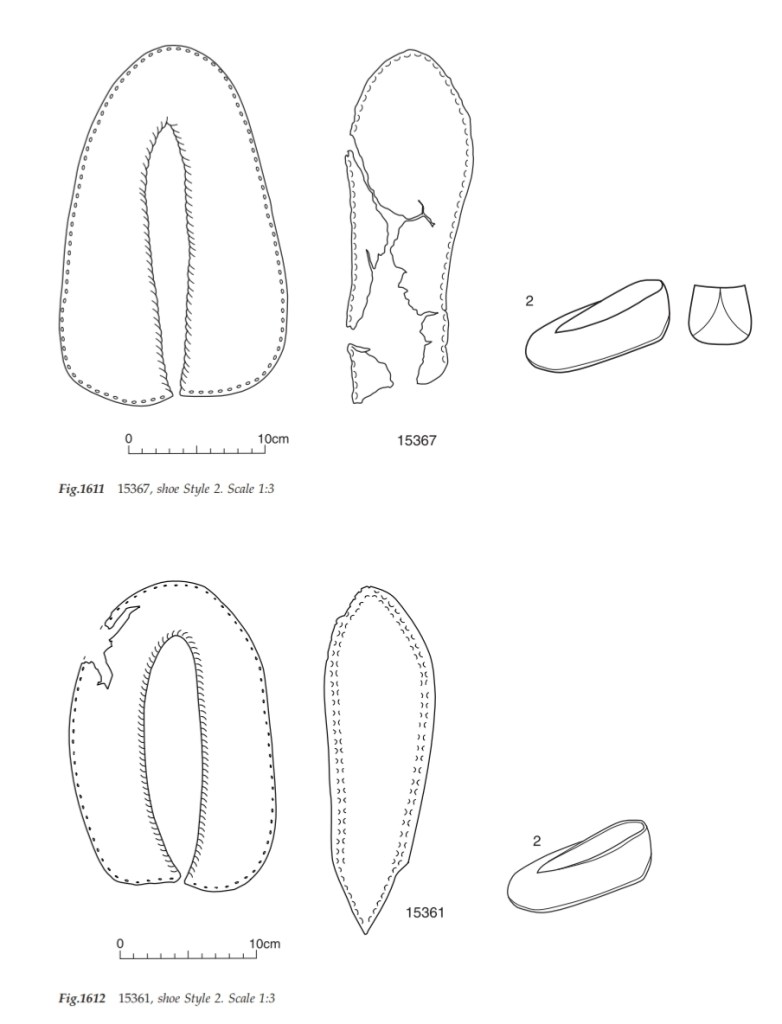
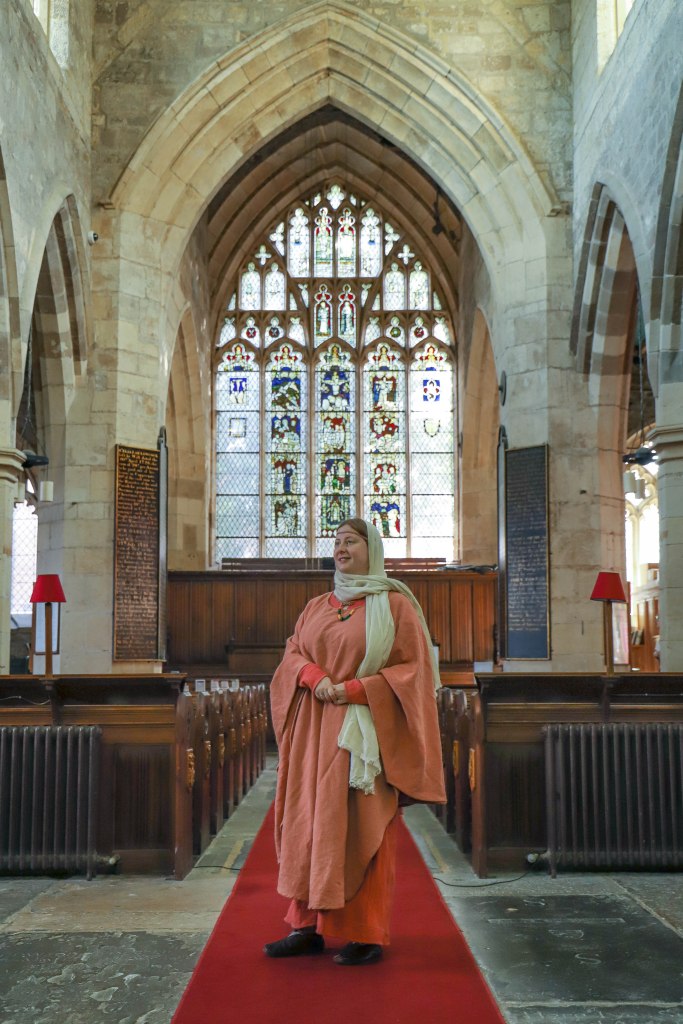
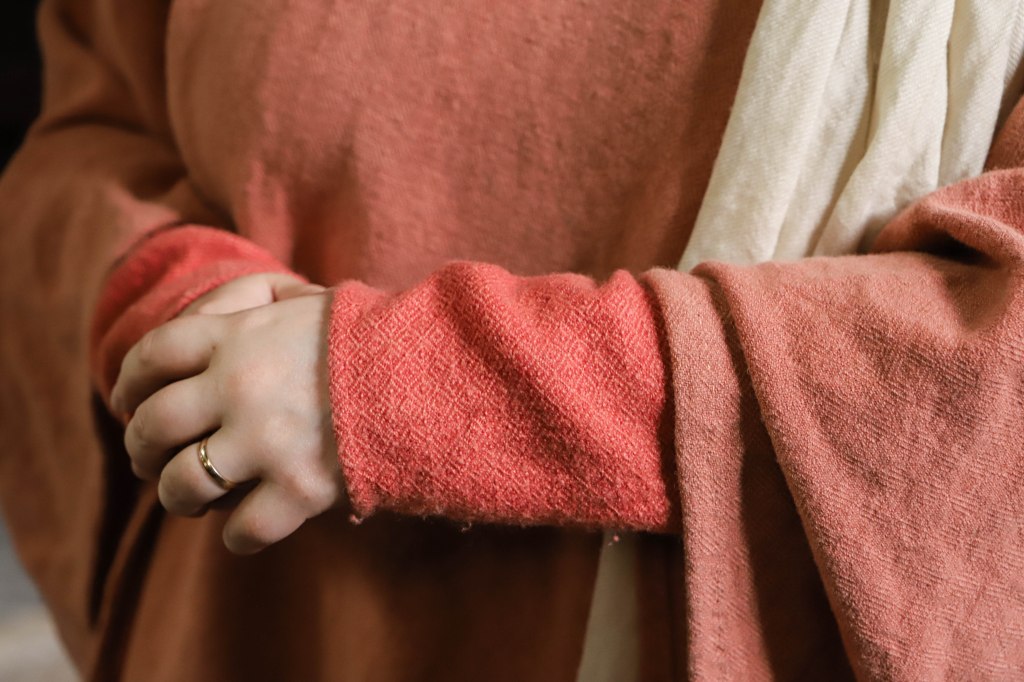
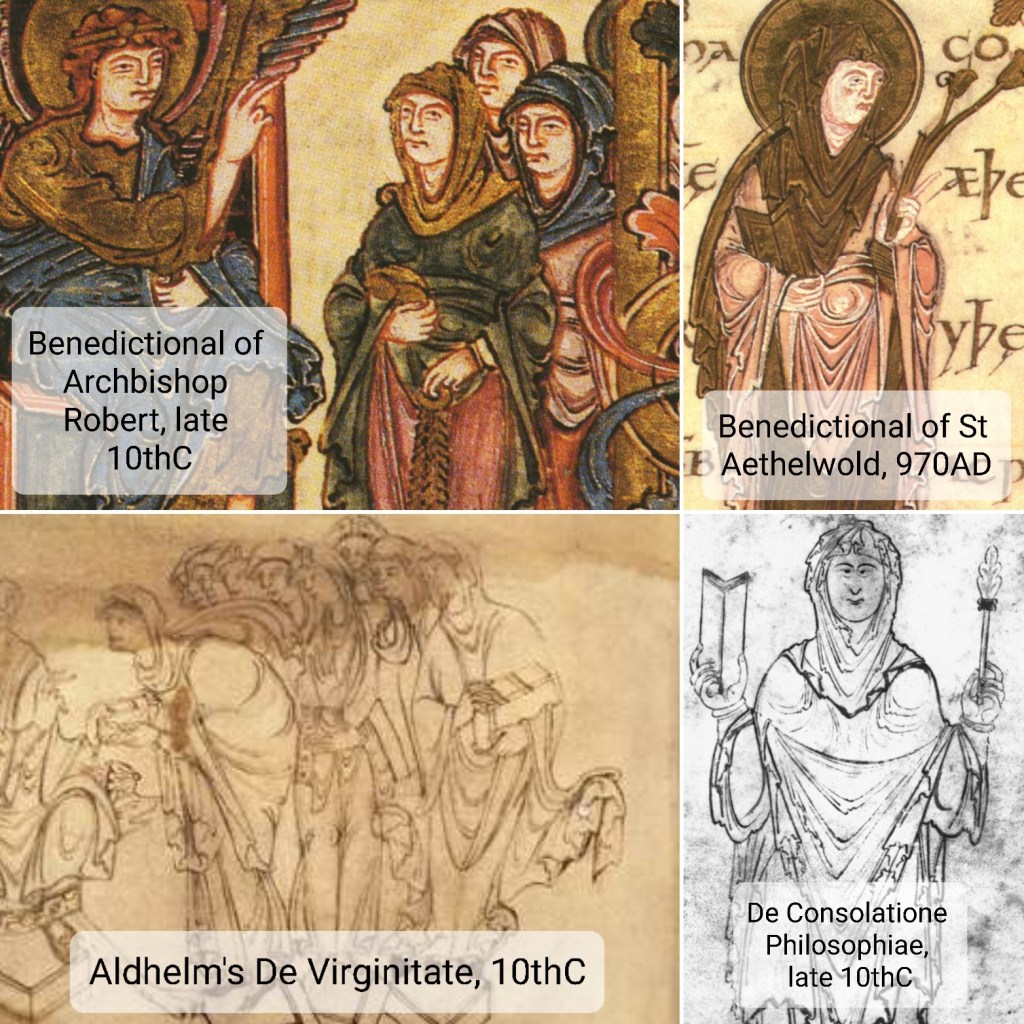
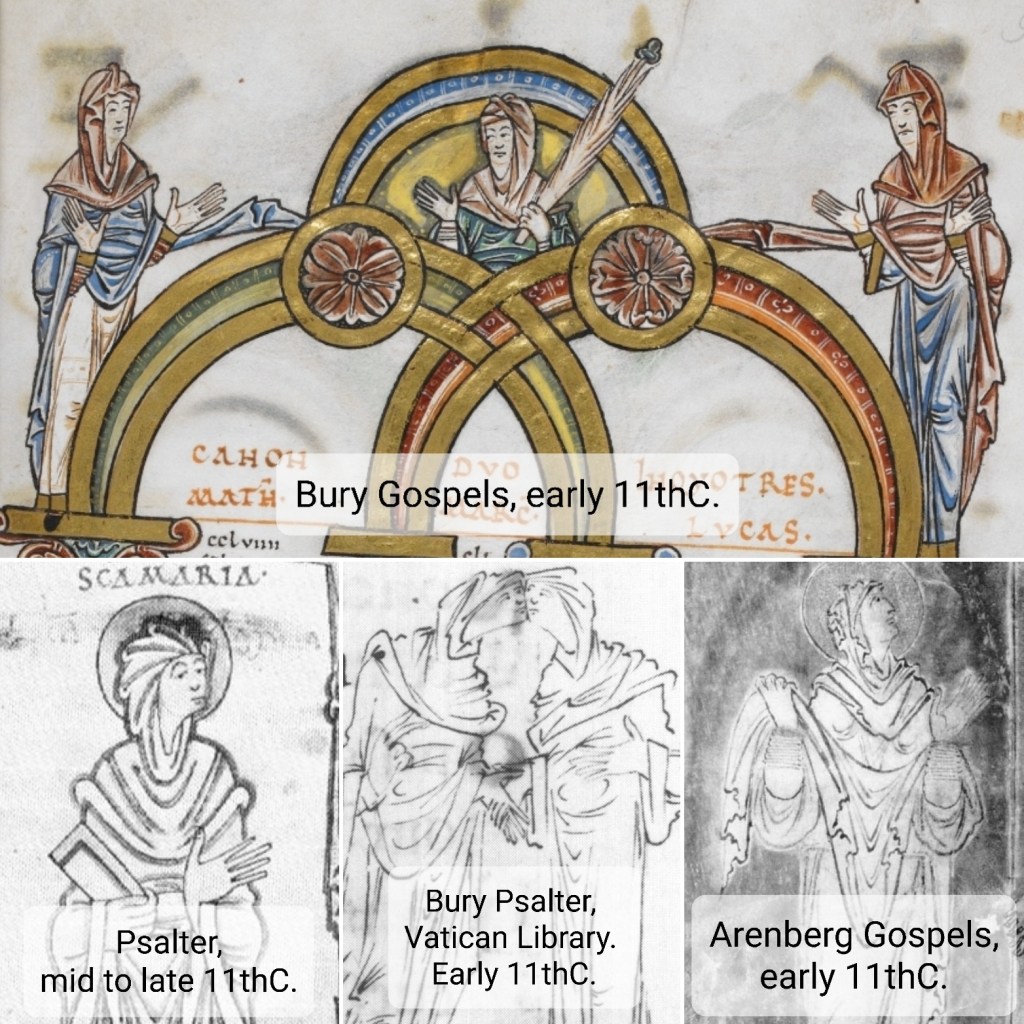
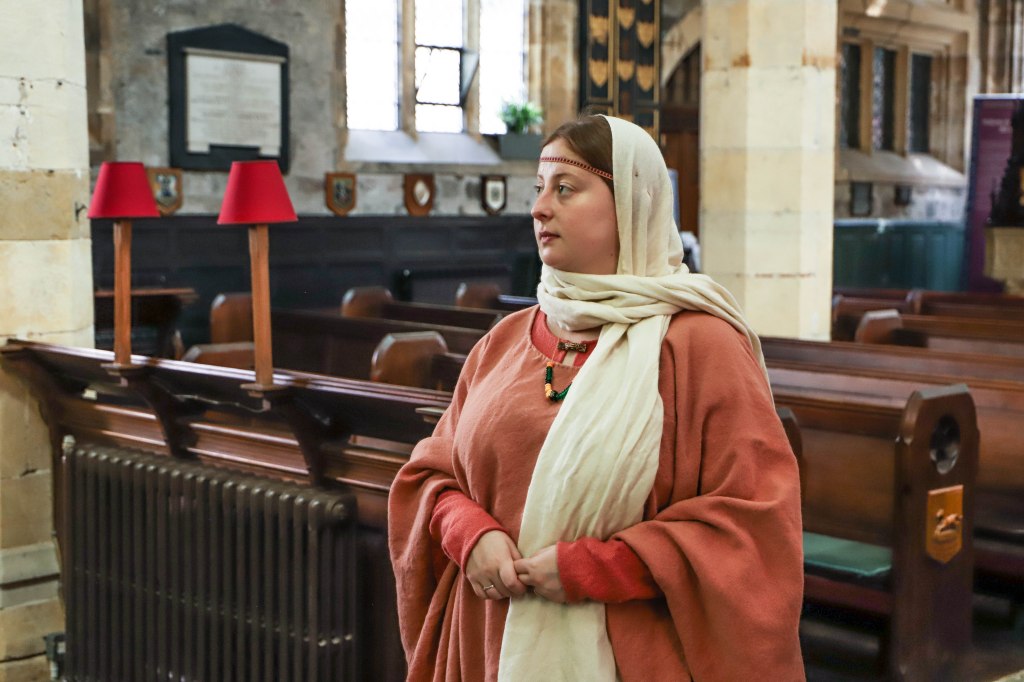
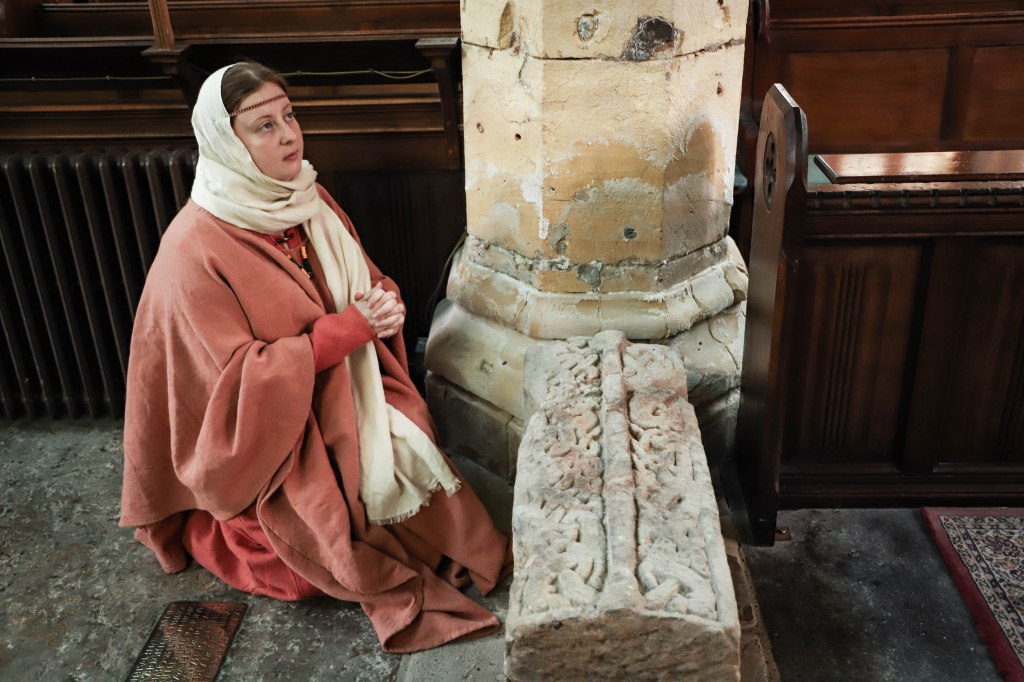
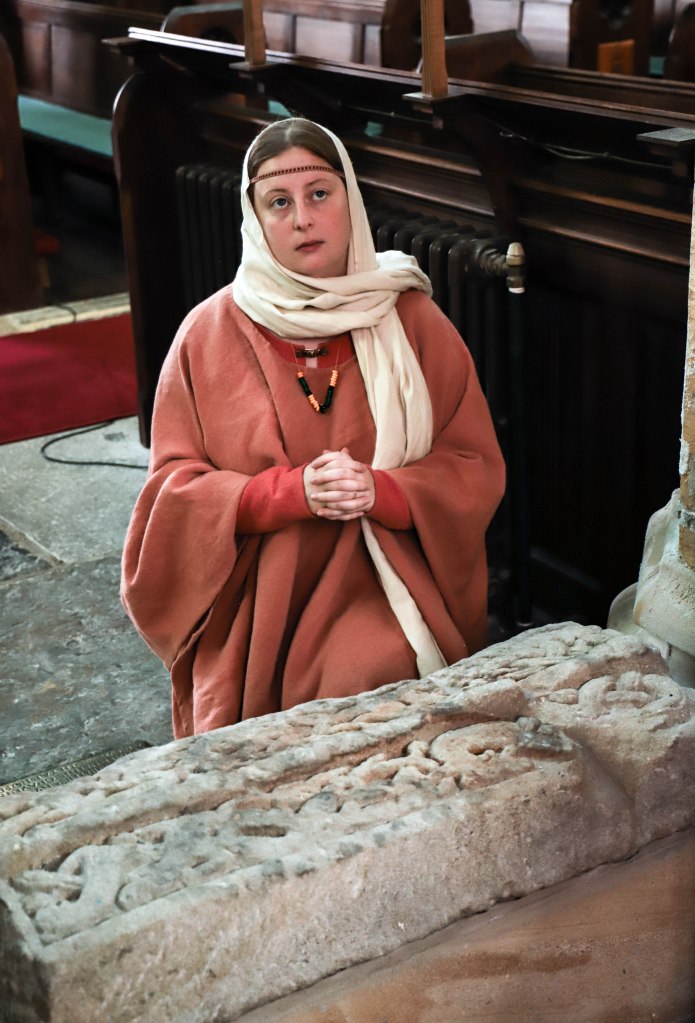
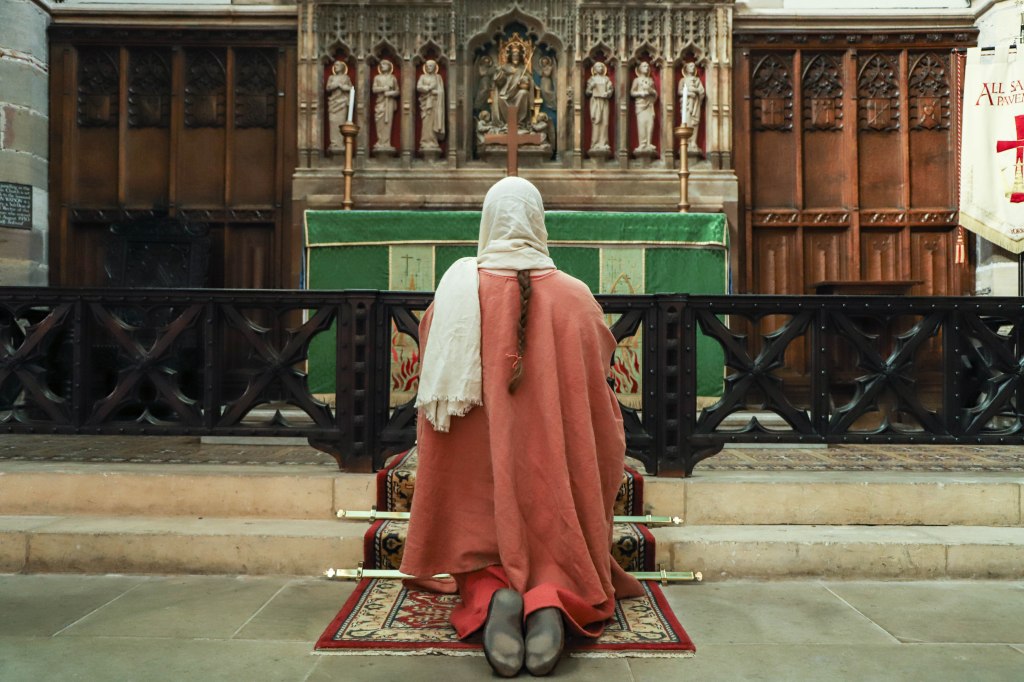
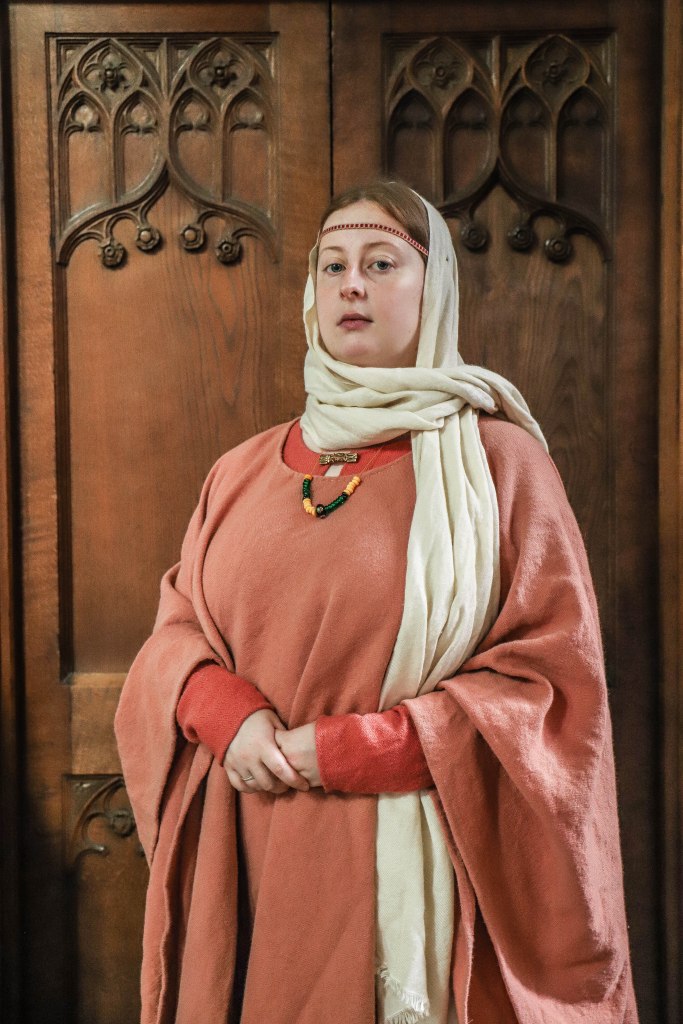
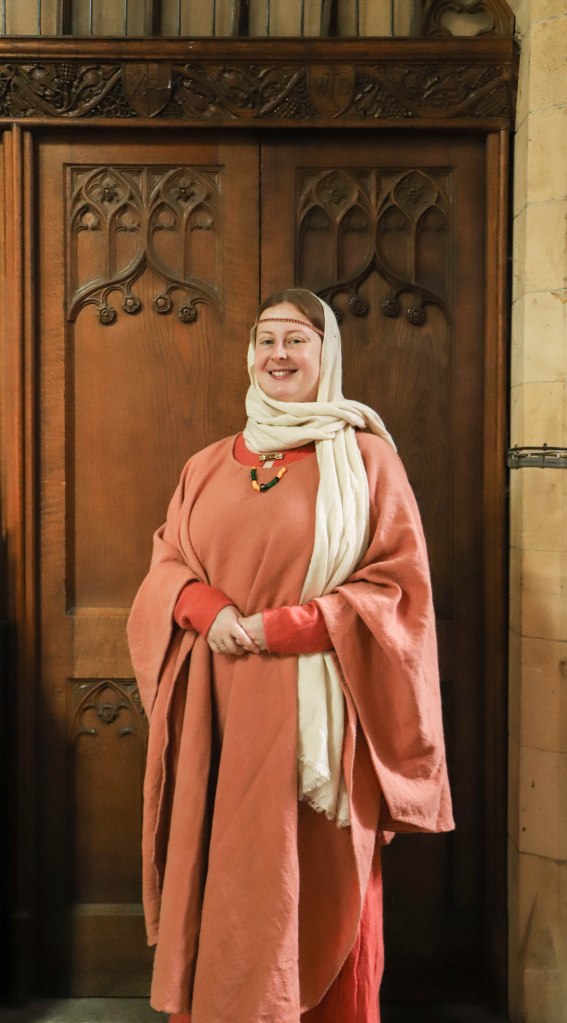
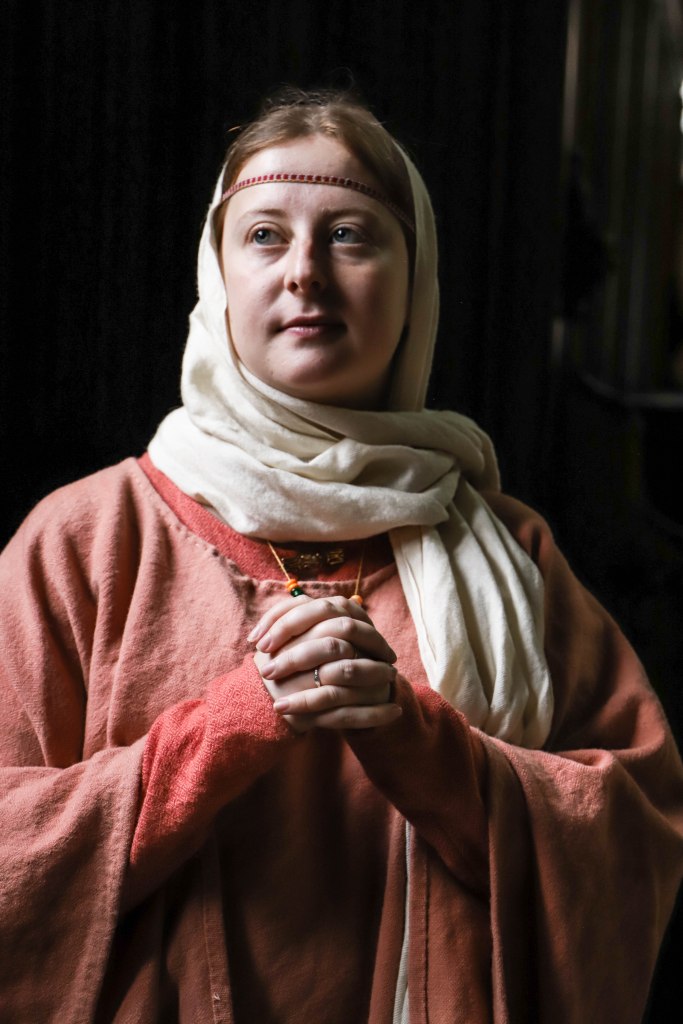
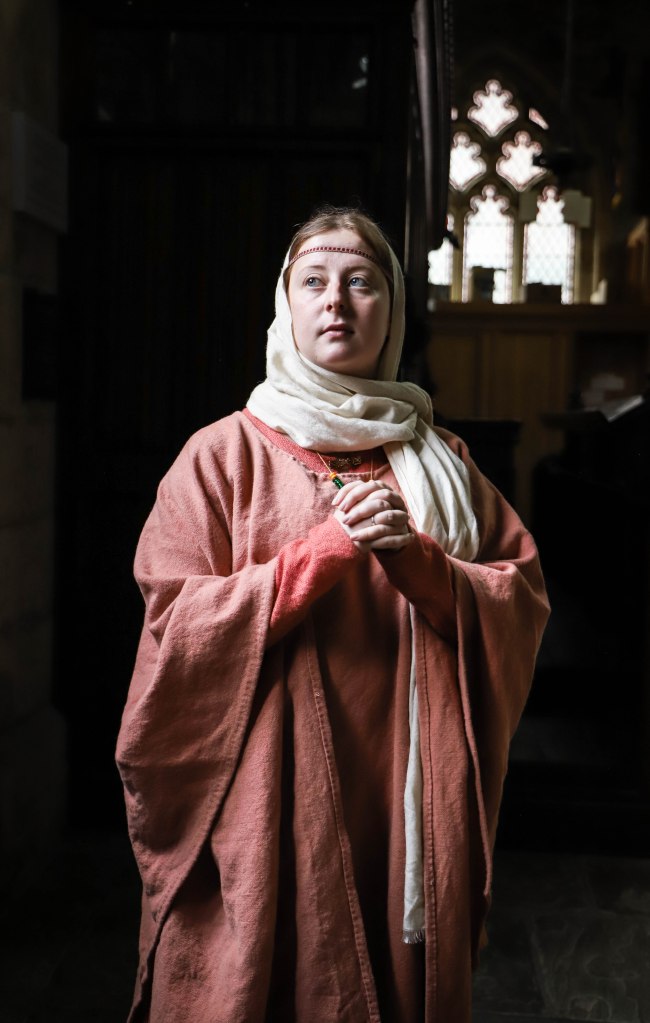

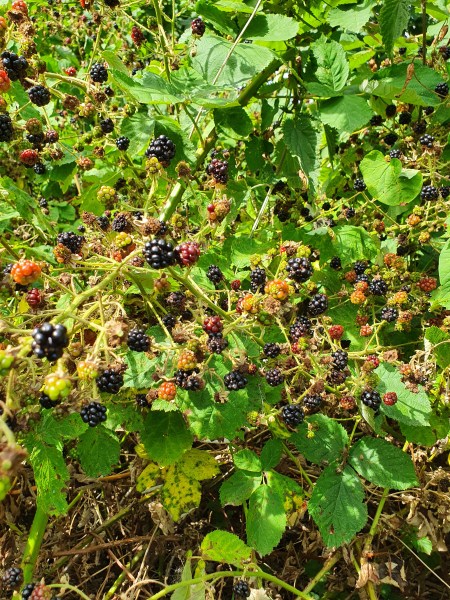
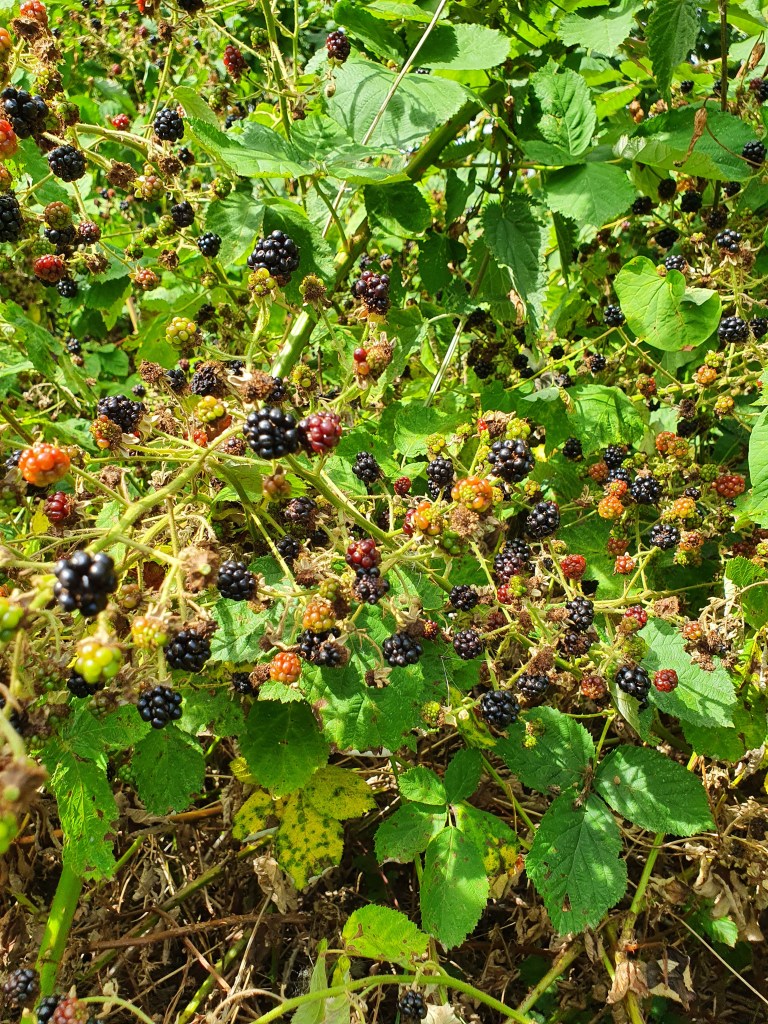
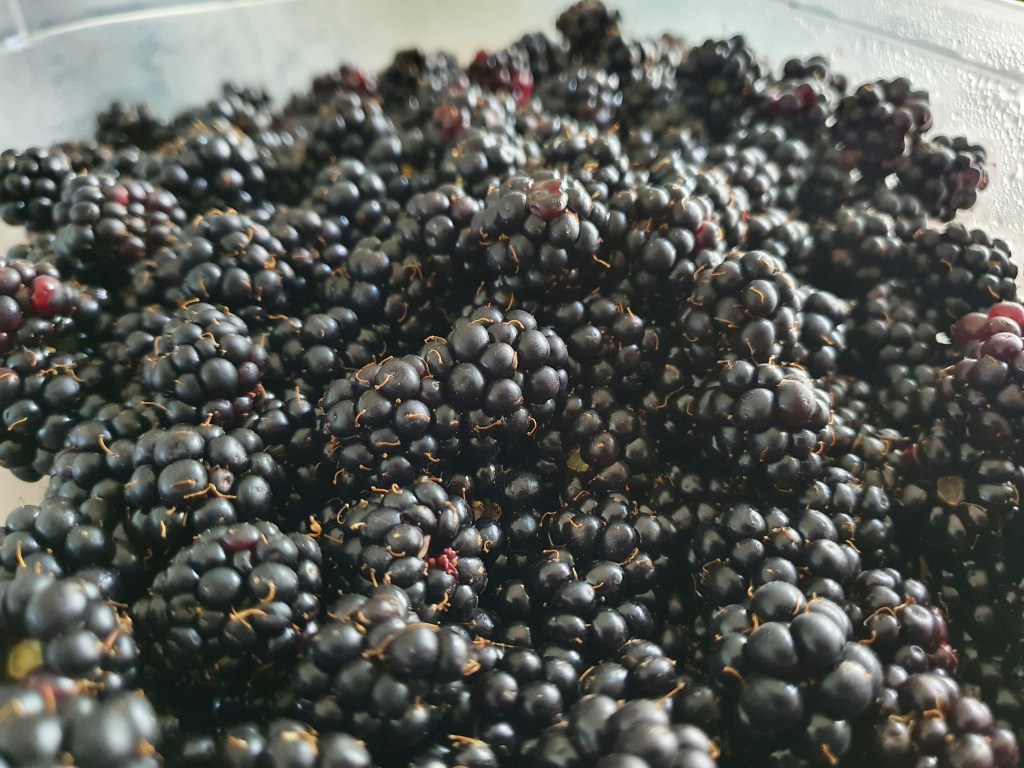
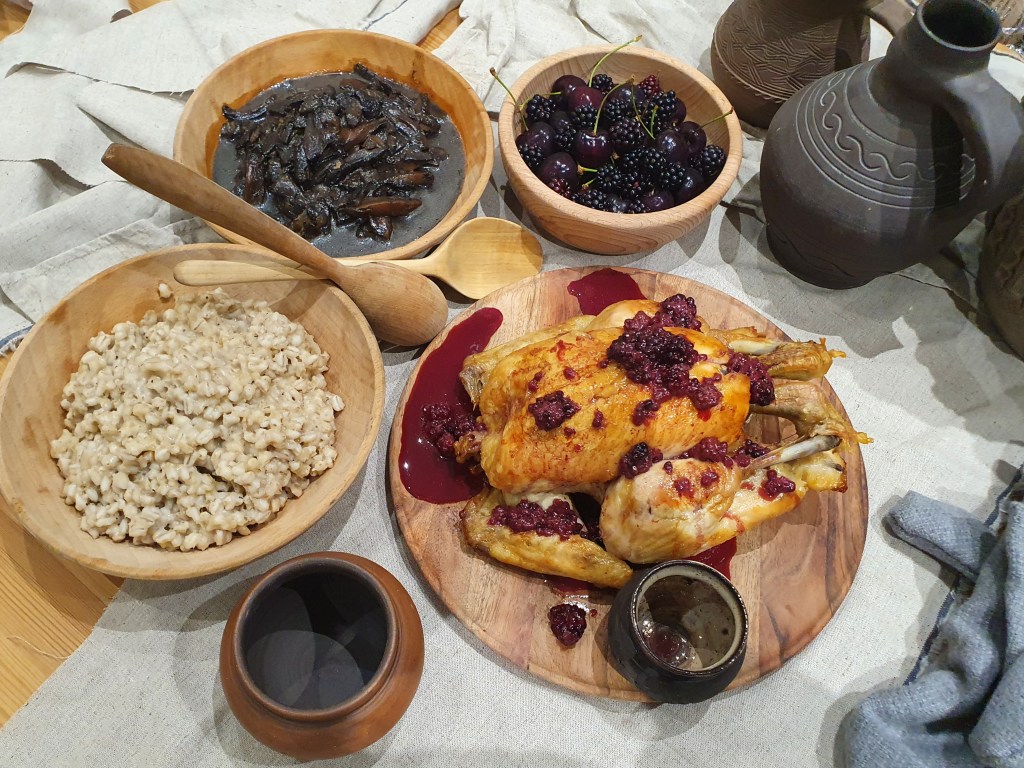
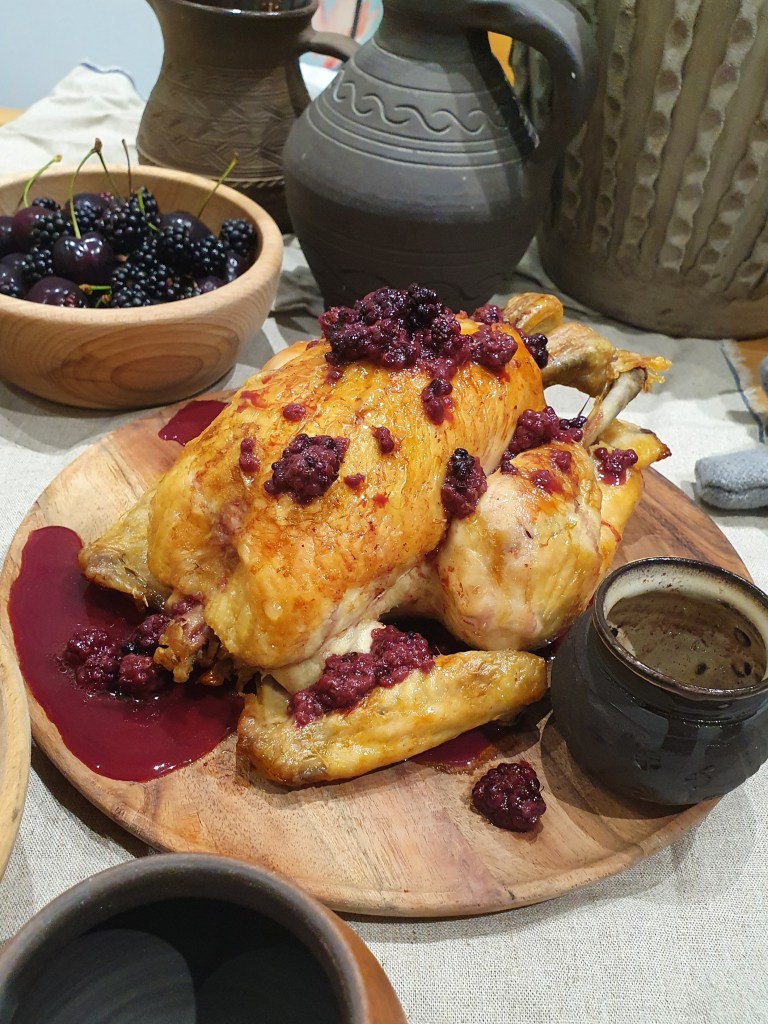
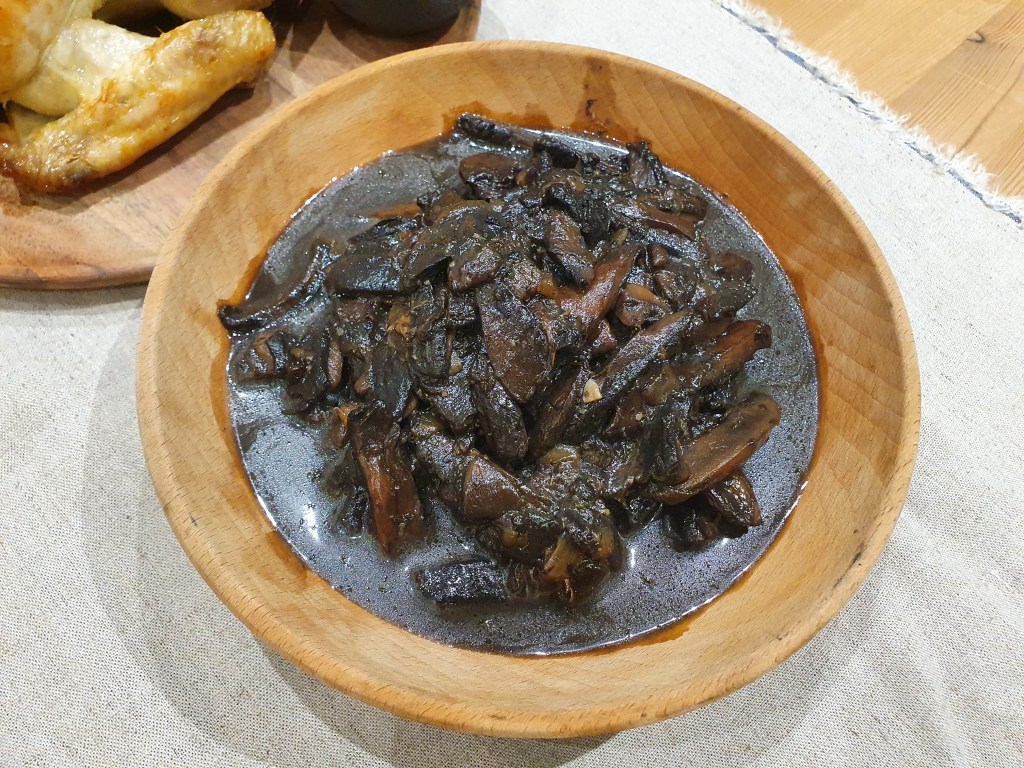
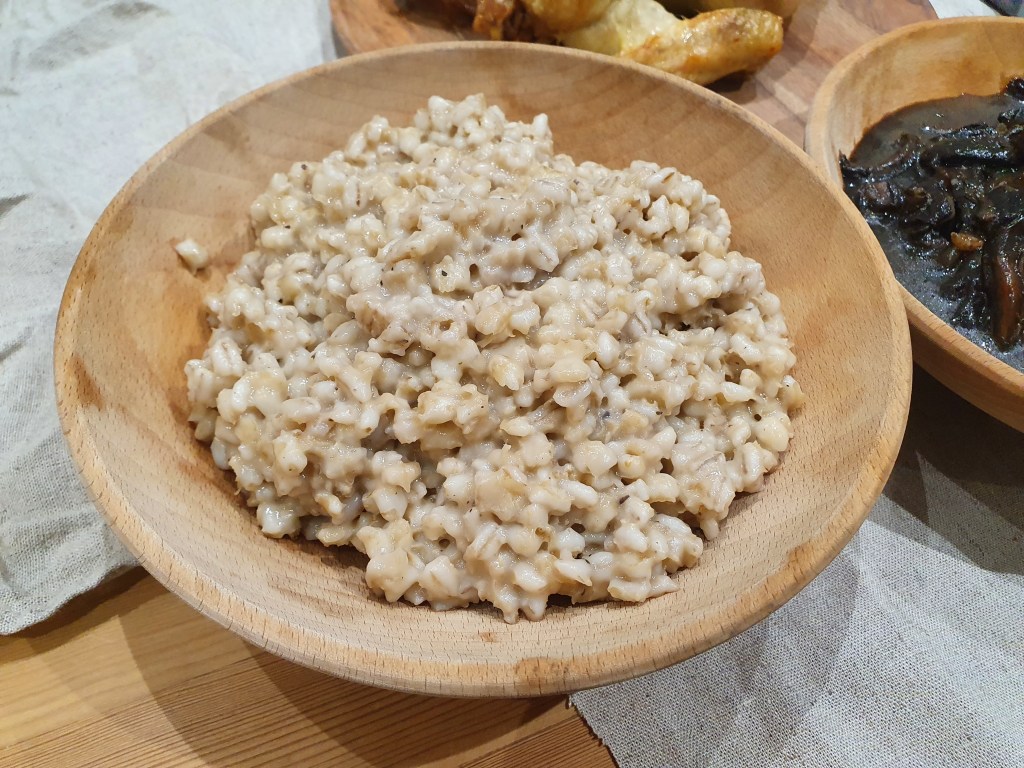
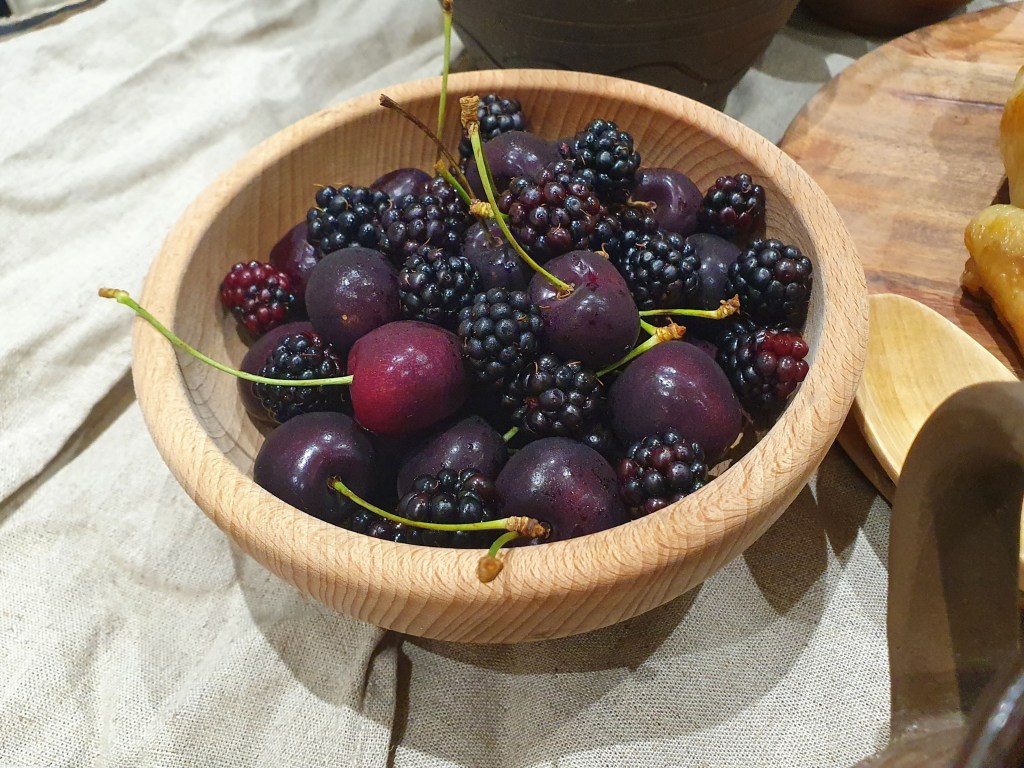
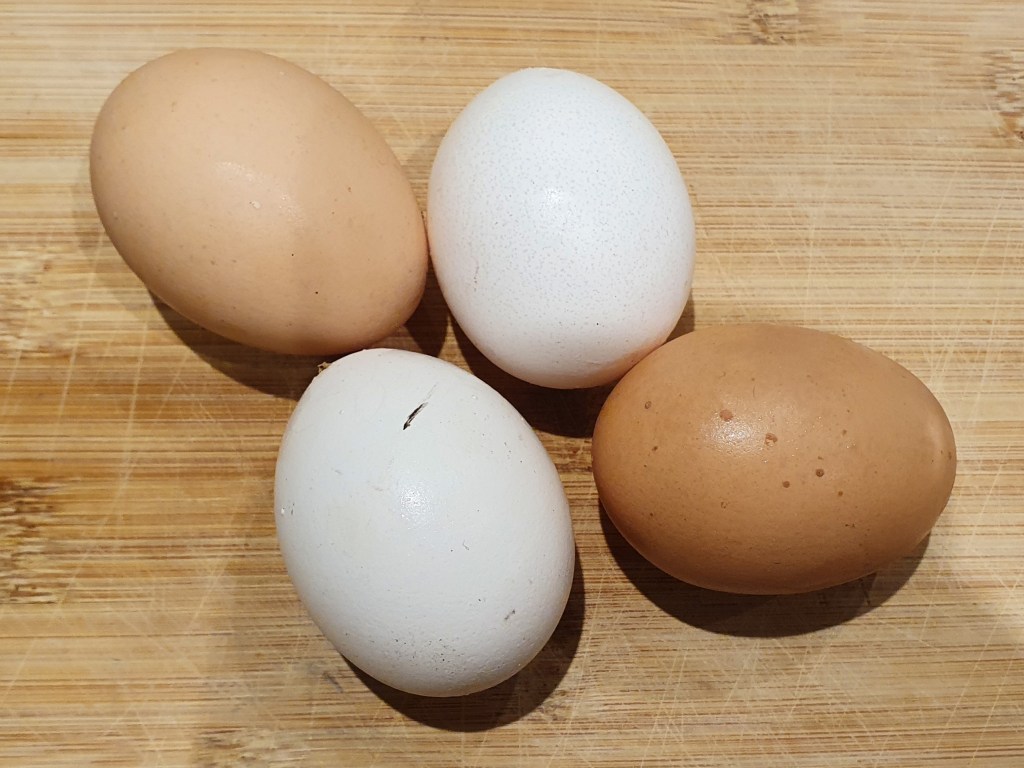
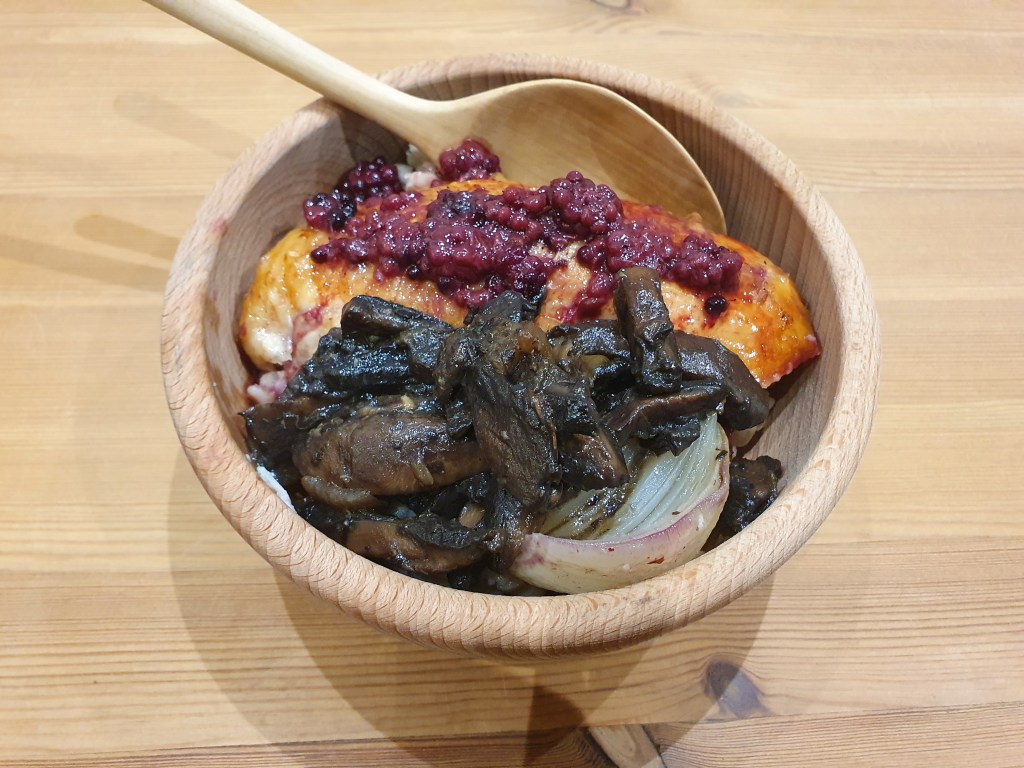
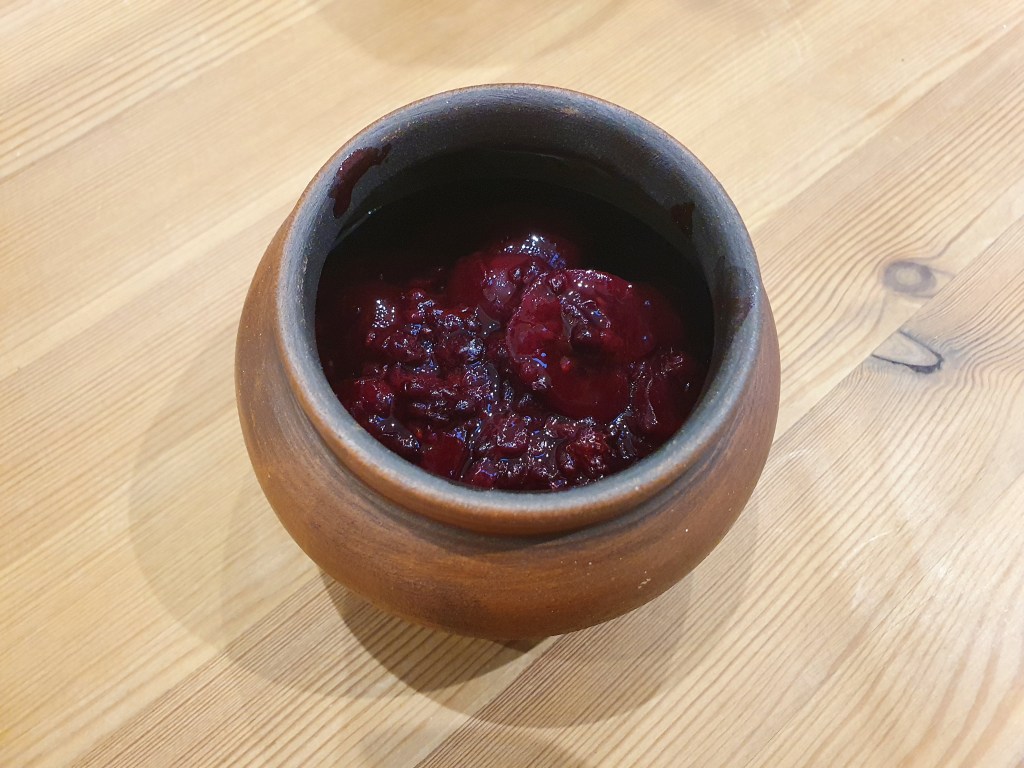
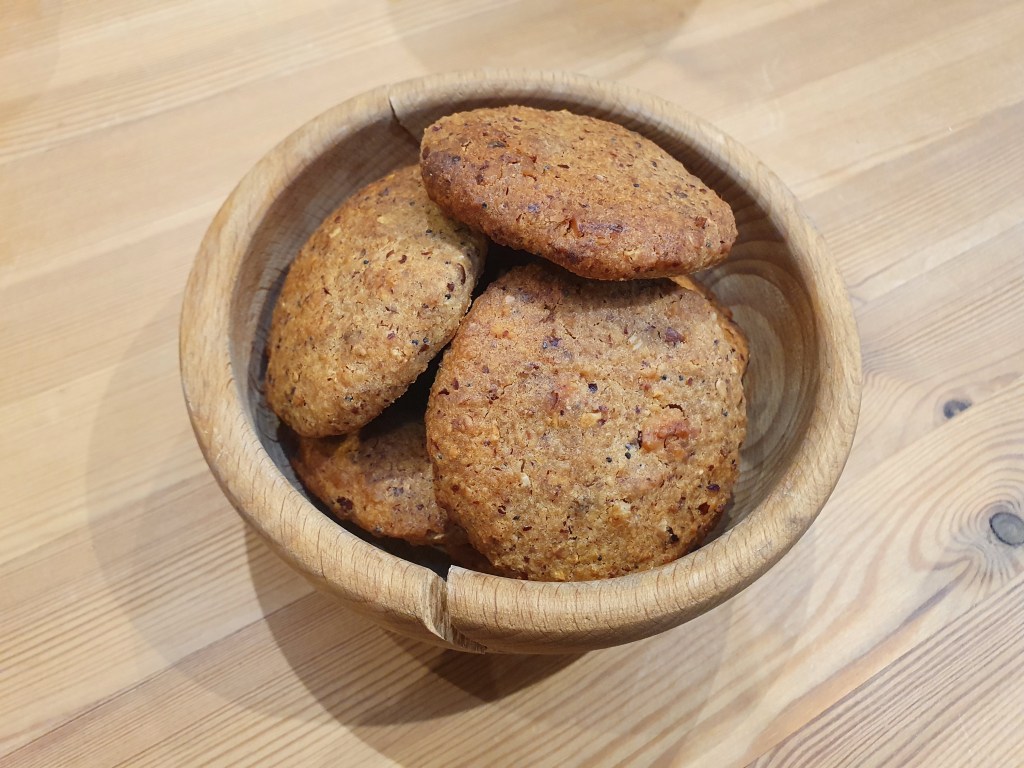
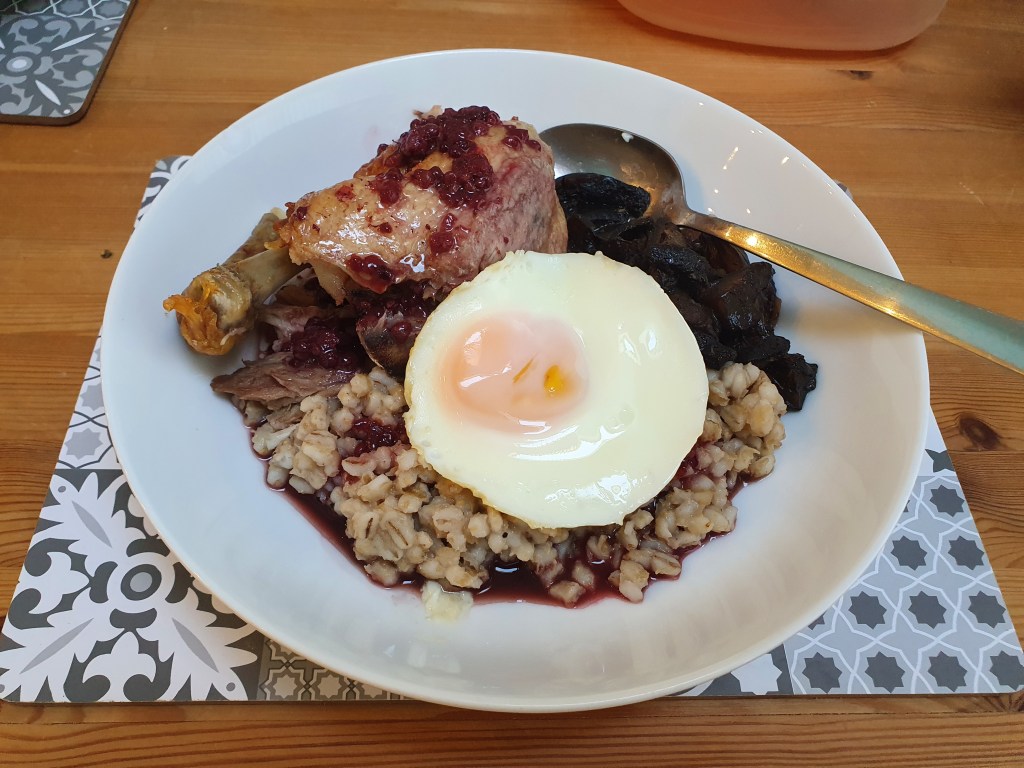
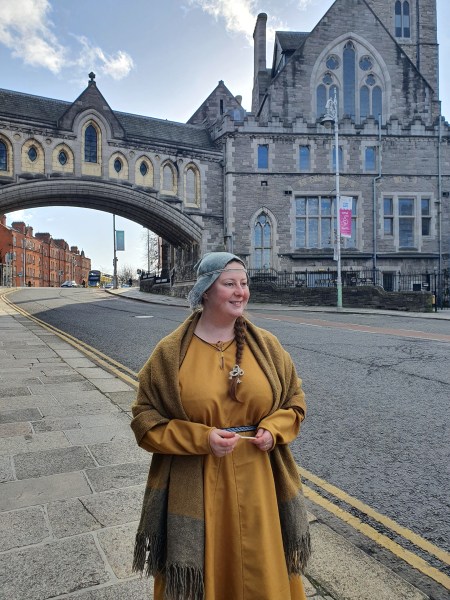
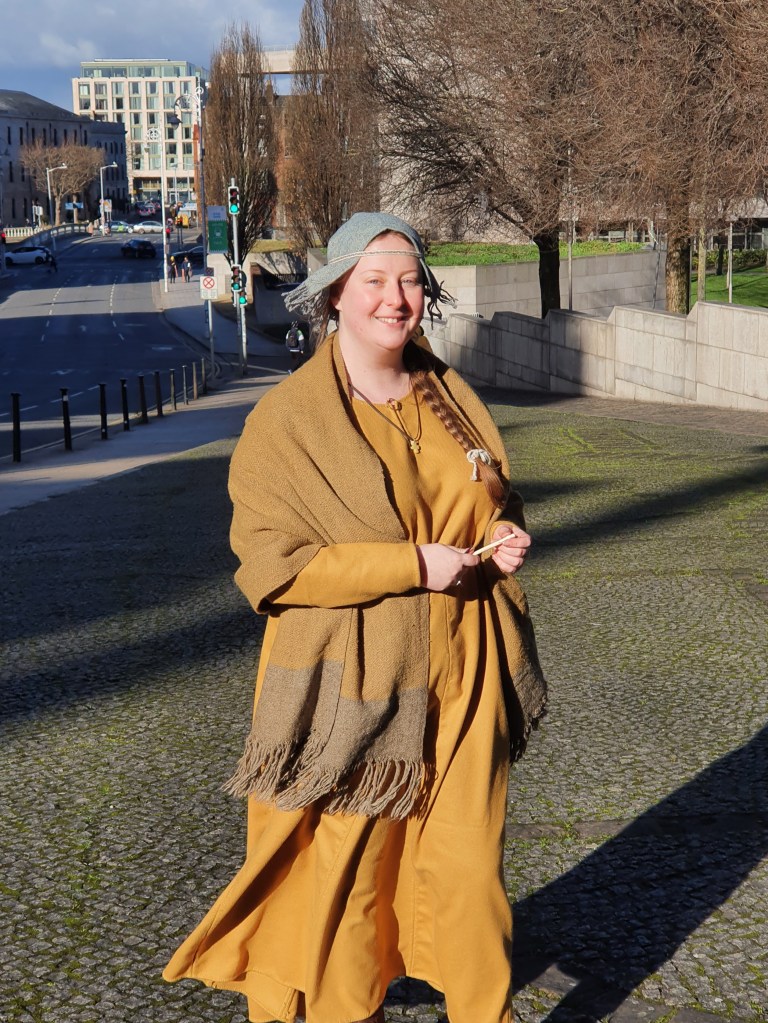
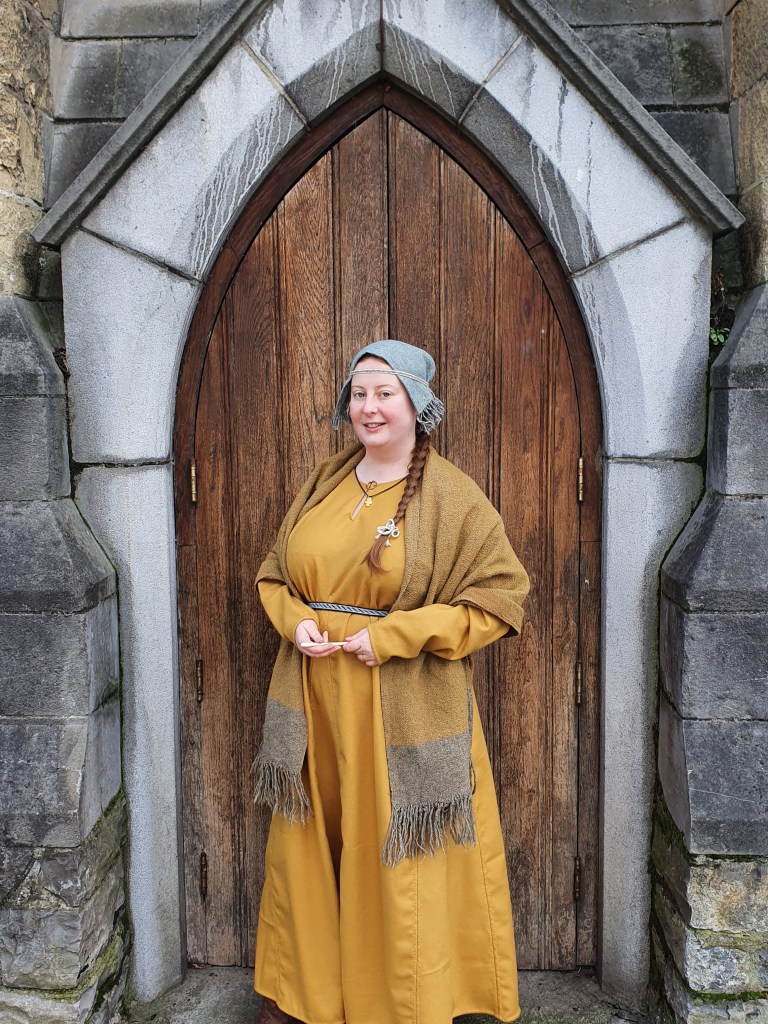
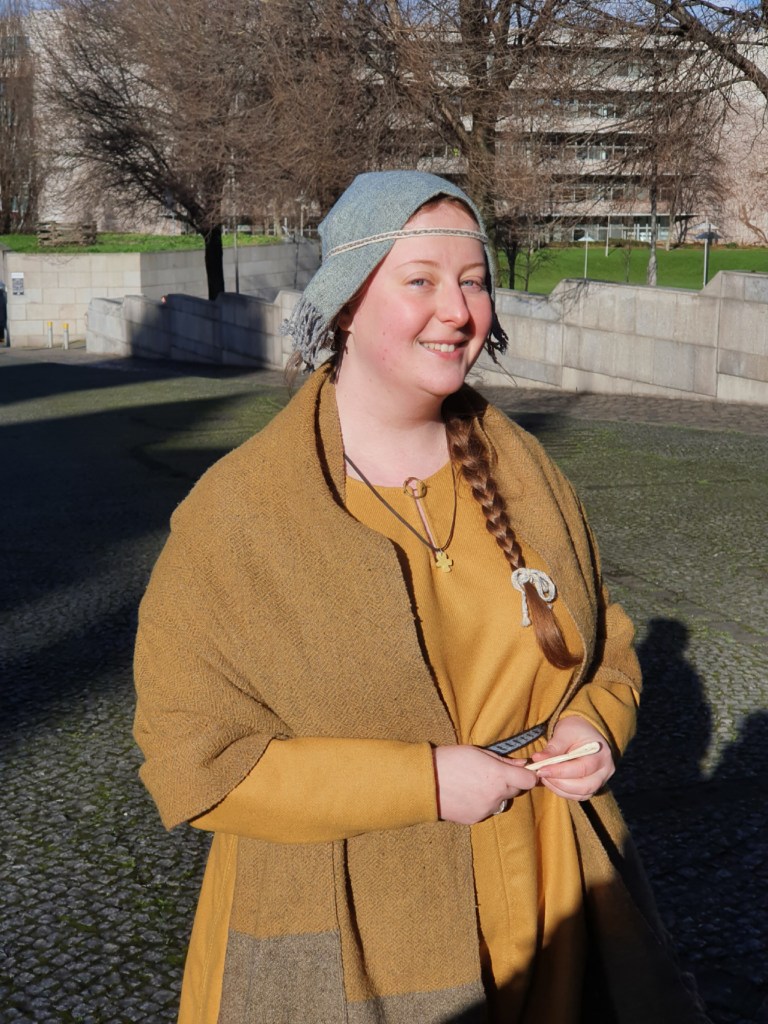
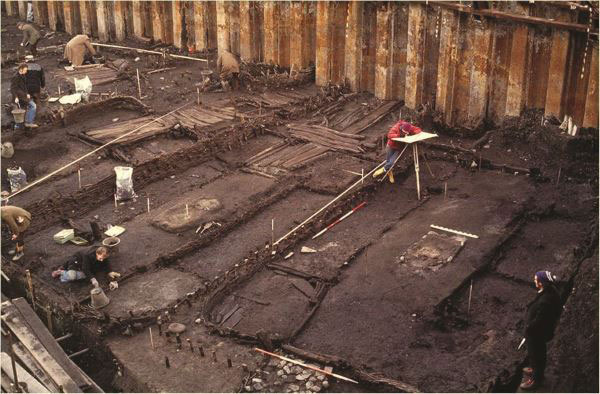
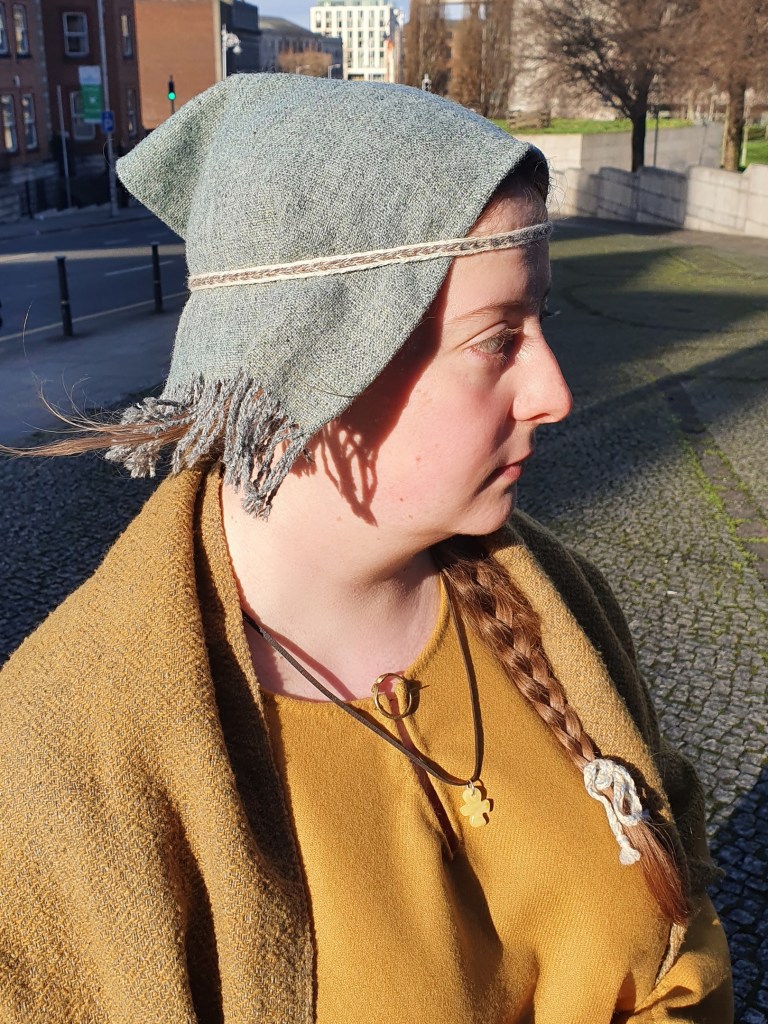
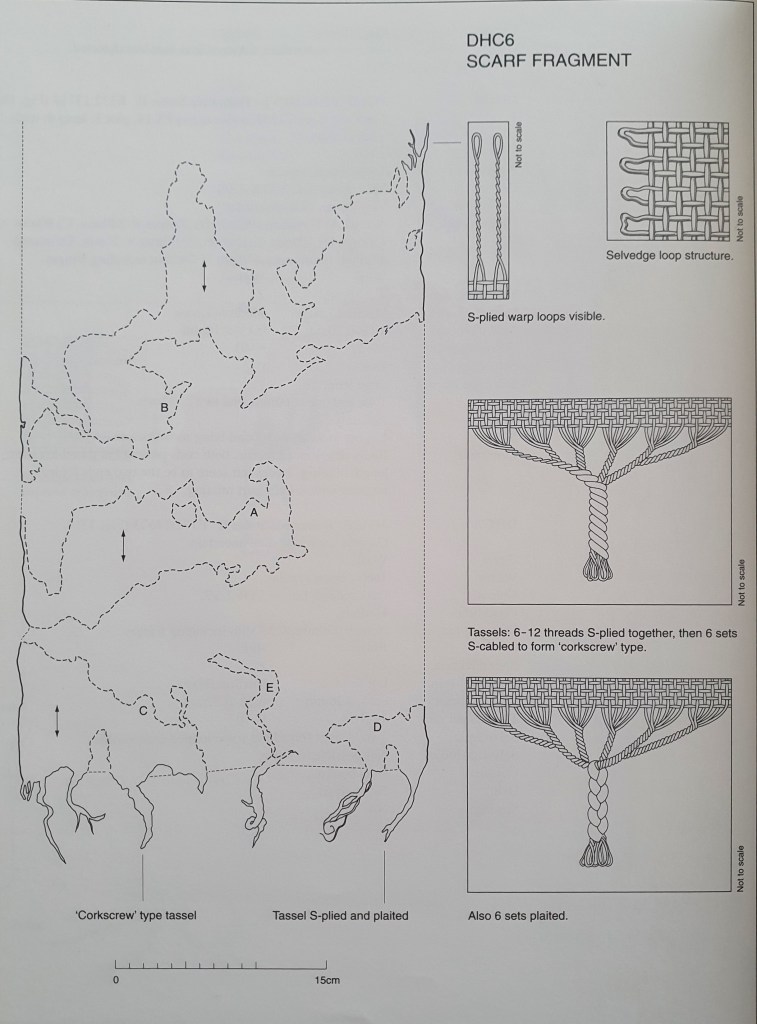
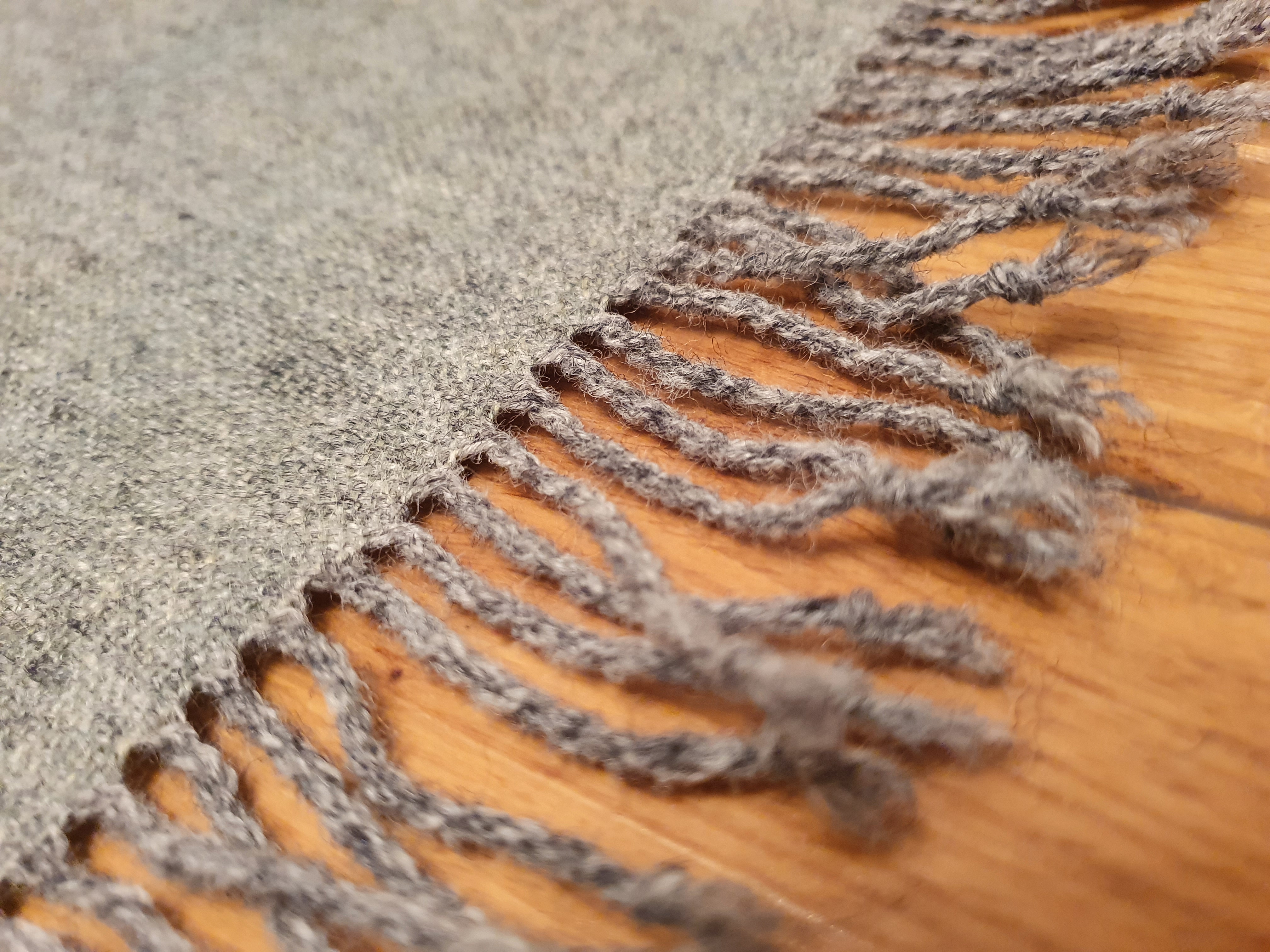
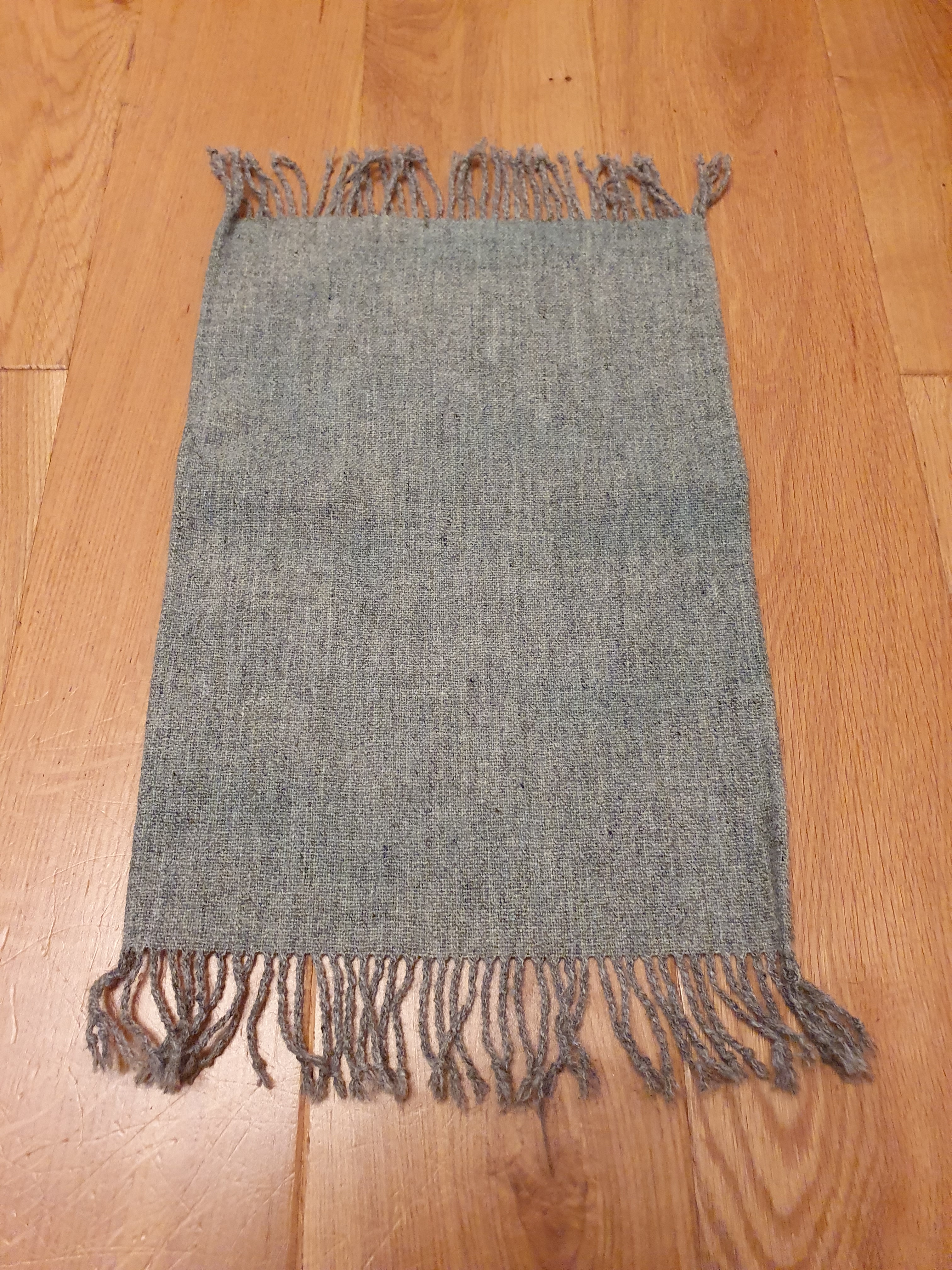
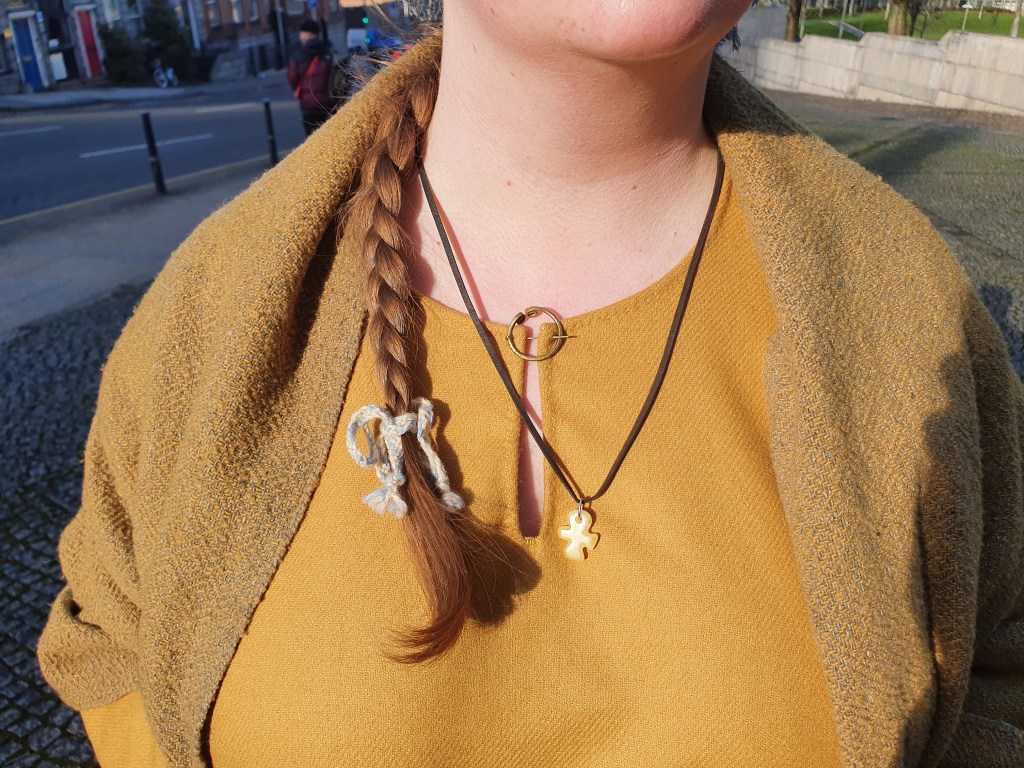

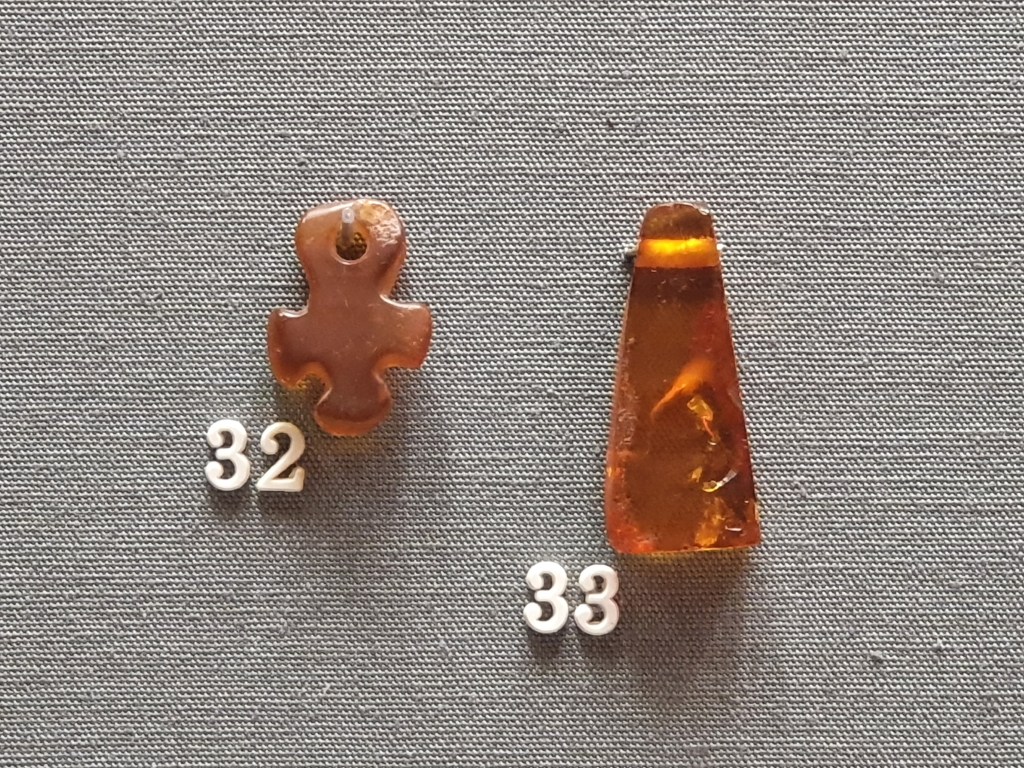
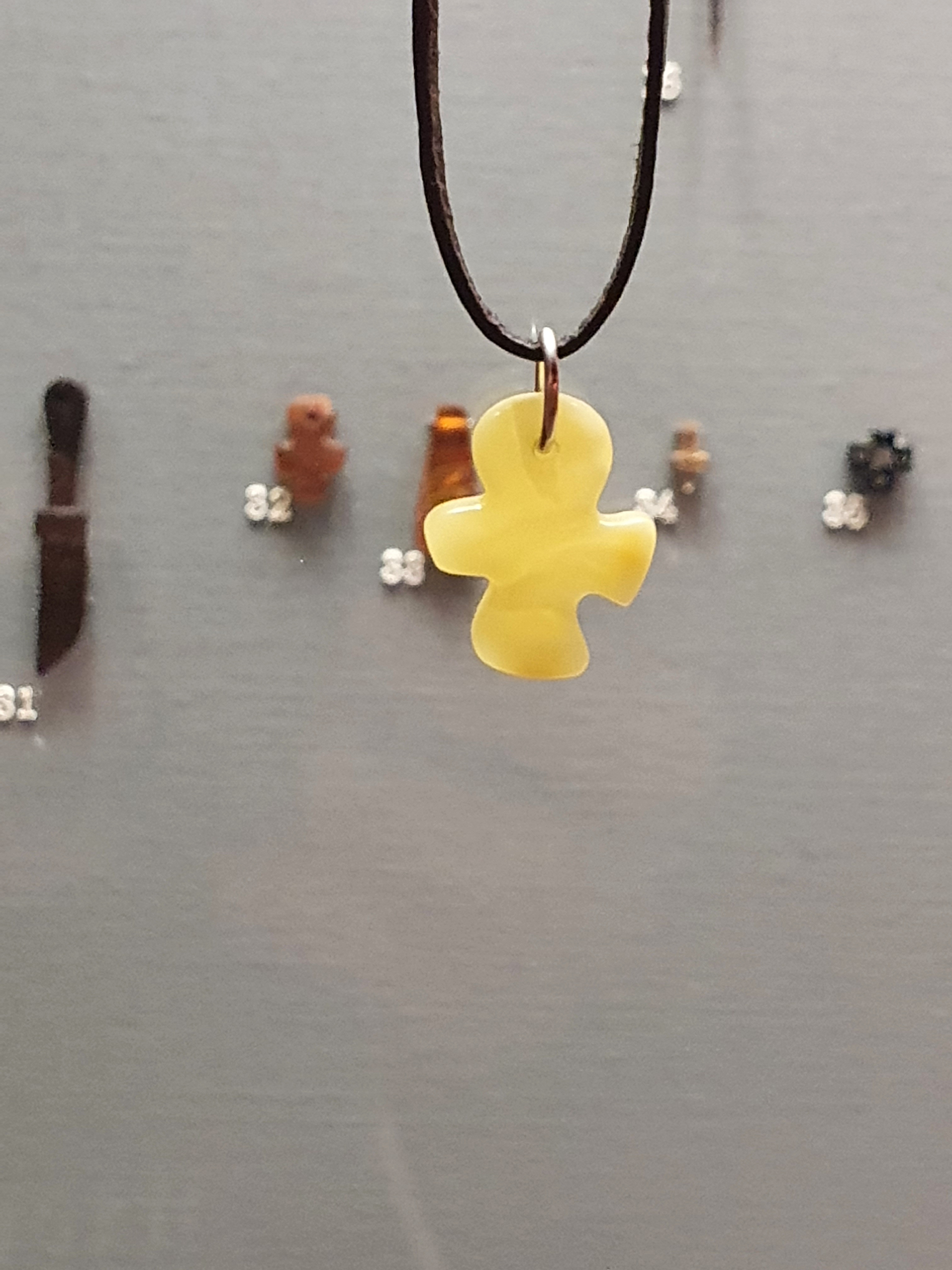
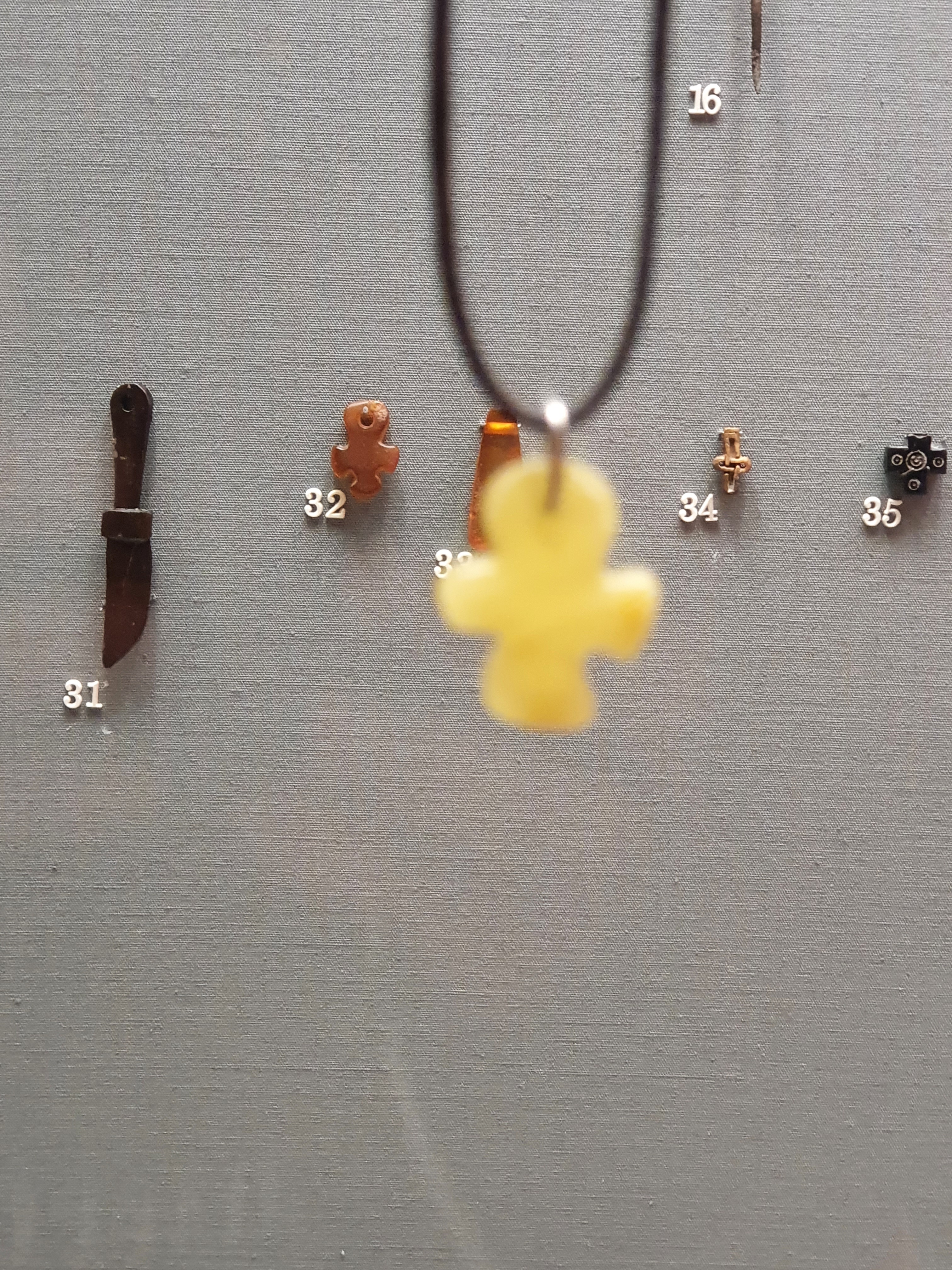
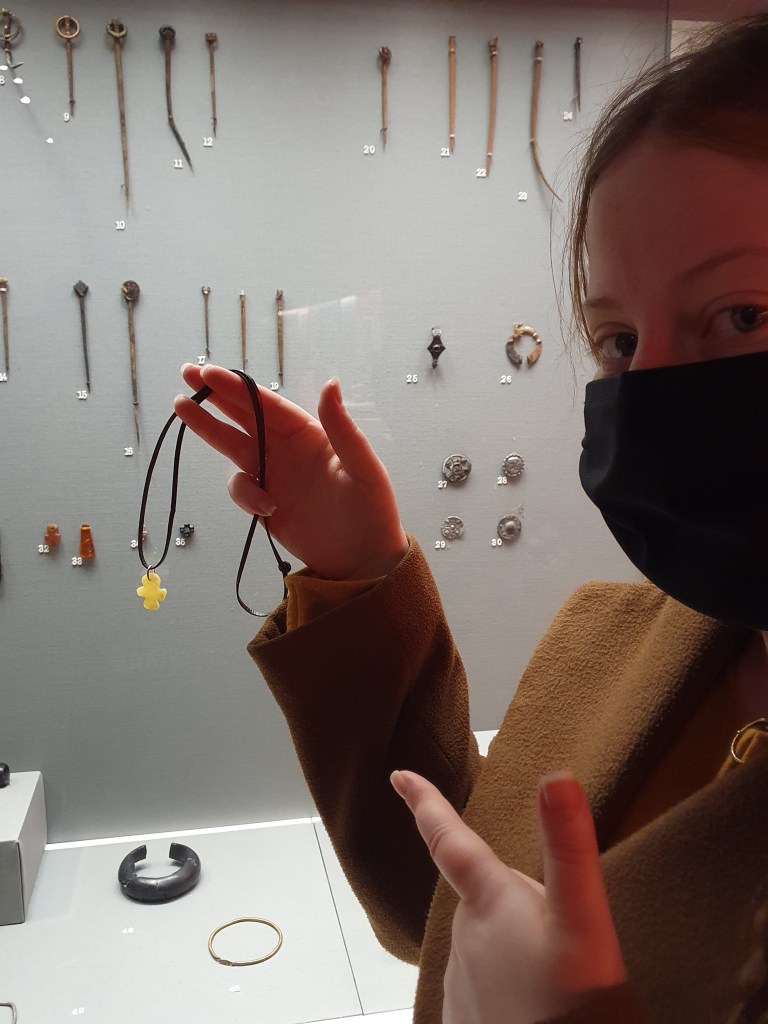
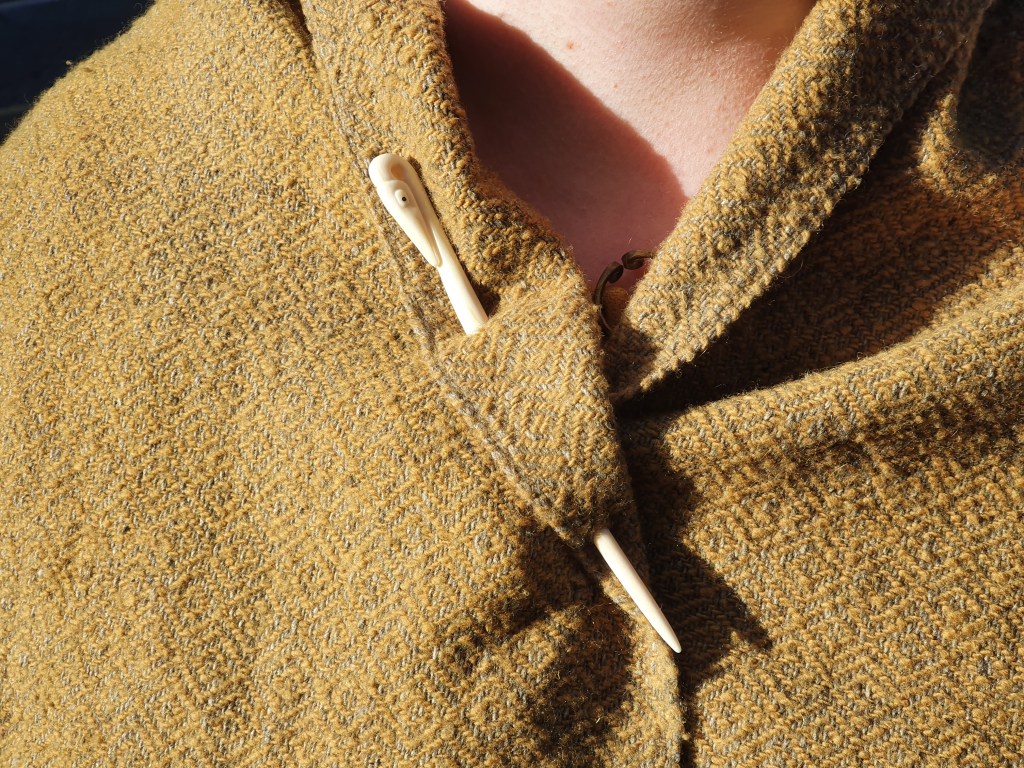


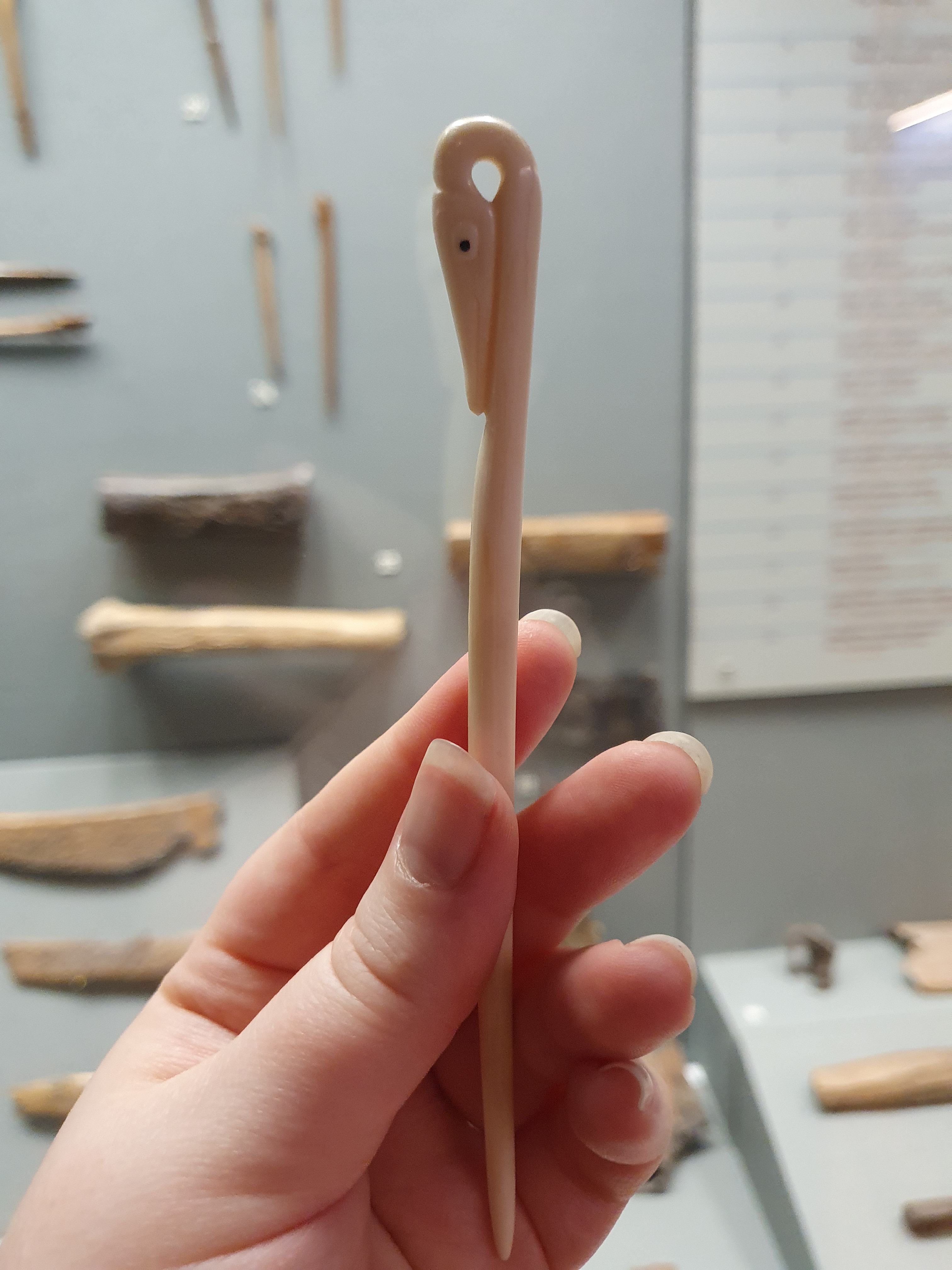
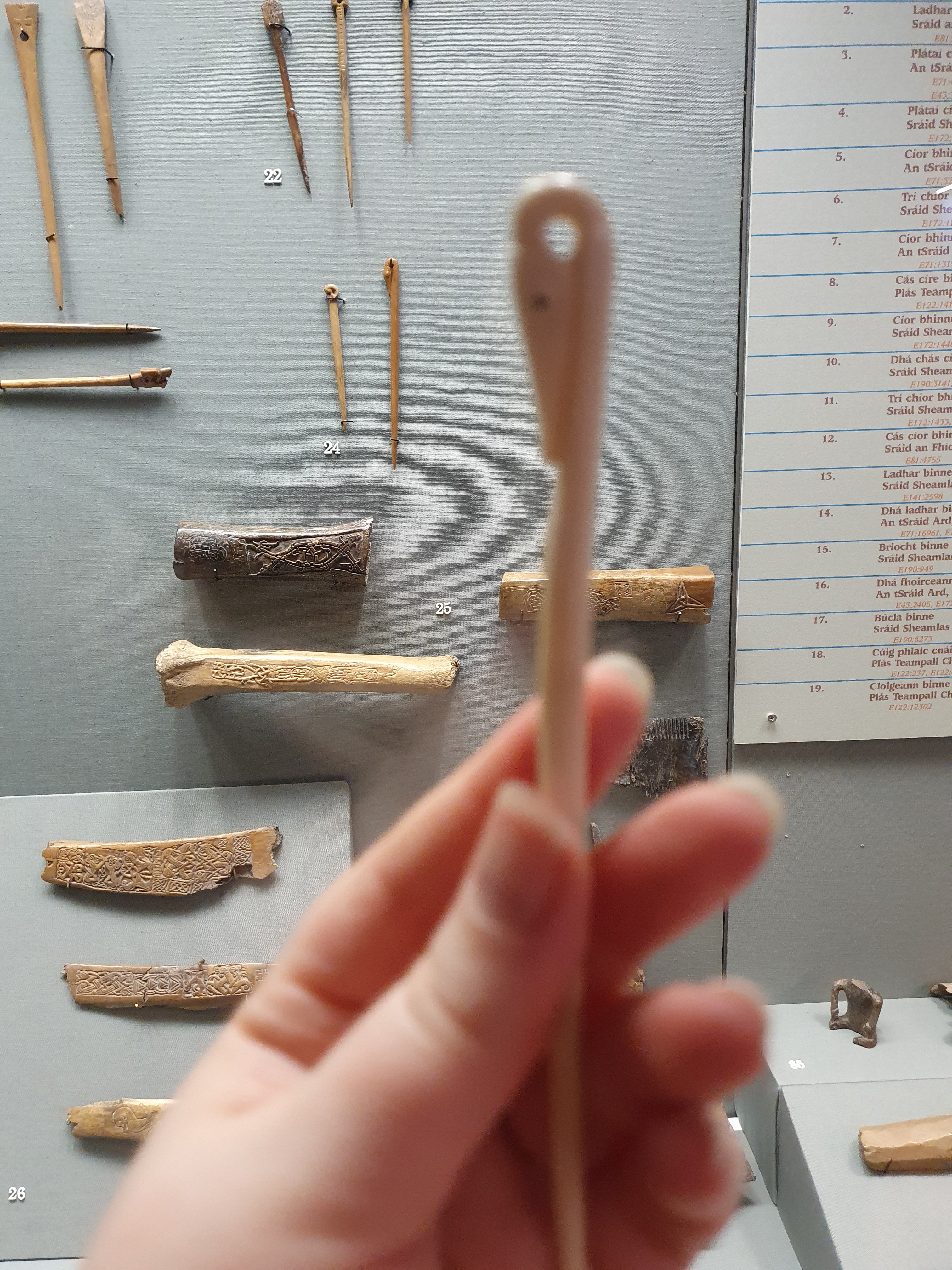
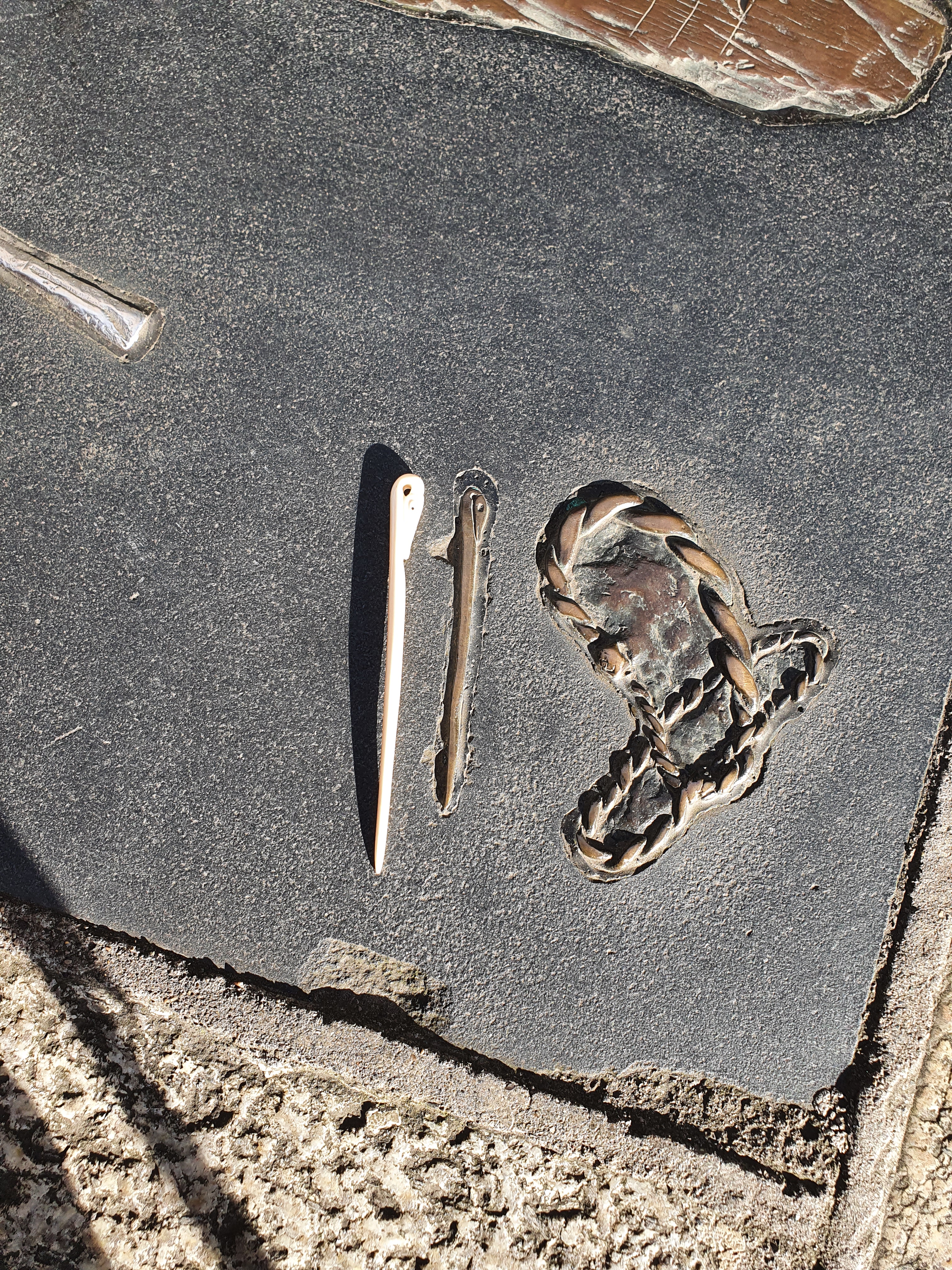
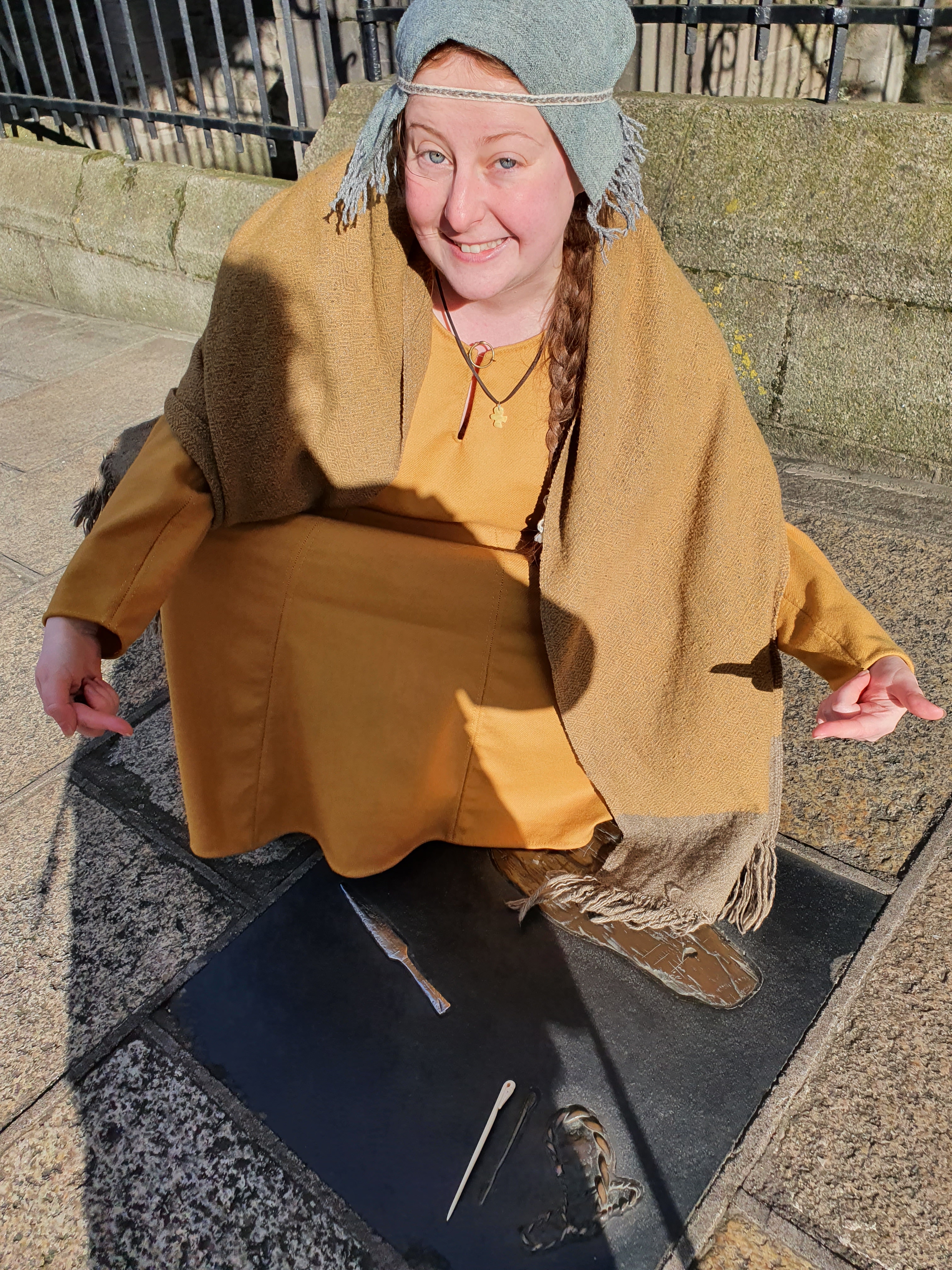
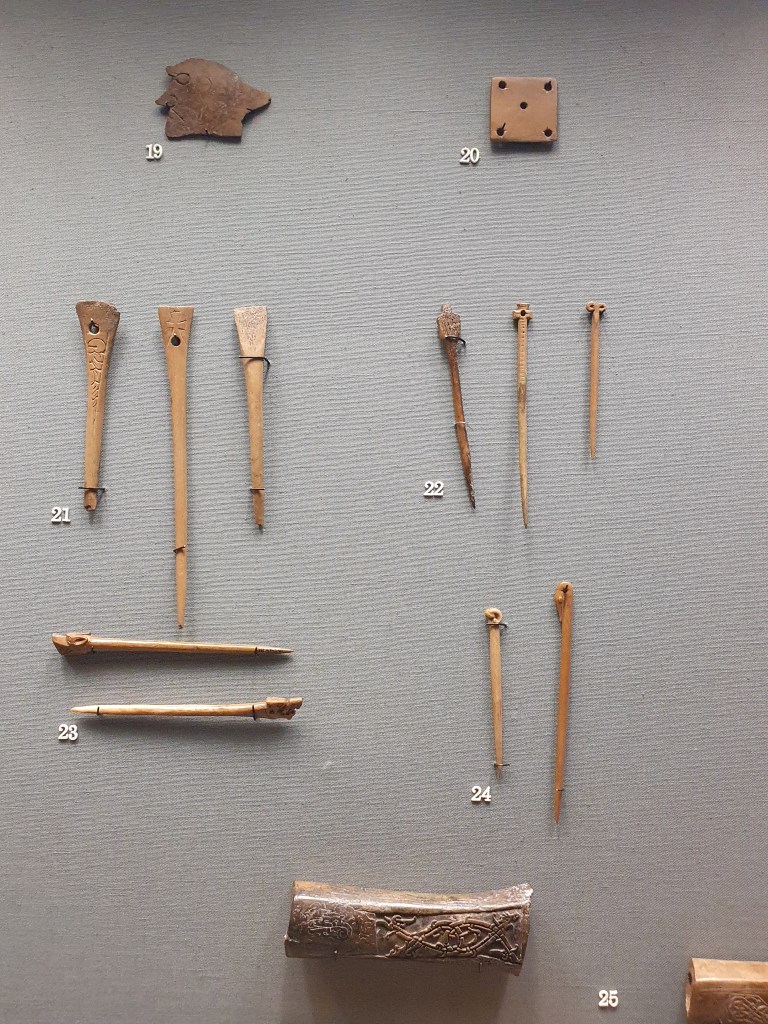
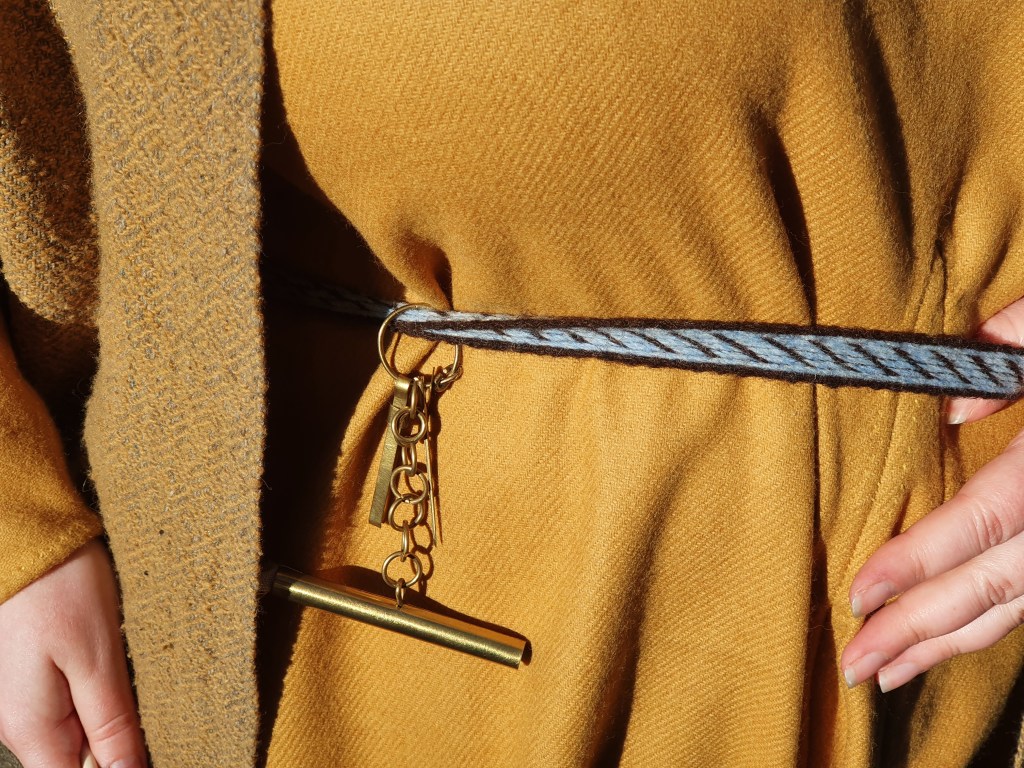
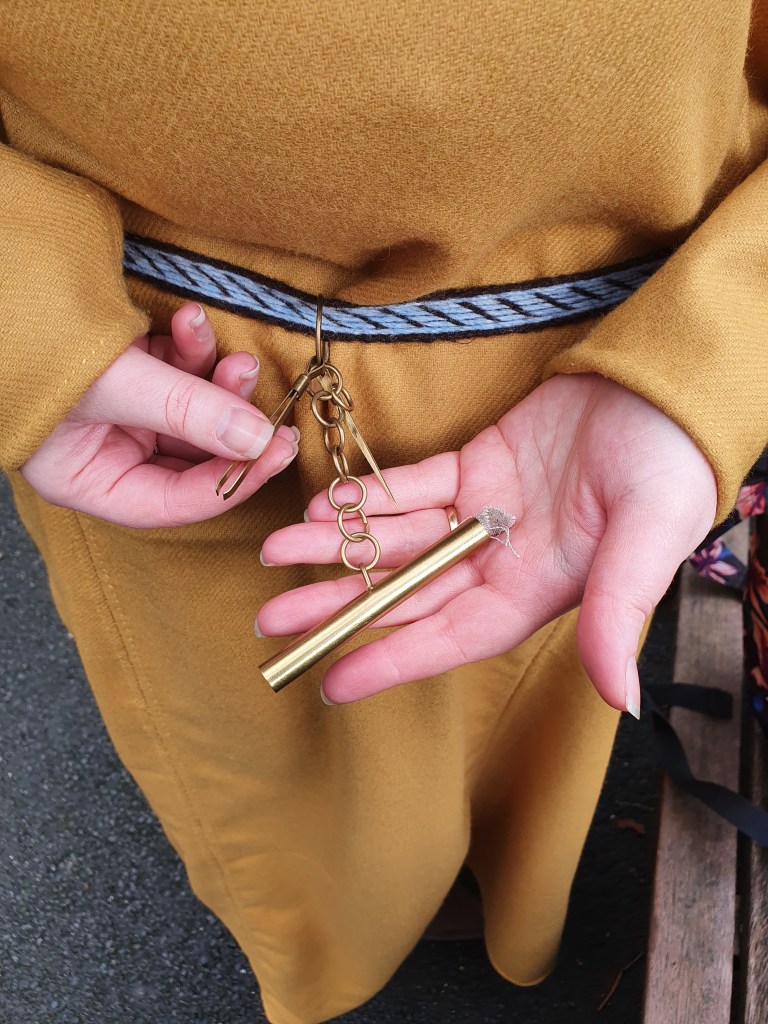
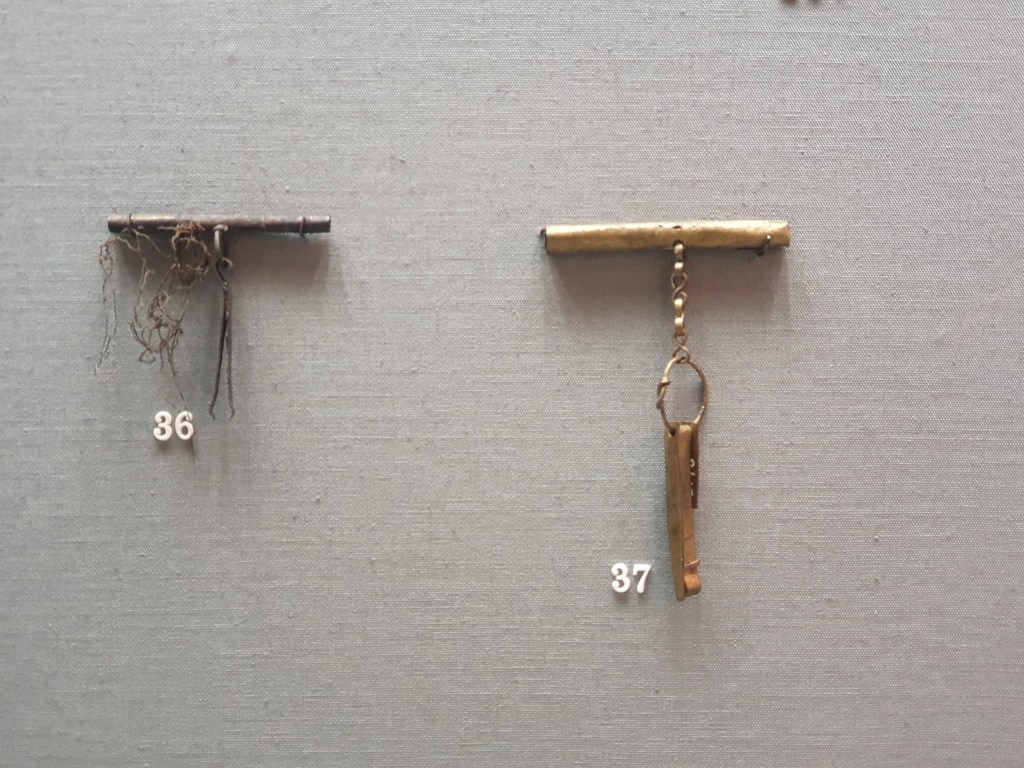
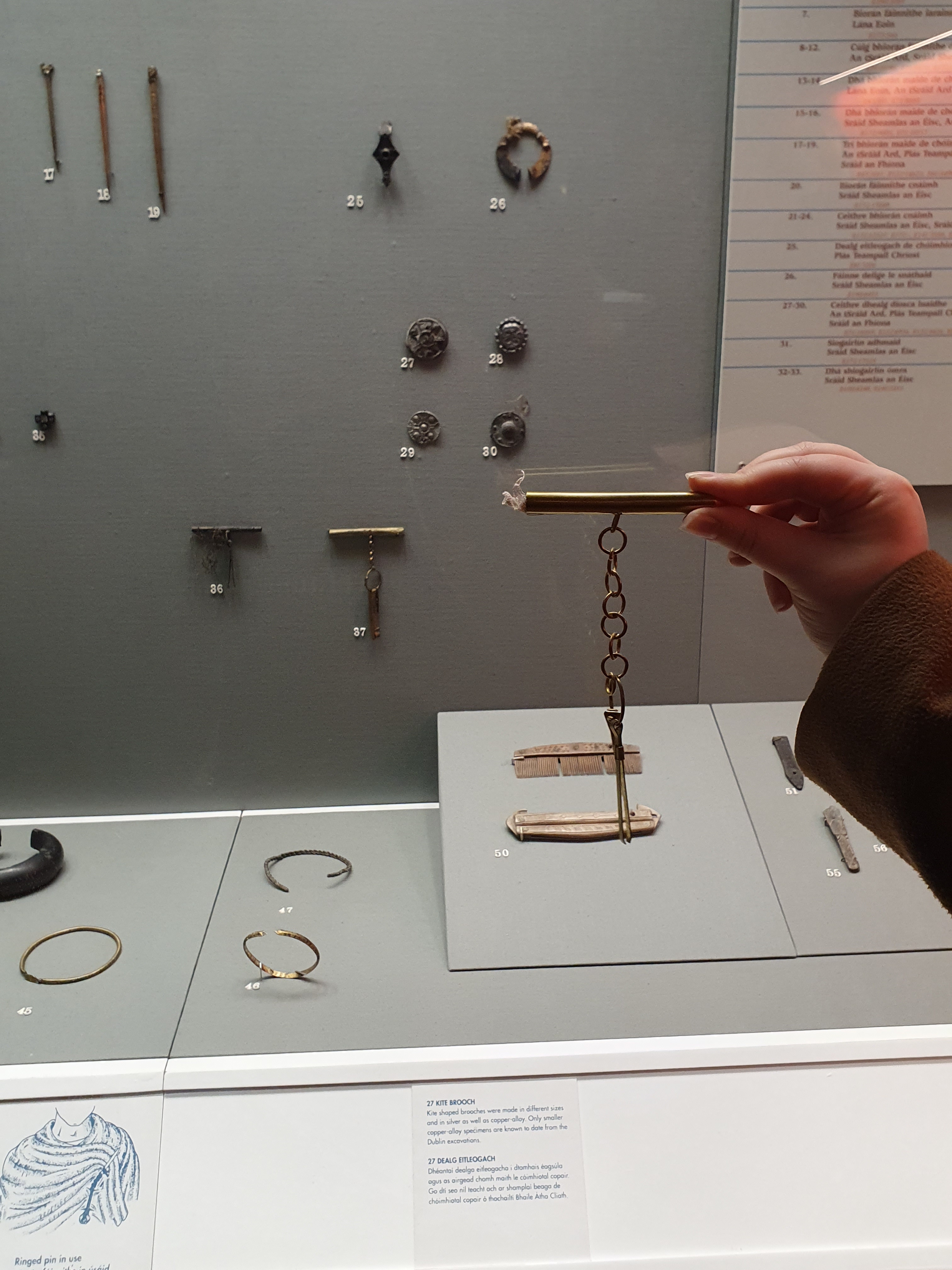
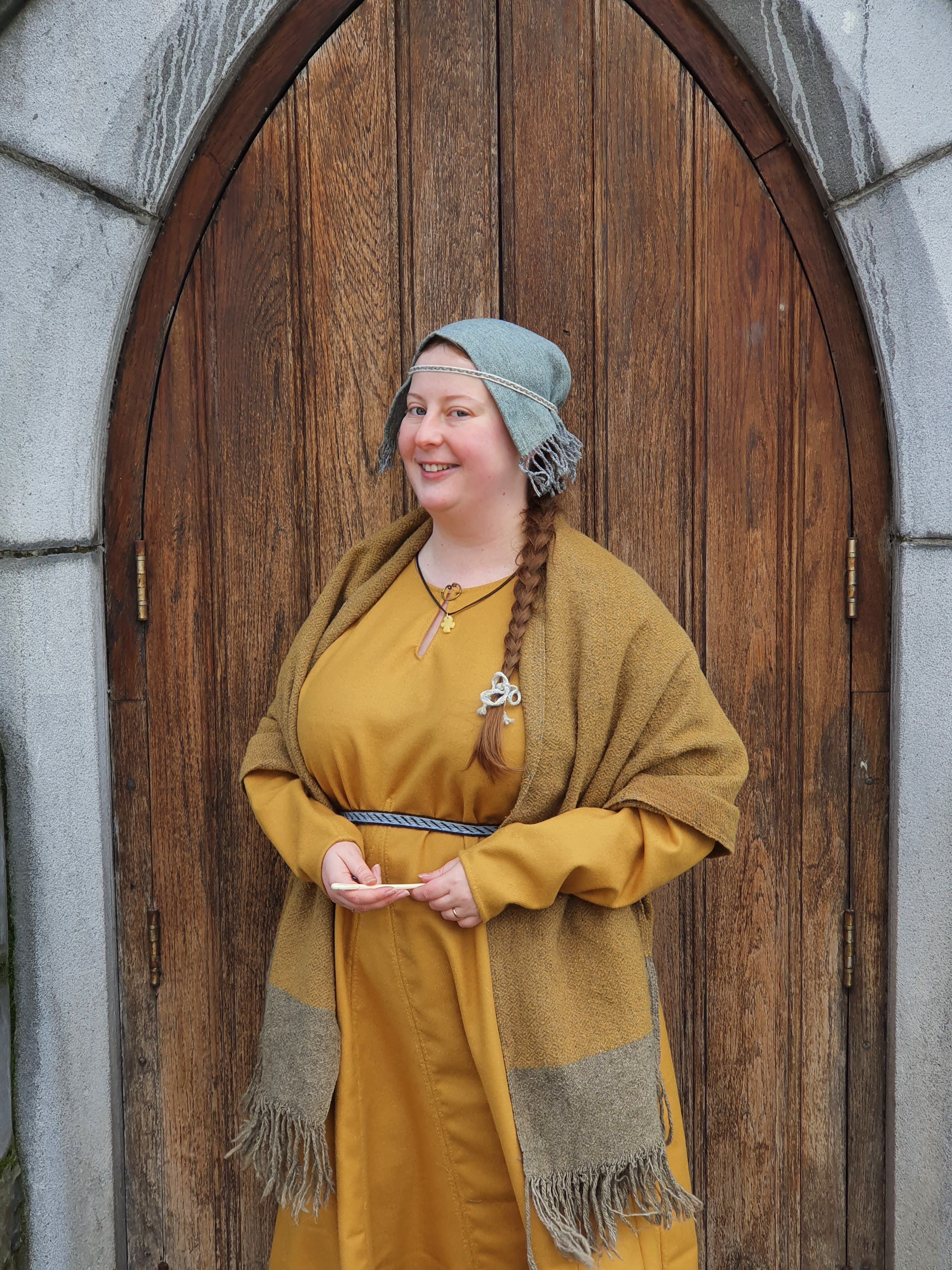
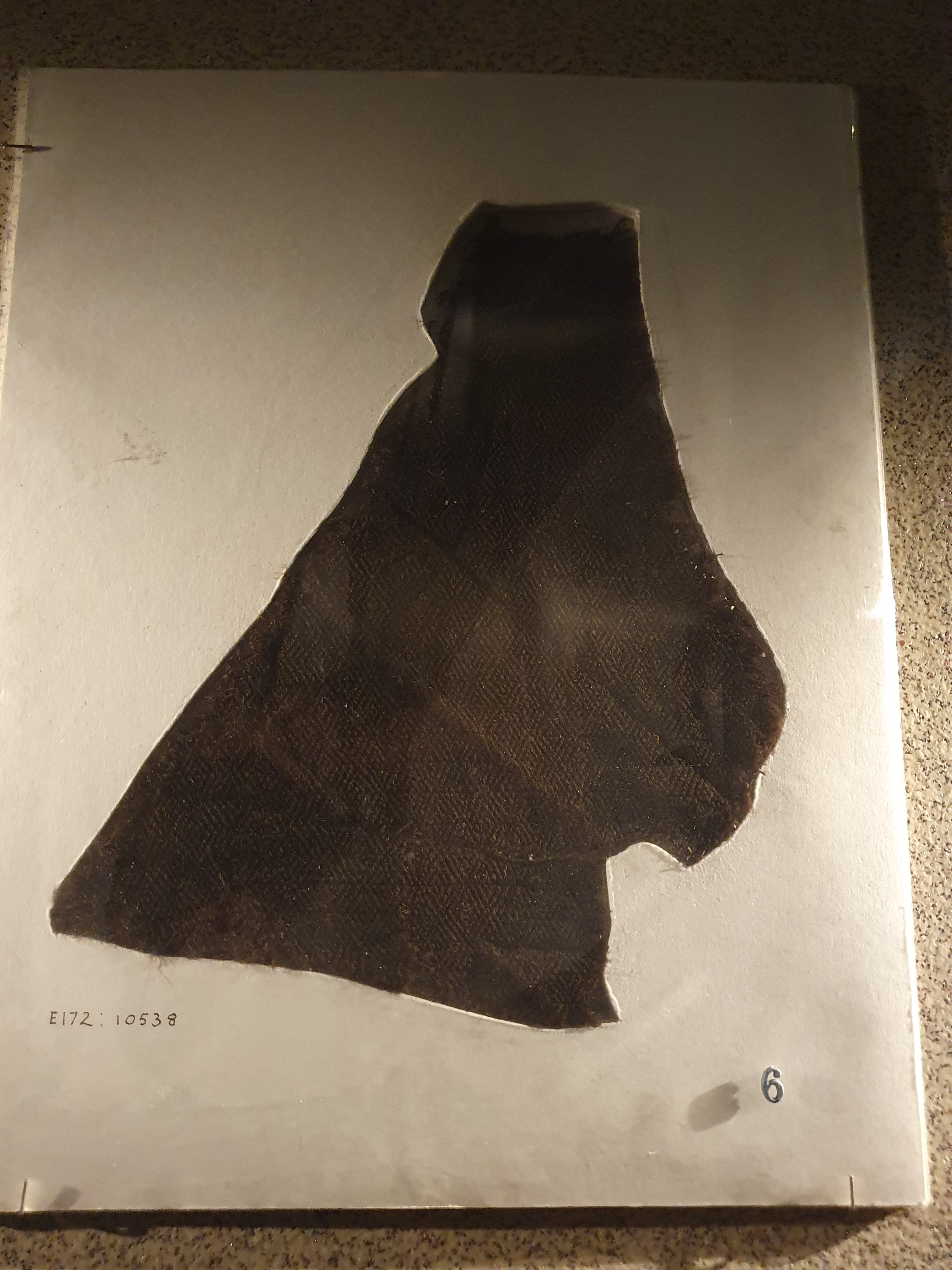
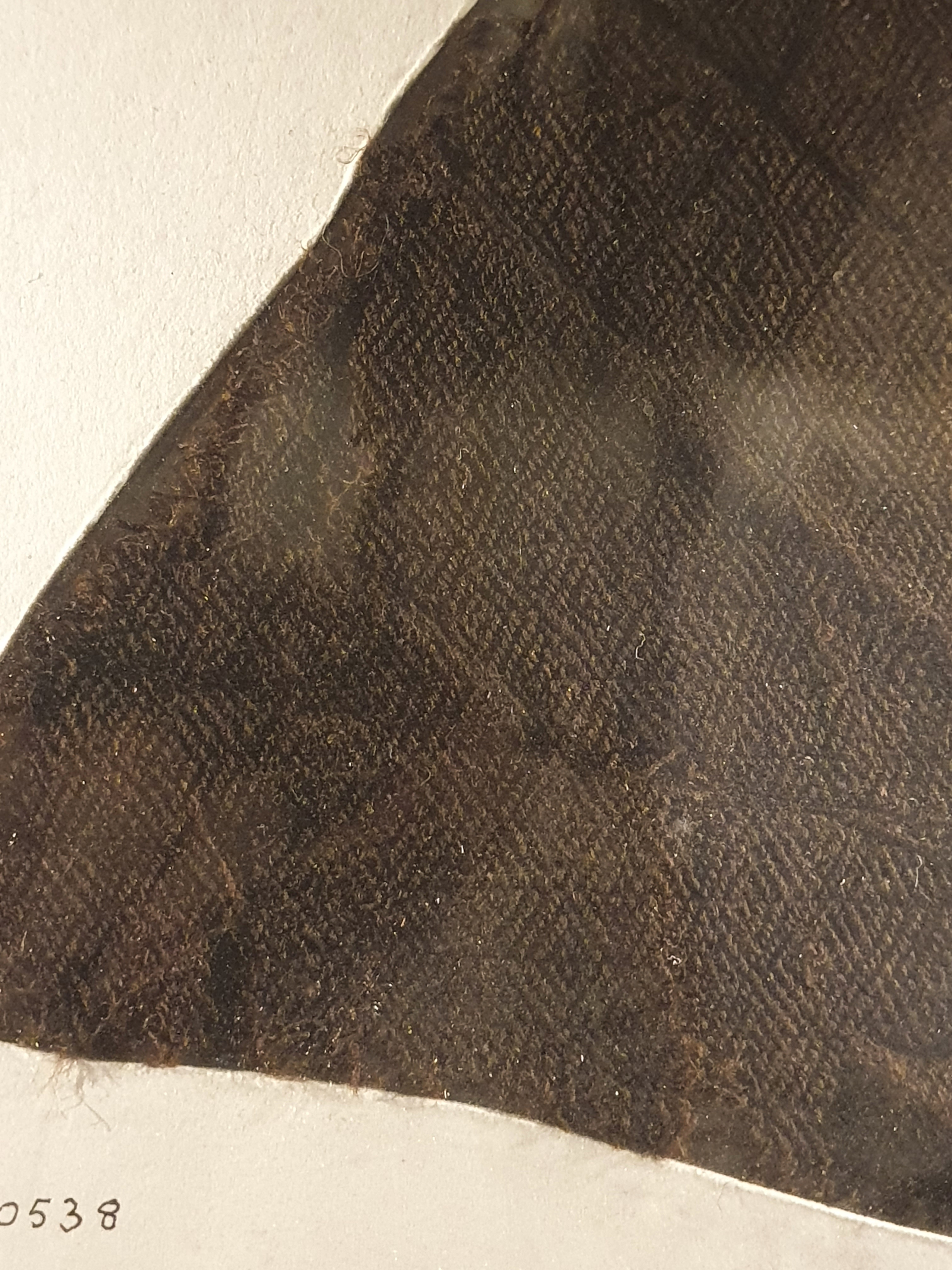
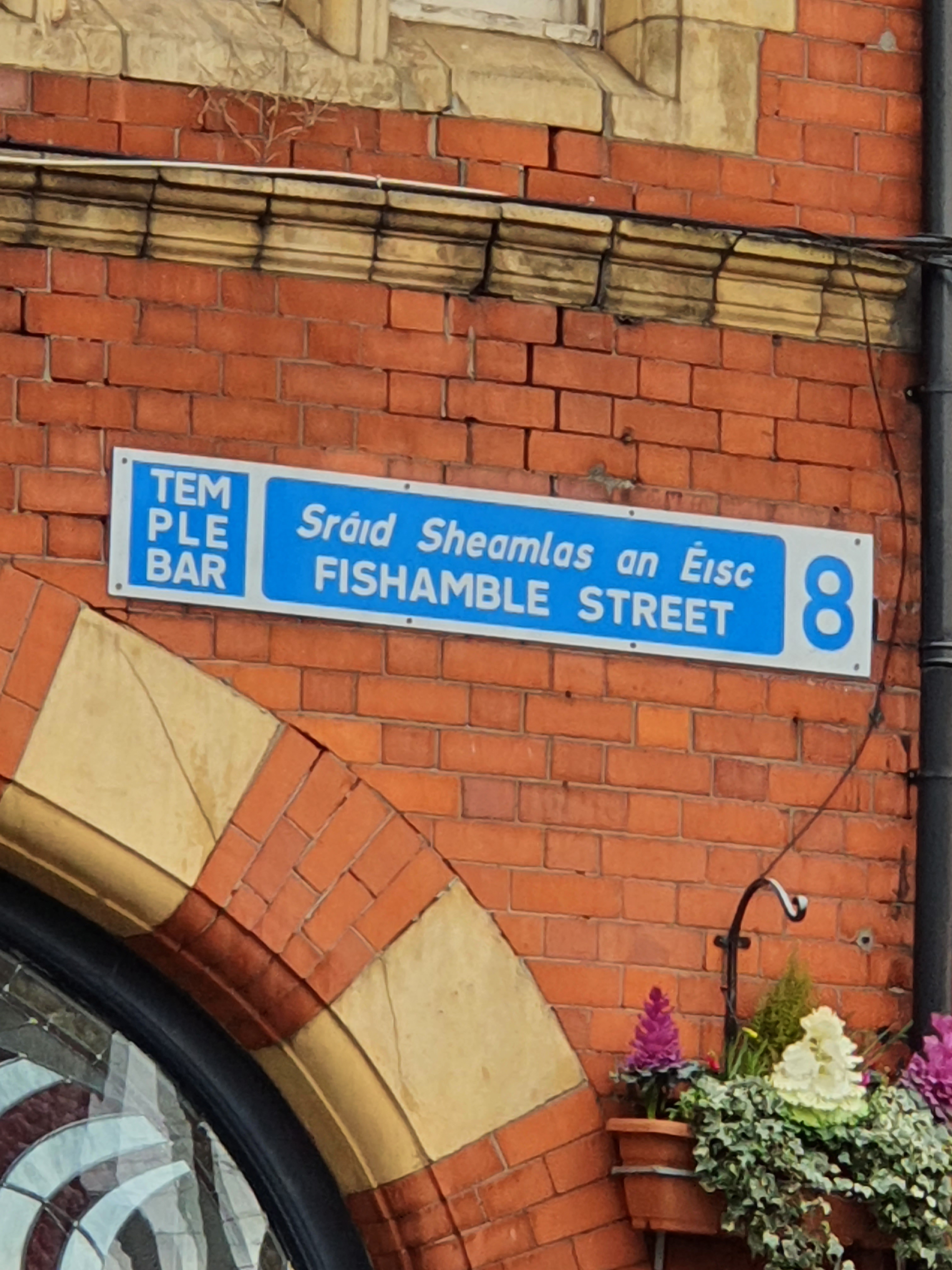
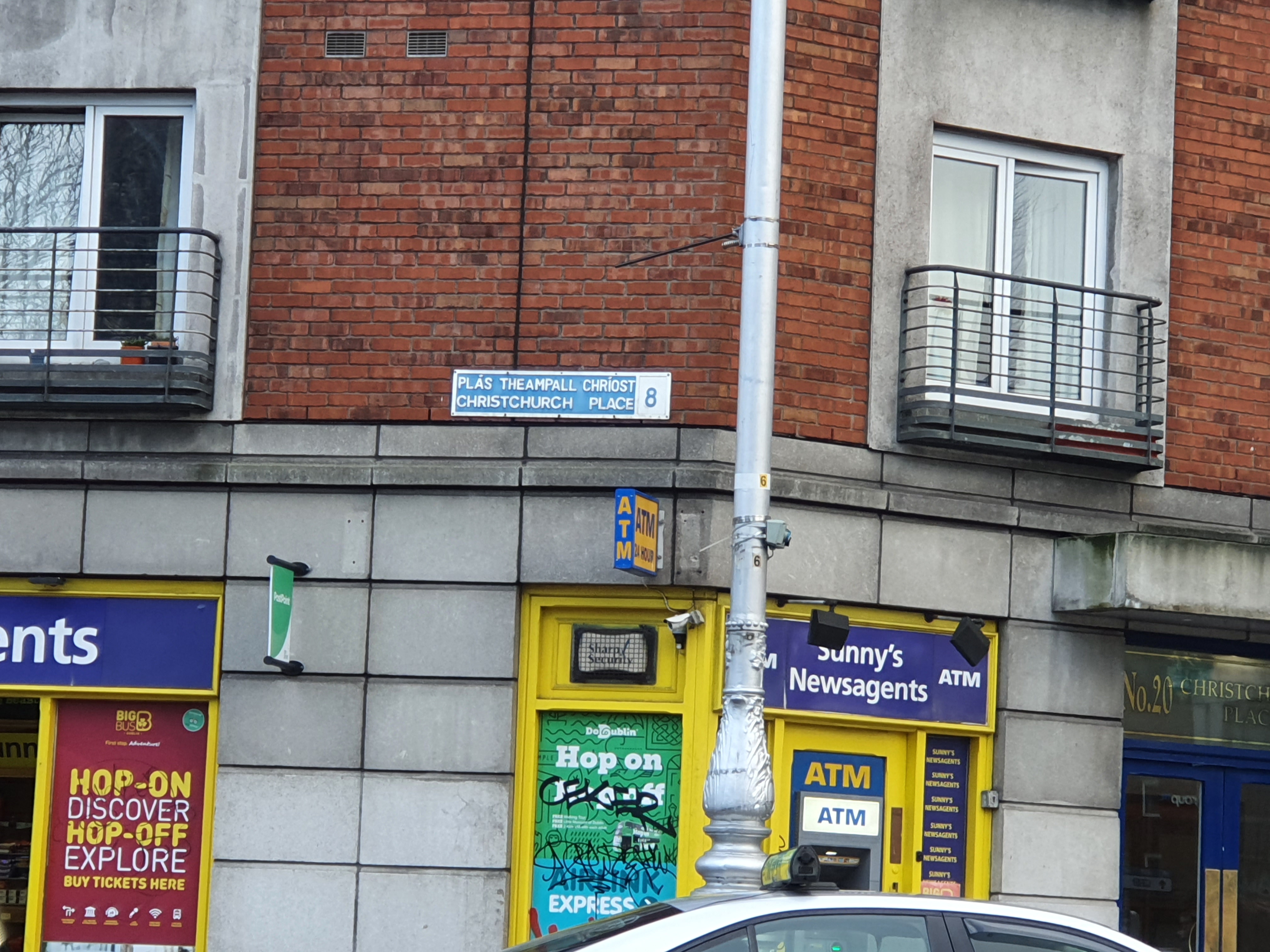
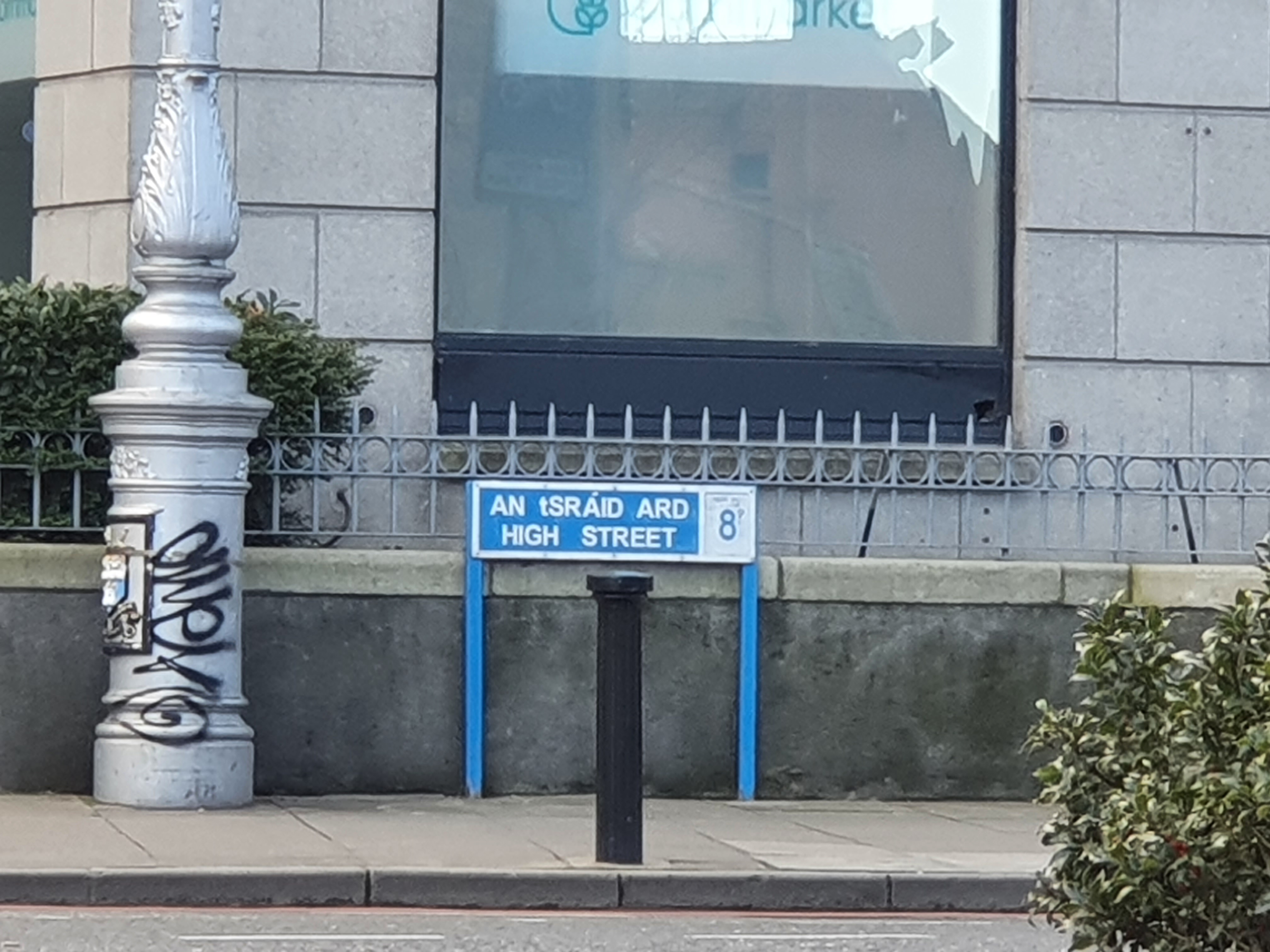
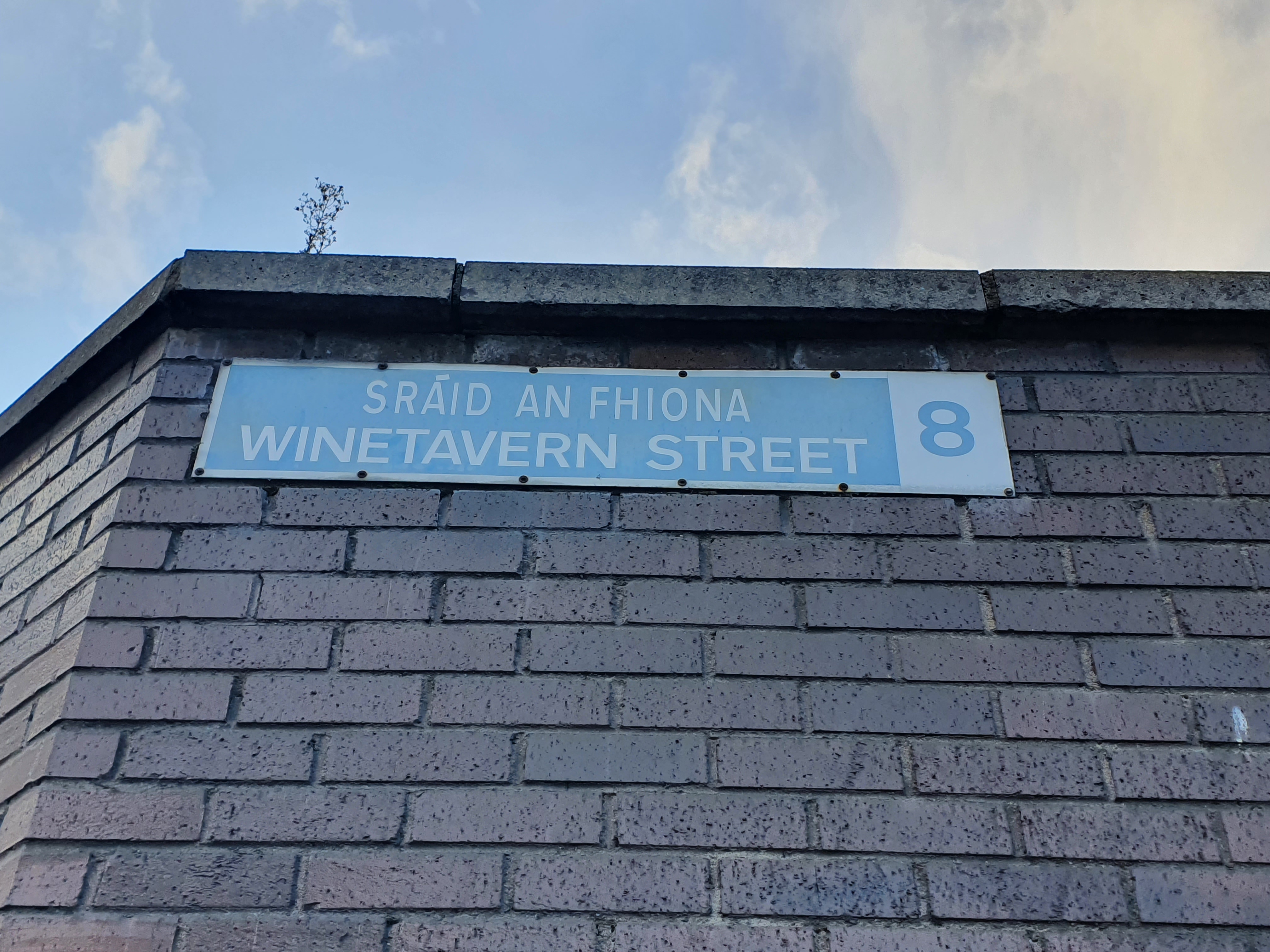
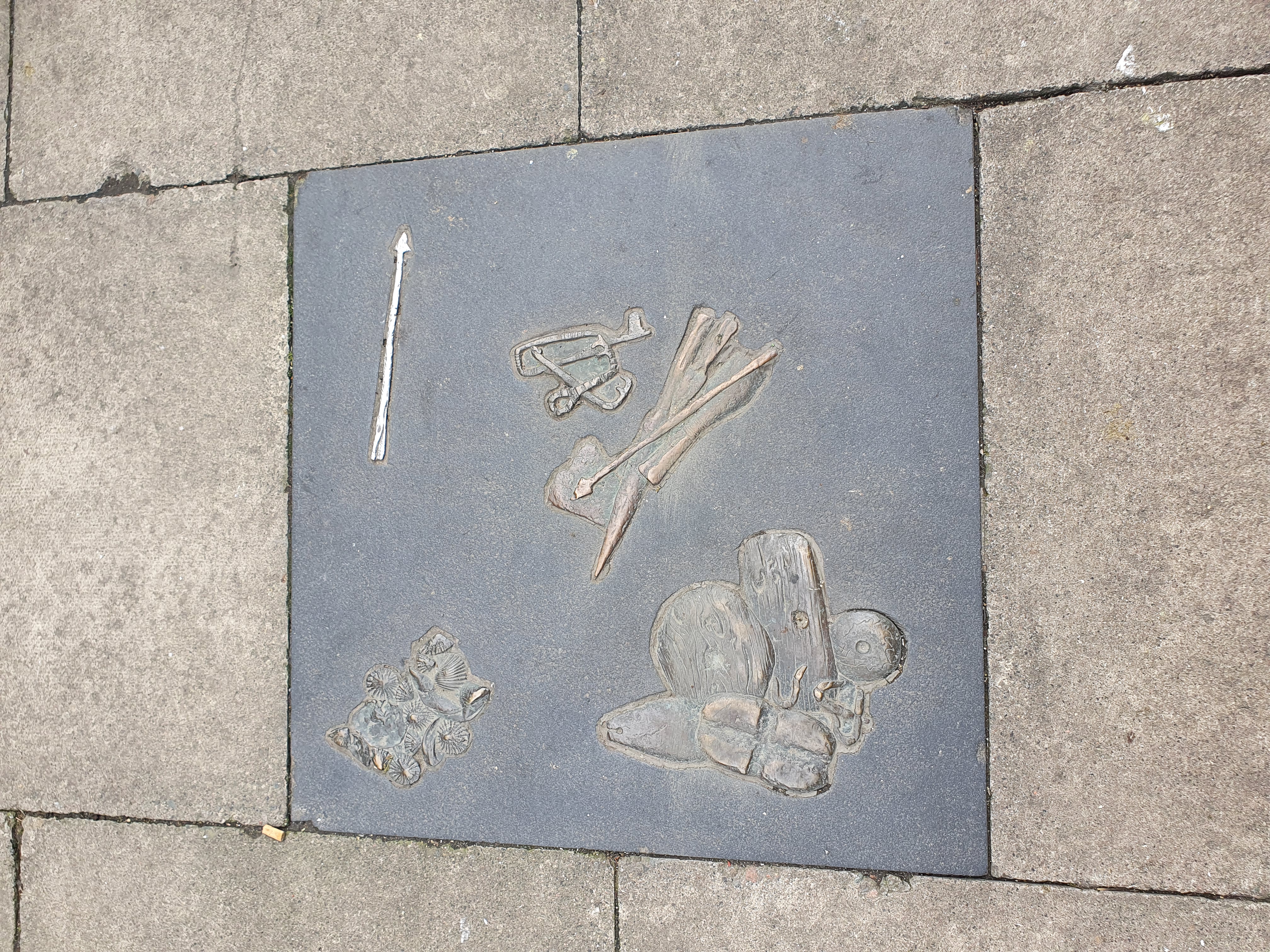
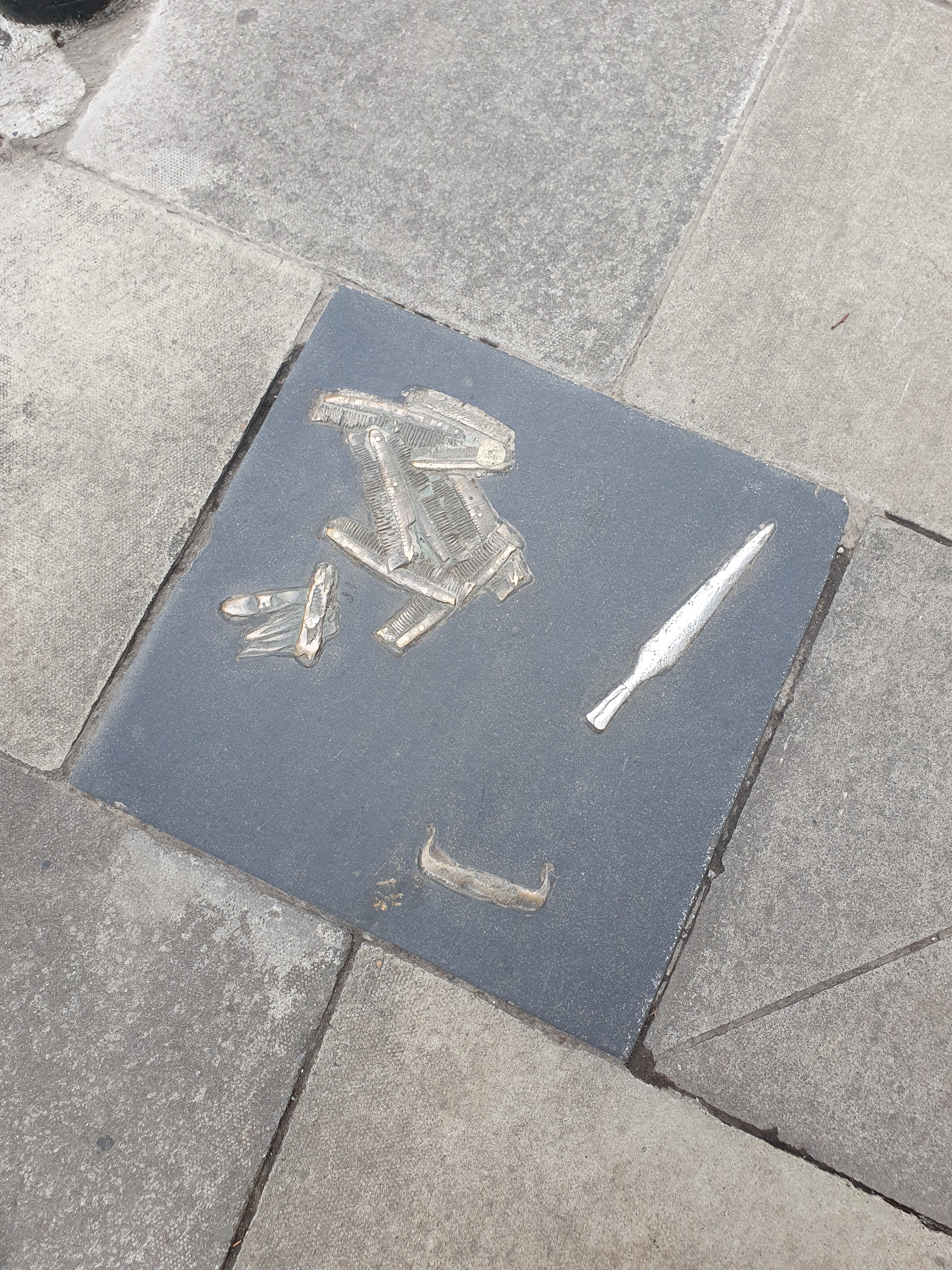

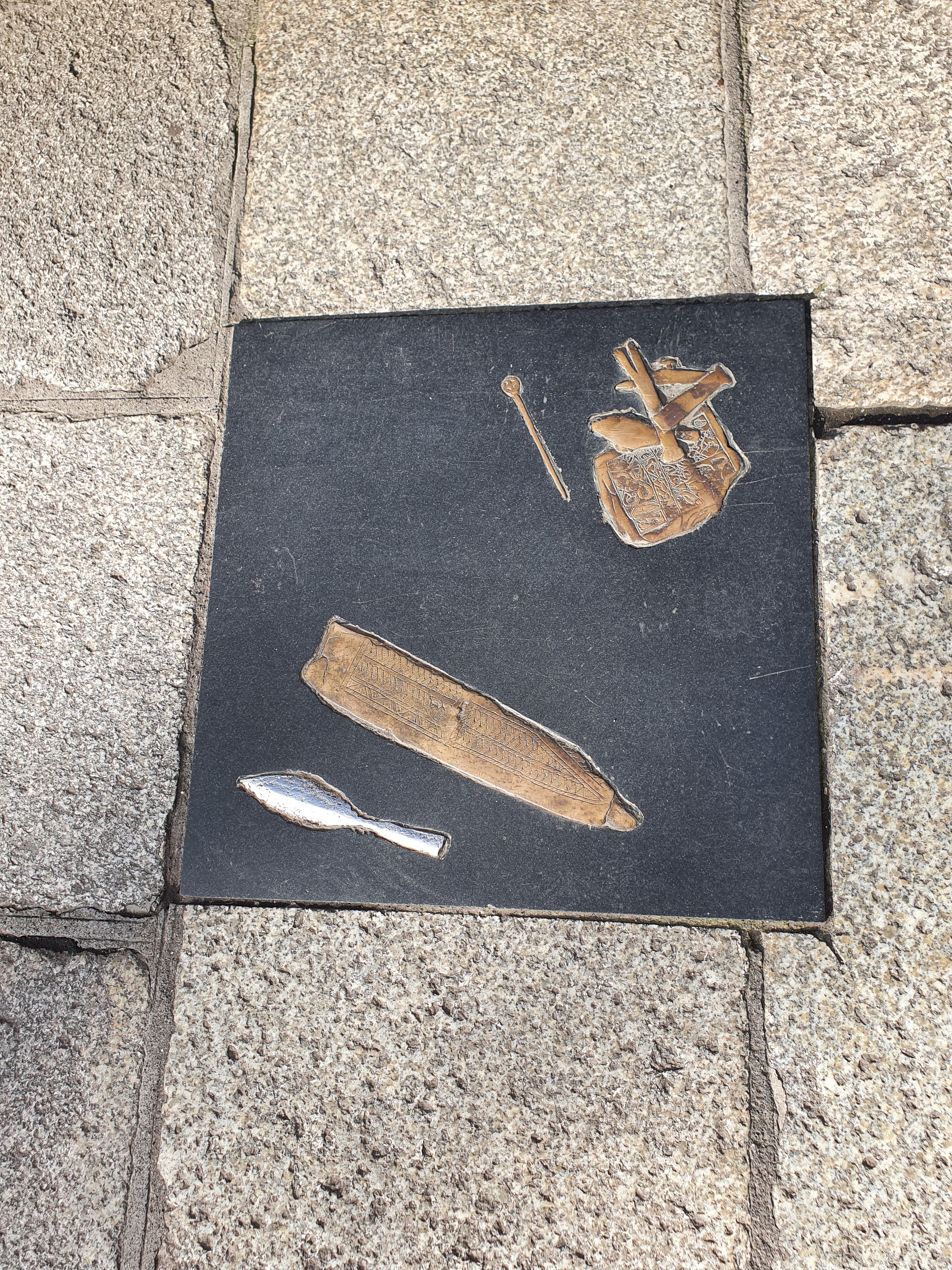
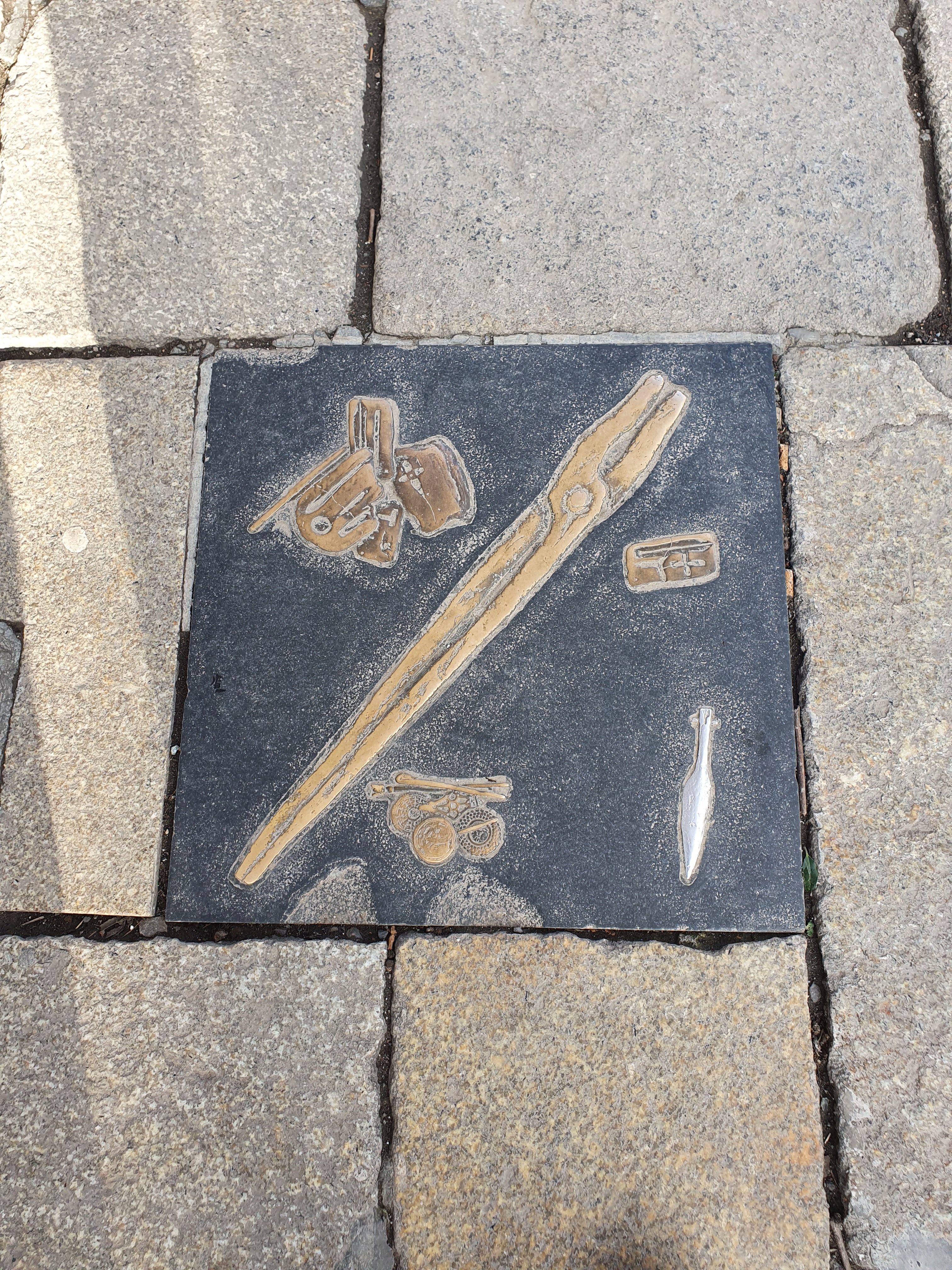
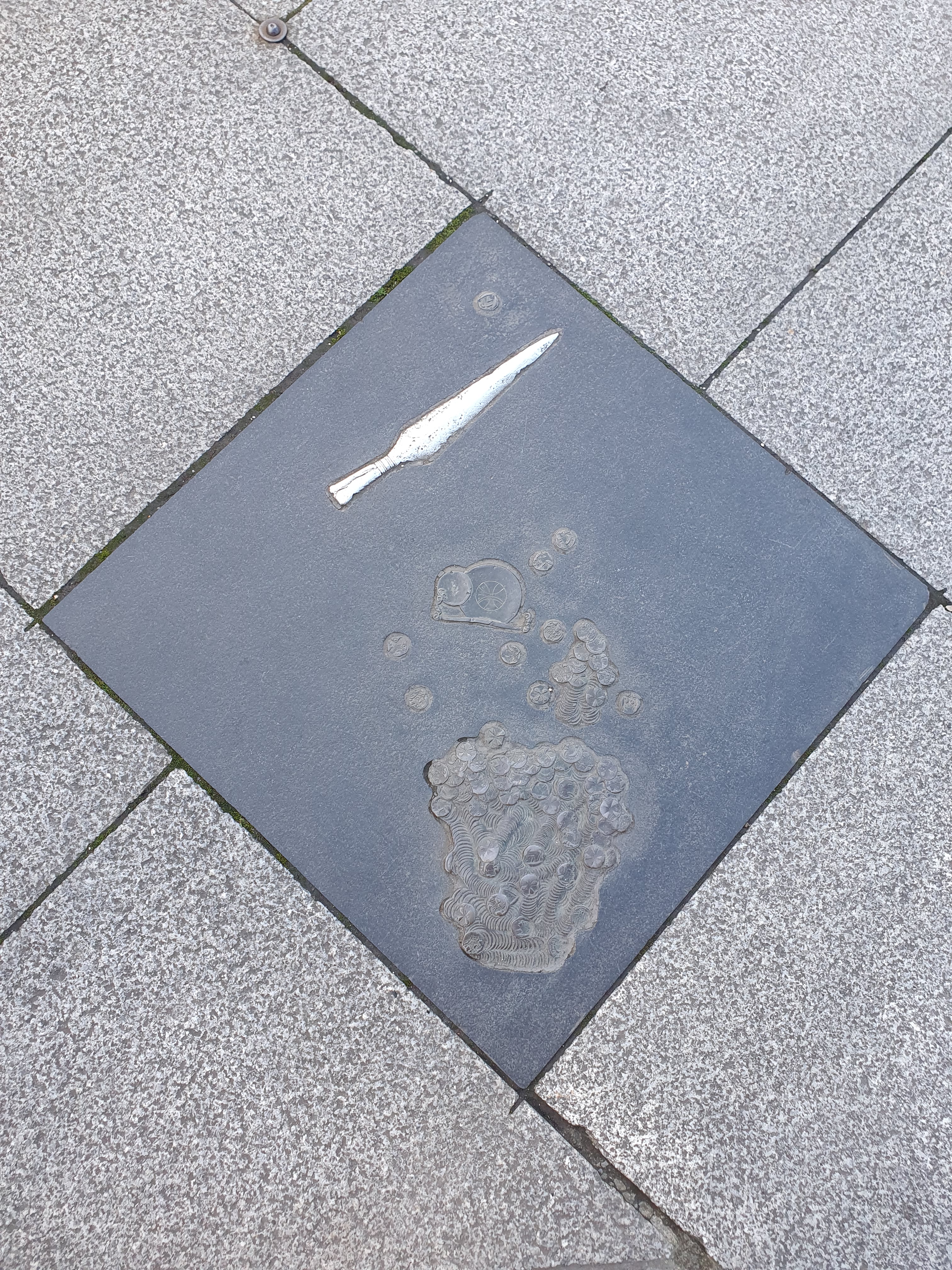
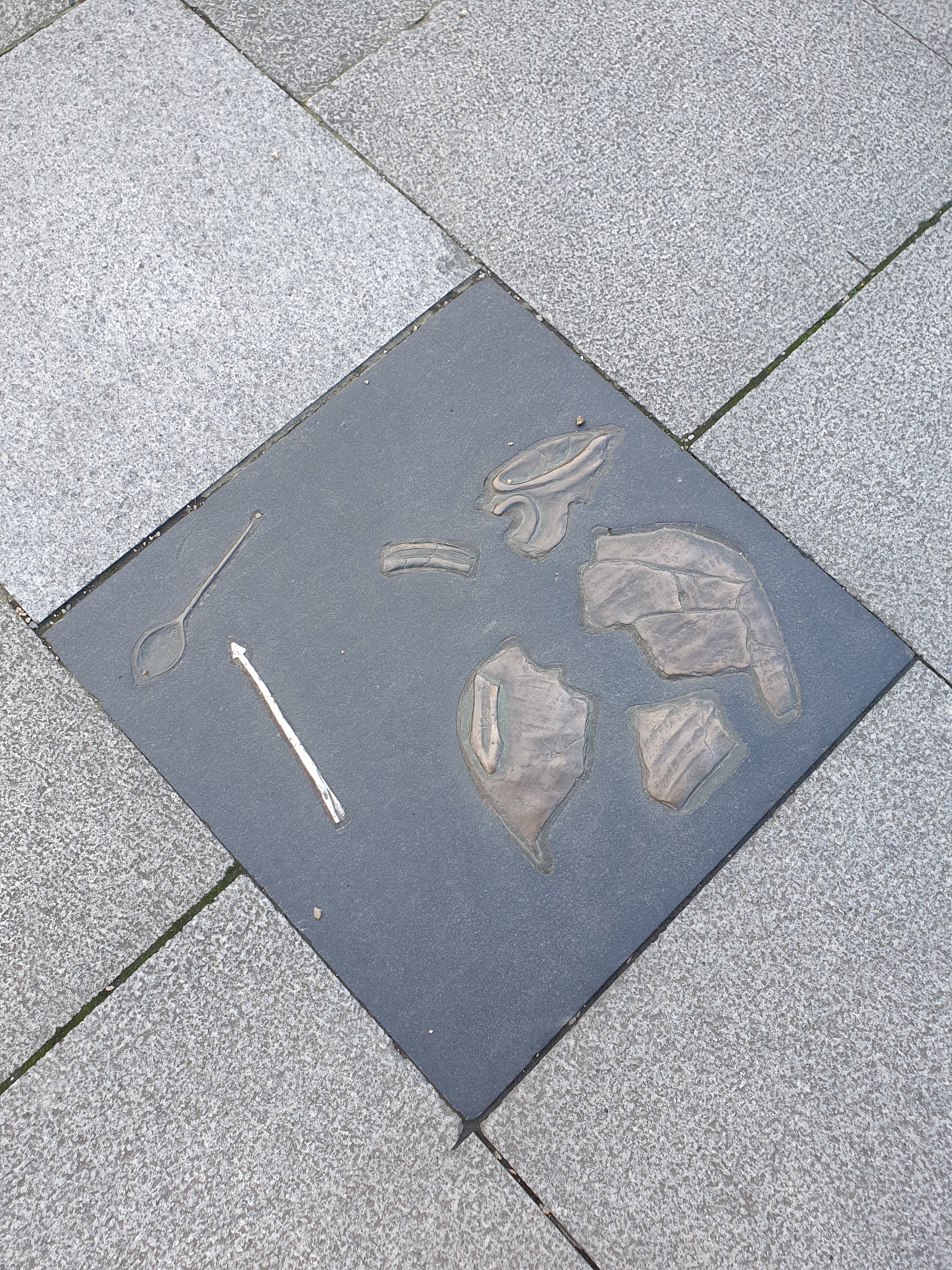
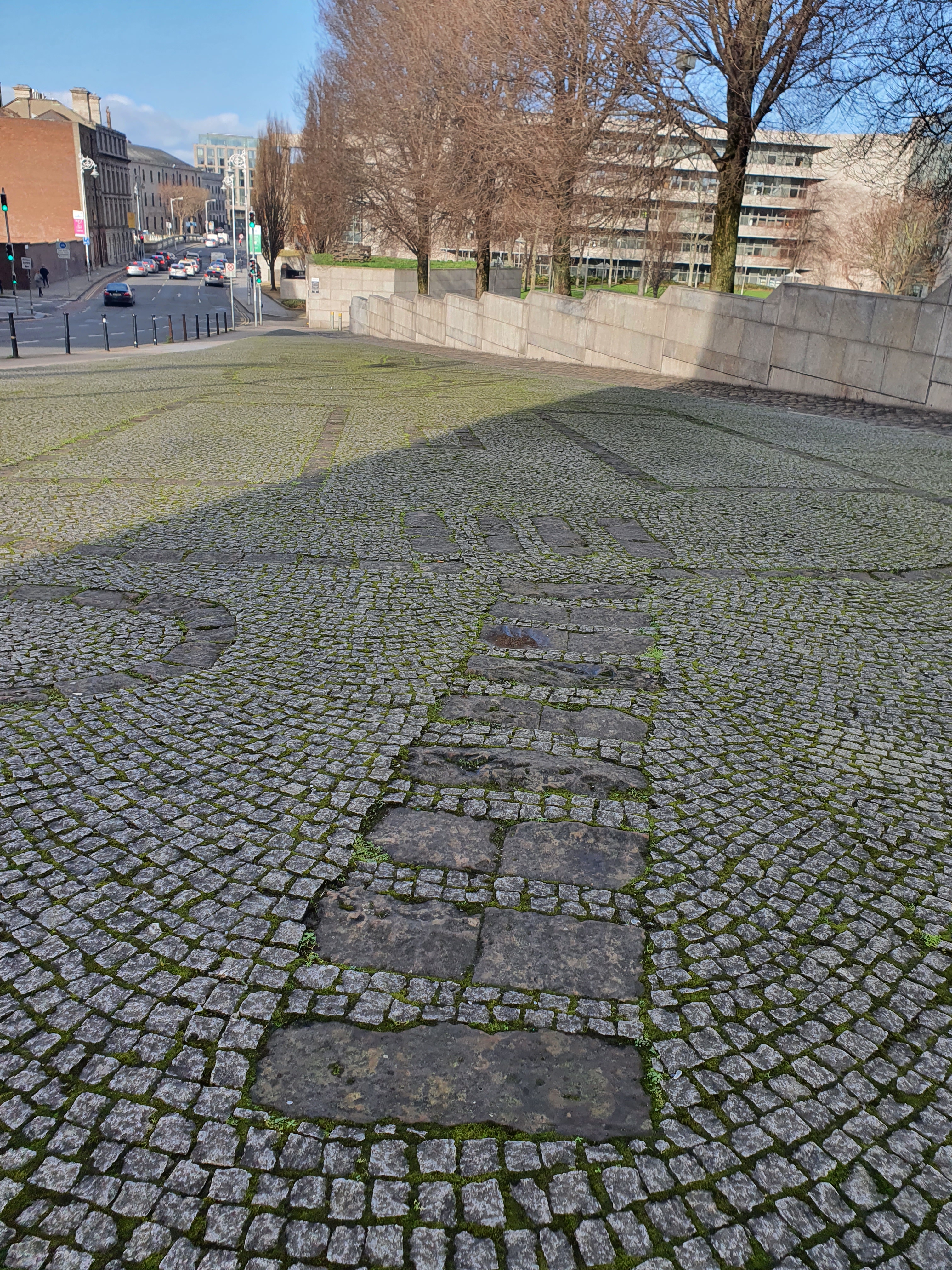
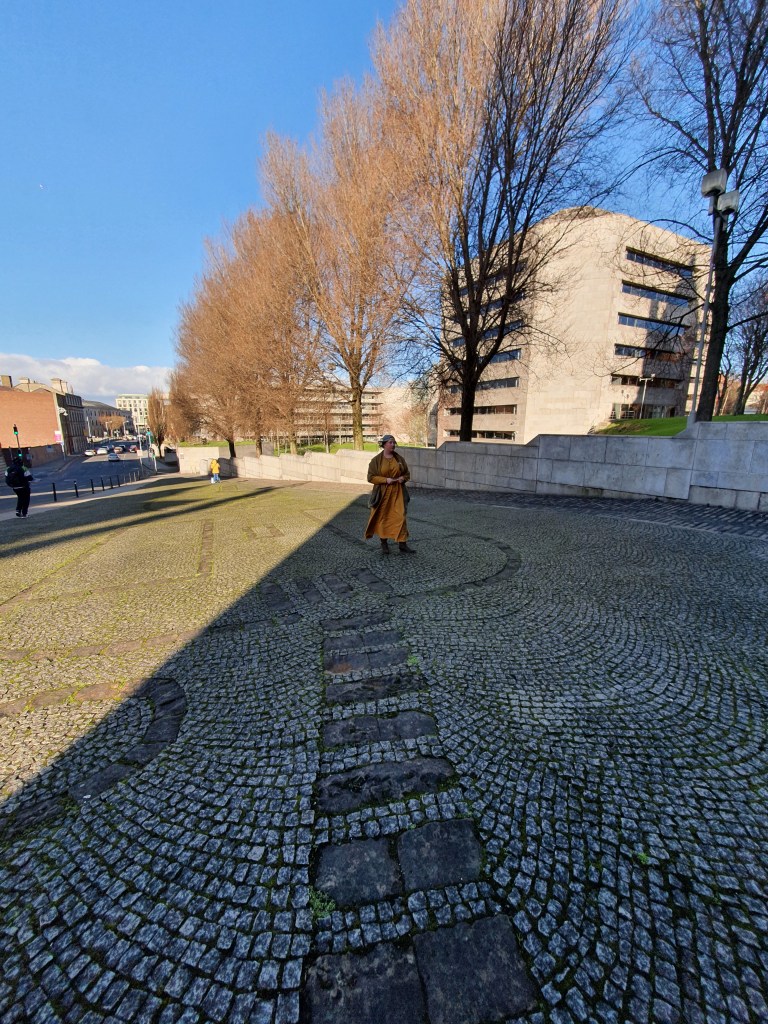
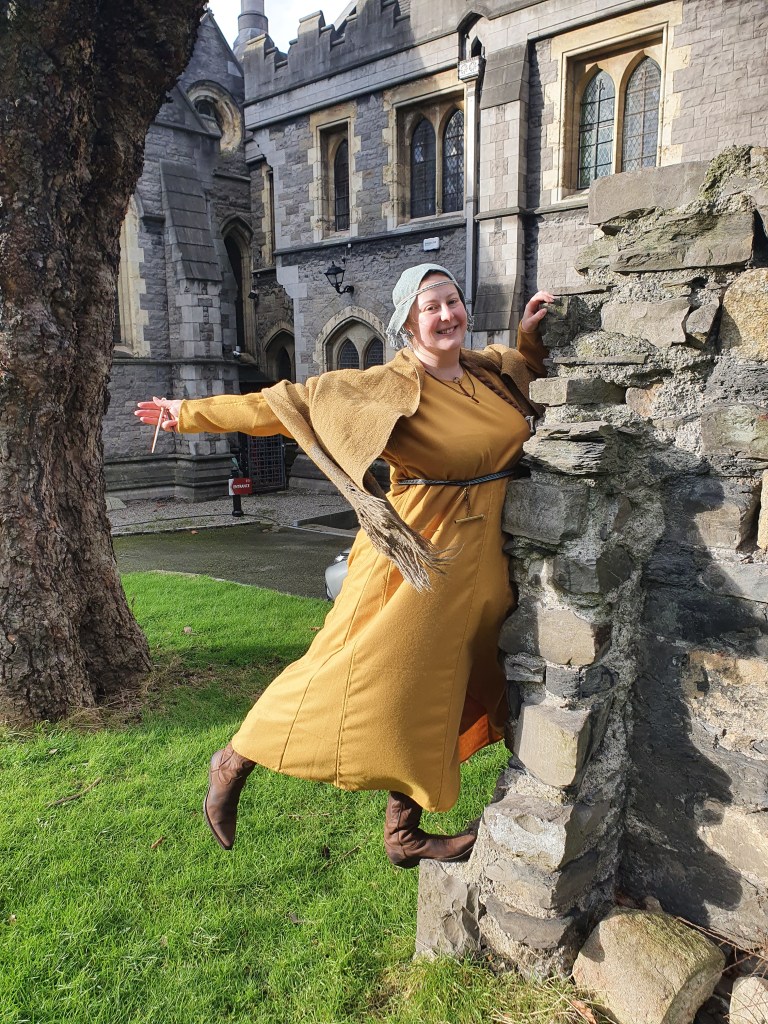
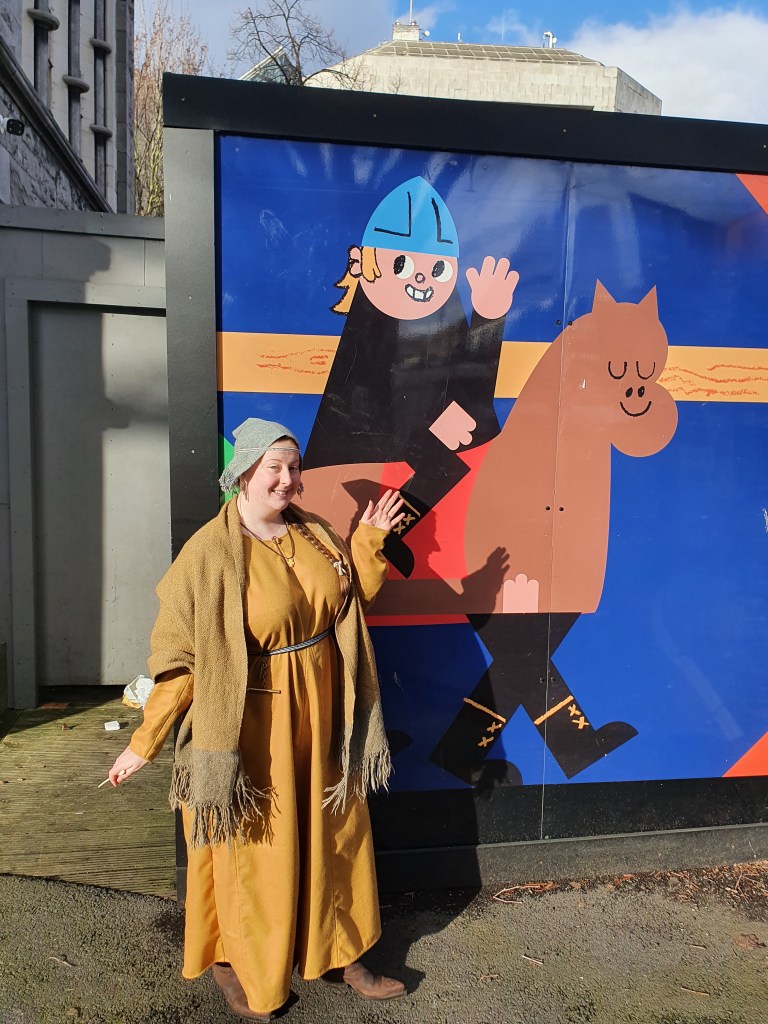
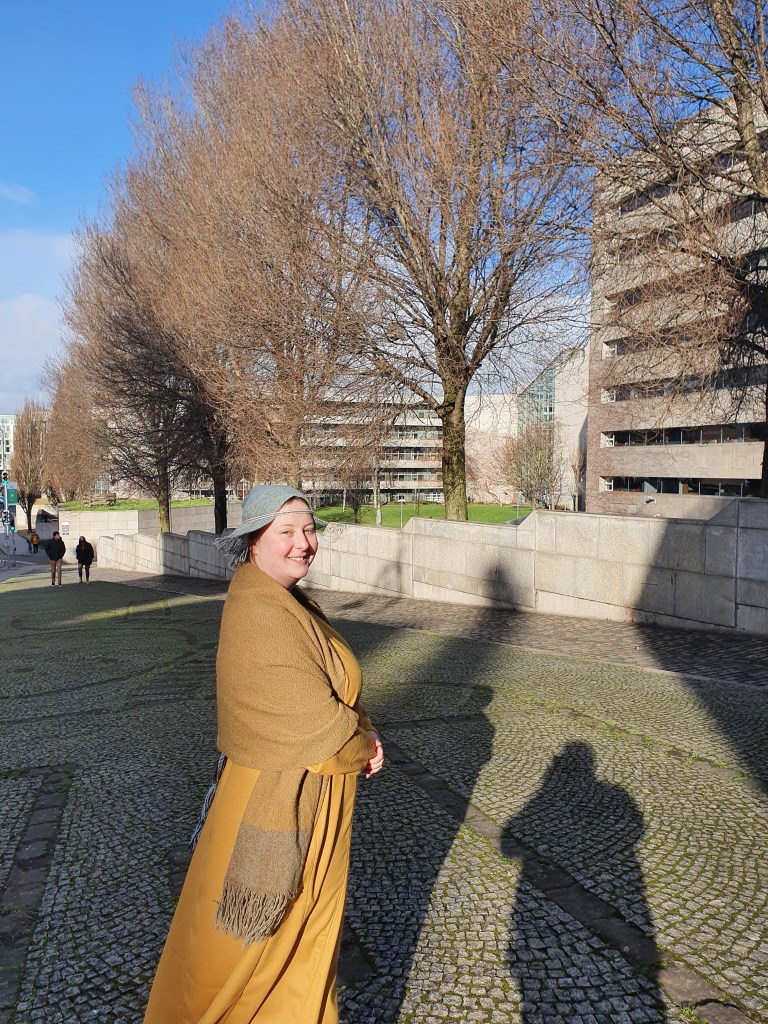
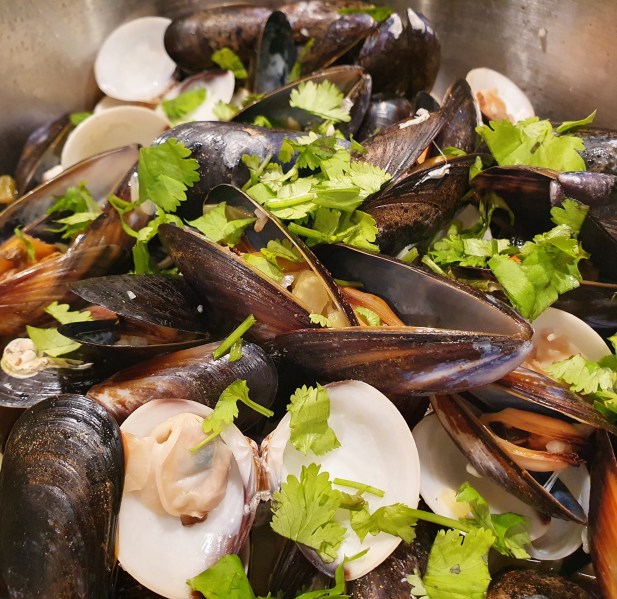
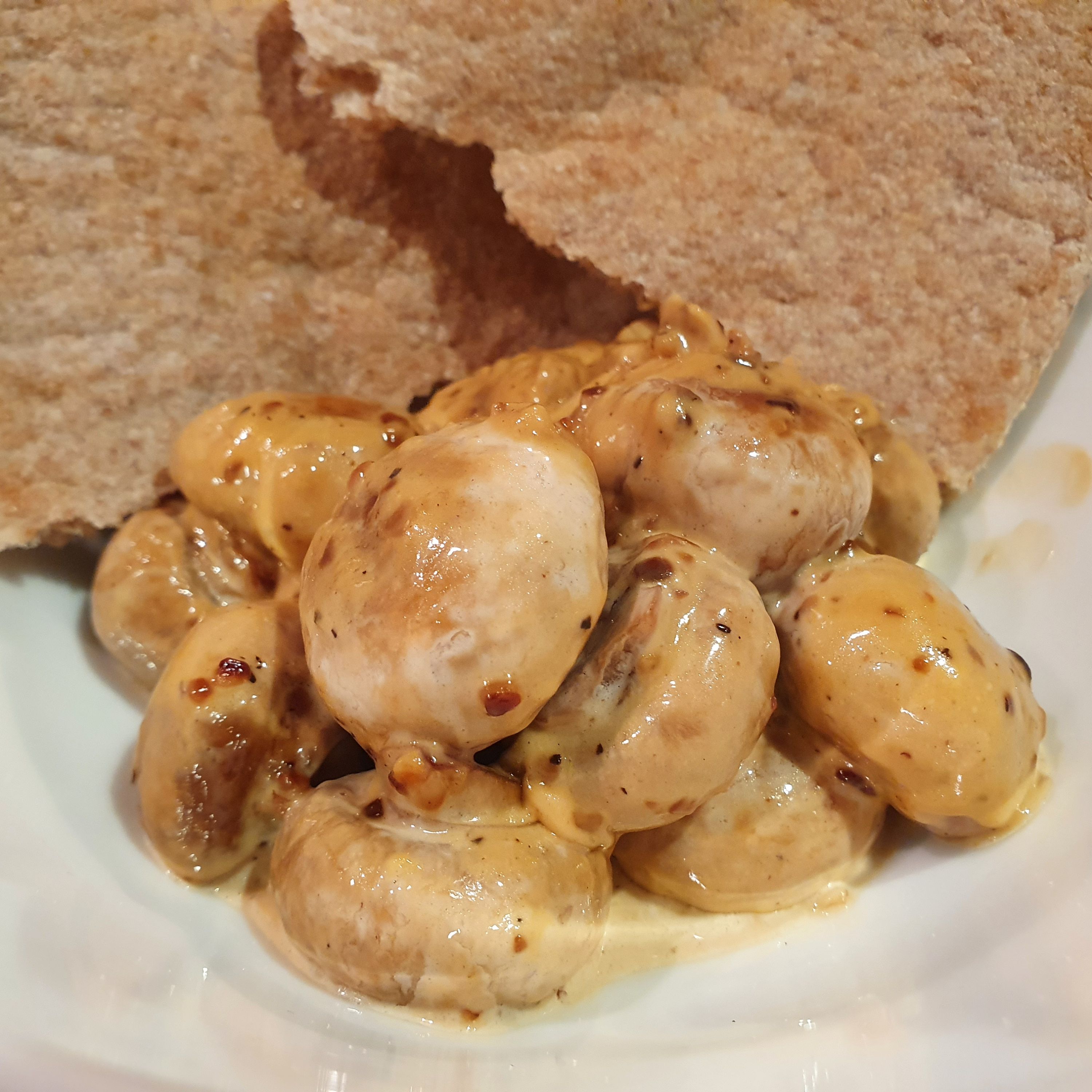
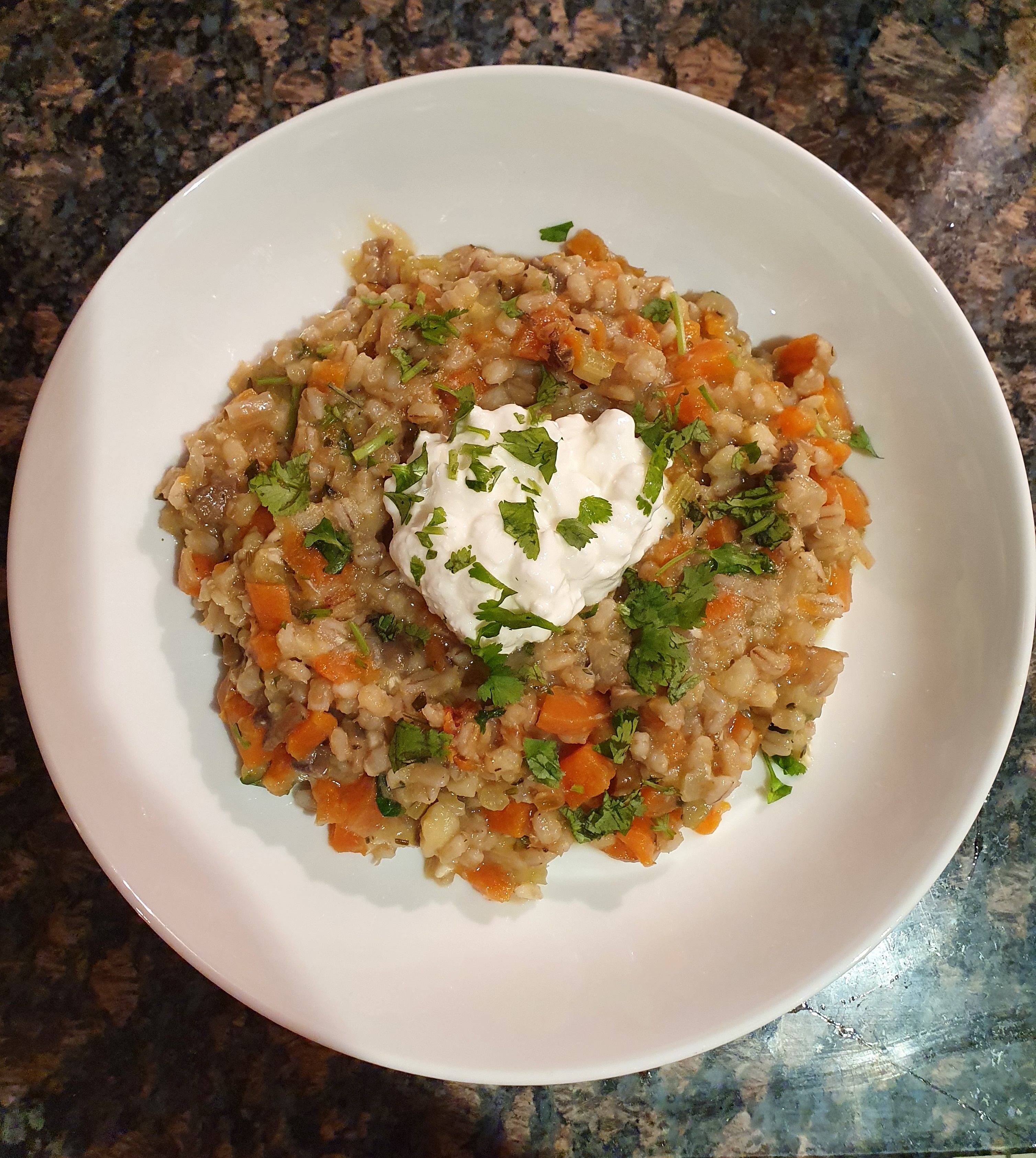
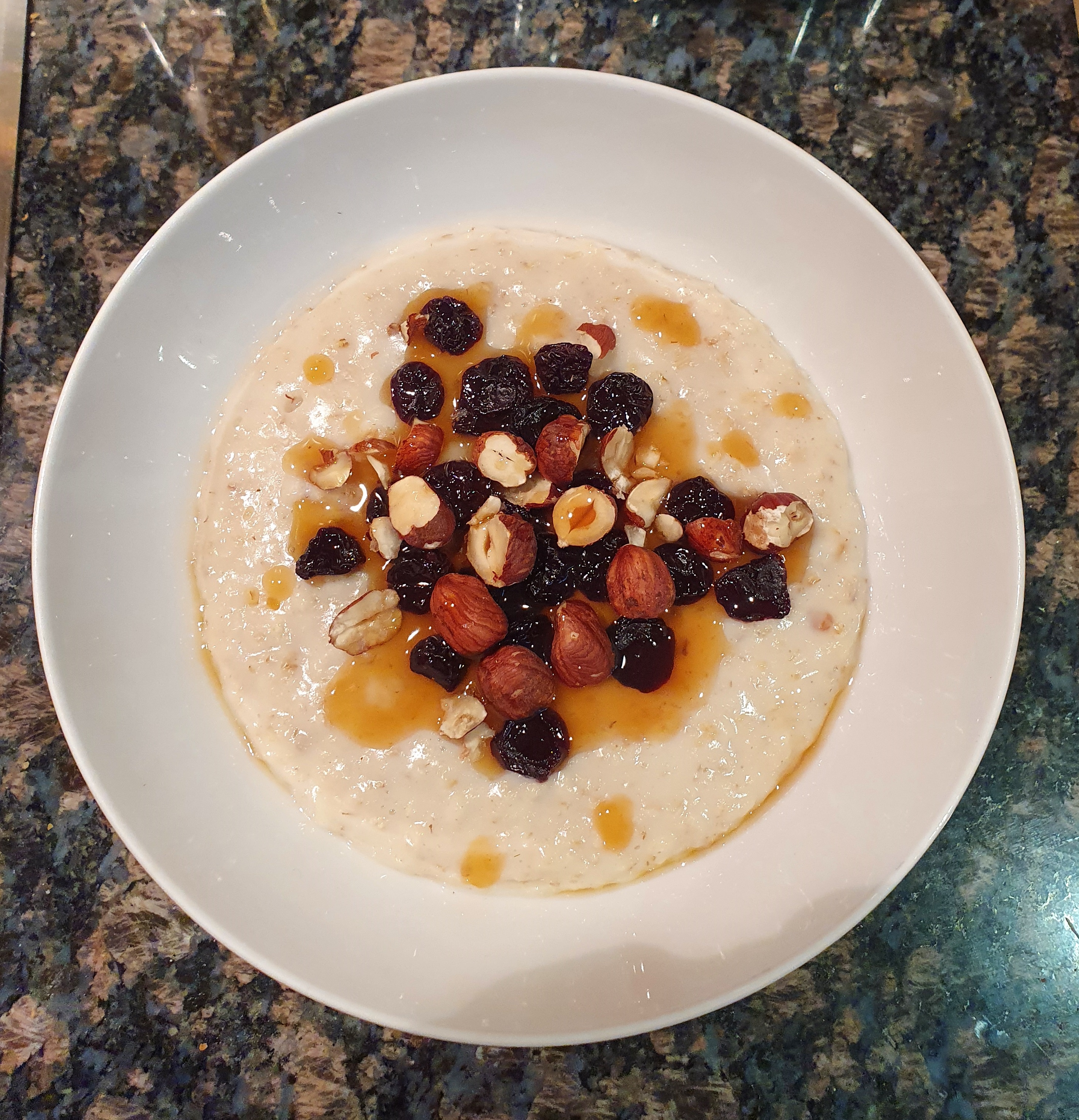

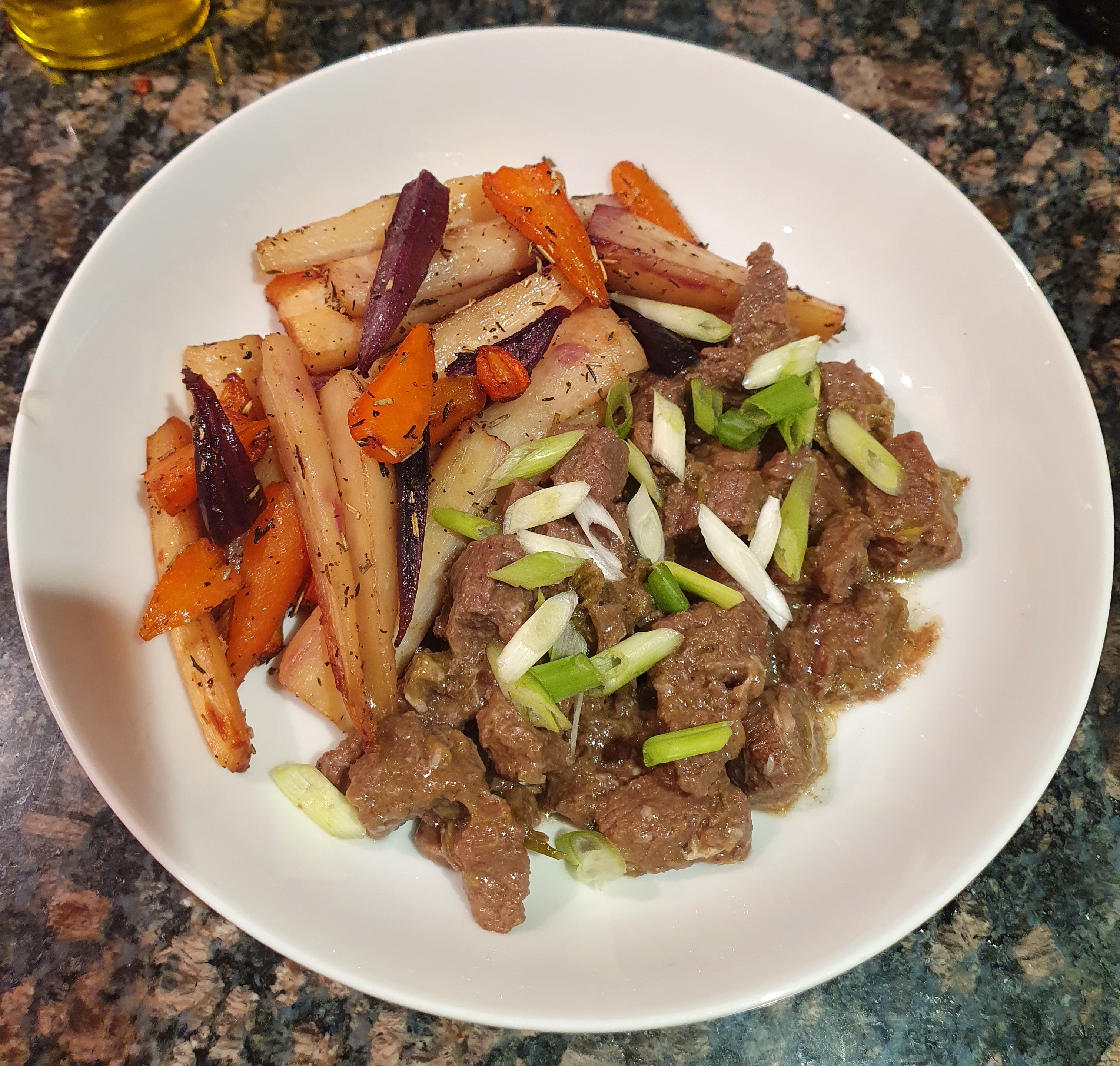
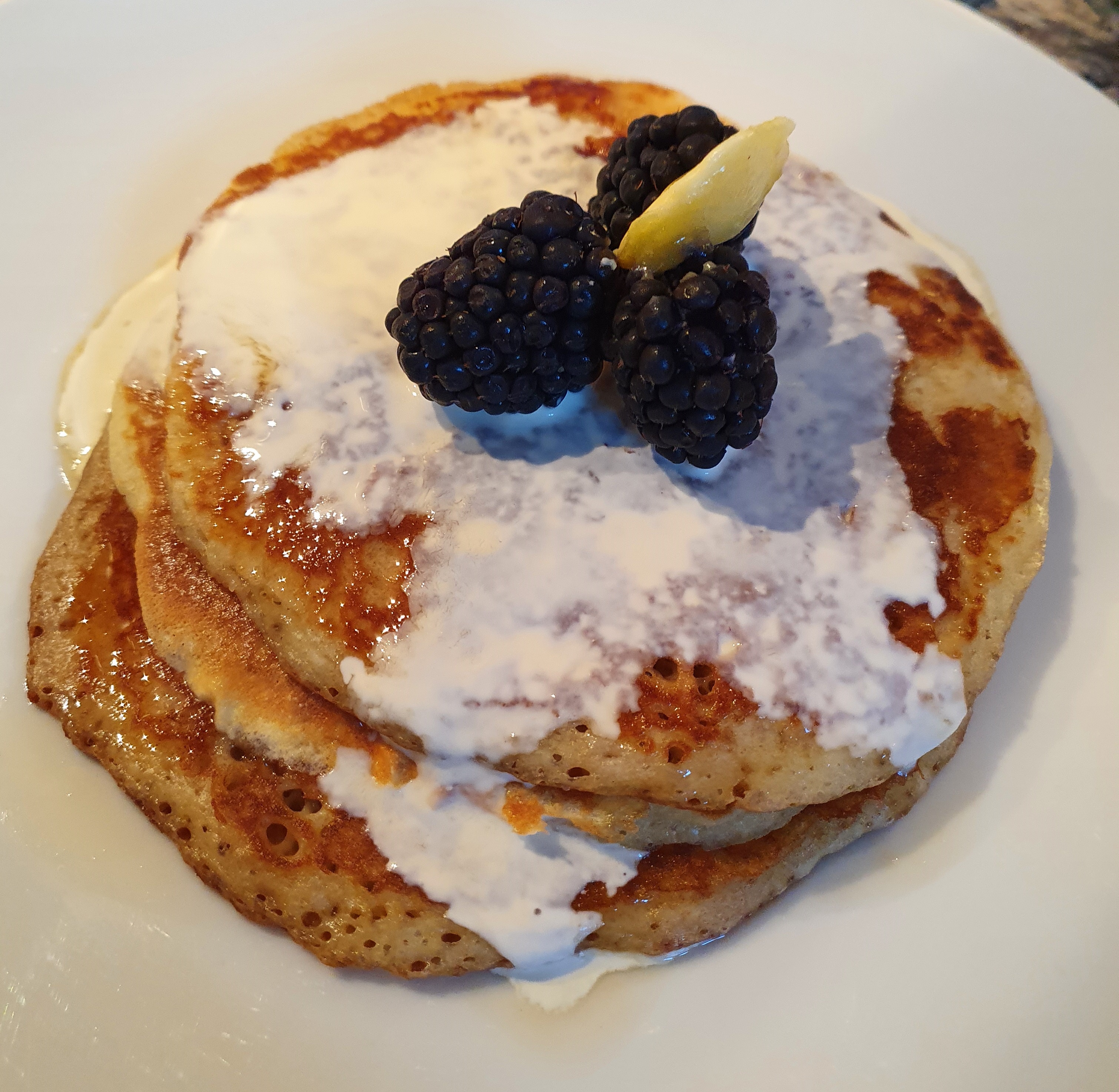

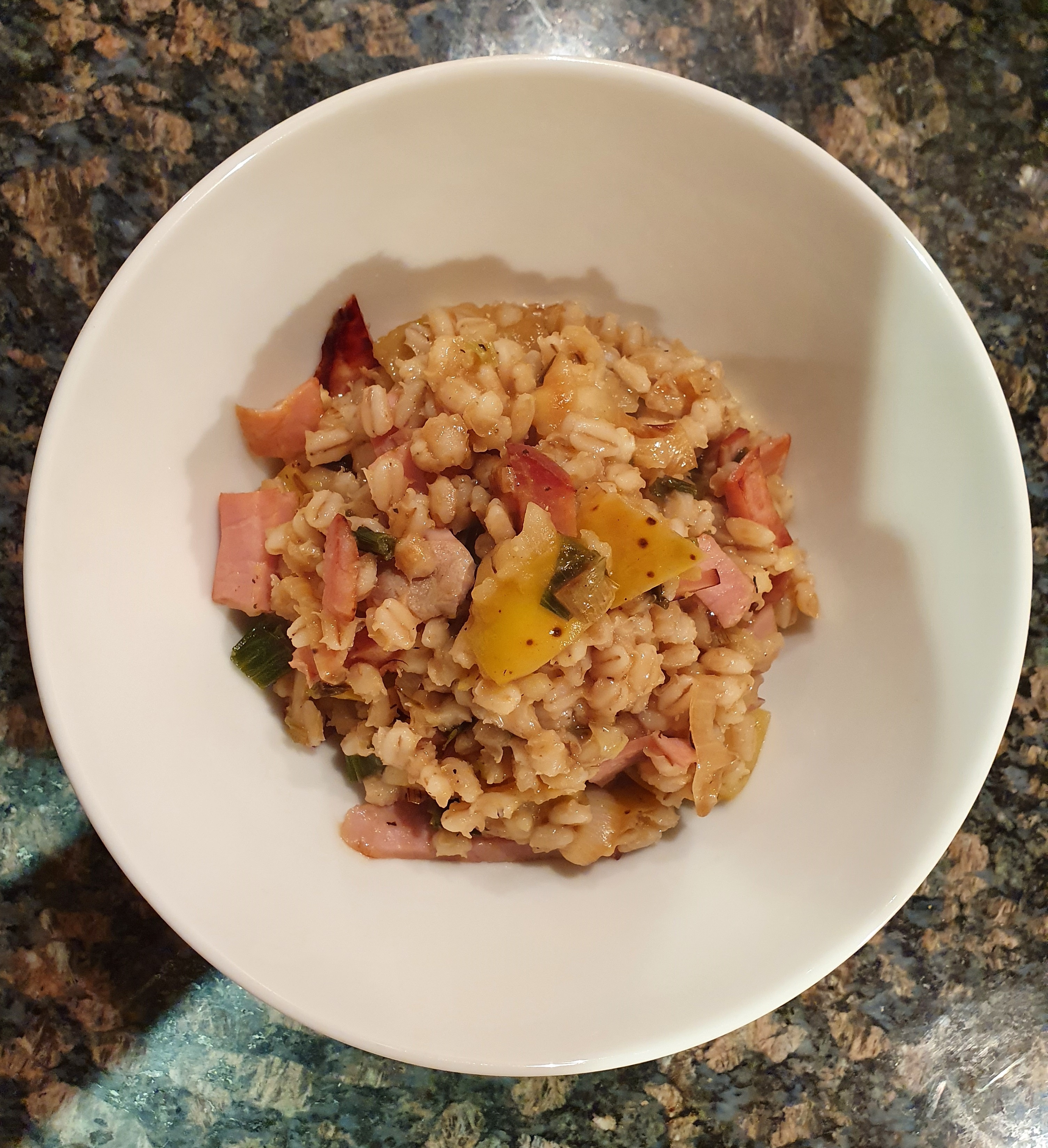
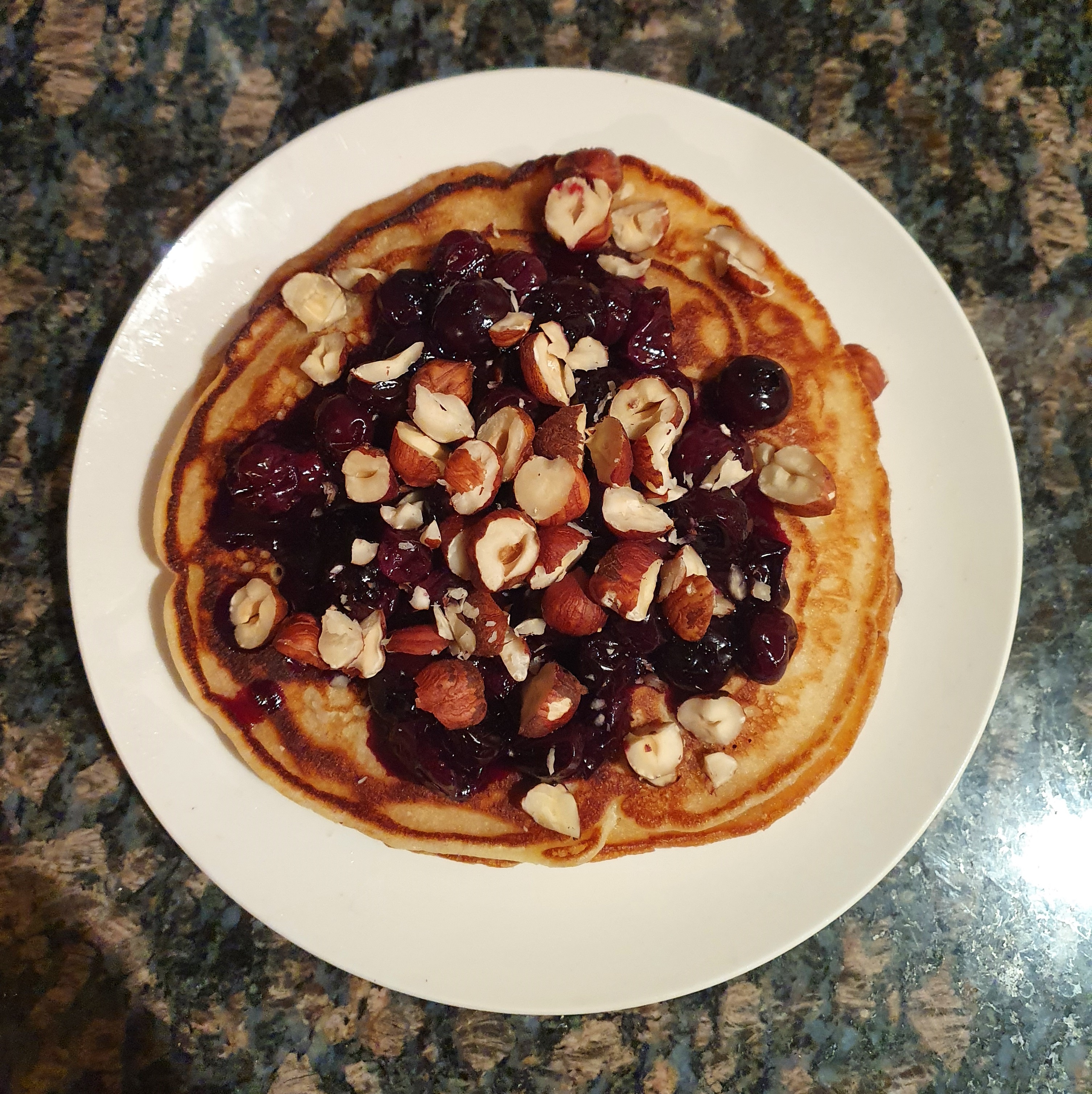
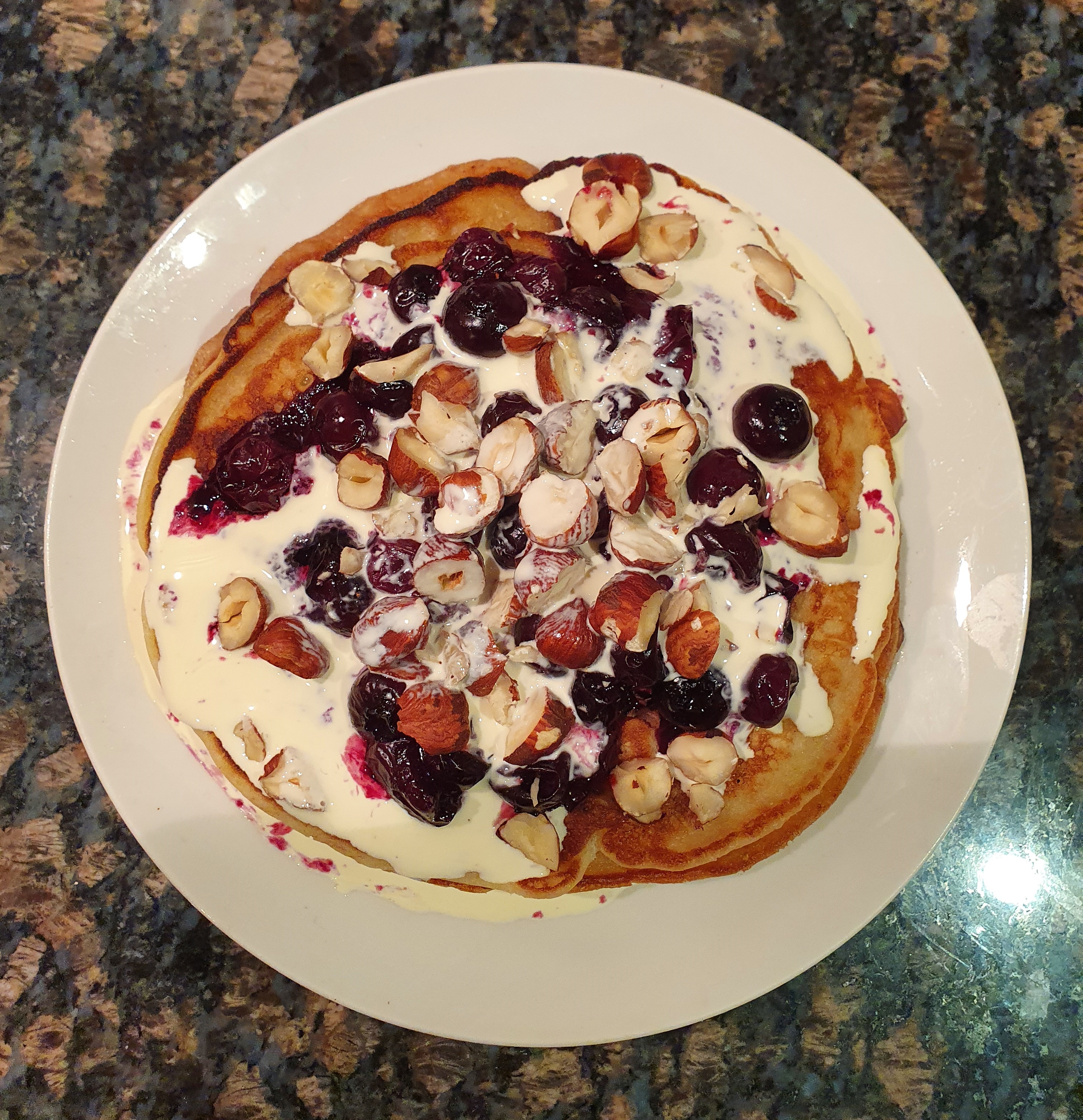
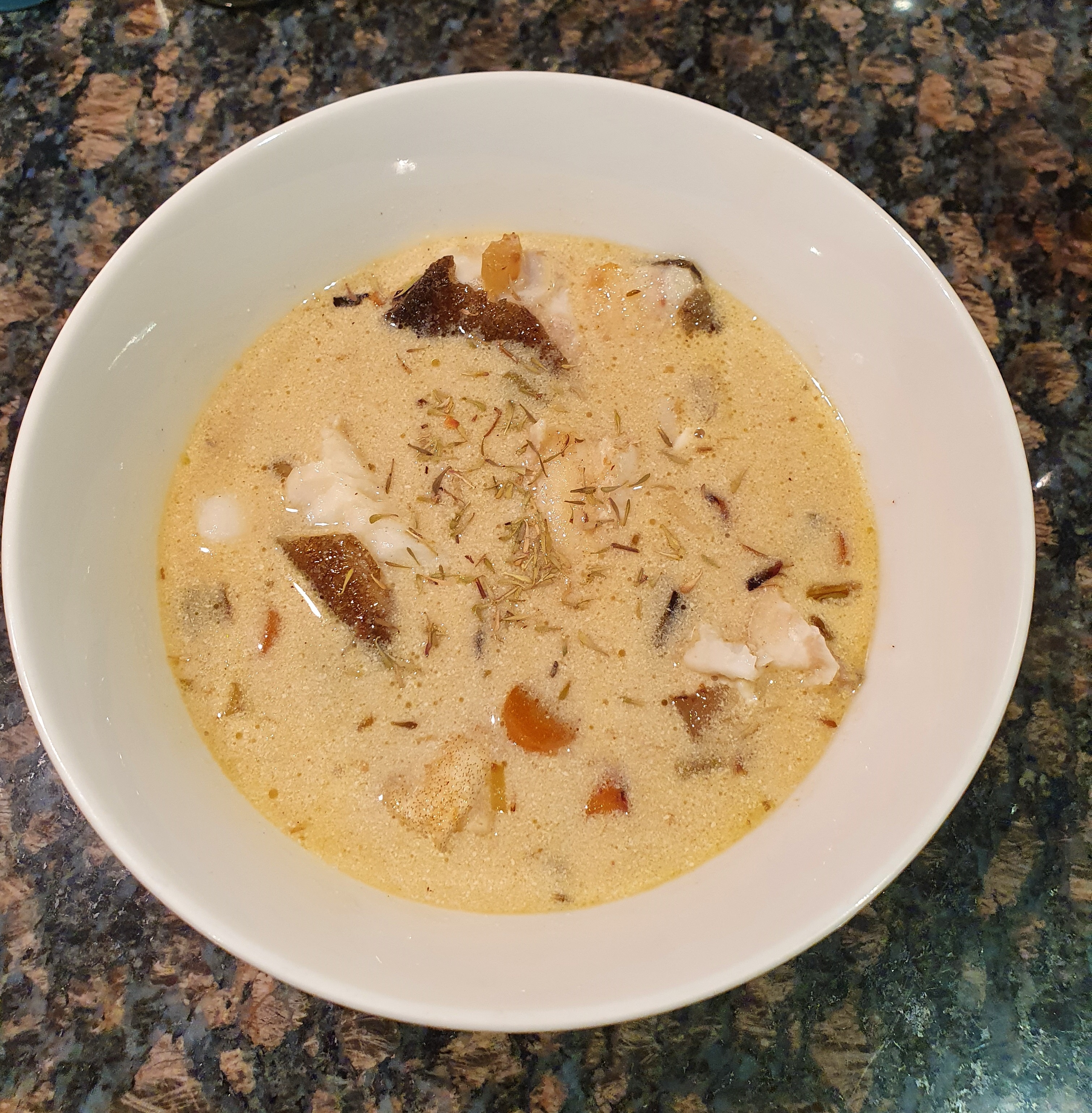
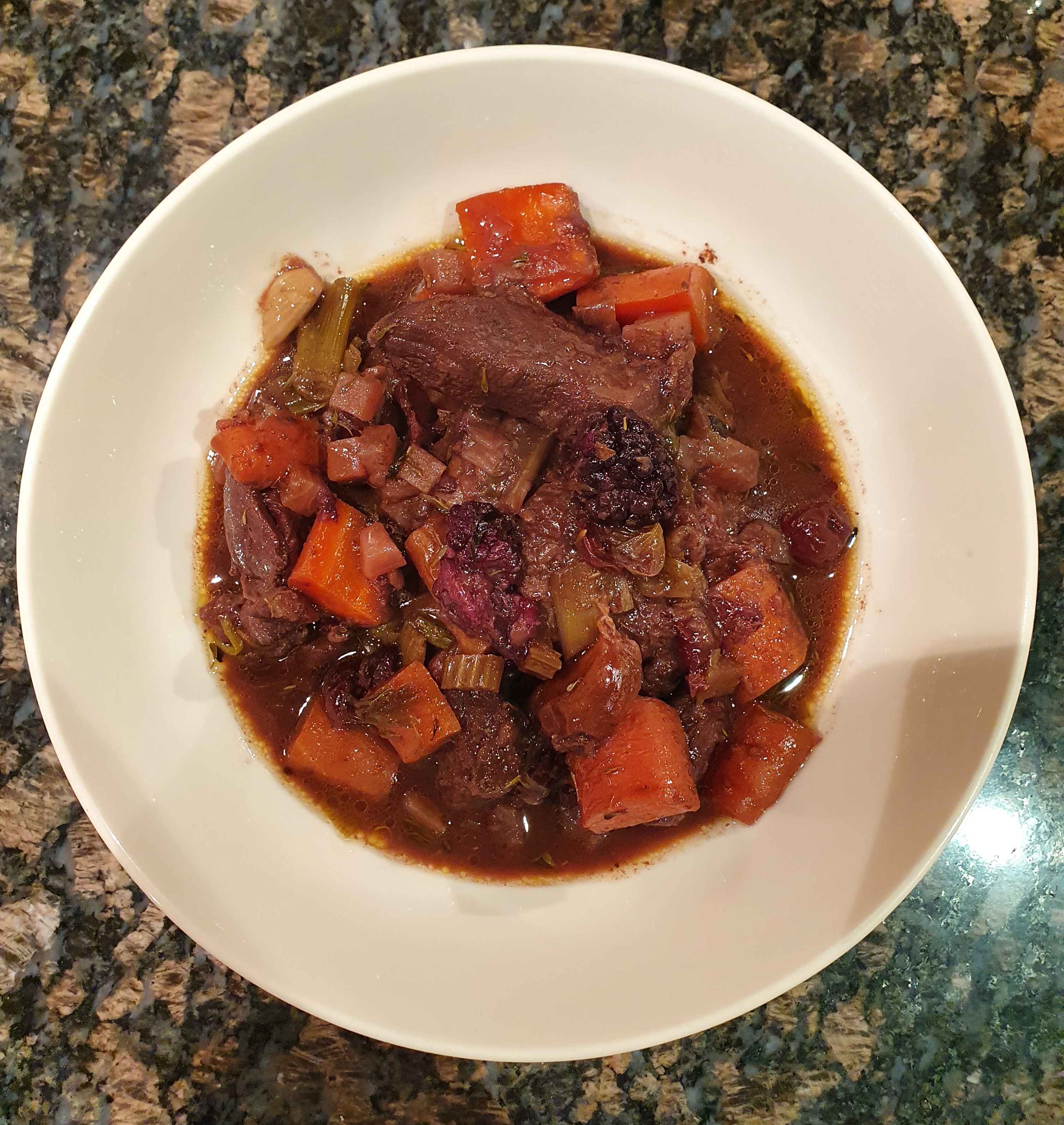
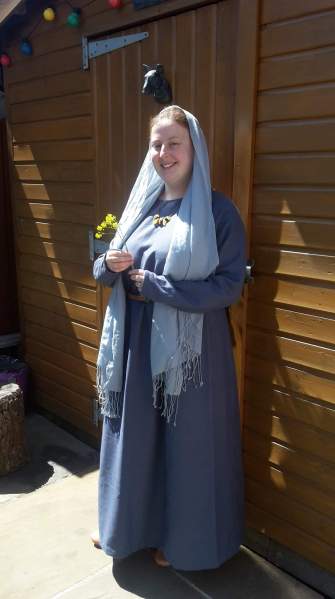

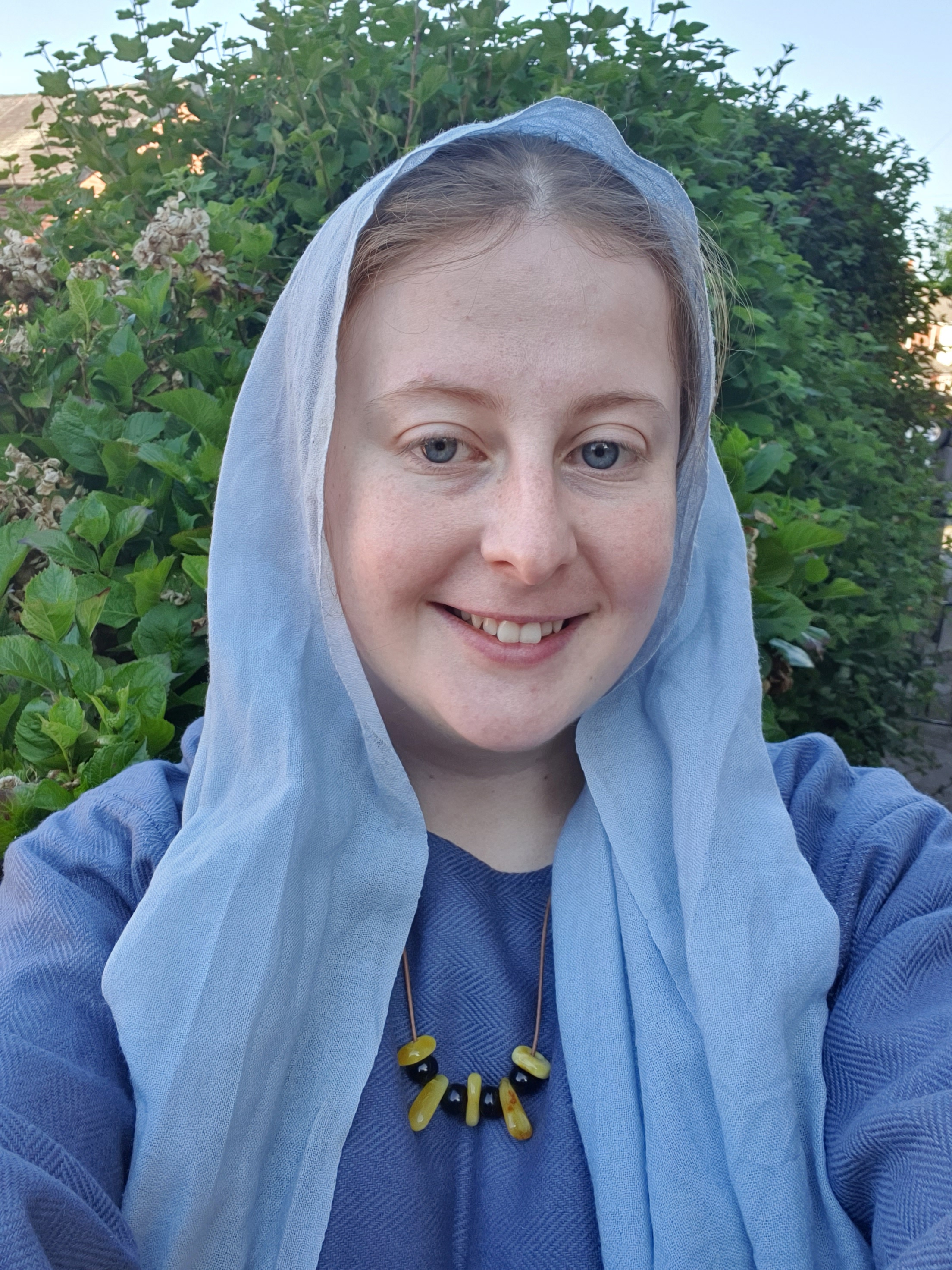


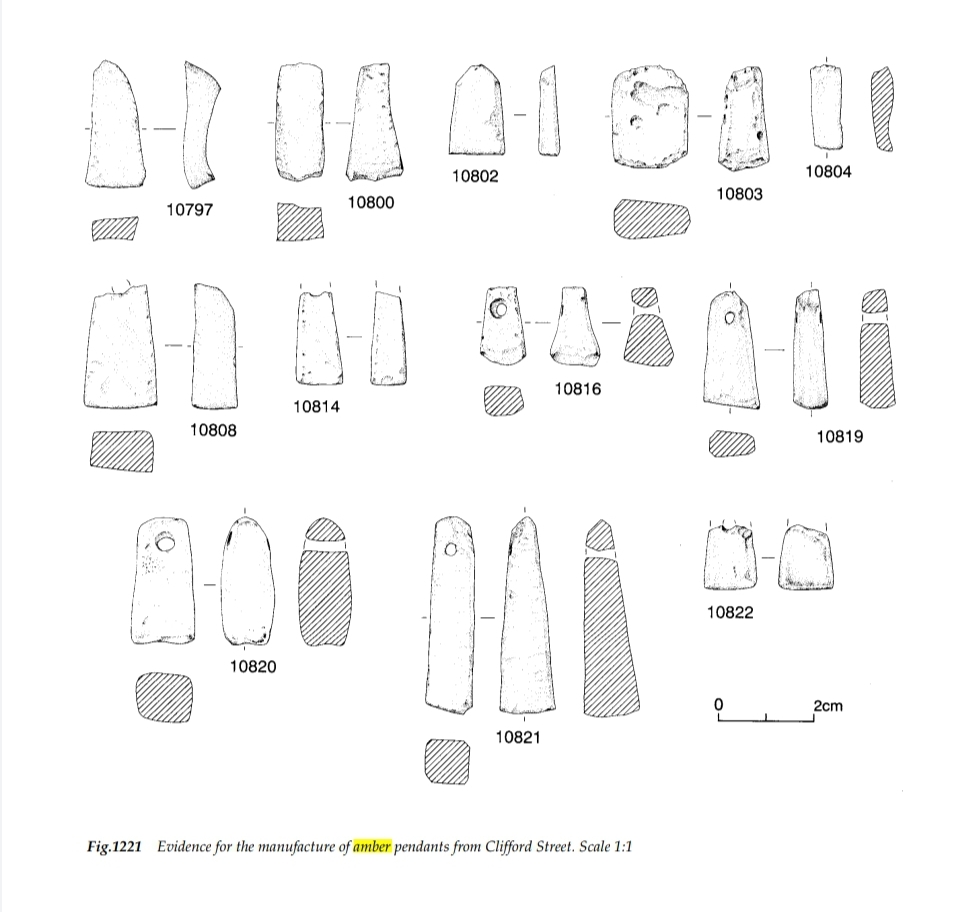
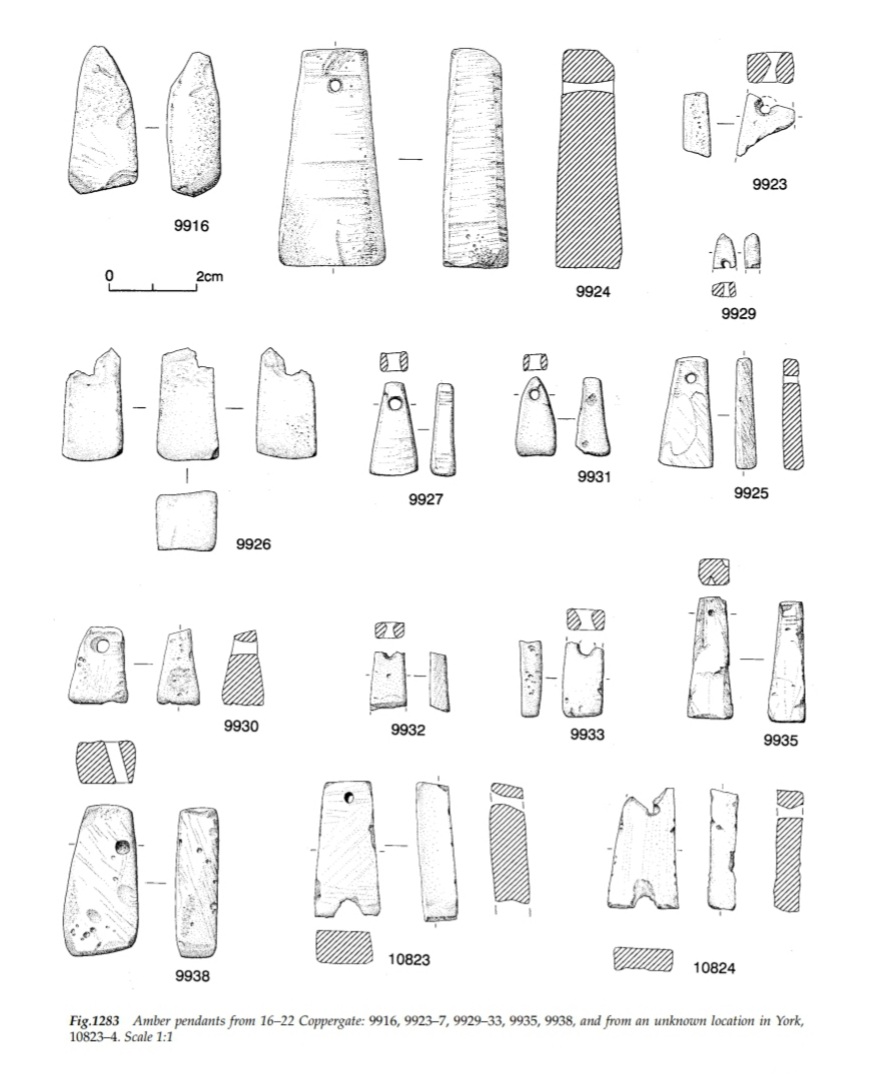
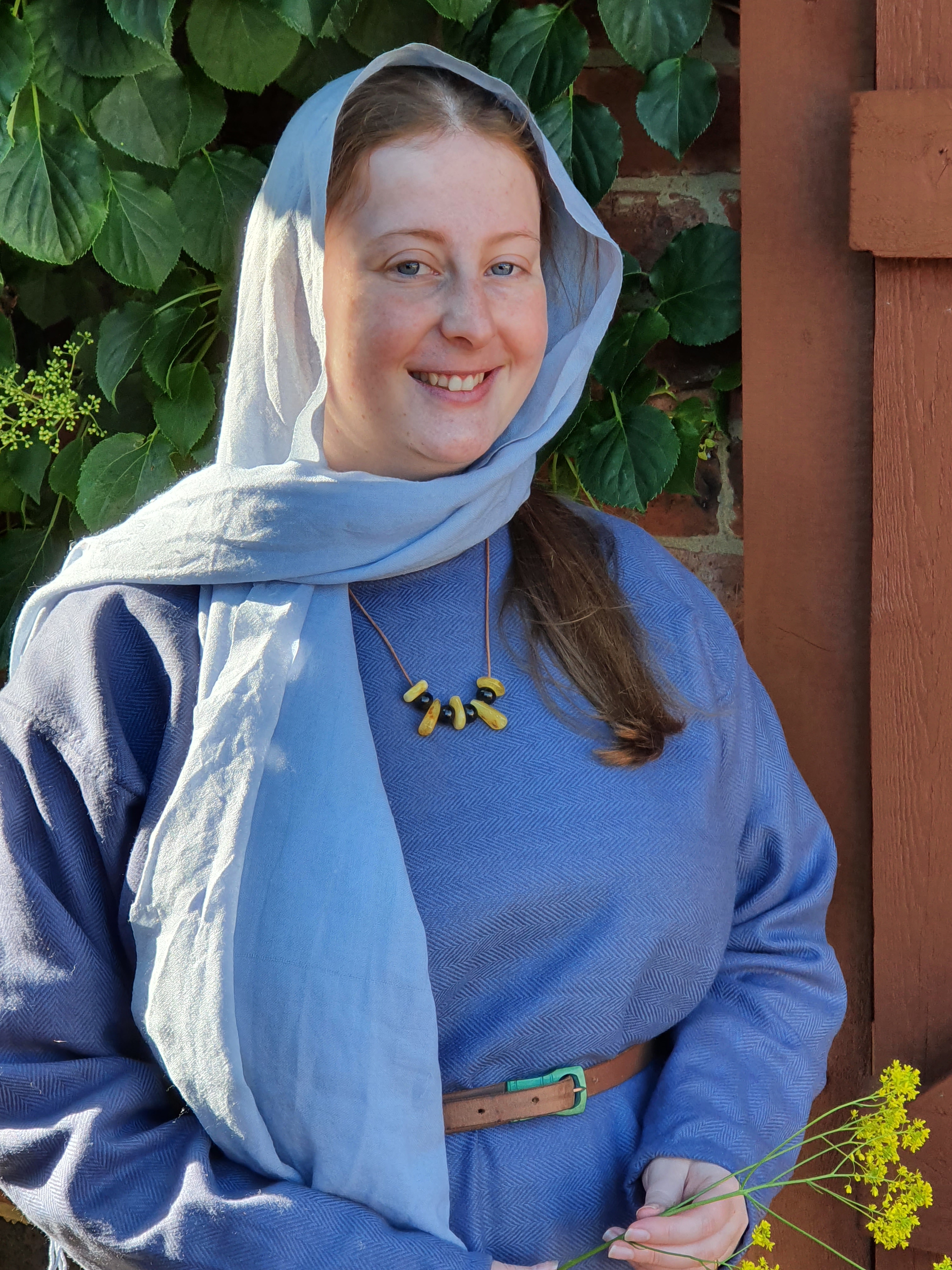
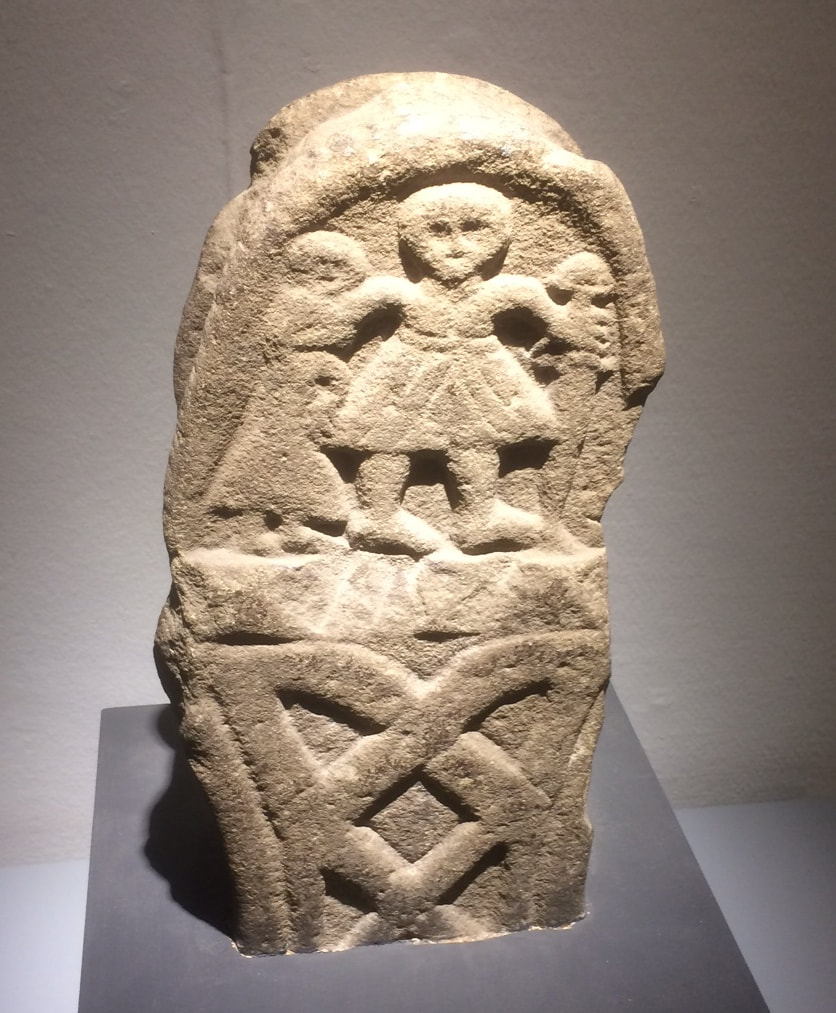
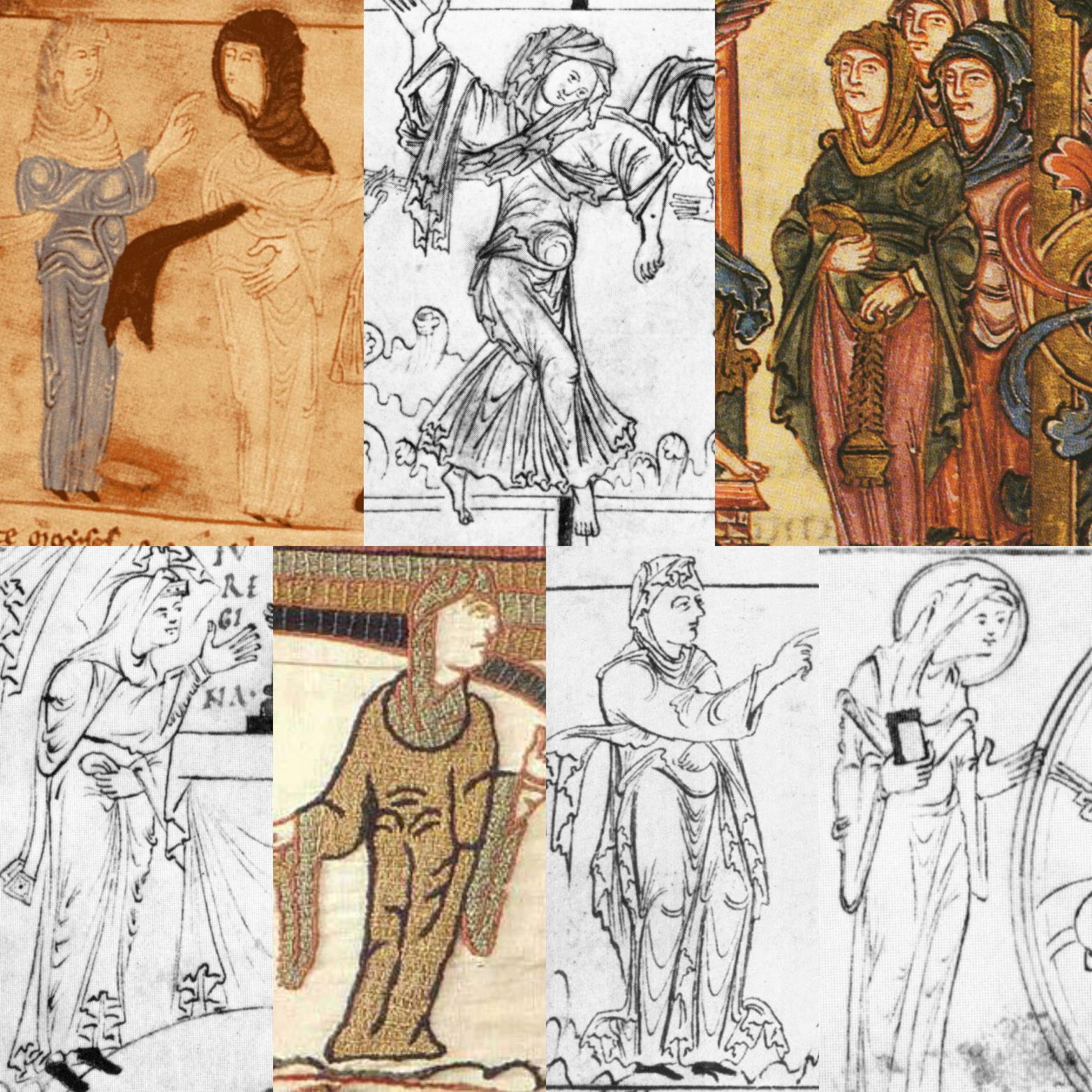
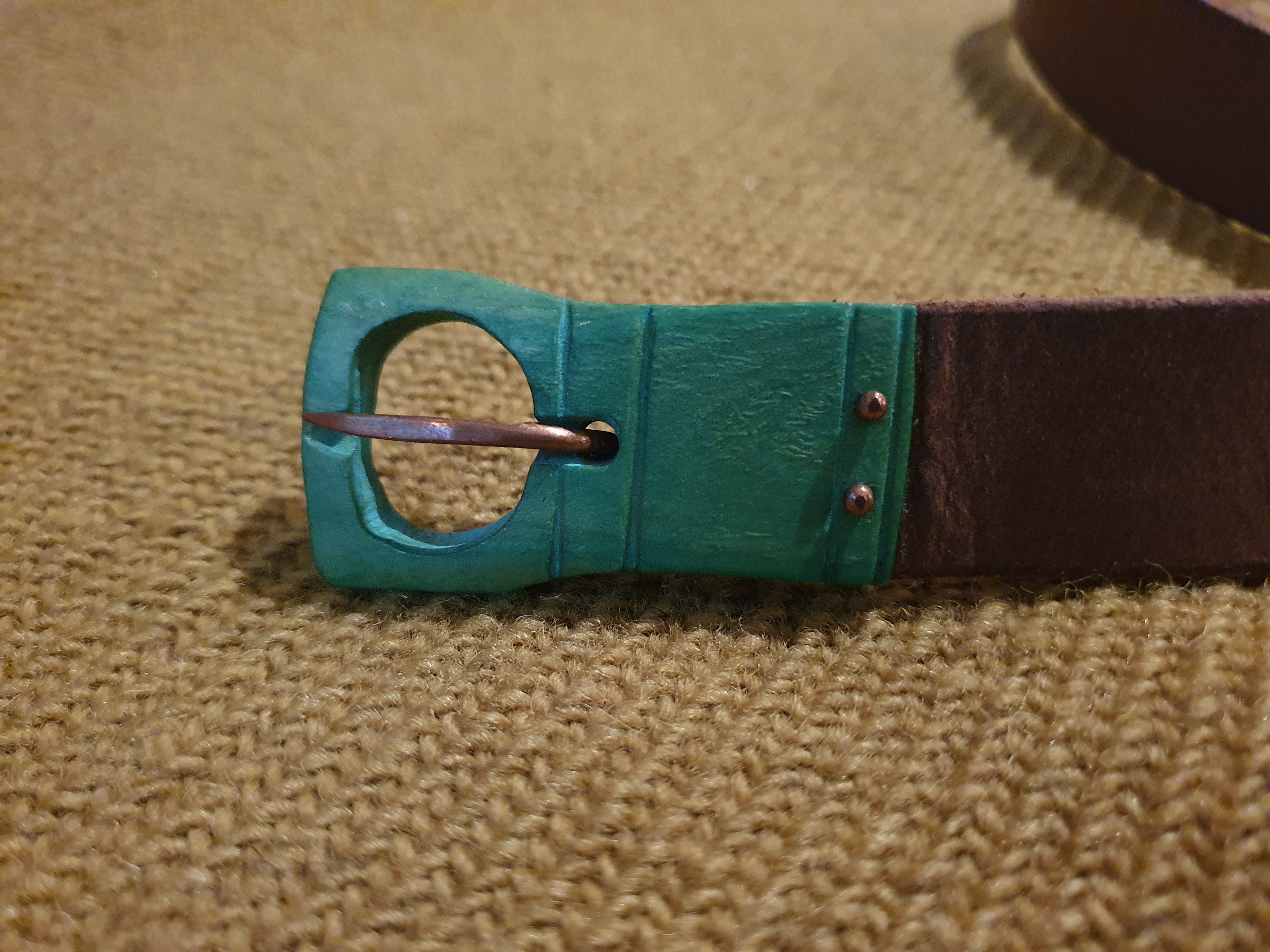
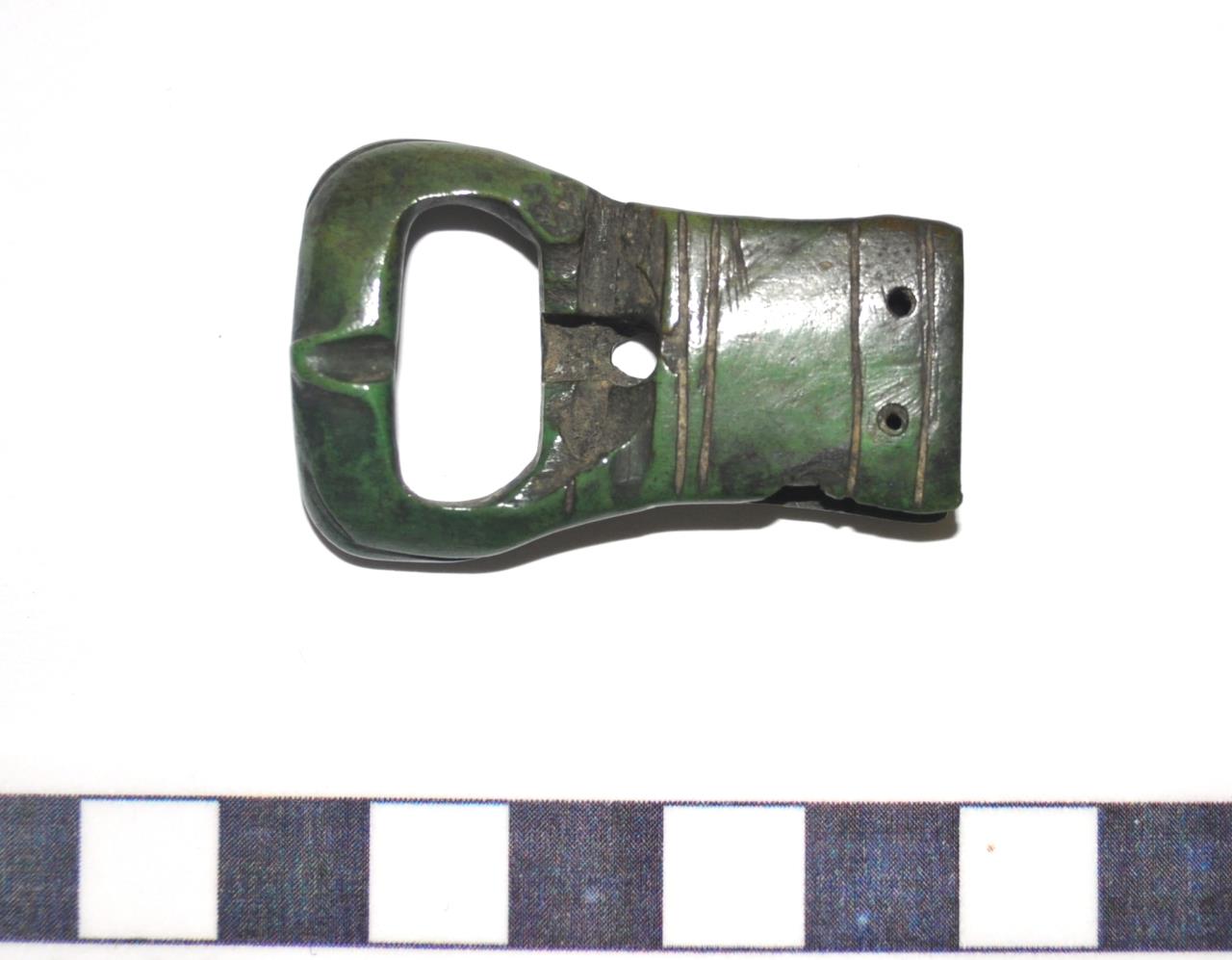
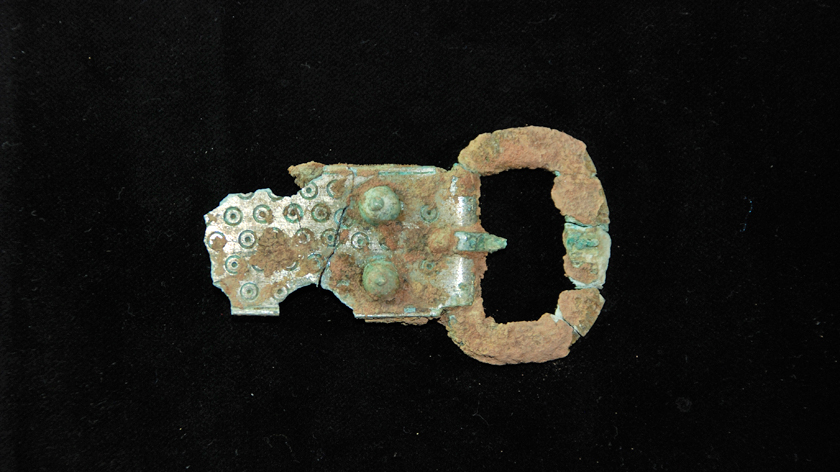
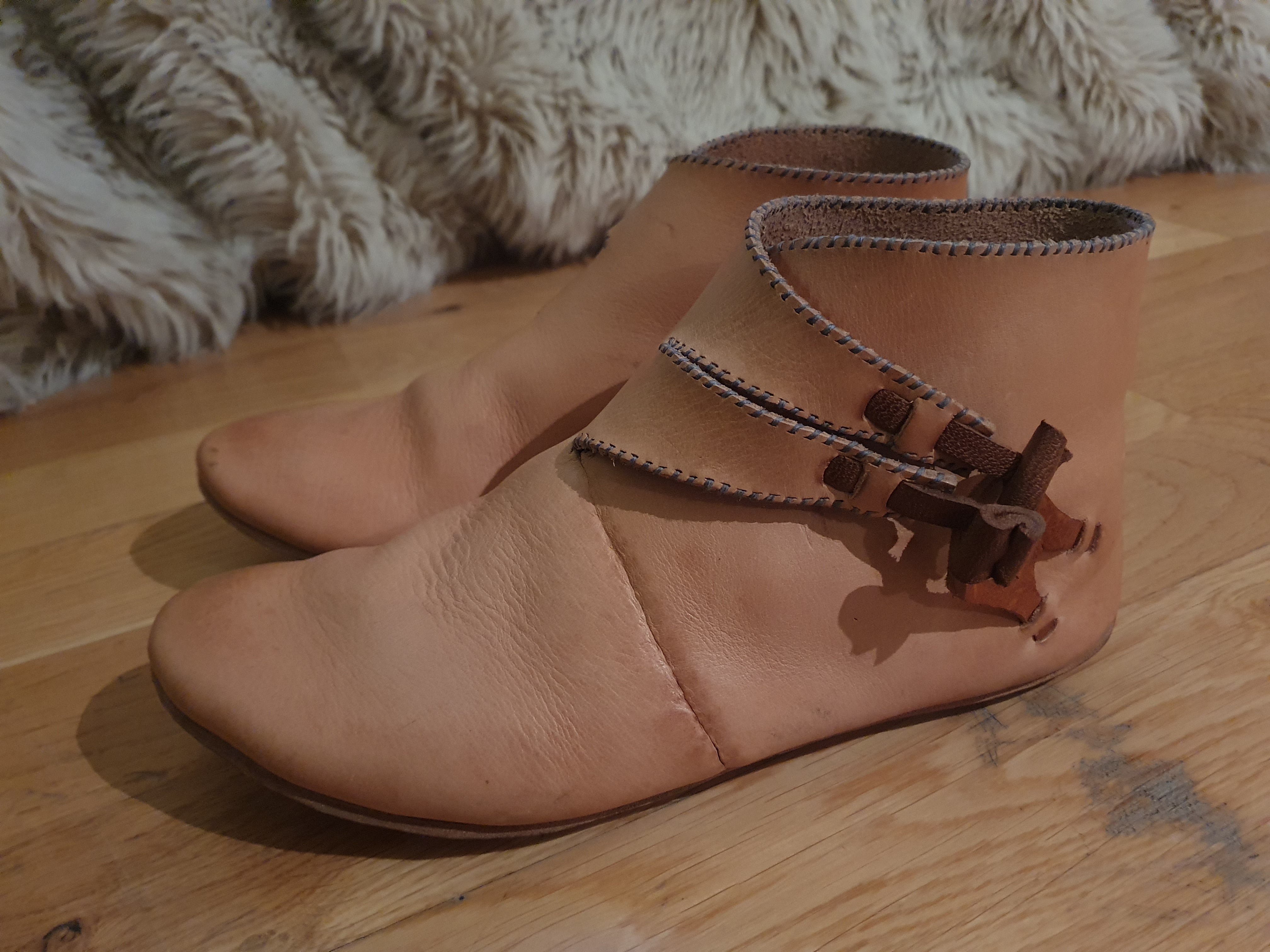
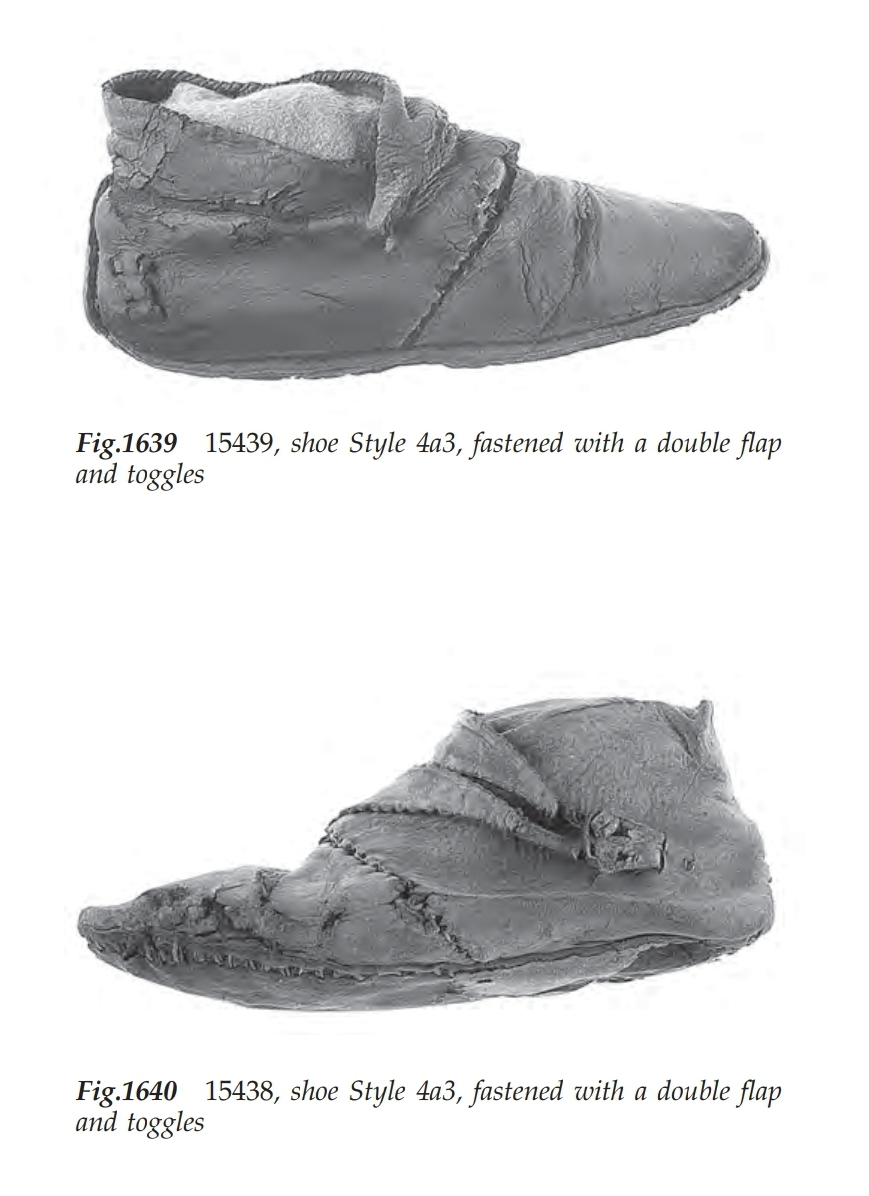
 The Eoforwic Project