Recreating Illuminations: Nun Edition

Or Hastings 9: Back In The Habit

This is a quick wee article, because I am extremely busy with commission work right now! Last weekend, I travelled to the annual Battle of Hastings event down in Sussex. I’ve taken part about 9 times over the years, so Eric and I made a compromise that I would attend only on the Saturday. Sunday would be reserved for touristy shenanigans and japes.
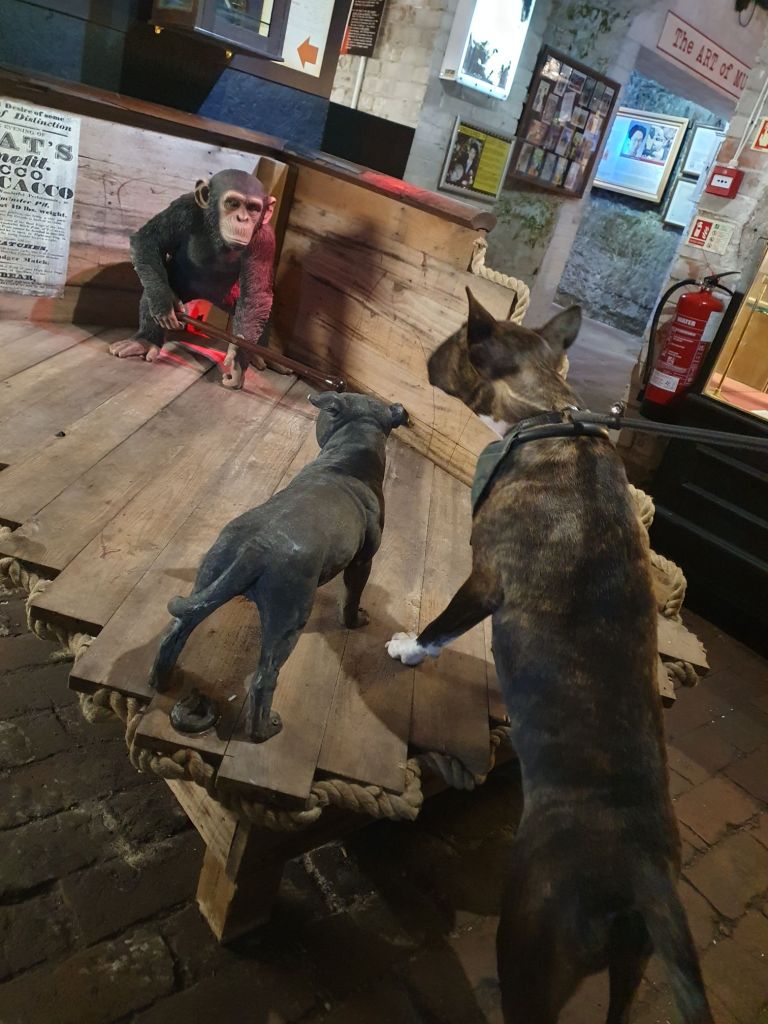

Touristy shenanigans, which here means triggering Peanut’s ancestral bloodlust against armed apes at the “True Crime Museum” in Hastings.

On Saturday, I opted to dust off my ancient ecclesiastical clothing and join my sisters as nuns for the day. The historical battle did not feature nuns, however, many women fled to convents after the Conquest and we wanted to represent those religious who may have been forced to flee their communities for safety.

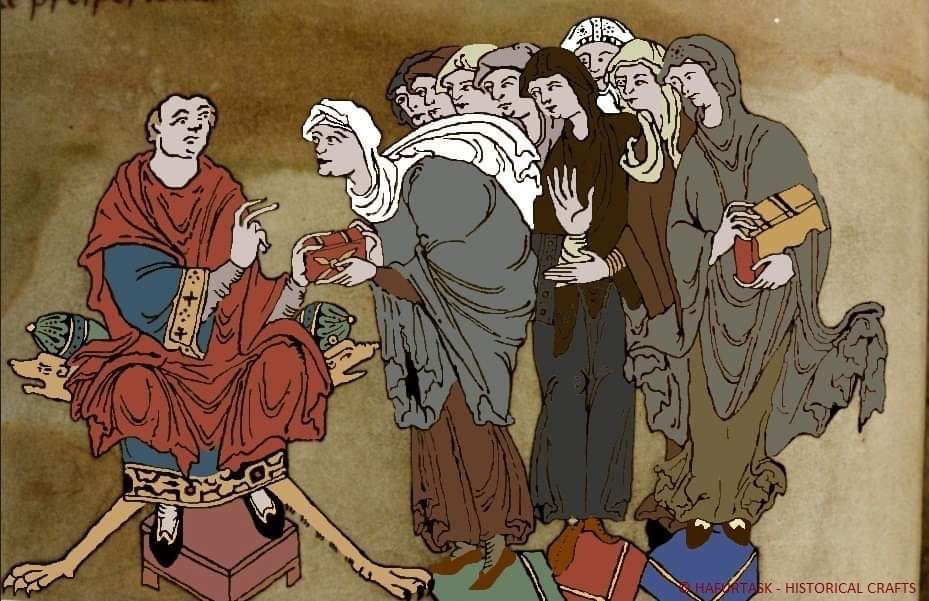
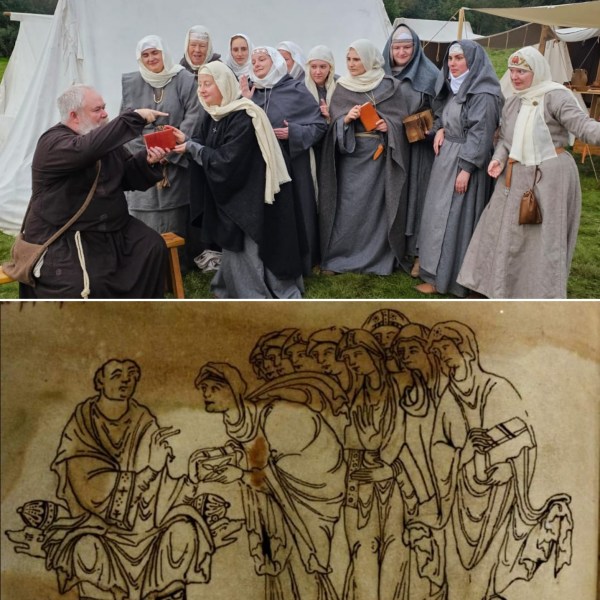
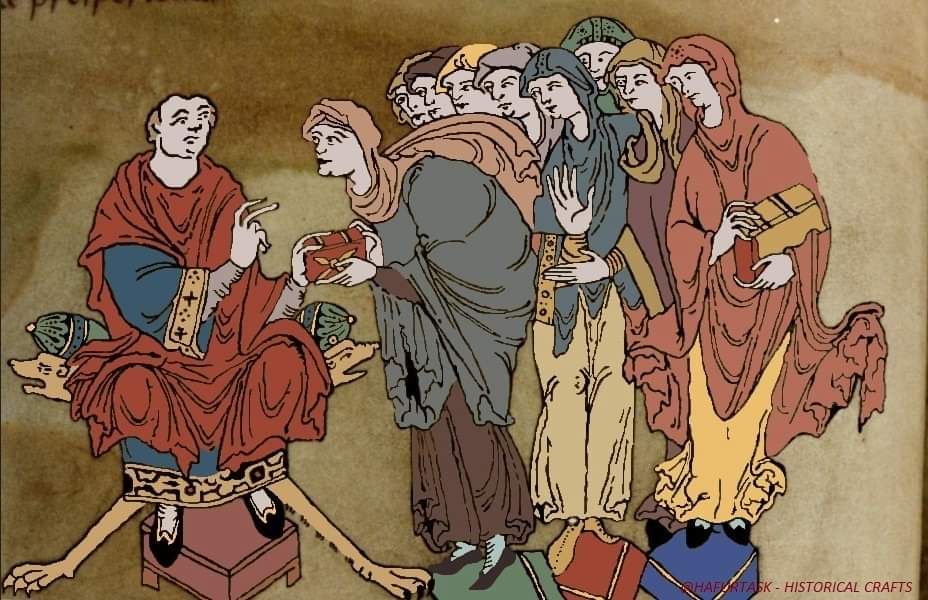
As we had so many nuns in one place, I asked if we could recreate one of my favourite illuminations in an Old English manuscript: Aldhelm presenting his De Virginitate “On Virginity” to Abbess Hildelith and her nuns of Barking Abbey (f68v in MS200, owned by Lambeth Palace Library.)
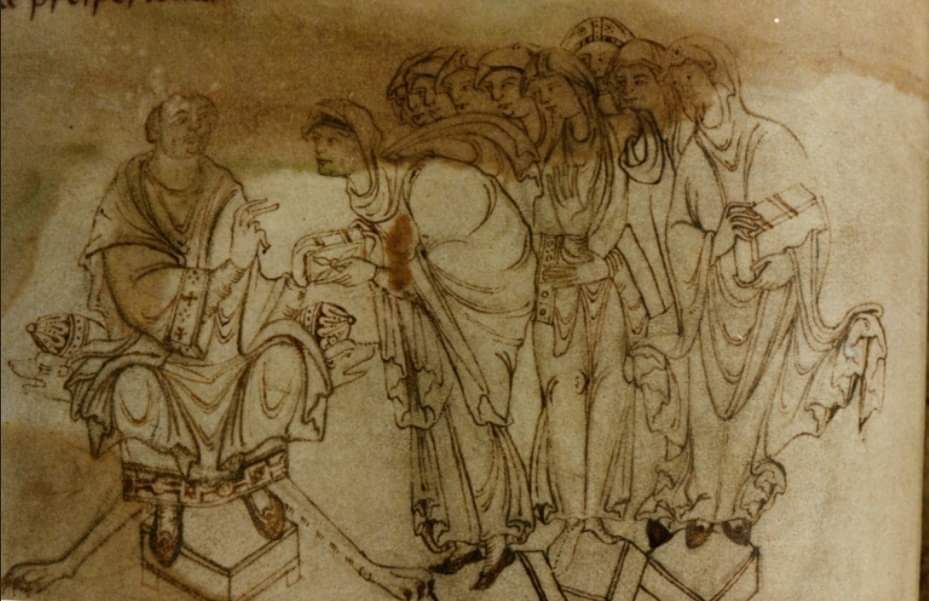
The original isn’t especially clear, so in the pandemic, I had a go at recolouring it and made a few versions. (Please note, I created these pieces before I had my blog, so they are clumsily labeled with my business name “Hafurtask- Historical Crafts.”)
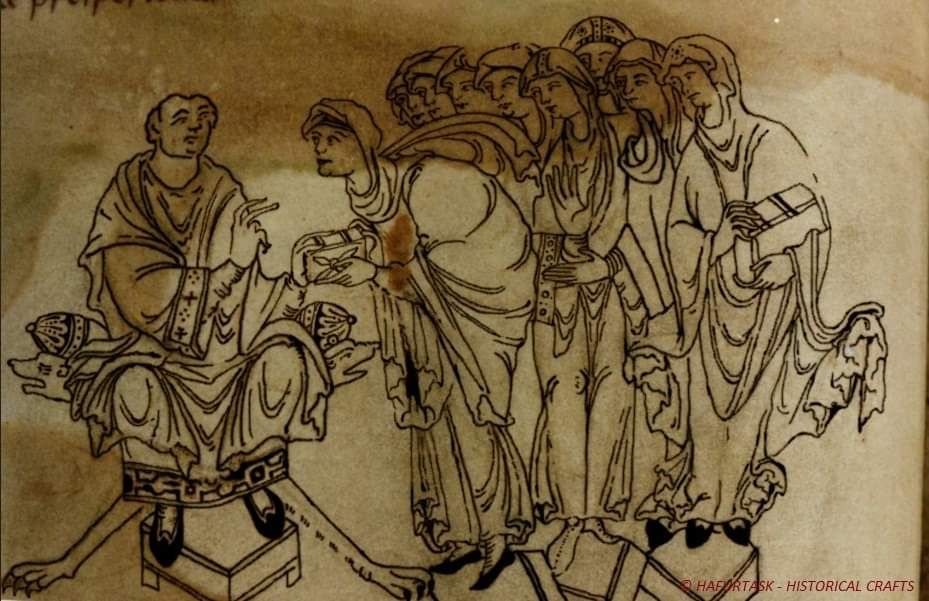
A simple line drawing, making some of the details a little clearer.
A coloured version, with the nuns wearing secular, colourful clothing. This can be seen in contemporary artwork of the time e.g. the nuns in The Benedictional of St Æthelwold. I used colours from those same contemporary volumes.
This was an attempt at depicting some more realistic monastic colouring. The nuns are clad in different natural tones of undyed wool and linen.
I created this in 2020, what else could I do?

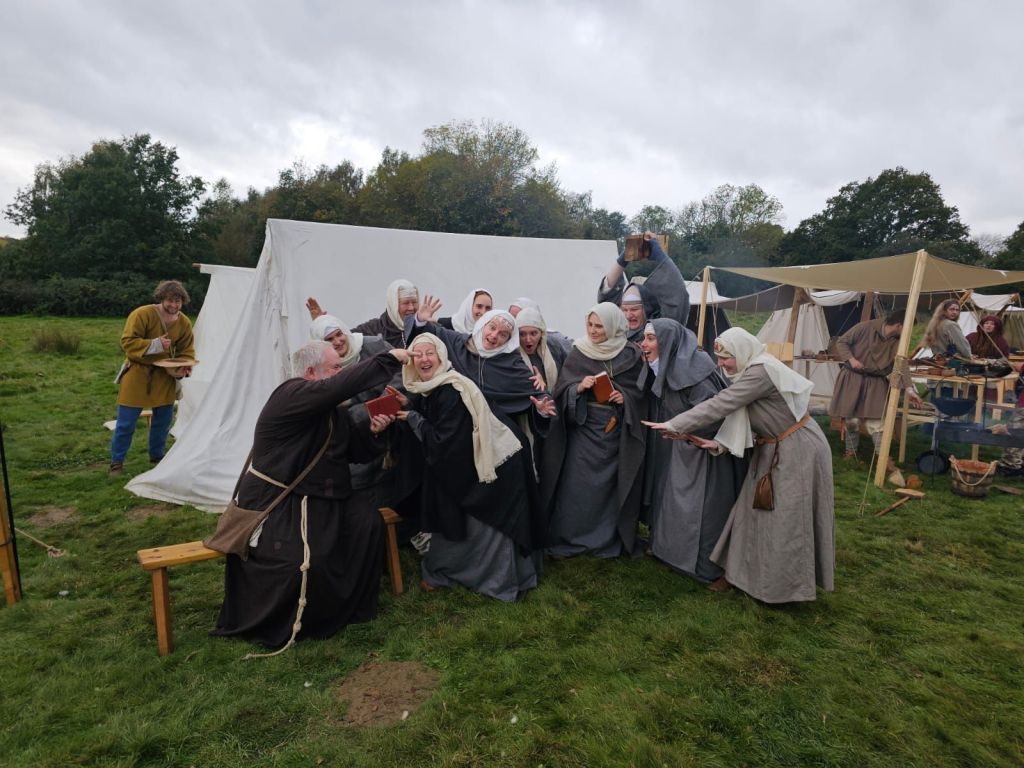
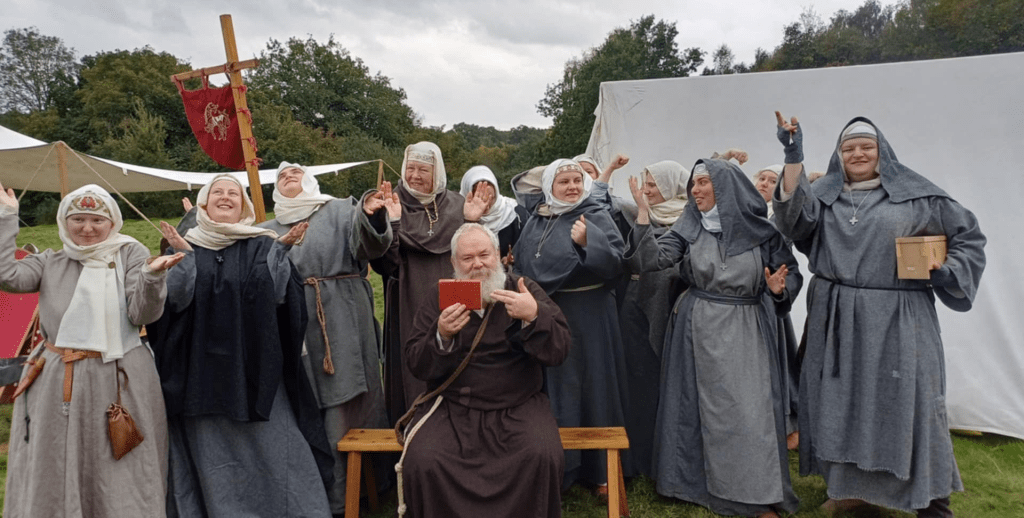
I think that this is probably the best recreation of the scene that we managed, though as you can see, it is not exact. We had 2 more nuns than Barking Abbey did, we fudged a couple of the hand/veil positions and we didn’t have fancy vestments or pillows for Brother Mark (we will be accepting likes and prayers for his sake.)

We did however have a blast trying to defy physics like the original (look at the colourful versions and count the heads of the nuns, then look out for their legs and bodies) and a lot of giggling ensued. We also think that Aldhelm looks like he’s about to poke poor Hildelith in the eyes.
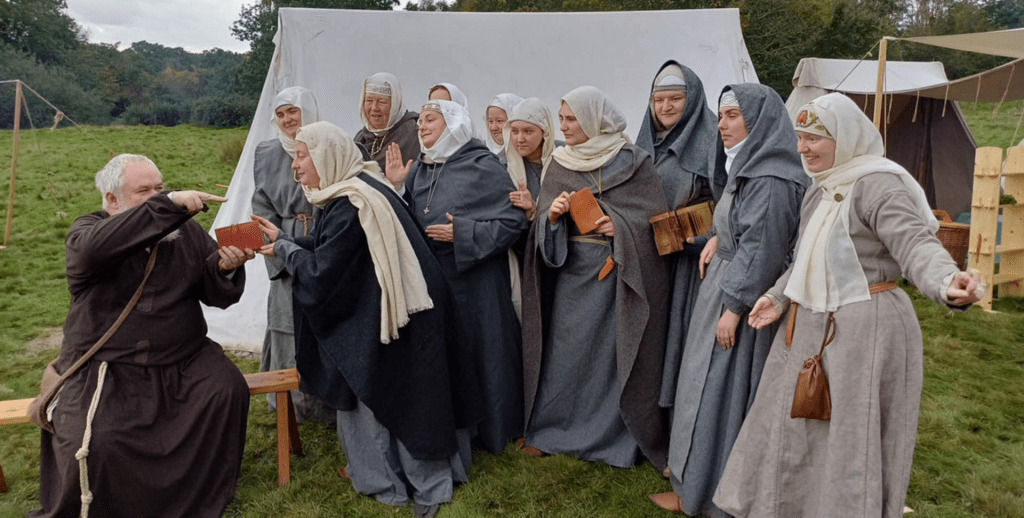
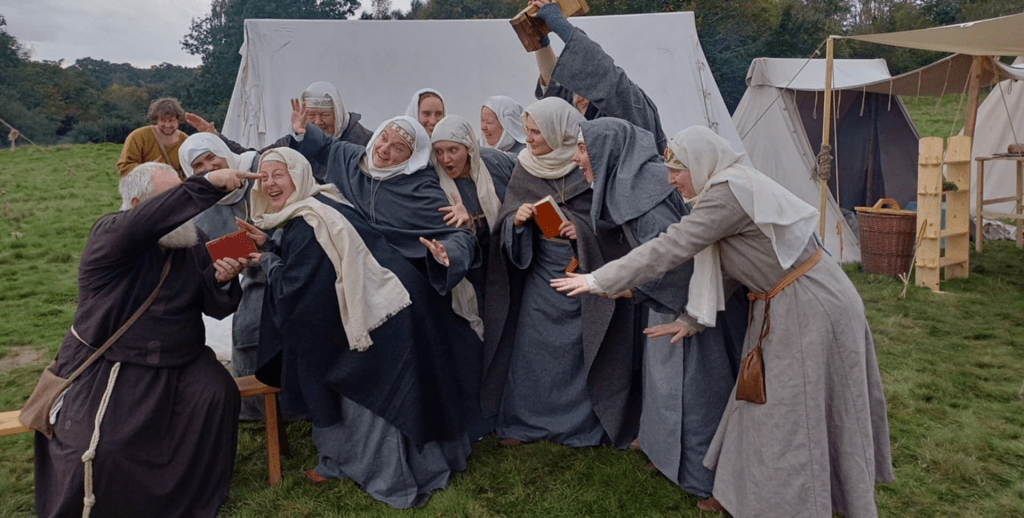
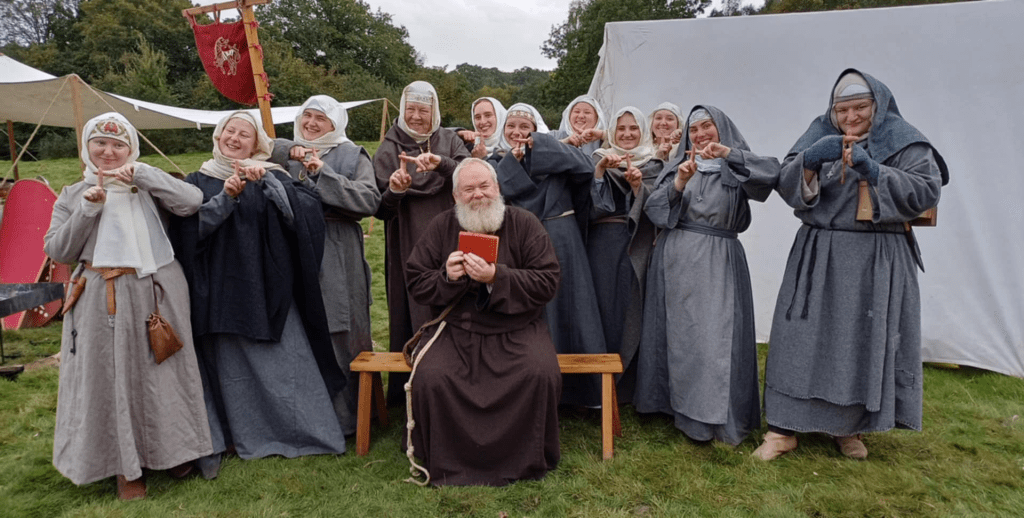
We decided that a finger cross is the 10thC hot girl’s V sign ✌️

I loved gathering with so many other ecclesiastical re-enactors and it’s really given me a kick up the bum to get sewing my new habit over winter. My old one is raggedy and doesn’t fit especially well, so it needs a spruce up and then I can donate it to a sassy novice.

What do you think of our recreation? I need to give a massive thanks to Brother Mark and Sisters Katie, Larissa, Christine, Miriam, Lyndsey, Chloe, Harri, Olivia, Thea and Sasza- for taking part and being such good eggs while I was manic and it was drizzling! Nun- and monk-wrangling is a taxing sport. Thank you also to Lyndsey and Ant for taking pictures for us!

References

Lambeth Palace Library’s scan of the original image: https://images.lambethpalacelibrary.org.uk/luna/servlet/detail/LPLIBLPL~17~17~1651~100447?qvq=w4s:/when%2F10th%2Bcentury;lc:LPLIBLPL~21~21,LPLIBLPL~20~20,LPLIBLPL~9~9,LPLIBLPL~29~29,LPLIB~2~2,LPLIB~1~1,LPLIBLPL~34~34,LPLIBLPL~32~32,LPLIBLPL~23~23,LPLIBLPL~24~24,LPLIBLPL~31~31,LPLIBLPL~12~12,LPLIBLPL~17~17,LPLIBLPL~19~19&mi=0&trs=44

If you like my articles, please consider following my blog for updates when I post. If you really like them, please consider donating to my Ko-Fi account and help me afford to keep the lights on! You don’t need to make an account and I keep 100% of whatever you decide to tip me.
https://ko-fi.com/eoforwicproject

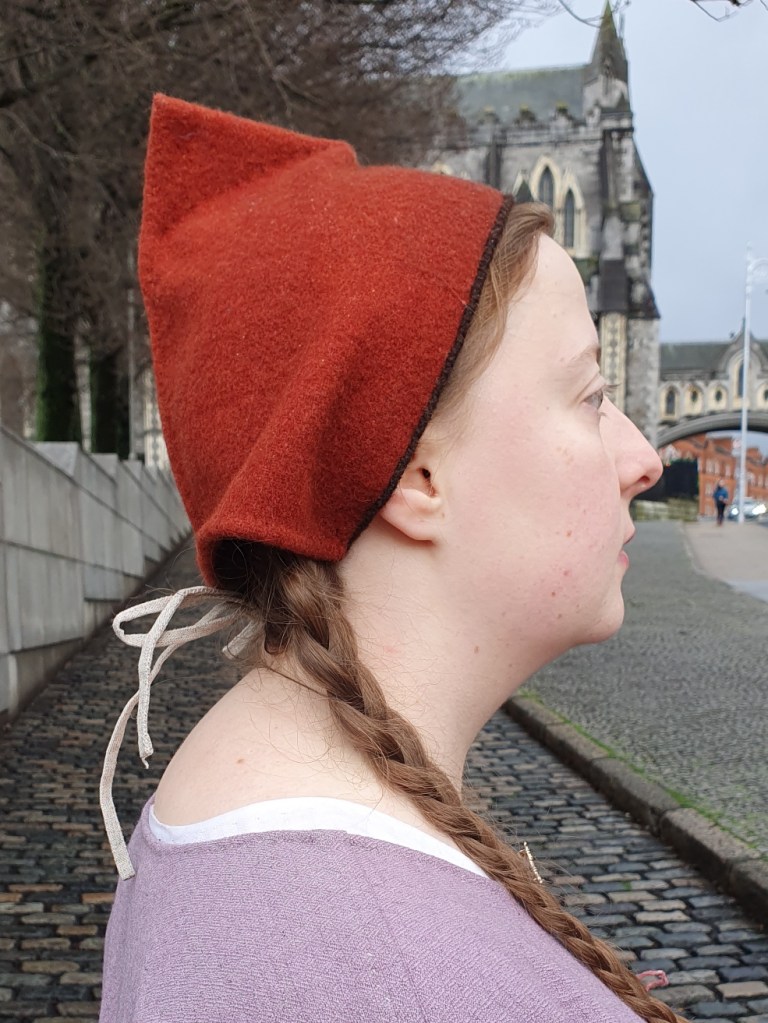
A Wool Cap from 10th Century Dublin. DHC33

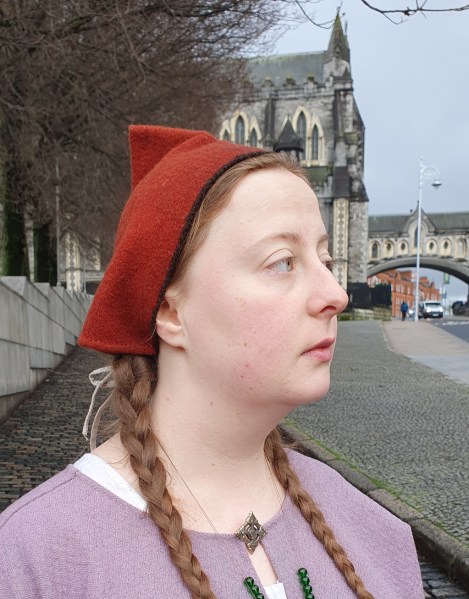
The cap worn tied behind the head.

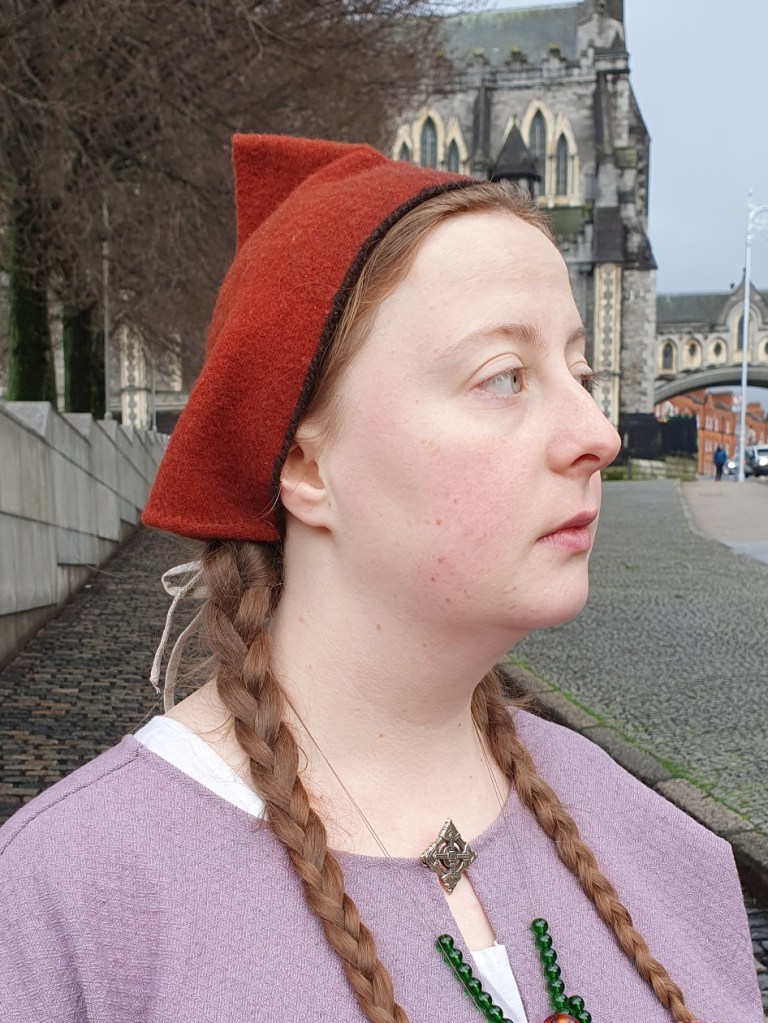
This cap is based on item DHC33 from Fishamble Street, just one of the roads in Viking Dublin’s Wood Quay neighbourhood. All of the street photographs were taken on location in nearby Winetavern Street, Dublin.

DHC33 was made of wool and like all of the Dublin caps (silk or wool) it was woven in tabby/plain weave. It was found in layers that dated to the early-mid 10th century and its estimated size as a cloth piece was 490mm x 185mm. (Wincott Heckett, 2003). The other caps found in Dublin are extremely similar in size to DHC33, which could indicate a central production site somewhere in Viking Dublin.

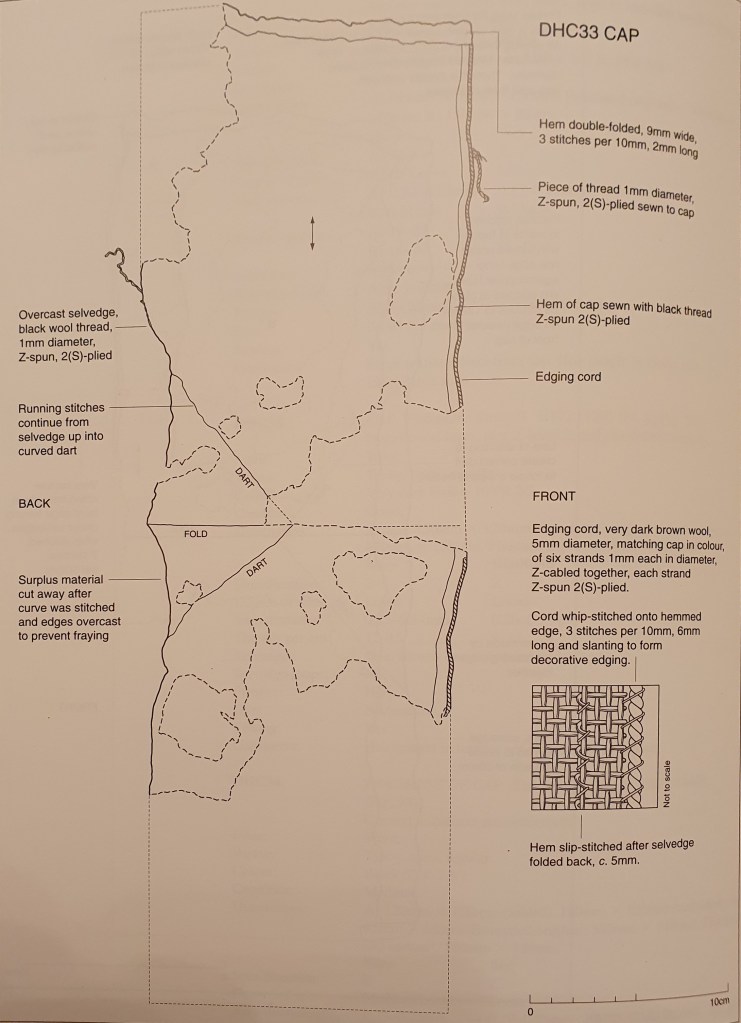
Fig. 53. DHC33 (E172:11205), cap from Fishamble Street. From Wincott Heckett, E. (2003) p. 60.

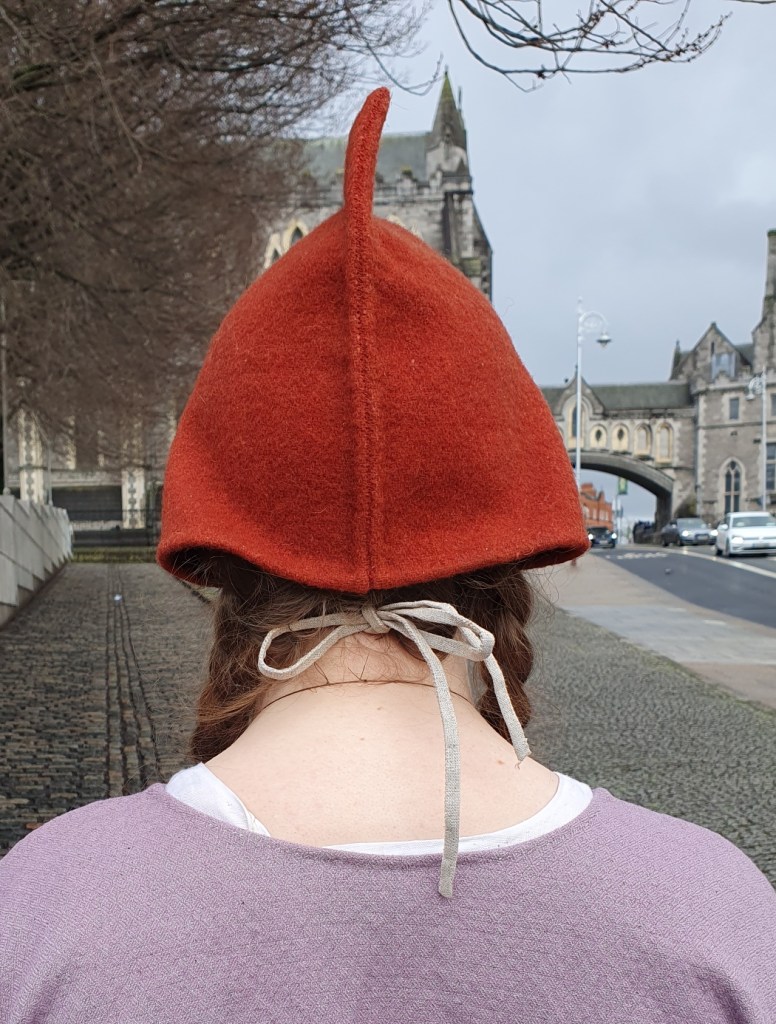
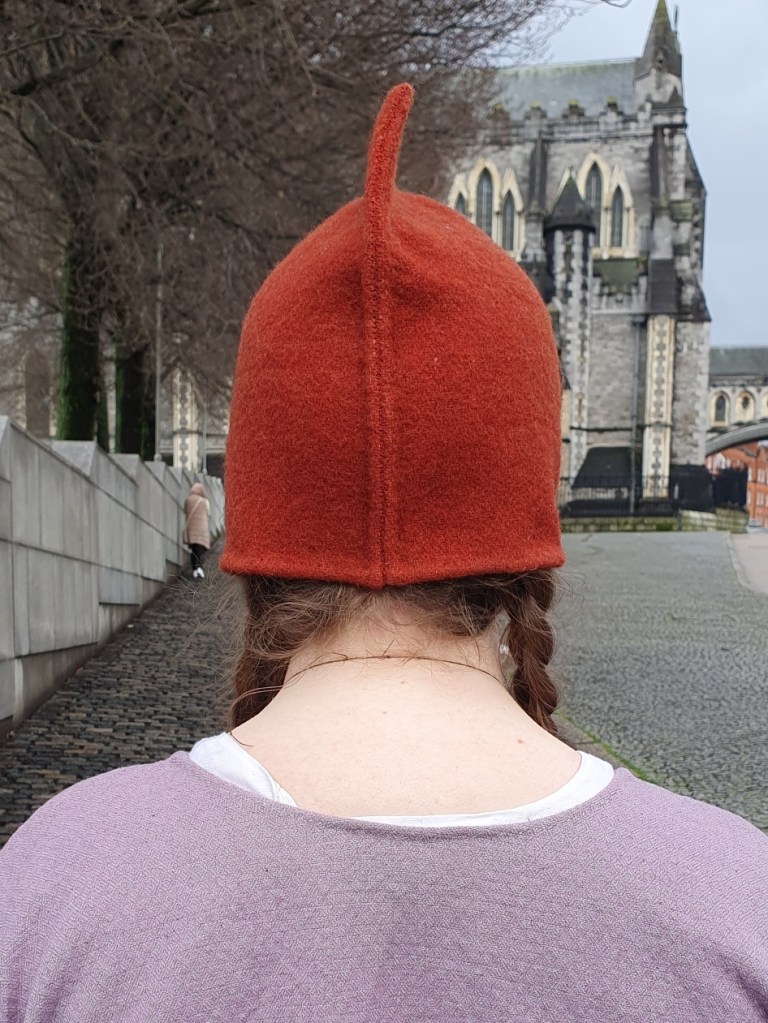
Similar to all the other suspected caps from Wood Quay, DHC33 showed evidence of a curved seam along the outside of the crown. This results in the distinctive shark’s fin look I am sporting here. Something I didn’t include in my own version was that a small amount of fabric was cut away from the back “fin” after the curve was sewn and then whipstitched to prevent fraying. To my shame, I will admit that I didn’t include this because I didn’t read the literature closely enough before making it- the drawings show such a small amount having been removed that I cannot fathom why they did it.

This trimming of the “fin” is not a feature shared by any of the other caps, though there are other small, conspicuous variations in how the caps were put together. I wonder if these were slightly different methods used by different craftspeople within the same workshop- I know I have my own preferences of how I sew that differ from my friends!

Due to the incomplete nature of DHC33, we’re not sure if the back seam would have been originally sewn closed the entire way up the back or left half open at the bottom, like some recreations of the Lincoln silk cap and caps DHC39 and 40 from Dublin. I decided to keep mine closed, but I’d like to make a version of an open cap soon- I think this would look really nice over a bun held in place with one of the many small pins found in Wood Quay.

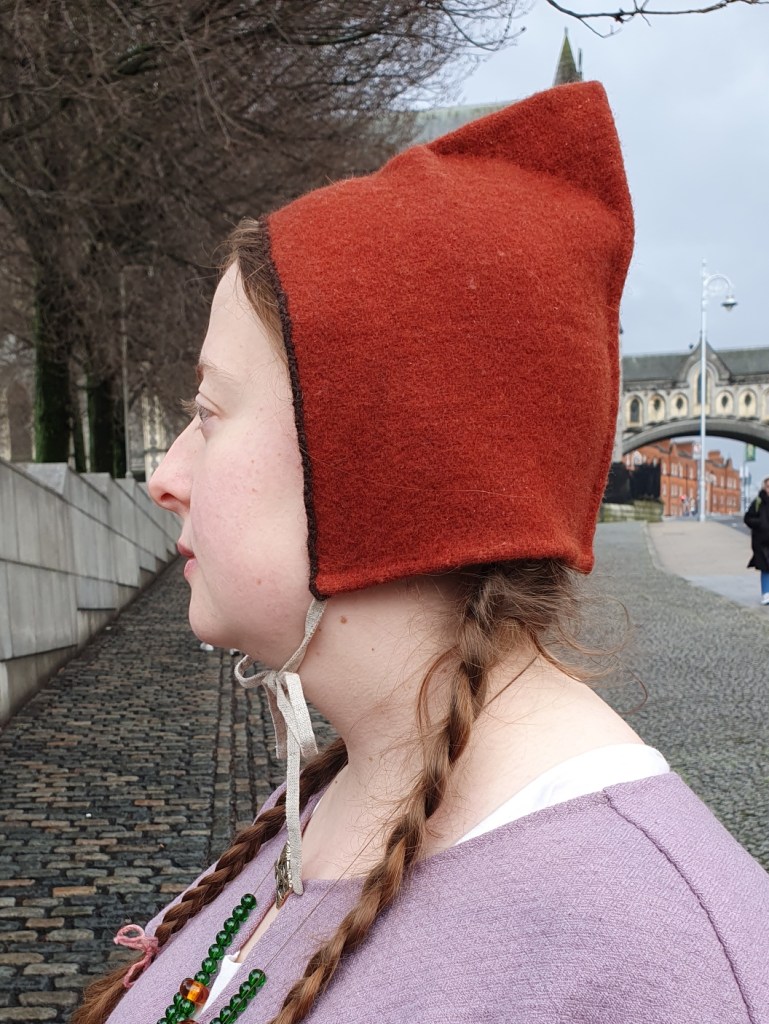
The cap worn tied behind the head, side profile.

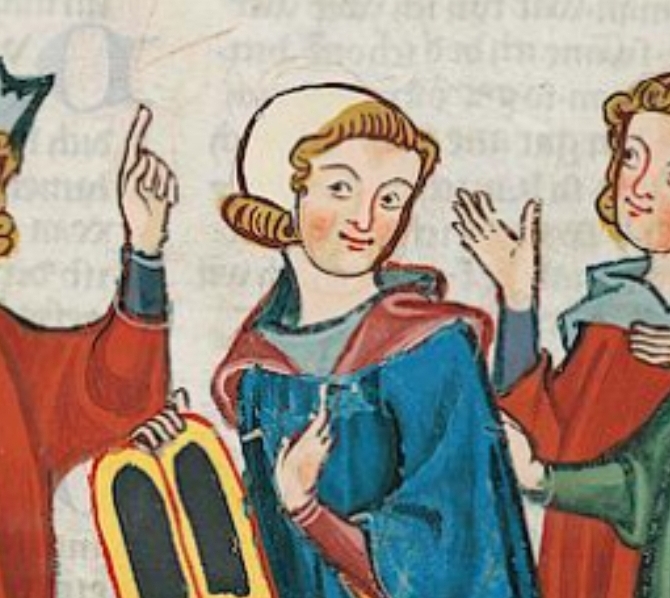
What you might find interesting is that the silk caps from York and Lincoln (fairly contemporary to the Dublin caps) both feature the curved type of seam over the crown too, except on the inside of the garments- see my recreation of the York one here. This results in a cap curved to fit the contour of the wearer’s head, with the excess point of fabric being hidden inside the cap. These resemble later Medieval coifs more closely.

Detail of 364r “Meister Gottfried von Straßburg” from the Manesse Codex, 14thC. Source. (I just wish I looked this cute and sassy in my caps!)

Like the majority of the Dublin textile remains, this cap was not analysed for dye. In my recreation, I decided to dye my cap fabric with madder and was surprised to achieve a really good robust red for once. Madder was detected on some of the Dublin textiles that were subjected to dye analysis (Pritchard, 1992) and it is commonly found at other sites across the Viking world. (Walton, 1989.)

The cap worn tied behind the head, back view.

Another distinctive feature of this cap is the decorative braid along its front edge. It is described as:

“Edging cord, very dark brown wool, 5mm diameter, matching cap in colour, of six strands 1mm each in diameter, Z-cabled together, each strand Z-spun 2(S)-plied. Cord whip-stitched onto hemmed edge, 3 stitches per 10mm, 6mm long and slanting to form decorative edging.” (Wincott Heckett, 2003)

I chose to use a naturally pigmented dark brown wool for my cord in order to have a bit of contrast, but it’s not clear if the original would have since no dye analysis was performed. DHC33 also had a small piece of wool yarn sewn to the front edge, a few inches above the corner. Could this be the remains of a tie? I chose to use more robust linen ties, inspired by the small remaining piece of sewn linen tie extant on the front edge of DHC40, a contemporary silk cap found in the same level of Fishamble Street.

How were the Dublin caps worn?

The cap tied under the chin, front view.

The cap tied underneath the chin, side profile.

The cap tied underneath the chin, back view.

Personally, I think that wearing the Dublin caps tied behind the head results in the overall most flattering fit from the front and side. This is of course informed by my modern aesthetics and sense of style, so my own preference doesn’t necessarily indicate which way of wearing it is most accurate or likely. Wearing the caps with the ties underneath the chin is a bit goofy, but it does make it fit more securely and tightly to the head, which is warmer in the windy and rainy terrain near the Liffey.

If you like my Viking Dublin content, please stay tuned- I created this cap as part of a whole speculative Wood Quay outfit. These photos are just a handful of a larger photo-shoot on location and the outfit article is coming very soon.

References

Pritchard, F. (1992). Aspects of the Wool Textiles from Viking Age Dublin. In: Bender Jørgensen, L. and Munksgaard, E. (Ed). Archaeological Textiles in Northern Europe: Report from the 4th NESAT Symposium. Copenhagen: Det Kongelige Danske Kunstakademi. pp.93-104.

Walton, P. (1989) Textiles, Cordage and Raw Fibre from 16–22 Coppergate. York: York Archaeological Trust. PDF.

Wincott Heckett, E. (2003) Viking Age Headcoverings from Dublin. Dublin: Royal Irish Academy.

If you liked this article, please consider following my blog for updates when I post. If you really liked it, please consider donating to my Ko-Fi account and help me afford to keep the lights on! You don’t need to make an account and I keep 100% of whatever you decide to tip me.
https://ko-fi.com/eoforwicproject